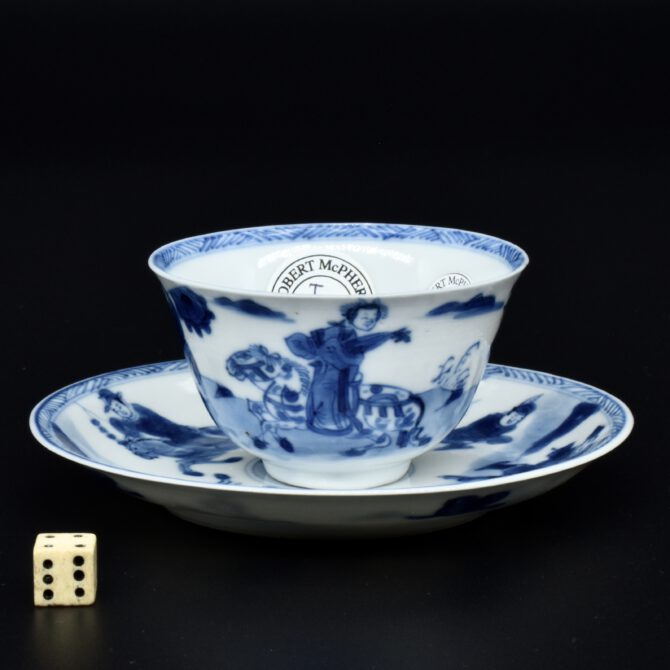
A Kangxi Blue and White Porcelain Teabowl and Saucer
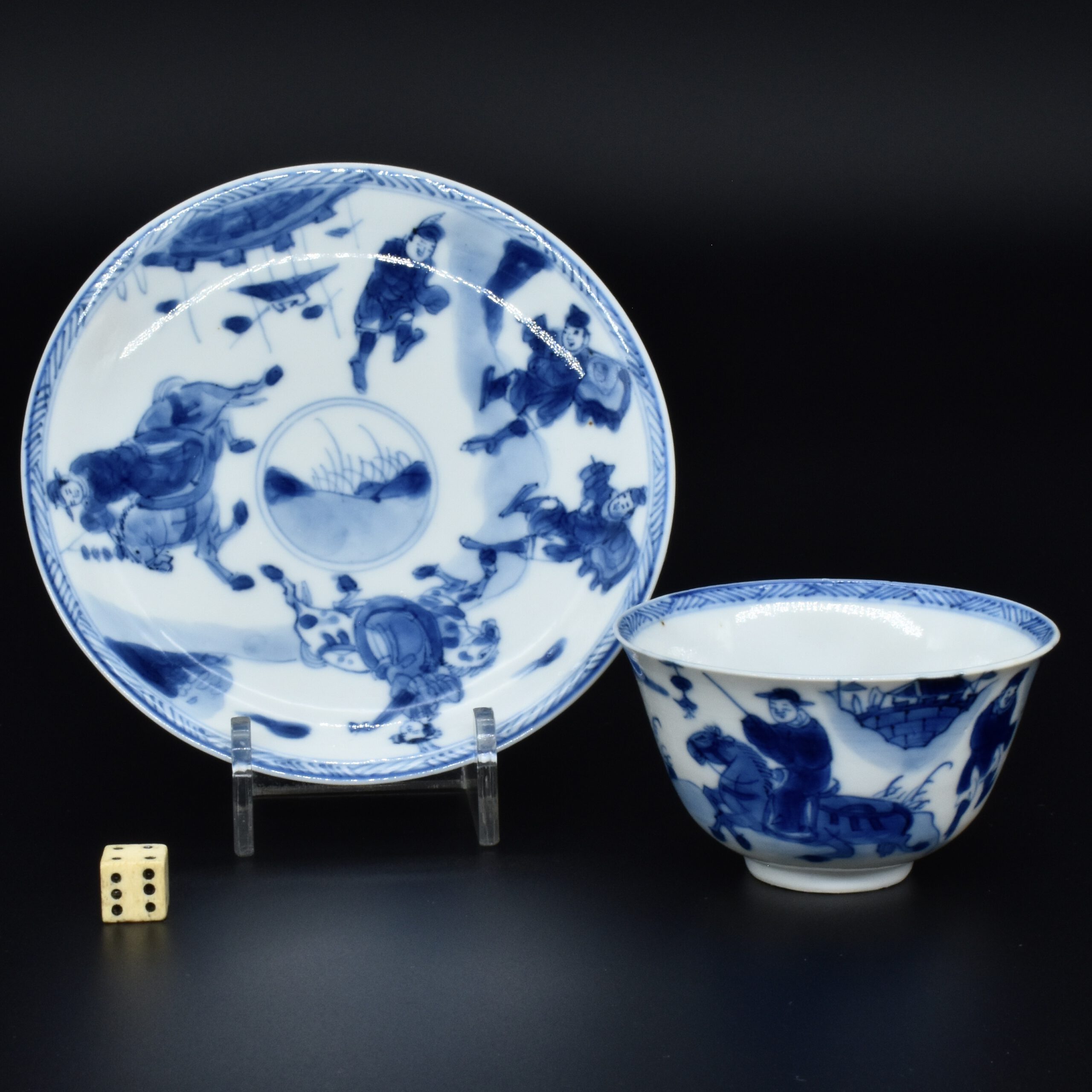
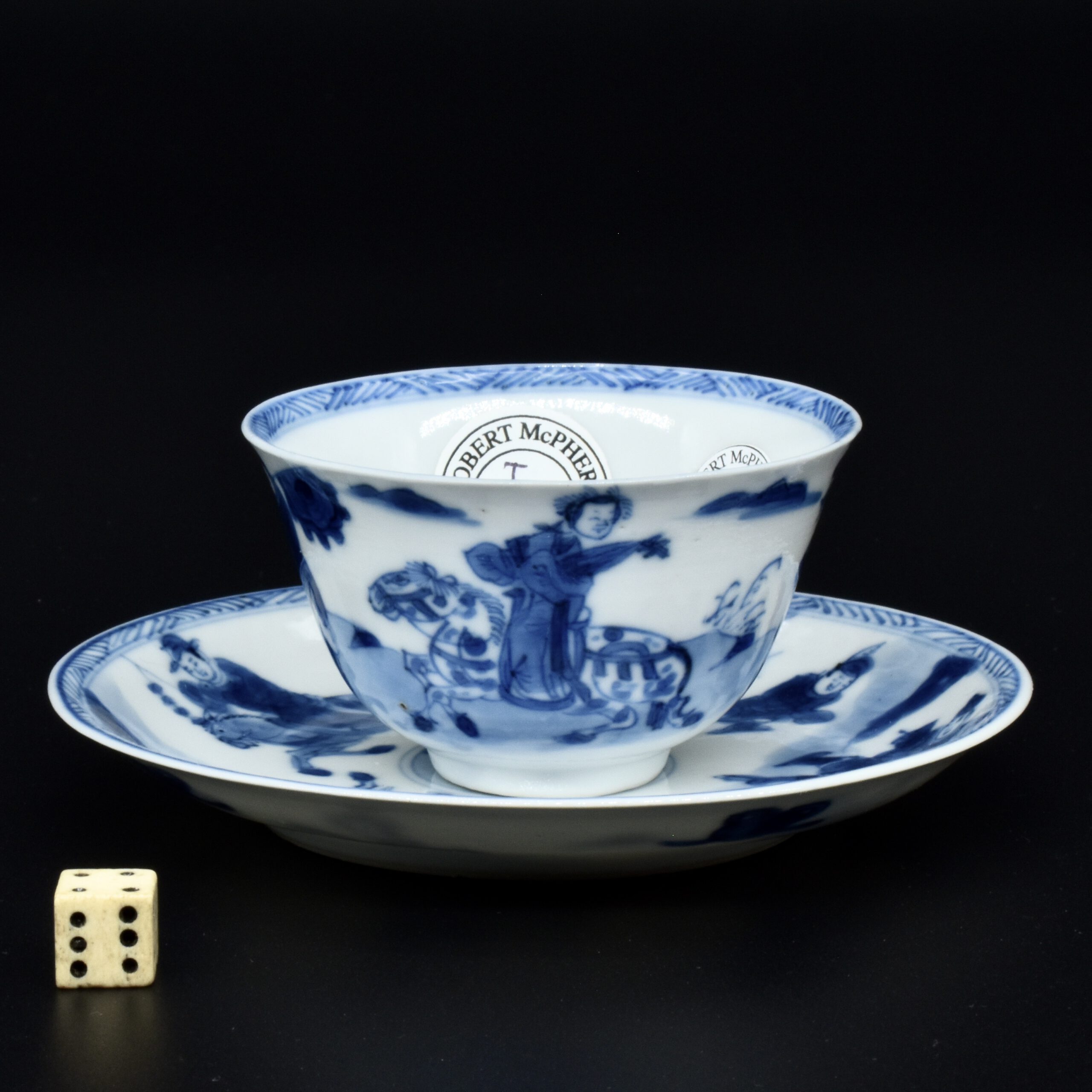
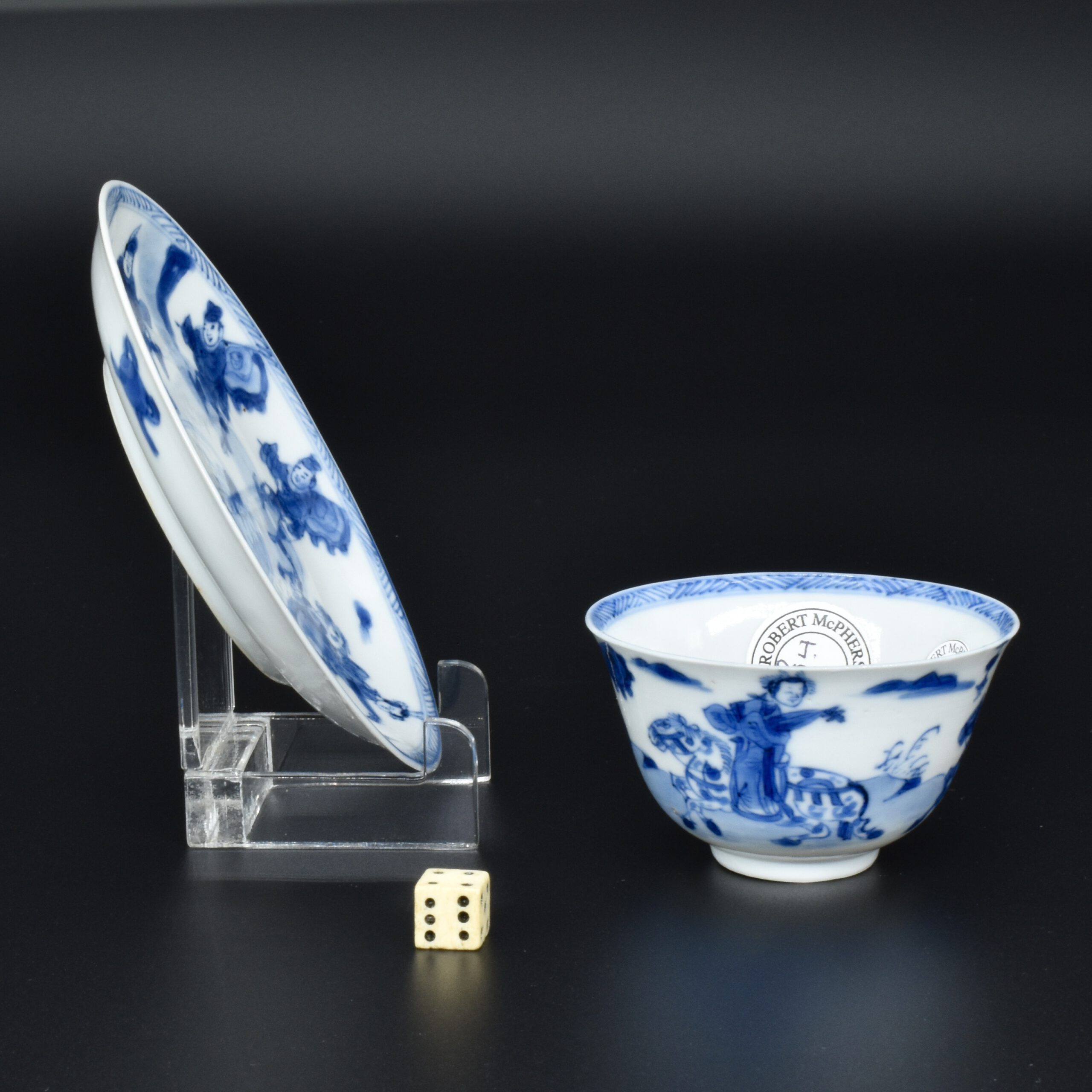
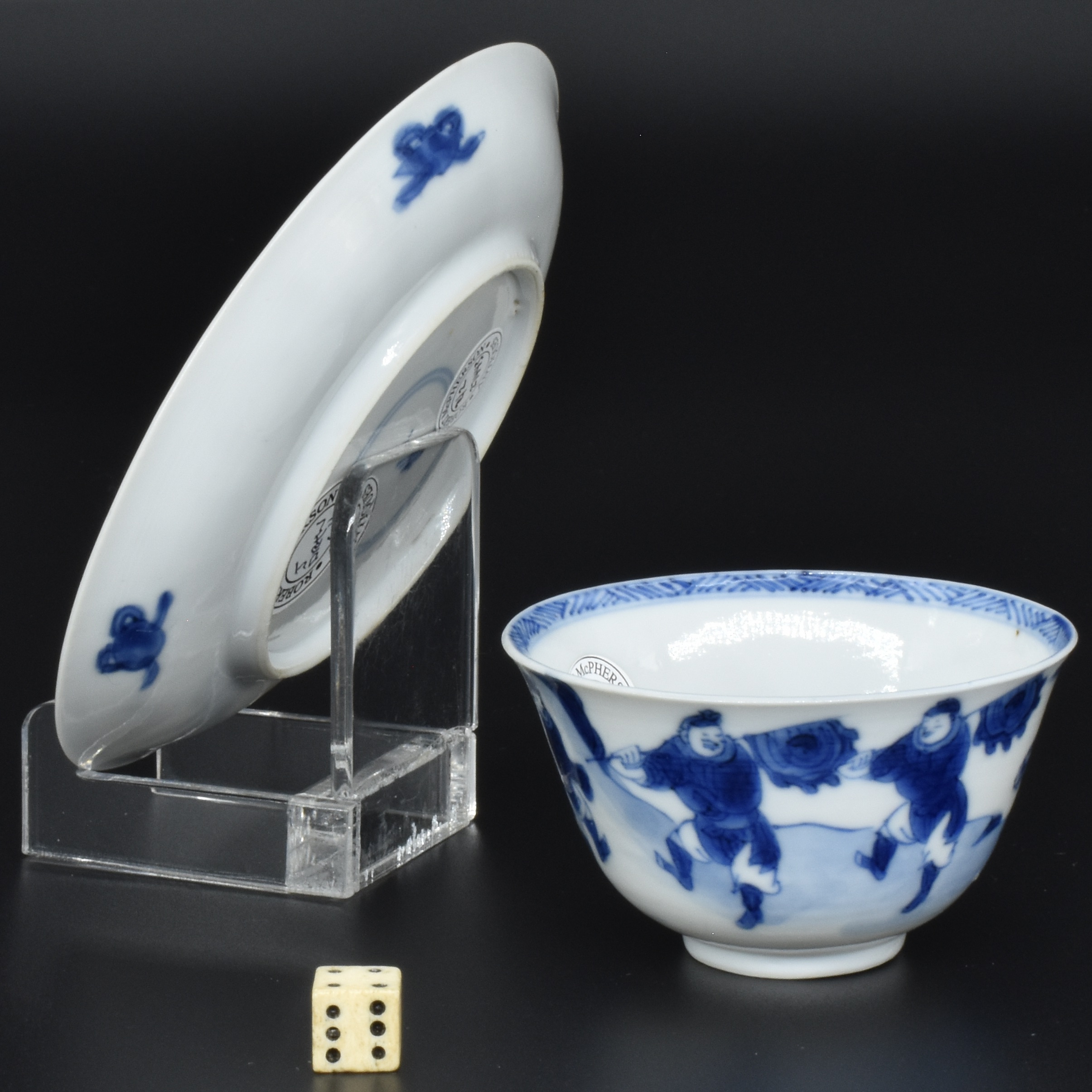
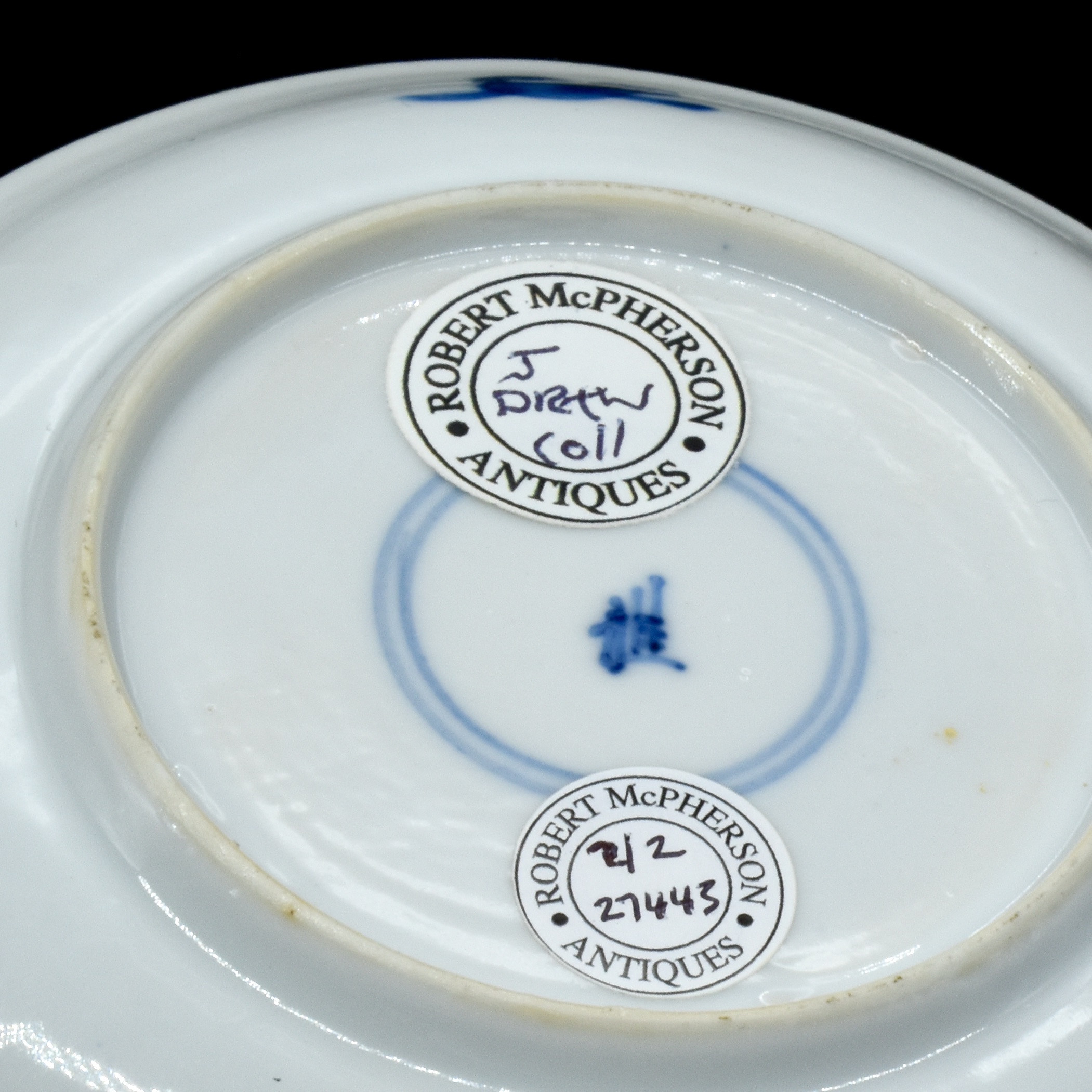
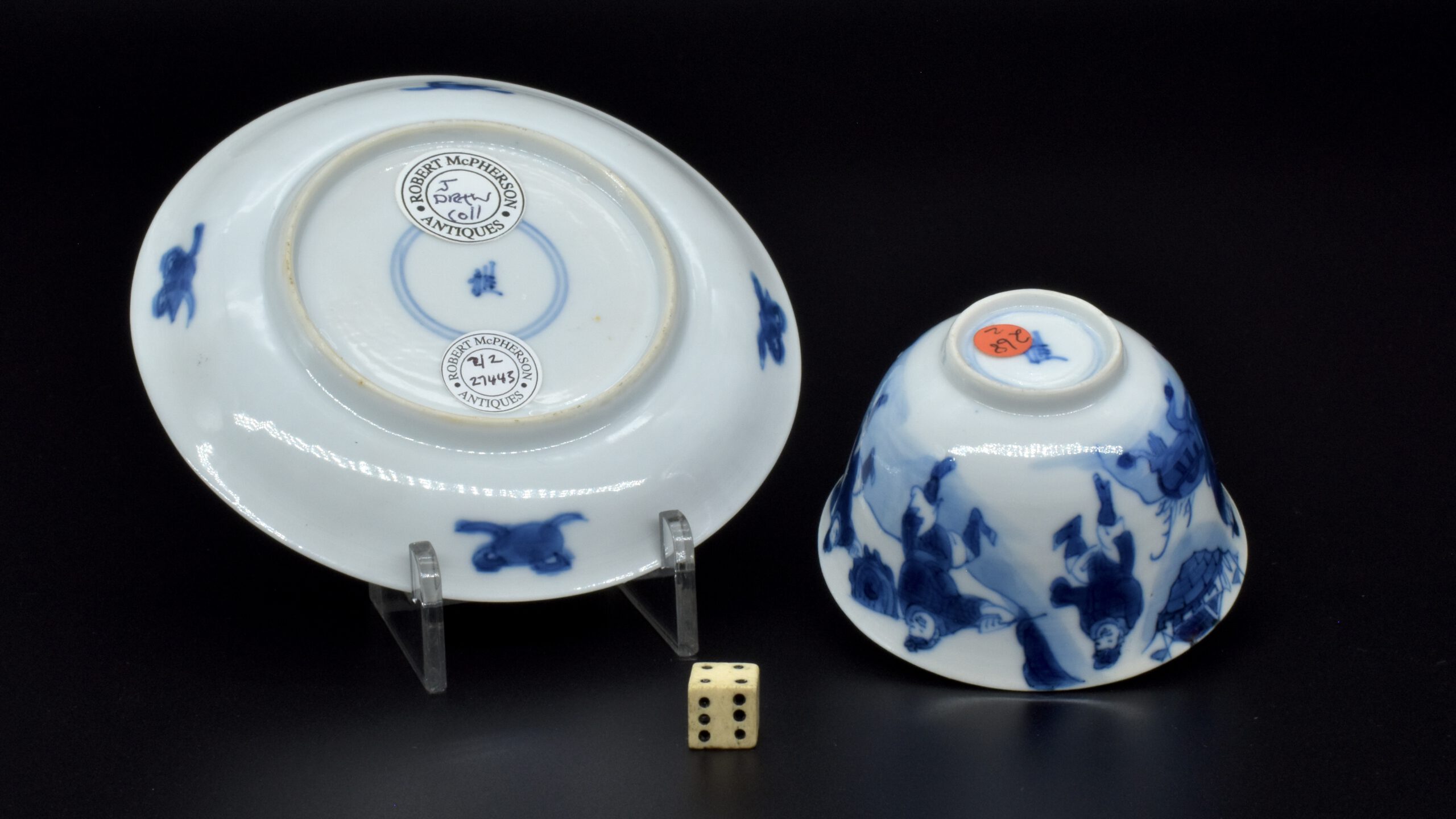
A Fine Kangxi Blue and White Porcelain Semi-eggshell Teabowl and Saucer, Jingdezhen Kilns. From the Collection of John Drew (1933 – 2006). This very thinly potted small Kangxi teabowl and saucer dates to around c.1690-1700. The diminutive size reflects the high cost of tea during this early period, both in the Netherlands and in Britain. Another dating indication is that the colour, glaze and painting are similar to the well known Rotterdam Riot design porcelain of the early 1690s, which was copied on Chinese porcelain from a Dutch Republic commemorative medal. The lively scene on this Kangxi teabowl and saucer shows a couple on horseback or perhaps I should say pony. The elegantly dressed woman, riding a piebald horse, is playing a Pipa (see Information below). Her male companion follows behind. In front, are two bannermen (see Information) and another man. The finial element, is just an indication of a walled town. The center of the saucer is very plain, two concentric circles enclose a vignette with rough ground and grasses, this is where the teabowl should sit. Both the teabowl and the saucer have a single character mark.
See Below For More Photographs and Information.
SOLD
- Condition
- In excellent condition.
- Size
- Saucer diameter 10 cm (4 inches).
- Provenance
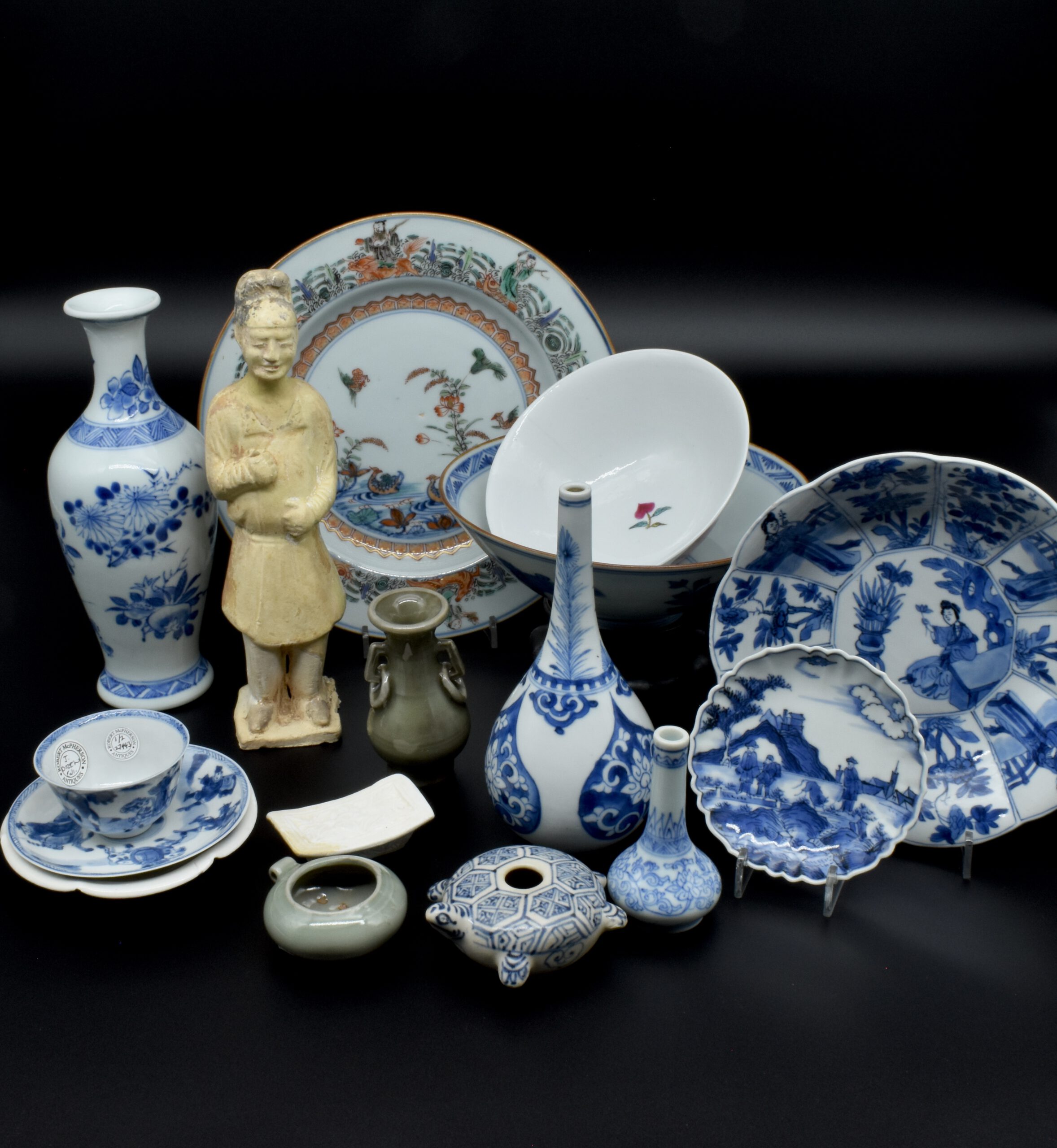
- Probably purchased at Christies or Sotheby's in Amsterdam. They had very large sales of Chinese porcelain, especially Kangxi blue and white, most of which came from private Dutch and German collections. I bought many hundreds, well thousands of pieces in these sales from the early 1990s to around 2017. Unfortunately, these auctions are long gone and nothing has replaced them. Robert McPherson Antiques. The John Drew Collection. The John Drew Collection : John Drew was born in 1933 in Tideswell, Derbyshire, where his father was curate. The family moved to Norfolk whilst he was still a baby and his father became the rector of the parish of Intwood and Keswick. He was educated at Sedbergh School and after National Service in the R.A.F. being taught Russian, he went to Queens College, Oxford to read Greats (Classics). He spent nearly all his working life in various African countries as an archivist, moving to a post at Cape Town University in 1978. He remained in Cape Town after his retirement until his death in 2006. He had a great love of the English countryside (but not the climate) and this is shown in many of the pieces he collected. His taste was varied and ranged from Neolithic right through to the 18th Century. When we sent photograph to his home in Cape Town of pieces we thought he might be interested in, he would write long funny well observed letters back, wanting to add many of the items to his growing collection. Over the years we got to know him better and better, and during the last few years it was very rare for him to not want all the pieces we offered him. We knew his taste, even though his taste was so varied. This was in no small part because he had a very good eye and it was a pleasure finding things that interested him, because they were also very interesting to us. He never got to put his collection on display, something he hoped to do while on retirement in England, so it is with a mixture of pleasure and sadness that we offer these pieces from his collection this June. Each piece has a John Drew collection label, so when the collection is split up there will be some lasting record of the love and hard work he put into his two decades of collecting.
- Stock number
- 27443
Photos

Information
Chinese Pipa 琵琶
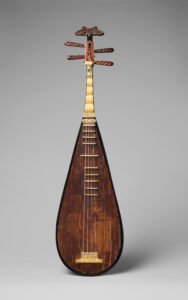
Pipa (琵琶) Chordophone-lute-plucked-fretted The spectacular back and sides of this unique Ming-dynasty instrument feature more than 110 hexagonal ivory plaques, with thinner bone plaques on the neck. Each plaque is carved with Taoist, Confucian, or Buddhist figures and symbols signifying prosperity, happiness, and good luck. These include images of various gods and immortals, such as Shou Lao, the Daoist god of longevity, who is shown with a prominent forehead on the single plaque at the very top. When the instrument is played, this expert workmanship remains unseen by the listener, as the back faces the player. The front is relatively plain but shows signs of use. The ivory string holder bears a scene featuring four figures and a bridge; an archaic cursive inscription; and, at the lip, a bat motif with leafy tendrils.
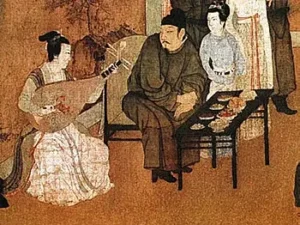
Horse or Pony.
A Kangxi Model of a Horse c.1700. Although these are referred to as horses, they are in mostly ponies.
Robert McPherson Sold Archive 25668.
-

A Kangxi Blanc de Chine Porcelain Model of a Horse, Dehua Kilns c.1690-1710. The horse is shown with its tack; stirrups, bridles, halters, reins, bits, harnesses etc. The horse was made using several moulds and luted together, with the addition of some hand modelled clay, for example, the tail and reins. The records of the Dashwood sale in September 1703, an English Supra-cargo, include 10,800 `square toys` (seals), the other 5,400 `toys` were models of animals, `men on beasts` and the 490 `small white dogs` were priced at 1d each (Geoffrey A. Godden, see references).
Models such as the present example were luted together from moulded sections. In 18th century England the people who carried out this process were called ‘repairers’, indeed the process is similar to repairing broken ceramics, except that you use clay as your glue. Wet clay was used to stick the leather-hard moulded sections together, the process is referred to as luting from the Latin Lutum meaning mud or clay. To help made sure the join will be as strong as possible the edges of the clay sections are scored, so the luting material really binds with the joining surfaces, especially when firm pressure is applied. The luted joins are then cleaned, smoothed down, so the piece looks seamless.Condition
There is a small crack to the neck of the horse.
Size
Height 8.2 cm (3 1/4 inches)
Provenance
From a Private English Collection of Blanc de Chine Porcelain.References
For other Blanc de Chine models or 'toys' see : Oriental Export Market Porcelain and its Influence on European Wares (Geoffrey A. Godden, Granada, 1979.ISBN 0246110570) page 272, plate 200. Information from Godden`s book ; The records of the Dashwood sale in September 1703, an English Supra-cargo, include 10,800 `square toys` (seals), the other 5,400 `toys` were models of animals, `men on beasts` and the 490 `small white dogs` were priced at 1d each.
A Related Kangxi Porcelain Dish with a Battle Scene c.1700.
Sold Archive Number 25848.
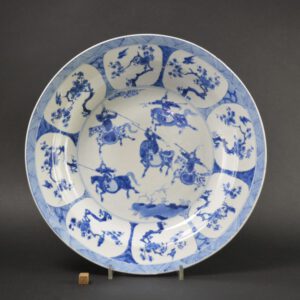
Condition
In good condition but with some small rim chips. There is an area of deep fritting to the rim c.2cm. Two small shallow (mostly glaze glaze) chips to the front and a minute frit. The back rim has several small chips and glaze frits. There is some very feint speckling to the glaze from the torso of the warrior at 11 o’clock to the rim.
Size
Diameter 34.5 cm (13 1/2 inches)
Provenance
From a Private Belgium Collection
Stock number
25848
Qing Bannermen / The Eight Banners
The Eight Banners was a military system set up by the Manchu at the beginning of the Qing in the 17th century. Its origins date back to c.1600 in the late Ming period, during the Wanli period. Military units were grouped into large units called gūsa or 'banners', they were differentiated by colours to form a total of eight banners that the Jurchen (the group that overthrew the Ming) carried into battle. The banner system was militarily efficient, but it also played an economic, social as well as a political role. The system allowed the newly formed Qing to unify the different clans into a cohesive fighting force, however the banners were broadly divided along ethnic lines, namely Manchu and Mongo. The Manchu Banner Army totalled approximately 200,000, this was evenly divided between the Forbidden Eight Banner Army stationed in Beijing and the Territorial Eight Banner Army.
The Eight Banners


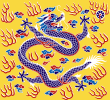


The Emperor Nurchani, the Manchu warlord who created what would become the Qing Dynasty.
