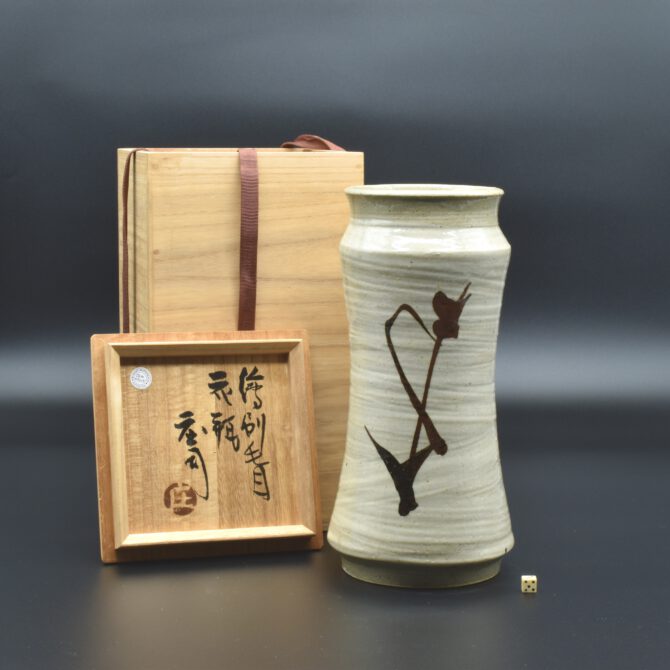
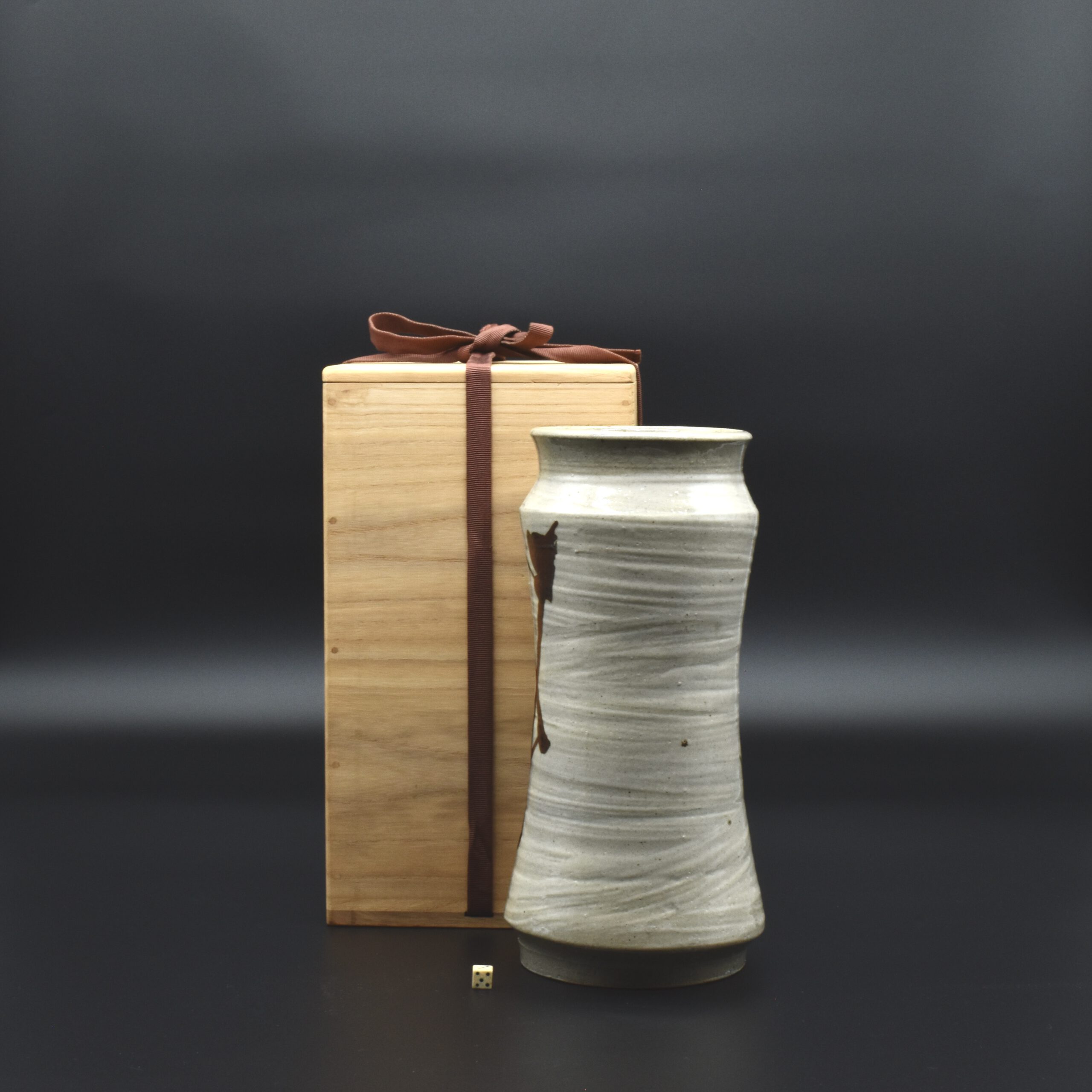
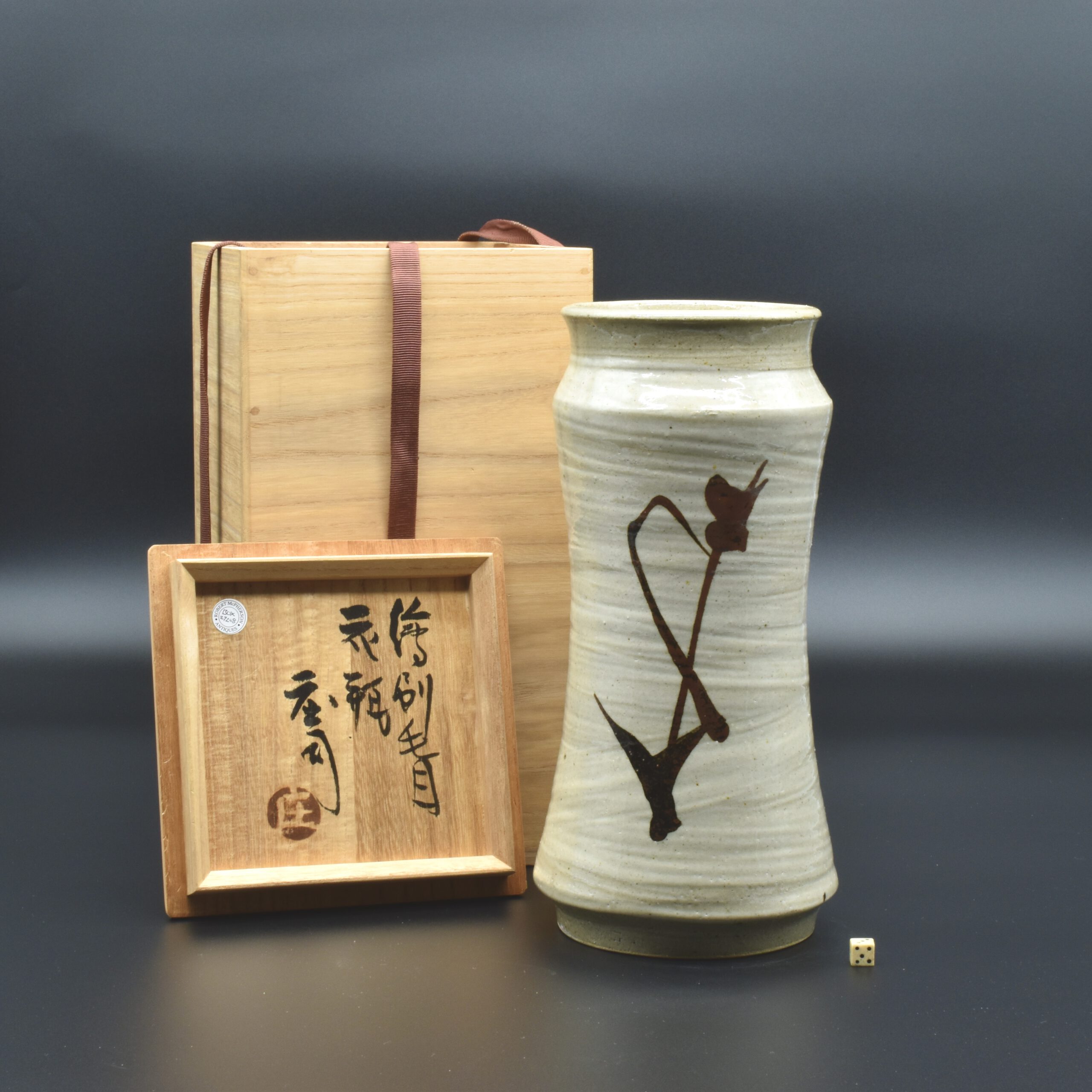
A Large Stoneware Sugar Cane Albarello By Shoji Hamada.
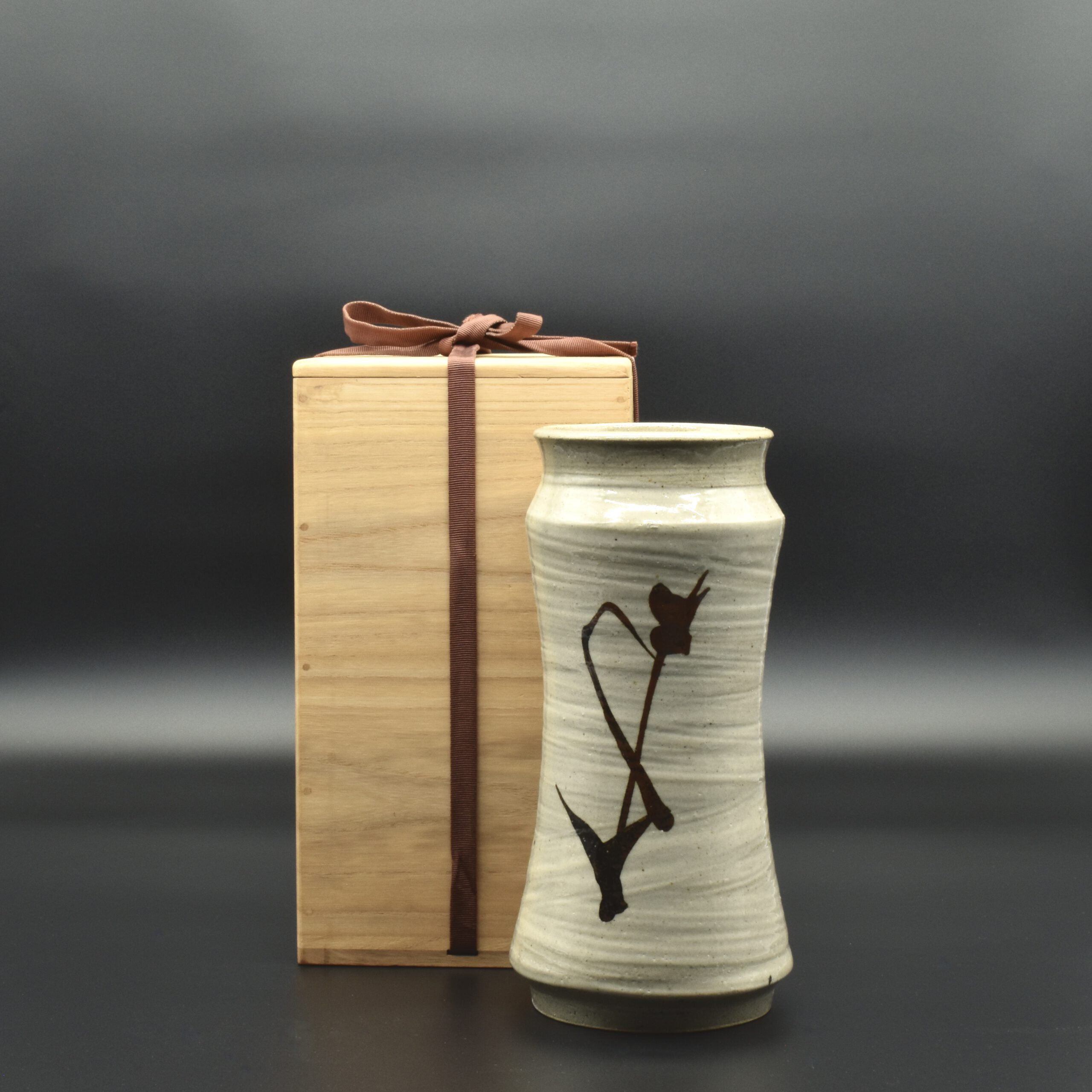
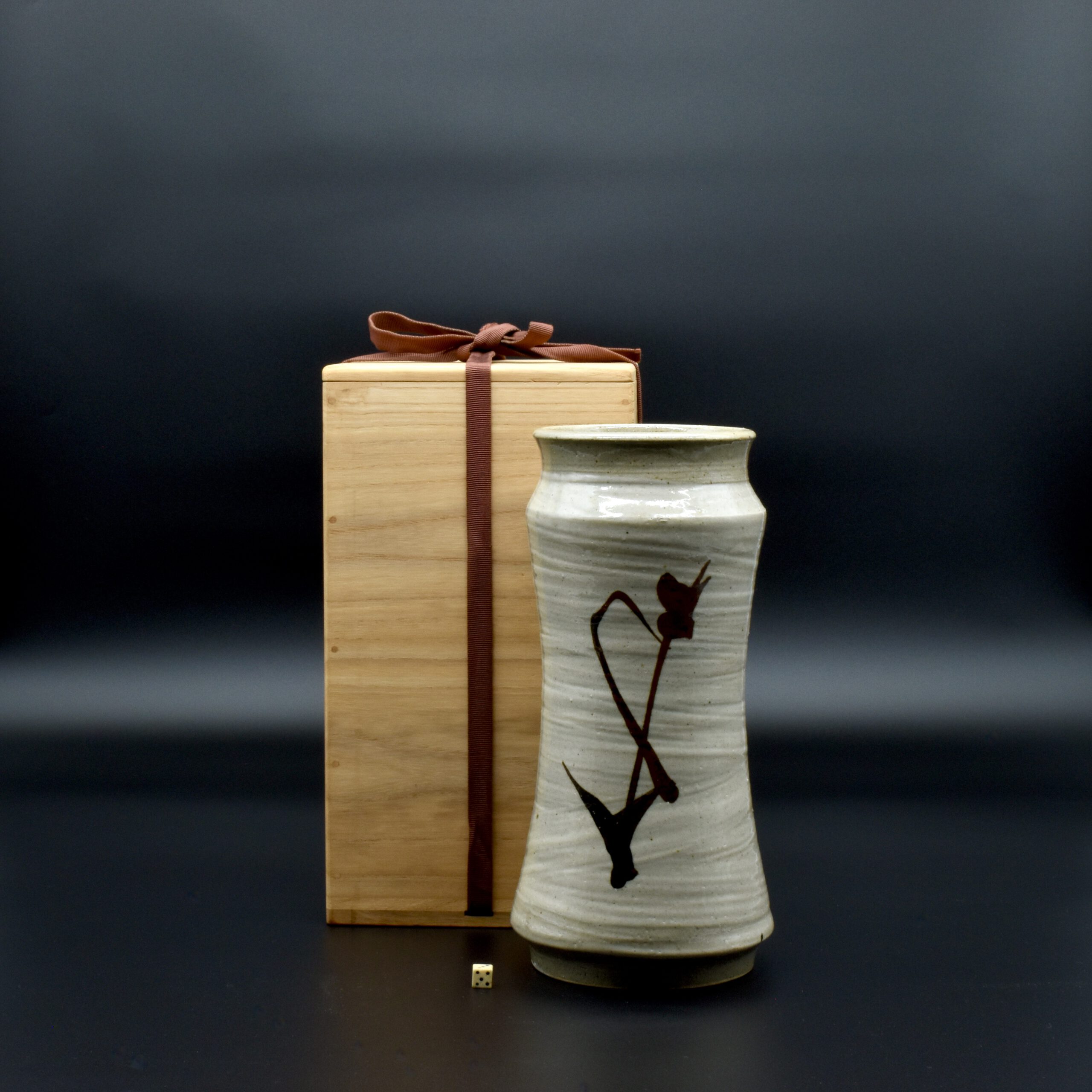
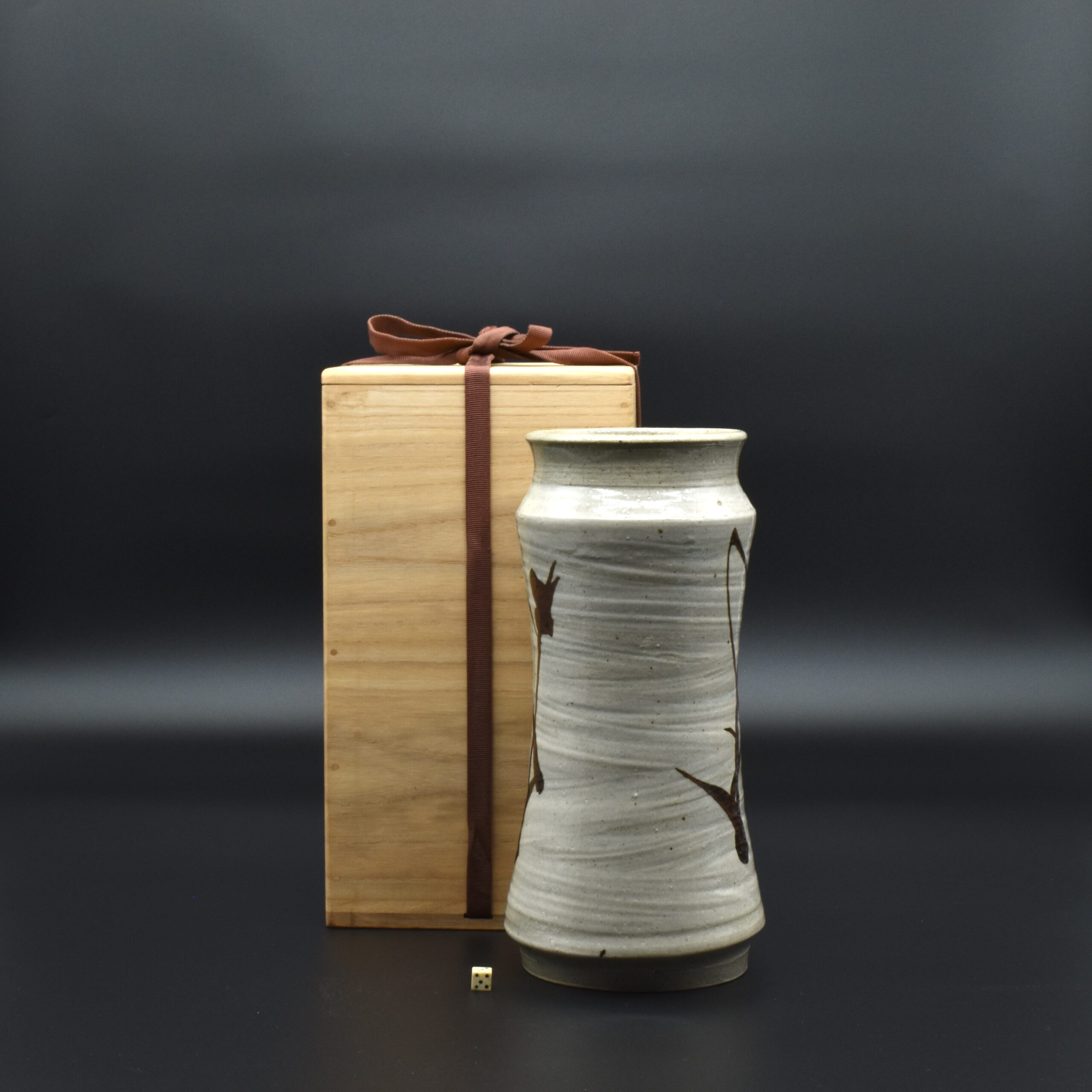
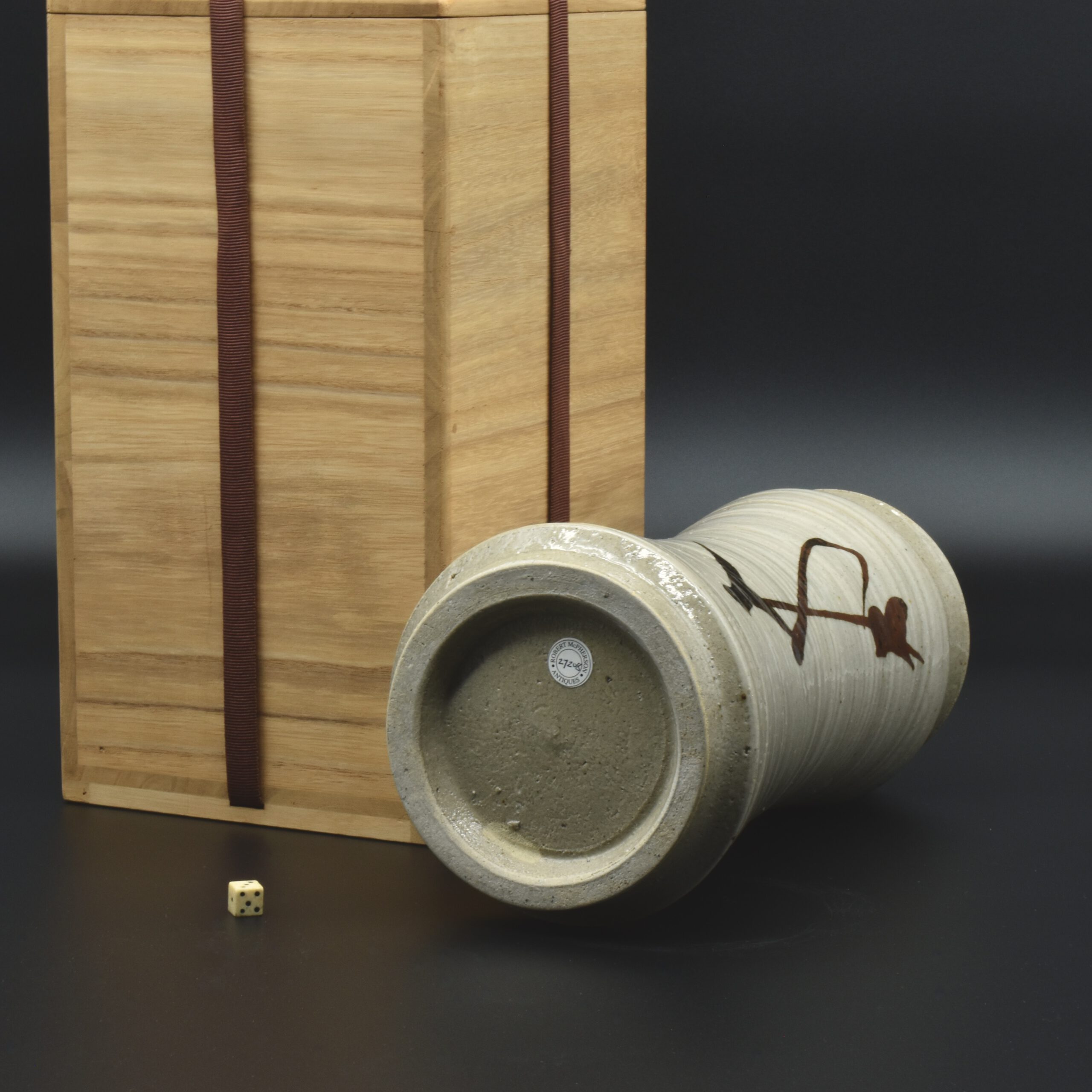
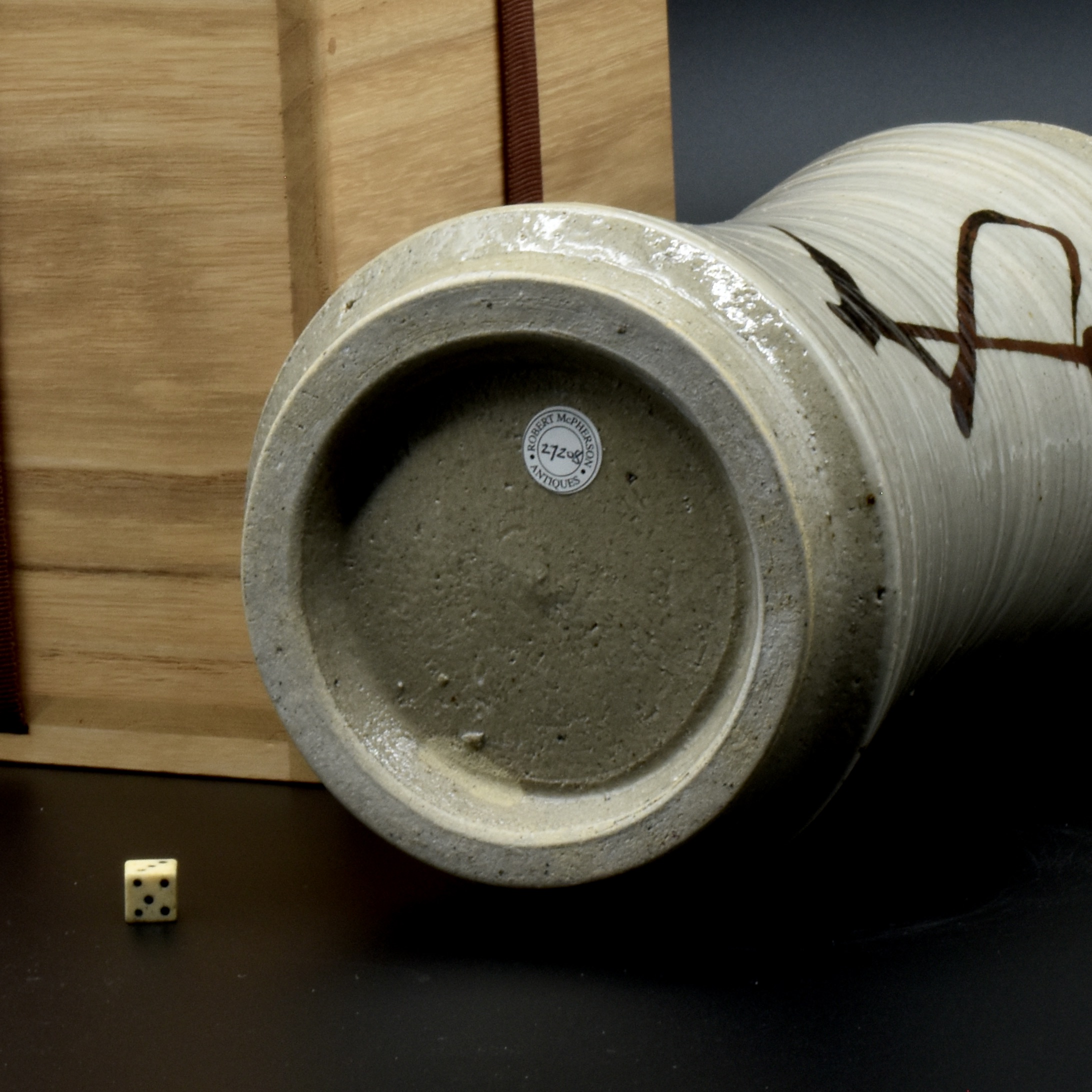
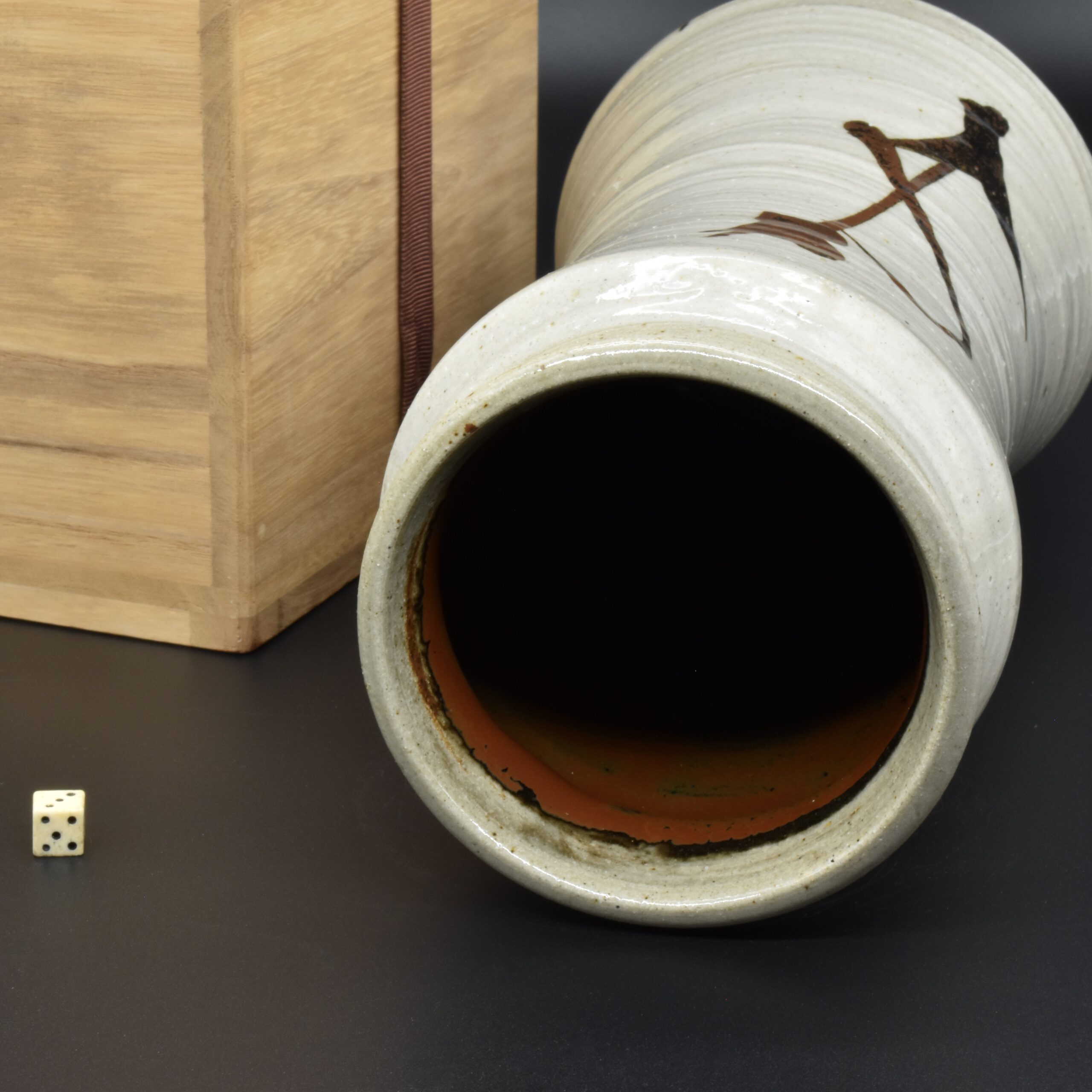
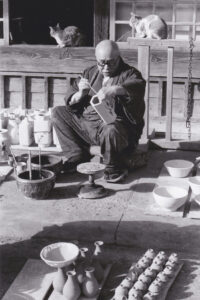
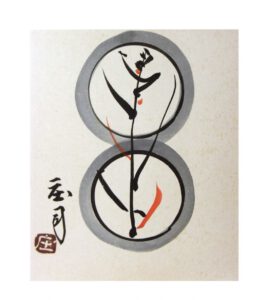
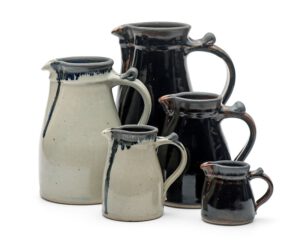
A Large Stoneware Albarello By Shoji Hamada 1894 – 1978. This large heavy Albarello shaped vase is constructed of fine gritty grey stoneware, the body had a very thin wet layer of white slip applied with a large brush. The slip is stripped due to the speed of application, leaving the body visible in many places, you can actually feel the slip as ridges against your fingertips. The design in rich brown iron oxide over the top of the slip is a very well known design by Hamada, called or referred to as ‘Sugarcane’. The interior of this Italian inspired form is washed with a thick brown iron oxide glaze. Hamada established his workshop in Mashiko, a small town north of Tokyo. He was a major figure of the mingei (folk craft) movement and drew inspiration from folk pottery styles, adopting local clay and glazes. His favored sugar cane motif, seen here, was ultimately reduced to abstraction after being painted thousands of times. In 1955 he was designated a “Living National Treasure“. This is the highest of all honor that can be bestowed on a craftsperson. The cover of the Tomobako storage box is inscribed by Shoji Hamada and has his seal in red. As a child I went to the Leach Pottery in St.Ives, Cornwall. I was fascinated by it, the clay, glazes and smell of wet pots. Bernard Leach worked with Hamada at the Leach pottery, Hamada and Leach also worked together at Hamada’s pottery in Mashiko, Japan. They throw pots next to each other, but Leach’s space was deeper, simply because he was much taller. In around 1981, I bought my first studio pottery piece from a pupil of the Leach Pottery, Nic Harrison at the Trelowarren pottery in Cornwall. I purchased more pieces in black and celadon glazed stoneware without being aware of early Chinese ceramics. I carried on buying pieces from him, on and off until he retired. For a photograph of Shoji Hamada painting a sugar cane vase with his cats around him look further down the page.
SOLD
See Below For More Photographs and Information
Shoji Hamada 1894 – 1978.
Shoji Hamada was one of the most influential potters of the 20th century. Hamada graduated from Tokyo Technical College in 1916 and enrolled at Kyoto Ceramics Research. During the years from 1919 to 1923, Hamada travelled extensively to learn about diverse ceramic and folk craft traditions, and built a climbing kiln in England at St Ives with Bernard Leach (1887–1979). In 1952, Hamada travelled with Soetsu Yanagi (1889–1961) and Bernard Leach throughout the United States to give ceramic demonstrations and workshops. Hamada’s work was influenced by a wide variety of folk ceramics including English medieval pottery, Okinawan stoneware, and Korean pottery. His works were not merely copies of the styles he studied, but were unique products of his own creative energy. Hamada’s great respect for artisan crafts led him to draw as much as possible from folk traditions. After receiving the Tochigi Prefecture Culture Award and Minister of Education Award for Art, Hamada was designated a Living National Treasure in 1955. Thereafter, he was appointed Director of the Japan Folk Art Museum and awarded the Okinawa Times Award and Order of Culture from the Emperor. In 1961, Shoji Hamada: Collected Works was published by Asahi Shimbun. In 1973, Hamada received an honorary Doctor of Art degree from the Royal College of Art in London, England. Shoji Hamada died in 1978, four years after the completion of the Mashiko Sankokan Museum, which was built in his home. Hamada’s influence on potters around the world is incalculable, and the village of Mashiko has become synonymous with Japanese folk ceramics.
- Condition
- In perfect condition.
- Size
- Height 25 cm (9 3/4 inches).
- Provenance
- N/A
- Stock number
- 27208
Photos
Information
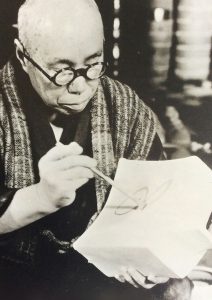
Shoji Hamada 1894 - 1978,
Painting a Sugar Cane Vase in the company of his cats in Japan.
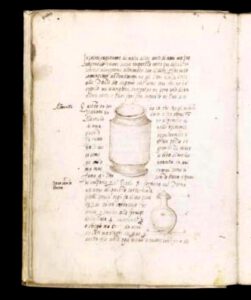
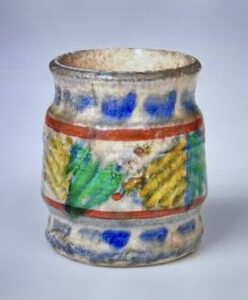
An Albarello Depicted in an Important Manuscript about Ceramic Production Compiled in 1557.
The Victoria & Albert Museum in London.
Bernard Leach (1887-1979).
Bernard Leach worked with Hamada at The Leach Pottery, in St.Ives in Cornwall, England and at Hamada's pottery in Japan.
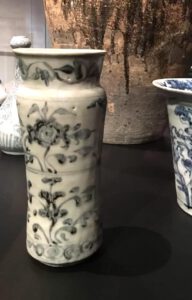
A Rare Ming Porcelain Albarello from the Wreck of the Santiago, sunk in 1600.
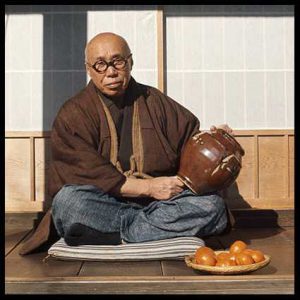
Shoji Hamada 1894 - 1978.
Shoji Hamada was one of the most influential potters of the 20th century. Hamada graduated from Tokyo Technical College in 1916 and enrolled at Kyoto Ceramics Research. During the years from 1919 to 1923, Hamada travelled extensively to learn about diverse ceramic and folk craft traditions, and built a climbing kiln in England at St Ives with Bernard Leach (1887–1979). In 1952, Hamada travelled with Soetsu Yanagi (1889–1961) and Bernard Leach throughout the United States to give ceramic demonstrations and workshops. Hamada's work was influenced by a wide variety of folk ceramics including English medieval pottery, Okinawan stoneware, and Korean pottery. His works were not merely copies of the styles he studied, but were unique products of his own creative energy. Hamada’s great respect for artisan crafts led him to draw as much as possible from folk traditions. After receiving the Tochigi Prefecture Culture Award and Minister of Education Award for Art, Hamada was designated a Living National Treasure in 1955. Thereafter, he was appointed Director of the Japan Folk Art Museum and awarded the Okinawa Times Award and Order of Culture from the Emperor. In 1961, Shoji Hamada: Collected Works was published by Asahi Shimbun. In 1973, Hamada received an honorary Doctor of Art degree from the Royal College of Art in London, England. Shoji Hamada died in 1978, four years after the completion of the Mashiko Sankokan Museum, which was built in his home. Hamada's influence on potters around the world is incalculable, and the village of Mashiko has become synonymous with Japanese folk ceramics.

A Shoji Hamada Stoneware Dish.
Robert McPherson Antiques - Sold Archive - 25698.
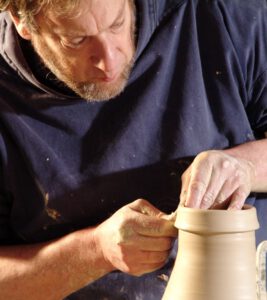
Nic Harrison
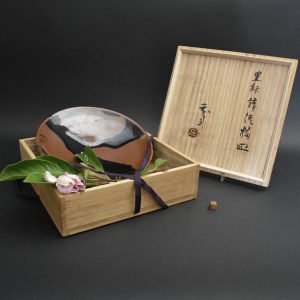
Tomobako Storage Boxes :
Traditional Japanese ceramic storage boxes, referred to as Tomobako are highly valued and much used in Japan. Most boxes are made from paulownia wood, it is lightweight hardwood and it’s also fire resistant, which is very useful in because Japanese buildings tend to be made of timber and have paper dividers inside. The Islands of Japan are located on a highly complex, unstable, and active geological junction where four major tectonic plates collide and subduct. These islands are essentially built upon the boundaries of these plates, with the archipelago forming as a result of the subduction and volcanic activity caused by these tectonic movements. Therefore the use of tradition tomobako is essential for the survival of ceramics in Japan. Japanese museums don’t have this luxury, so they secure the ceramic objects with nylon, which looks very much like fishing line. The paulownia is a fast growing tree, so it isn’t too expensive. It is believed that the phoenix, symbolising wisdom and prosperity, will only land on a paulownia tree when a worthy ruler is in power.
Tomobako containers that protect, store, and often certify the authenticity of the pottery inside. They are typically signed by the owner of the antique ceramic item in the box. They are tied with cord in a specific way, this is regarded as part of the ritual ceremony among a gathering of friends in Japan. Of course not everything in these boxes is what it might seem. Some contain surprising objects, so you will have to wait and see what we have in these boxes.