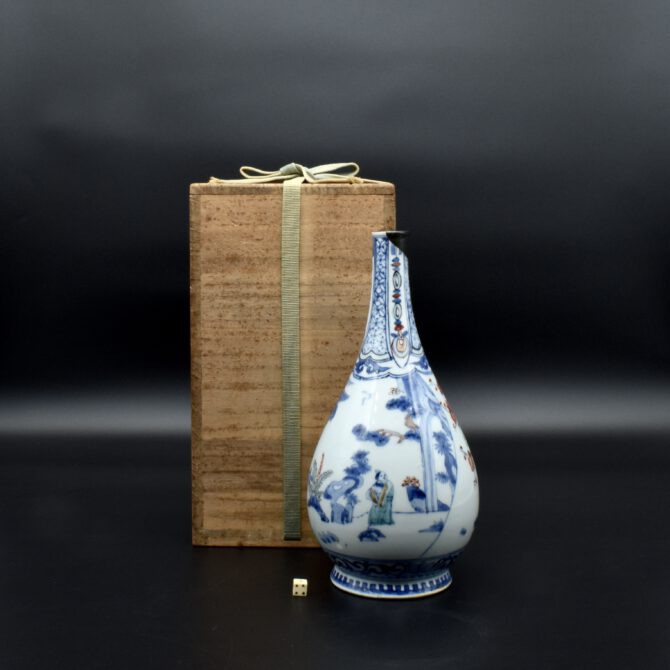
A Rare 17th Century Japanese Bottle Vase in the Chinese Taste.
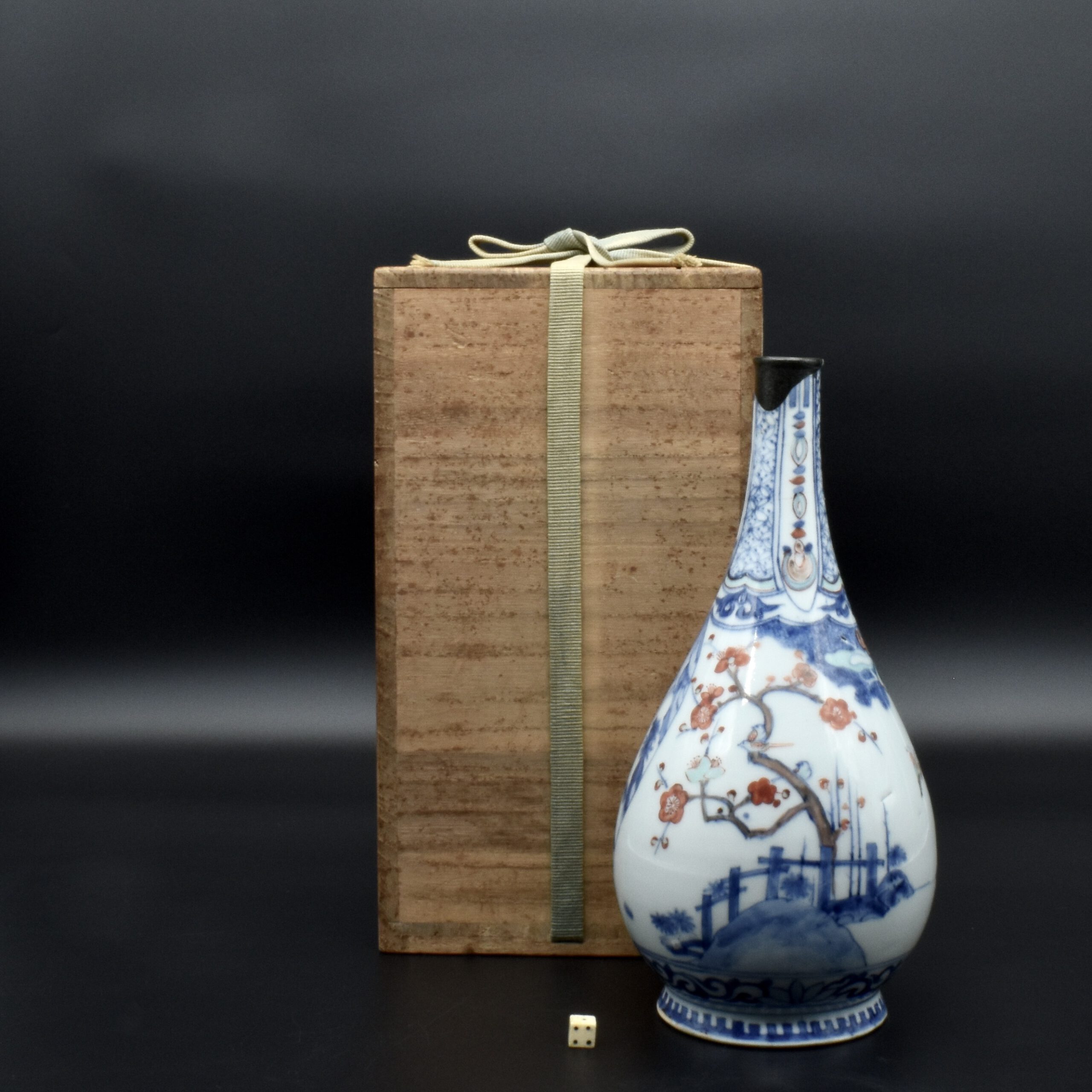
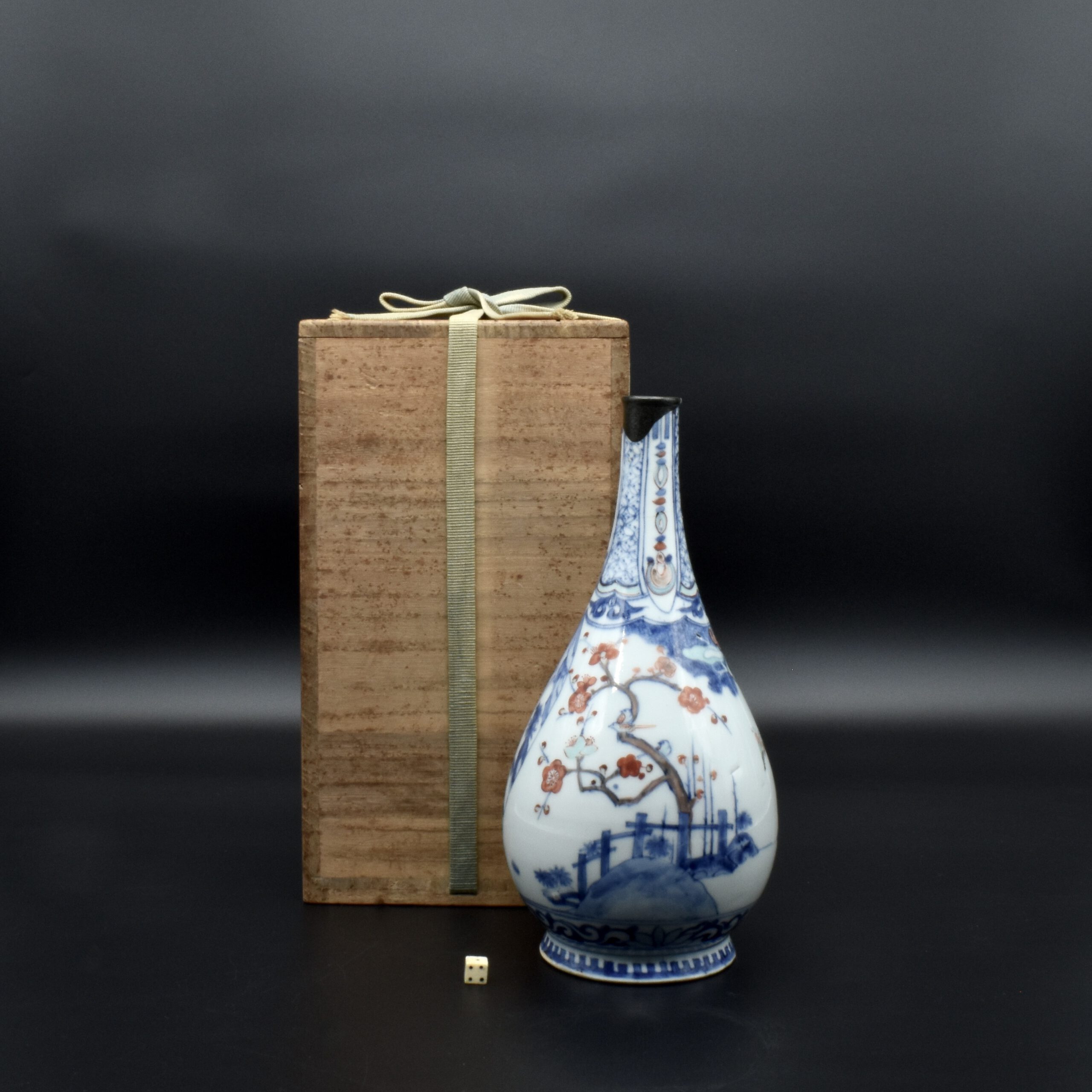
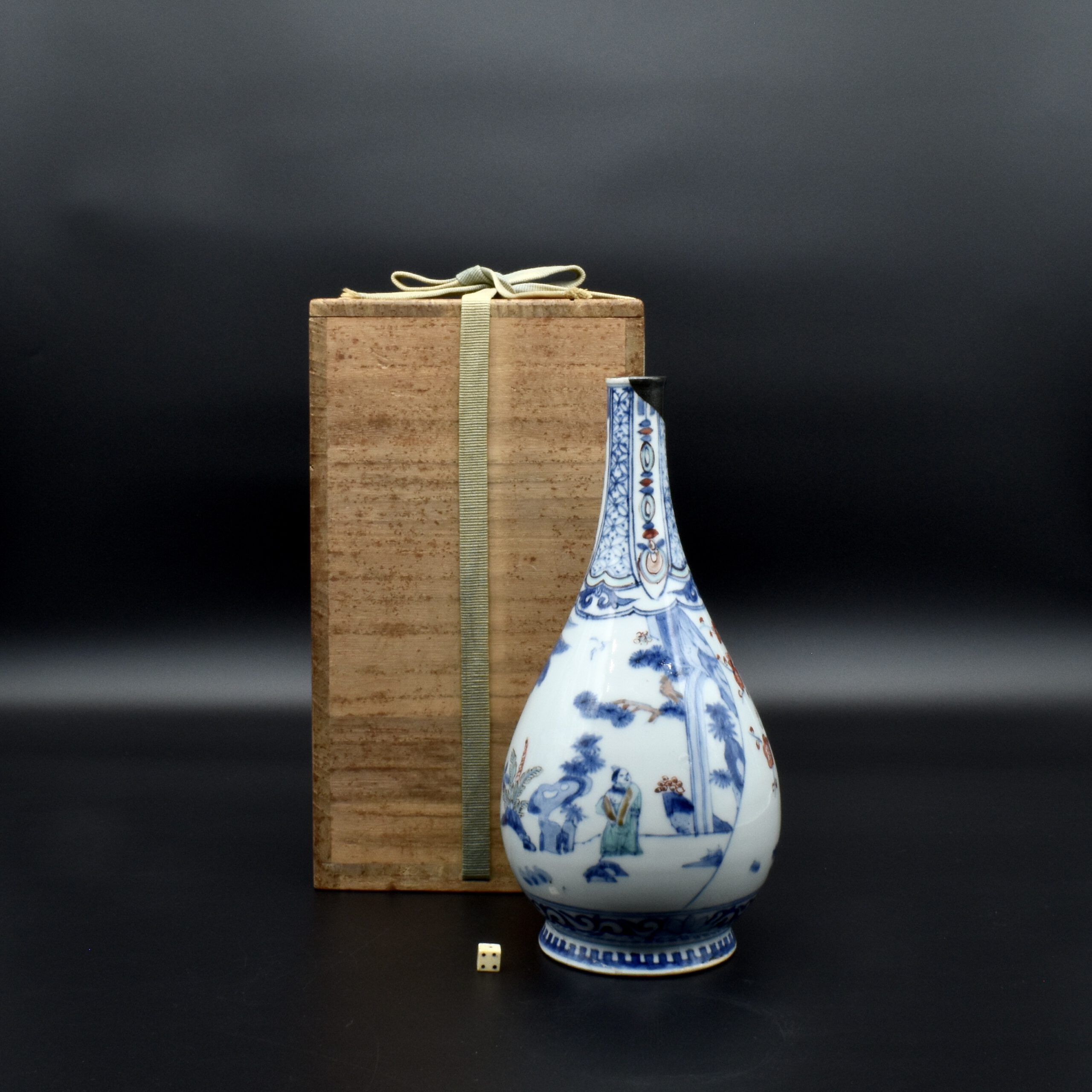
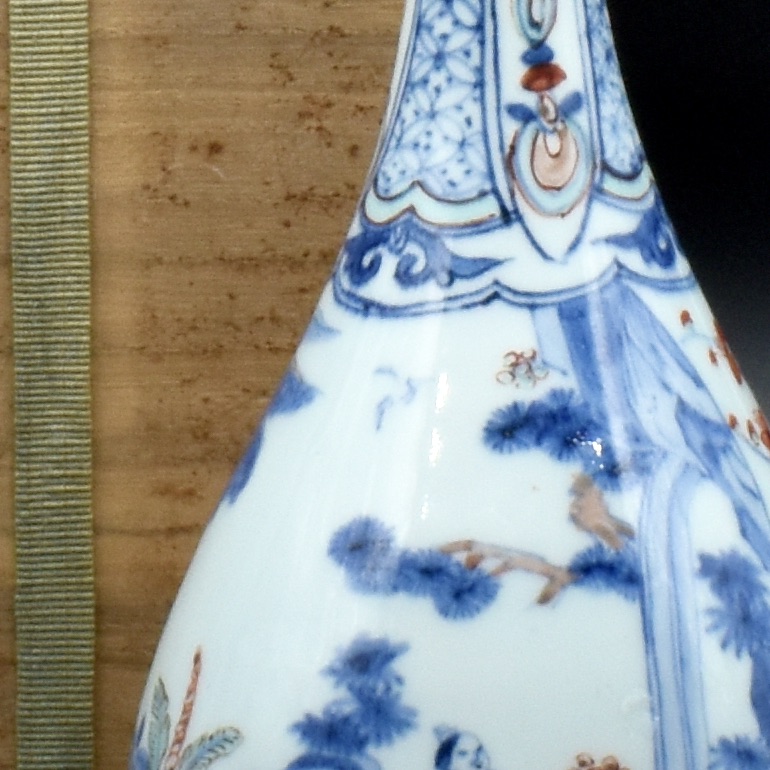
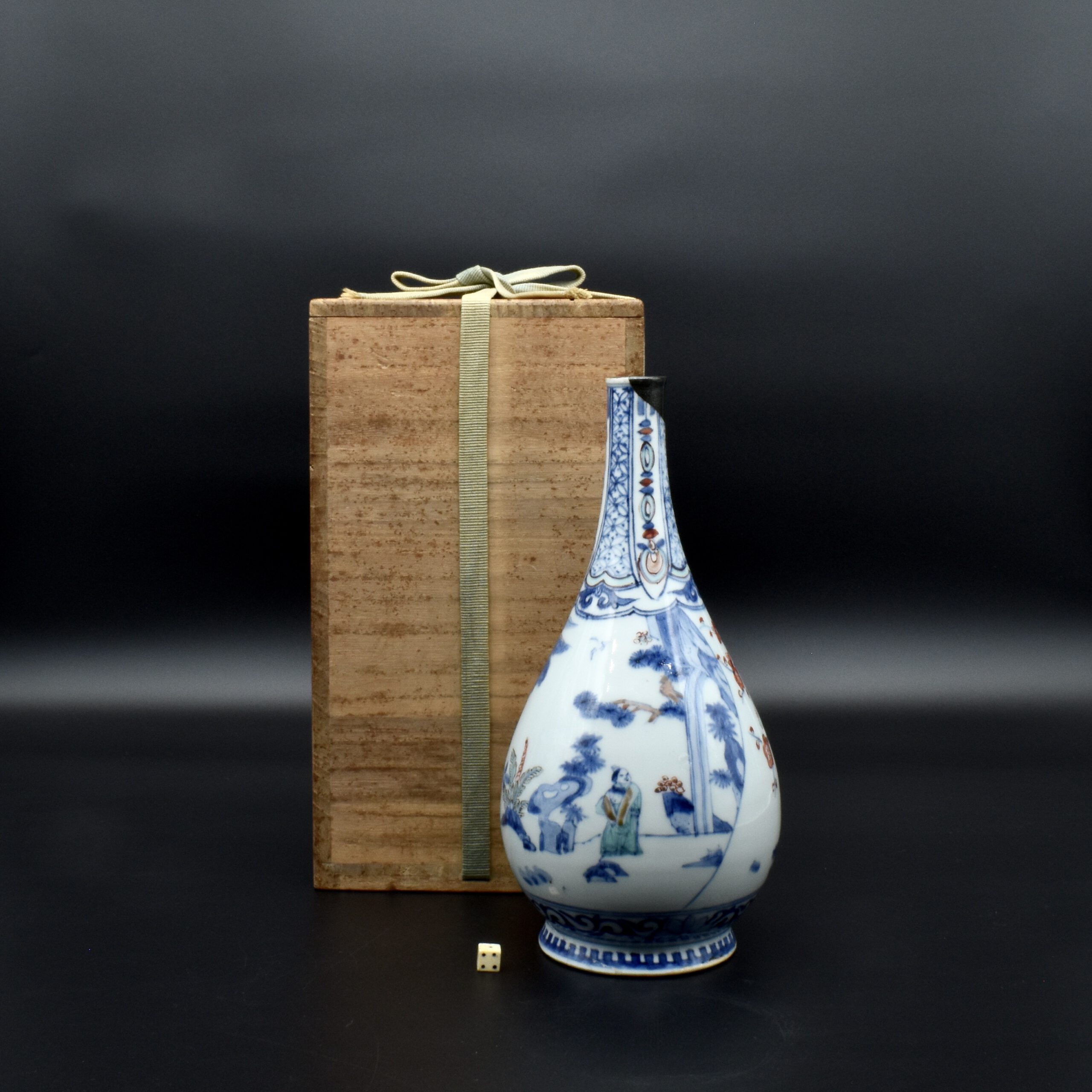
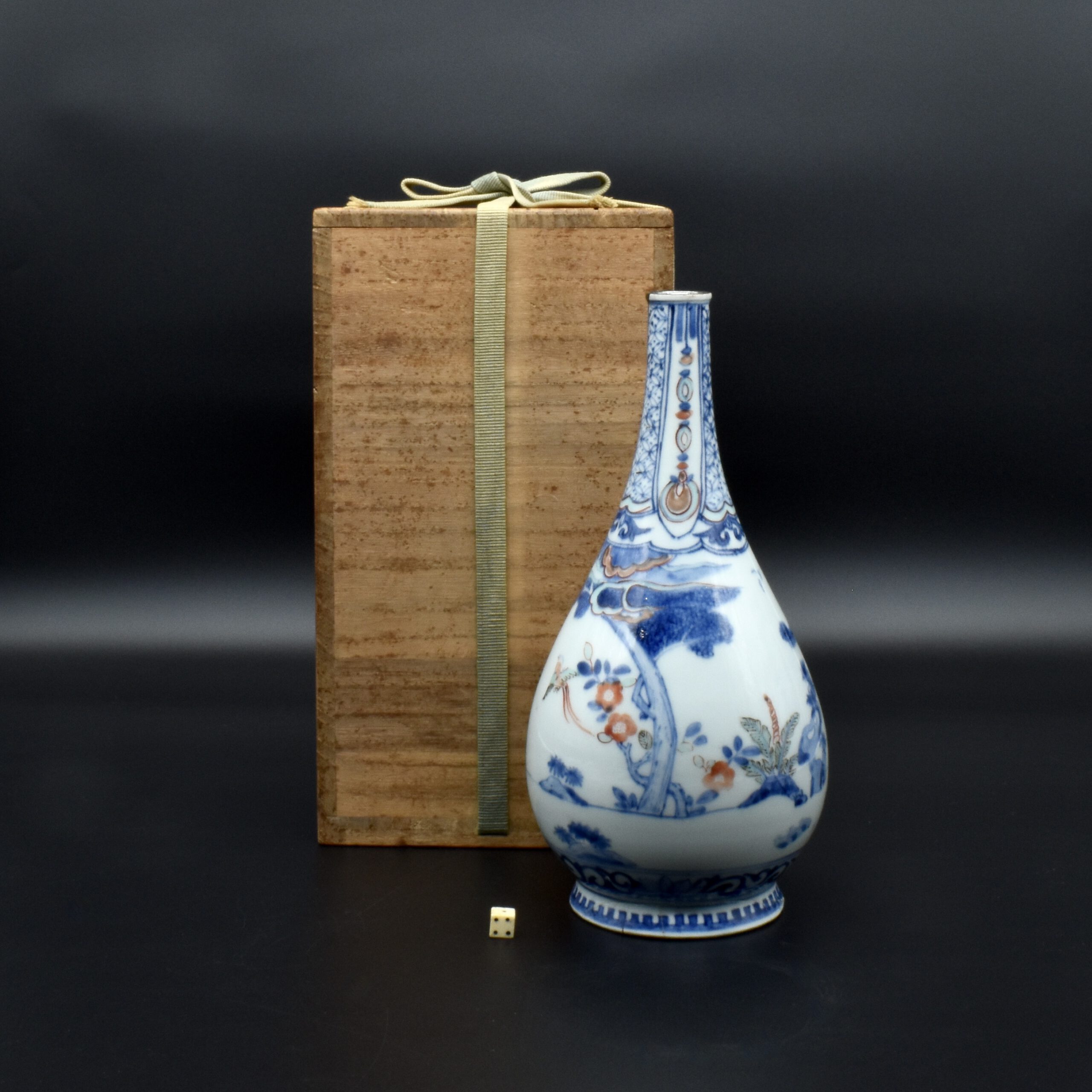
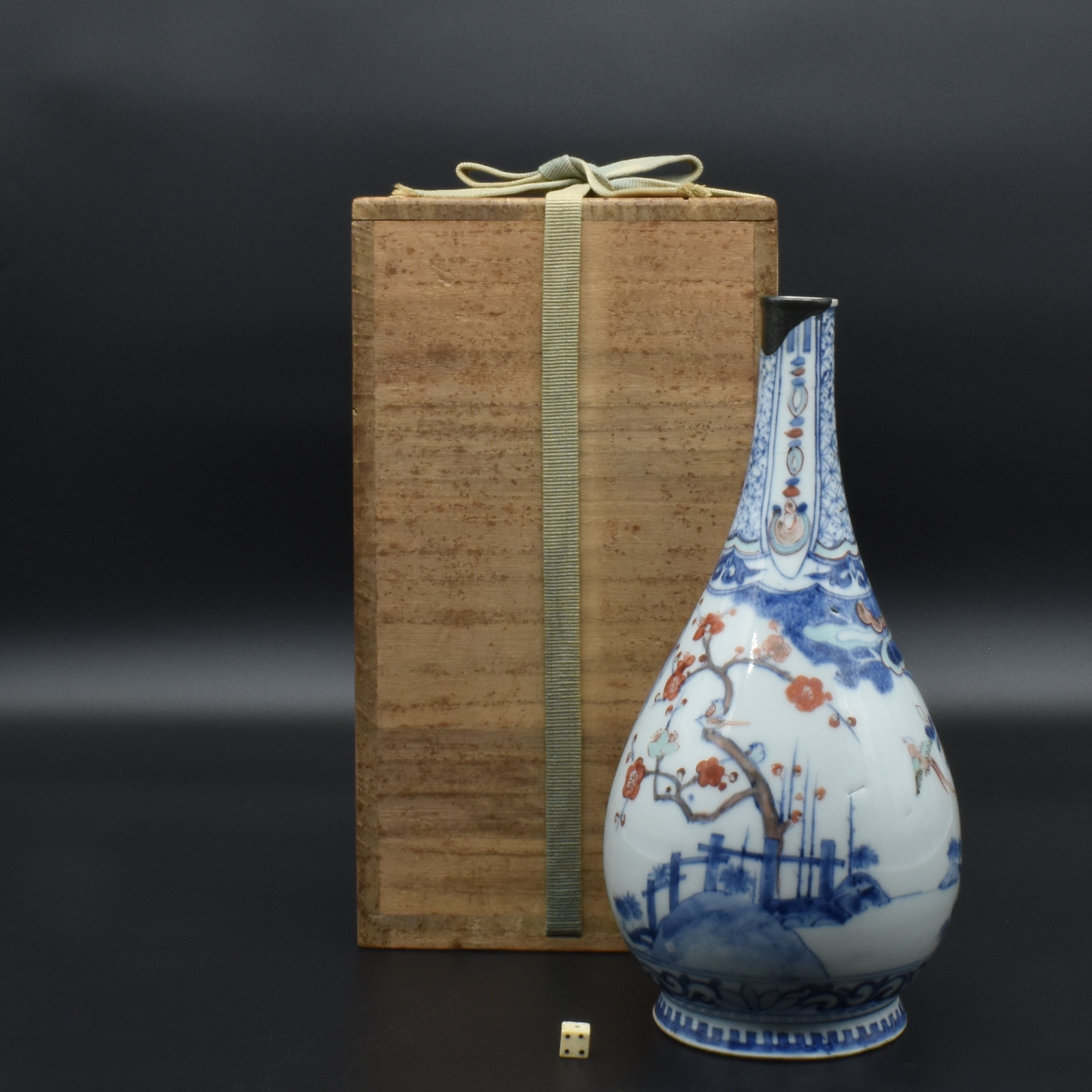
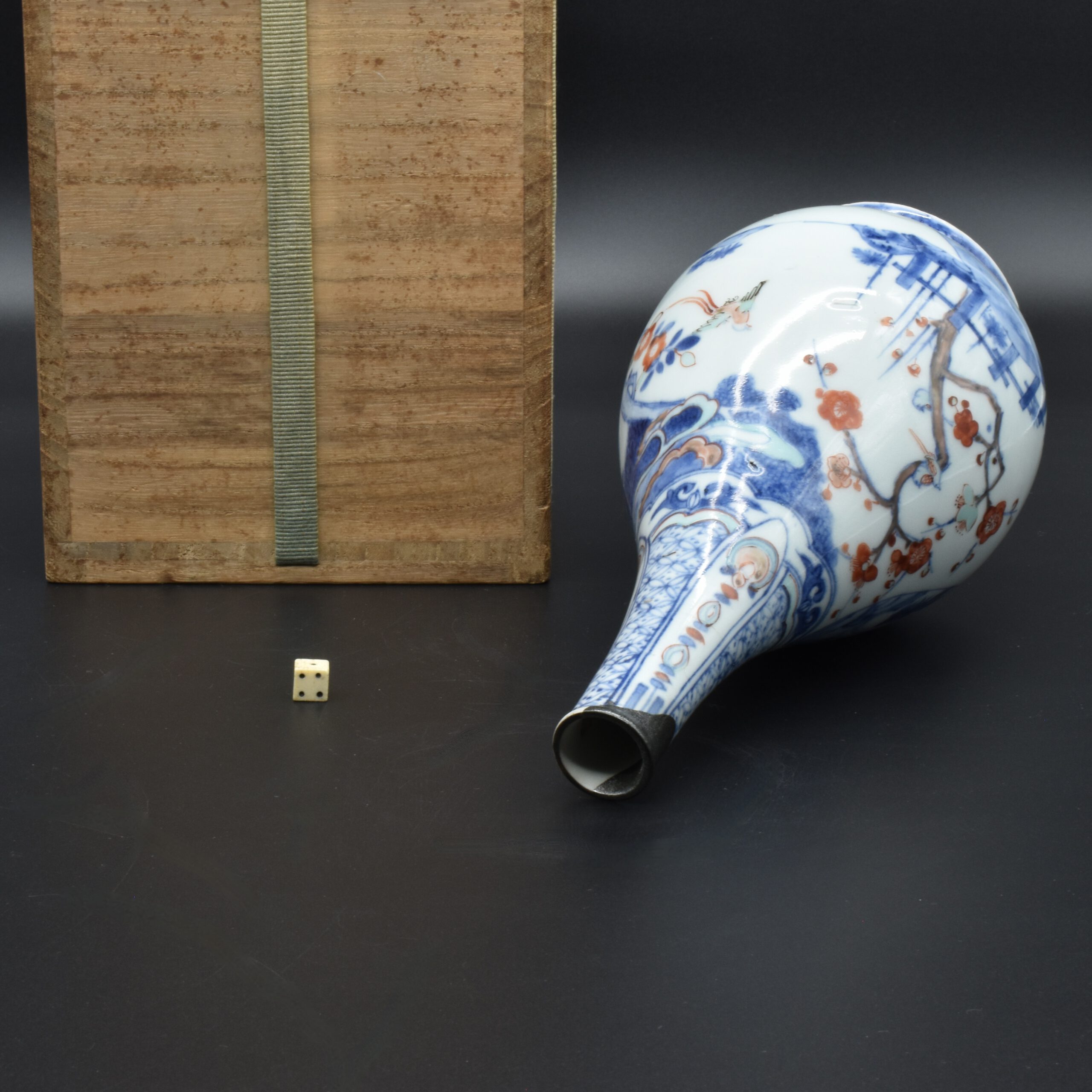
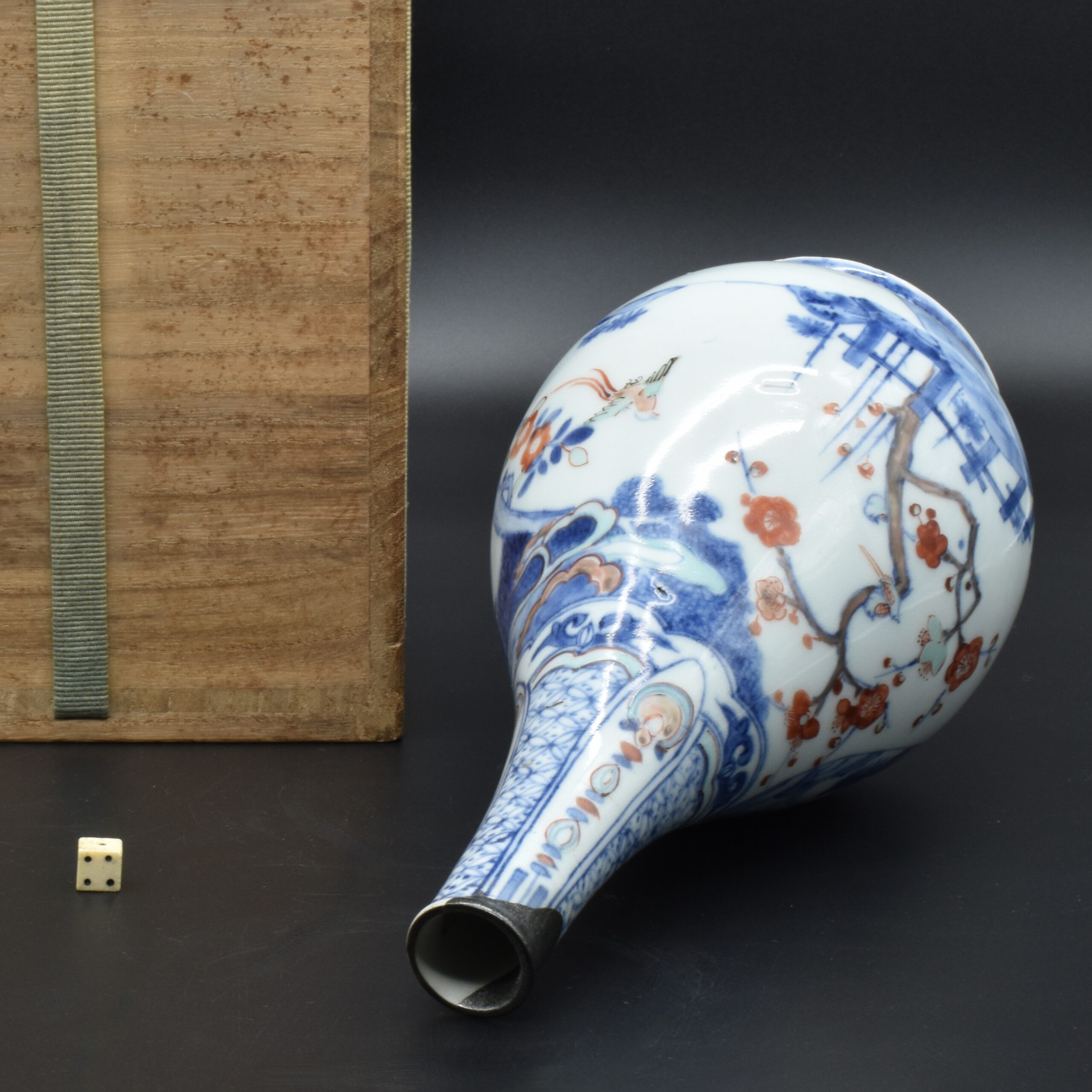
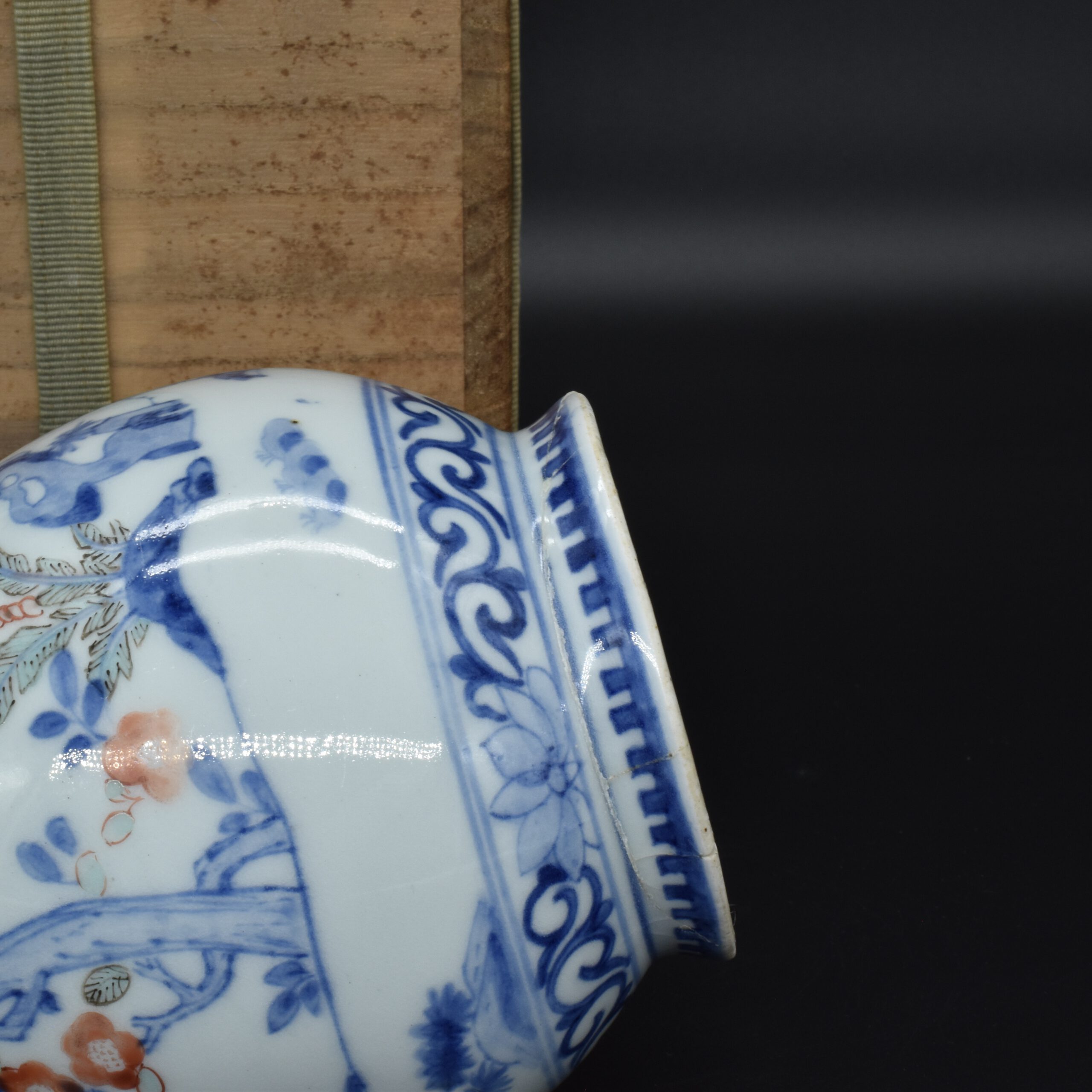
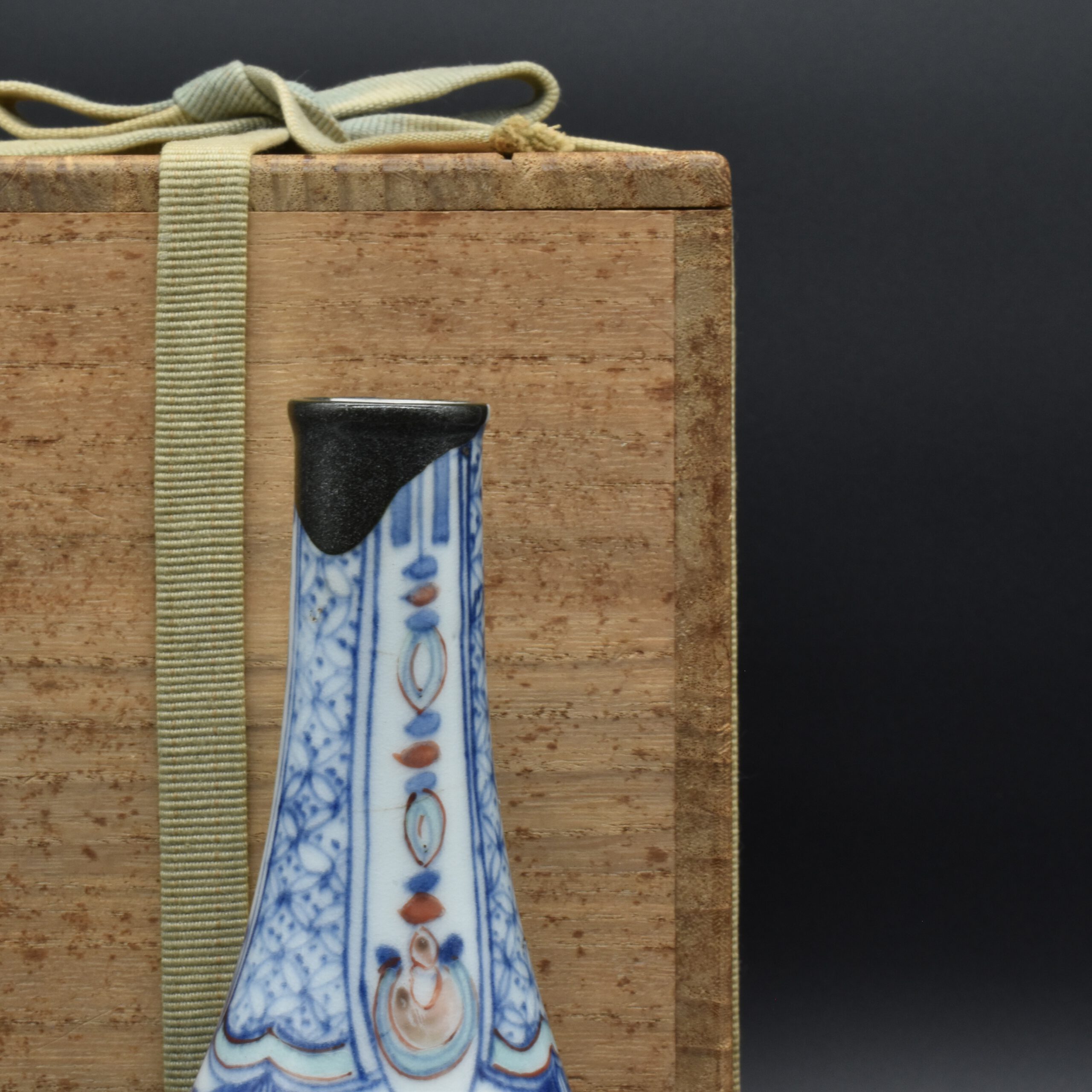
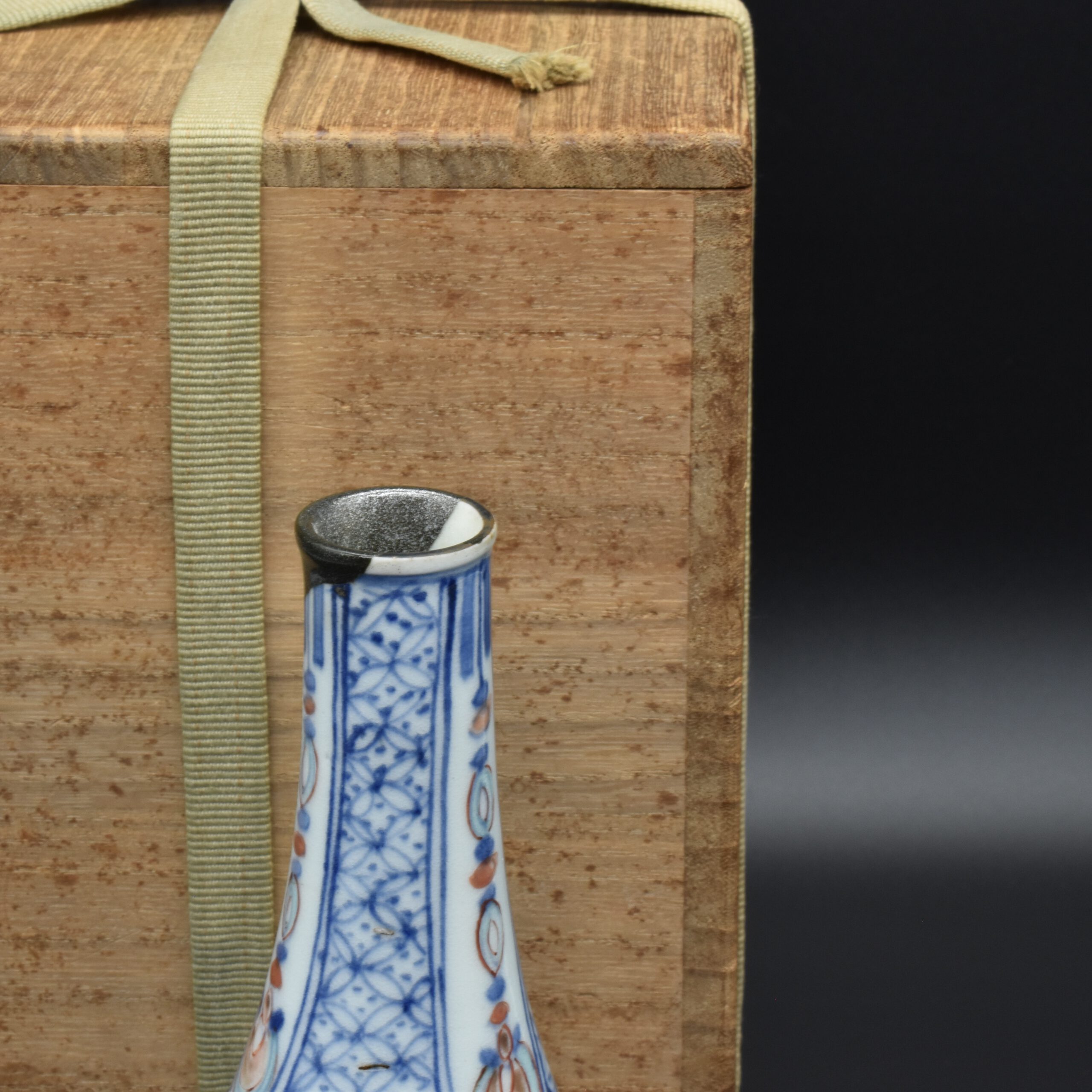
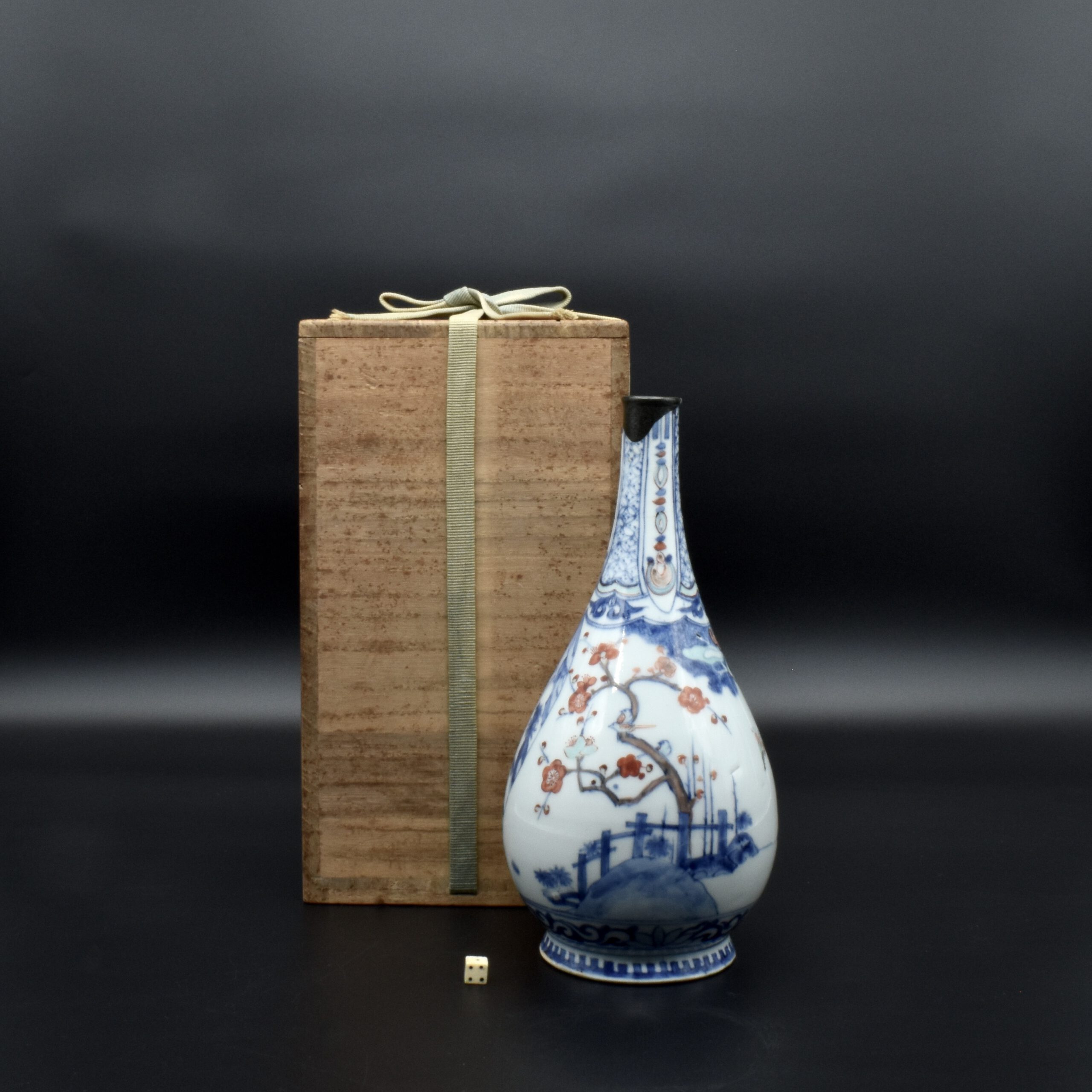
A Rare 17th Century Japanese Bottle Vase in the Chinese Taste, Arita Kilns c.1640-1650. This elegant early Arita vase is clearly Japanese, however the design and form show strong Chinese influences from the late Ming dynasty period. It is painted in under-glaze cobalt blue using a range of different tones. The enamel decoration is limited in colour palette to a pale soft green, a strange almost metallic brown which might be emulating Chinese aubergine enamel, there is a reddish flat colour based on iron oxide, and a sparing use of black outlines. The scene with a figure looking at a waterfall is similar to Chinese porcelain images taken from wood-block prints. Japanese vases of this period are rare, fine quality pieces like the present example are rarer still. If you look at the Photograph Gallery below, you can see a detail of an unfinished bird in flight. It is in cobalt blue outline with the head facing right, it would be more recognisable if the enamel painter had been a bit more diligent.
SOLD
See Below For More Photographs and Information
- Condition
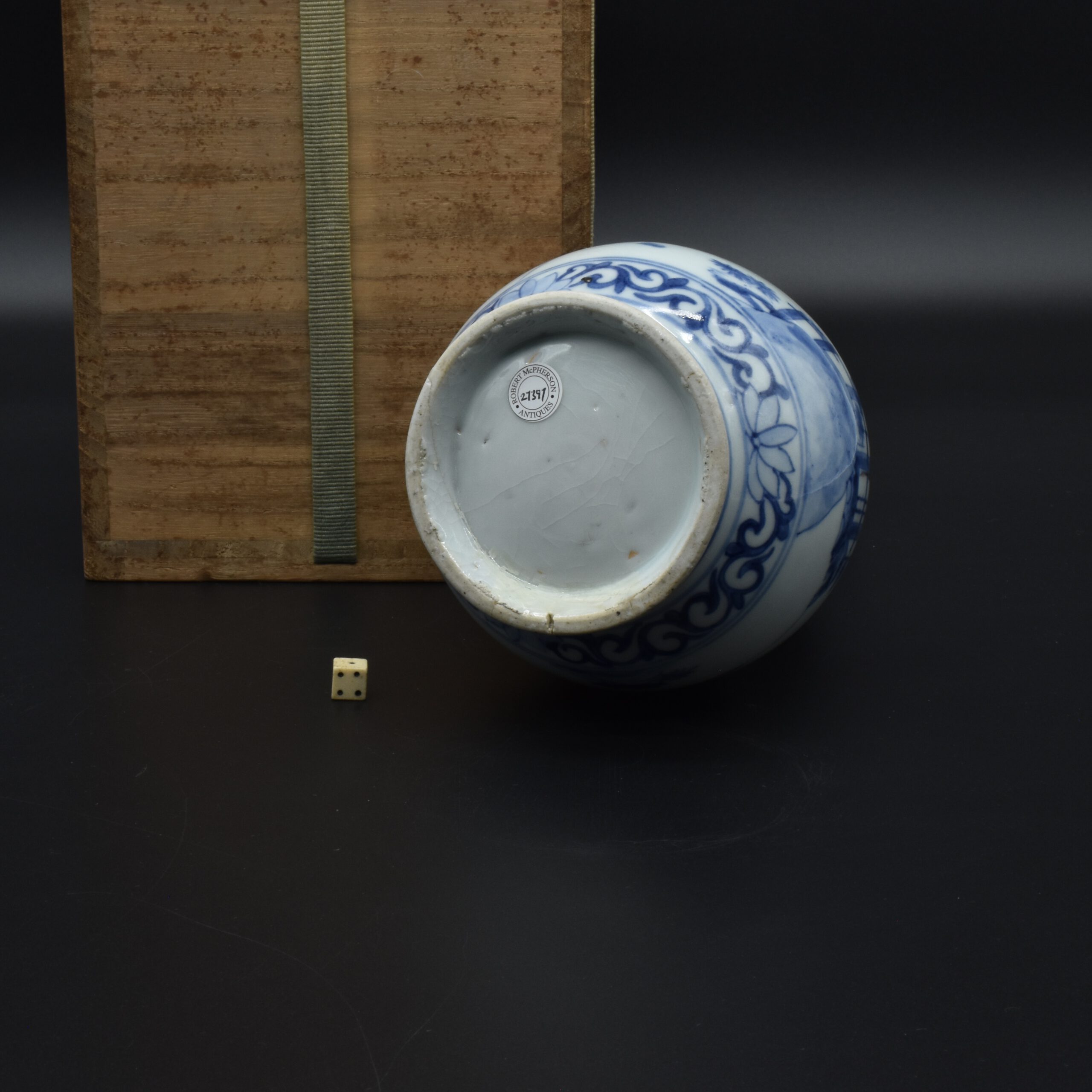
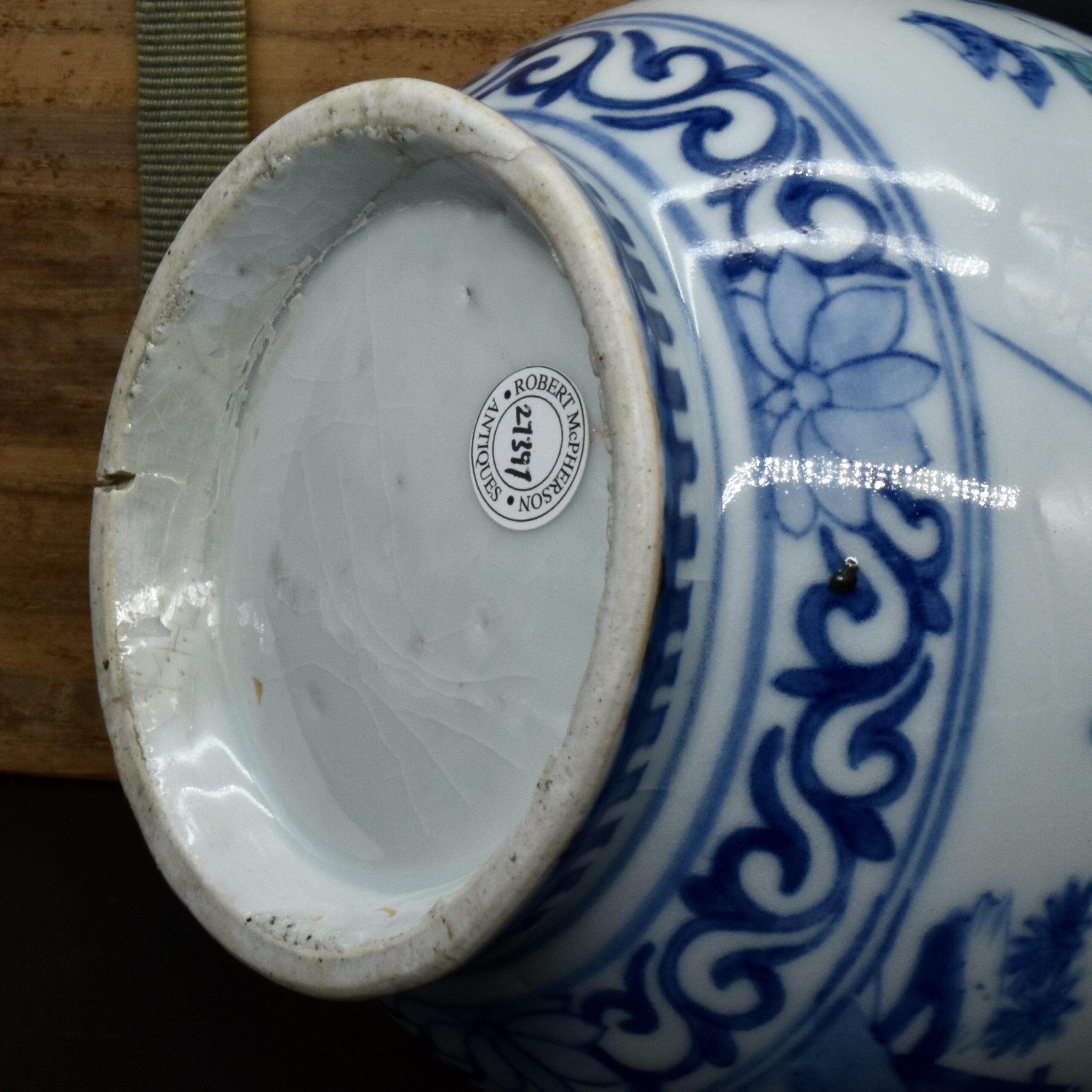
- Damaged and repaired. The top has a sophisticated Japanese lacquer repair, using black lacquer with minute flakes of silver, called Gin-Nashiji. By contrast the base has a crude repair, a large section has been broken out, this curved section is broken in three pieces. It has been glued back and at some time in the past, it has been over painted. Someone has removed most of the over painting. No porcelain is missing from the base, except a small piece in the foot rim, which might be a firing fault, if its not a loss through damage.
- Size
- Height 24.1 cm (9 1/3 inches).
- Provenance
- N/A
- Stock number
- 27397
Photos
Information
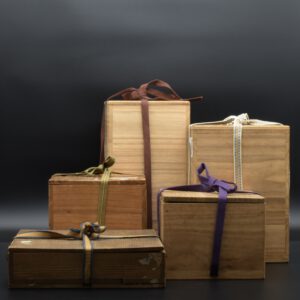
Tomobako Storage Boxes :
Traditional Japanese ceramic storage boxes, referred to as Tomobako are highly valued and much used in Japan. Most boxes are made from paulownia wood, it is lightweight hardwood and it’s also fire resistant, which is very useful in because Japanese buildings tend to be made of timber and have paper dividers inside. The Islands of Japan are located on a highly complex, unstable, and active geological junction where four major tectonic plates collide and subduct. These islands are essentially built upon the boundaries of these plates, with the archipelago forming as a result of the subduction and volcanic activity caused by these tectonic movements. Therefore the use of tradition tomobako is essential for the survival of ceramics in Japan. Japanese museums don’t have this luxury, so they secure the ceramic objects with nylon, which looks very much like fishing line. The paulownia is a fast growing tree, so it isn’t too expensive. It is believed that the phoenix, symbolising wisdom and prosperity, will only land on a paulownia tree when a worthy ruler is in power.
Tomobako containers that protect, store, and often certify the authenticity of the pottery inside. They are typically signed by the owner of the antique ceramic item in the box. They are tied with cord in a specific way, this is regarded as part of the ritual ceremony among a gathering of friends in Japan. Of course not everything in these boxes is what it might seem. Some contain surprising objects, so you will have to wait and see what we have in these boxes.