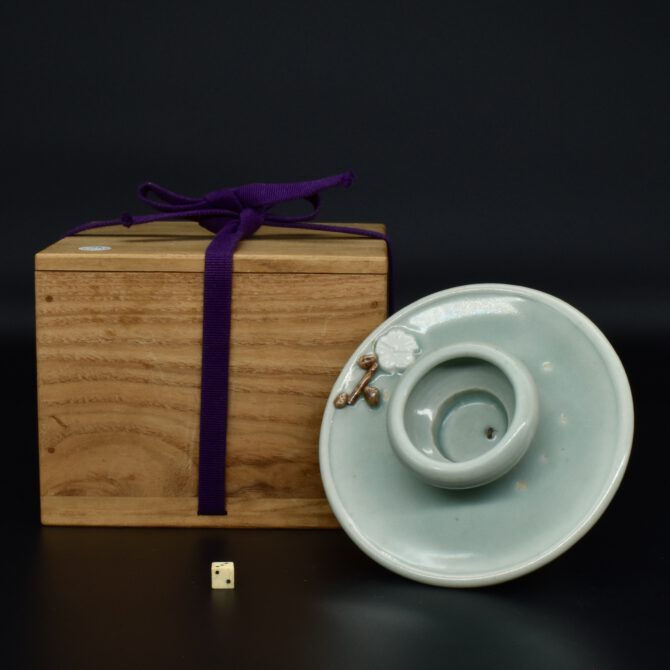
A Rare Early Japanese Celadon Porcelain Cup Stand.
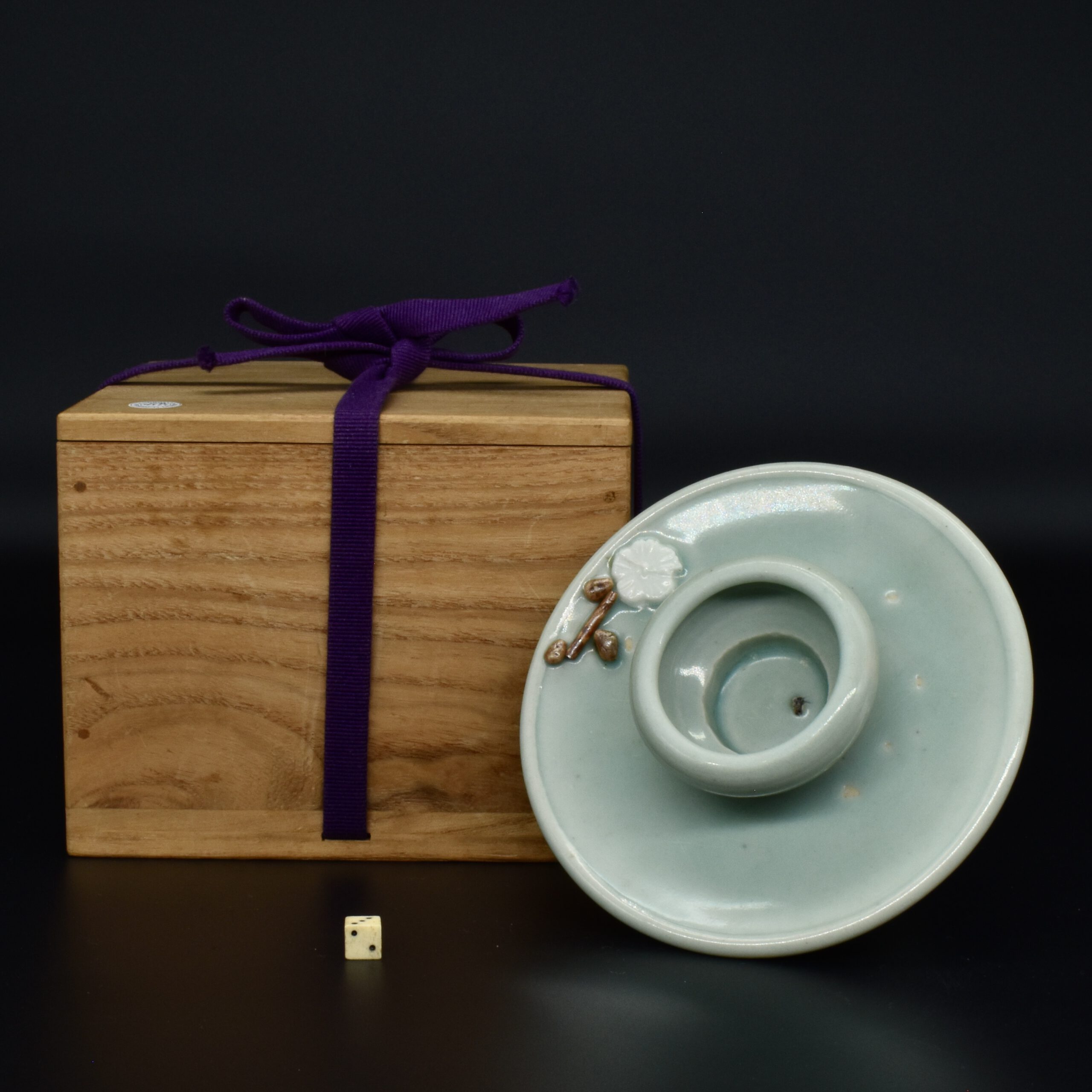
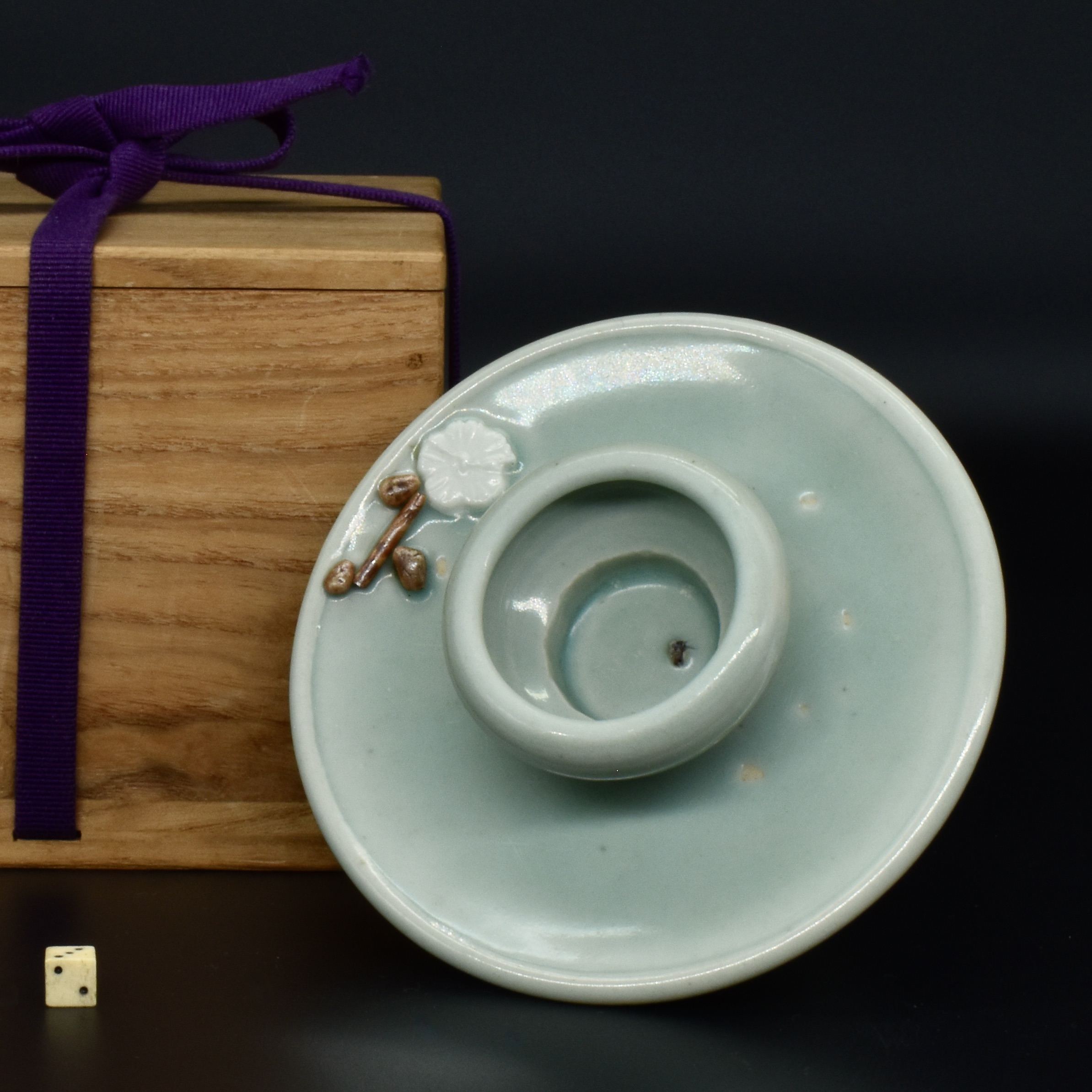
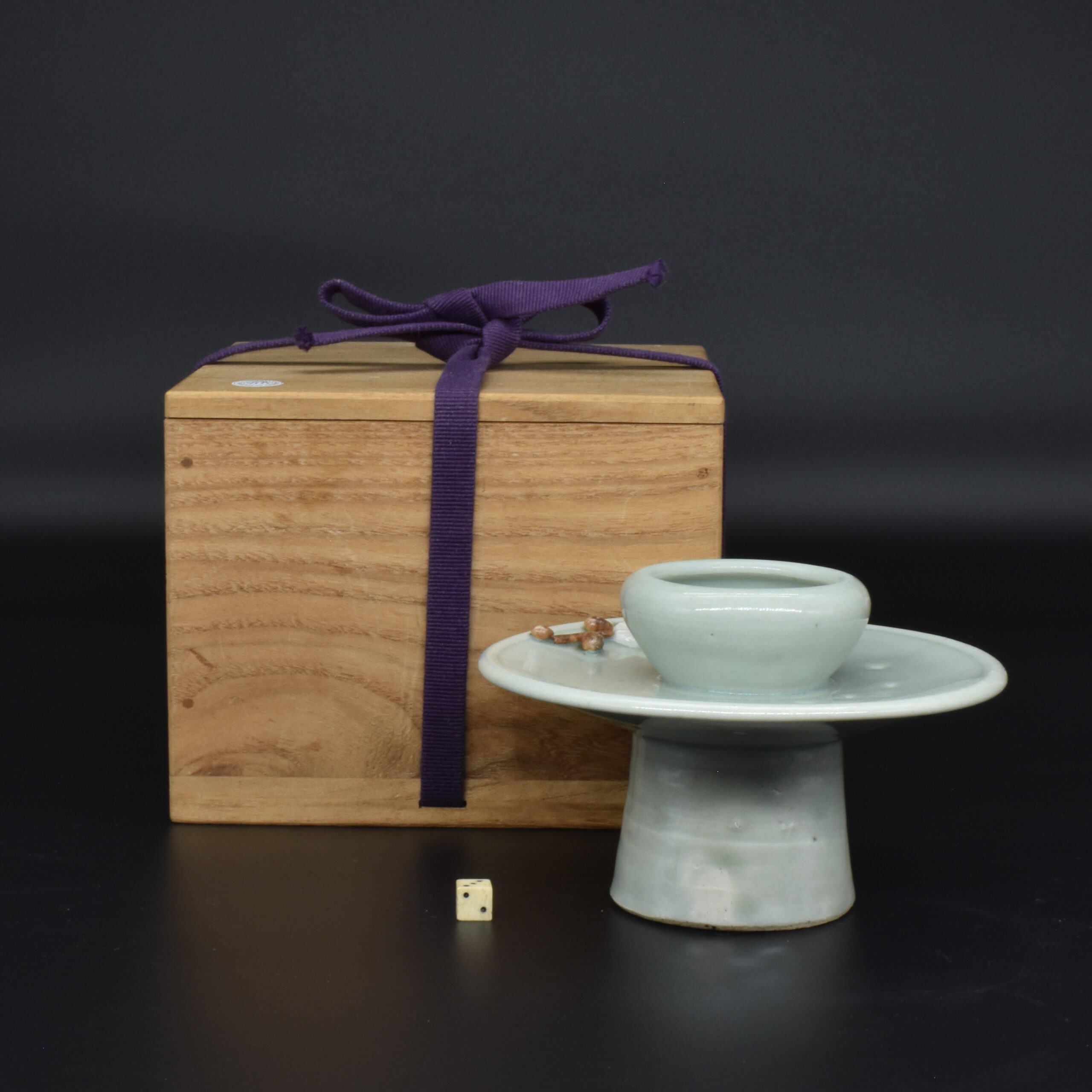
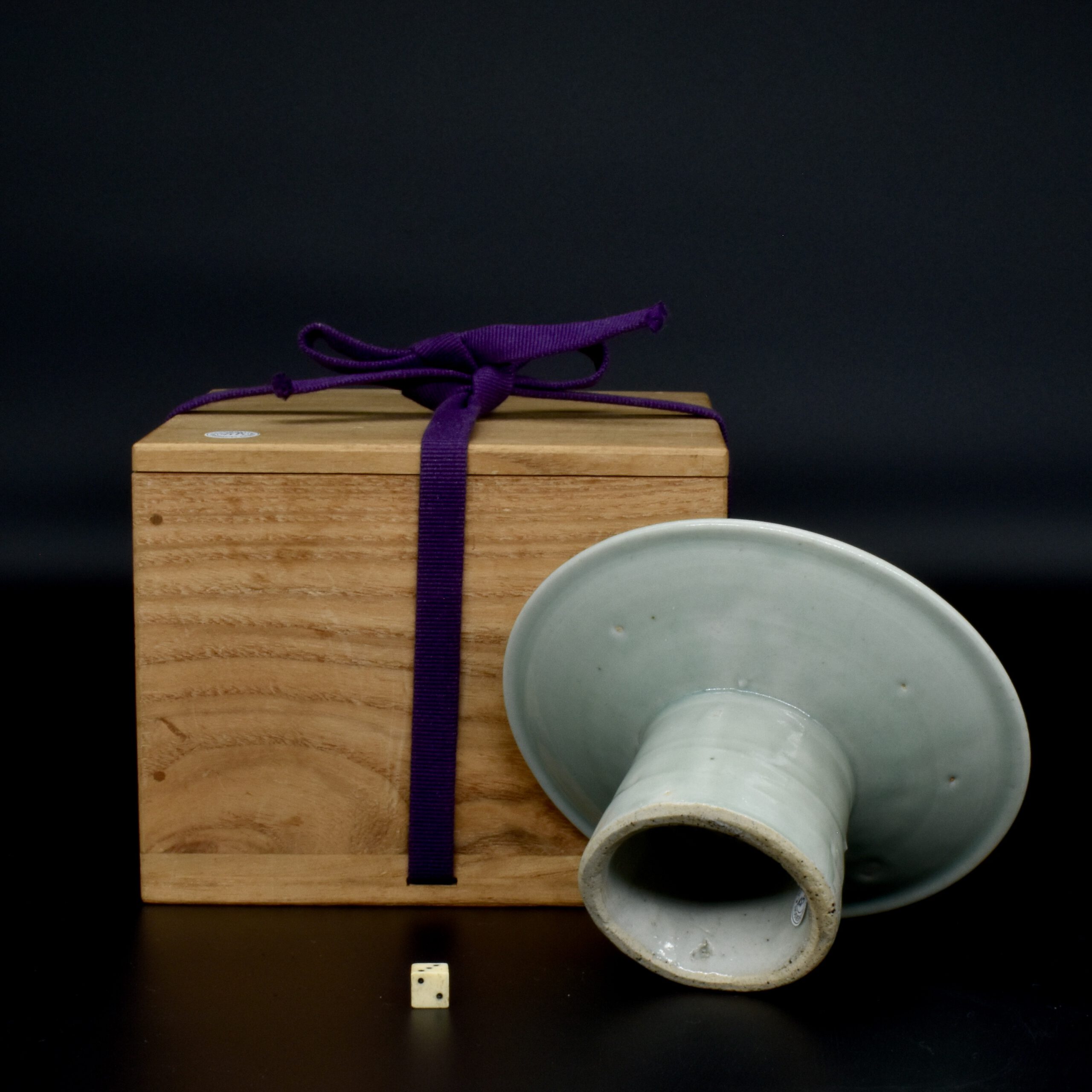
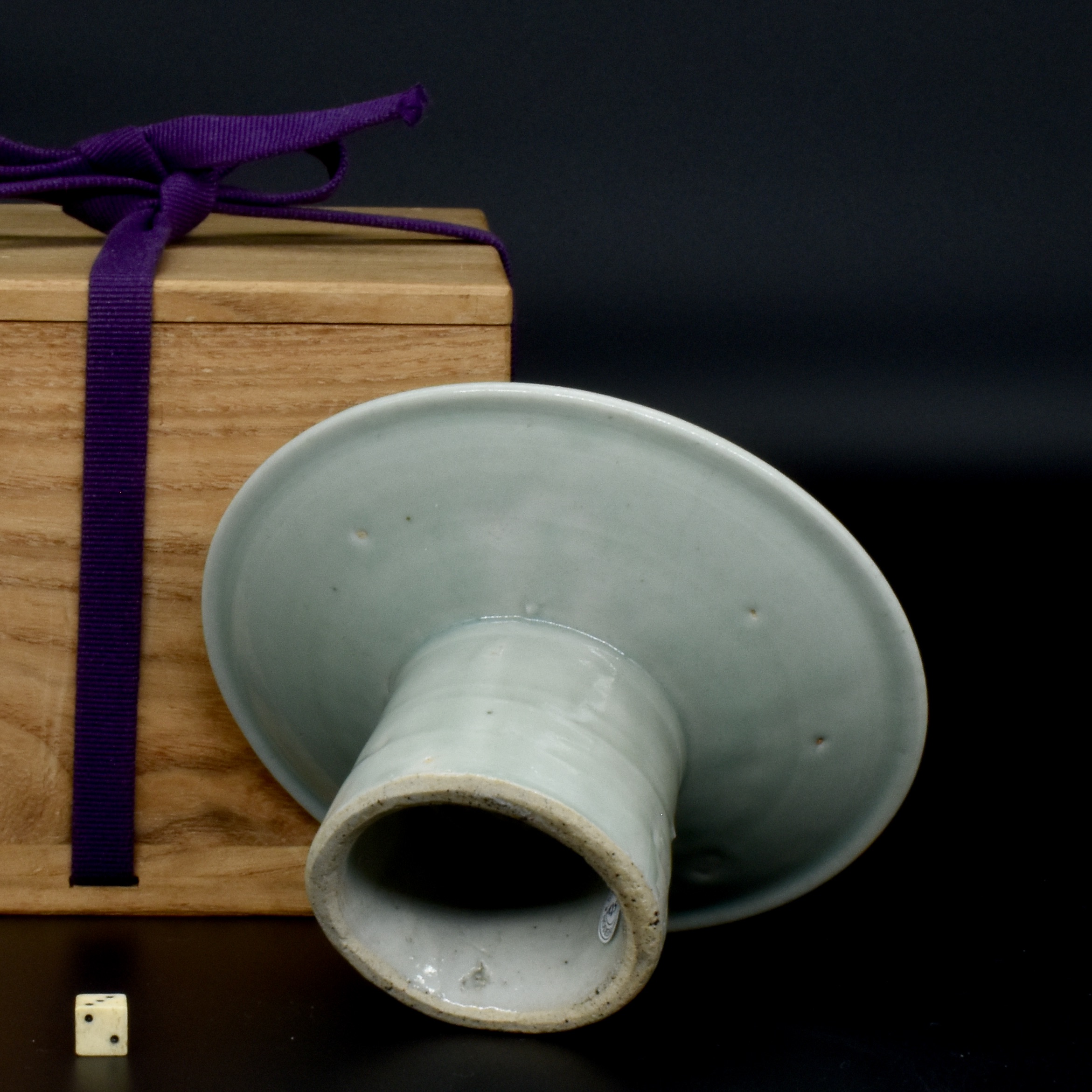
A Rare Early Japanese Celadon Porcelain Cup Stand, perhaps Mitsunomata Kiln, Nagasaki prefecture, Hasami ware c.1630-1640. A flat tripod stand which is related, but of a very different shape, is in the Kyushu Ceramic Museum (see references below). This stand has a pale celadon glaze, it’s rather unevenly applied and relatively thin. This Japanese celadon stand has a different look to Chinese celadons from the Longquan kiln, in that it lacks the fine suffused bubbles of Chinese celadons. The bubbles are often said to make the celadon look softer, as the tiny bubbles bounce back the light in a scattered way. However, this very early Japanese celadon looks soft, almost creamy due to the bright white porcelain shining through. This is cup stand, but that doesn’t necessary mean a celadon cup would have been made for this stand. Stands sometimes had different cups, I once had a Chinese Mingqi cup with stand made as one piece glazed together with the cup, the stand was brown and the cup white. Sometimes stands had cups made from different materials. That isn’t to say the present example didn’t have a Hasami ware celadon cup made for it. The present stand, has a moulded prunus flower with an iron 0xide decorated stalk and three flower buds .
SOLD
See Below For More Photographs and Information
- Condition
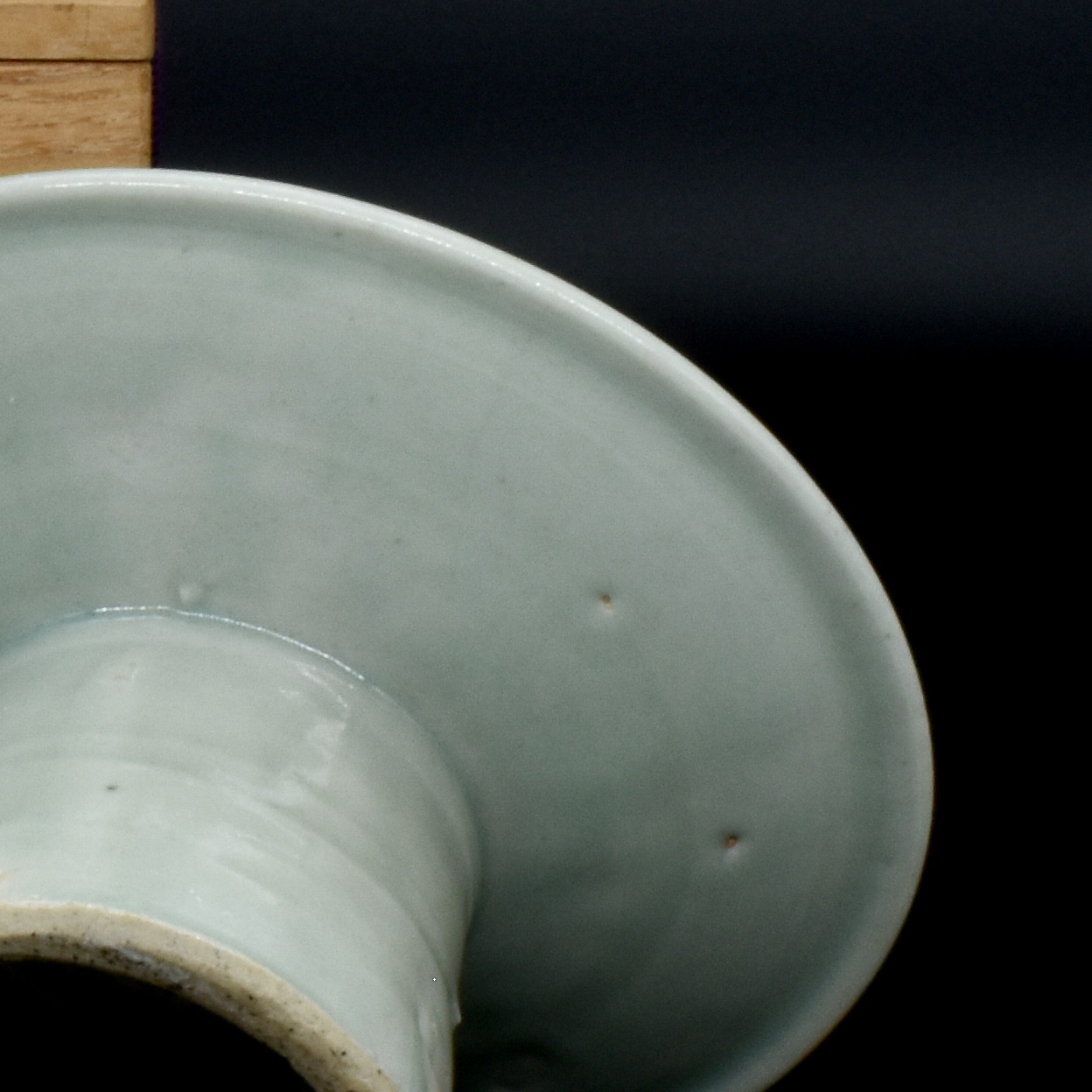
- There is a fine crack to the rim, see the last two photographs.
- Size
- Diameter 13.5 cm (5.3 inches). Height 8.7 cm (3.4 inches).
- Provenance
- N/A
- Stock number
- 27372
- References
- A flat stand which is closely related but of a a very different shape, is in the Kyushu Ceramic Museum, see : The Kyushu Ceramic Museum Collection (Published by The Kyushu Ceramic Museum, Printed by Seibundo Printing Co. Ltd, March 31st, 1987). Page 89, plate 111.
Photos
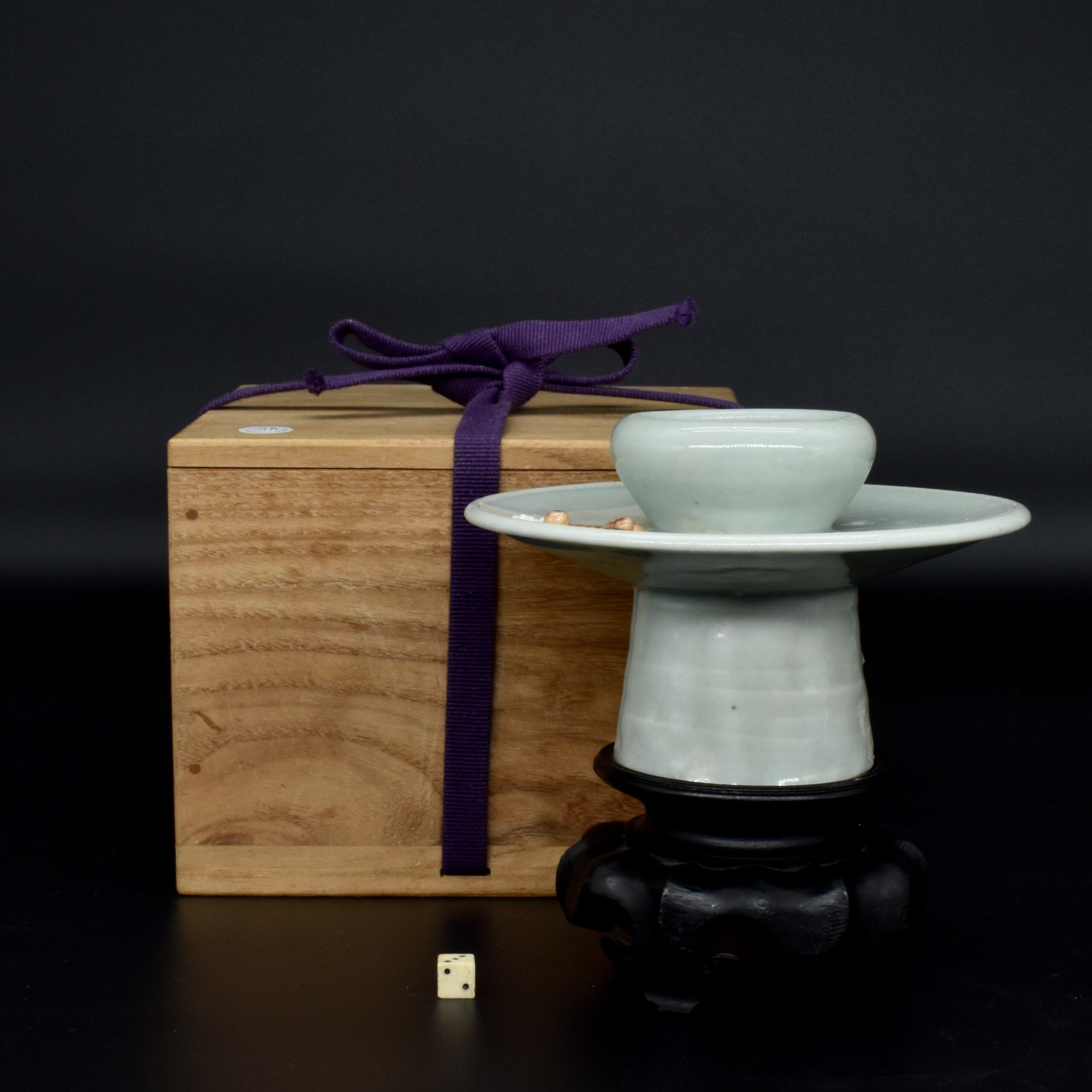
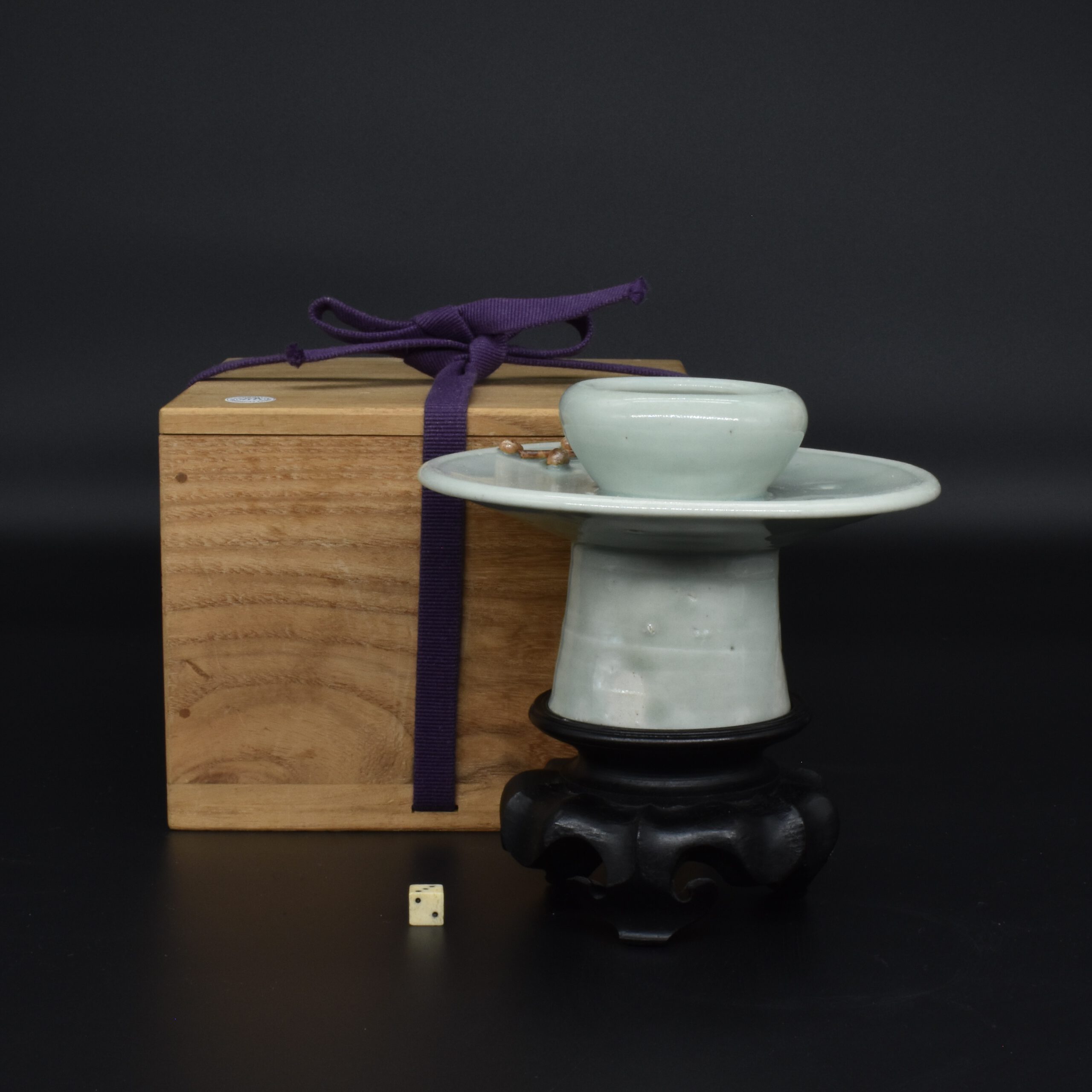
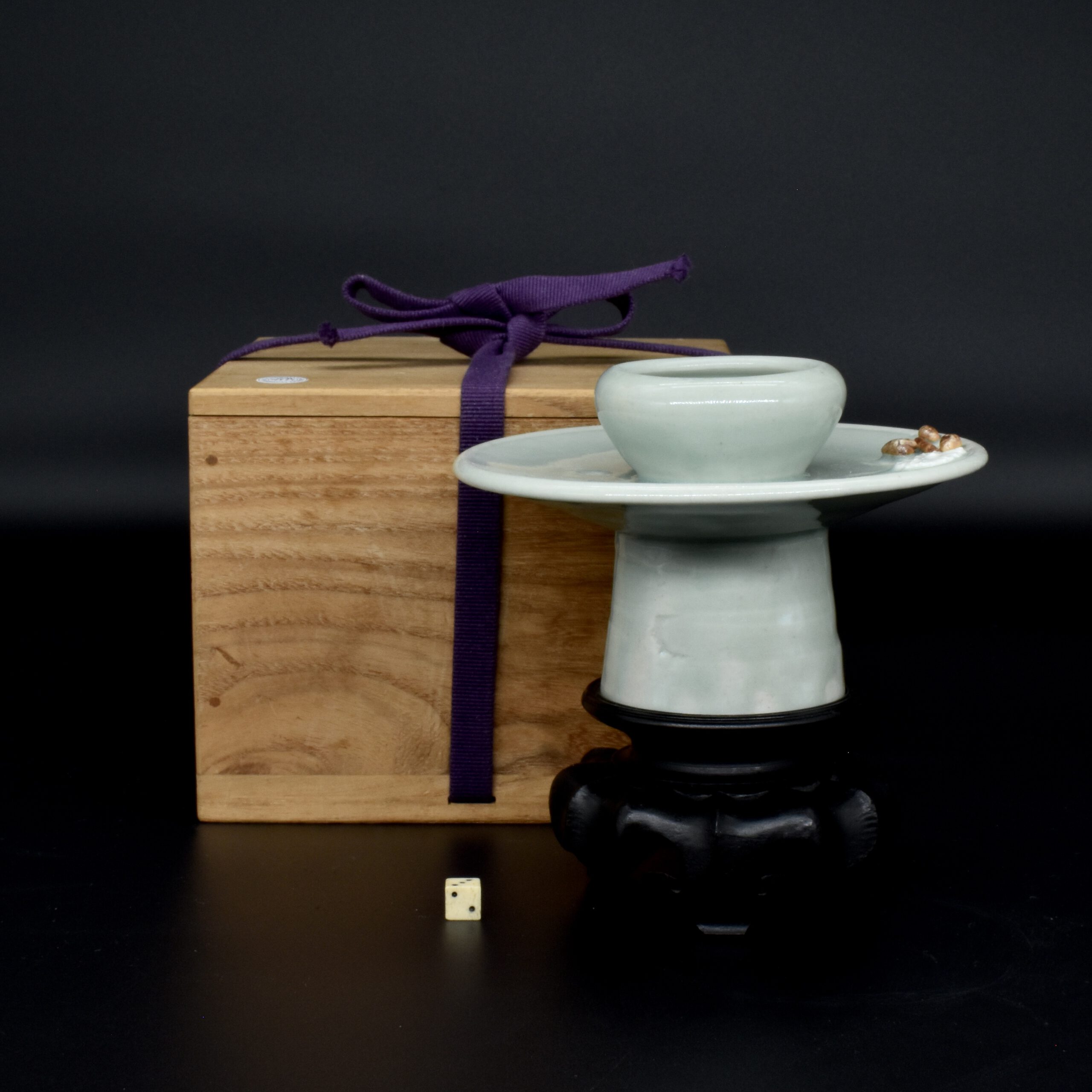
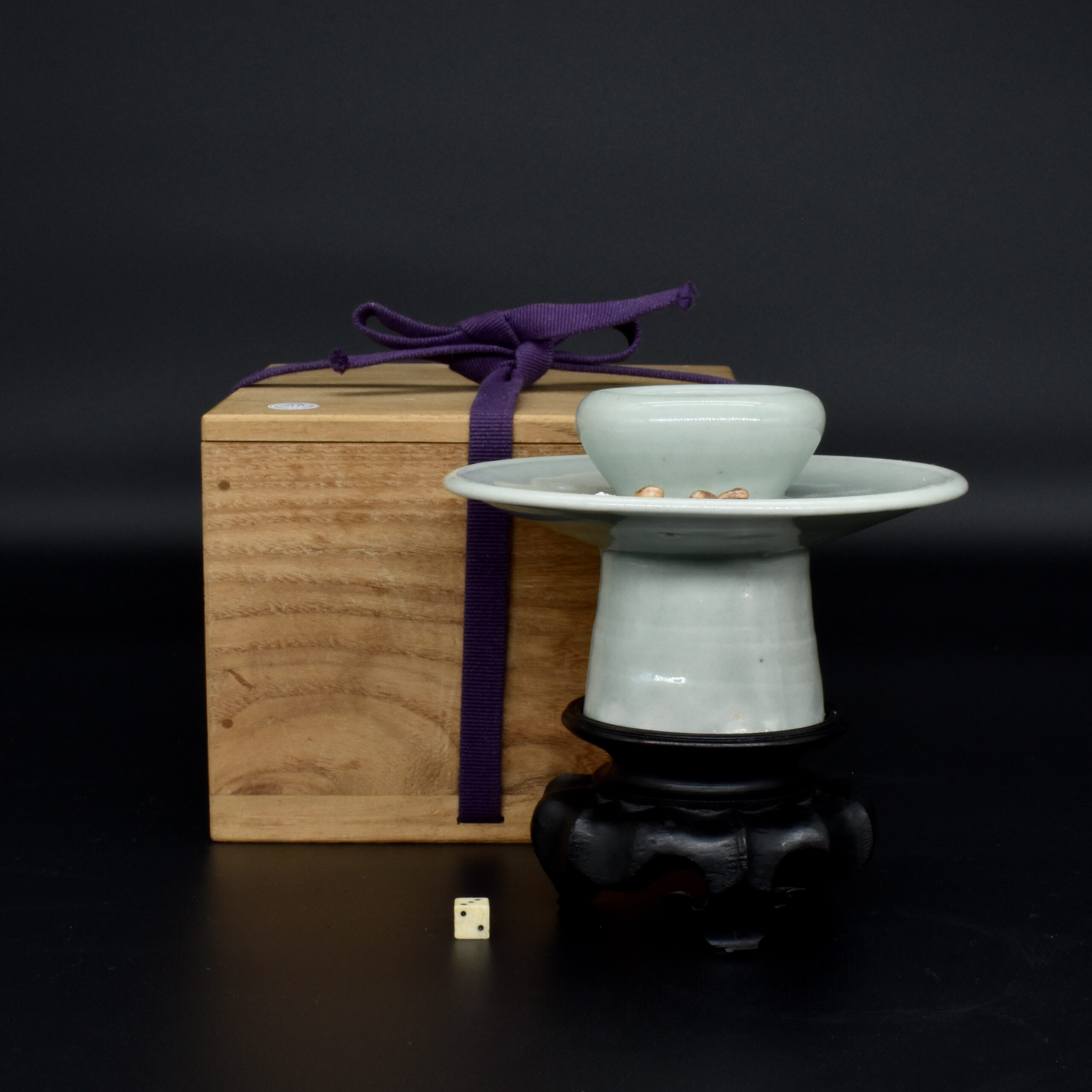
Information
Tomobako Storage Boxes :
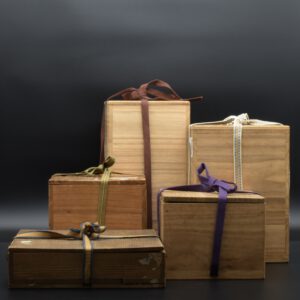
Traditional Japanese ceramic storage boxes, referred to as Tomobako are highly valued and much used in Japan. Most boxes are made from paulownia wood, it is lightweight hardwood and it’s also fire resistant, which is very useful in because Japanese buildings tend to be made of timber and have paper dividers inside. The Islands of Japan are located on a highly complex, unstable, and active geological junction where four major tectonic plates collide and subduct. These islands are essentially built upon the boundaries of these plates, with the archipelago forming as a result of the subduction and volcanic activity caused by these tectonic movements. Therefore the use of tradition tomobako is essential for the survival of ceramics in Japan. Japanese museums don’t have this luxury, so they secure the ceramic objects with nylon, which looks very much like fishing line. The paulownia is a fast growing tree, so it isn’t too expensive. It is believed that the phoenix, symbolising wisdom and prosperity, will only land on a paulownia tree when a worthy ruler is in power.
Tomobako containers that protect, store, and often certify the authenticity of the pottery inside. They are typically signed by the owner of the antique ceramic item in the box. They are tied with cord in a specific way, this is regarded as part of the ritual ceremony among a gathering of friends in Japan. Of course not everything in these boxes is what it might seem. Some contain surprising objects, so you will have to wait and see what we have in these boxes.