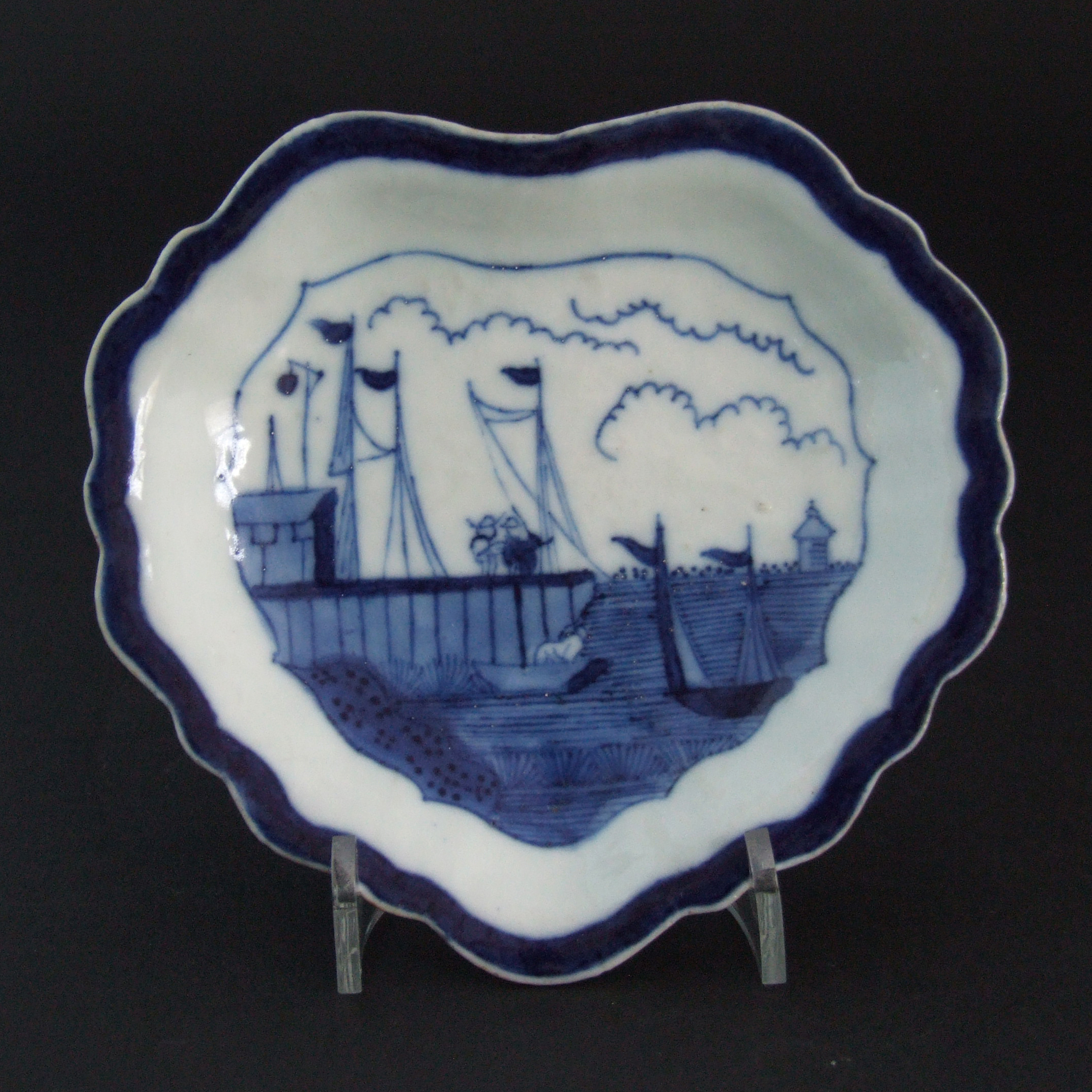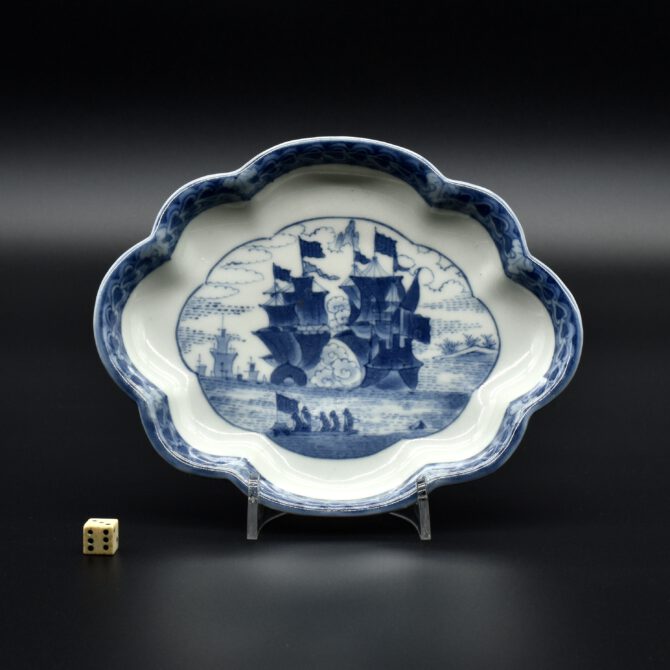
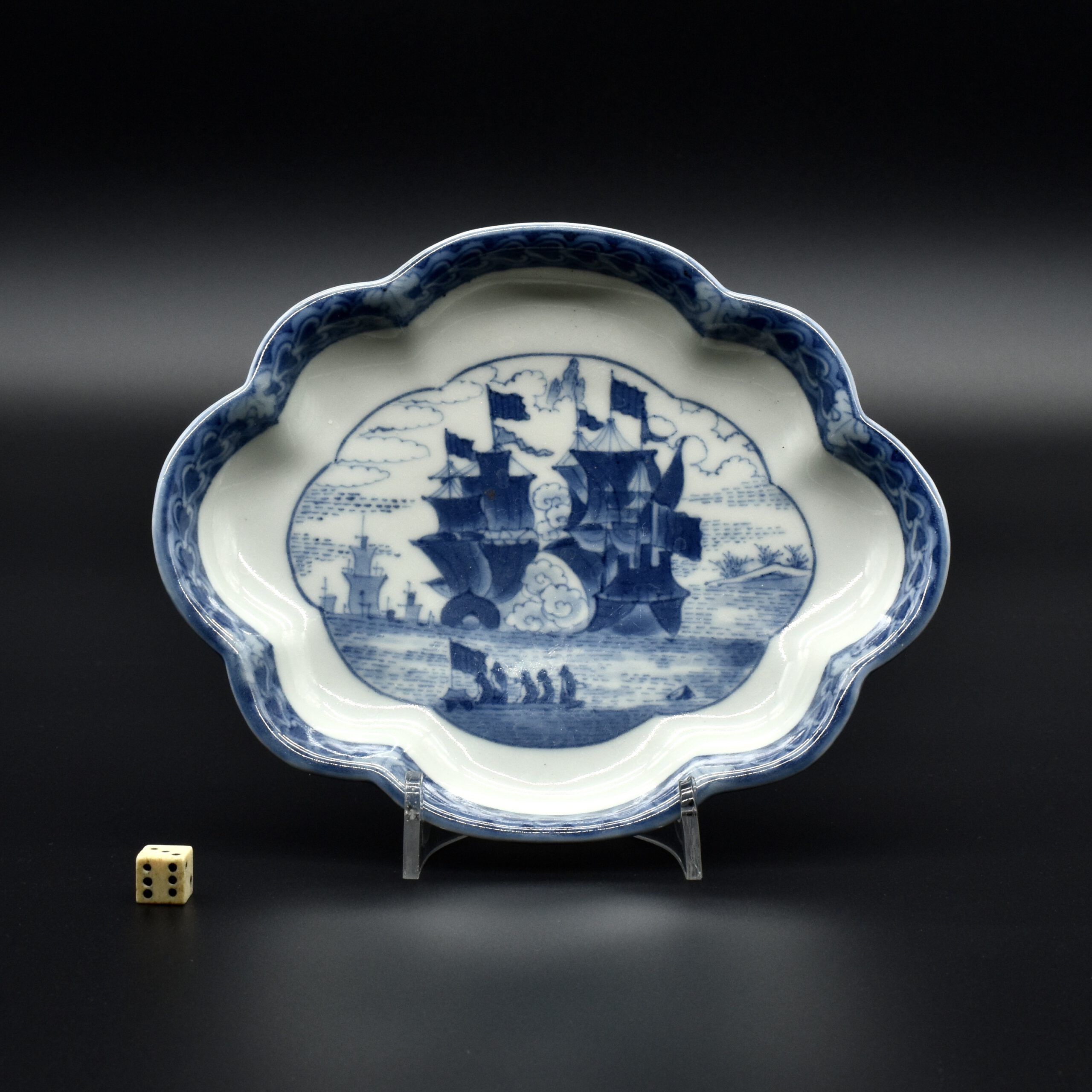
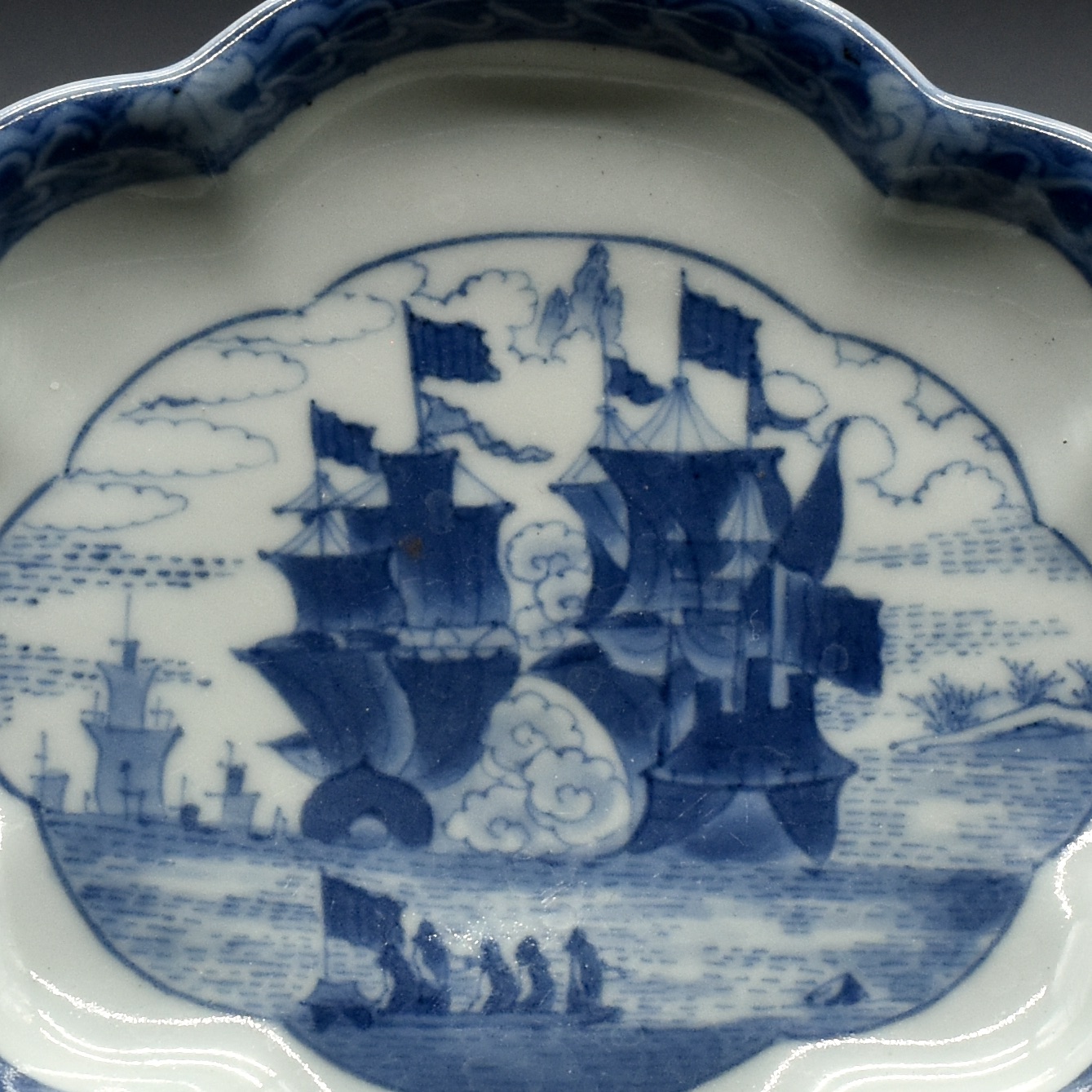
A Rare Japanese Export Porcelain Navel Battle Saucer c.1700.
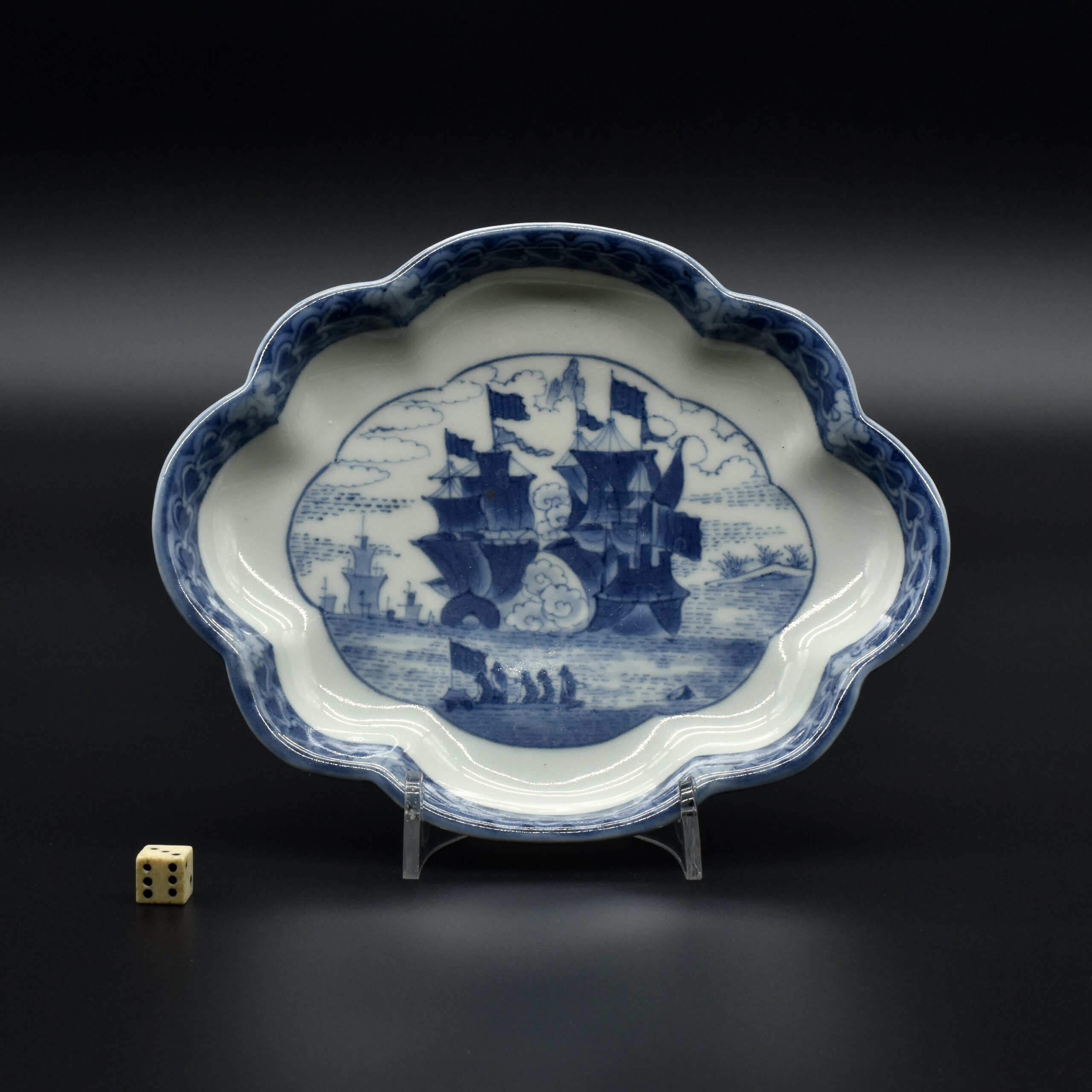
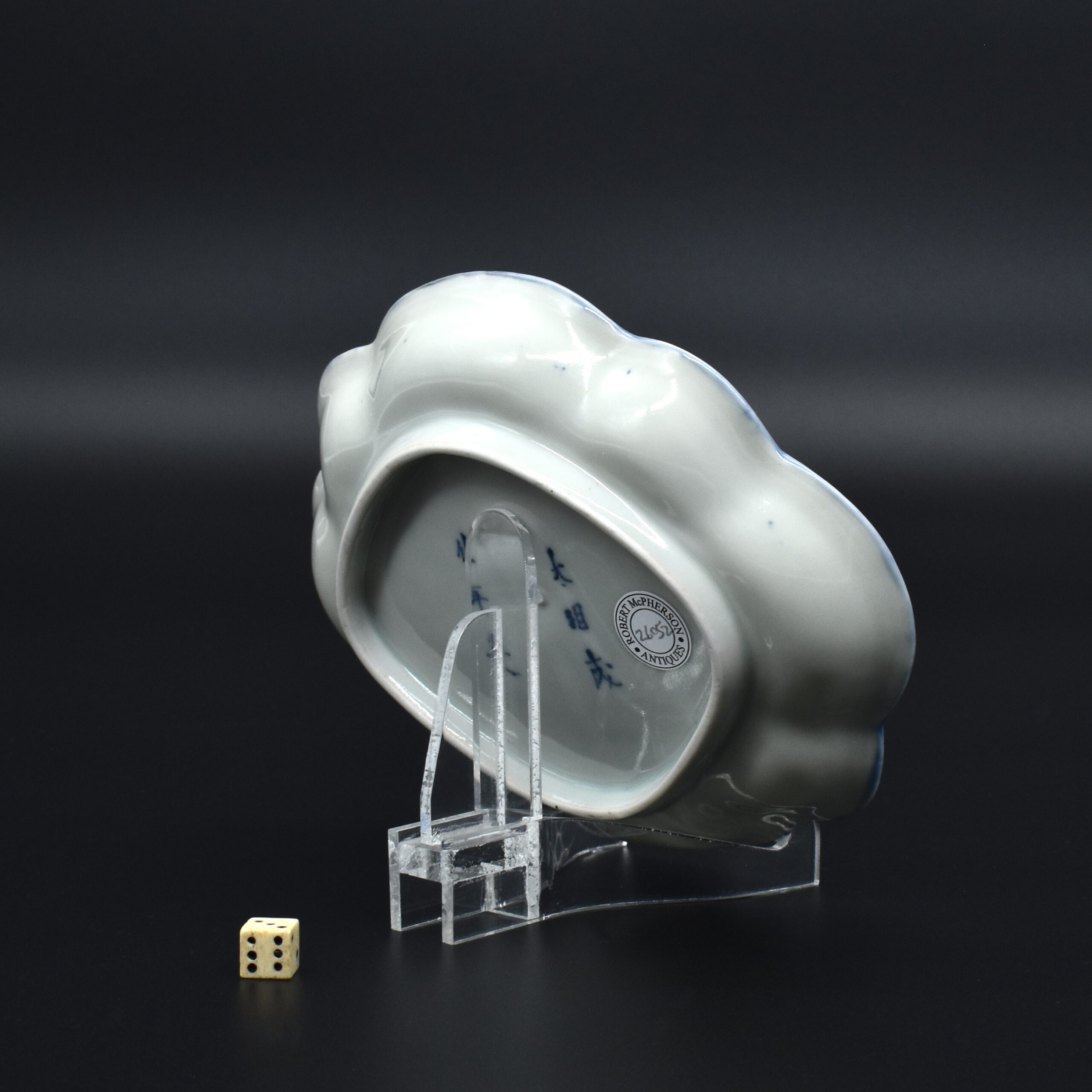
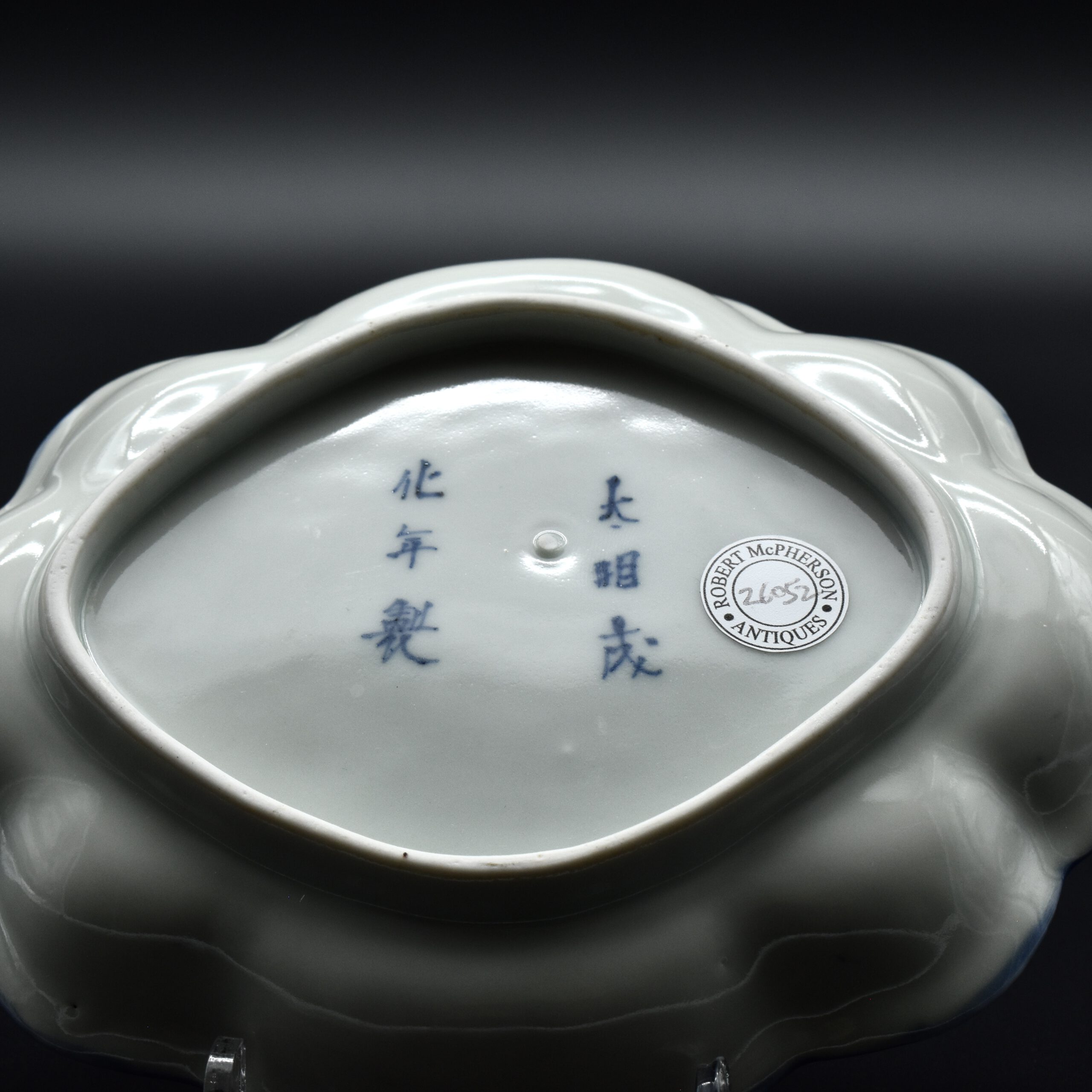
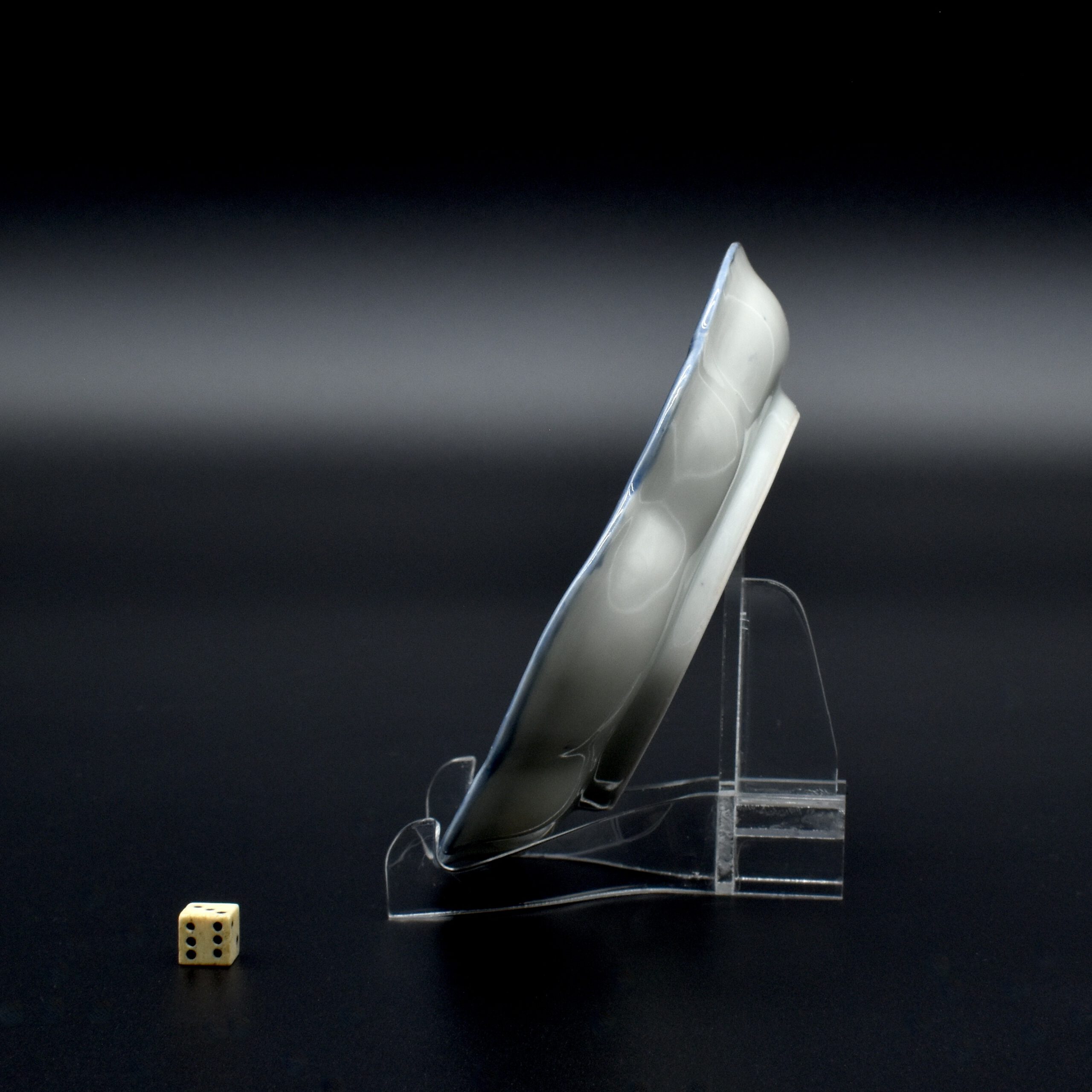
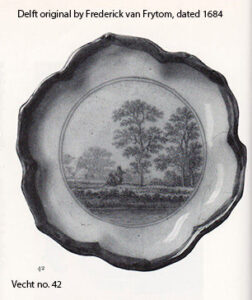
A Rare Japanese Export Porcelain ‘Navel Battle’ Saucer, Arita Kilns, c.1700. This rare Van Frytom related design was almost certainly supplied by the Dutch East India Company, Vereenigde Oostindische Compagnie, and would have been made to order for the Dutch market. The ships depicted might have been the Oostindiëvaarder (East Indiamen) engaging in a battle for trade, or perhaps this scene shows a skirmish between the Dutch and British in the Third Anglo-Dutch War (1672-1674). The wars for lucrative foreign trade were fought throughout the 17th century by European nations. As far as I am aware, the origin of this design has yet to be found. Christian Jörg illustrates an extraordinary teapot from the early 18th century with two designs carefully copied from an engraving of 1670 by Olfert Dapper’s book about China (see References). This teapot relates to the present example in that they have a similar look to the ‘Van Frytom’ landscape designs, the clouds are depicted in a similar way, the spout of the teapot has a wavy blue edge, somewhat similar to the borders of the Van Frytom group. The shape of the present example looks very different from a typical saucer, it is not circular but oval, with eight lobes. Normally this form would be described as a dish, however ‘Van frytom’ saucers come in many different forms apart from circular ones. A lobed Dutch Delftware saucer painted by Fredrick Van Frytom dated to 1684, is in the Prinsenhof Museum in Delft. Of course the cups have a circular rim, as drinking from a lobbed cup would be rather unpleasant. This is the first example I have had of this rather rare design. Saucers of this type are rare, however the tea bowls that would have been used with these saucers are rarer still.
SOLD
- Condition
- In excellent condition, very minor wear.
- Size
- Width 15.5 cm (6.1 inches).
- Provenance
- N/A
- Stock number
- 26052
- References
- Olfert Dapper's book about China 'Gedenkwaerdig bedryf der Nederlandsche Oost-Indische Maetschappye, op de kuste en in het keizerrijk van Taising of Sina' , is a seminal Dutch work documenting Chinese society and Dutch East India Company (VOC) embassies, published in Amsterdam by Jacob van Meurs in 1670. For a saucer of this design see : Fine and Curious, Japanese Export Porcelain in Dutch Collections' (Christian J.A. Jorg, Hotei Publishing, 2003. ISBN 90-74822-16-9) page 247, plate 319. Another example, described as a dish is illustrated in : Four Centuries of Blue and White, The Frelinghuysen Collection of Chinese & Japanese Export Porcelain : (Becky MacGuire, Paul Holberton Publishing Ltd, 2023. Hardcover 9781915401090) pages 335. A further example is at Burghley House and is illustrated in : Burghley Porcelains: An Exhibition from the Burghley House Collection and Based on the 1688 Inventory and 1690 Devonshire Schedule (Published by Japan Society Gallery. Nishiea Hiroko. June 1986) page 174, plate 63.
Photos
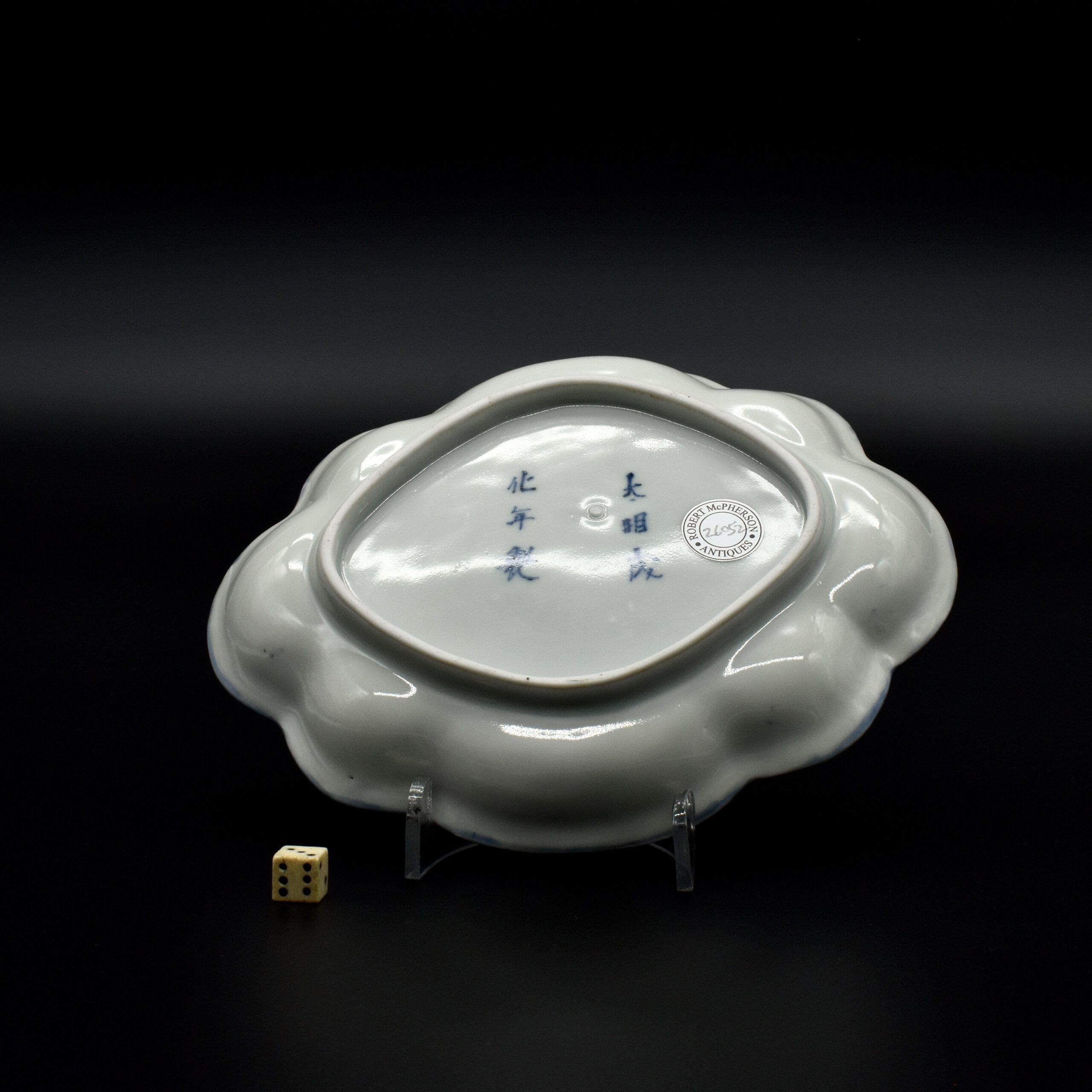
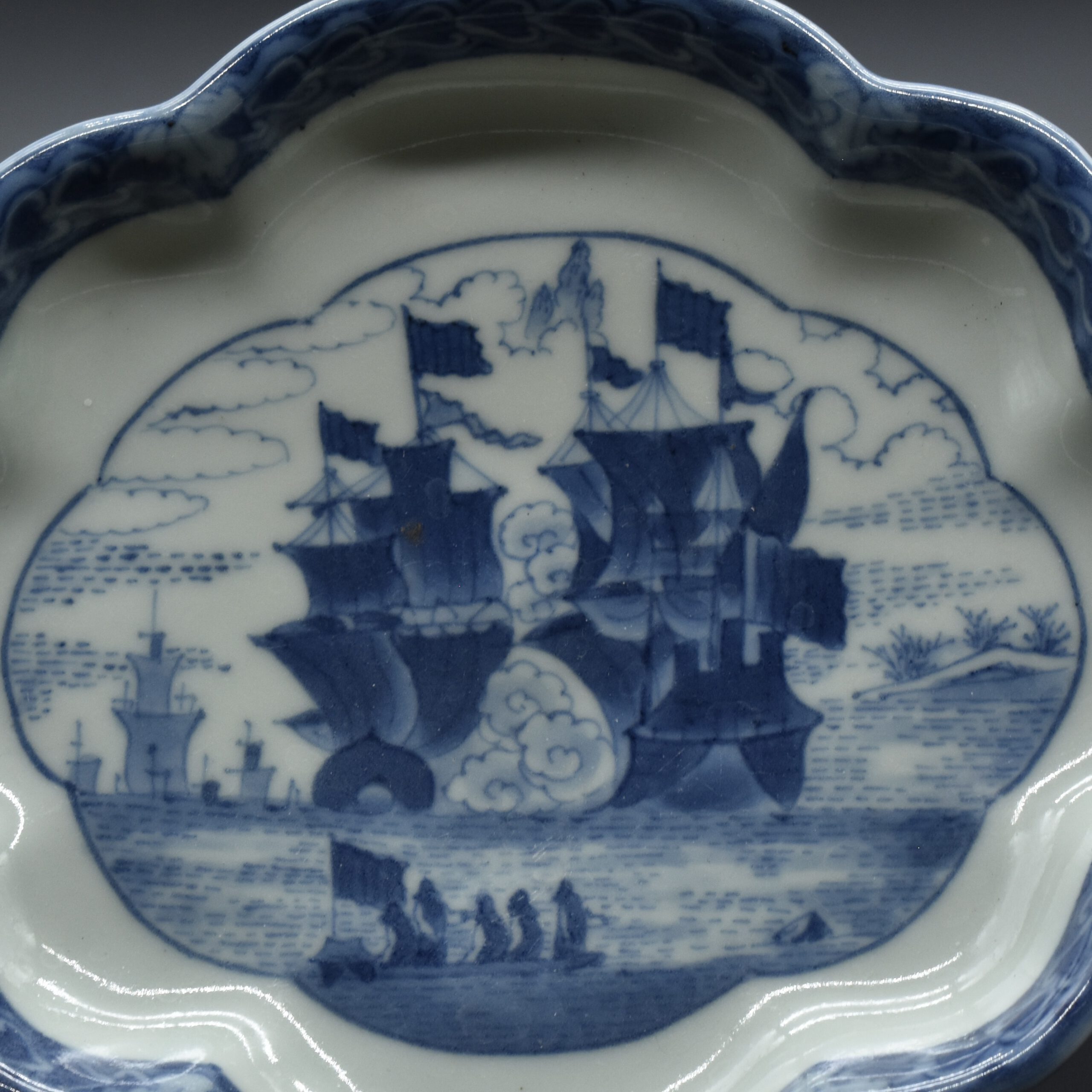
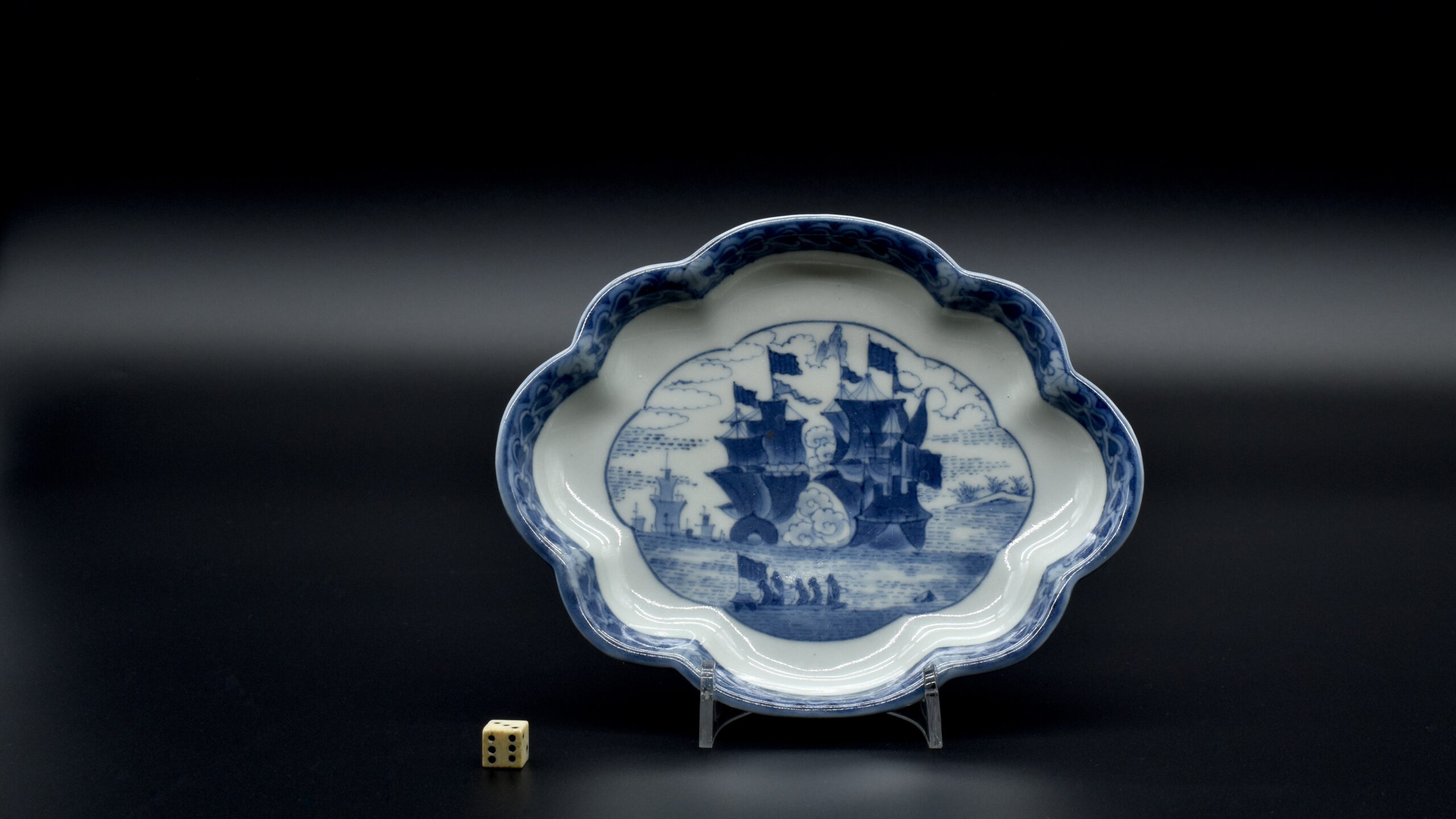
Information
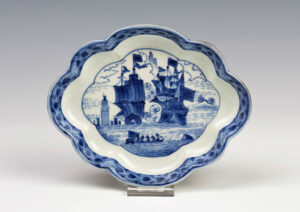
An Example of this Rare Saucer is at Burghley House.
"A small Van Frytom multi-lobed oval dish, Japanese, early 18th Century."
Frederik Van Frytom (1632 – 1702) :
The Dutch artist Frederik Van Frytom (1632 – 1702) was an important painter of Delft pottery, his style of painting fits very well within the 17th century Dutch landscape tradition, it includes typically scenes of the Netherlands, rustic landscapes with small bridges, farmsteads, pollarded willow, and cows scattered about small fields. His ceramic painting technique was individual, more akin to a painting than merely filling in a design on a ceramic body. Van Frytom's connection with oriental ceramics stems from a series of small blue and white Delftware dishes painted by him that were found in Japan and were said to be made for the Tea-Ceremony in Japan, the bases of which were marked MB and dated 1684 (See Frederik Van Frytom 1632 – 1702, Life And Work Of A Dutch Pottery-Decorator, A.Vecht, Scheltema and Holkema NV, Amsterdam, 1968). However, it is also possible, or in fact, more likely to have been sent to Japan by the V.O.C. to be copied. As far as I know, not conclusion has been reached.
A Delftware Dish Attributed to Frederik van Frijtom (or Frytom) circa 1632 - 1702.
The Museum of Art, Den Haag, Netherlands.
A Delftware Dish by Frederik van Frijtom (or Frytom) circa 1632 - 1702. Dated 1684 found in a Japanese Collection.
A Japanese Blue and White Porcelain ‘Van Frytom’ Saucer, Arita Kilns c.1690 – 1710.
Robert McPherson Antiques, Sold Archive Number 24745
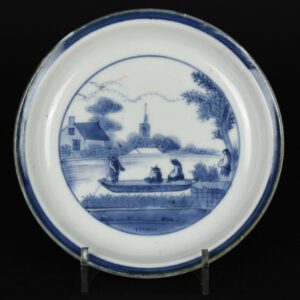
SOLD
Condition
In perfect condition, there are two firing cracks, one to the front (in the clouds) the other to the base.
Size
Diameter 12.4 cm (4 3/4 inches)
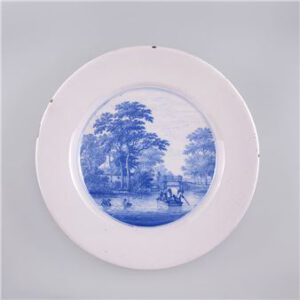
The best known of Van Frytom`s designs is the so-called Deshima Island pattern, now known to be a view of Holland. Porcelain plates of this pattern, as well as related designs, were produced at the Arita Kilns in Japan and then in China at the Jingdezhen kilns, related designs also occurs on Chinese soft-paste porcelain. Plates and dishes of the so-called Deshima Island pattern dating to the Yongzheng period (1723-1735) were sold at Sotheby's Amsterdam Sale of Chinese Porcelain from the Ca Mau Cargo, “Made in Imperial China”. This Western style was then re-used, probably via Japanese or Chinese interpretations, in England at The Bow Factory using soft-paste porcelain, at least some of these Bow pieces closely relate to Chinese soft-paste porcelain versions of the design. However, the Chinese soft-paste examples are quite late in date, so it might well be possible that they are based on the Bow examples that are copying the Japanese or Chinese versions of the Delft. A complex and somewhat confusing inter-connection of design and trade.
Japanese 'Van Frytom' Style Van Frytom Porcelain from Robert McPherson Antiques
Below are a few late 17th and early 18th century Van Frytom style Japanese porcelain objects.
See Robert McPherson Antiques - Sold Items, search 'Van frytom'.
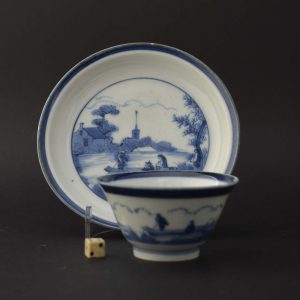
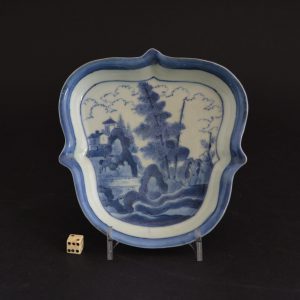
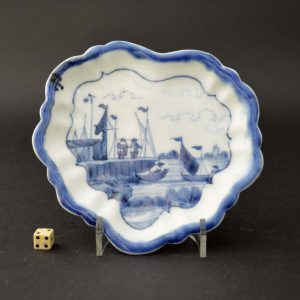
Japanese porcelain saucer after Van Frytom.
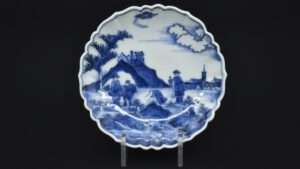
A Yongzheng Blue and White Porcelain Plate 1723-1735.
In the Style of Frederik Van Frytom (1632 – 1702).
Robert McPherson Antiques, Sold Archive Number 27082.
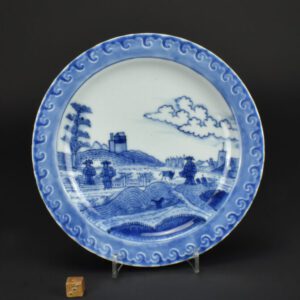
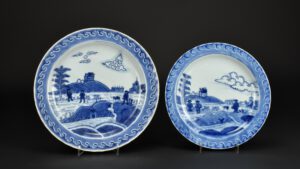
Groninger Museum, Netherlands
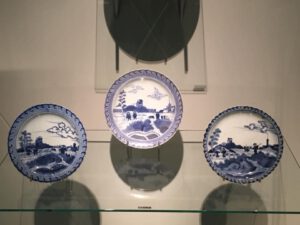
A Japanese Porcelain Dish After Van Frytom and a Rare Chinese Export Porcelain Dish, soft-paste porcelain, Qianlong Period c.1760. The
Robert McPherson Antiques Sold Archive.
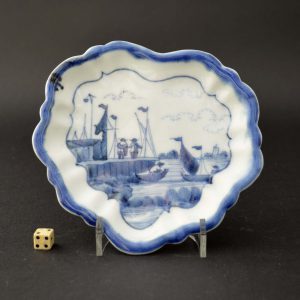
A Rare Chinese Export Porcelain Dish, soft-paste porcelain, Qianlong Period c.1760.
Robert McPherson Antiques Sold Archive.
This dish is a copy of a rare Dutch Delft dish painted by Frederik Van Frytom (1632 – 1702) . An English version made at the Bow Porcelain factory in London, that version of this pattern from c.1748-1752.