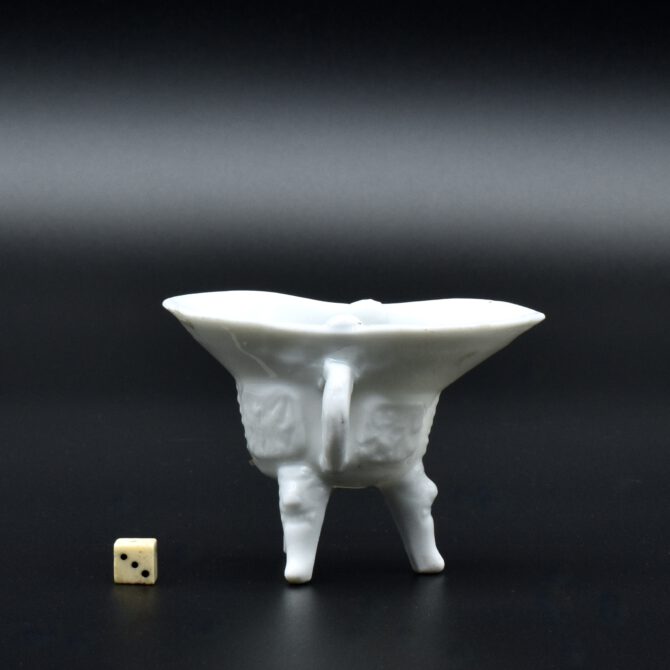
A Small Kangxi Blanc de Chine Porcelain Jue.
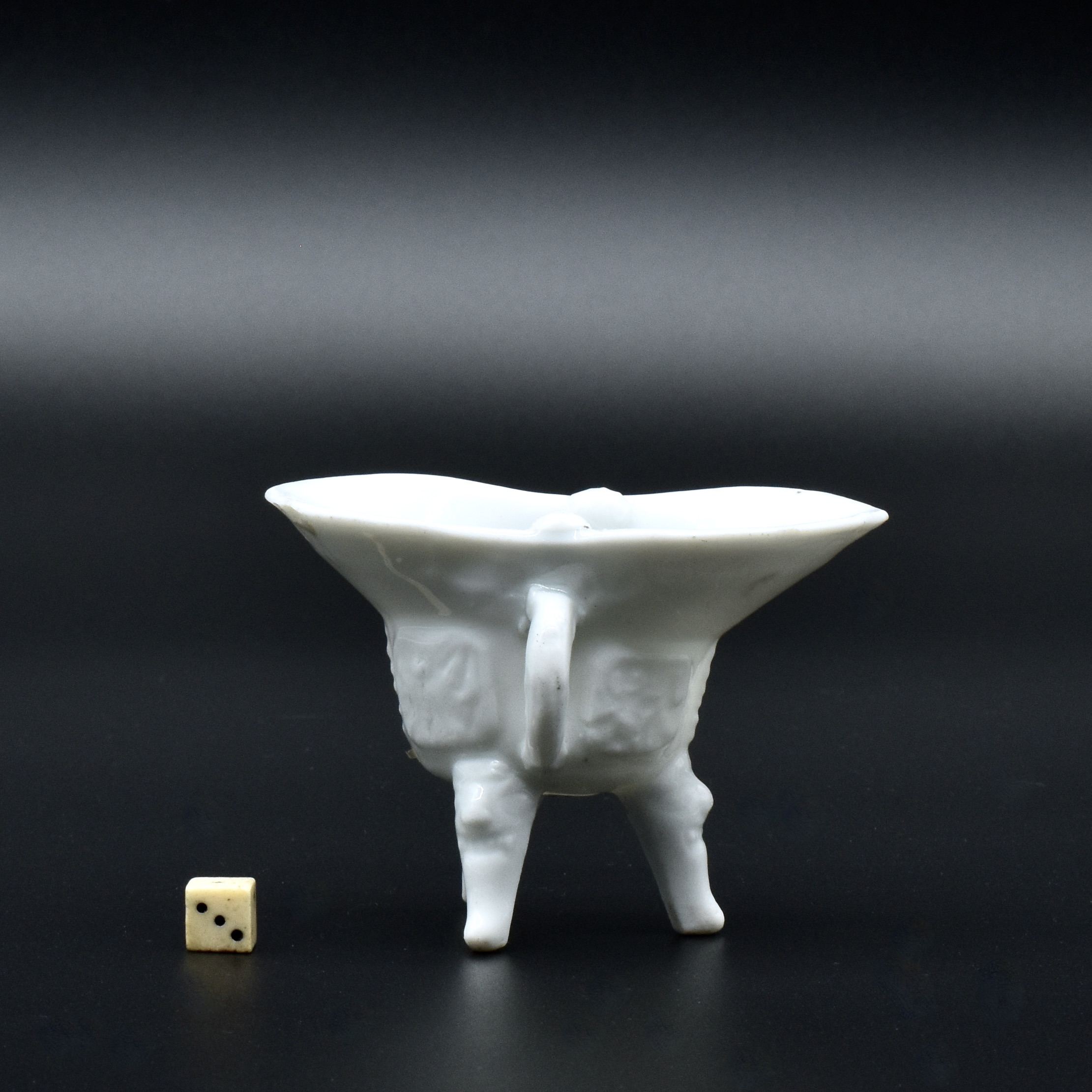
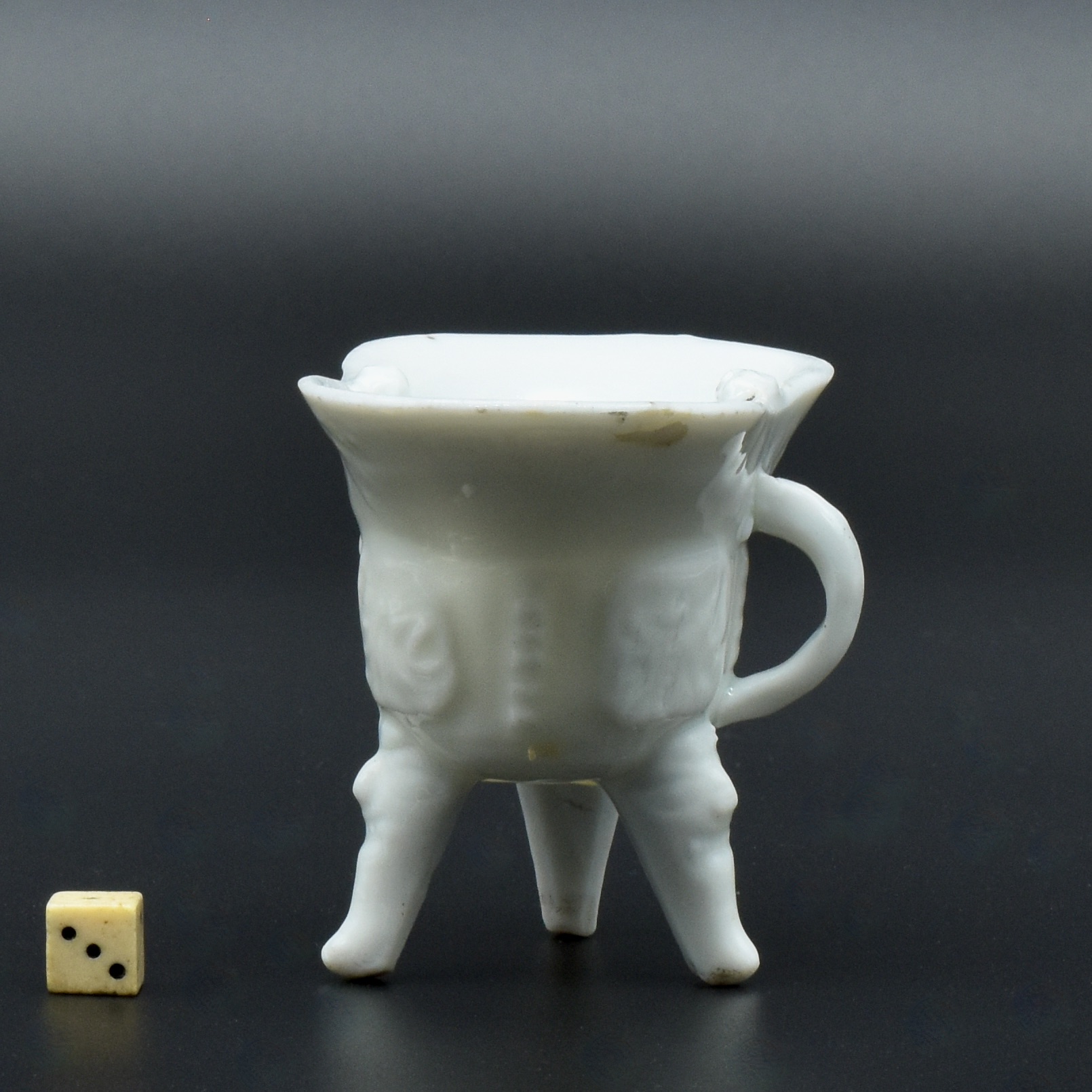
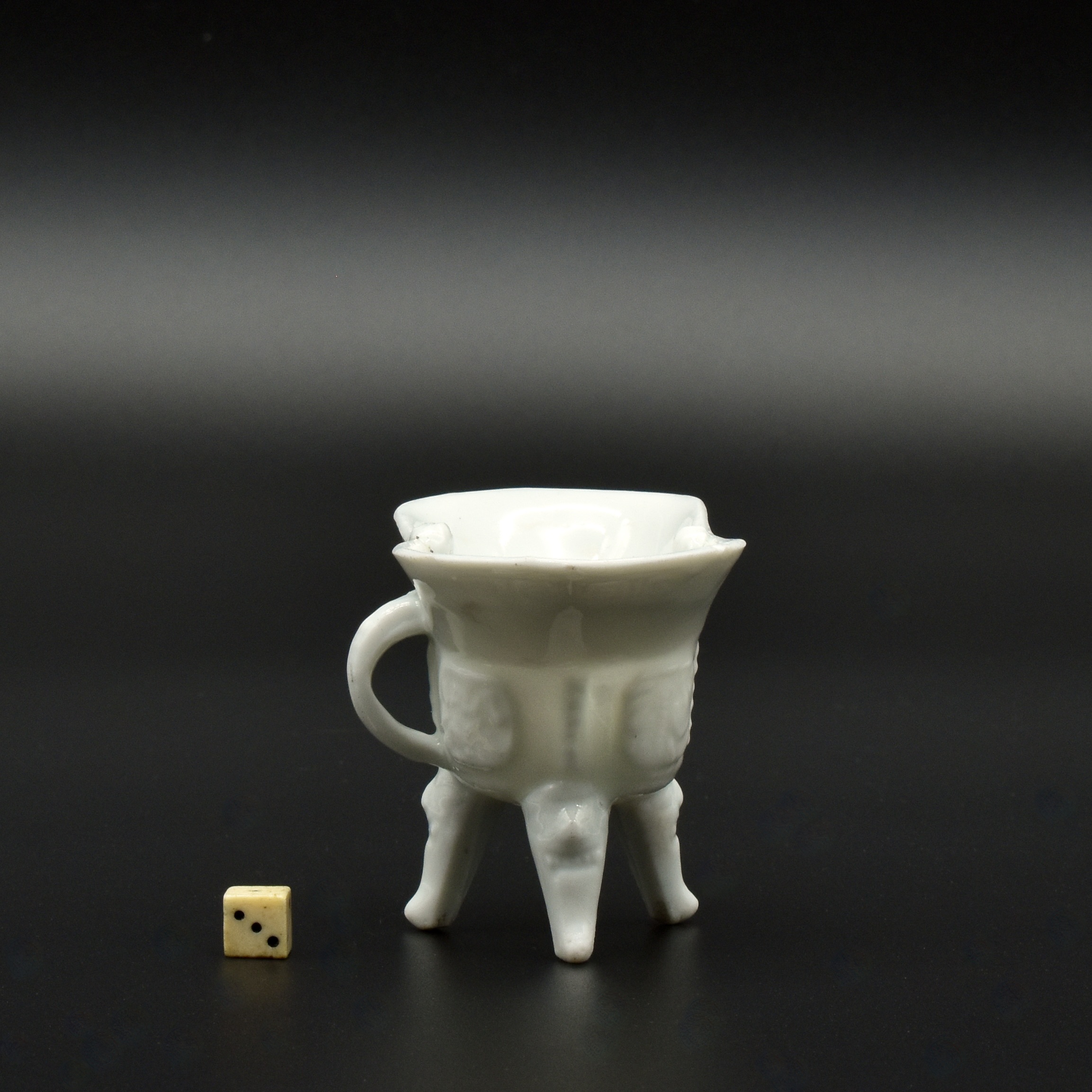
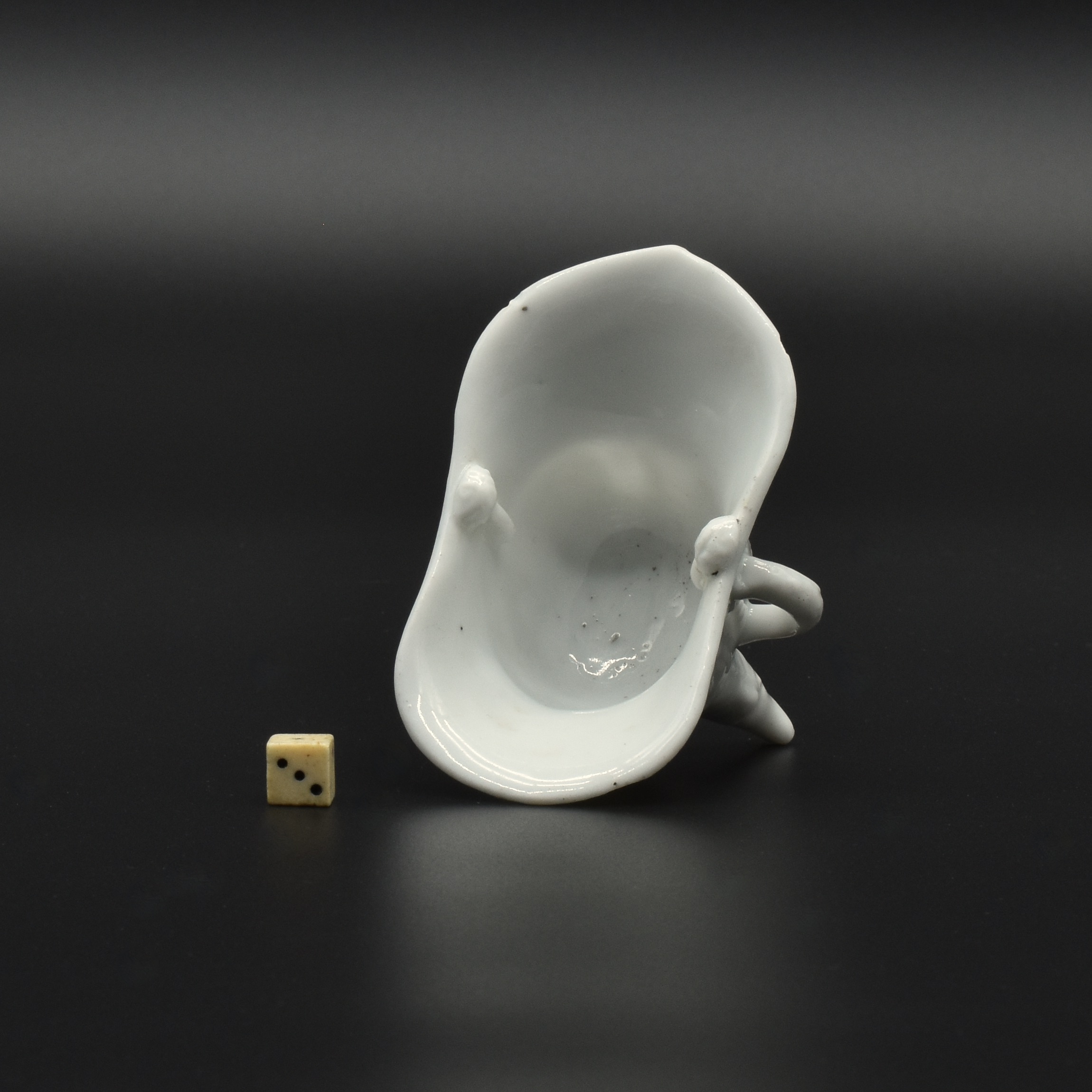
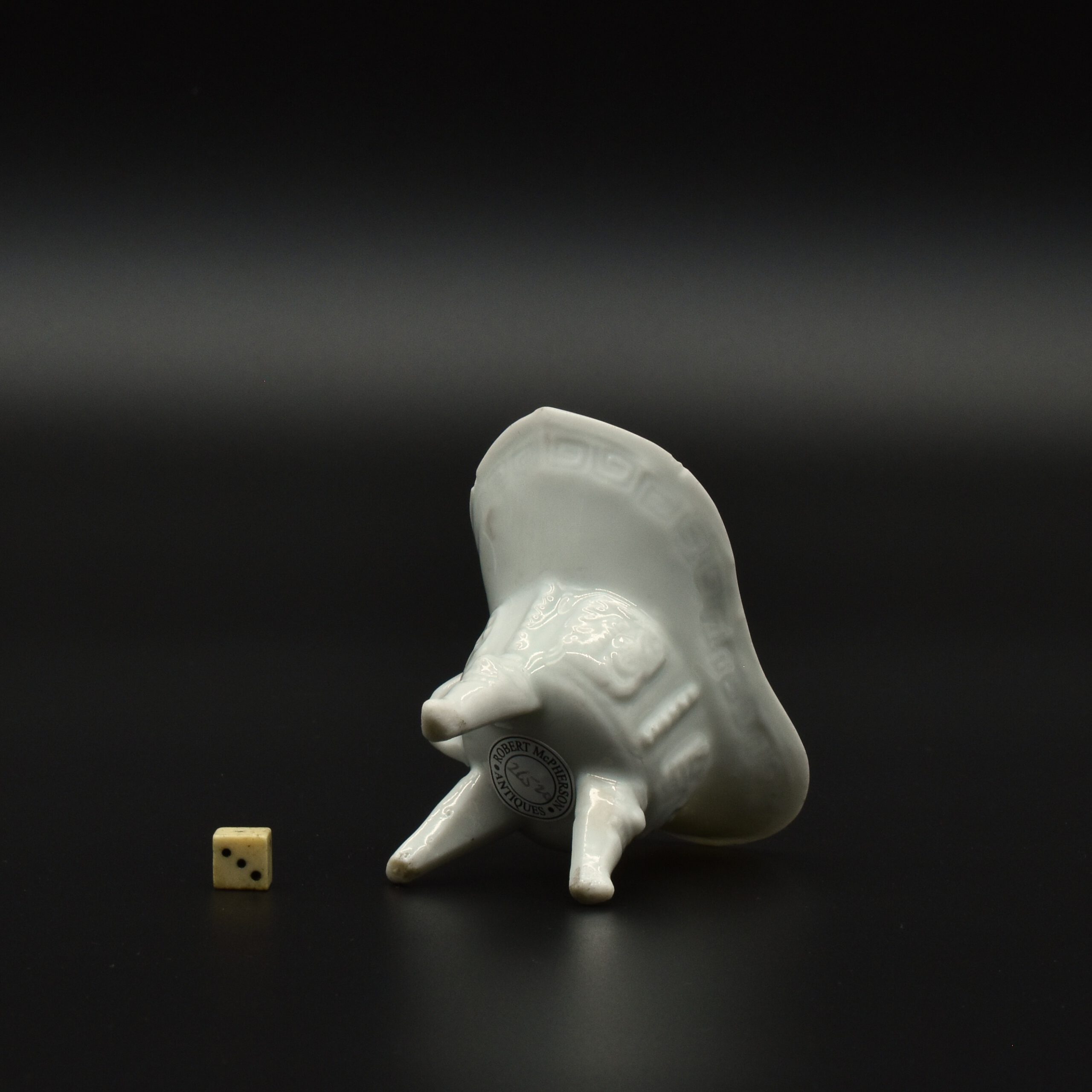
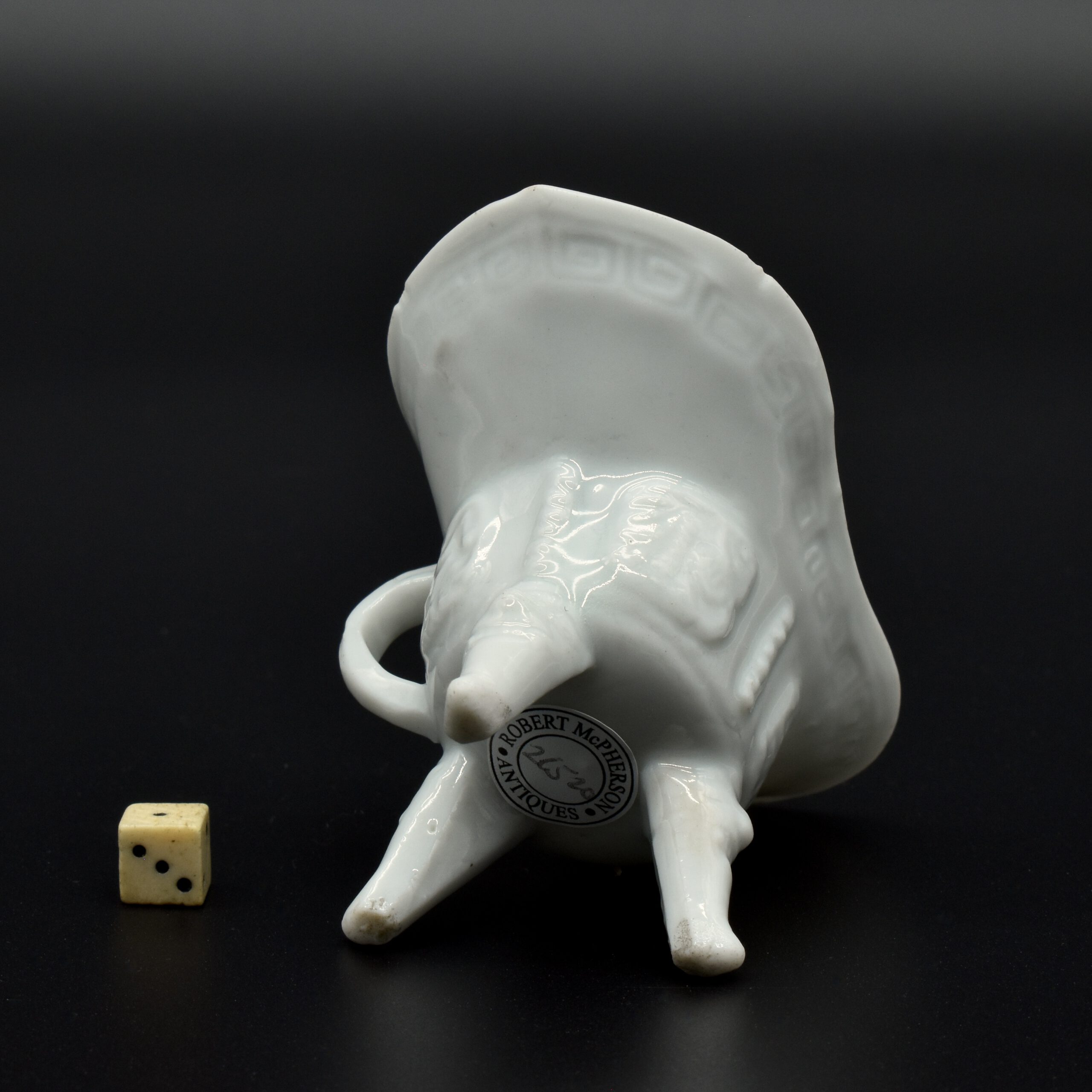
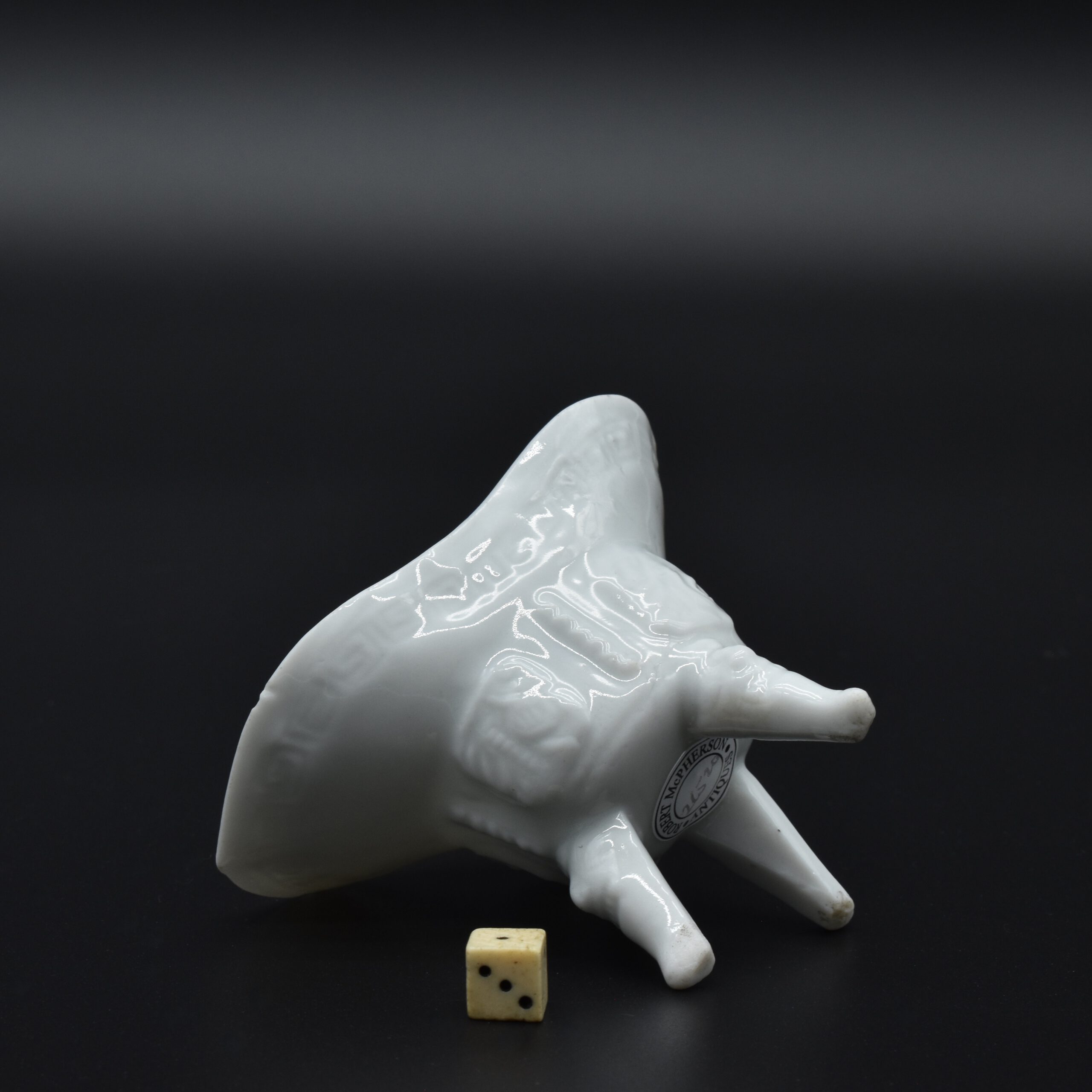
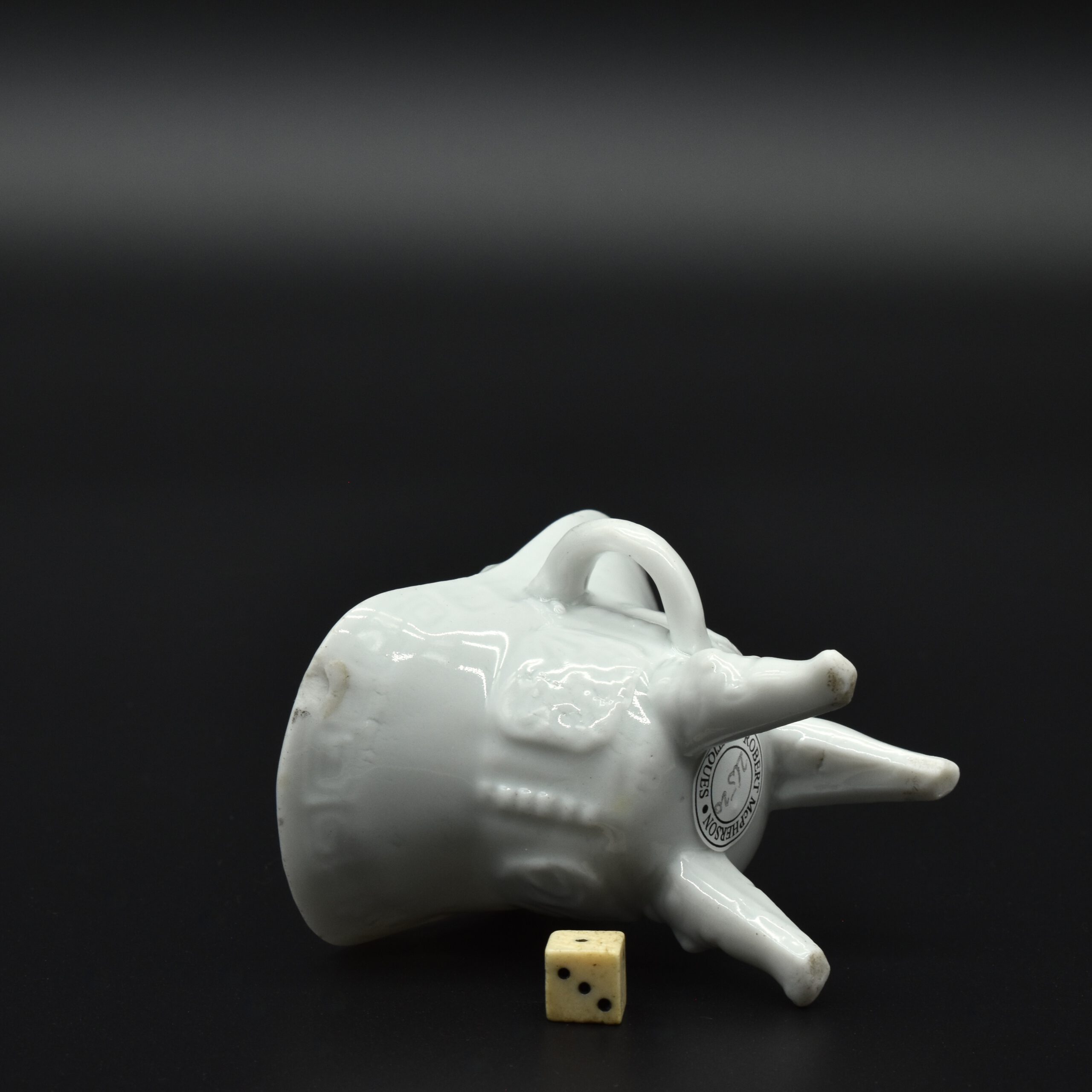
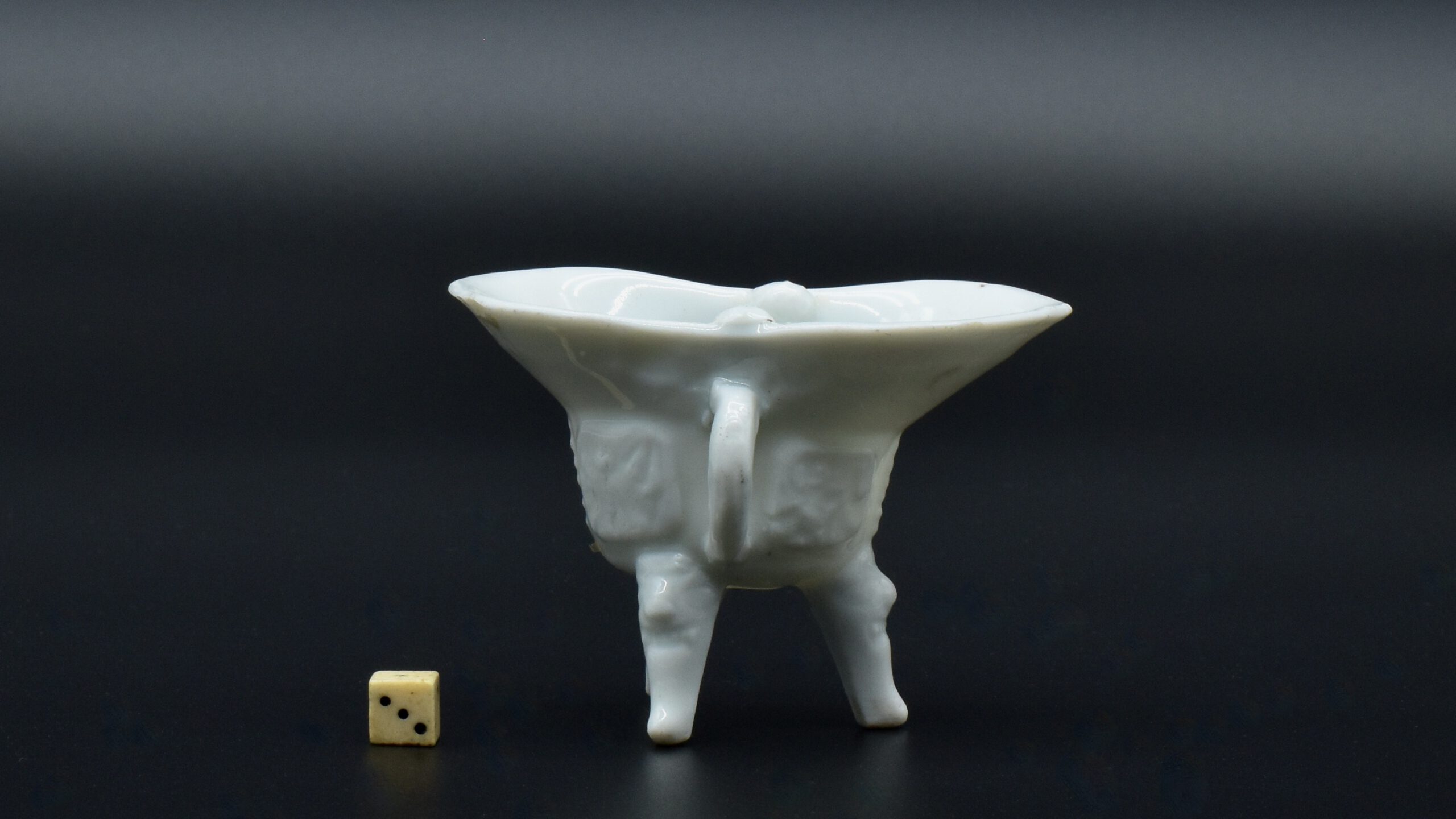
A Small Late 17th or Early 18th century Blanc de Chine porcelain Jue or libation cup, Dehua kilns, Fujian Province. This Kangxi (1662-1722) Jue is based on an archaic tripod form with masks at the top of each tapering leg has moulded panels with a single side handle. The interior with two facing raised porcelain strips that have a small shaped terminal, this emulates the original bronze handles found archaic jue. The legs of the original archaic bronze versions kept the body of the cup above the embers so wine would be warm, the inner flanges would have been taller and would probably have been used to retrieve the hot bronze Jue. The colour of this Blanc de Chine jue is a bright clear white with a very slight blue tinge to the glaze.
Blanc de Chine Porcelain :
The porcelain known in the West as Blanc de Chine was produced 300 miles south of the main Chinese kiln complex of Jingdezhen. The term refers to the fine grain white porcelain made at the kilns situated near Dehua in the coastal province of Fujian, these kilns also produced other types of porcelain. A rather freely painted blue and white ware, porcelain with brightly coloured `Swatow` type enamels as well as pieces with a brown iron-rich glaze. However it is the white blanc de Chine wares that have made these kilns famous. The quality and colour achieved by the Dehua potters was partly due to the local porcelain stone, it was unusually pure and was used without kaolin being added. This, combined with a low iron content and other chemical factors within the body as well as the glaze, enabled the potters to produce superb ivory-white porcelain
SOLD
See Below For More Photographs and Information
- Condition
- There is quite a large shallow flake chip to the rim, two very small frits to the edge. The damage looks worse than it is because the photographs of the object are large than in real life.
- Size
- Length : 8.5 cm (3 1/3 inches) Height : 5.9 cm (2 1/3 inches
- Provenance
- A Private Collection in the United States.
- Stock number
- 2 6 5 20
- References
- For two Blanc de Chine porcelain jue of this type dated Ming/Qing dynasty c.1650 see : Exhibition of Blanc de Chine (Marchant, London, 2014. ISBN 978-0-9568400-7-3) pages 146 and 147, plates 113 and 114. Offered for sale at £4,500 and £6,000 respectively.
Photos
Information
Blanc de Chine Porcelain :
The porcelain known in the West as Blanc de Chine was produced 300 miles south of the main Chinese kiln complex of Jingdezhen. The term refers to the fine grain white porcelain made at the kilns situated near Dehua in the coastal province of Fujian, these kilns also produced other types of porcelain. A rather freely painted blue and white ware, porcelain with brightly coloured `Swatow` type enamels as well as pieces with a brown iron-rich glaze. However it is the white blanc de Chine wares that have made these kilns famous. The quality and colour achieved by the Dehua potters was partly due to the local porcelain stone, it was unusually pure and was used without kaolin being added. This, combined with a low iron content and other chemical factors within the body as well as the glaze, enabled the potters to produce superb ivory-white porcelain.
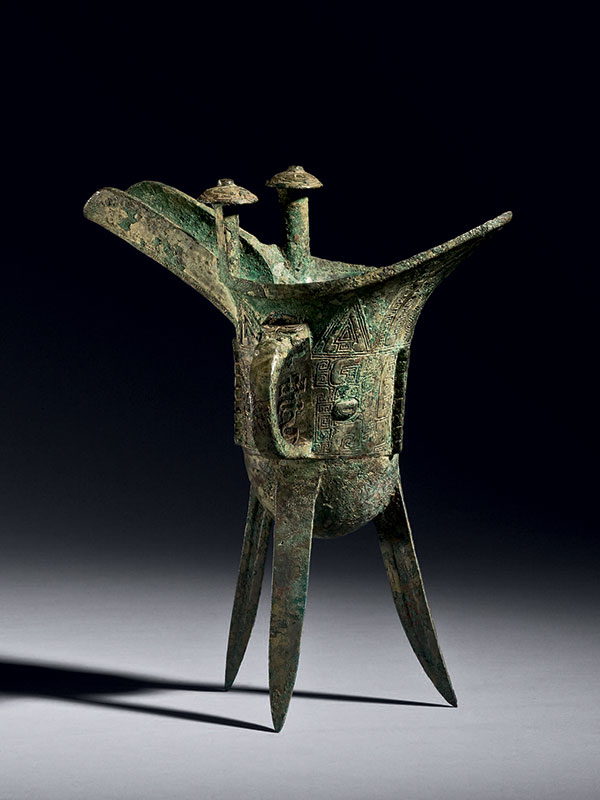
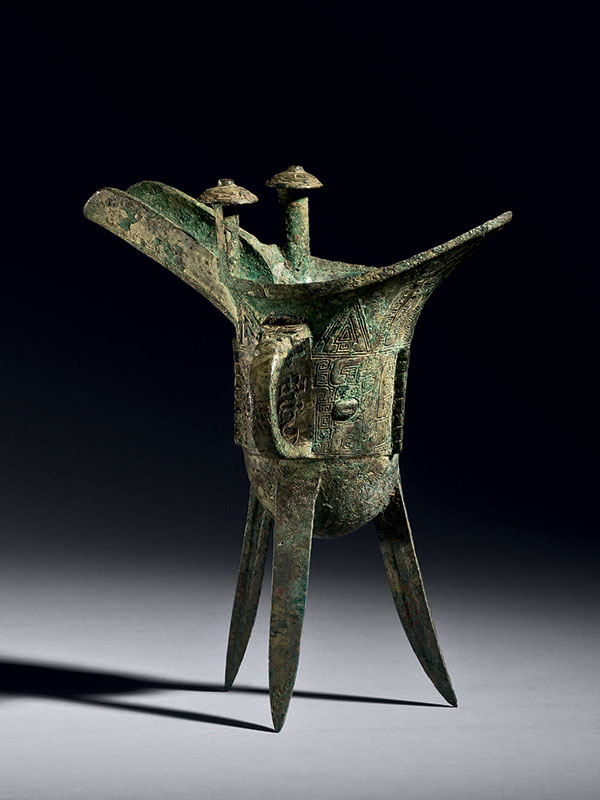
A Bronze jue is a shape of Chinese ritual bronze, a tripod vessel or goblet used to serve warm wine. It was used for ceremonial purposes by the Chinese of the Xia, Shang, and Zhou dynasties. Often the jue had a handle, sometimes in the shape of a dragon. It also has two protuberances on the top of the vessel, which were probably used when lifting the vessel out of heat.
A Chinese Bronze Jue, Shang Dynasty, 13th-12th century B.C.