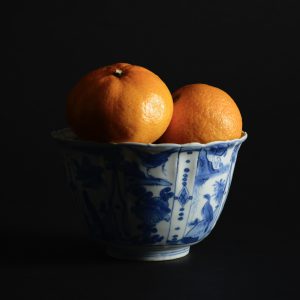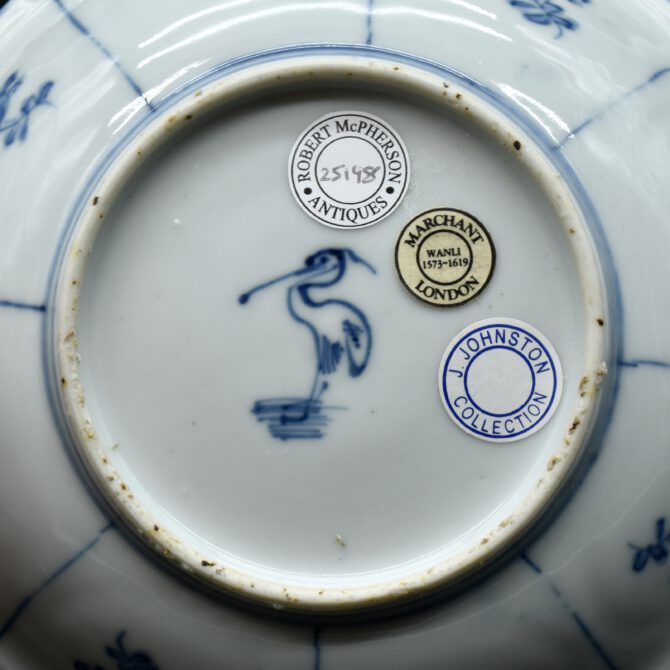
A Very Rare Egret Marked Small Ming Kraak Ware Saucer Shaped Dish c.1590s.
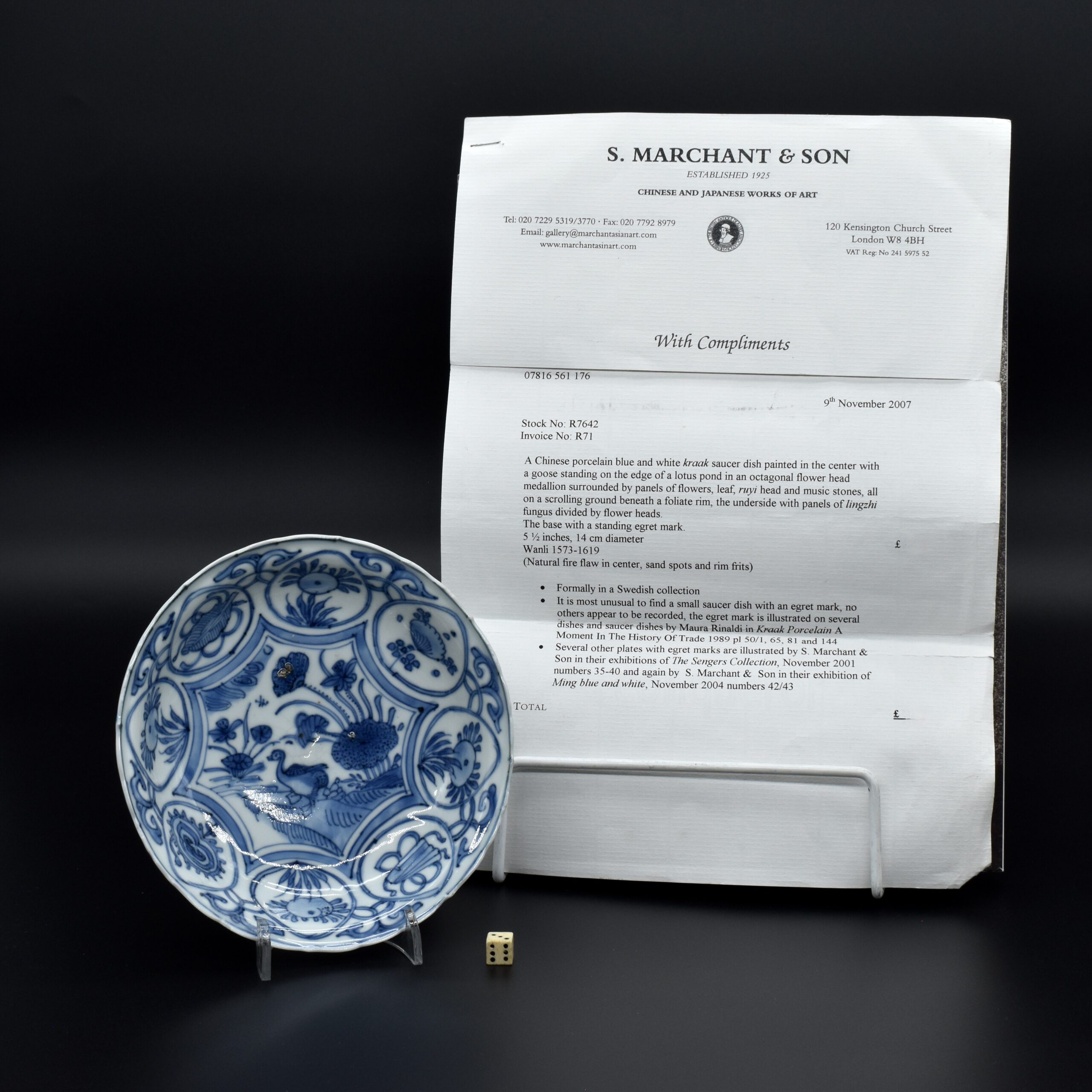
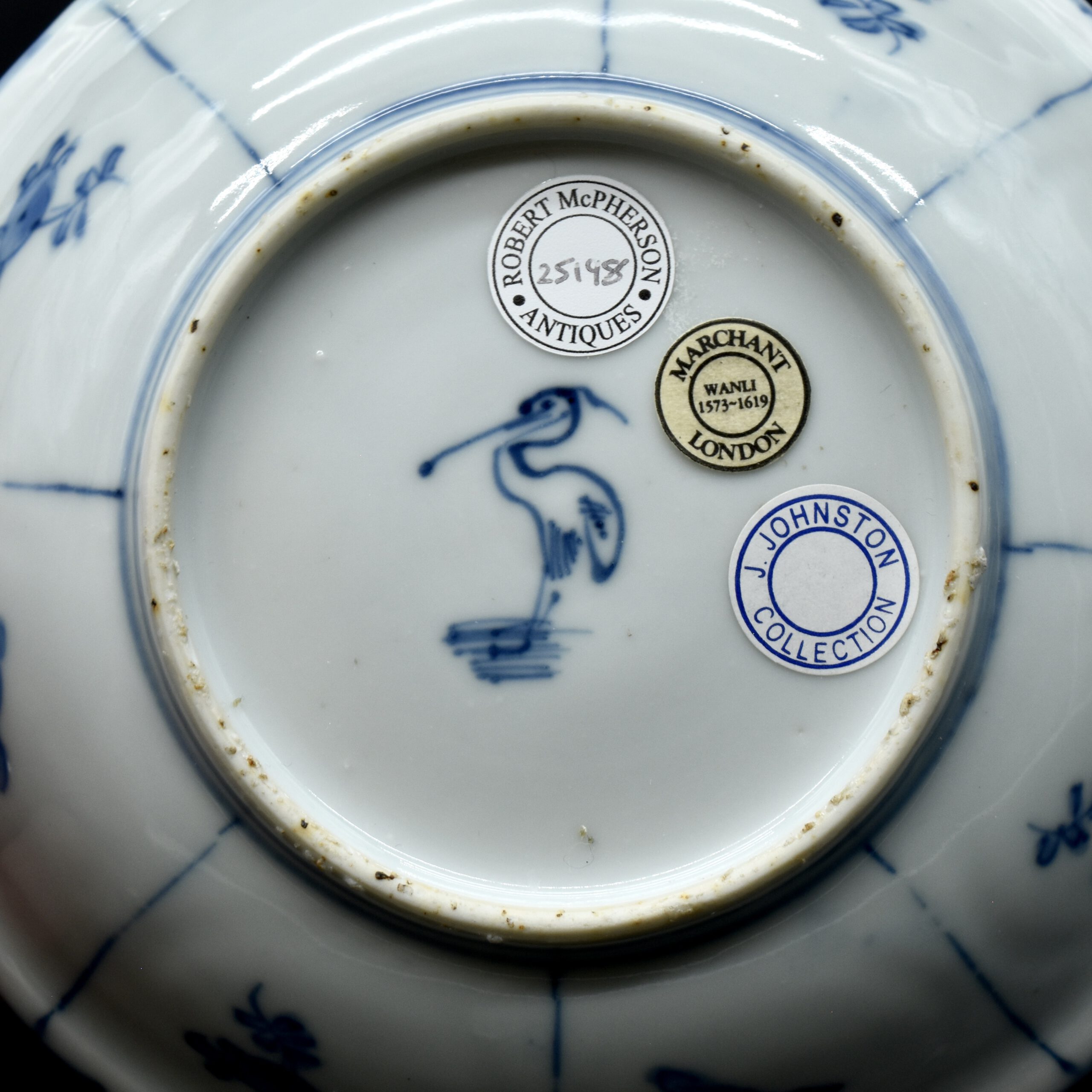
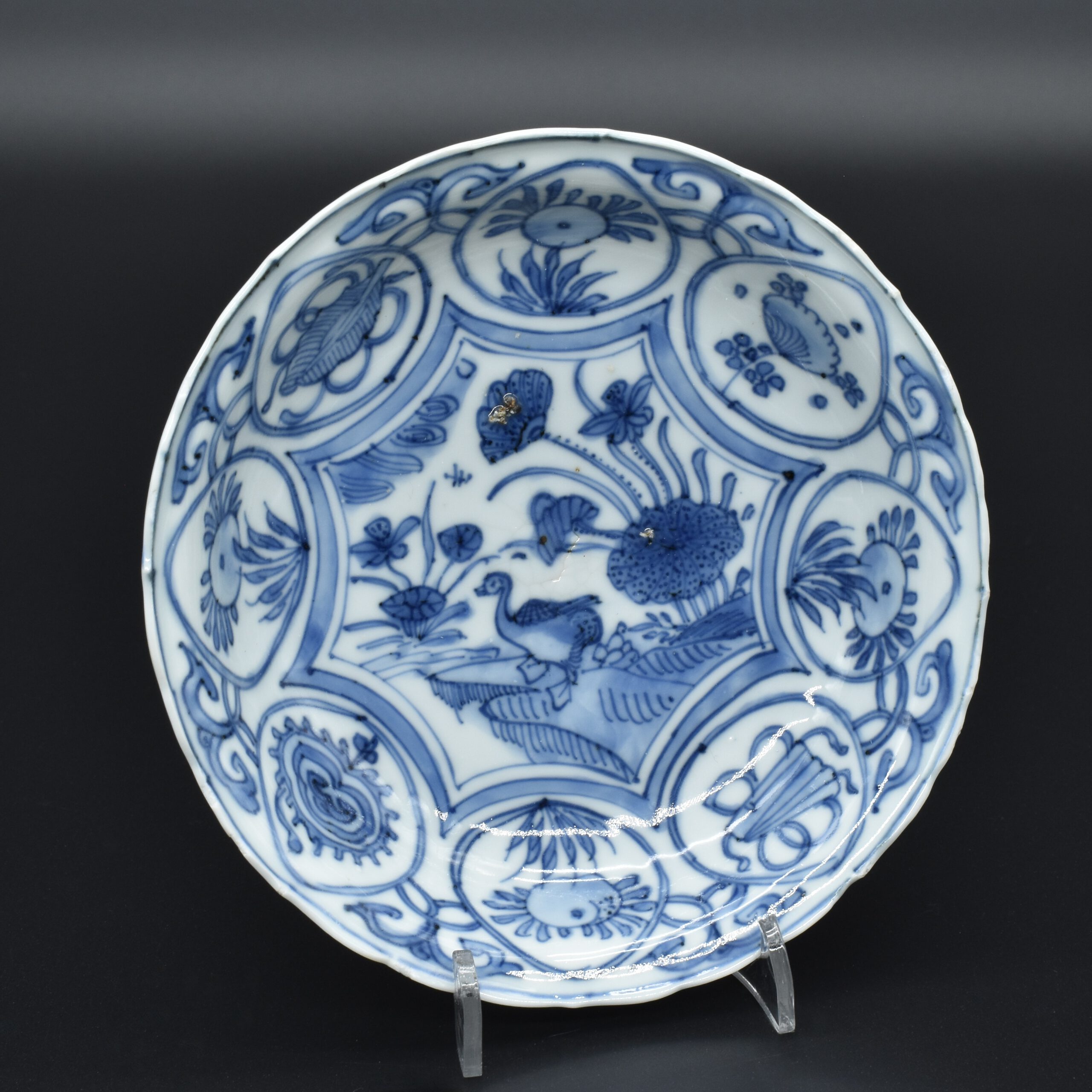
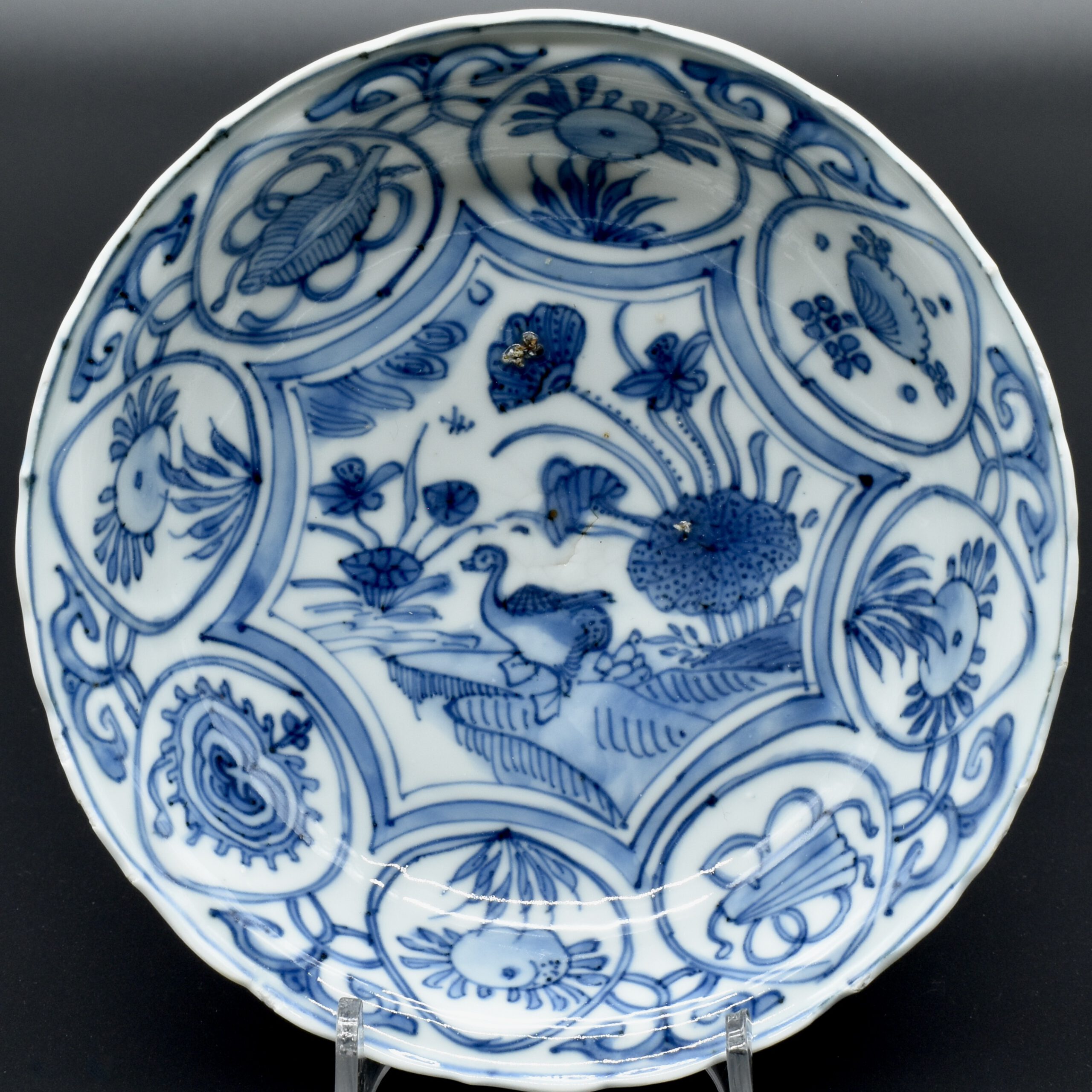
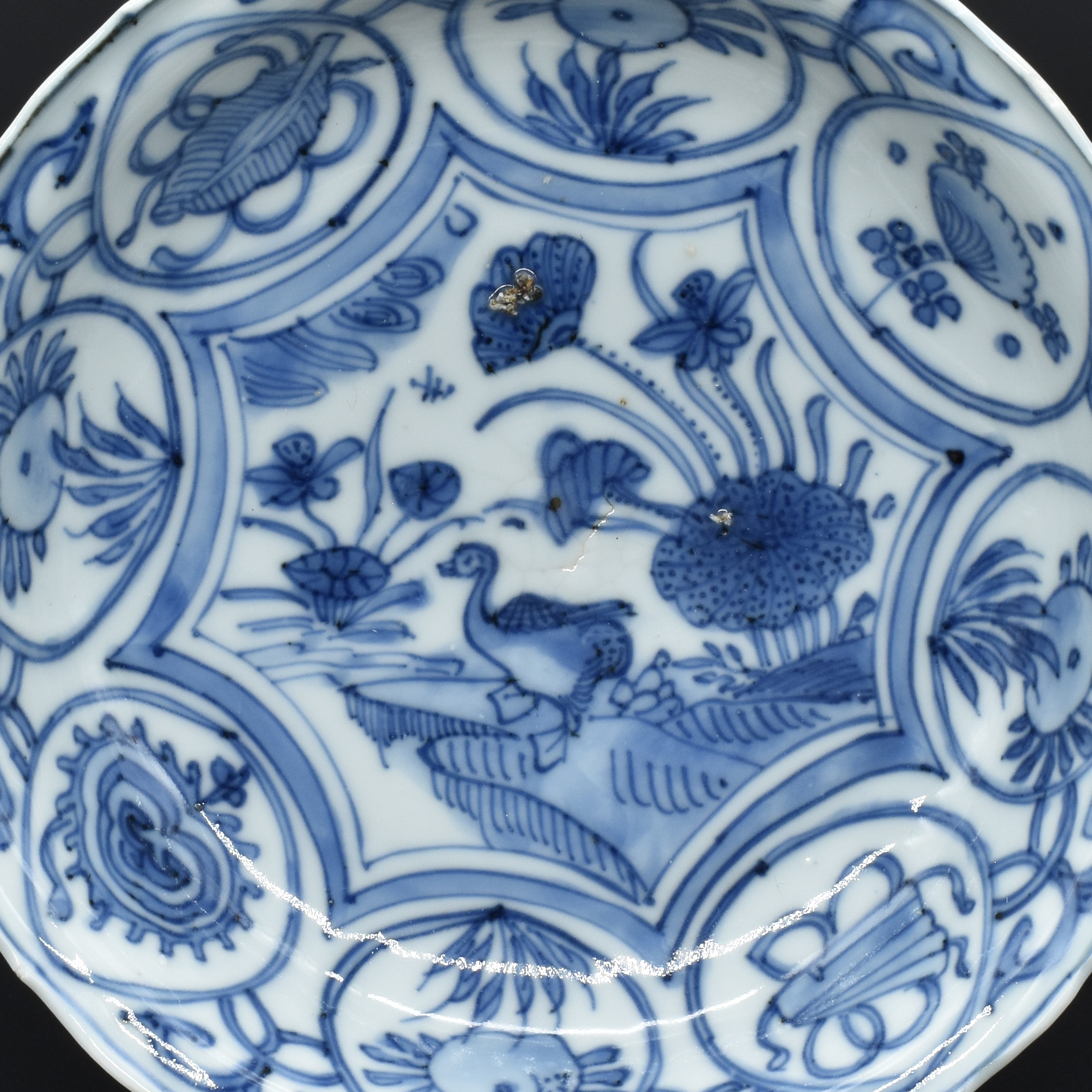
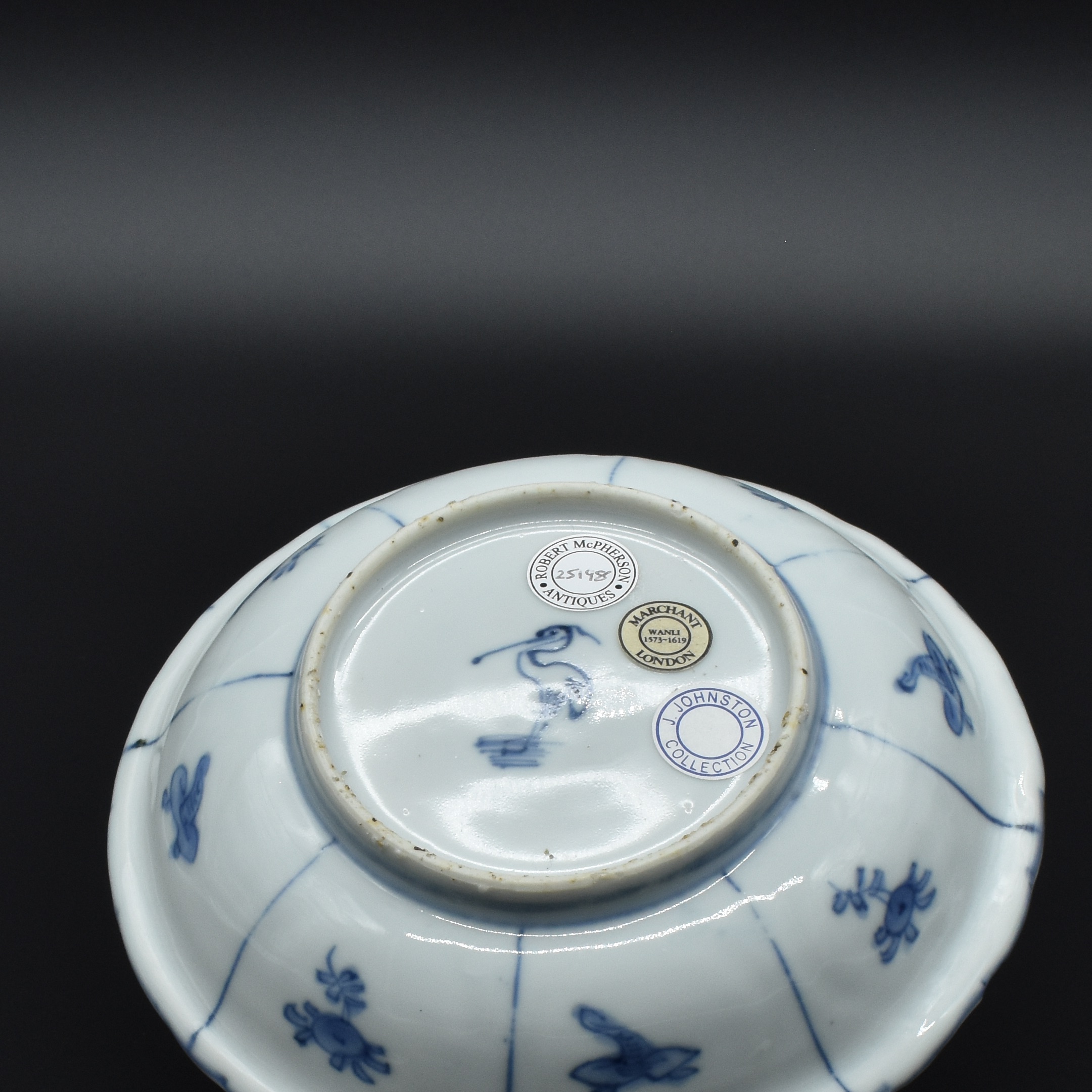
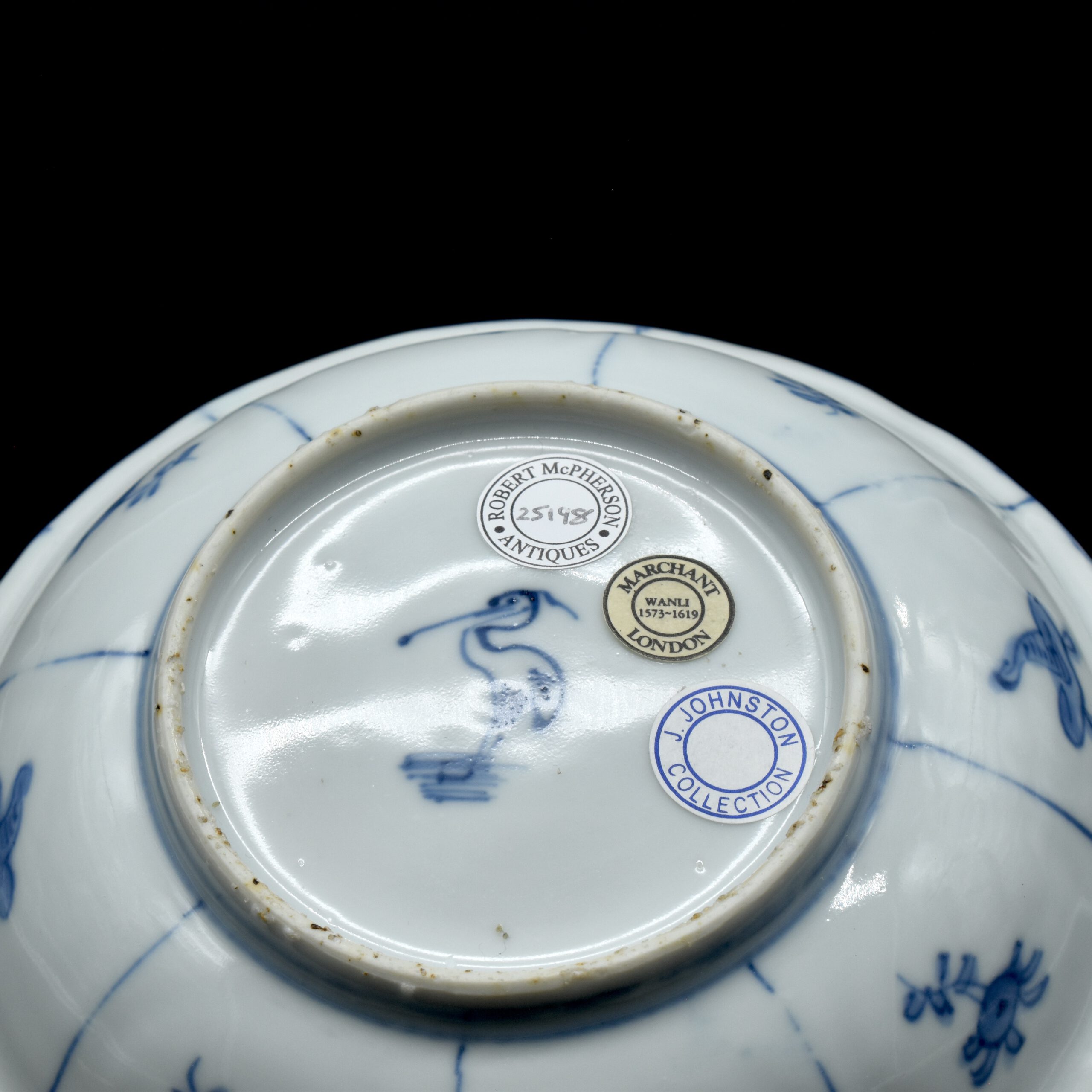
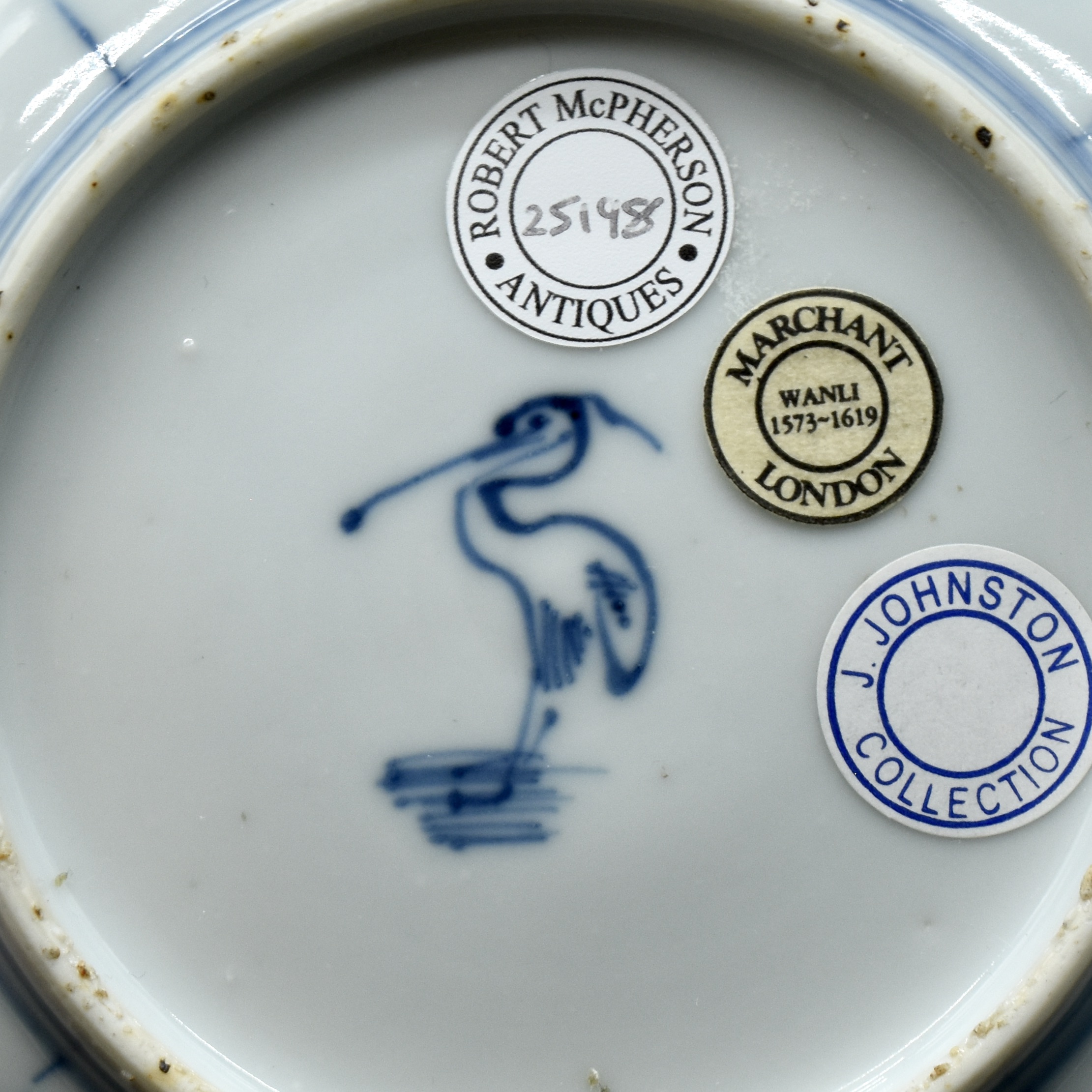
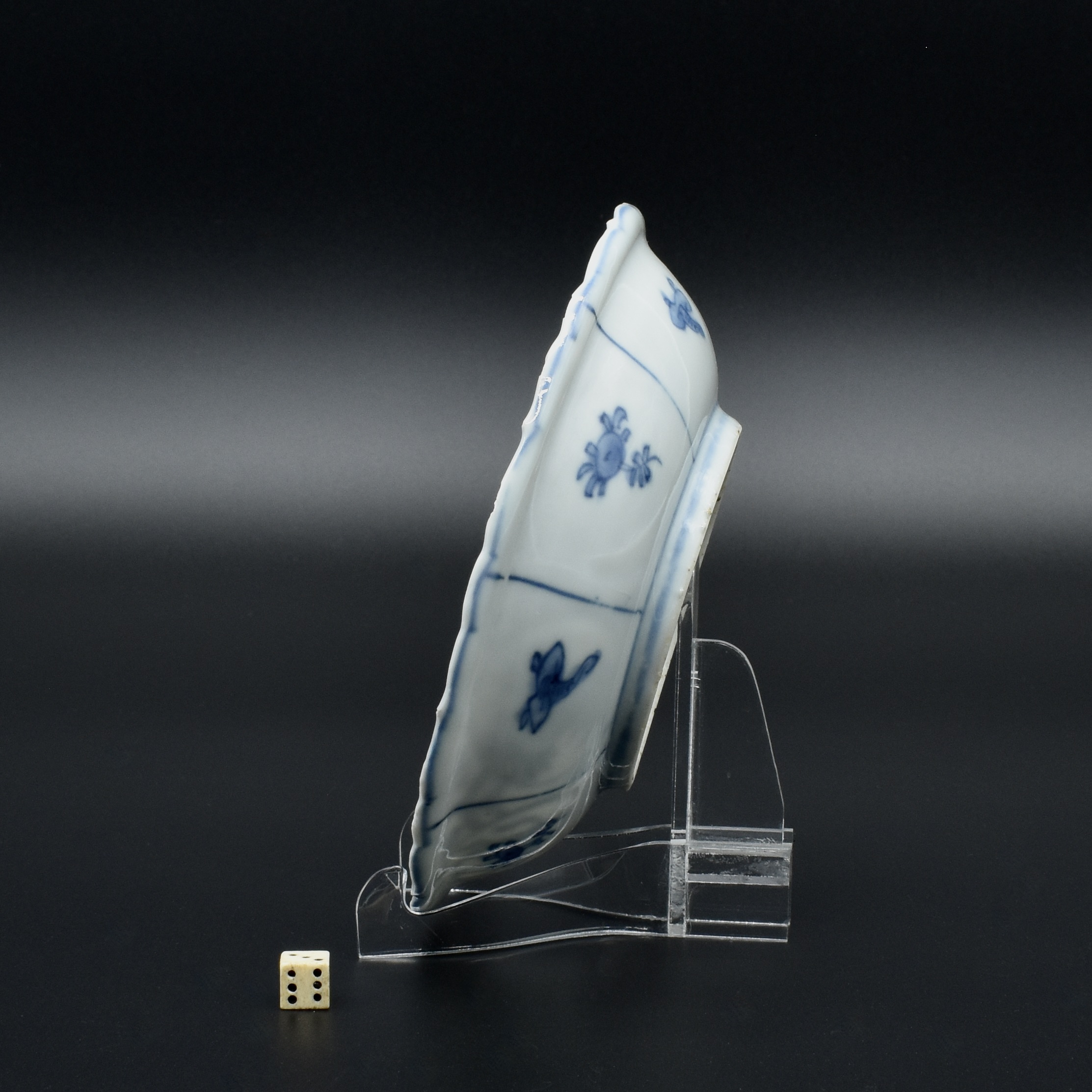
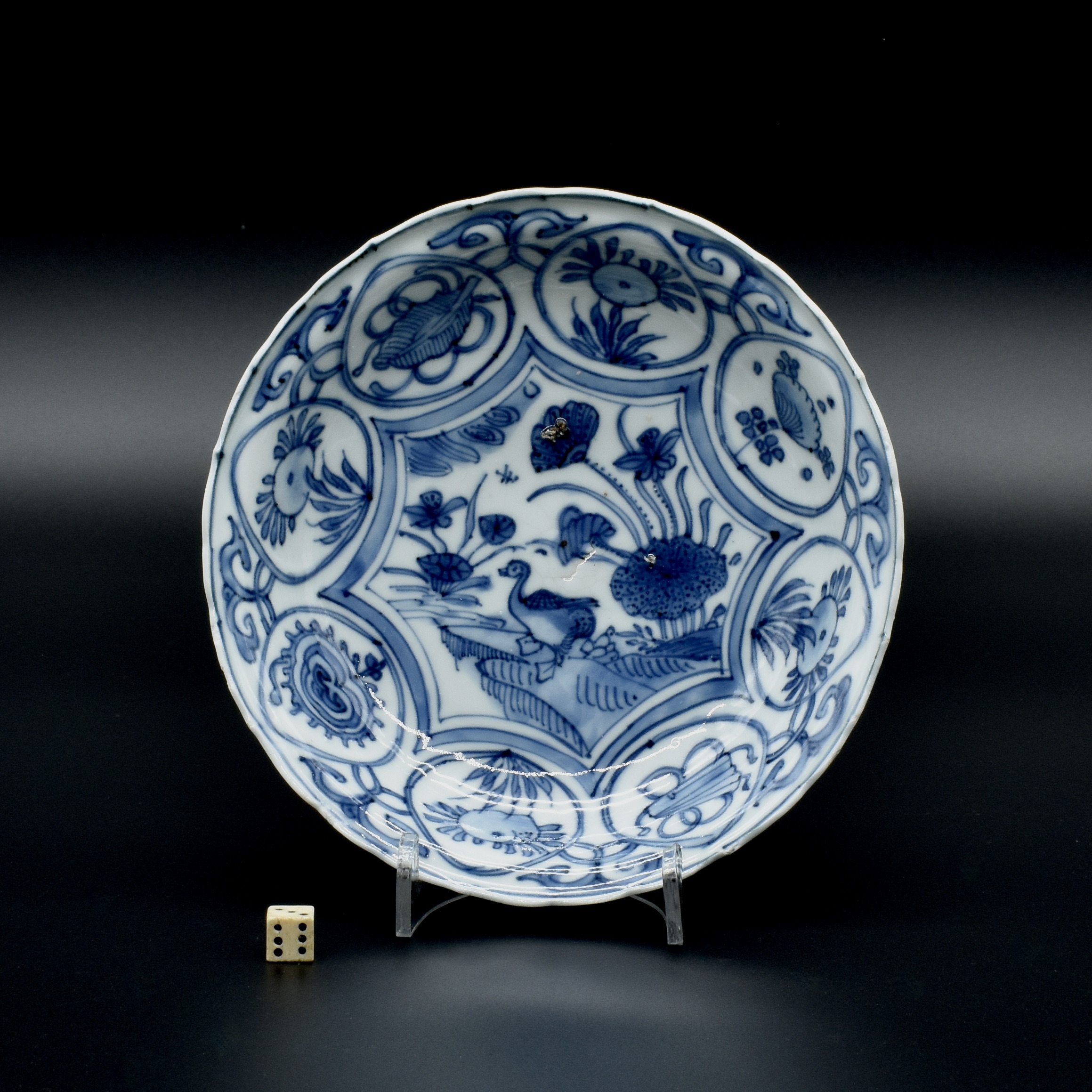
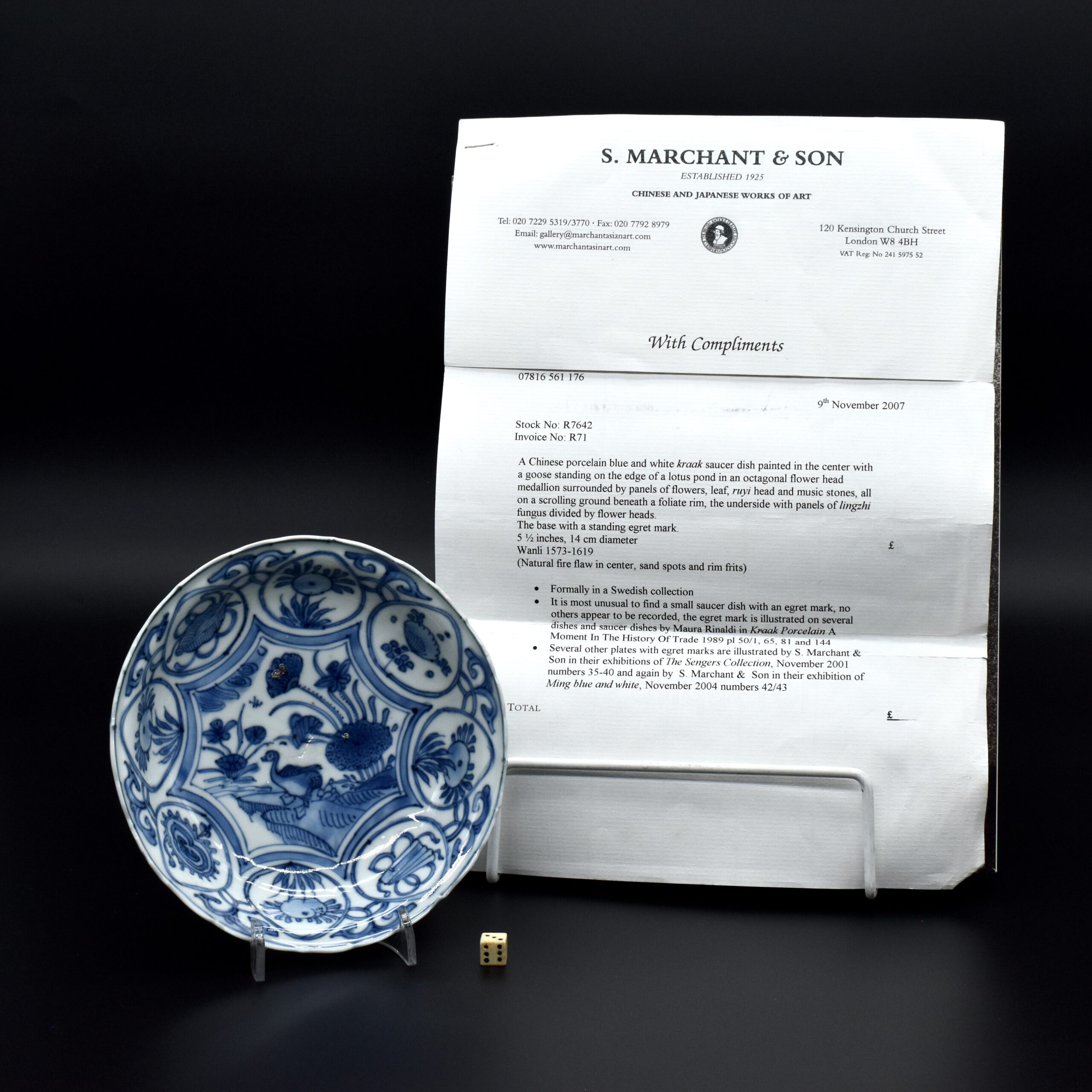
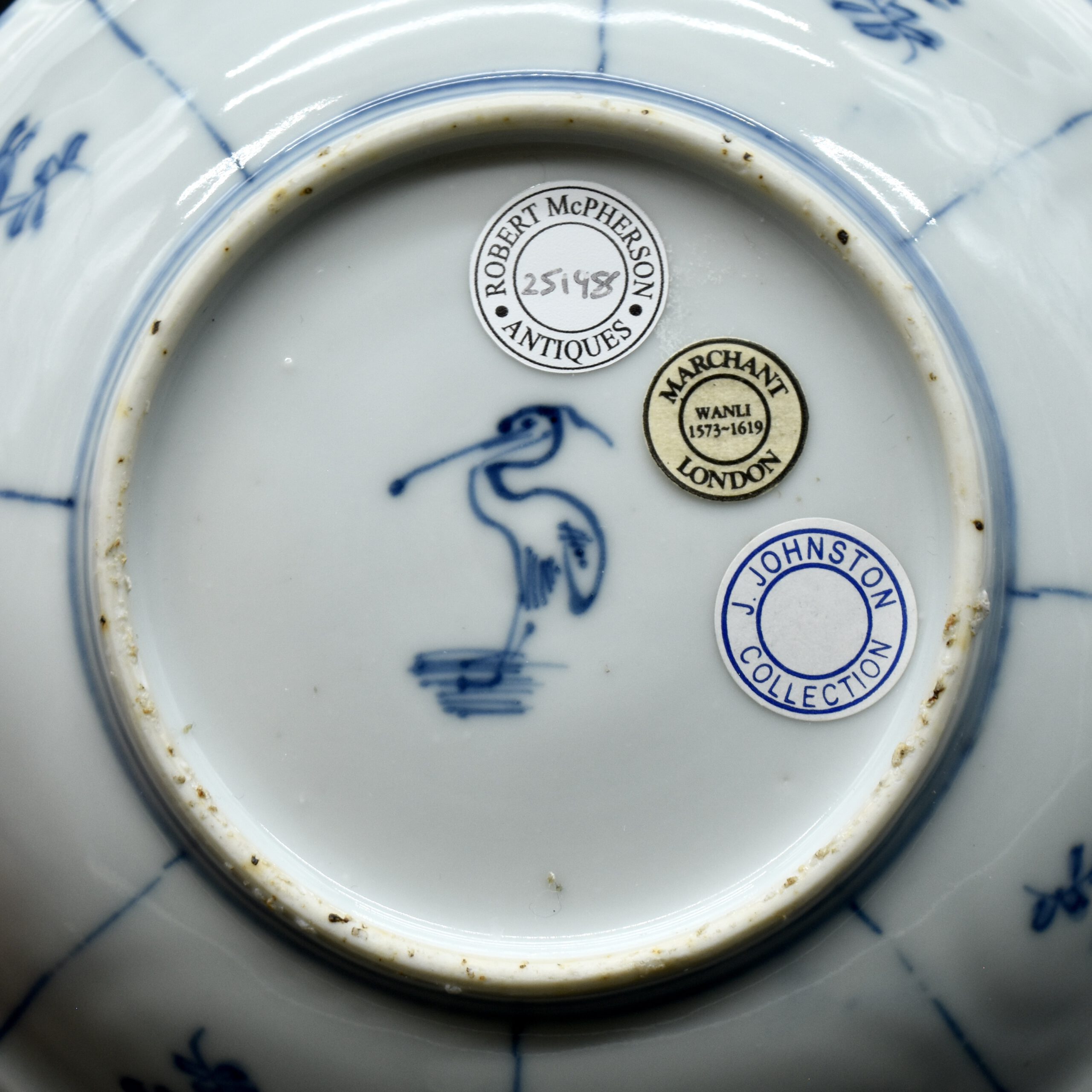
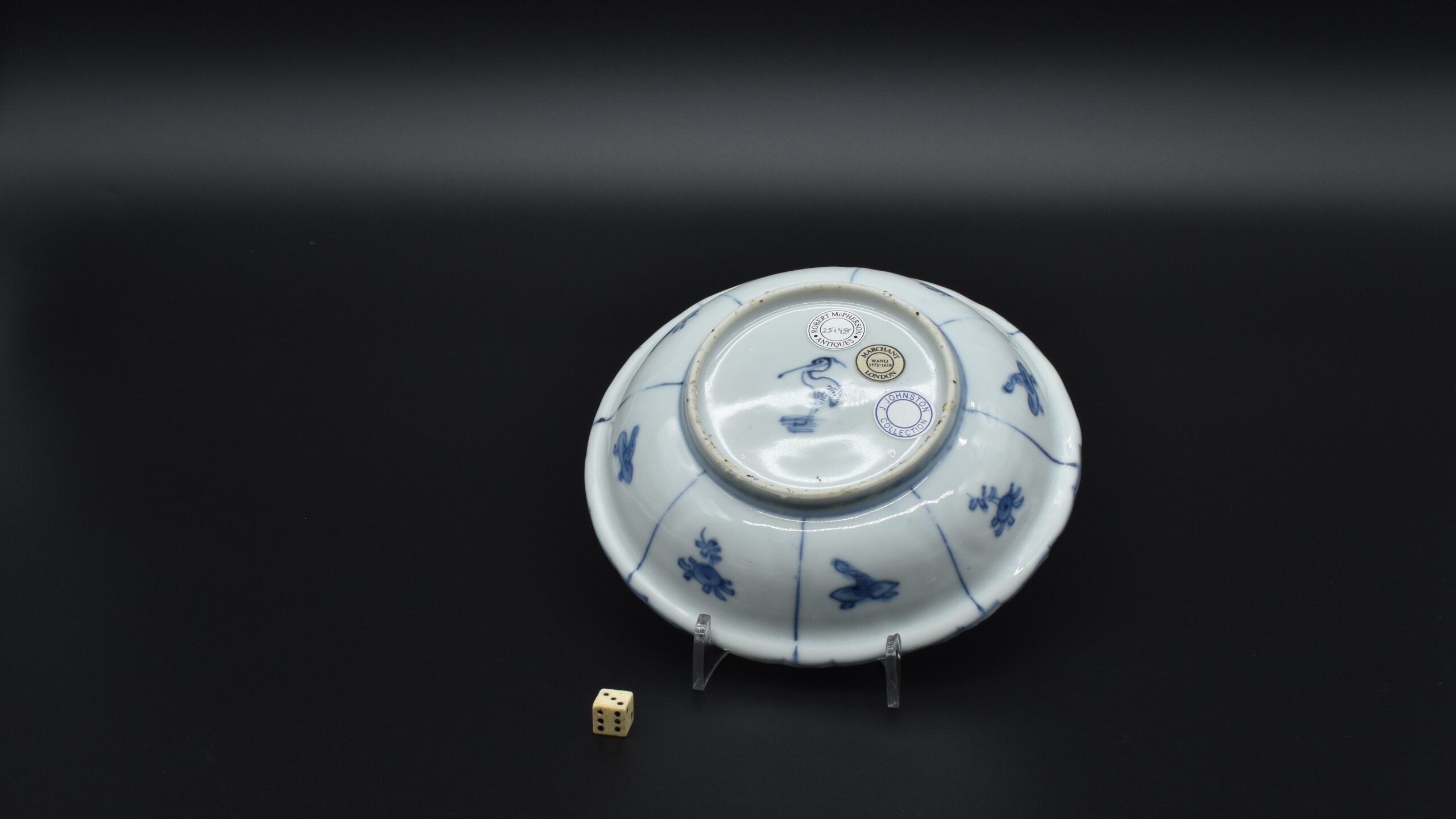
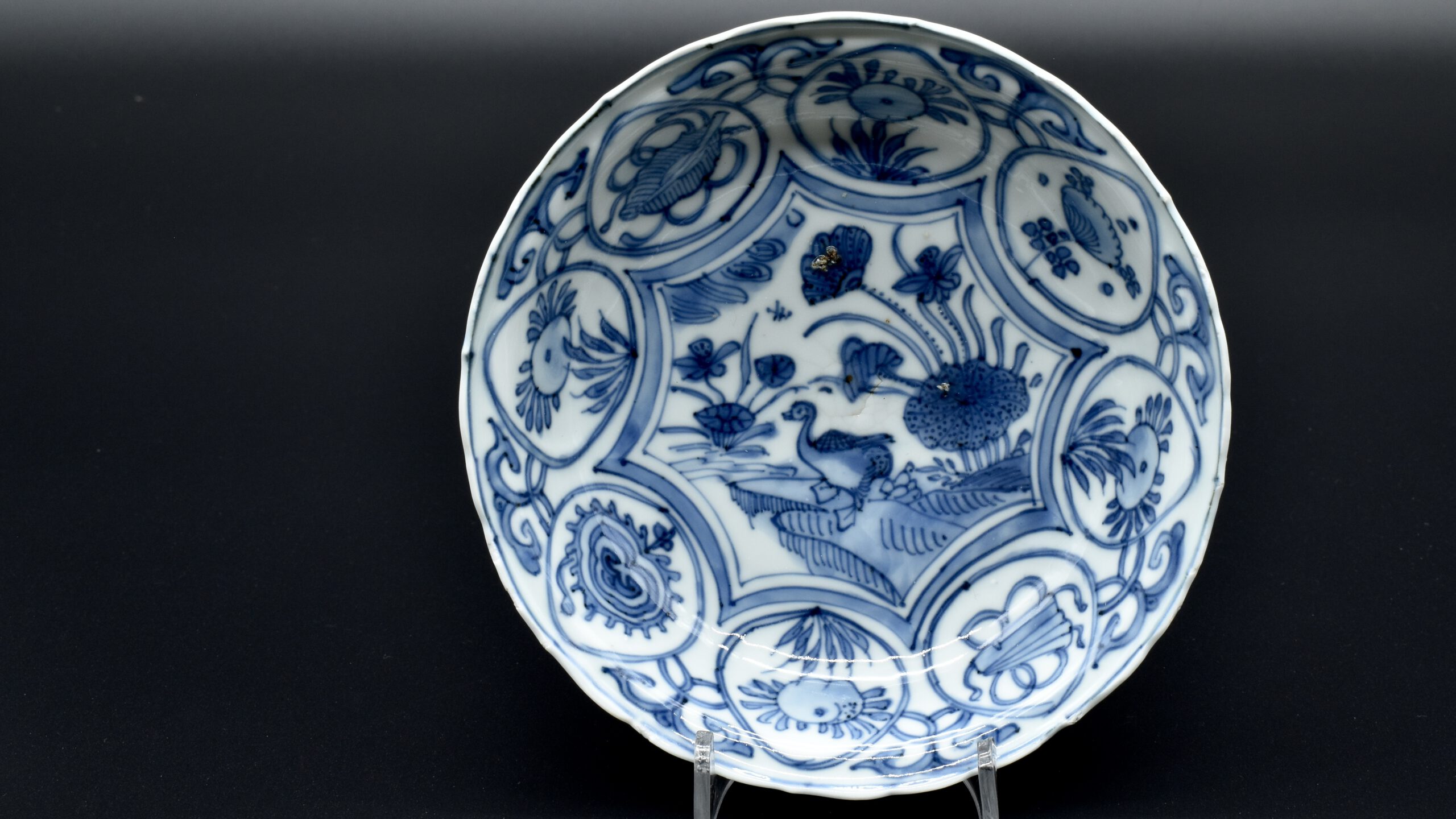
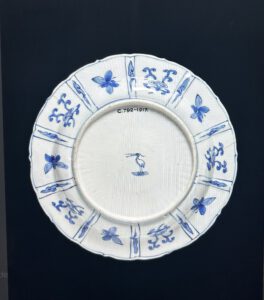
A Very Rare, Perhaps Unrecorded, Egret Marked Ming Saucer Shaped Kraak Ware Dish, Jingdezhen, Perhaps Guanyinge or Shibaqiao Kilns, Wanli Period c.1590s. This small Kraak porcelain or Kraak porselain, dish comes from a Swedish Collection, it then went to the renowned London dealers S. Marchant & Son, who commented that “It is most unusual to find a small saucer dish with an egret mark, no others appear to be recorded” on their invoice, see Provenance. This small Kraak ware dish comes from the Jack Johnson Collection. Dishes with egret marks are rare and have always been very desirable, the reason for this mark is less than straightforward. It is certainly associated with high quality Ming Kraak ware. In the past is has been suggested that the mark was is in fact a stork, the bird that symbolises Den Hague (The Hague). Rather wishful thinking, from a time when people saw Chinese porcelain from a rather biased Western perspective. I can imagine that story would have gone down rather well with some Dutch dealers in the past. The design is of a goose standing at the edge of a piece of flat land surrounded by flowering lotus growing from a pond or lakes edge. The lightly moulded border has eight panels, which are not circular but tear drop shaped or best described as pyriform, meaning pear shaped.
It is only recently that pieces excavated with the egret mark have been found in Jingdezhen, at two different kilns, Guanyinge or Shibaqiao. Of course, it is possible that they were made at other Jingdezhen kilns as well. This rare mark is associated with high quality Ming Kraak ware. In the past is has been suggested that the mark was in fact a stork, the bird that symbolises Den Haag (The Hague). I was wishful thinking, from a time when people saw Chinese porcelain from a rather biased Western perspective.
The only excavated example of an egret marked porcelain is a fragment that provides evidence of a Portuguese connection as it was excavated at Macao, at the CD-1 Pak Van site (see References). Macau was an important Portuguese colony on the Pearl River from 1557. From the 1640s Macau’s economy declined after Japan halted trade, as well as revolts against Spain and Portuguese. I assume the present example was more likely to have been shipped by the Portuguese to Europe, rather than by the Dutch as the V.O.C. wasn’t formed until 1602. However the Dutch were trading in the late 16th century, and kraak porcelain was imported into the Netherlands. In the 46 years I have been dealing, this is the second egret marked piece I have had. That piece was purchased by Tom Lurie about 25 years ago at the Olympia Antique and Art Fair, London, I am pretty sure it is illustrated in the catalogue of his collection. For more information about Kraak porcelain below our Photograph Gallery also see Kraak Ware Porcelain
I have relied extensively on a really well written and produced book for the background history of this Kraak ware dish. Teresa Canepa has done so much research, and the illustrations are excellent. If you don’t have this book, you really should consider buying it : Jingdezhen to the World: The Lurie Collection of Chinese Export Porcelain from the Late Ming Dynasty (Teresa Canepa, published by Ad Ilissvm 2019. ISBN 978-1-912168-09-5). See Reference.
SOLD
See Below For More Photographs and Information
- Condition
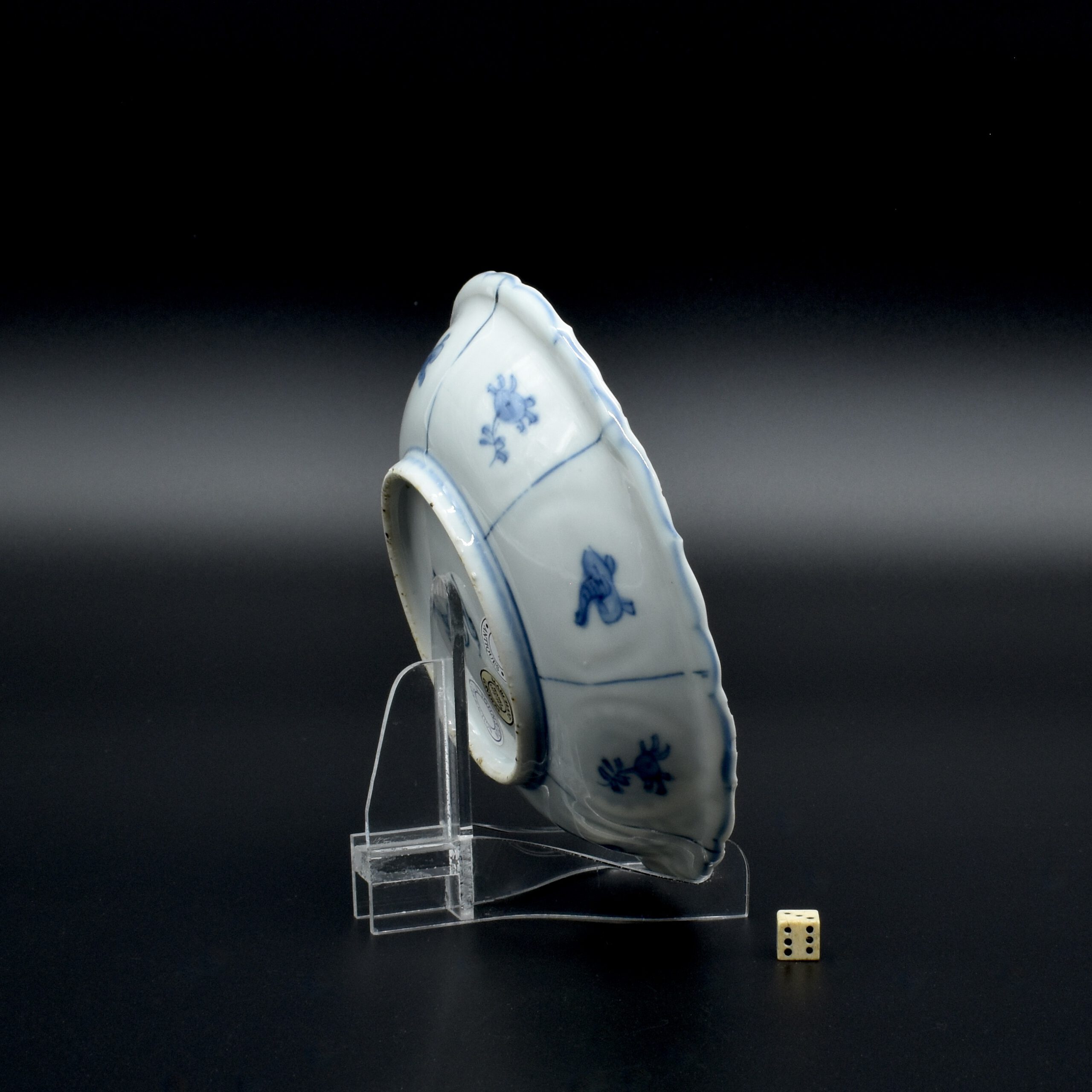
- In excellent condition, firing fault to the center, grit to the center and very light frits to the glaze on the rim.
- Size
- Diameter 13.8 cm (5 1/2 inches).
- Provenance
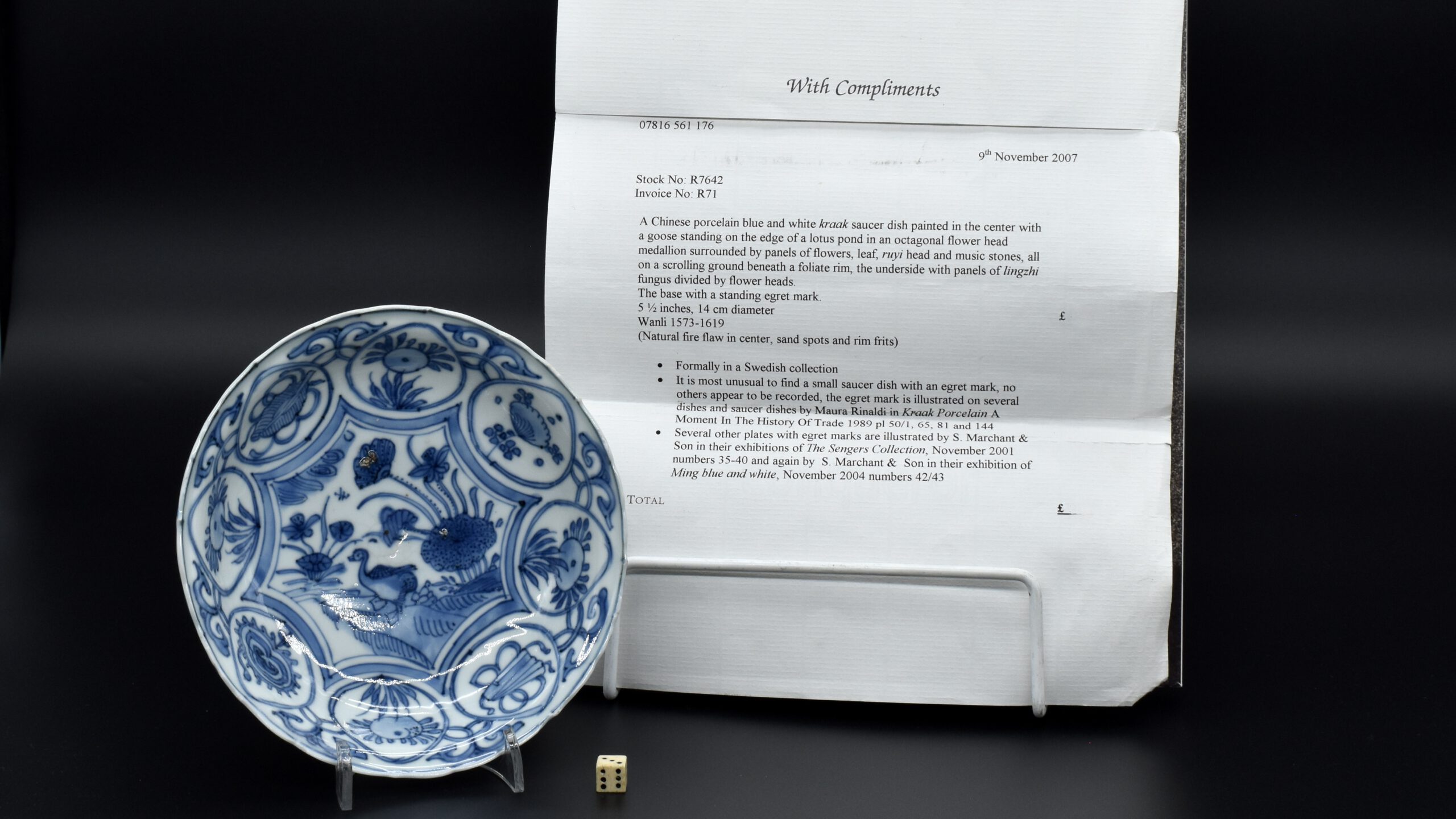
- Formally in a Swedish collection. S. Marchant & Son, Kensington Church Street, London. Stock number R7642, Invoice No. R71. Sold 9th of November 2007, they note that "It is most unusual to find a small saucer dish with an egret mark, no others appear to be recorded". (Invoice included with this dish). The Jack Johnston Collection.
- Stock number
- 2 5 1 9 8
- References
- The only excavated of a egret marked porcelain is a fragment that provides evidence of a Portuguese connection as it was excavated at Macao, see : Jingdezhen to the World: The Lurie Collection of Chinese Export Porcelain from the Late Ming Dynasty (Teresa Canepa, published by Ad Ilissvm 2019. ISBN 978-1-912168-09-5) page 80, Figs I.15.ia and b. For six egret marked dishes see pages 76 to 91. For a group of rare egret marked Ming kraakware porcelain see : Ming Blue and White Porcelain, The Drs.A.M. Sengers Collection (S.Marchant & Son, November 2001) page 50 plate 35, page 52 plate 36, plate 37 page 54, plate 38 page 55, page 56 plate 39 and page 58 plate 40. For Kraakware porcelain with egret marks : Kraak Porcelain, A Moment in the History of Trade (Maura Rinaldi, Bamboo Publishing,1989) pages 65, 81 and 144.
Photos
Information
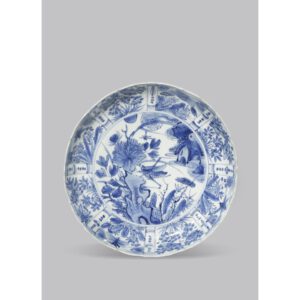
A Rare Egret Marked Ming Kraakware Dish.
Sold at Christie's New York, 16th of March 2015 for $21,250 (including premium).
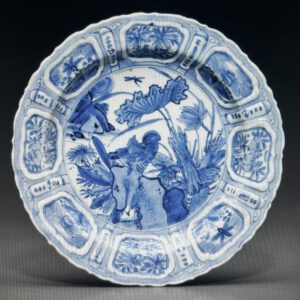
LATE MING DYNASTY, CIRCA 1610-1630
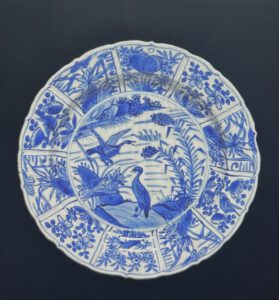
The dish has a bracket-lobed rim and is finely decorated in vibrant tones of cobalt blue with a central scene of a duck in a lotus pond enclosed by radiating lappets containing floral groupings and flying insects. The reverse is decorated with similar lappets and a small 'egret' mark on the base.
8 ½ in. (21.6 cm.)
Provenance
Blitz Antiek, Amsterdam, 1989.
Collection of Julia and John Curtis.
A Rare Kraak Egret Marked Dish.
Sold Rob Michiels Auction in Bruges. June 2026.
This cracked example Sold for € 8.450 (including premium).
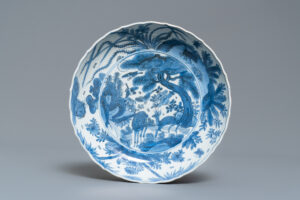
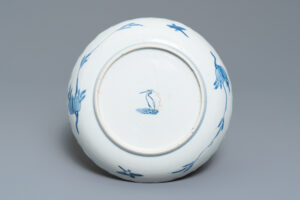
An Egret-marked Kraakware Dish at the British Museum
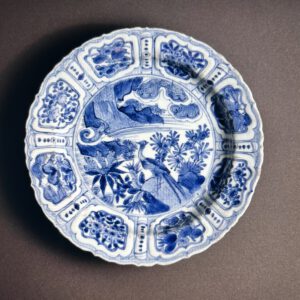
A Rare Ming Egret-Marked Kraakware Dish
Sold at Woolley & Wallis for £9,500 plus buyers premium.
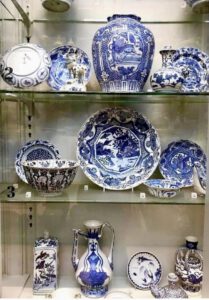
A Kraak Dish with Egret Mark.
At the Victoria and Albert Museum in London.
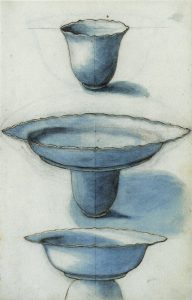
Early 17th Century Dutch Drawings of Kraak porcelain.
This extraordinary watercolour was sent to China to be made into these objects at Jingdezhen.
It is interesting that the shapes are clearly shown, however no indication has been given about the decoration.
Ming Kraak Porcelain Depicted in 17th Century European Paintings.


1612-13
Oil on panel, 55 x 85 cm
Private collection


Other Images of Ming Kraak Ware Porcelain