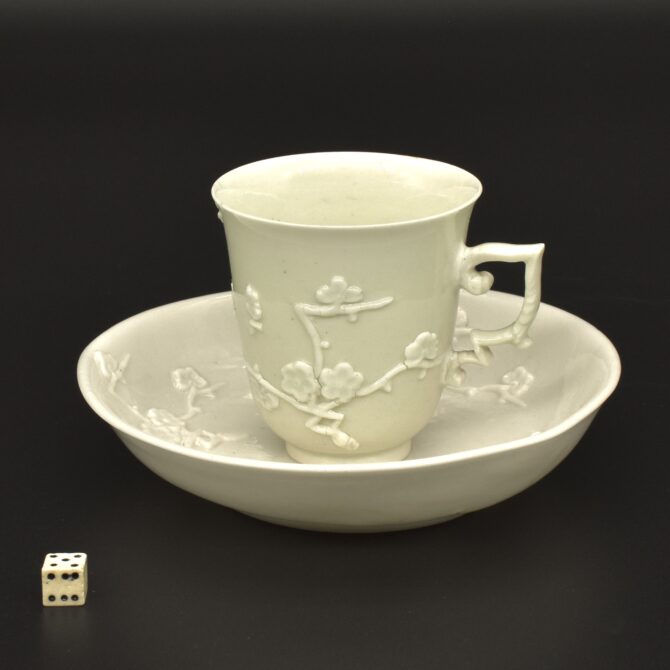
A Rare 18th Century Capodimonte Coffee Cup and Saucer After Chinese Blanc de Chine Porcelain.
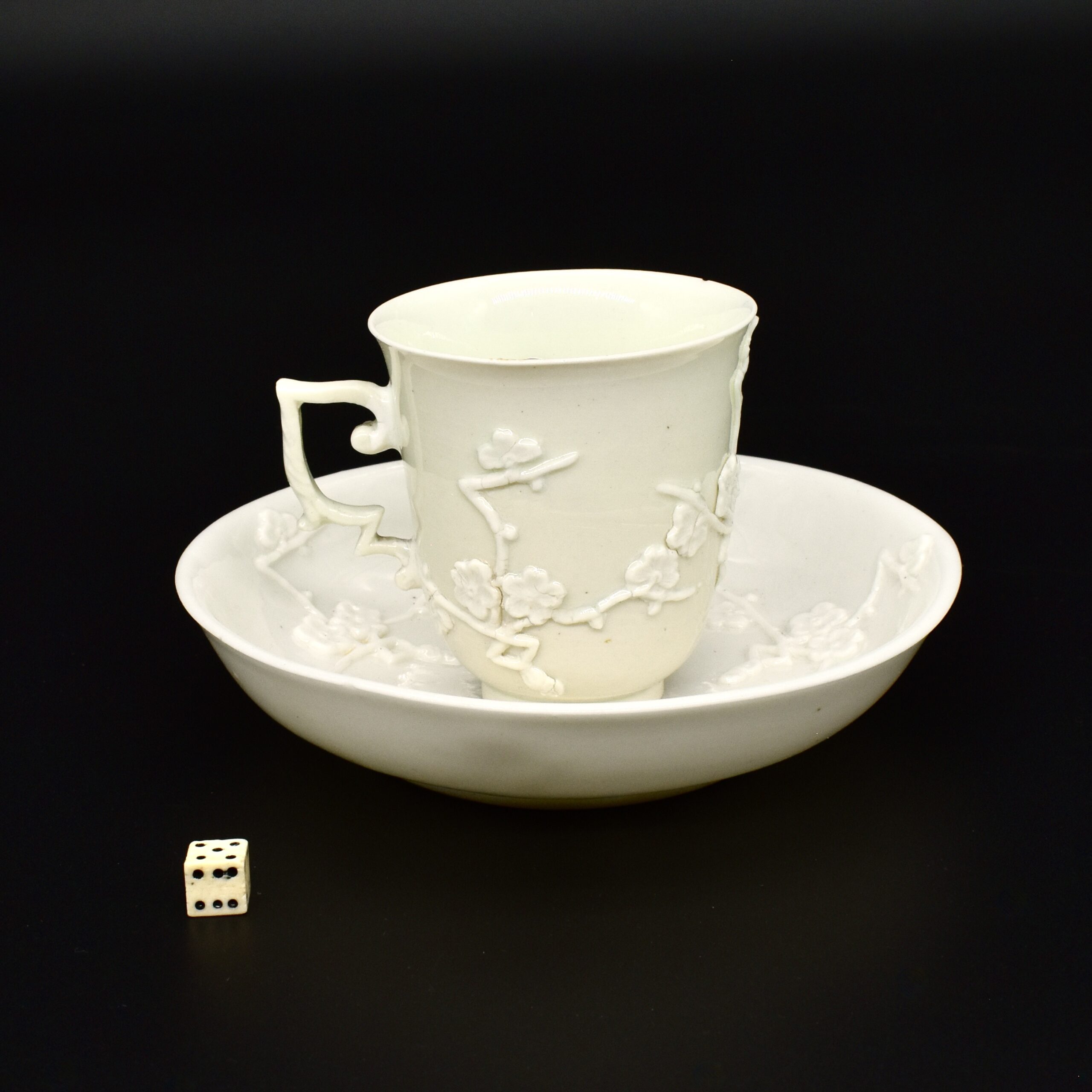
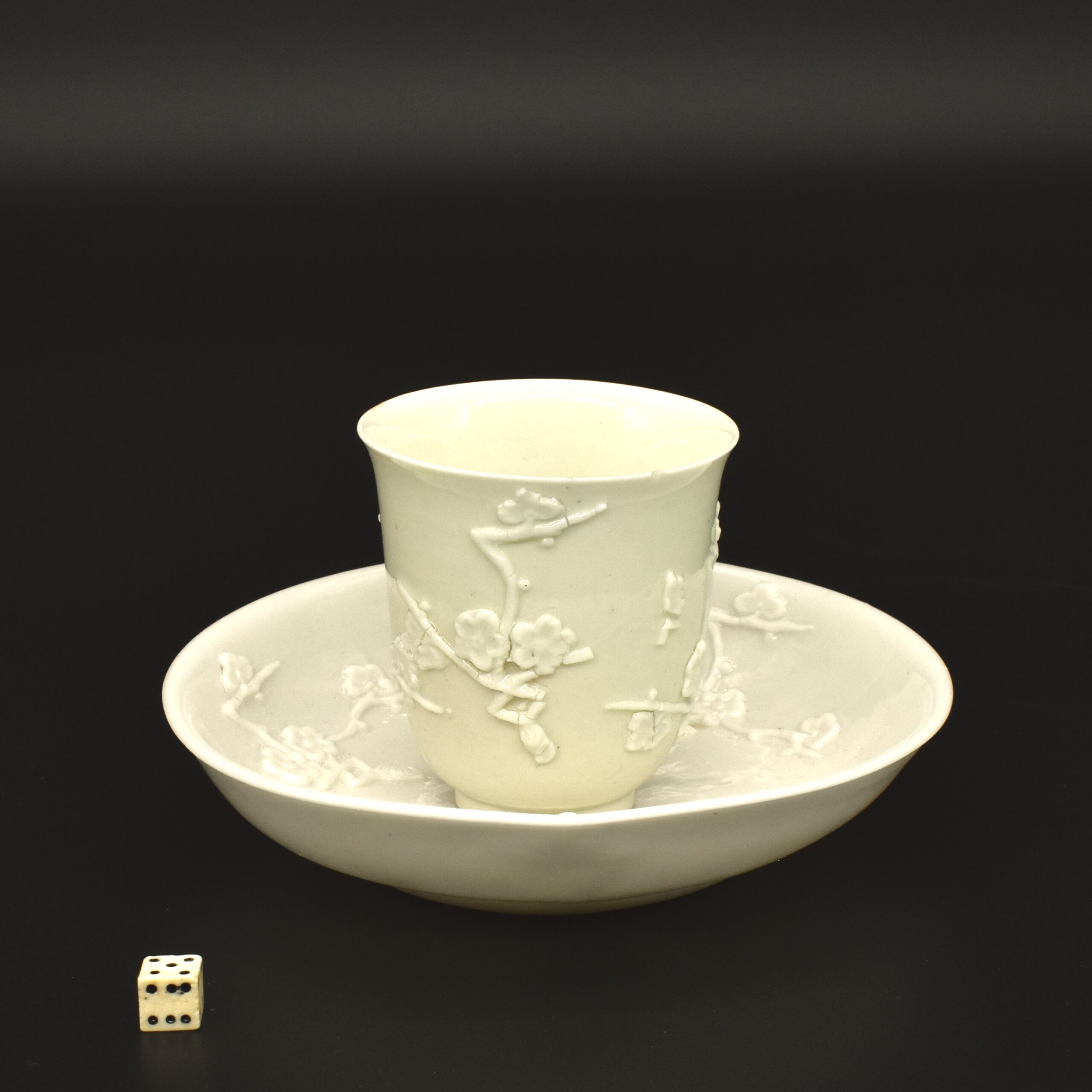
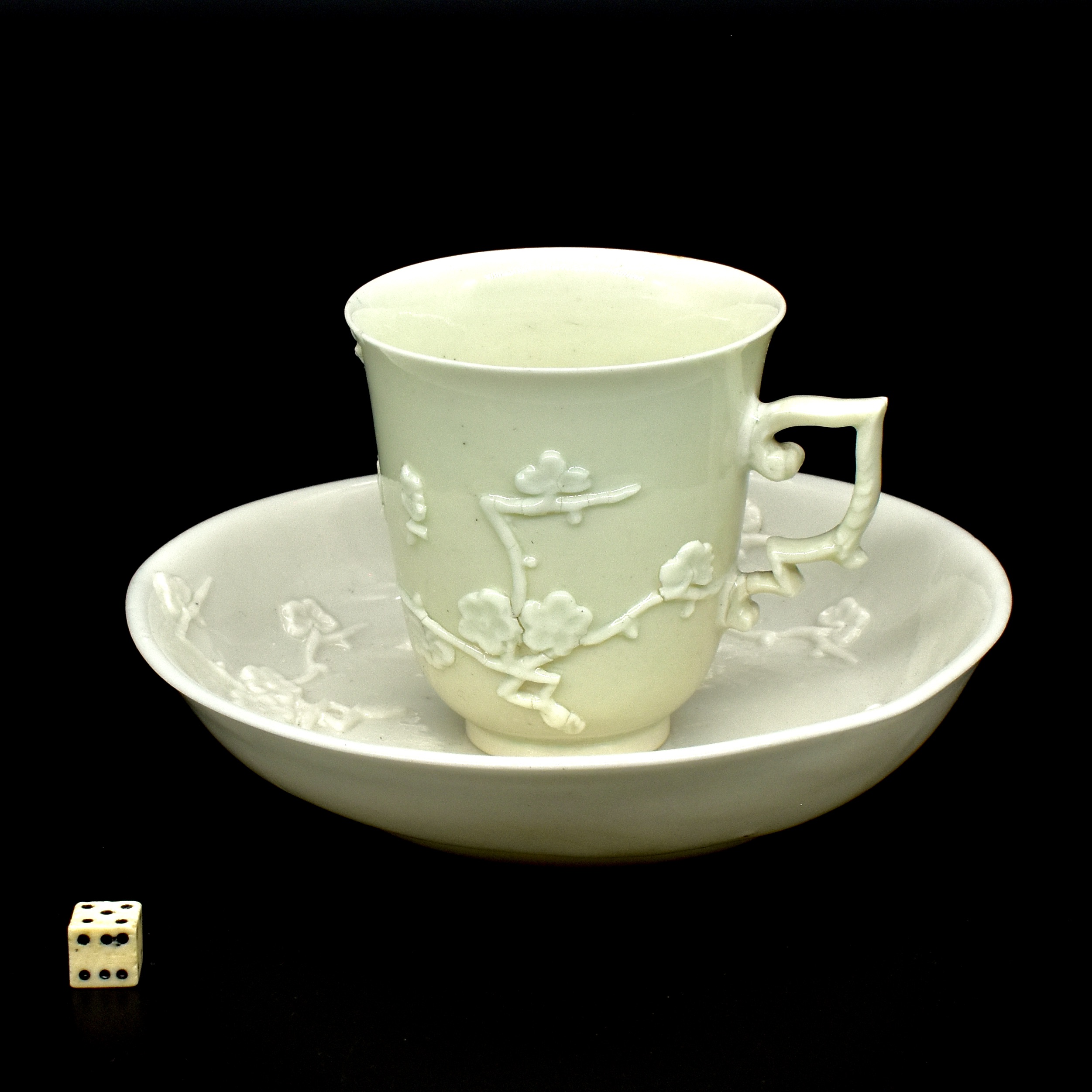
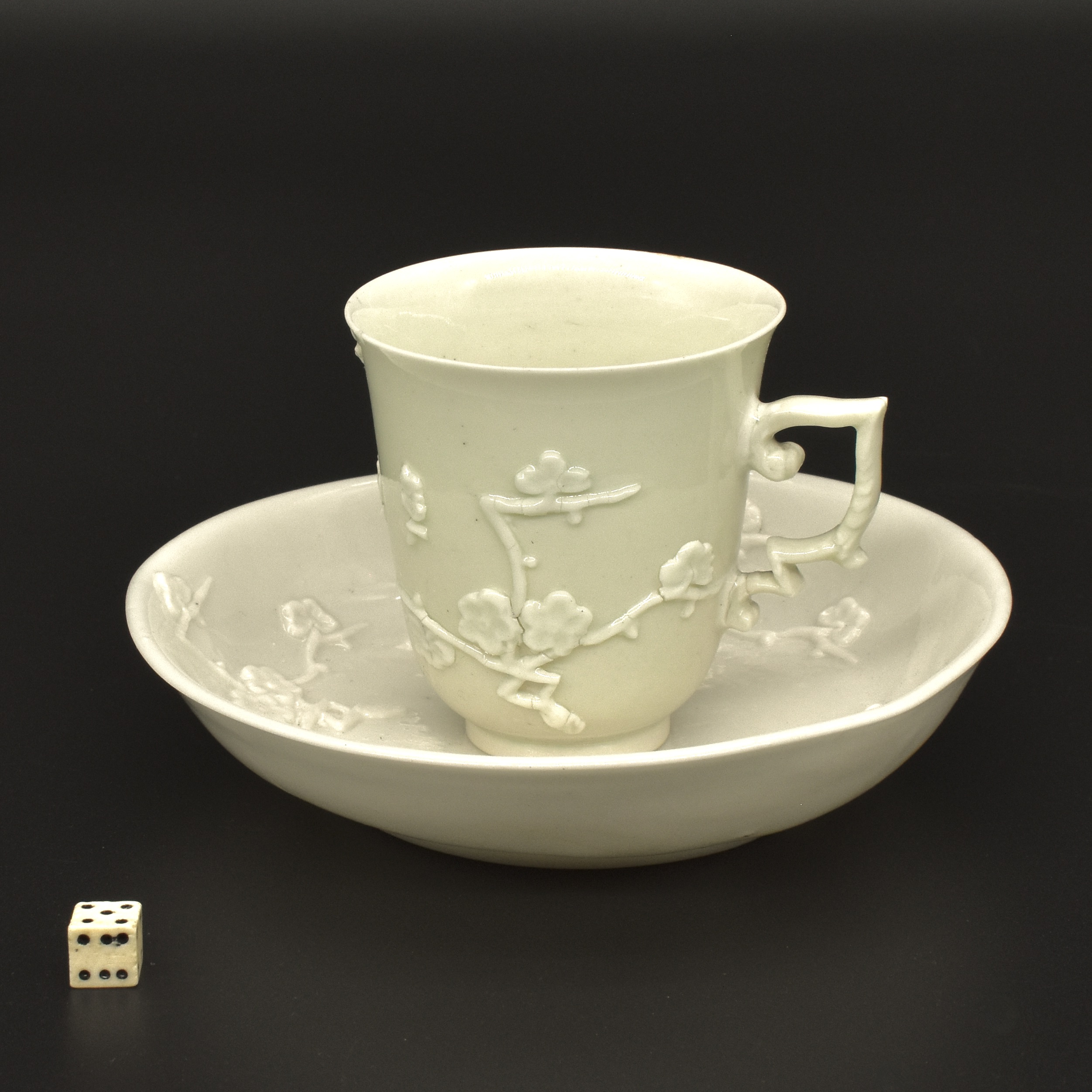
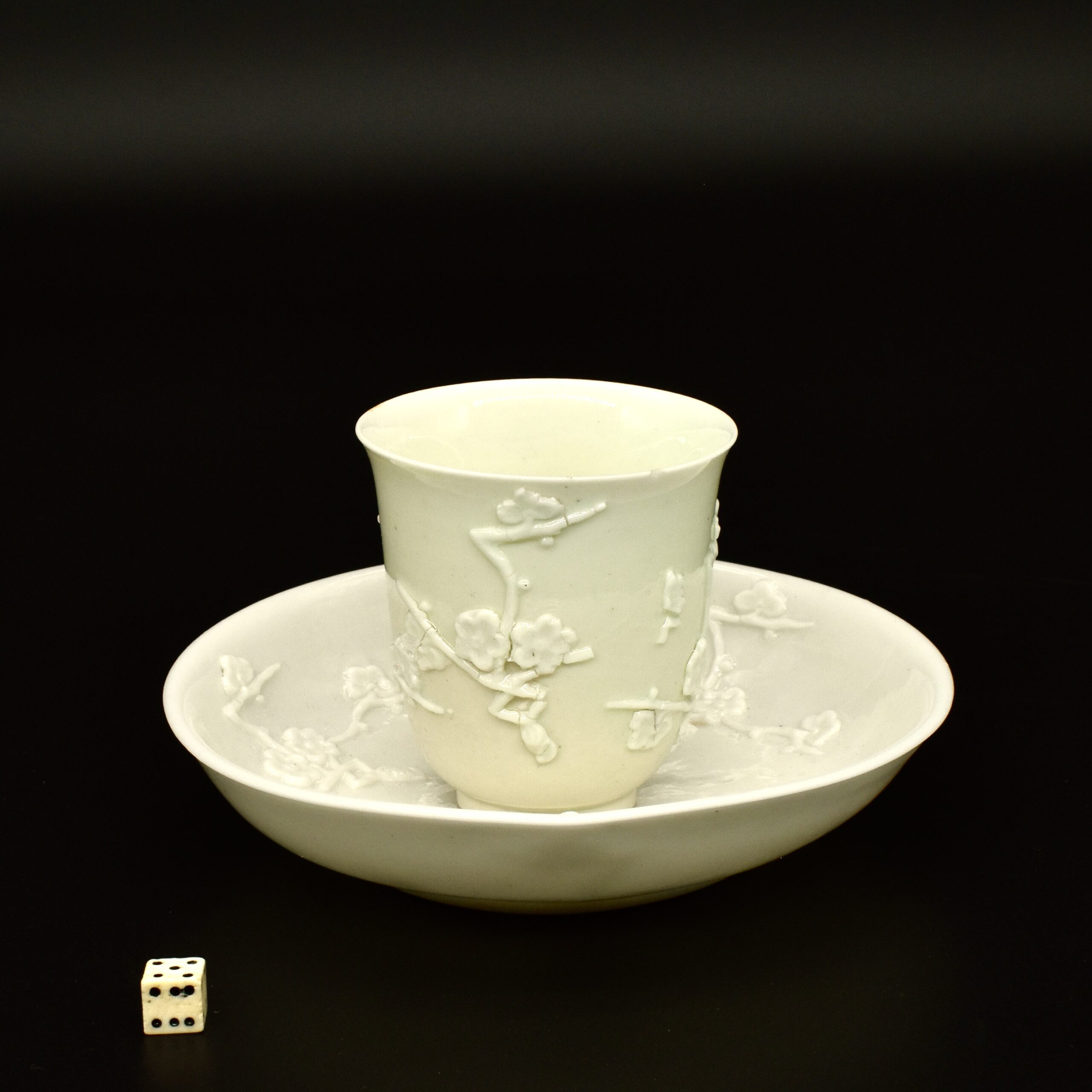
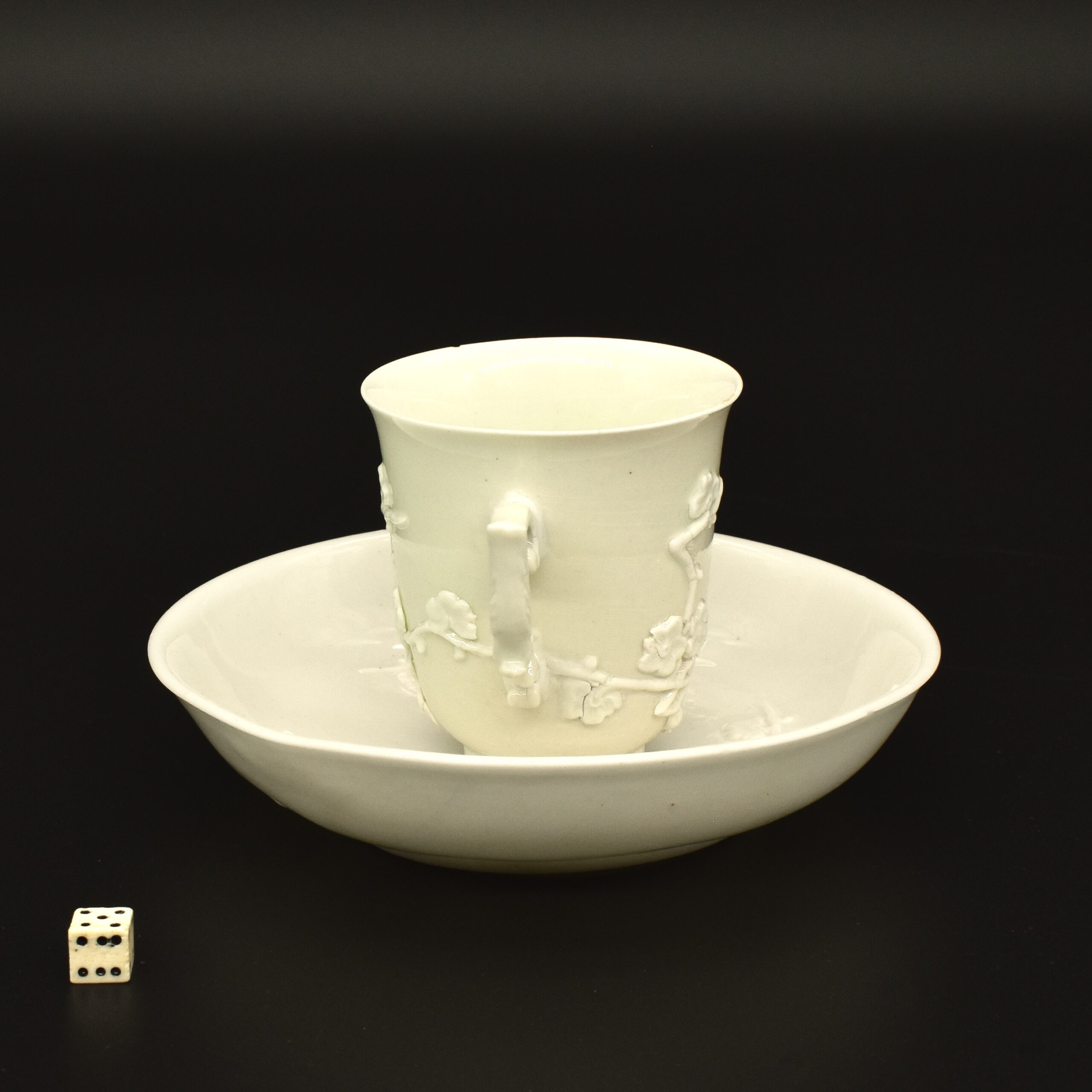
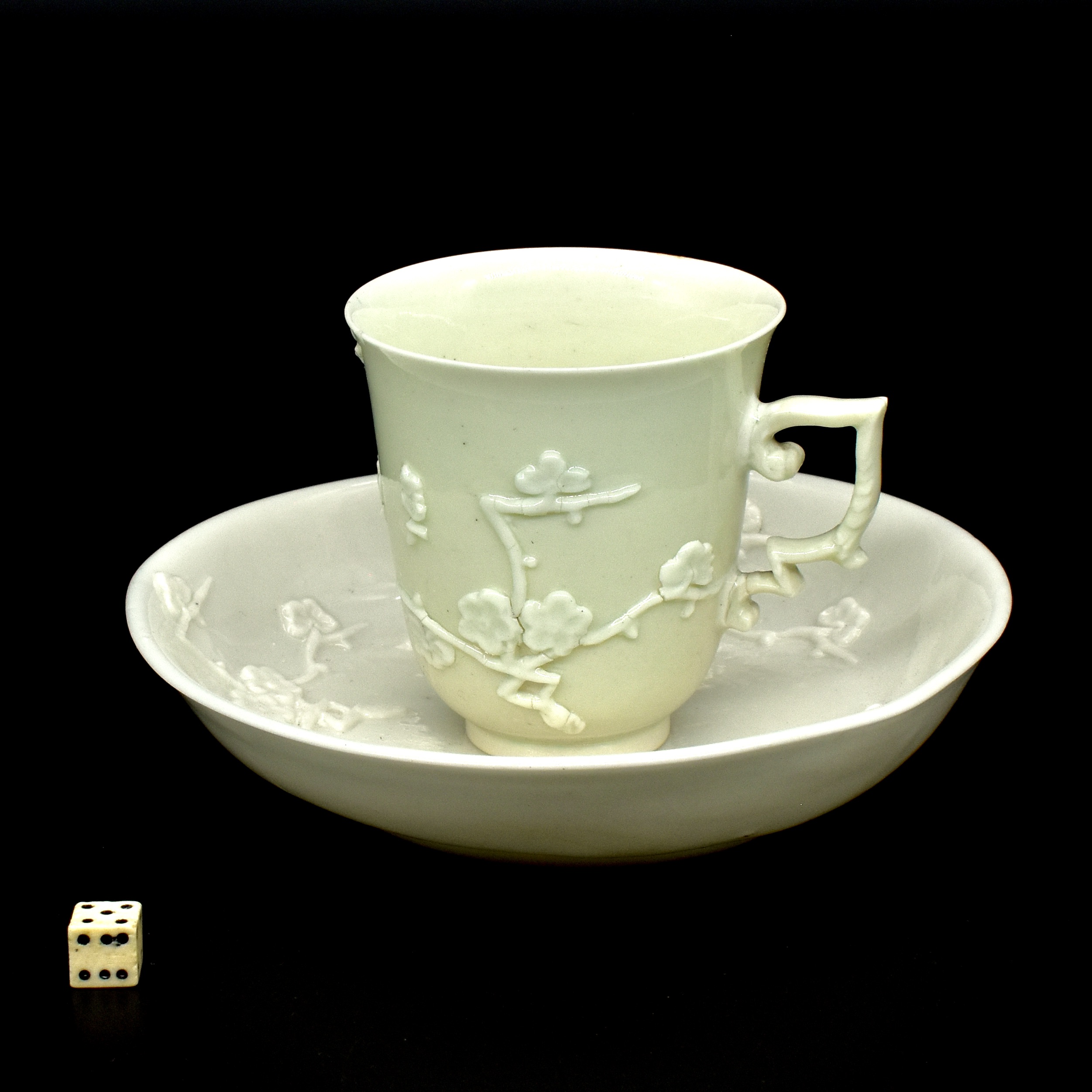
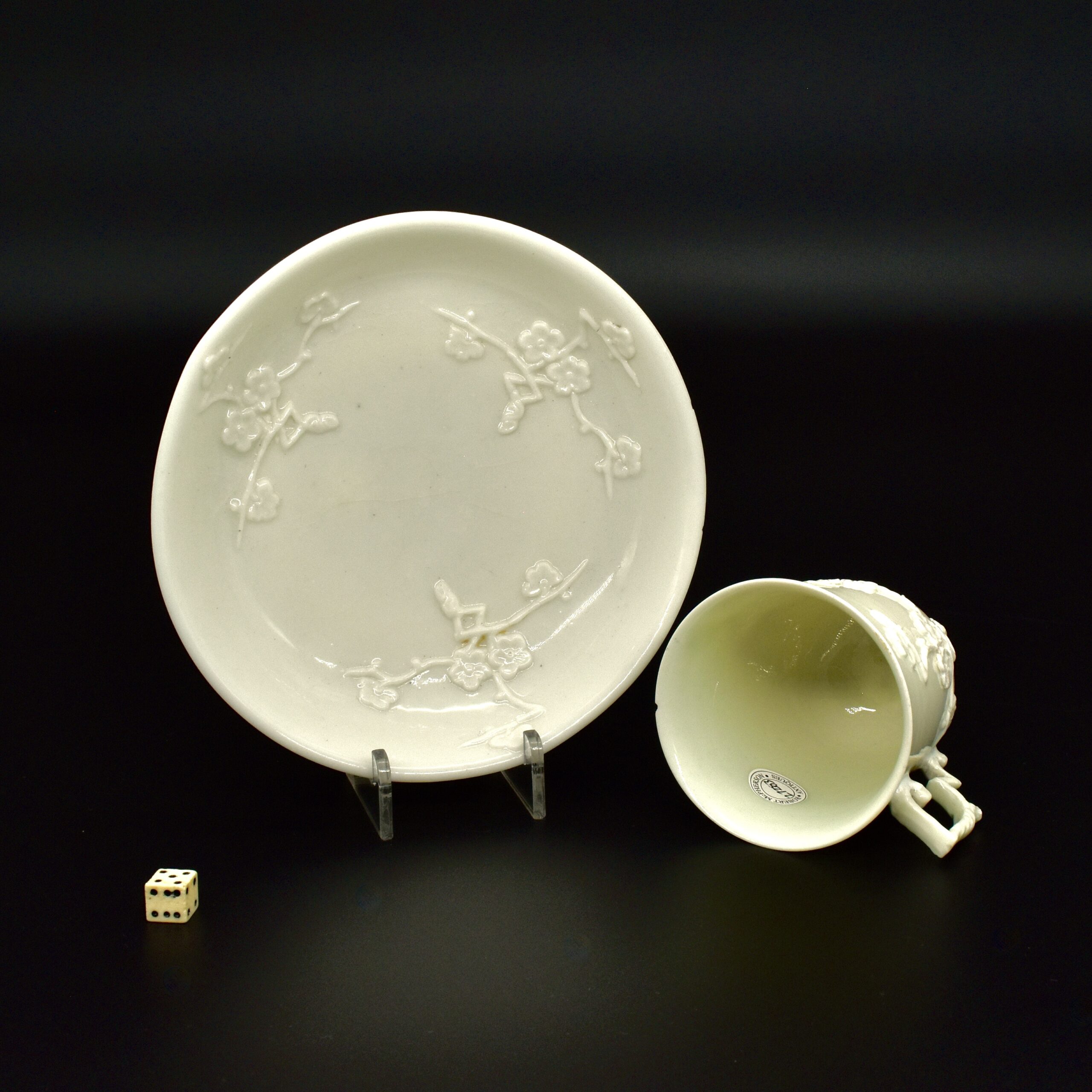
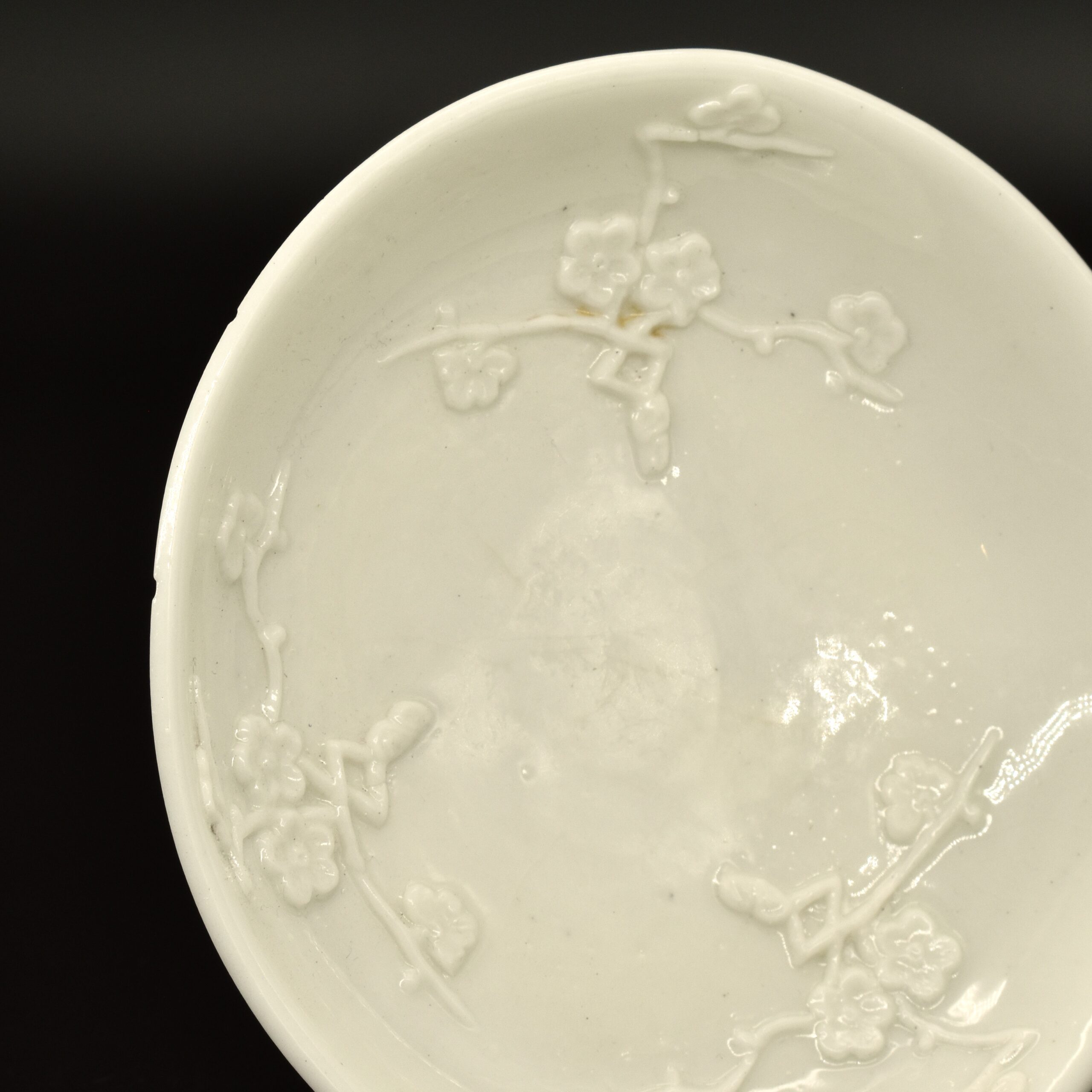
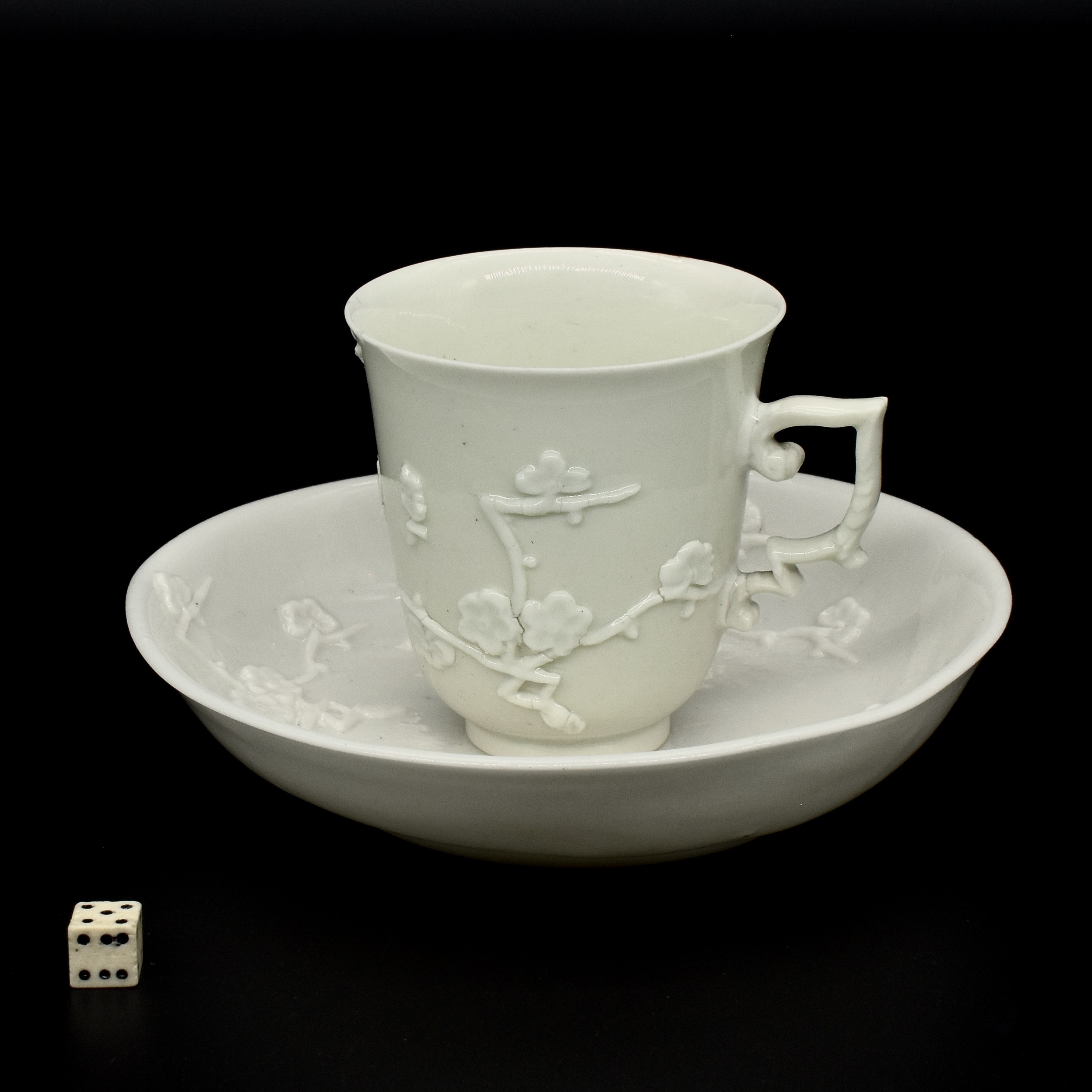
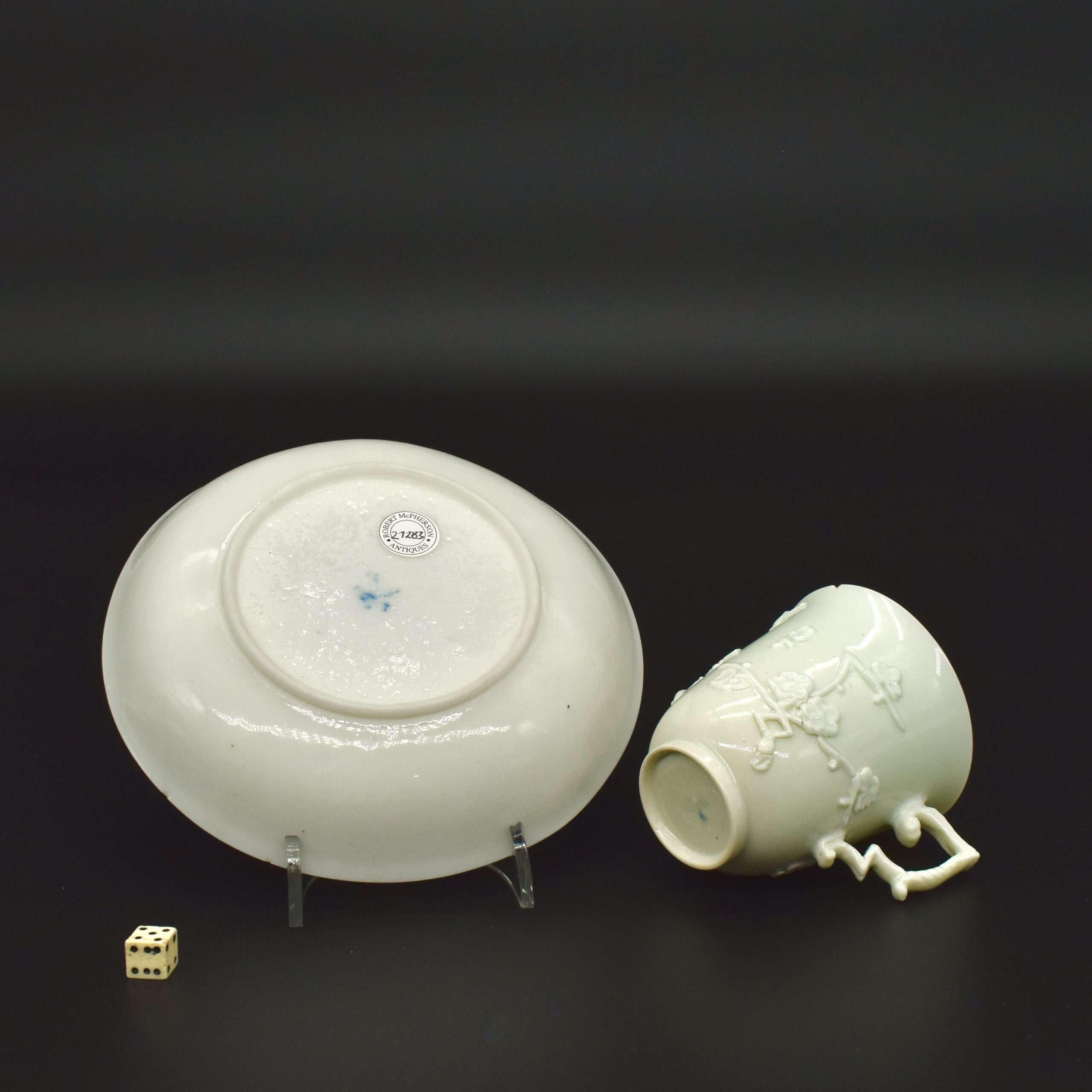
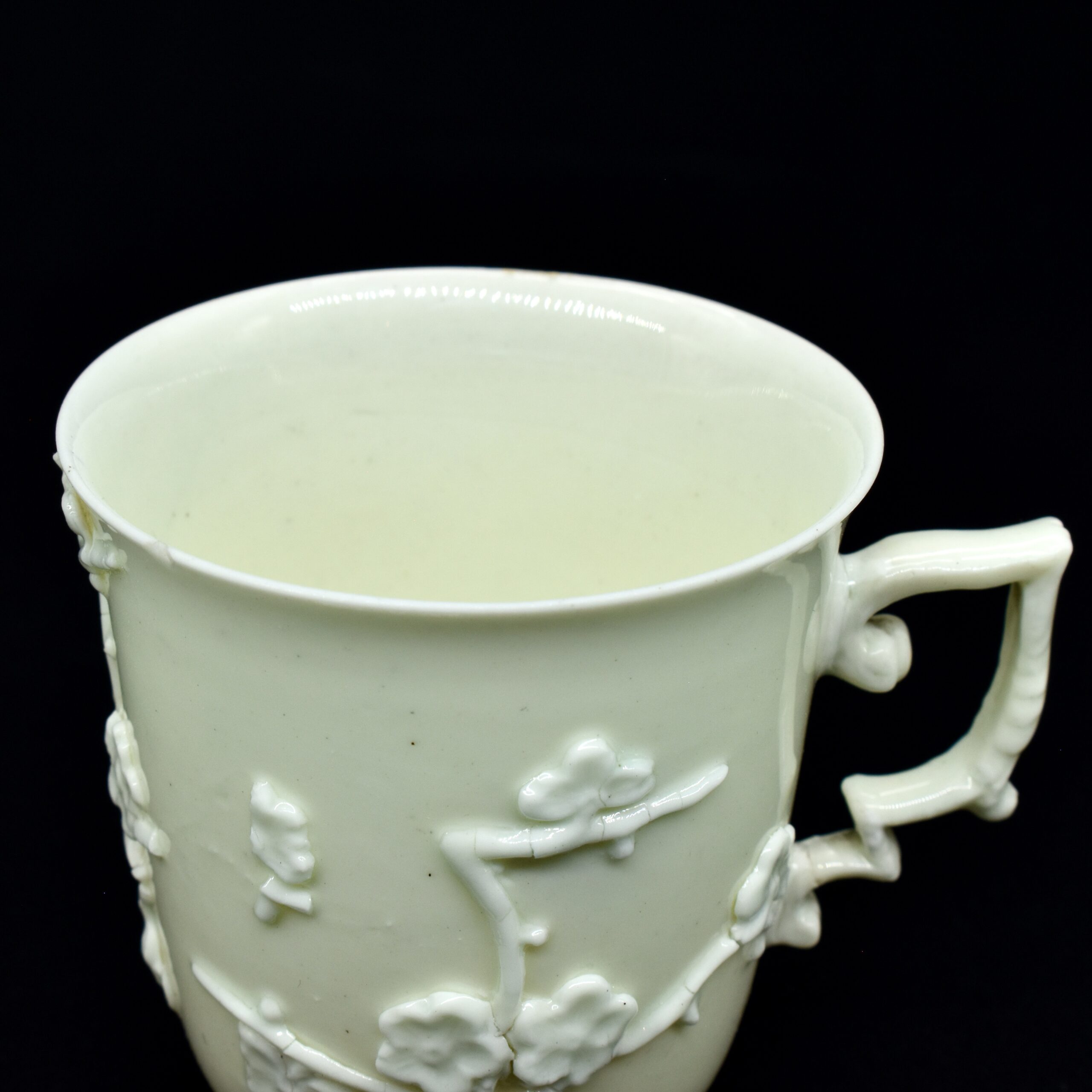
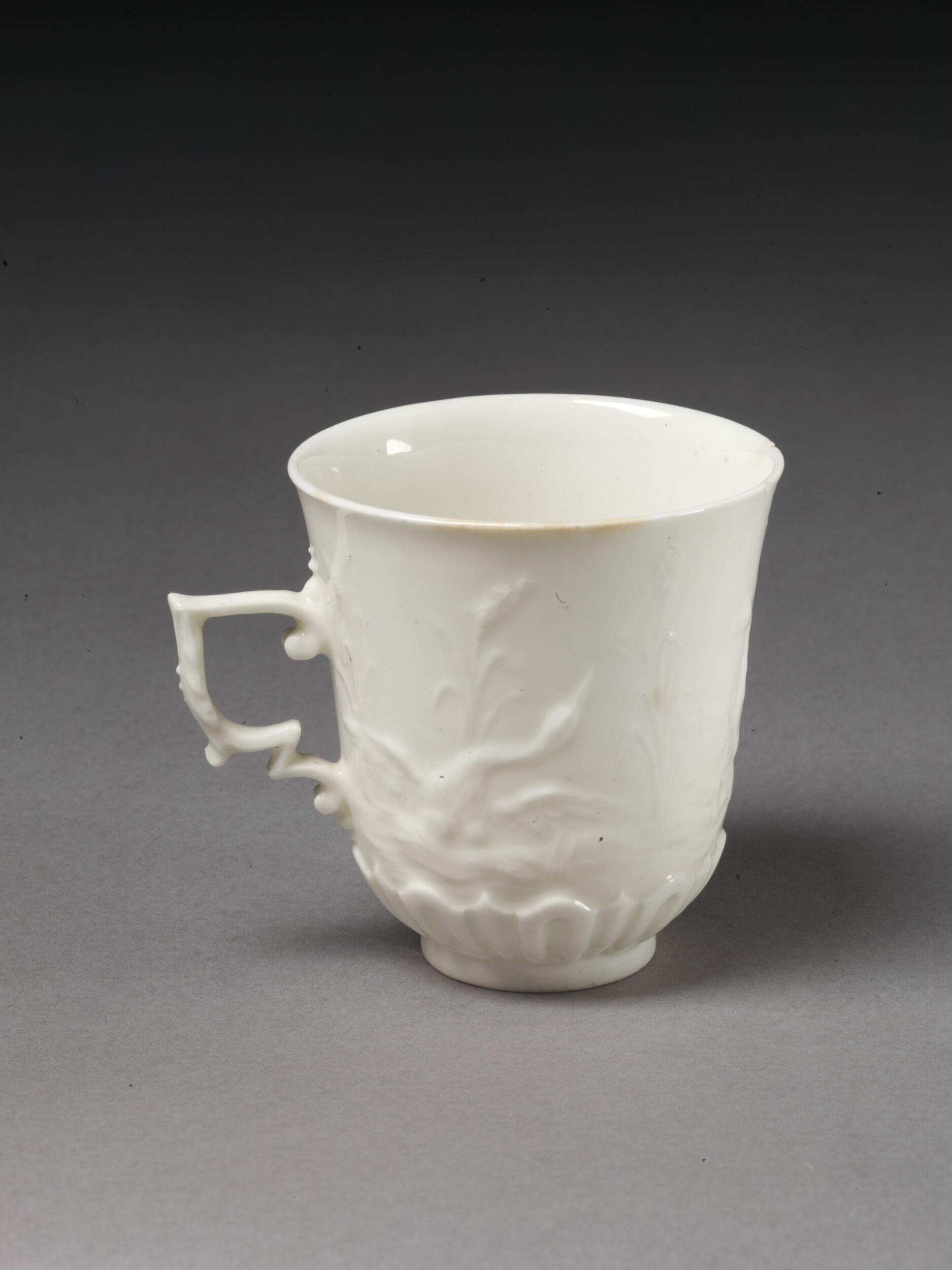
A Rare 18th Century Capodimonte Porcelain Coffee Cup and Saucer c.1750. This finely potted soft-paste porcelain, early Capodimonte coffee cup and saucer, is based on Chinese Blanc de Chine porcelain from an earlier period. The neat fine prunus sprigs are raised high above the thinly potted body, there are brakes and missing sections in the applied porcelain sprigs due to shrinkage during firing and probably carelessness. The saucer doesn’t suffer from the same problems. The glaze has a bright pearly appearance with a yellow-green look and it is highly translucency, especially the cup. The handle form has been ‘borrowed’ from Meissen, this complicated Baroque style angular scroll handle is typical of Meissen porcelain of the mid-18th century. There is an 18th Century Capodimonte porcelain coffee cup at the Victoria & Albert Museum which is a copy of the famous Meissen ‘Swan Service’ but left in the white, it has a Baroque style angular scroll handle like the present piece. See below our Photograph Gallery for a link to the V&A website.
See Below For More Photographs and Information.
RESERVED
- Condition
- There is a small rim chip to the thin edge of the coffee cup and the saucer has some crazing to the front.
- Size
- Diameter of the saucer 13.2 cm (5.2 inches) Height of the cup 6.6 cm (2.6 inches).
- Provenance
- Purchased in Paris.
- Stock number
- 27283
- References
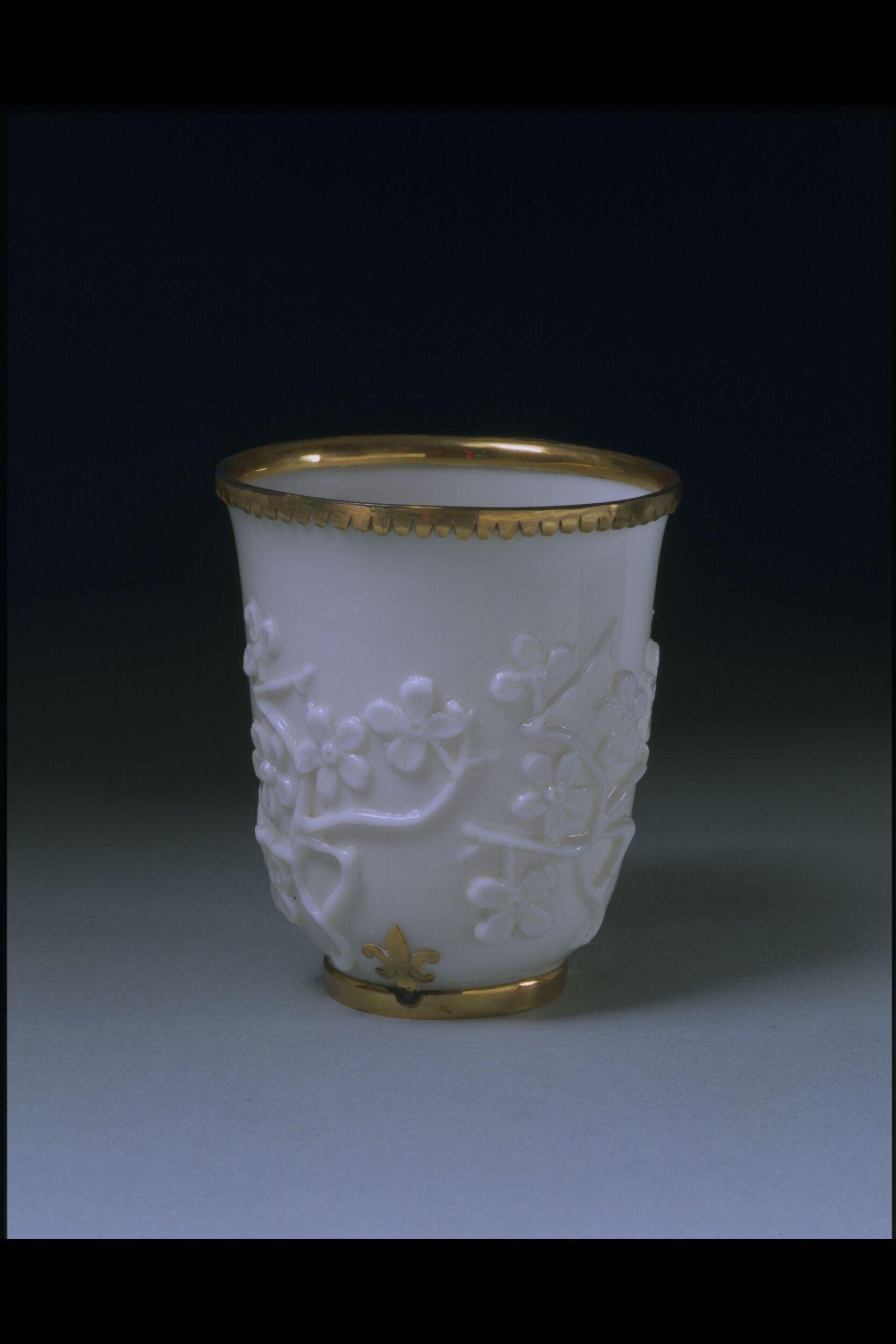
- A related 18th Century Capodimonte beaker is at the Victoria & Albert Museum in London, see below the for a photograph with a link to the V&A. Accession number C.230-1918 below our Photograph Gallery. For a large 18th Century Capodimonte porcelain jug, a beaker and tobacco box in the Blanc de Chine style with prunus sprigs dated to c1745-1750 see : Porcellane Italiane Del Settecento (Oreste Farrari, Antonio Vallardi Editore 1966) page 132.
Photos
Information
Related 18th Century Capodimonte Porcelain the Victoria & Albert Museum, South Kensington, London.
The Victoria andAlbert Museum has a truly exceptional collection of ceramics.
A Related Capodimonte Prunus Decorated Beaker c.1750.
Cup of soft-paste porcelain with silver gilt mounts, Capodimonte porcelain factory, Capodimonte, ca. 1750.
An 18th Century Capodimonte Porcelain Cup with a Meissen style Handle.
Capodimonte Porcelain
The Capodimonte porcelain factory started in 1743 following Maria Amalia Walburga of Sassonia’s (daughter of Federico Augusto King of Poland and grand-daughter of August the Great – creator of the porcelain factory in Meissen), marriage to Carlo III di Borbone (King of Spain from 1716 to 1788). The couple decided to build a porcelain factory in Naples, early progress was made between 1743 to 1745. Detailed record are preserved in the Neapolitan State Archives giving explicit details of the painted designs and forms used. The soft-paste porcelain used at Capodimonte is usually highly translucent with a pink or yellow tinge to it. The close fitting glaze is normally quite lustrous but sometimes it is fired rather matt. This might be deliberate as the surface takes the painted decoration very well. The factory has earned the reputation as the foremost of all 18th century Italian porcelain factories and yet it closed or rather relocated in 1759. Arthur Lane writes in `Italian Porcelain` "Three ships left Alicante in October 1759, laden with 44 of the Capodimonte staff, their families, and 88 tons of equipment (including 4 3/4 tones of porcelain-paste). A new factory, built in the grounds of the Buen Retiro Palace on the eastern outskirts of Madrid, was ready by May 1760" (Italian Porcelain with a note on Buen Retiro, Arthur Lane, Faber and Faber, 1954) page 52.