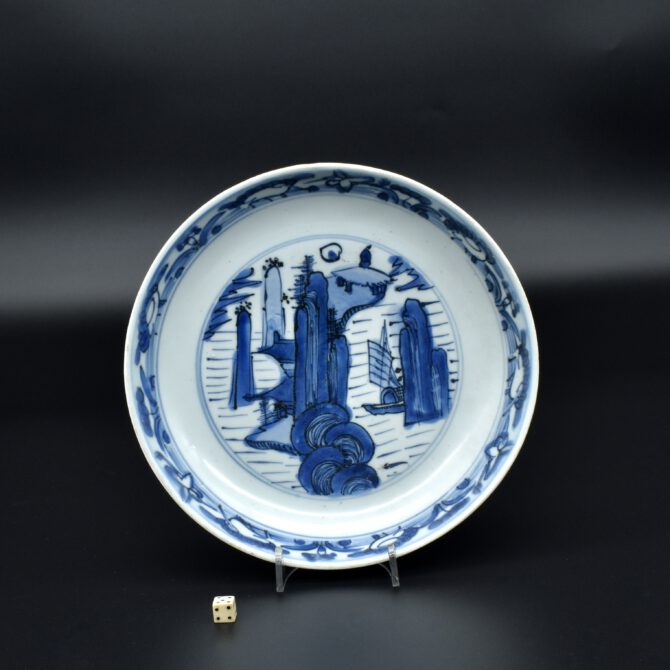
A Small 16th Century Ming Blue and White Porcelain Dish.
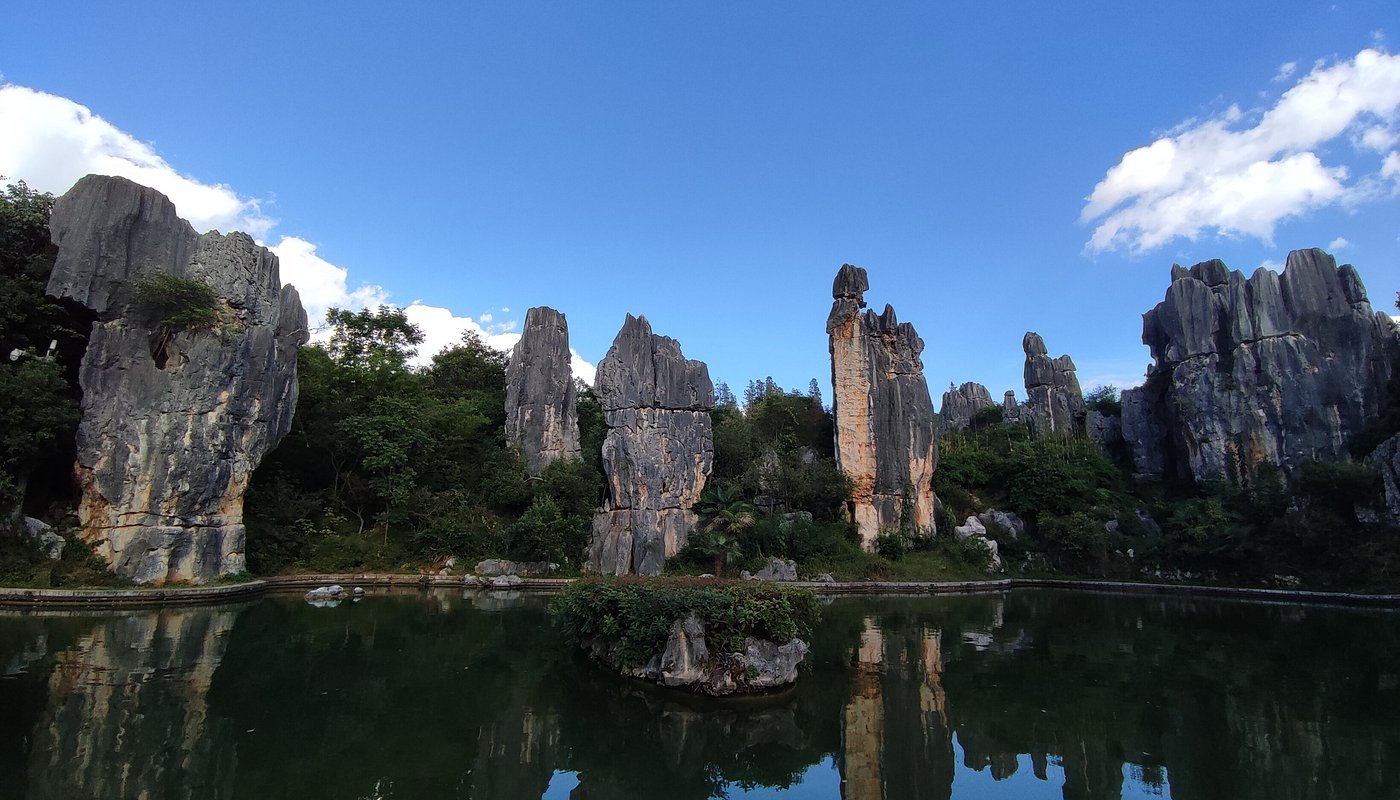
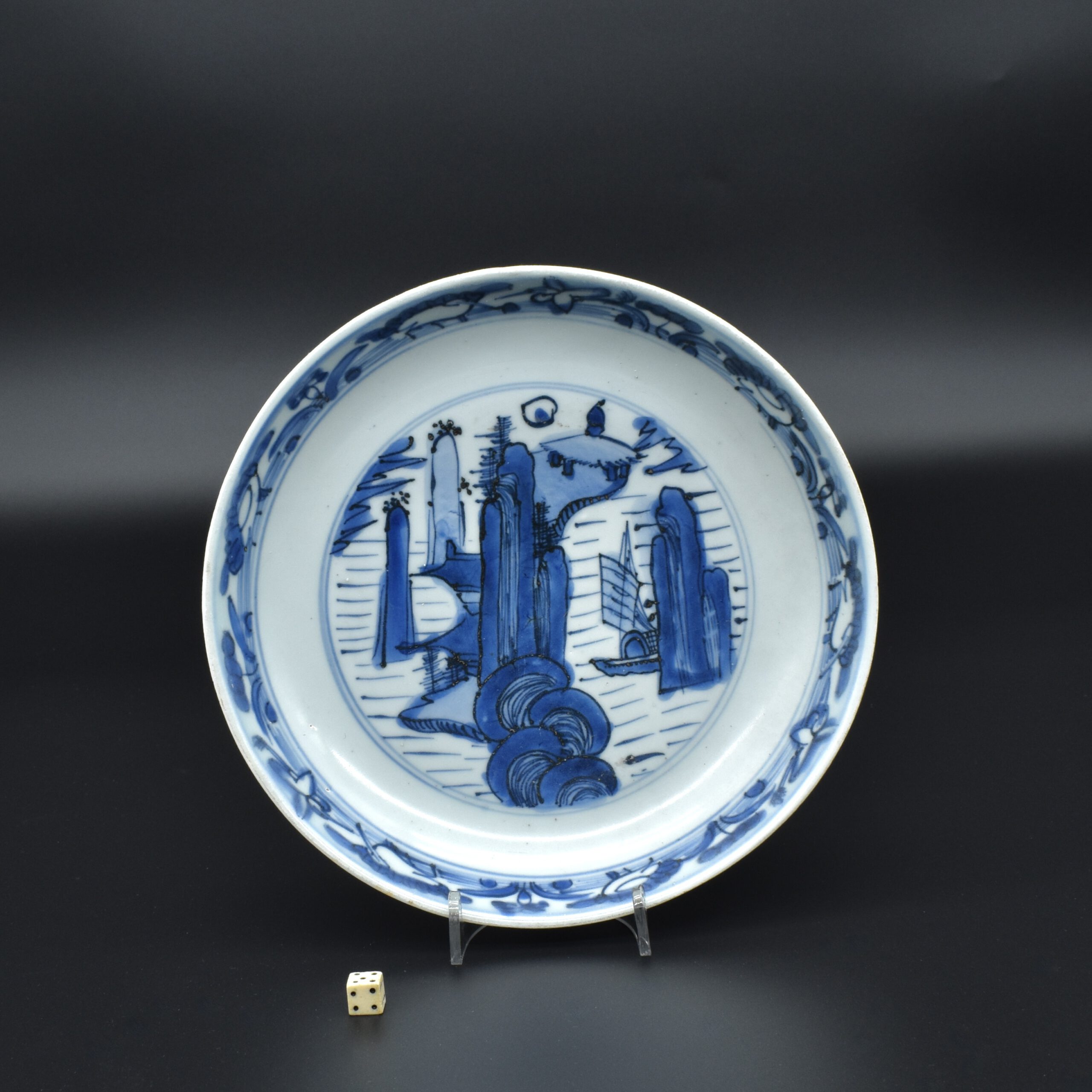
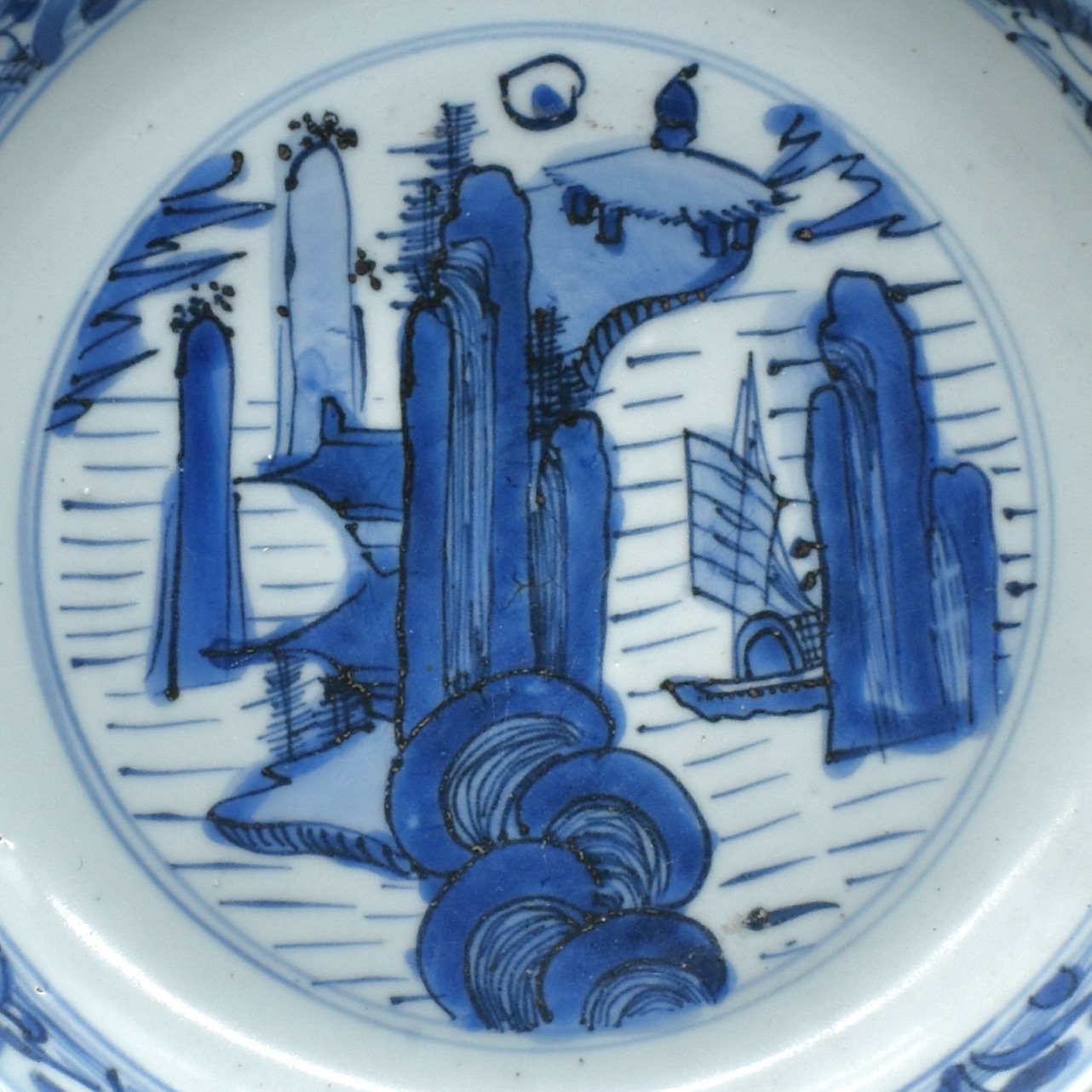
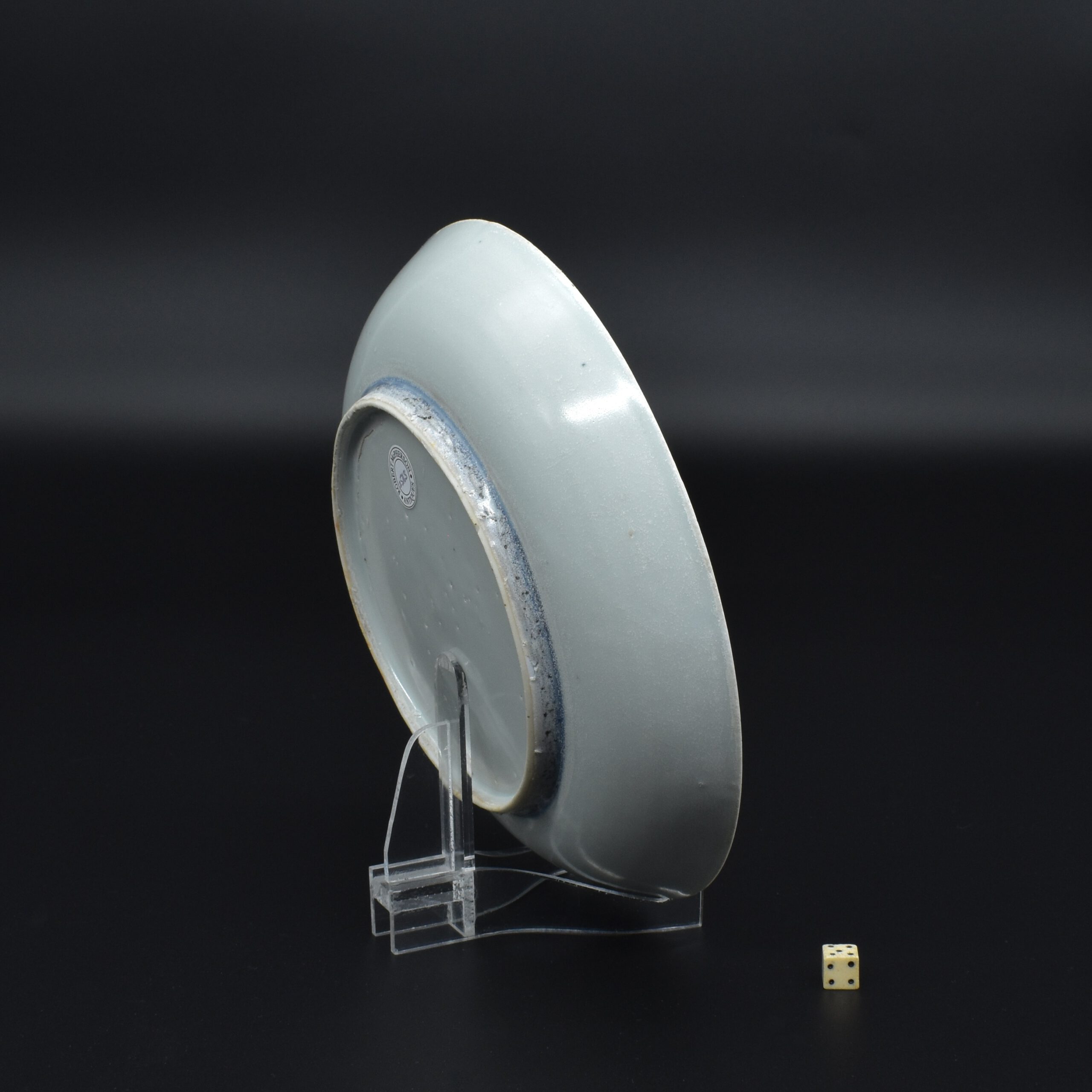
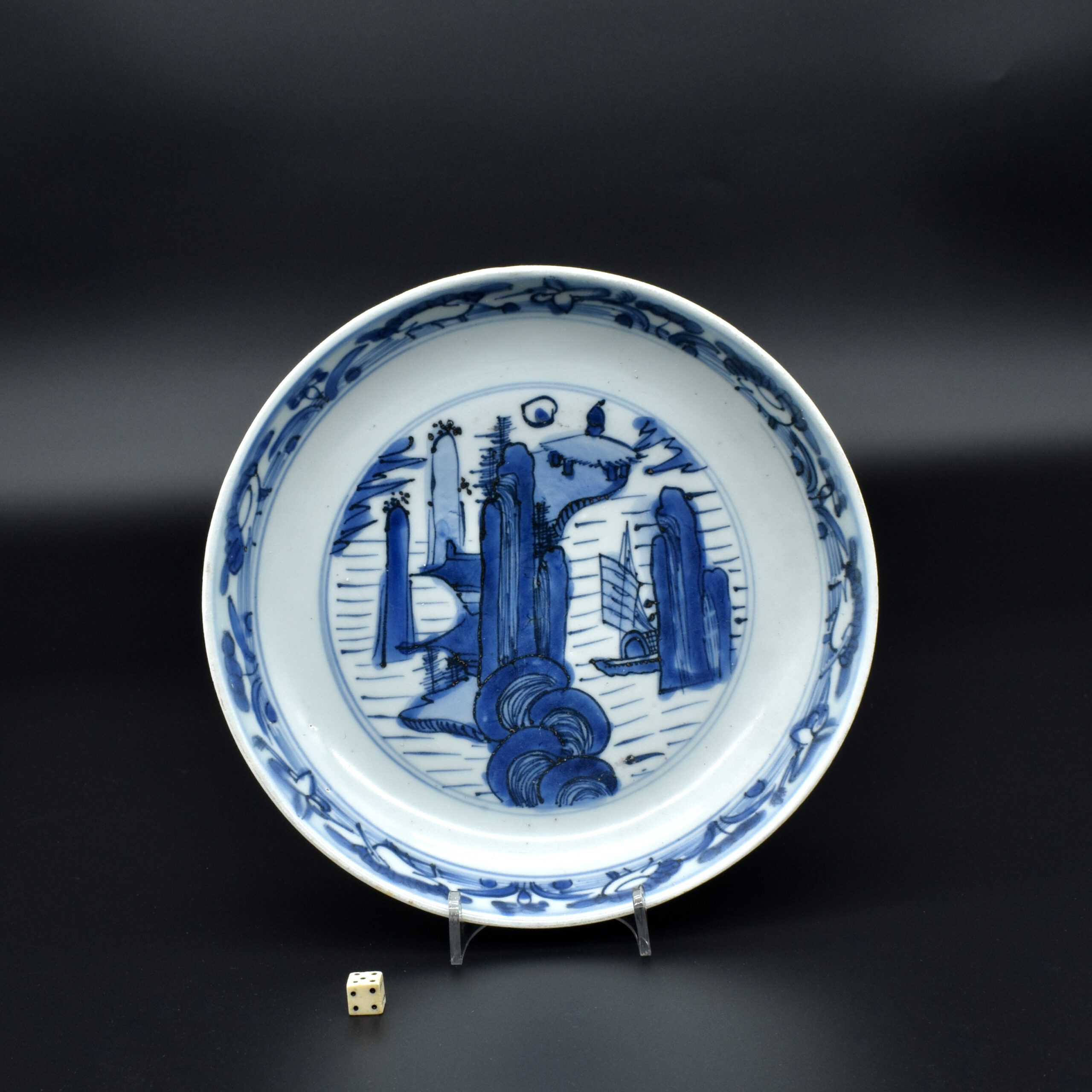
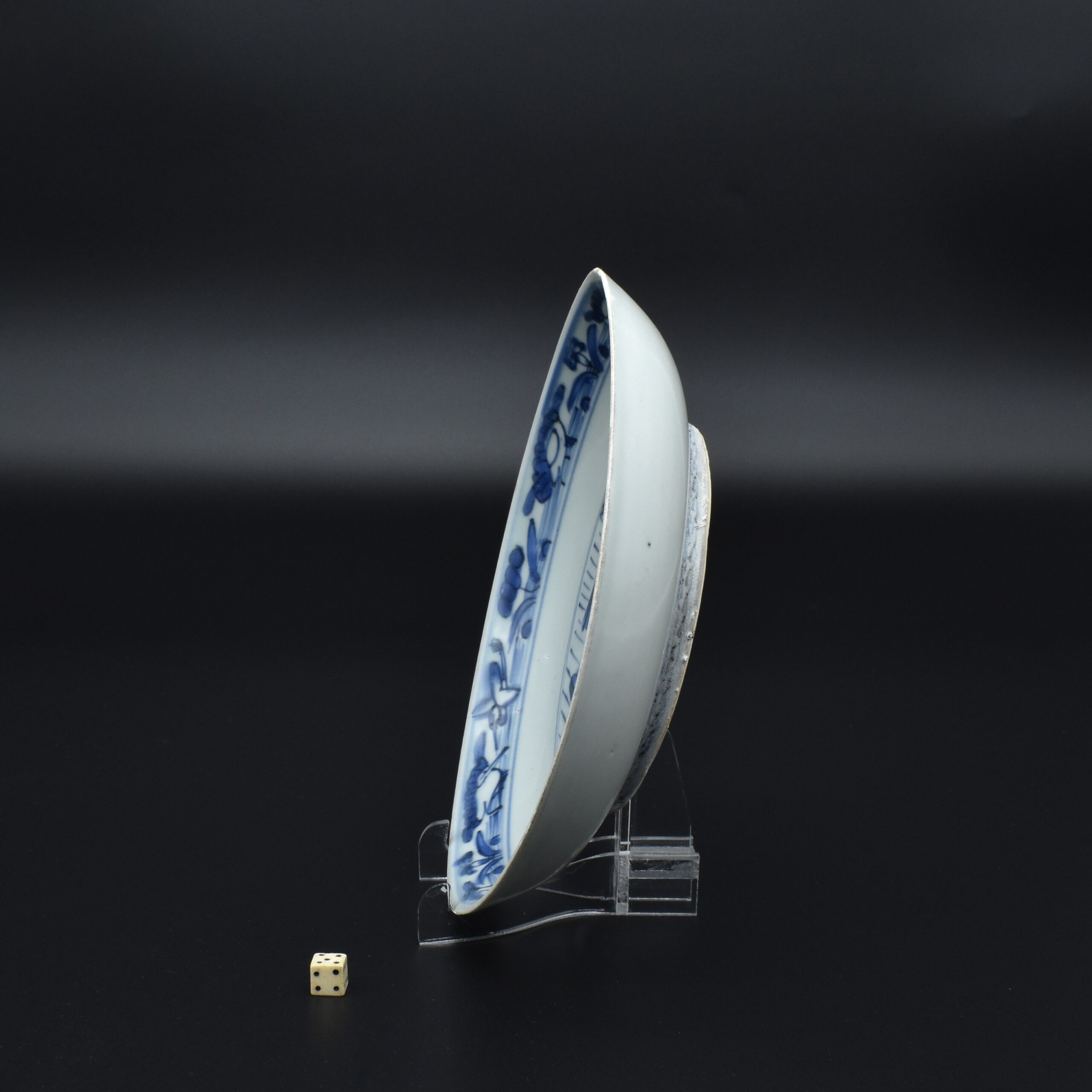
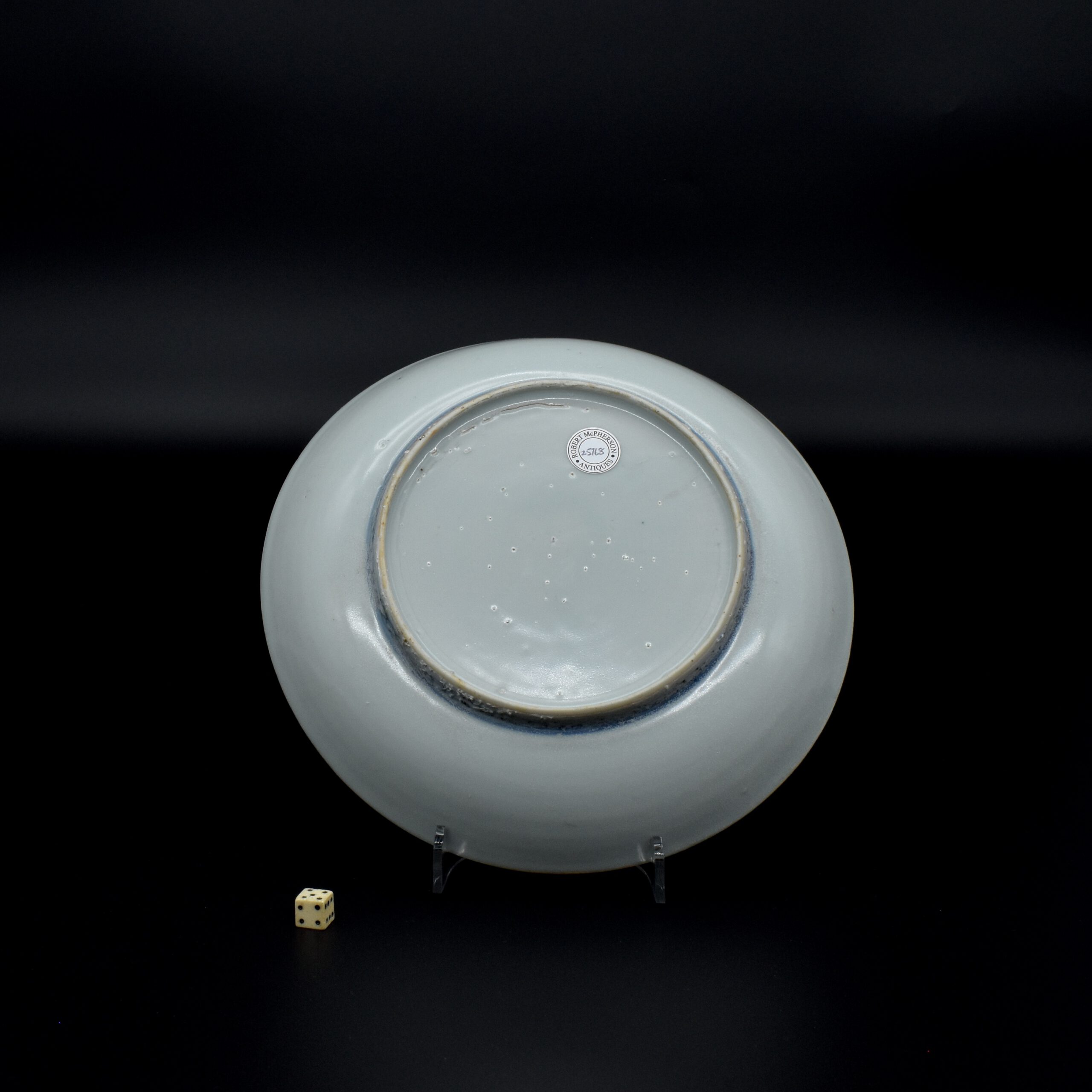
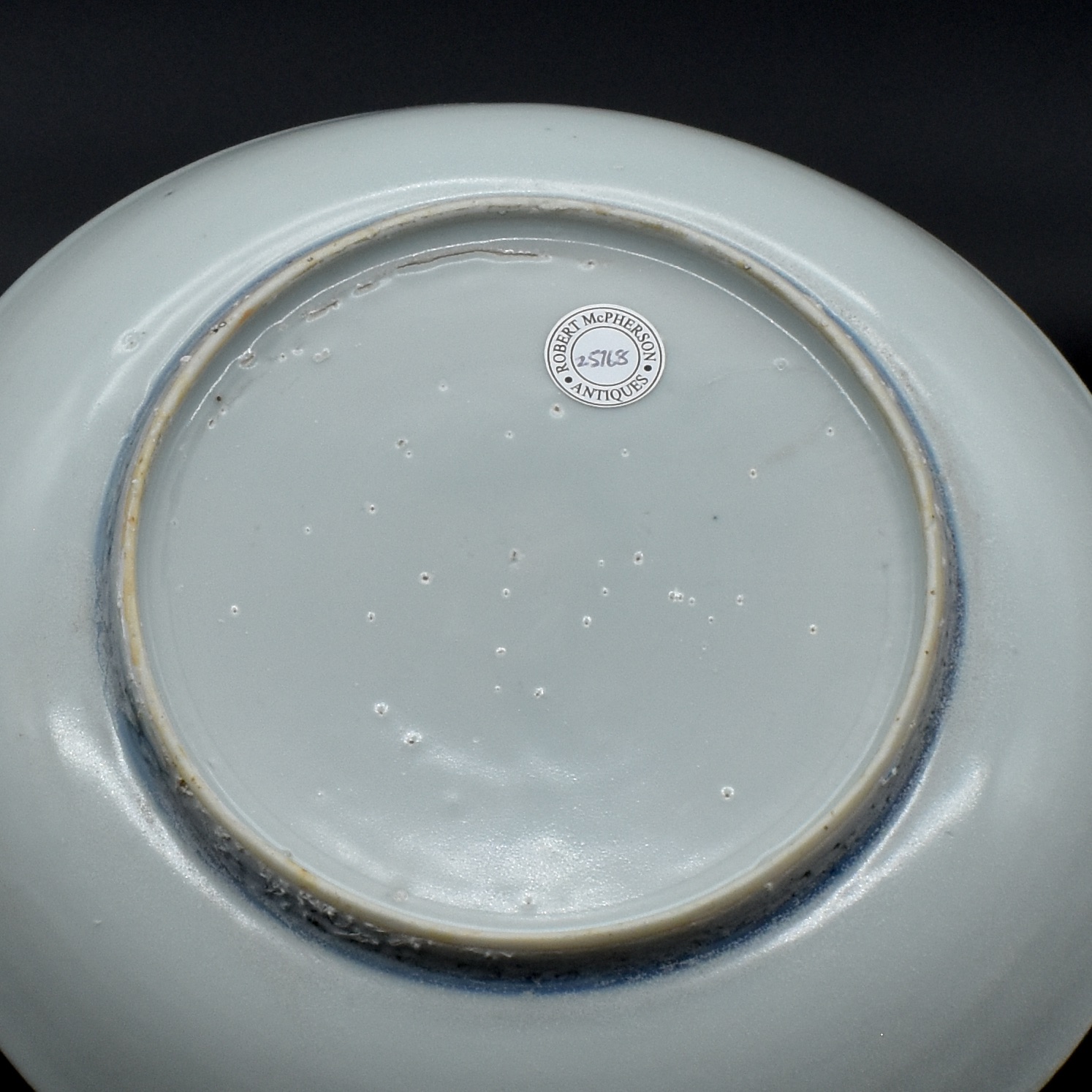
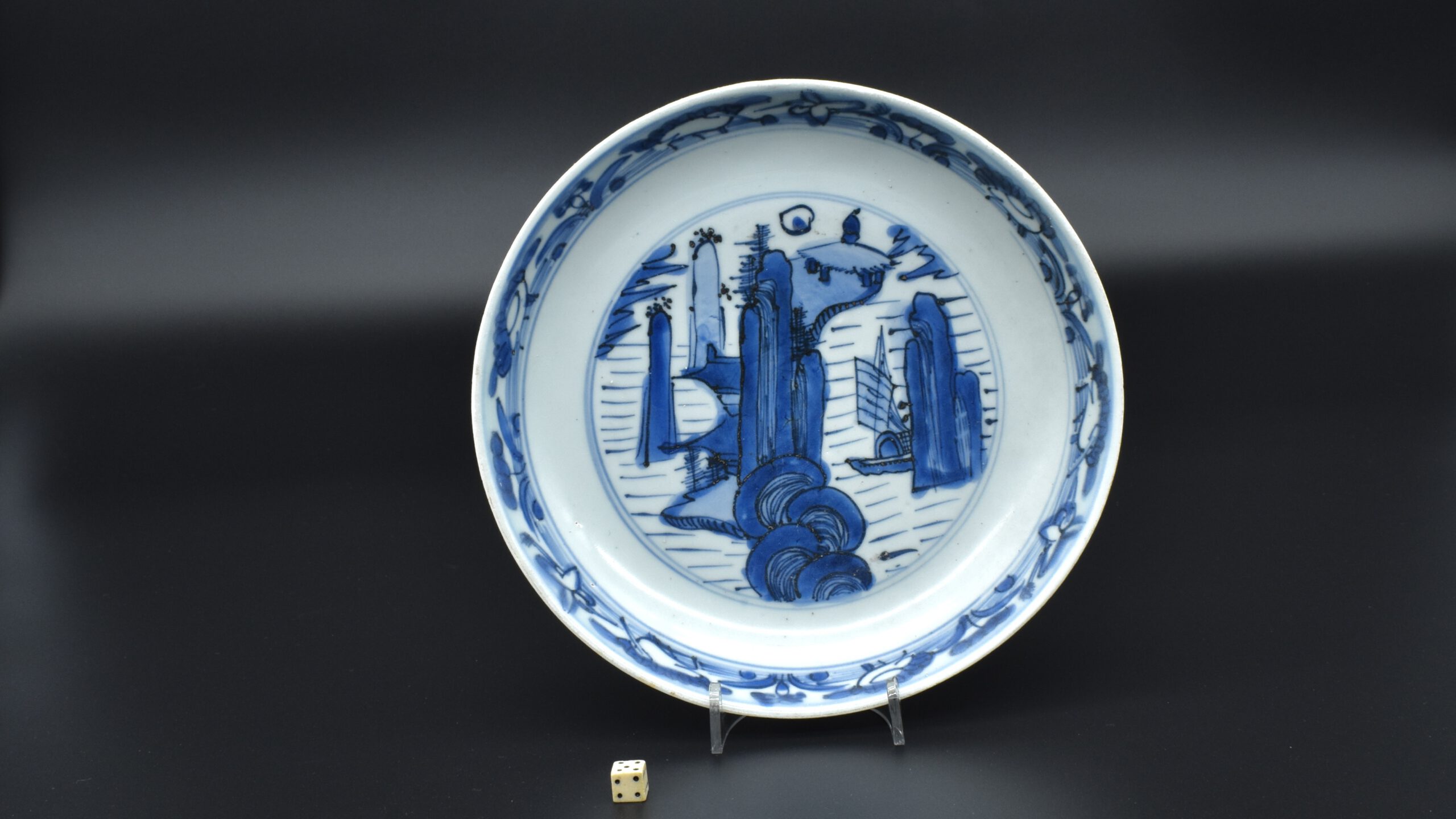
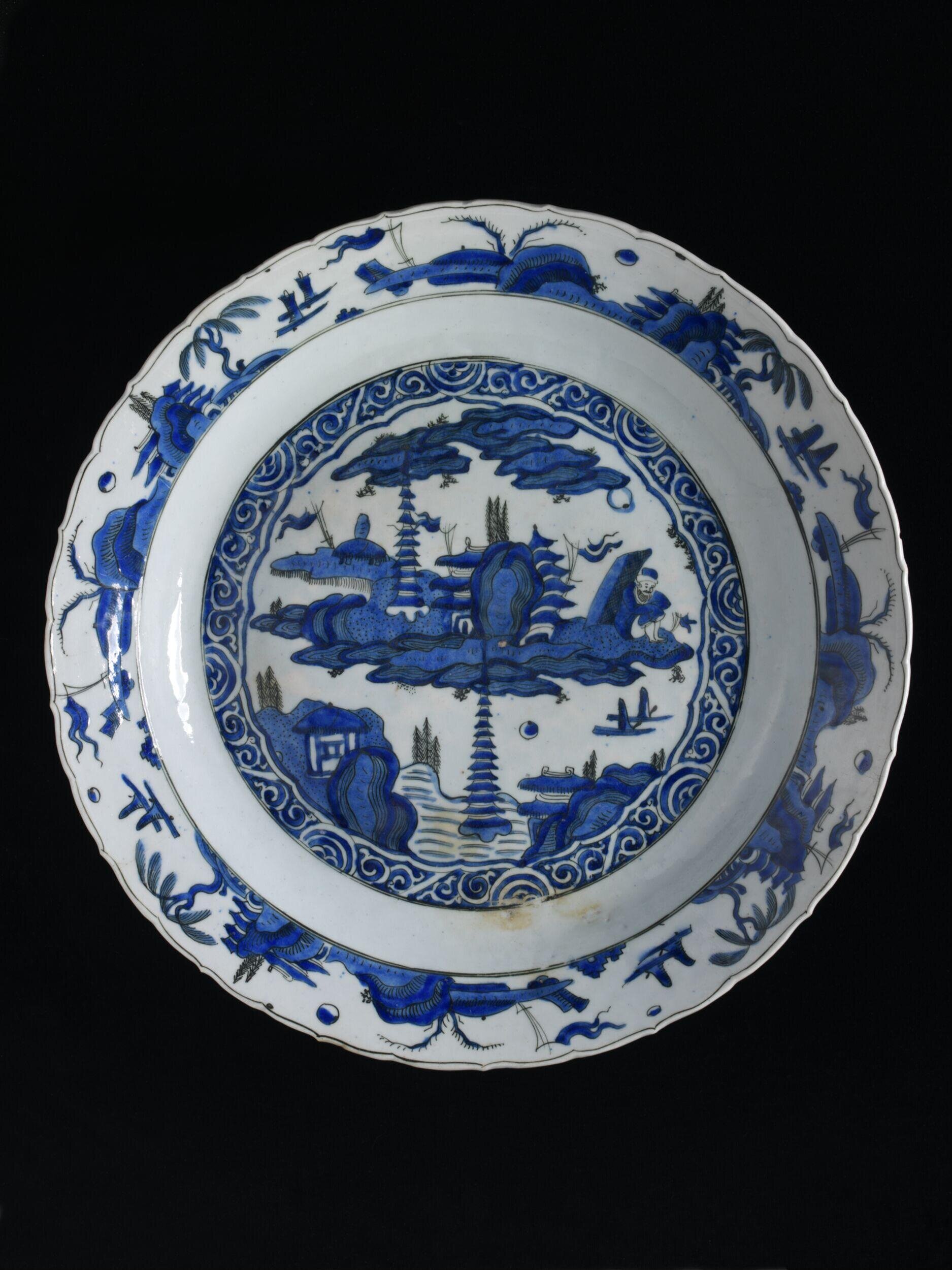
A Small 16th Century Ming Blue and White Porcelain Dish, China, Jingdezhen Kilns, Jiajing (1522-1566), Longqing (1567-1572) or Early Wanli (1573-1620). This well painted shallow dish from c.1560-1580 comes from a shipwreck, unfortunately I don’t know which wreck it comes from. The Fort San Sebastian Wreck, a 16th century Portuguese wreck discovered of the Island of Mozambique is of the same period, however I couldn’t find a comparable piece among the 30 lots of porcelain sold at Christie’s in Amsterdam (19th of May 20004). The present dish is well painted dish and is typical of Chinese Ming export porcelain from c.1560-1580. The blue is very strong and vibrant, the well depicts very large rocks in water, the central rock has a water fall with waves spilling out into the water below. A fishing vessel is partly obscured by a boat on the right. In the distance is a grass covered shelter. This landscapes with tall rocks surrounded by water aren’t a fantasy, this an actual landscape that can be found in China’s ‘Shilin Stone Forest’ in Yunnan Province, its limestone rocks were errored by rain, 270 million years ago this was a shallow tropical sea. The border consists of egrets or herons feeding in water or flying above it. The back has been left without decoration except for a very narrow band around the outer edge of the foot, it has a small shallow foot.
Larger Ming porcelain pieces with similar designs can be found in the very important collection at the Topkapi Saray Museum Istanbul (see References). Ming blue and white porcelain dishes of this type were certainly in Iran in the 17th century, during the Safavid Persia / Safavid Empire. Iranian potters made Fritware imitations of these Ming dishes in the 17th century, two examples are at the Victoria & Albert Museum in London (see Information below). Large Chinese versions, much more thickly potted of and of a slightly later date, referred to as Swatow ware were produced at various kilns in Zhangzhou Prefecture, Fujian Province. They had similar landscapes with tall rocks surrounded by water often with Pagodas, however they look very different.
- Condition
- In very good condition, a very glaze frit to the rim, a very slight 'dryness' due to salt water immersion. Some light crazing to the back. This dish has warped in the firing
- Size
- Width 19 cm (7.4 inches) and 18.3 cm (7.2 inches). Depth 3.8 cm (1.5 inches) and 3.5 cm (1.4 inches).
- Provenance
- N/A
- Stock number
- 25768
- References
- Larger dishes of this type are illustrated in : Chinese Ceramics in the Topkapi Saray Museum Istanbul, A Complete Catalogue, Volume II, Yuan and Ming Dynasty Porcelain (Regina Krahl, Published in association with the Directorate of the Topkapi Saray Museum by Sotheby`s Publications 1986). For a related Ming Porcelain dish see : Exhibition of Ming Blue and White Porcelain, The Drs.A.M. Sengers Collection (S.Marchant & Son, London, November 2001.) page 12, item 8. For another Ming dish of this type see : Kraak Porcelain, a Moment in the History of Trade (Maura Rinaldi, Bamboo Publishing Ltd, 1989) page 77, plate 52.
- £ GBP
- € EUR
- $ USD
Photos
Information
A Ming Porcelain Plate, Longqing (1567-1572) or Early Wanli (1573-1620) c.1565-1600.
Robert McPherson Antiques, Sold Archive 25305.
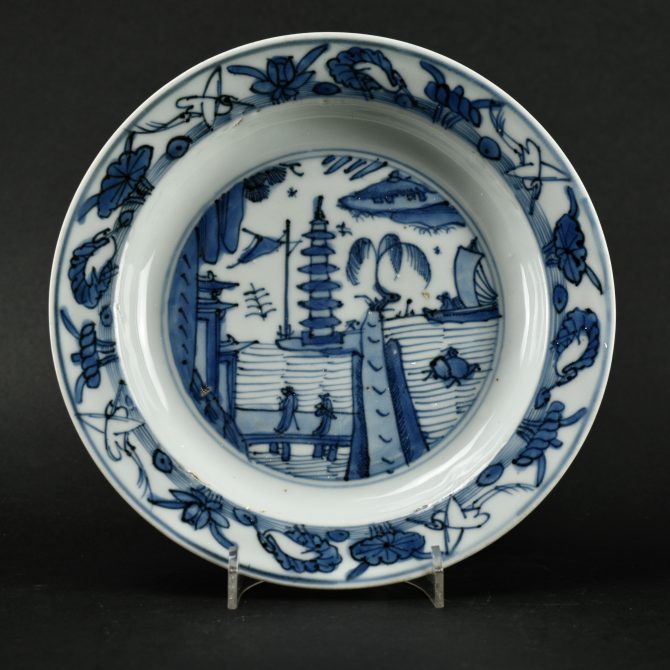
A Ming Porcelain Plate, Jiajing (1522-1566), Longqing (1567-1572) or Early Wanli (1573-1620) c.1560-1580. The centre decorated in tones of cobalt blue with a mountain to the center which partly obscures a pagoda, there is a rocky overhang with a straw roved building perched on the edge and a boat below. The border is of egrets among aquatic plants. This type is counted as being Kraak ware but I struggle to see exactly why it would be classified as such. It looks to me as if it belongs to the group of Chinese export wares that started during the Jiajing (1522-1566), there are large dishes of this type in the Topkapı Palace Museum (Topkapı Sarayı Müzesi). However, Maura Rinaldi shows a related Ming dish in her book about Kraakware, she uses the border to classify it, Border II (Kraak Porcelain, a Moment in the History of Trade by Maura Rinaldi, Bamboo Publishing Ltd, 1989, page 77, plate 52)
- Condition : Small rim chips to the footrim, minor wear and fine scratches.
- Size : Diameter : 19 cm (7 1/2 inches)
- References : For a similar Ming Porcelain dish see : Exhibition of Ming Blue and White Porcelain, The Drs.A.M. Sengers Collection (S.Marchant & Son, London, November 2001.) page 12, item 8. For another Ming dish of this type see : Kraak Porcelain, a Moment in the History of Trade (Maura Rinaldi, Bamboo Publishing Ltd, 1989) page 77, plate 52.
Two Related 17th Century Safavid Fritware Dishes :
At the Victoria & Albert Museum, London.
Safavid Persia or the Safavid Empire, was one of the largest and longest-lasting Iranian empires. It was ruled by the Safavid dynasty from 1501 to 1736.
17th Century Safavid Fritware Dish
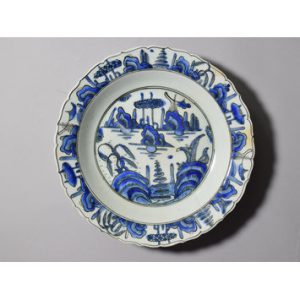
1108-1876
Egrets and Herons
An egret is one of several herons, most of which are white or buff, and several of which develop fine plumes (usually milky white) during the breeding season. Many egrets are members of the genera Egretta or Ardea which contain other species named as herons rather than egrets. The distinction between a heron and an egret is rather vague, and depends more on appearance than biology. The word 'egret' comes from the French word "aigrette", referring to the long filamentous feathers that seem to cascade down an egret's back during the breeding season.
China's Shilin Stone Forest in Yunnan Province.