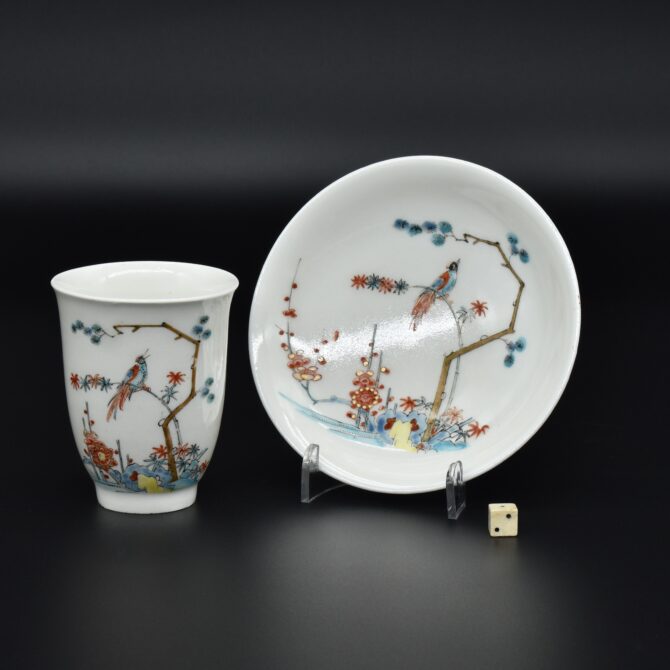
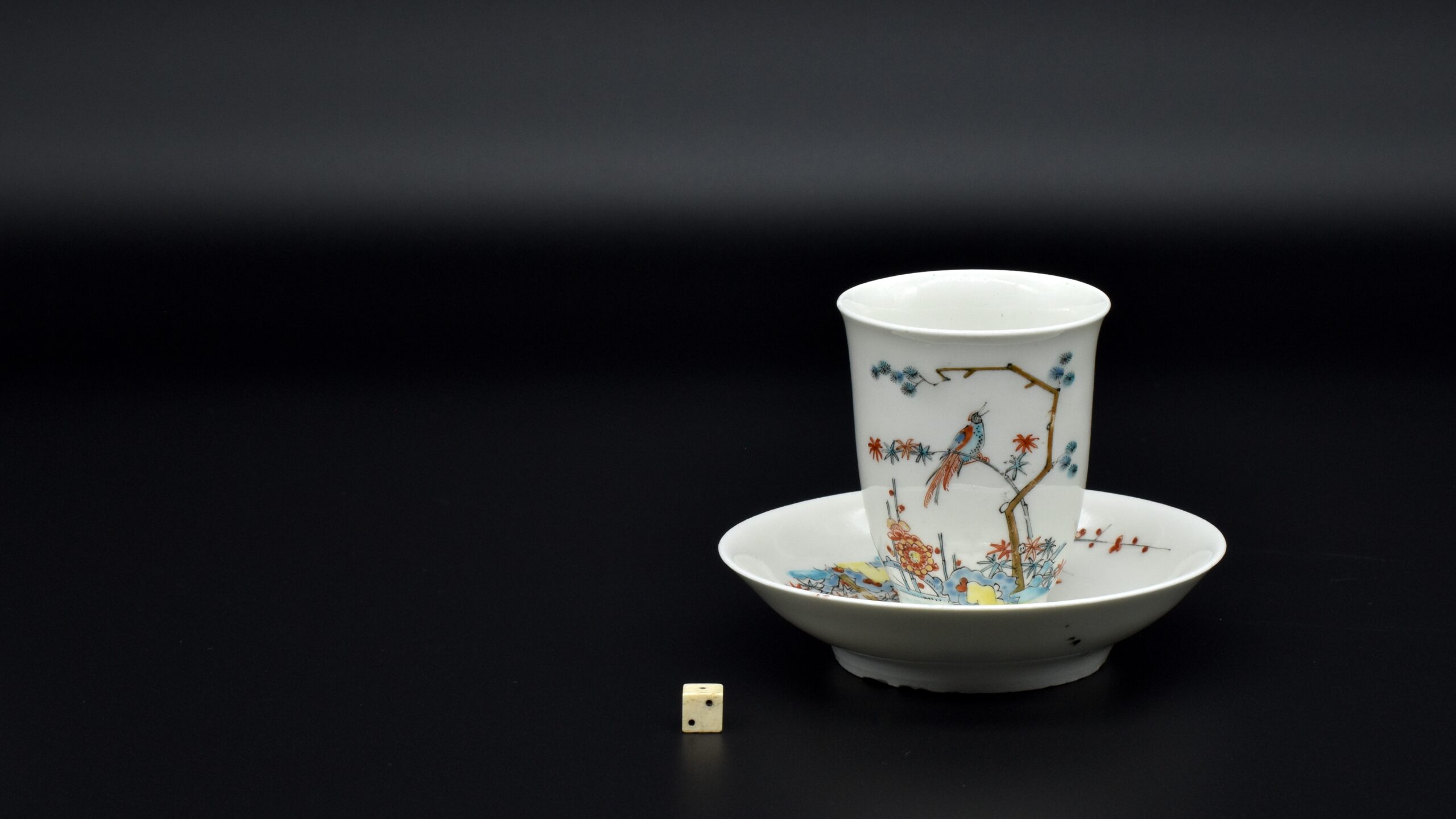
An Early 18th Century Meissen Beaker and Saucer with Dutch Decorated Kakiemon Style Enamels.
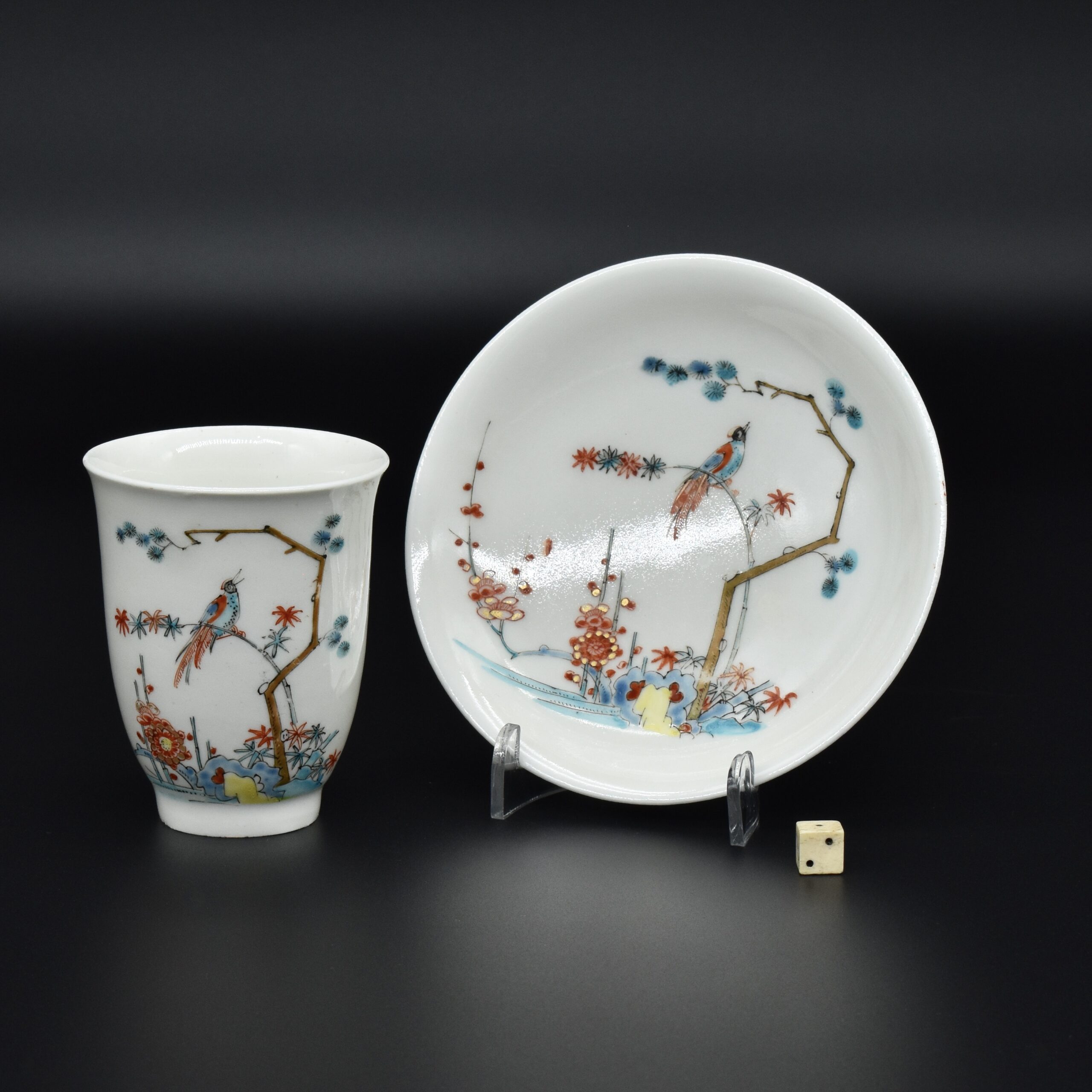
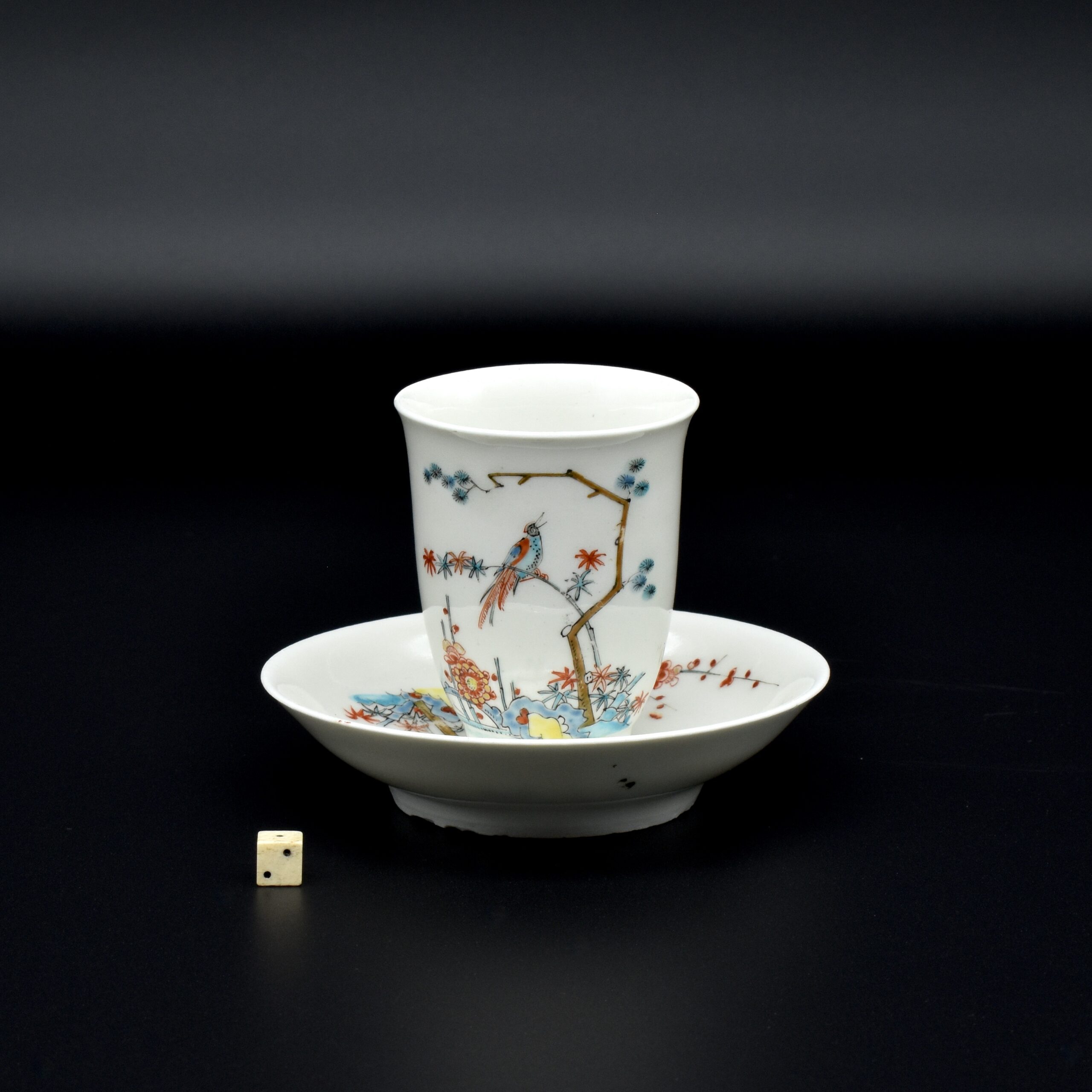
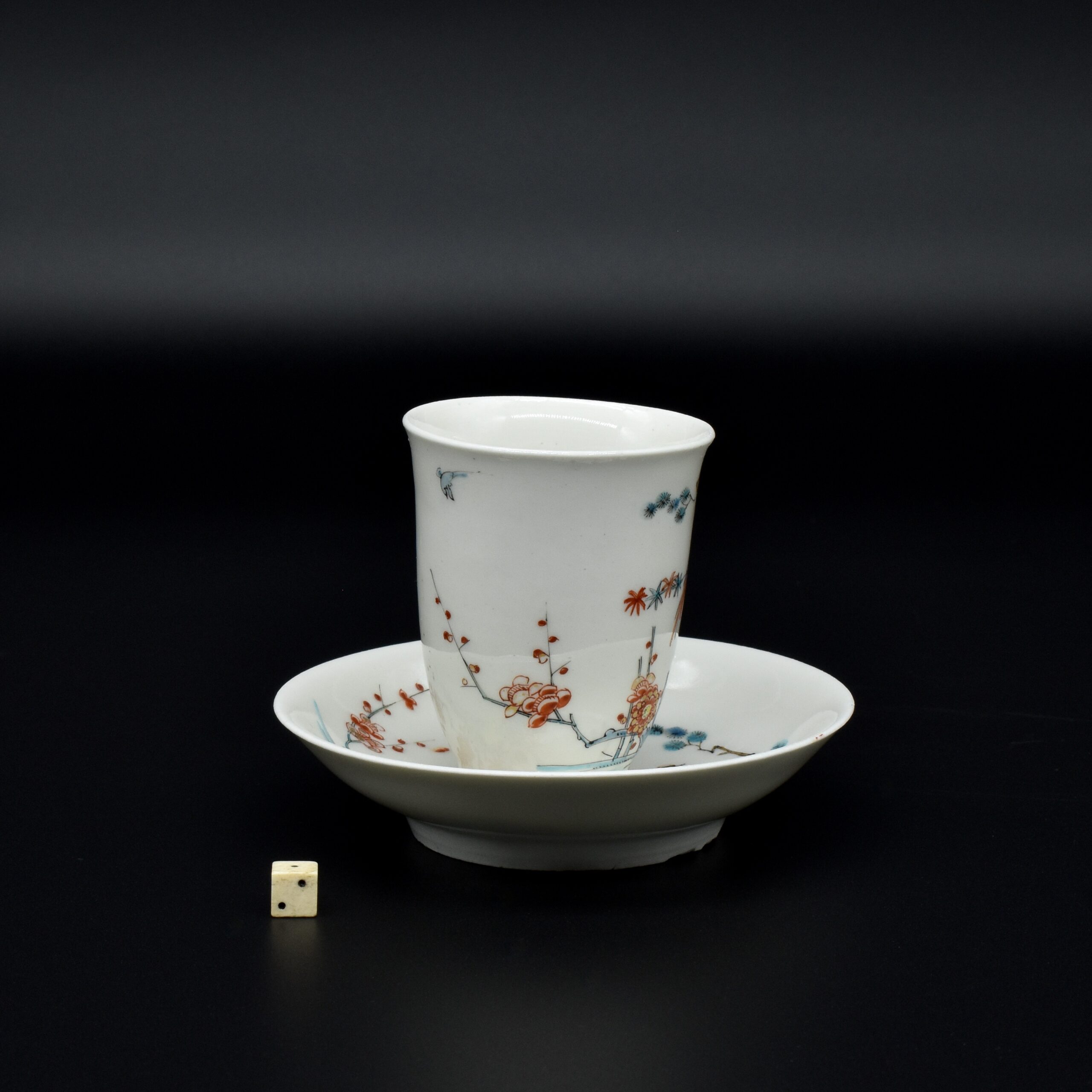
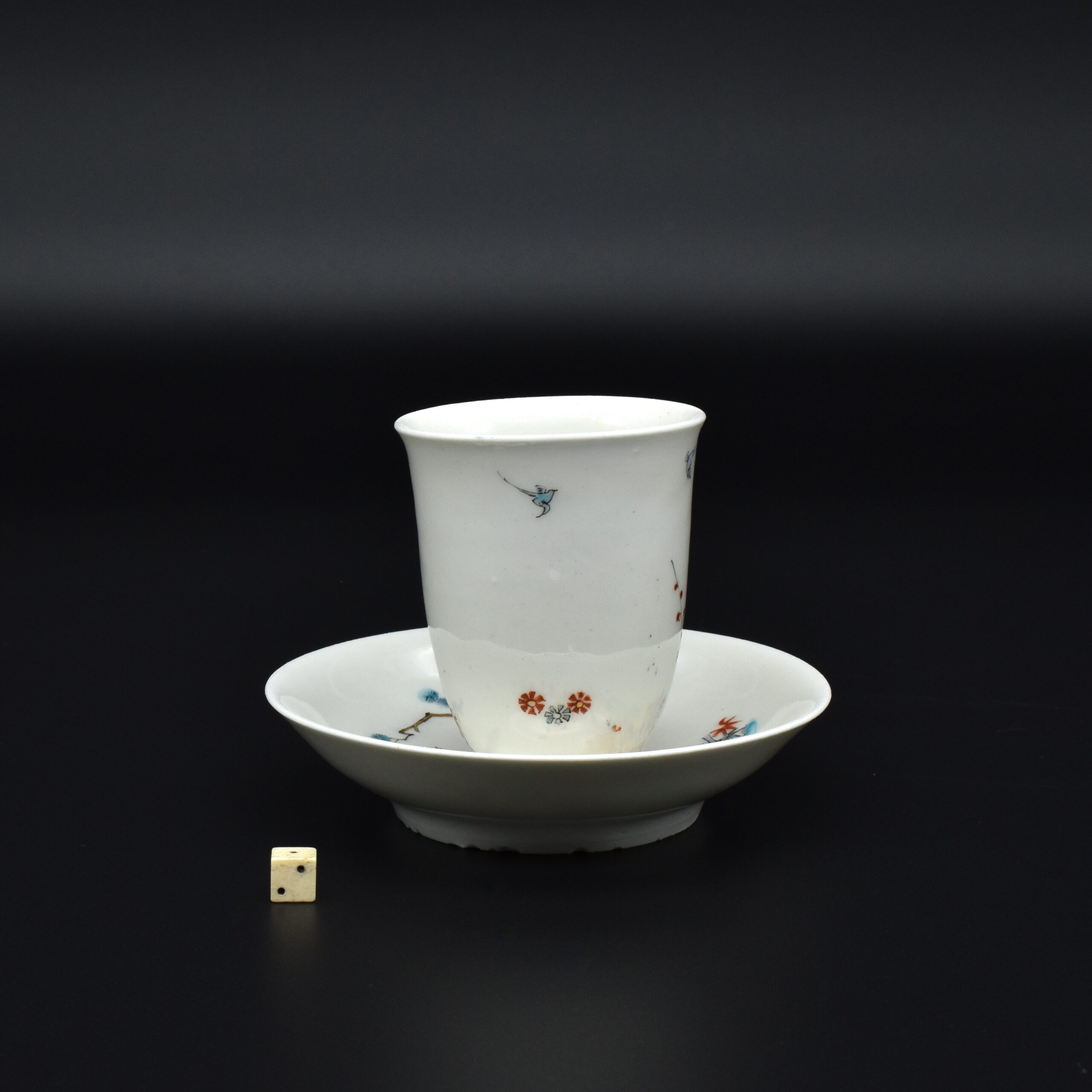
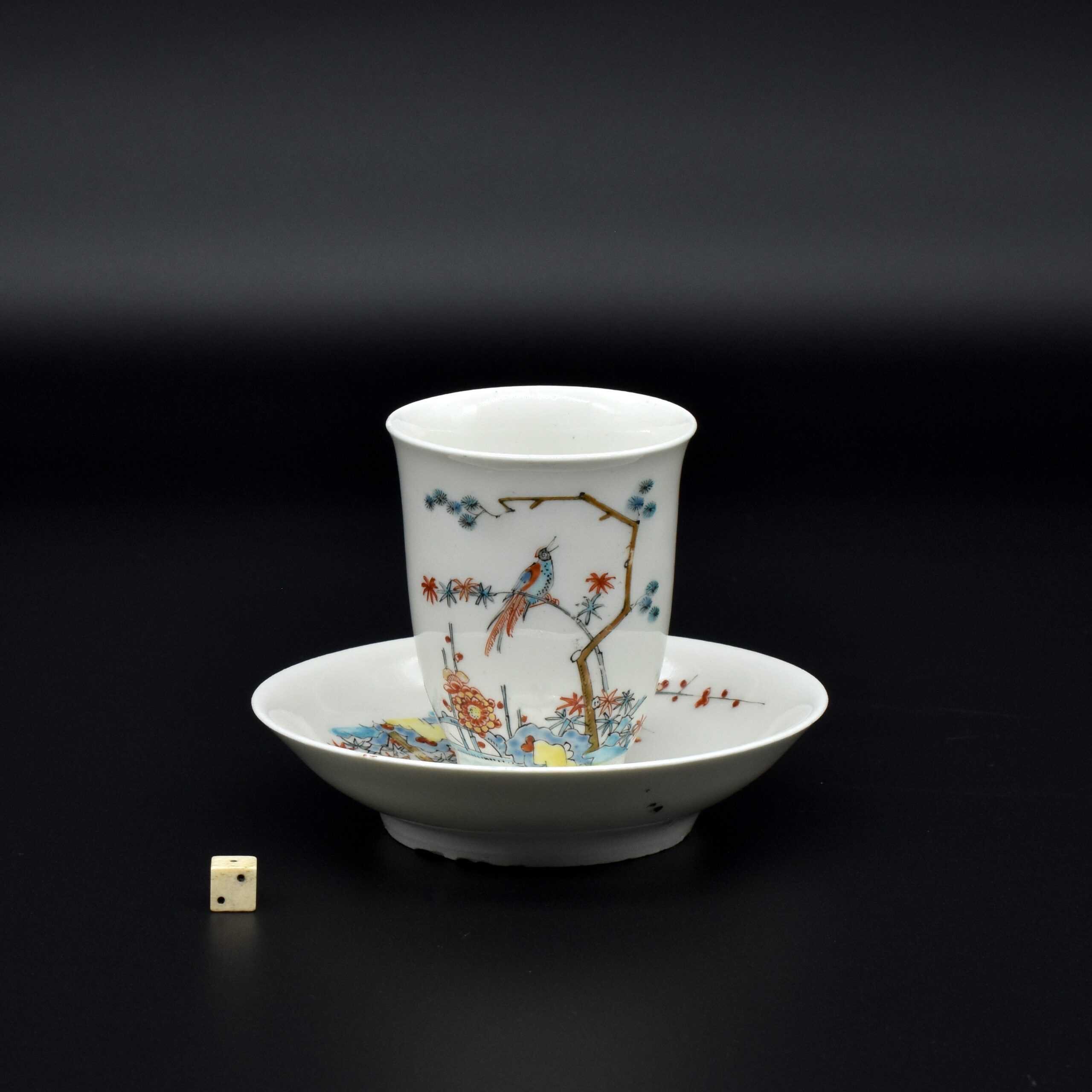
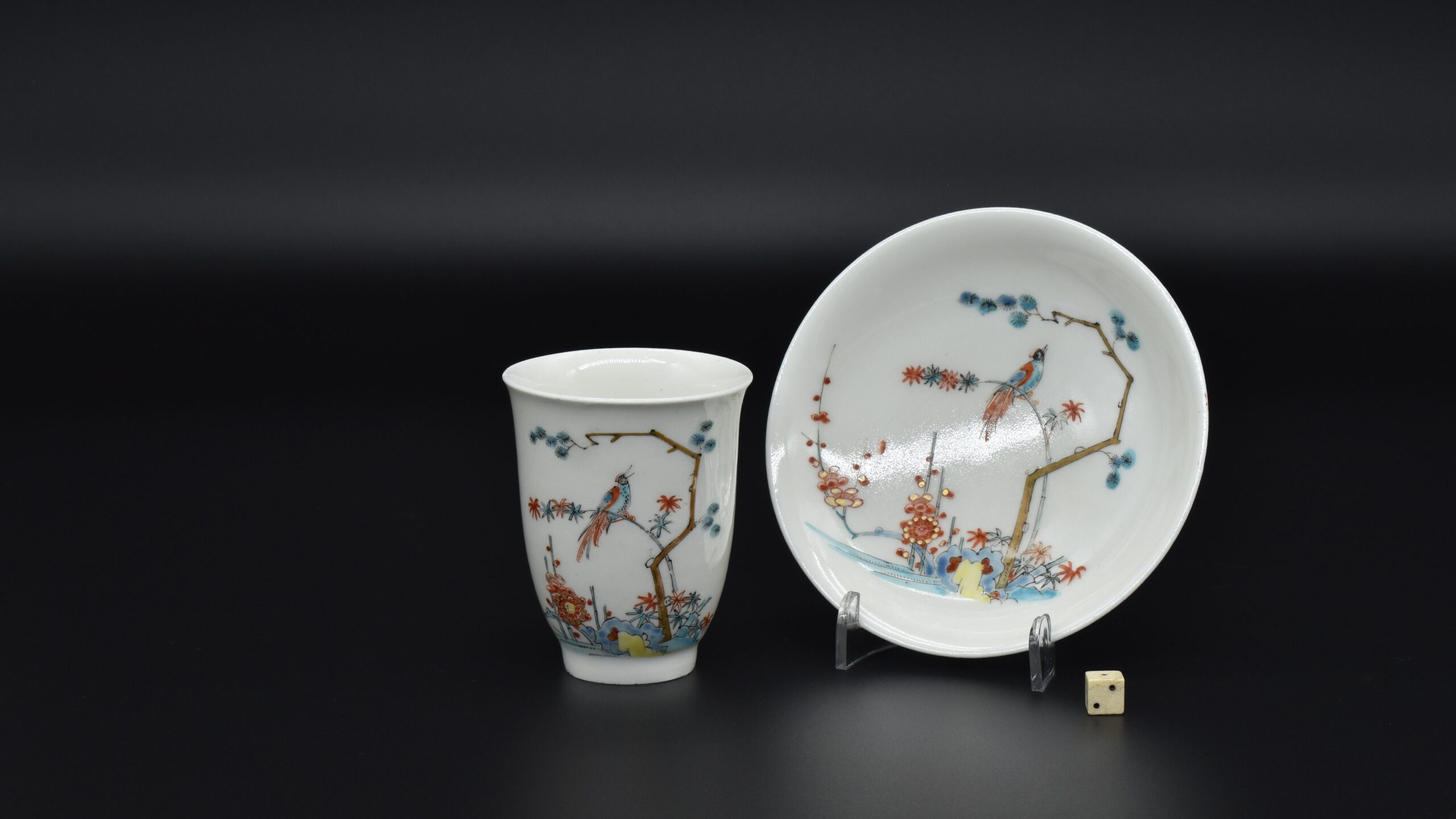
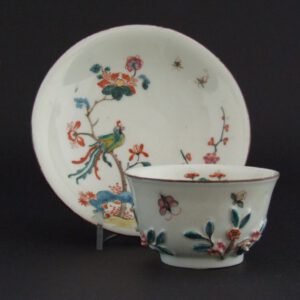
An Early 18th Century Meissen Beaker and Saucer with Dutch Decorated Kakiemon Style Enamels, the Meissen Porcelain c.1715-1720, the Dutch Enamels in the Kakiemon Style c.1720-1730. The enamel palette employed on this early Meissen porcelain beaker and saucer is rather close to the Japanese Kakiemon original, it is perhaps more closely aligned to the painting and palette of the Meissen factory. These overglazed enamels were not used at Meissen in the period of 1715 to 1720. However, the enamels closely resemble those found on Chinese export porcelain decorated in the Netherlands of the period c.1720-1730. The Japanese Hō-ō bird is type of auspicious phoenix and is similar to the Chinese Fenghuang. the Hō-ō appears only in peaceful and prosperous times (nesting, it is said, in paulownia trees), and hides itself when there is trouble. As the herald of a new age, the Hō-ō descends from heaven to earth to do good deeds, and then it returns to its celestial abode to await a new era. It is both a symbol of peace (when the bird appears) and a symbol of disharmony (when the bird disappears). The Hō-ō Bird appears frequently in Japanese porcelain of the late 17th and early 18th centuries, especially in Kakiemon wares. Ho-Ho is often used when referring to English porcelain versions of these Kakiemon designs. This early Meissen beaker and saucer has a very feint yellow-green tinge to the glaze, it doesn’t have the brilliant white look of slightly later Meissen porcelain.
The Rudolphe Lamaire Plot
Meissen porcelain painted in the Netherlands… “may have been part of an infamous scheme to dupe wealthy clients into buying imitations of Japanese porcelains which were very expensive and only imported in small numbers. The plot centred on a French merchant named Lemaire who was spurred on by the demand for Kakiemon porcelain in Paris. He purchased undecorated Meissen porcelain from the factory warehouse in Dresden in 1728-29, and sent it to be decorated in Holland ‘in the taste of old Japan’. He chose Dutch decorators as they were skilled at working on plain white Chinese porcelains and, of course, on their own homegrown earthenwares made in Delft. He arranged for the Meissen pieces he bought not to have the usual underglaze crossed sword marks applied to their bases, or to have the mark applied overglaze so that it could easily be ground off. Luckily the plot was discovered in 1731, by which time the Meissen factory was catering to the fashion for exotic porcelain by decorating its own wares with convincing Japanese designs, copied from authentic Japanese pieces in the Saxon royal collection.” (From the Victoria & Albert Museum website).
For a closely related teabowl and saucer click on the link to the Victoria & Albert Museum website Meissen tea bowl and saucer
See Below For More Photographs and Information.
- Condition
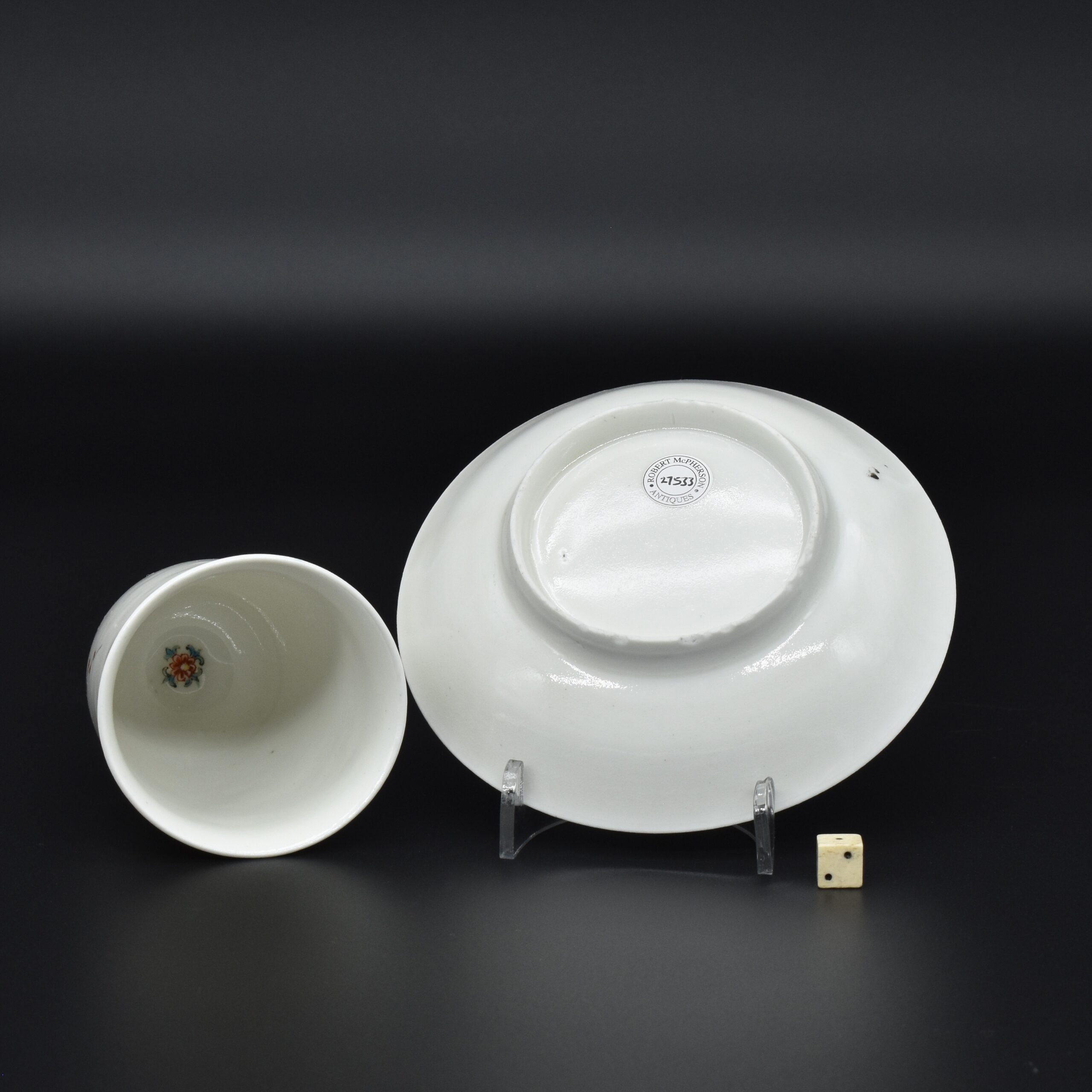
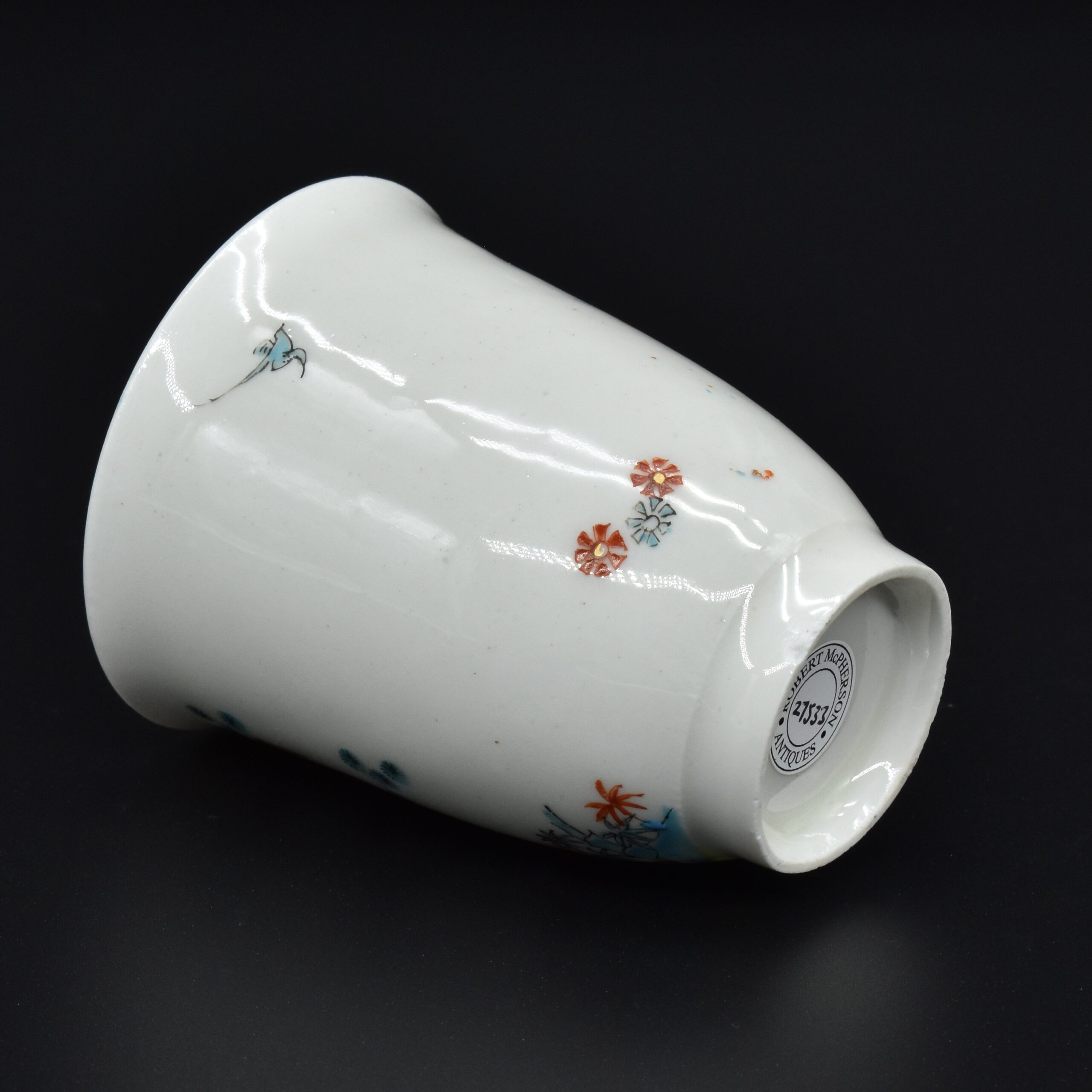
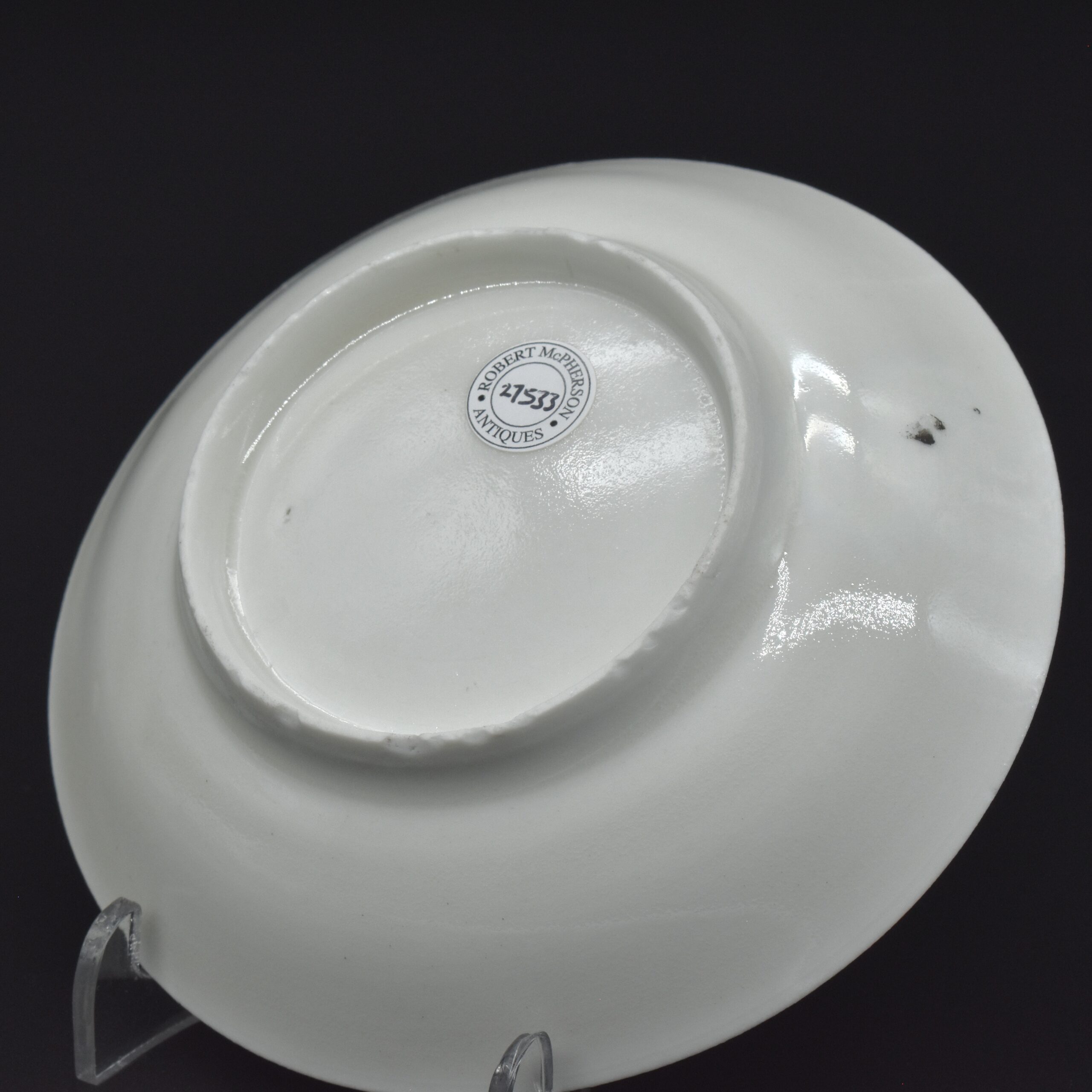
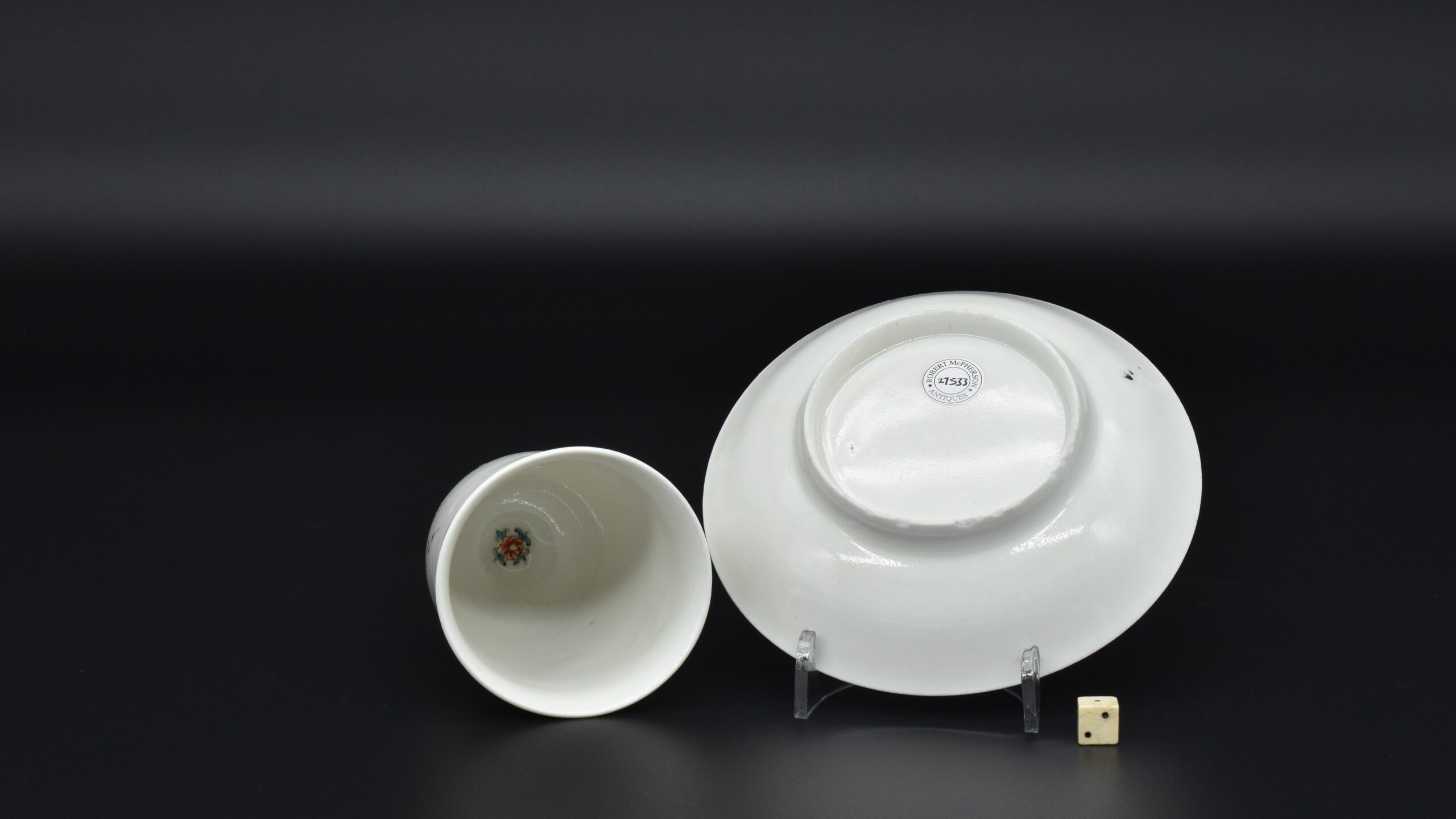
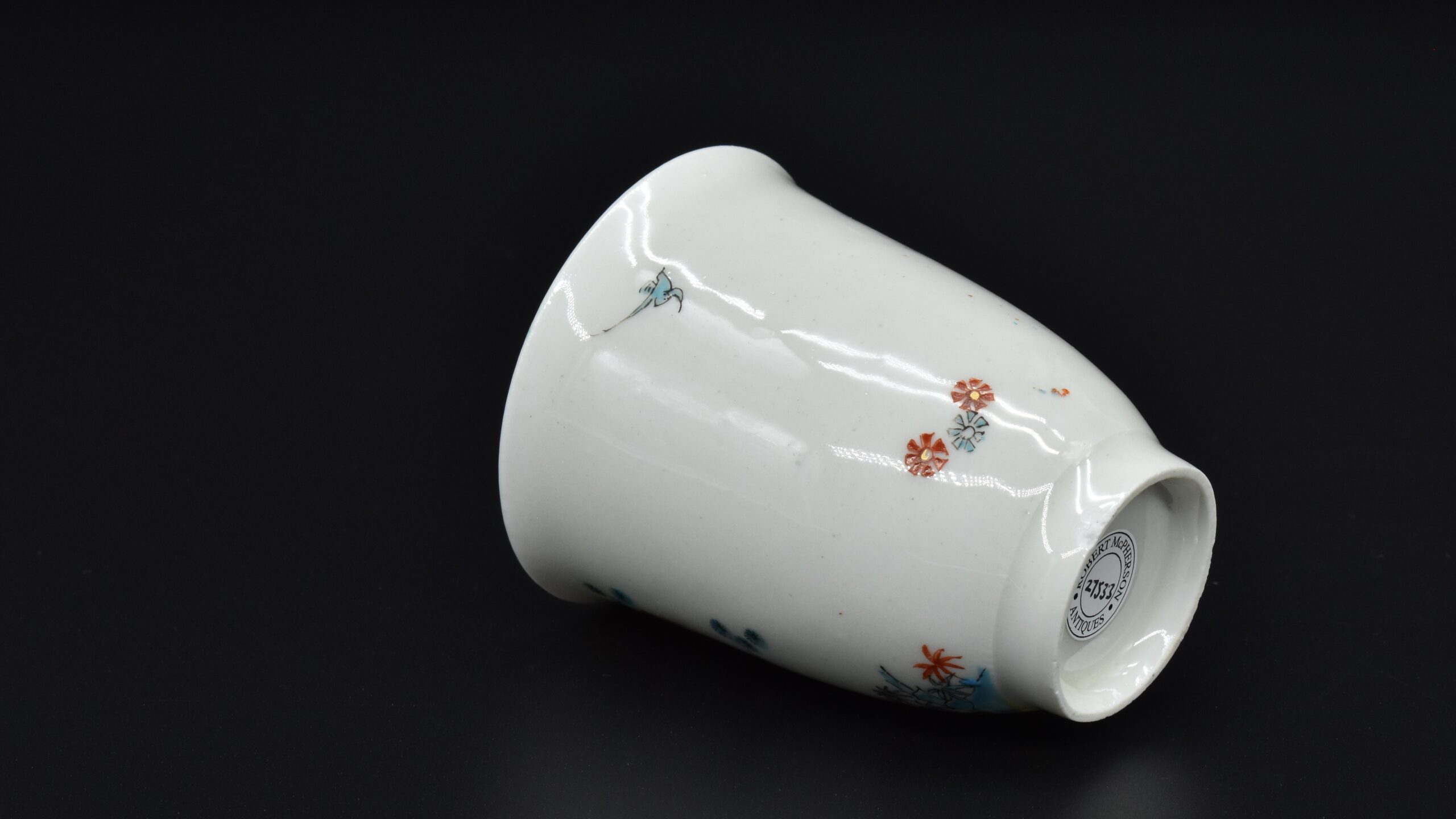
- There are quite allot of chips around the foot of the saucer (see photographs), the beaker has minor chips to the outside of the foot. Very minor wear in a few small areas to the enamels.
- Size
- Diameter of the saucer 11.8 cm (4.6 inches). Height of the beaker 7.7 cm (3 inches).
- Provenance
- Purchased in France.
- Stock number
- 27533
- References
- See Information below for a link to a related early Meissen tea bowl and saucer with Dutch decoration in the Kakiemon style.
- £ GBP
- € EUR
- $ USD
Photos
Information
An Early 18th Century Meissen Beaker and Saucer with Dutch Decorated Kakiemon Style Enamels, the Meissen Porcelain c.1715-1720, the Dutch Enamels in the Kakiemon Style c.1720-1730. The enamel palette employed on this early Meissen porcelain beaker and saucer is rather close to the Japanese Kakiemon original, it is perhaps more closely aligned to the painting and palette of the Meissen factory. These overglazed enamels were not used at Meissen in the period of 1715 to 1720. However, the enamels closely resemble those found on Chinese export porcelain decorated in the Netherlands of the period c.1720-1730. The Japanese Hō-ō bird is type of auspicious phoenix and is similar to the Chinese Fenghuang. the Hō-ō appears only in peaceful and prosperous times (nesting, it is said, in paulownia trees), and hides itself when there is trouble. As the herald of a new age, the Hō-ō descends from heaven to earth to do good deeds, and then it returns to its celestial abode to await a new era. It is both a symbol of peace (when the bird appears) and a symbol of disharmony (when the bird disappears). The Hō-ō Bird appears frequently in Japanese porcelain of the late 17th and early 18th centuries, especially in Kakiemon wares. Ho-Ho is often used when referring to English porcelain versions of these Kakiemon designs. This early Meissen beaker and saucer has a very feint yellow-green tinge to the glaze, it doesn't have the brilliant white look of slightly later Meissen porcelain.
The Rudolphe Lamaire Plot
Meissen porcelain painted in the Netherlands... "may have been part of an infamous scheme to dupe wealthy clients into buying imitations of Japanese porcelains which were very expensive and only imported in small numbers. The plot centred on a French merchant named Lemaire who was spurred on by the demand for Kakiemon porcelain in Paris. He purchased undecorated Meissen porcelain from the factory warehouse in Dresden in 1728-29, and sent it to be decorated in Holland 'in the taste of old Japan'. He chose Dutch decorators as they were skilled at working on plain white Chinese porcelains and, of course, on their own homegrown earthenwares made in Delft. He arranged for the Meissen pieces he bought not to have the usual underglaze crossed sword marks applied to their bases, or to have the mark applied overglaze so that it could easily be ground off. Luckily the plot was discovered in 1731, by which time the Meissen factory was catering to the fashion for exotic porcelain by decorating its own wares with convincing Japanese designs, copied from authentic Japanese pieces in the Saxon royal collection." (From the Victoria & Albert Museum website).
Kakiemon Style Porcelain at the Victoria & Albert Museum.
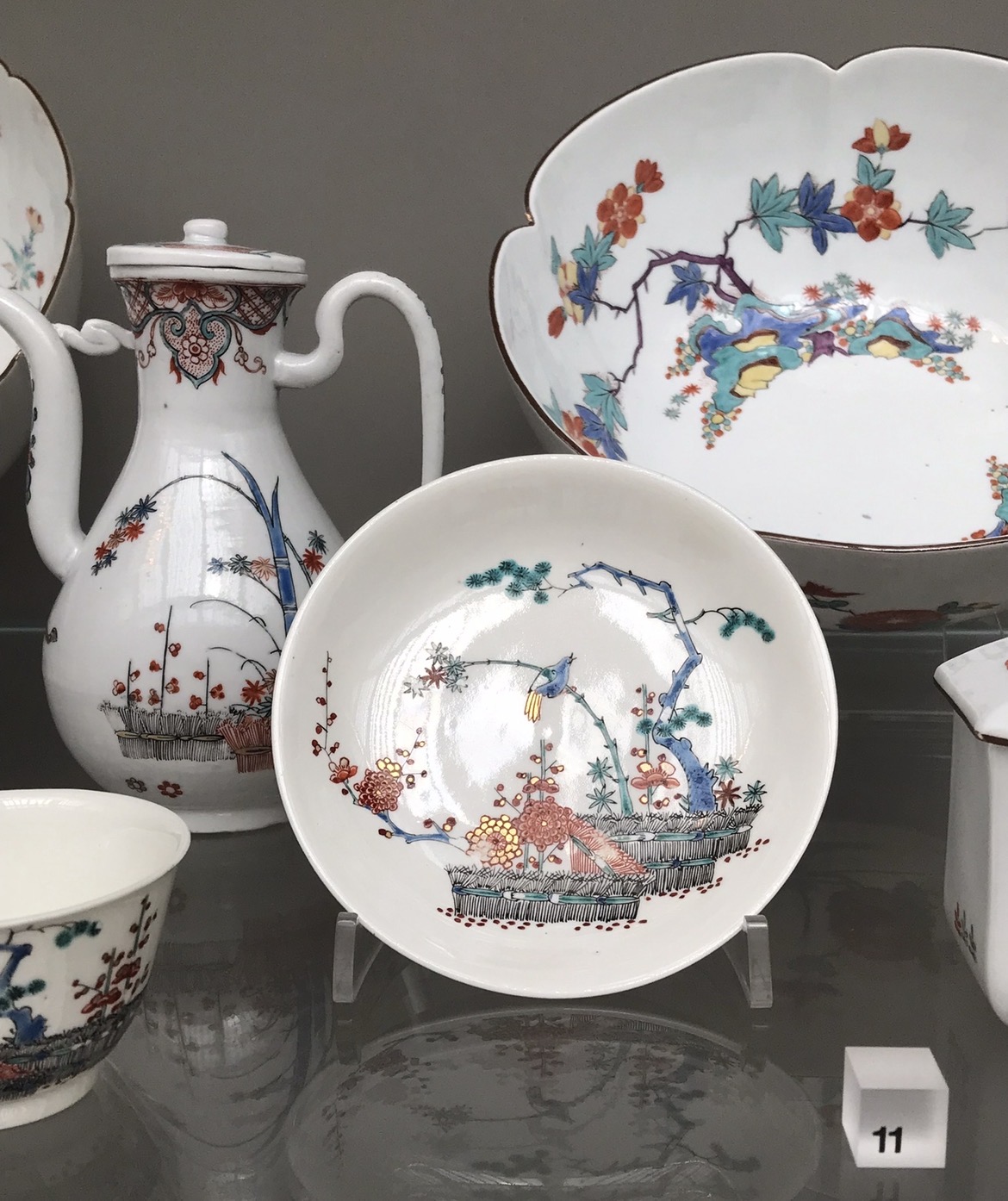
A related early with Dutch enamels in the Kakiemon style at The Victoria & Albert Museum, London, see Meissen porcelain teabowl and saucer
A photograph I took at the Museum, its an interesting group of Kakiemon and the variations of Kakiemon.
For the film I took of the Kakiemon display at the V&A ; see this link Kakiemon Porcelain
The Gardiner Museum in Canada.
The Böttger porcelain bowl with Dutch Decoration in the Kakiemon Style.
This bowl is illustrated in Dragons, Tigers and Bamboo : Japanese Porcelain and Its Impact in Europe by Oliver Impey, Christiaan Jörg, Charles Mason,
Robert McPherson Antiques Sold Archive 26055.
The Böttger porcelain bowl with Dutch Decoration in the Kakiemon Style.
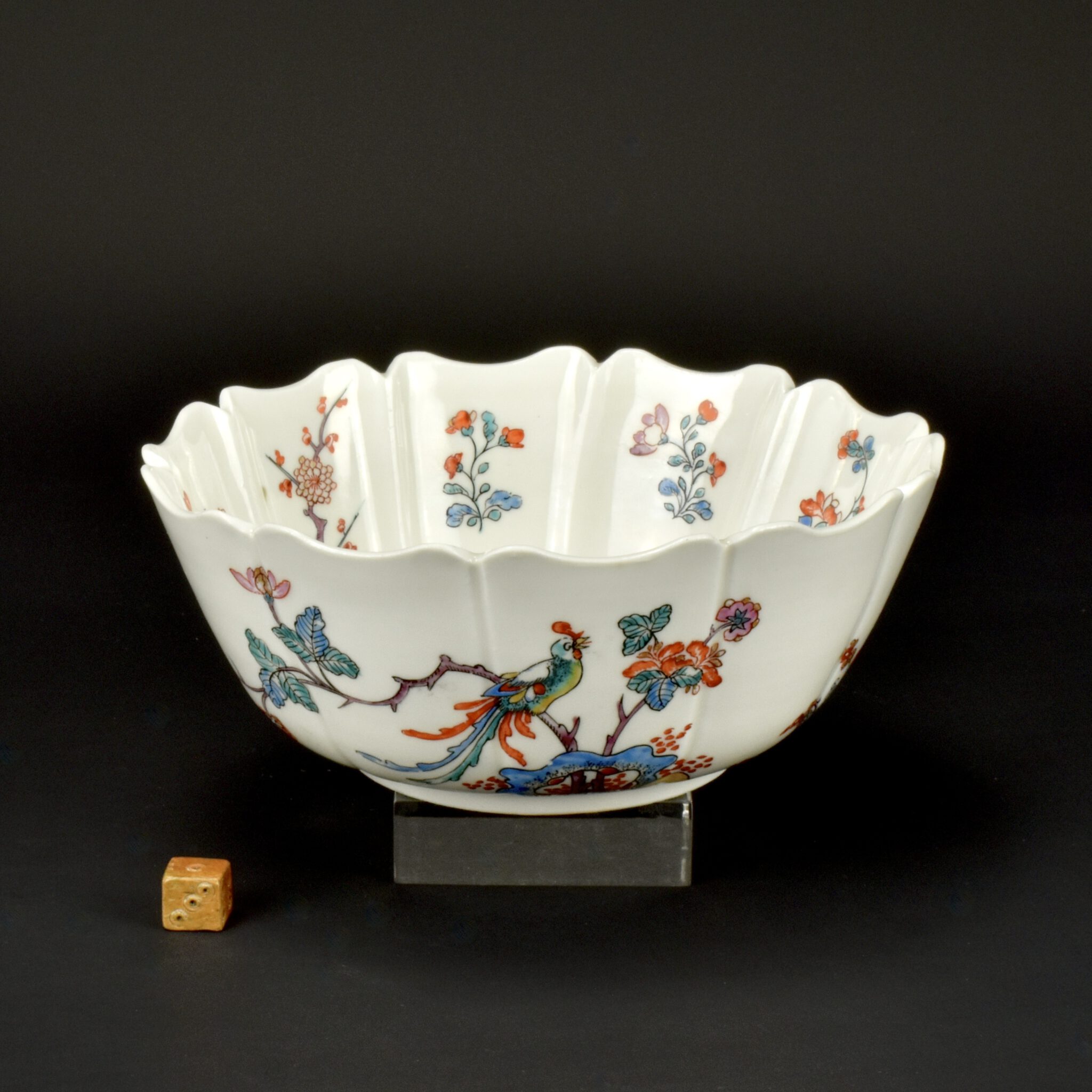
A Böttger or Early Meissen Dutch Decorated Teabowl and Saucer c.1715-1725.
Robert McPherson Antiques - Sold Archive - 23638.
Condition
There are two areas of restoration to the back of the saucer, these are almost certainly coving chips. The tea bowl is in perfect condition.
Size
Diameter : 12.5 cm (5 inches).
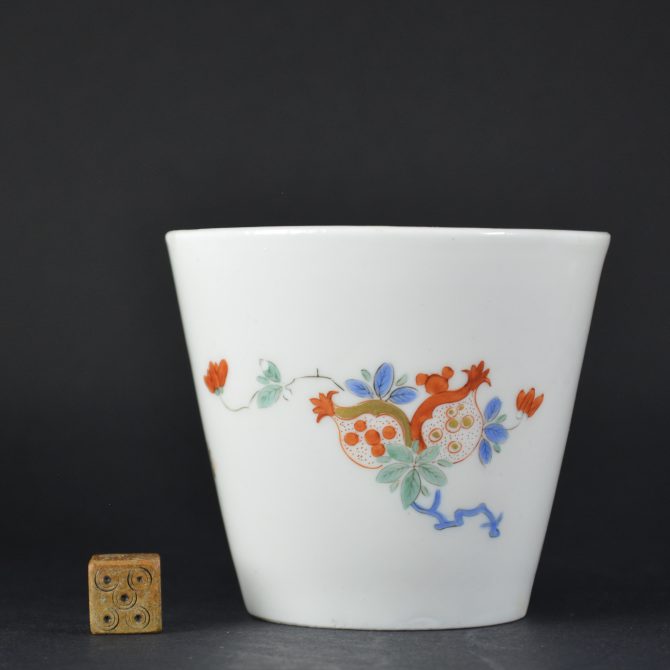
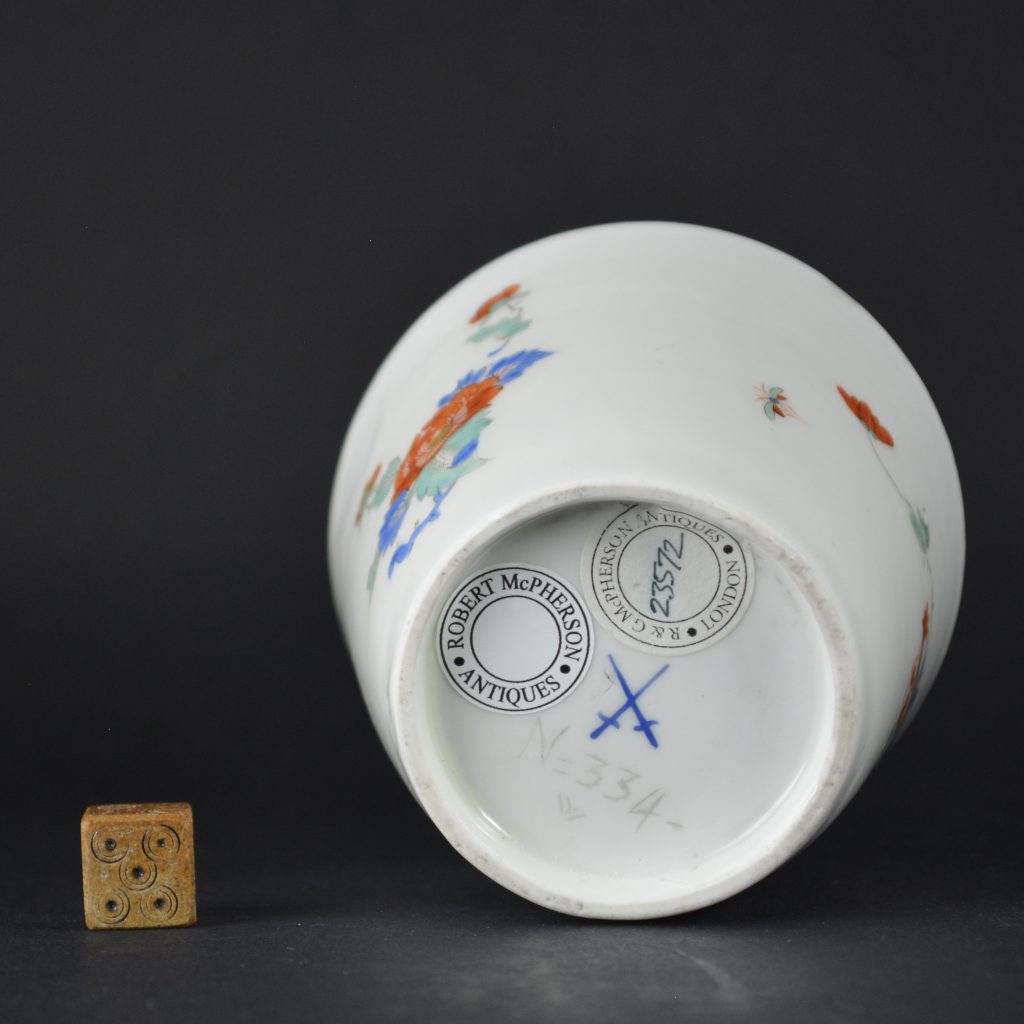
An 18th Century Meissen Porcelain Beaker in the Kakiemon Style from the Collection of Augustus the Strong.
Robert McPherson Antiques Sold Archive 23572.
Johann Friedrich Böttger 1682-1719
Böttger was a German alchemist. He was born in Schleiz, and died in Dresden. He was generally acknowledged as the inventor of European porcelain although more recent sources ascribe this to Ehrenfried Walther von Tschirnhaus. Böttger is still credited with developing the manufacture of porcelain in Europe.
Hō-ō Bird / Ho-Ho Bird :
The Japanese Hō-ō bird is type of auspicious phoenix and is similar to the Chinese Fenghuang. the Hō-ō appears only in peaceful and prosperous times (nesting, it is said, in paulownia trees), and hides itself when there is trouble. As the herald of a new age, the Hō-ō descends from heaven to earth to do good deeds, and then it returns to its celestial abode to await a new era. It is both a symbol of peace (when the bird appears) and a symbol of disharmony (when the bird disappears). The Hō-ō Bird appears frequently in Japanese porcelain of the late 17th and early 18th centuries, especially in Kakiemon wares. Ho-Ho is often used when referring to English porcelain versions of these Kakiemon designs.
Meissen Porcelain :
Meissen porcelain was the first hard-paste porcelain, or true porcelain to be developed in Europe. Development of this new hard-paste porcelain by Ehrenfried Walther von Tschirnhaus started in 1707. When Tschirnhaus suddenly died, the recipe apparently was handed over to Böttger, who within one week announced to the Elector that he could make porcelain. Böttger refined the formula and with some Dutch co-workers, experienced in firing and painting tiles, the stage was set for the manufacturing of porcelain. In 1709, the Elector established the first Meissen porcelain factory, placed Böttger`s laboratory at Albrechtsburg castle in Meissen and production started officially in 1710. In 1720 Johann Gregorius Höroldt became the director and introduced brilliant colours which made Meissen porcelain famous. The next sculptor, Johann Jakob Kirchner, was the first to make large-scale statues and figurines, especially of Baroque saints. His assistant was Johann Joachim Kaendler; in 1733 Kirchner resigned, and Kaendler took over as chief "modelmaster". He became the most famous of the Meissen sculptors. Under his direction Meissen produced the series of small figurines, often depicting scenes of gallantry, which brought out the best of the new material. His menagerie of large-scale animals, left in the white, are some of the high points of European porcelain manufacture. His work resulted in the production of exquisite figurines in the rococo style that influenced porcelain making in all of Europe. Supported by assistants like Johann Friedrich Eberlein and Peter Reinecke, he worked until his death in 1775. In 1756, during the Seven Years` War, Prussian troops occupied Meissen, giving Frederick II of Prussia the opportunity to relocate some of the artisans to establish the Königliche Porzellan Manufaktur Berlin. With the changing tastes of the neoclassical period and the rise of Sèvres porcelain in the 1760s, Meissen had to readjust its production, and in the reorganisation from 1763, C.W.E. Dietrich of the Dresden Academy became artistic director and Michel-Victor Acier from France became the modelmaster. The practice of impressing numerals that correspond to moulds in the inventory books began in 1763. Sèvres styles and ventures into Neoclassicism, such as matte bisque wares that had the effect of white marble, marked the factory`s output under Count Camillo Marcolini, from 1774.