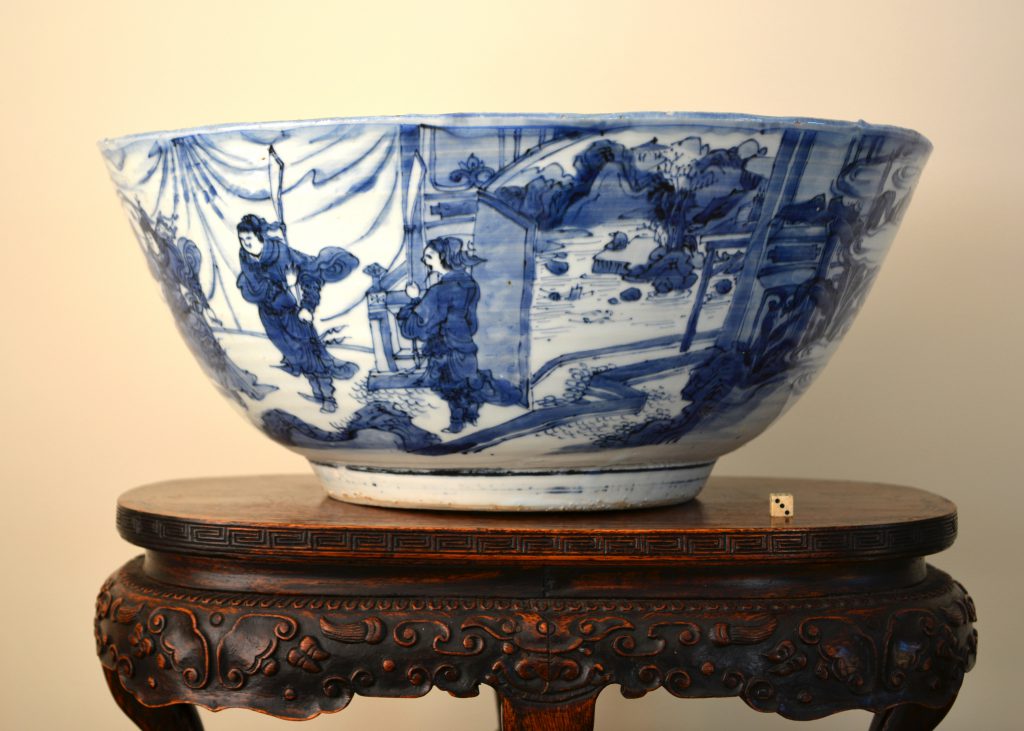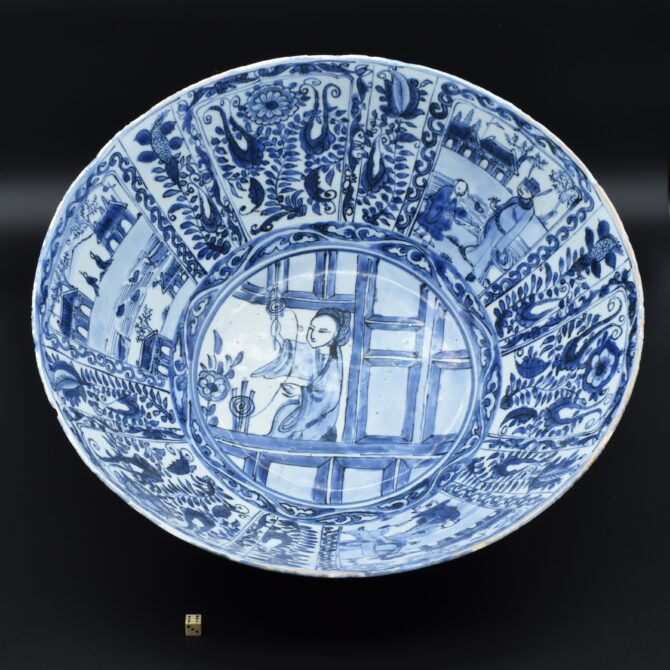
A Very Large Chinese Kraak Porcelain ‘Spinning’ Bowl, Ming Dynasty, Chongzhen Period.
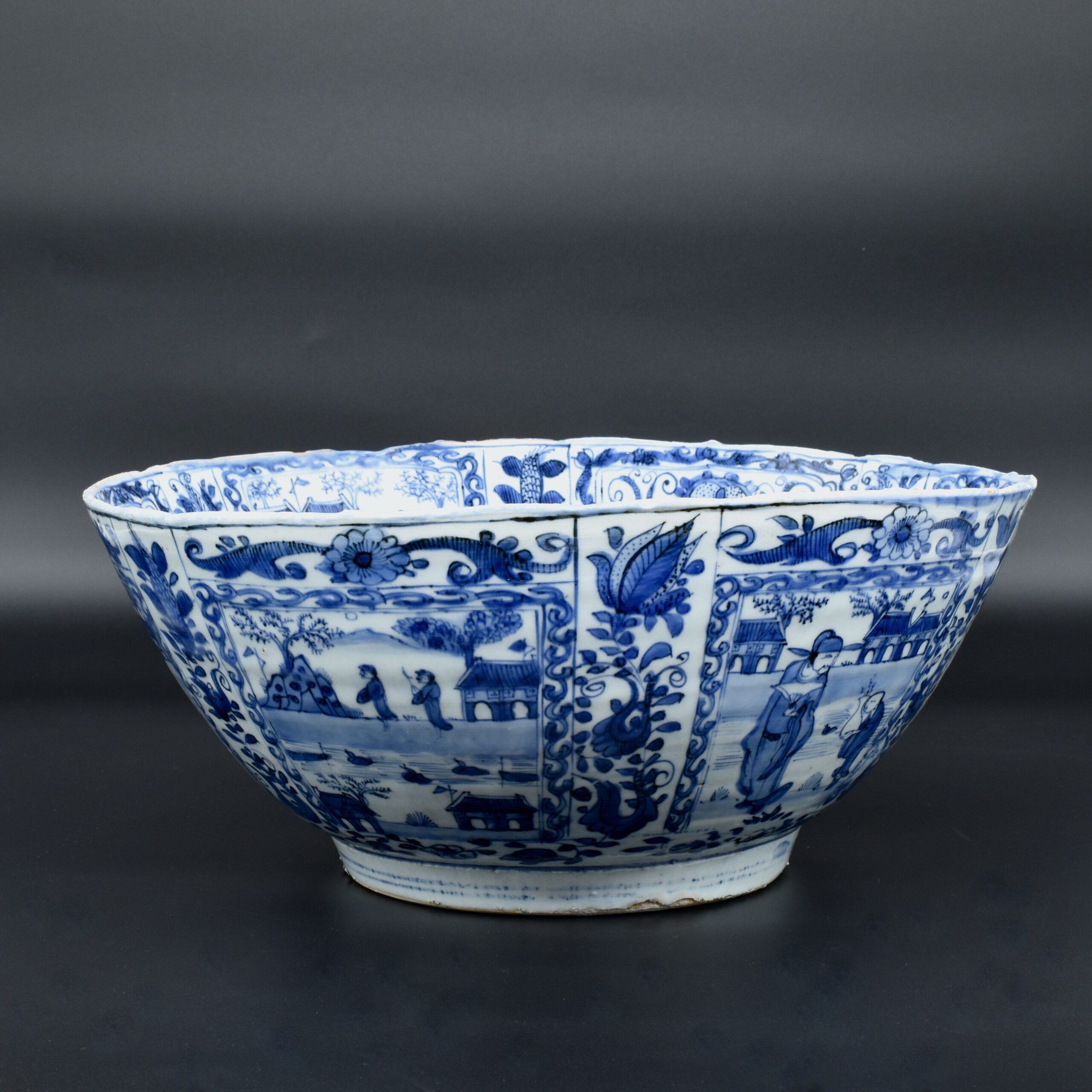
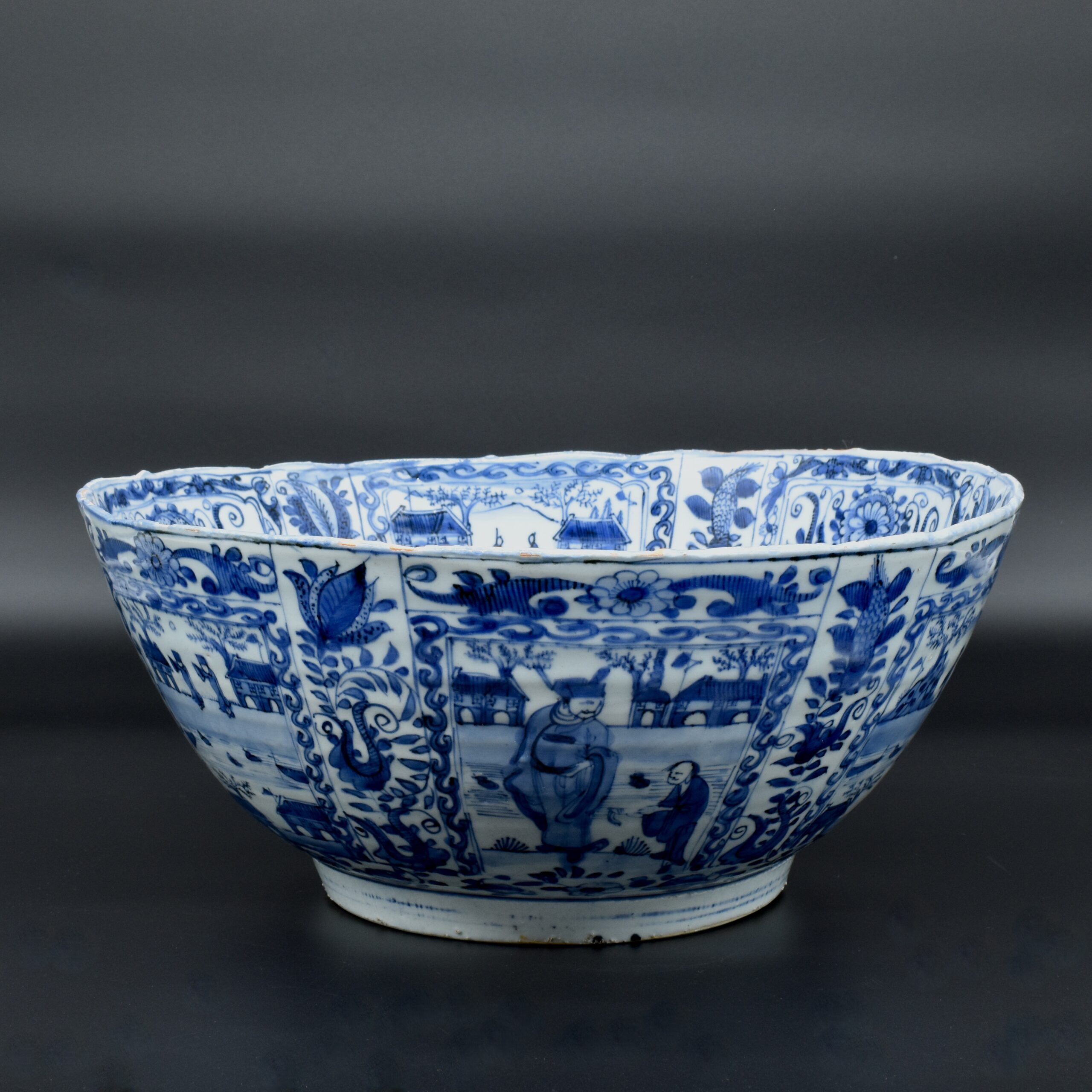
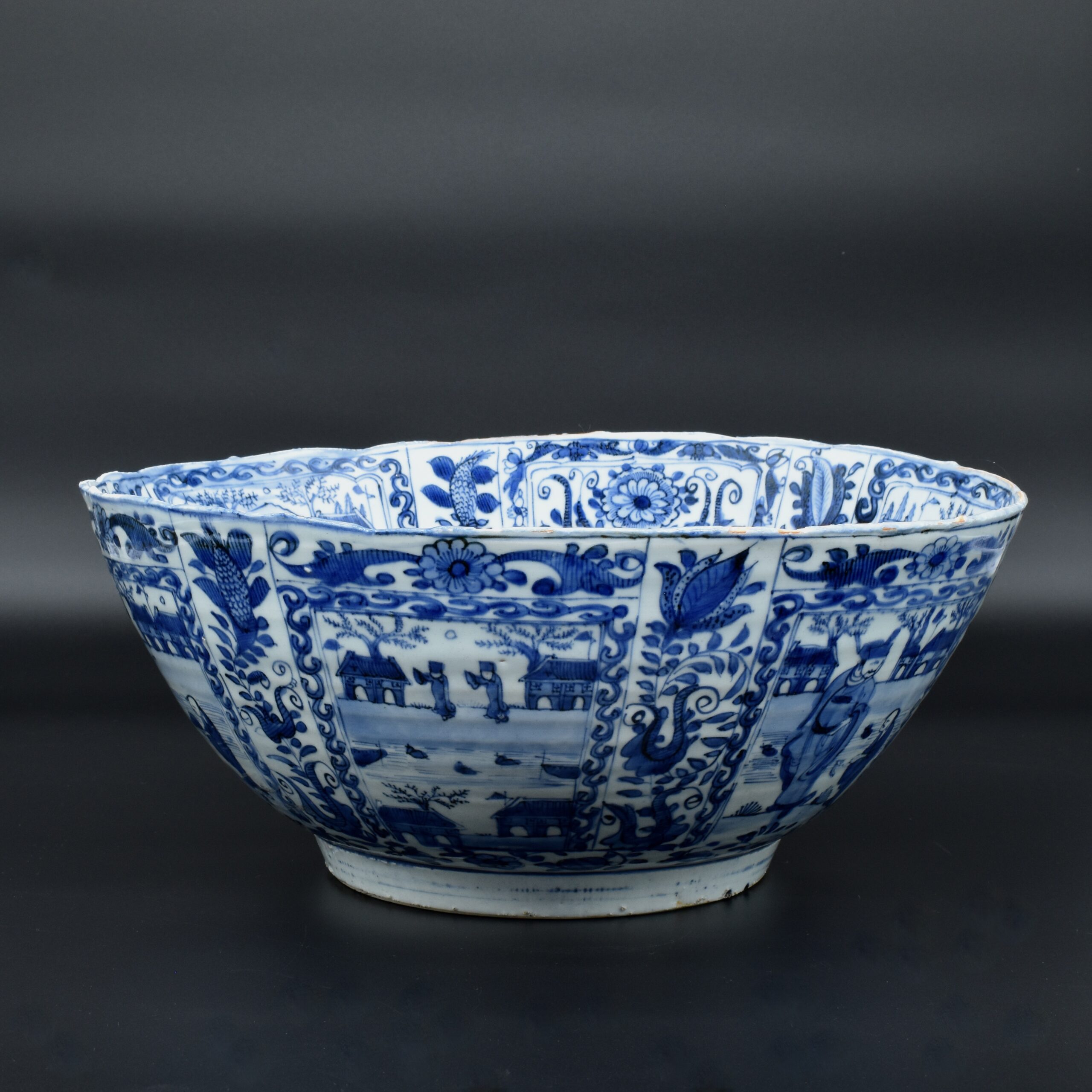
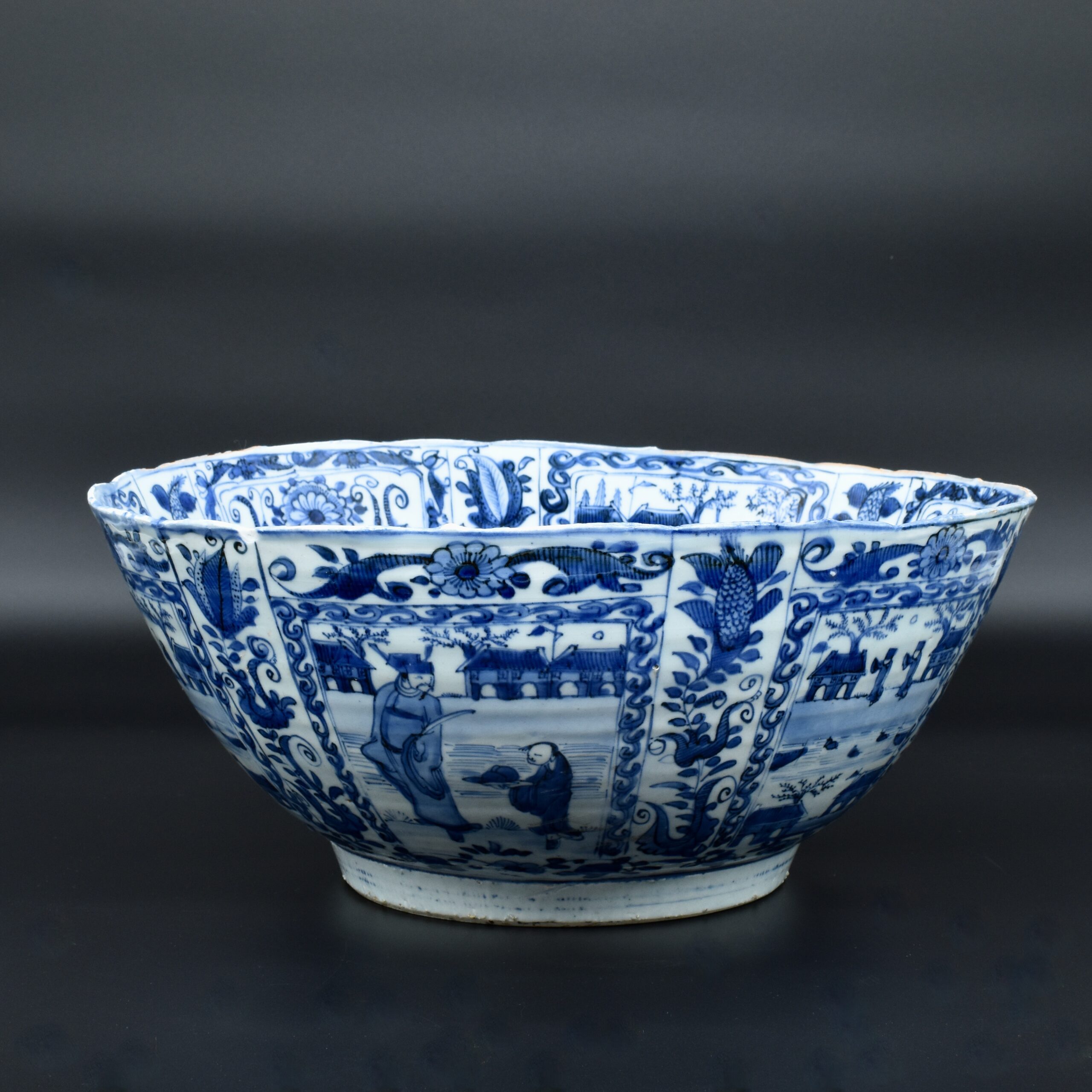
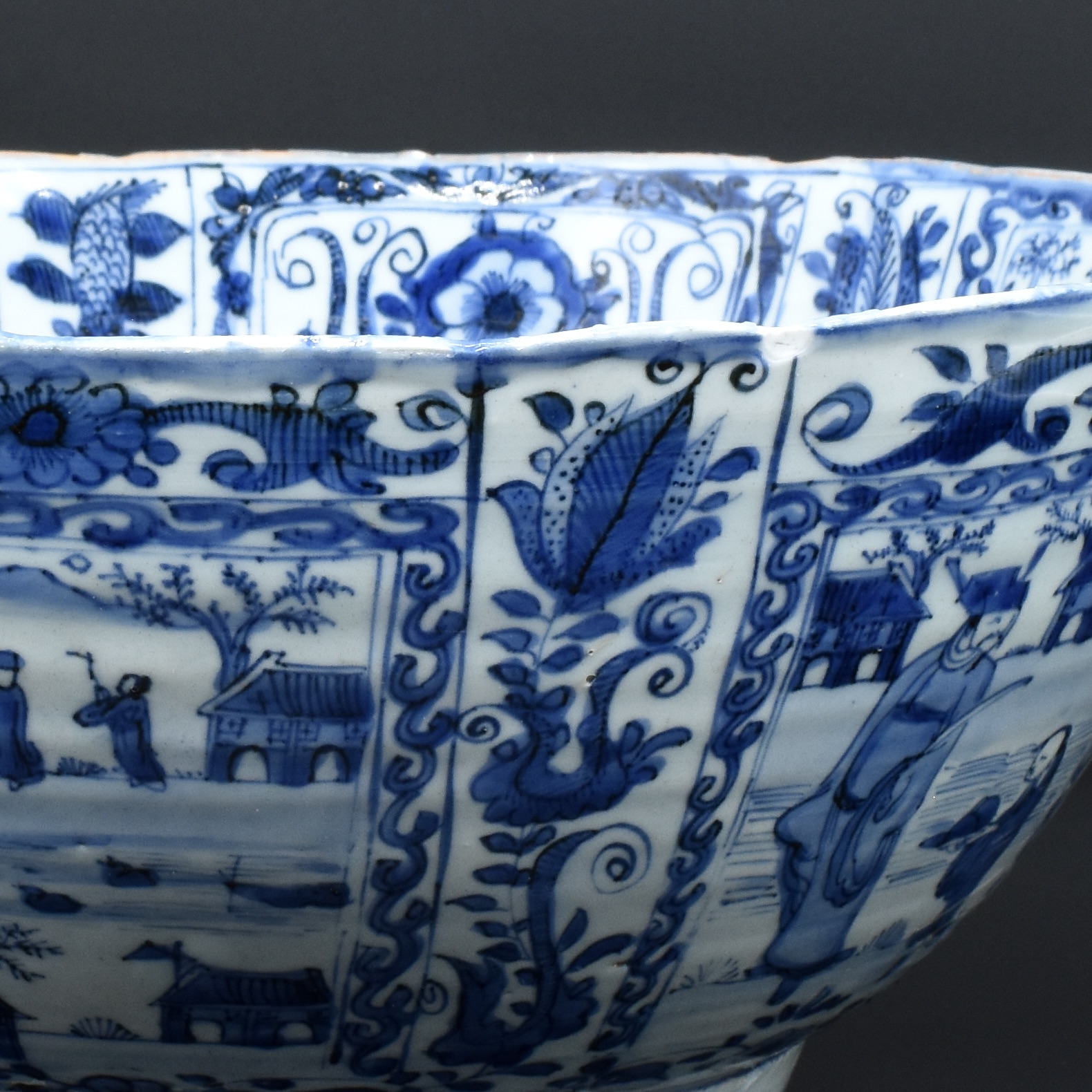
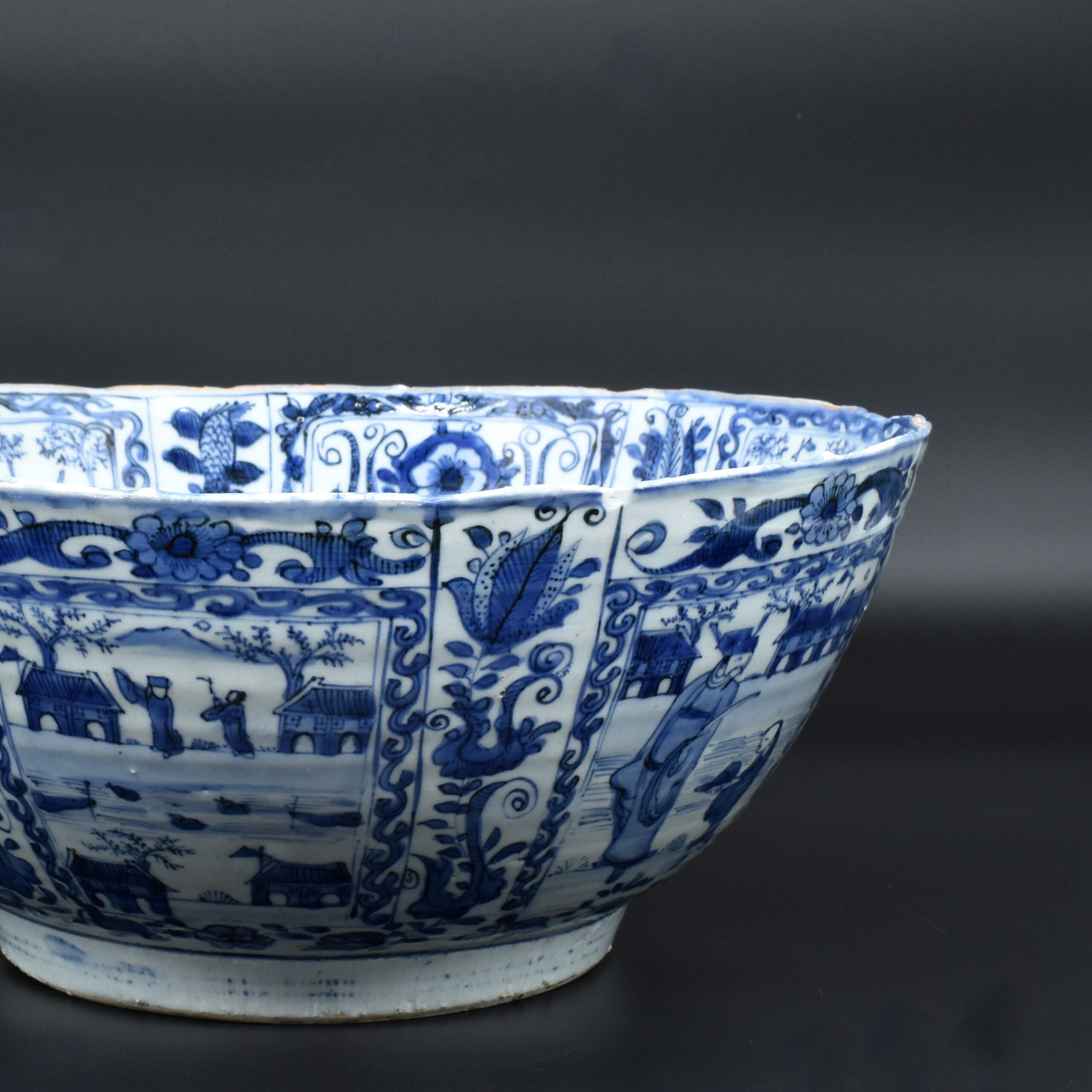
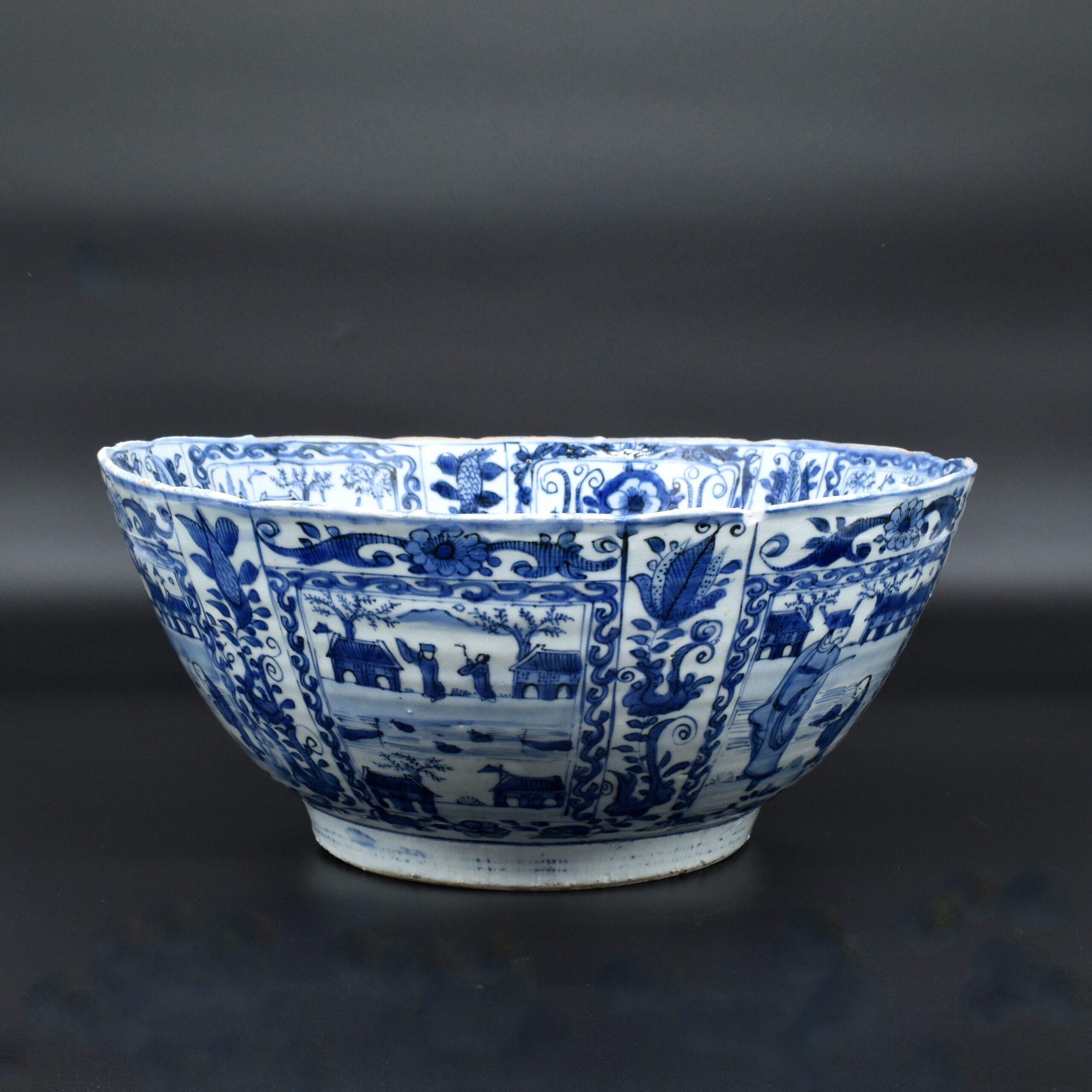
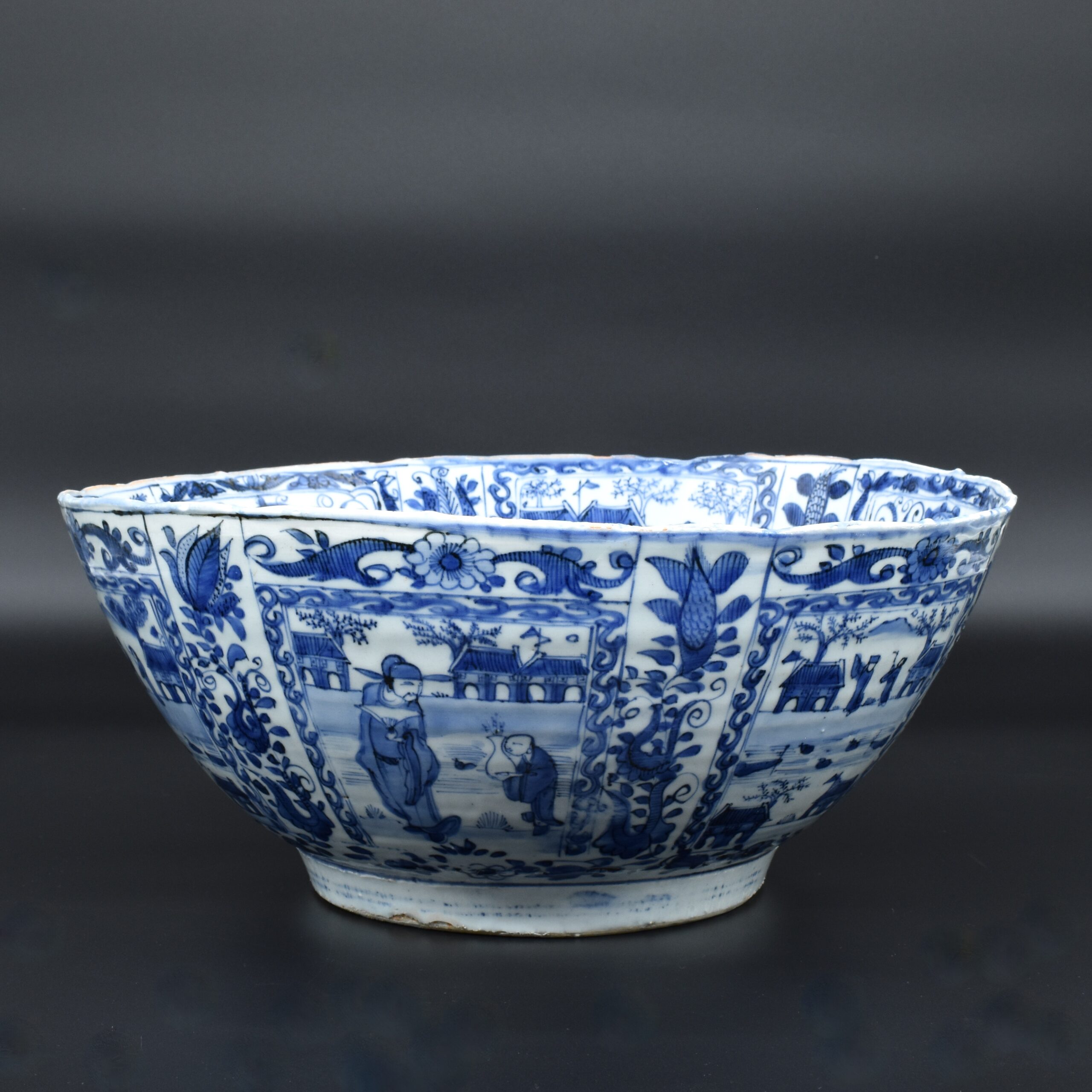
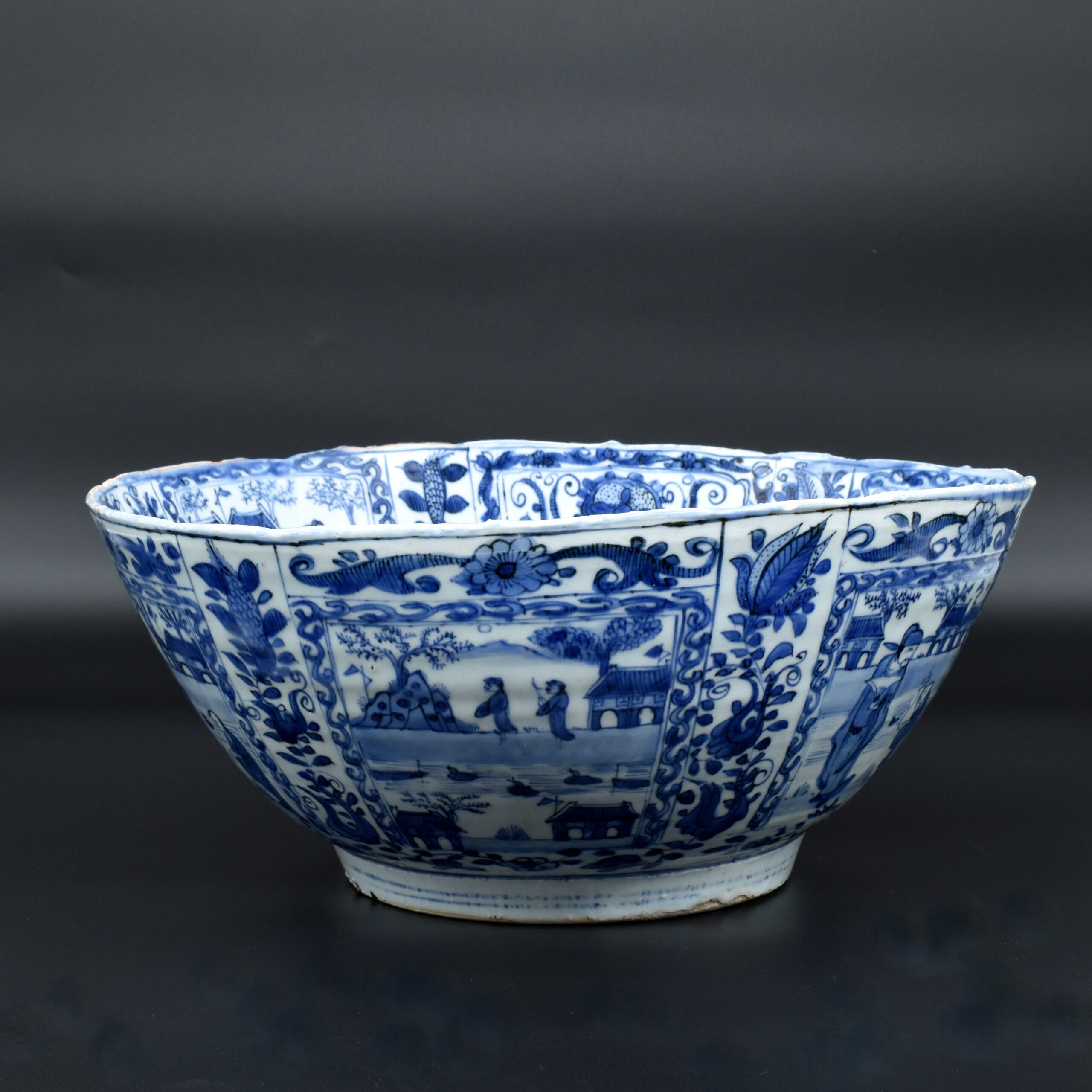
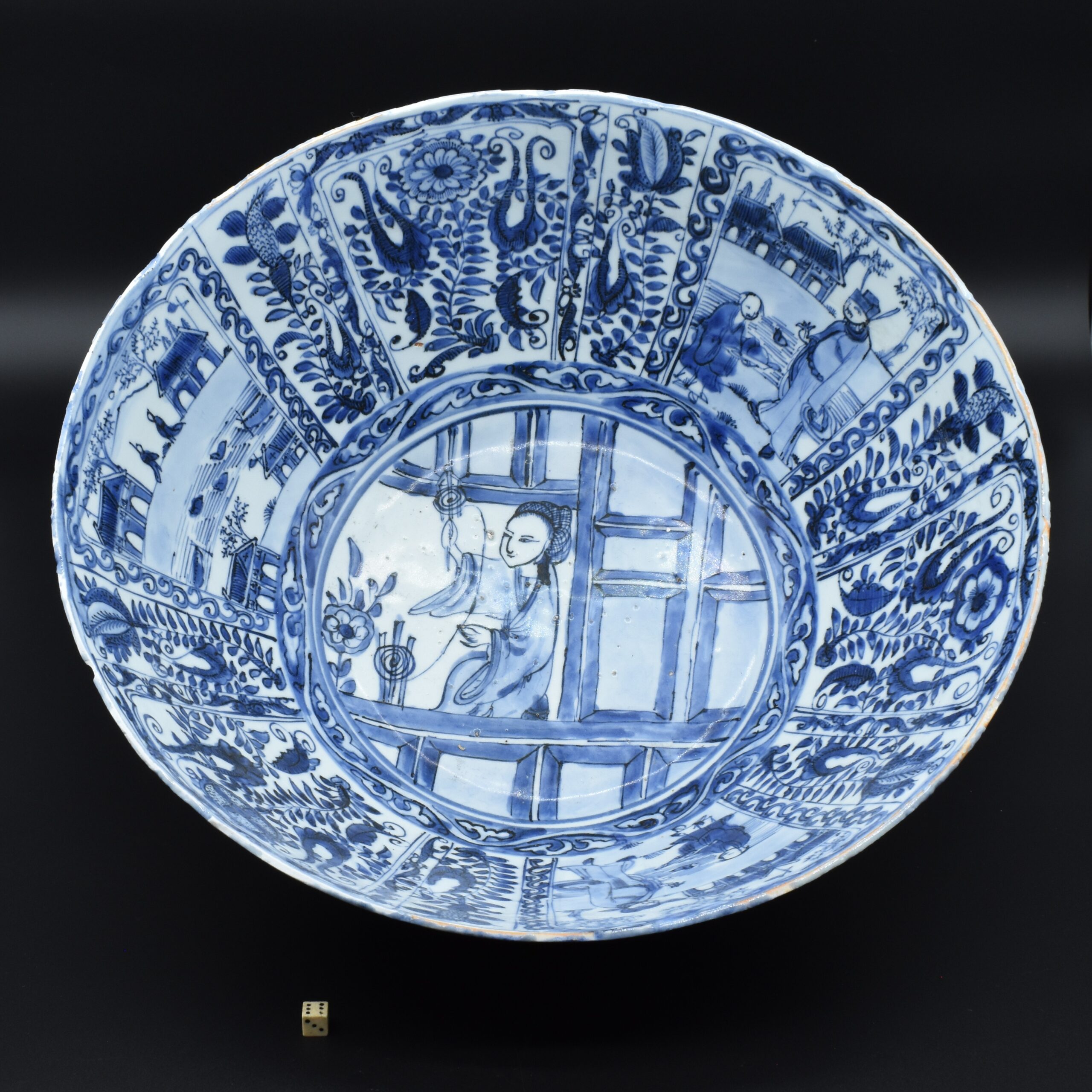
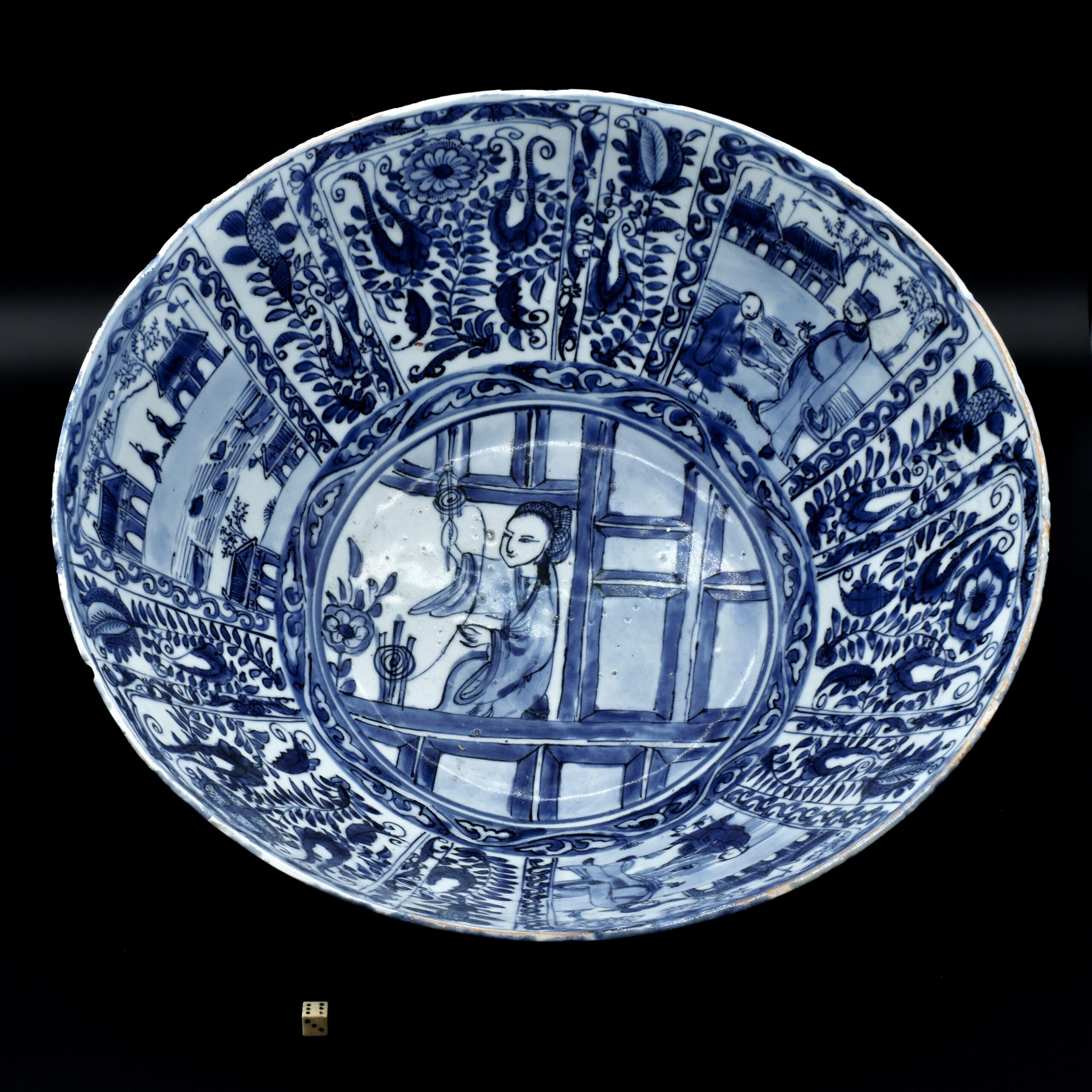
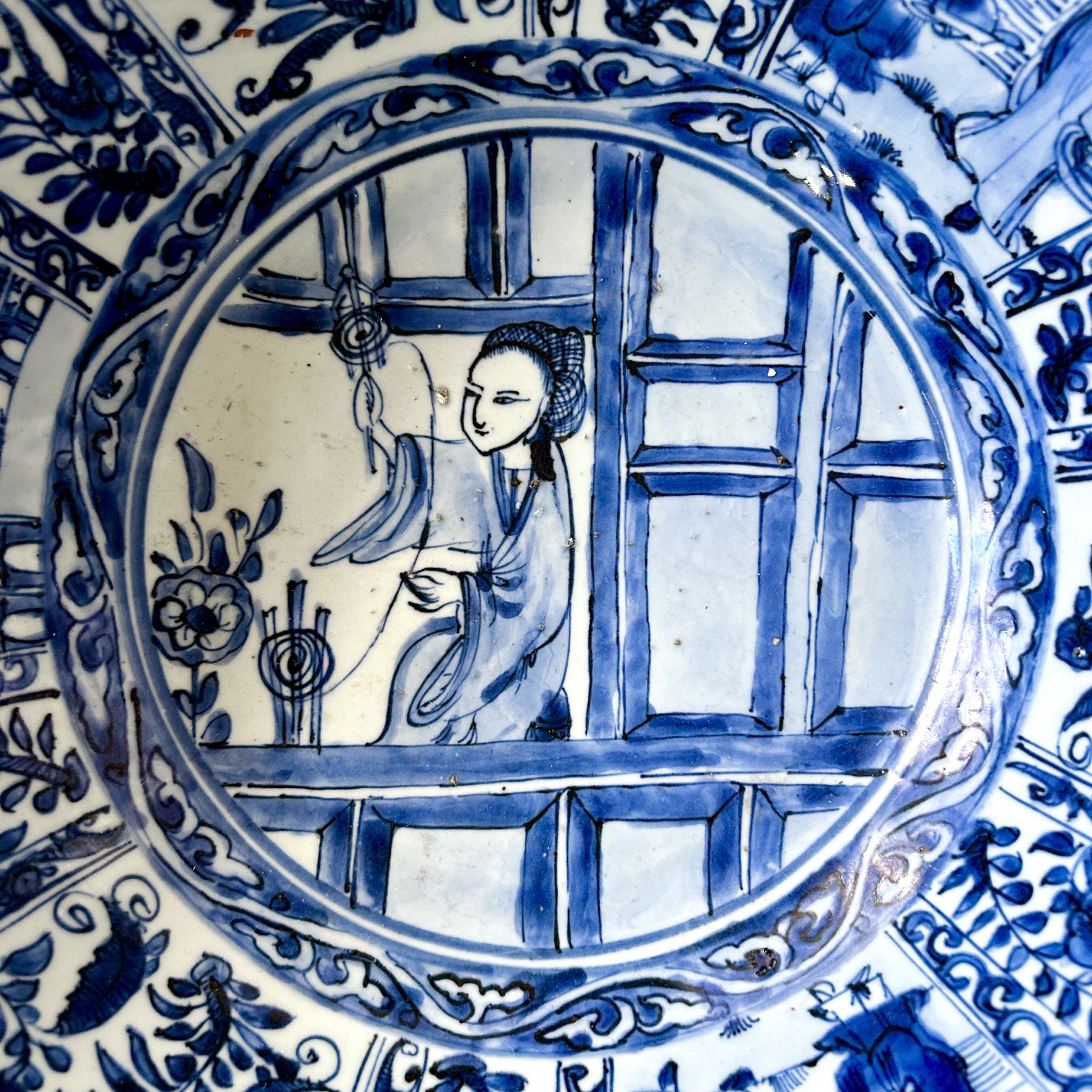
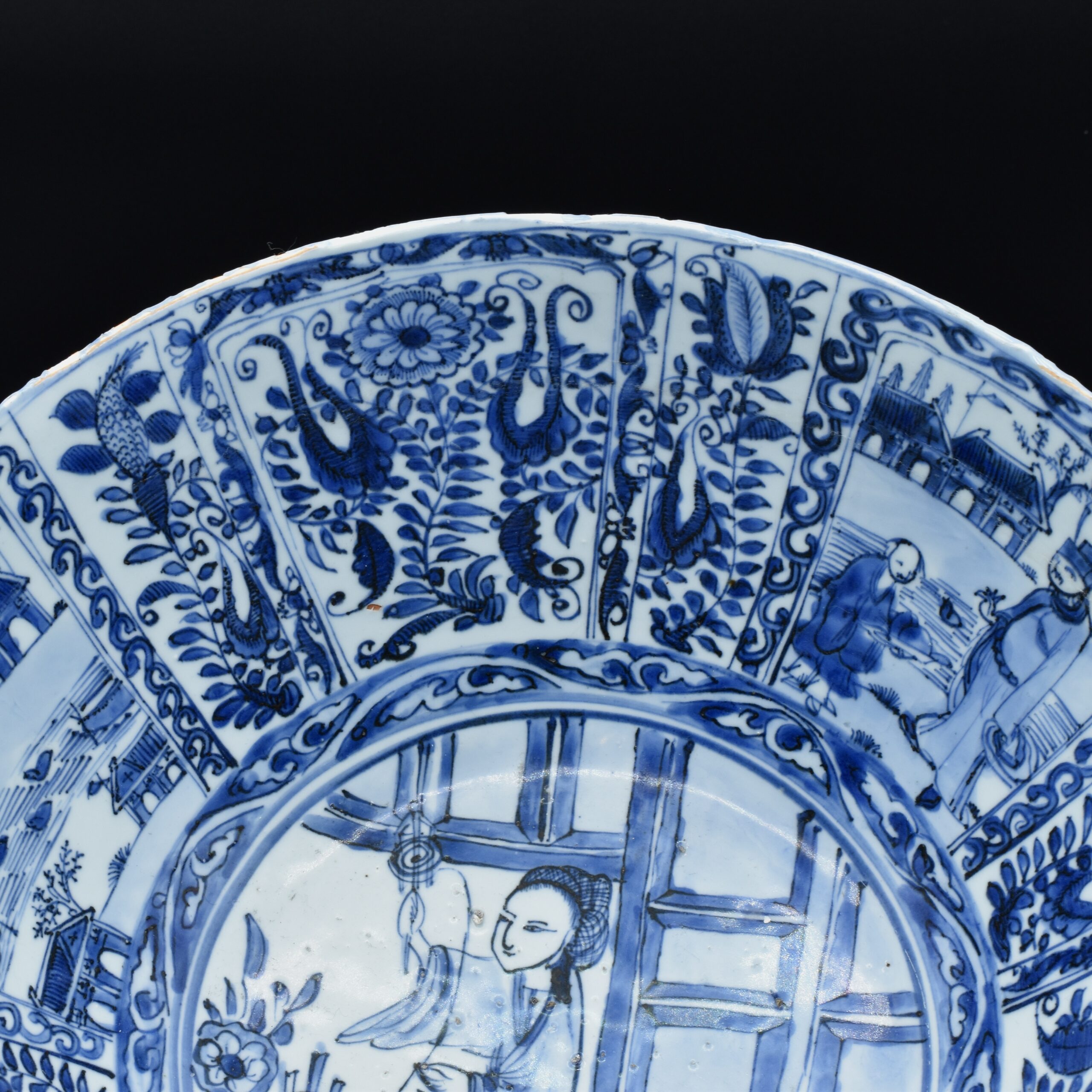
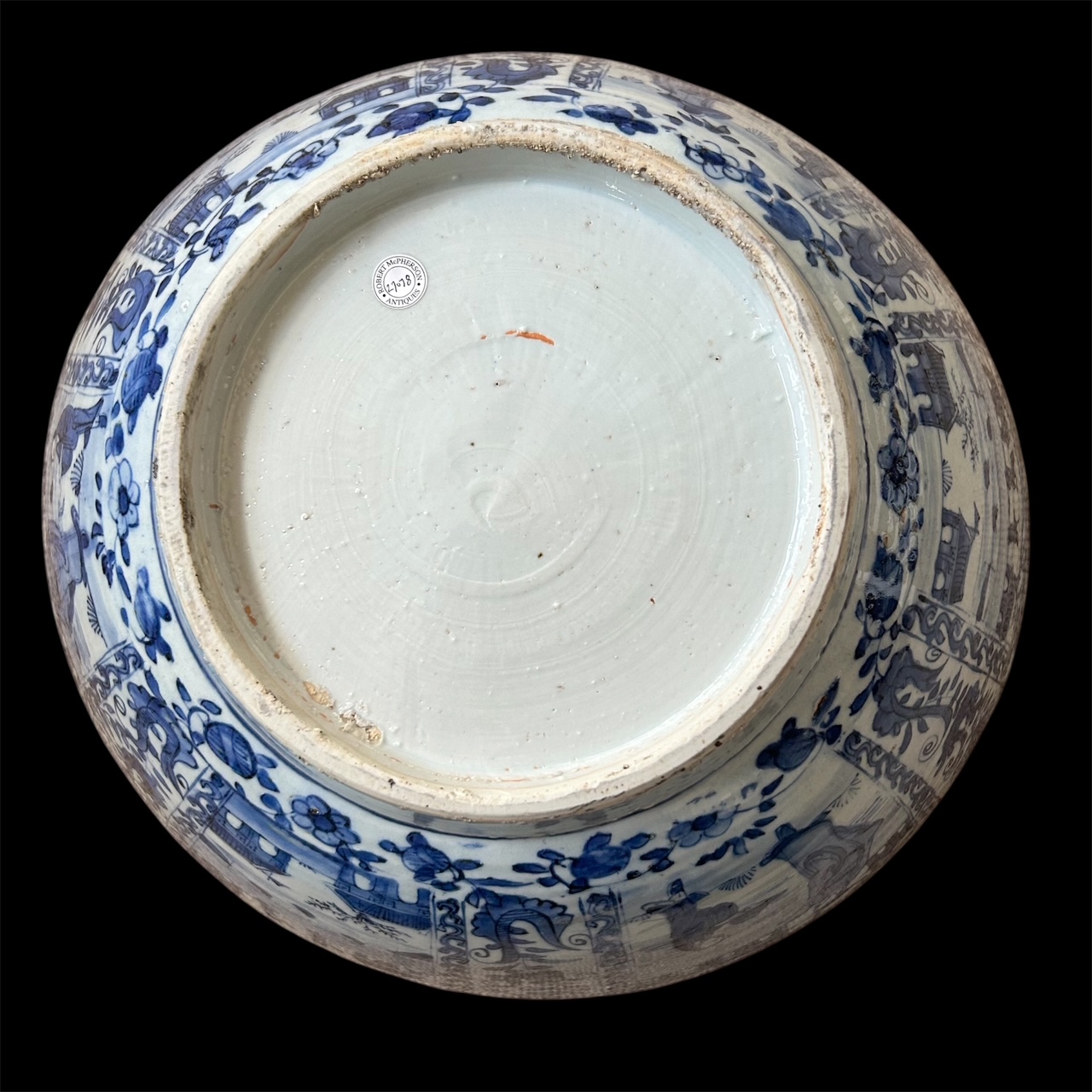
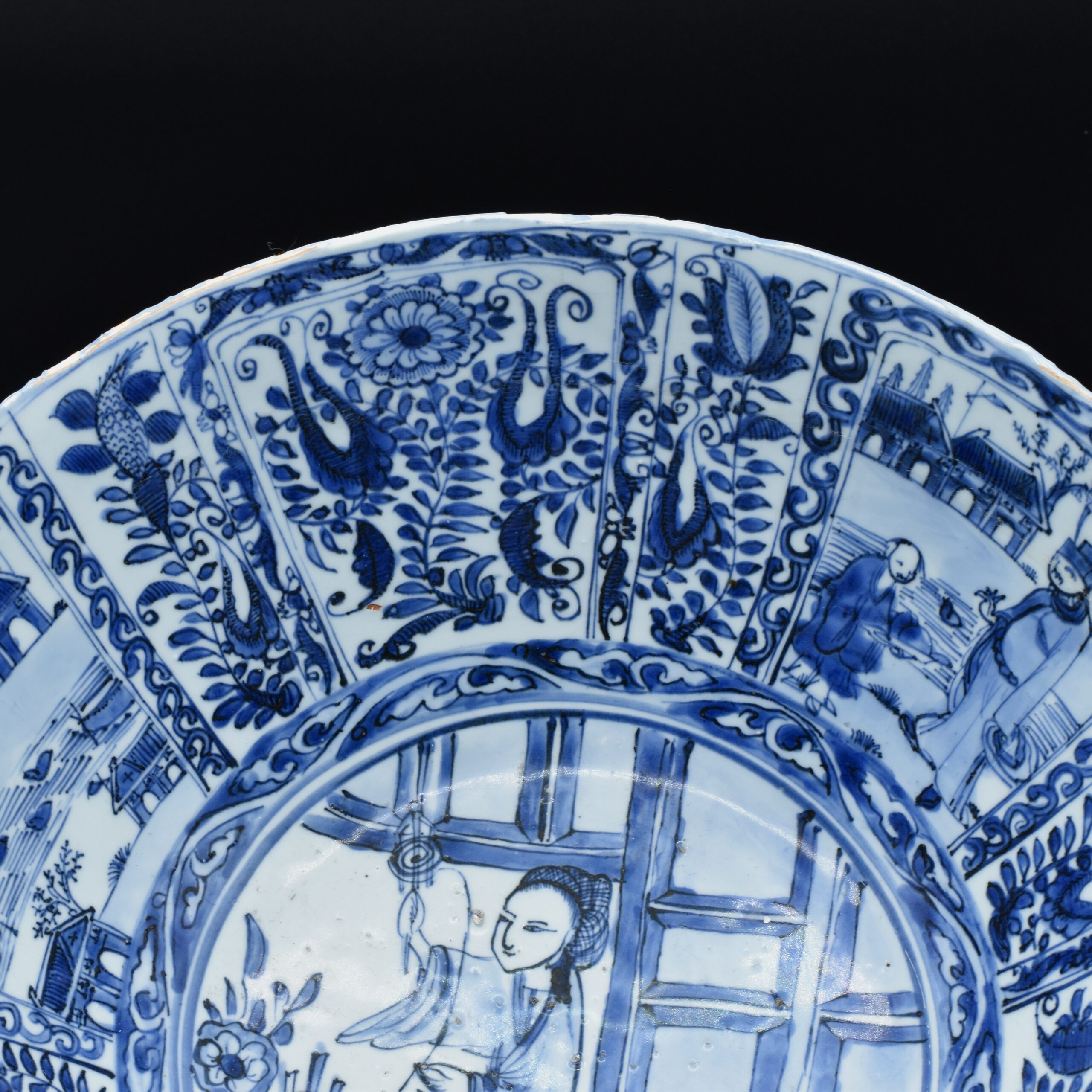
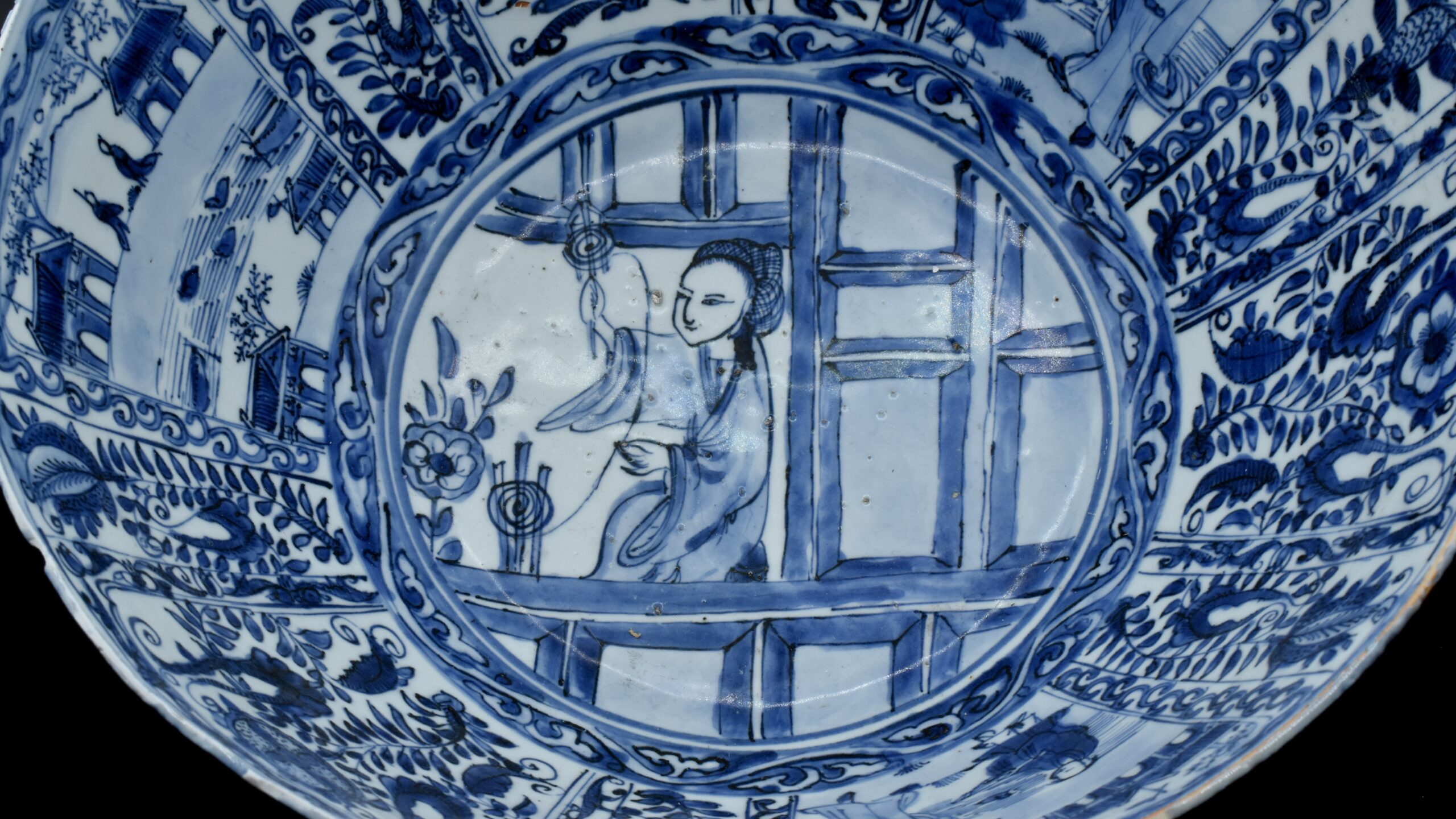
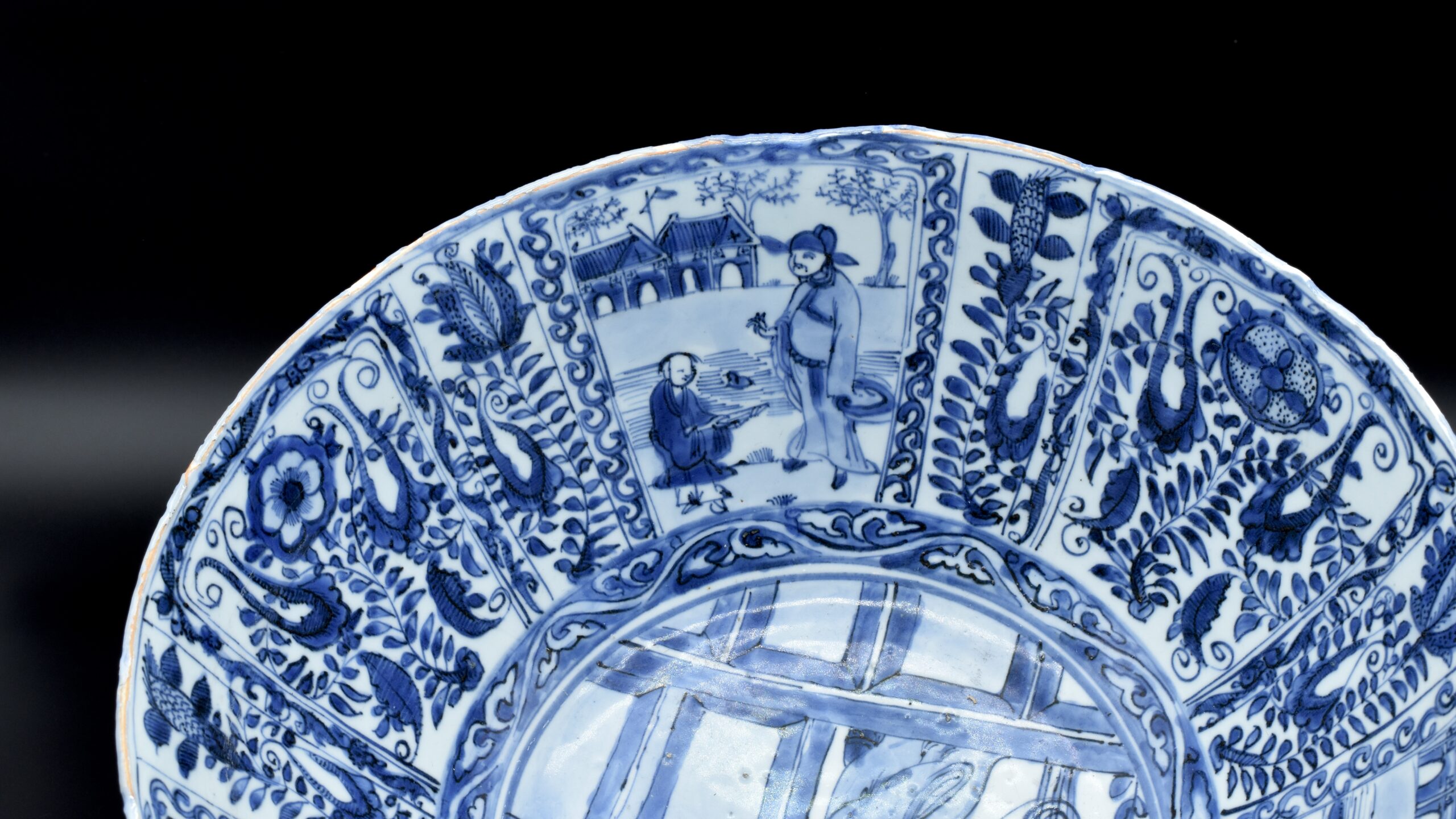
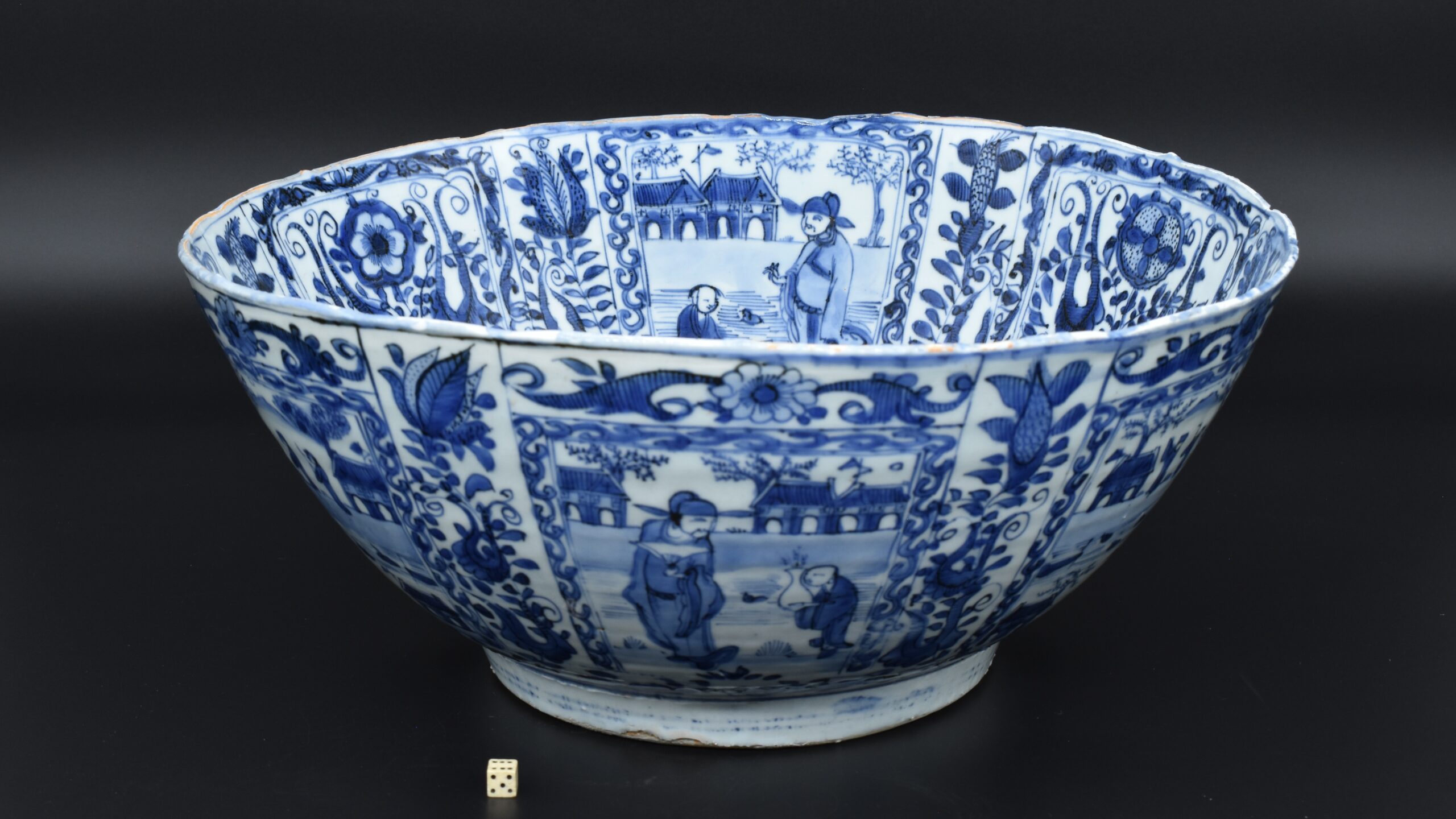
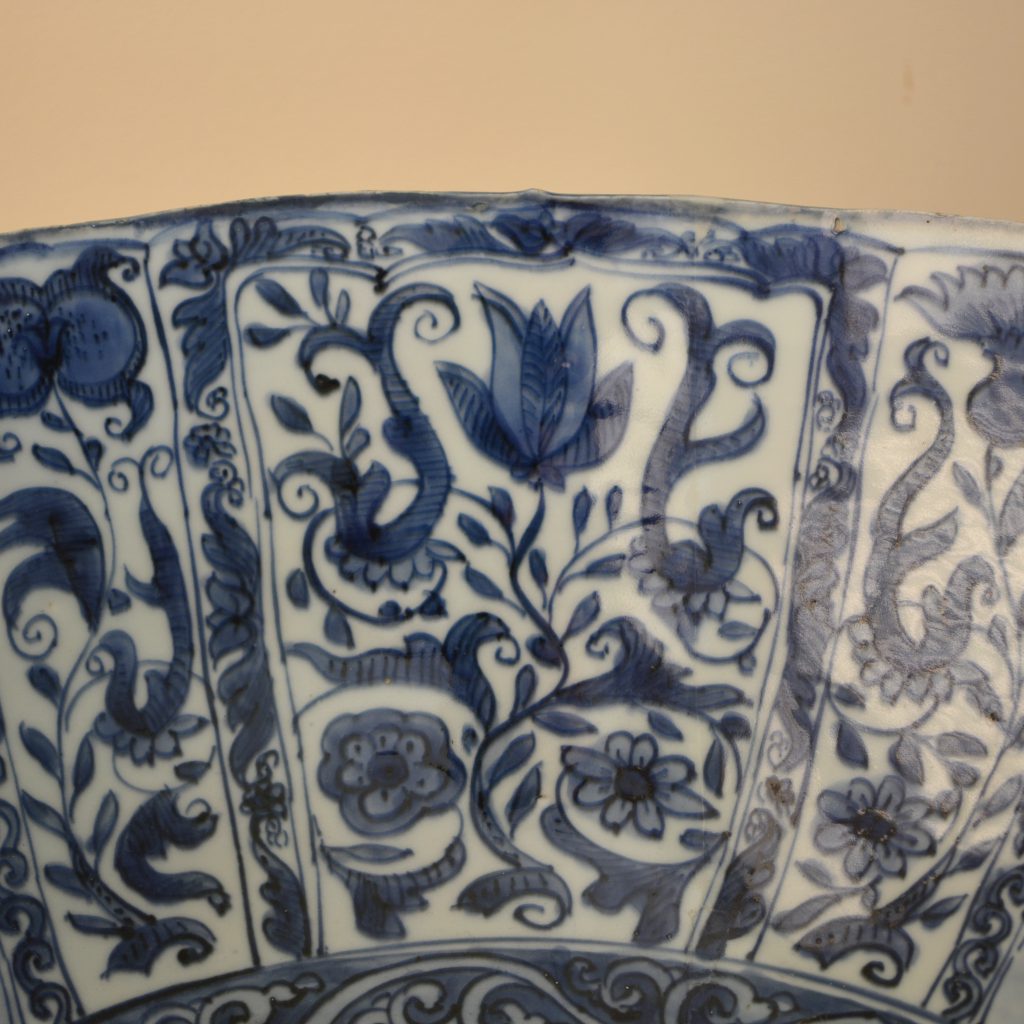
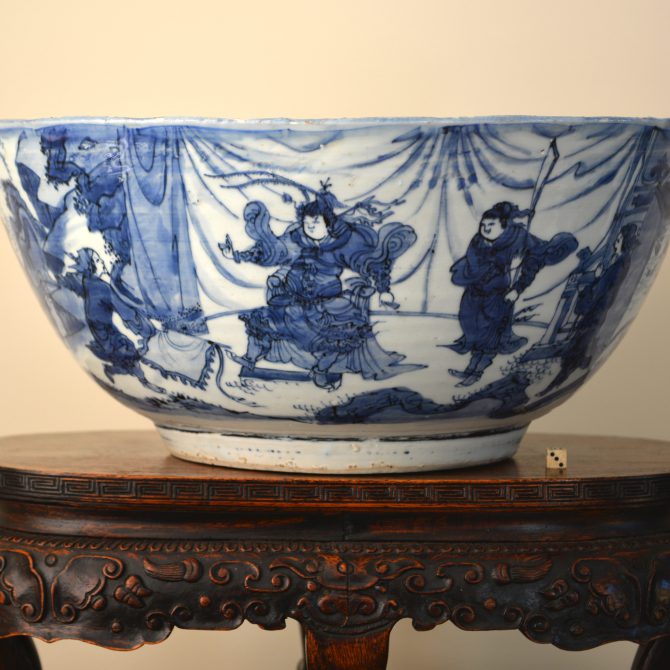
A Very Large Chinese Kraak Porcelain Bowl, Ming Dynasty, Chongzhen Period, 1628-1644. Almost certainly made for the Netherlands. The painting is well done and very lively. The cobalt oxide has fired to a strong blue which is bright in strong light, but slightly grey in lower light. The photographs were taken using a strong clear light, in some cases the blue appears too vibrant. The interior of this deep bowl is typical of late Kraak ware with its panels of landscapes with figures and rather European looking buildings. The well of the bowl is decorated with a lady spooling silk, sometimes referred to as the ‘spinning’ design or ‘spinning Lady’. The woman spinning is clearly Chinese, however the technique she is employing would have been very familiar to the Dutch and other Europeans. The European houses are often found on these of large late Ming Kraak porcelain bowls, the houses look slightly incongruous set among Chinese landscapes with Chinese scholar’s and their attendants. The panels of flowing flowers are influenced by Iranian art, the larger flower panels to the interior are unusual. The panels include tulips, which would have also been very popular in the Netherlands. Tulpenmanie (Tulip Mania) gripped the Netherlands from around 1634 to 1637, that coincided with the production of this bowl which was made in the China during the Chongzhen period 1628-1644, at the end of the Ming dynasty. Perhaps this bowl was purchased with the vast profits made by a speculative tulip grower. The bulbs were worth a small fortune but ended up as worthless. So maybe this bowl had to be sold to help pay the growers debtors. I think my imagination is running away with me!
Back to reality. There is a particularly interesting section in the excellent catalogue from Jorge Welsh, Kraak Porcelain, The rise of global trade in the late 16th and early 17th century (see References). I think it is worth quoting in full. “The fact that no bowls of this type have been recovered from any of the 17th century shipwrecks so far discovered, makes a precise dating difficult (when referring to a very similar bowl in the book). Reference to porcelain decorated with the so-called ‘Dutch flowers’, however, is found on a V.O.C. document of the Hoge Regening (the government in Batavia) informing Tayouan on 3 July 1635 that Dutch paintings, flower or leafwork were not wanted because the Dutch paintings on porcelain were not considered strange or rare. At the time it was not possible to carry out an order immediately, thus this order had to be repeated again in 1637 and 1638.”
For more information on Kraak Porcelain click on this link.
SALE PENDING
- Condition
- In good condition, one small chip to the rim and minor fritting to the rim (see close up photographs below). Typical fritting to the thin fragile edge. Some of the fritting is an iron-oxide orange colour, this shows that the glaze had shrunk from the edge of the rim just before, or during the firing process.
- Size
- . Like nearly all of these large Kraak bowls it is warped, so the sizes to its width and height are different depending on where you measure from. Diameter varies from 35cm to 37cm (13.78 inches to 14.57 inches.). Height varies from 15.5 to 16.5 cm (6.1 inches to 6.4 inches.
- Provenance
- Purchased in the Netherlands.
- Stock number
- 27078
- References
- For three bowls in this late Kraak style that incorporate transitional porcelain elements see : Kraak Porcelain, A Moment in the History of Trade (Maura Rinaldi, Bamboo Publishing,1989) Pages 163 - 164 Plates 202 - 204. Plate 202 includes the 'spinner' design, but none have a continuous to the exterior. Dated c.1635-1650. For another large Kraakware bowl of this type with a 'spinning' scene to the well but again without the rare continuous scene to the interior see : Kraak Porcelain, The Rise of Global Trade in the Late 16th Century and Early 17th Century (Jorge Welsh Book, London. 2008. ISBN 0-9550992-9-3) page 314, plate 59. Dated 1628-1644. A further Ming porcelain bowl of this type is illustrated in : Chinese Porcelain in the Collection of the Rijksmuseum Amsterdam, The Ming and Qing Dynasties (Christiaan Jorg, Phillip Wilson, The Rijksmuseum, 1997) page 64, plate 48.
Photos
Information
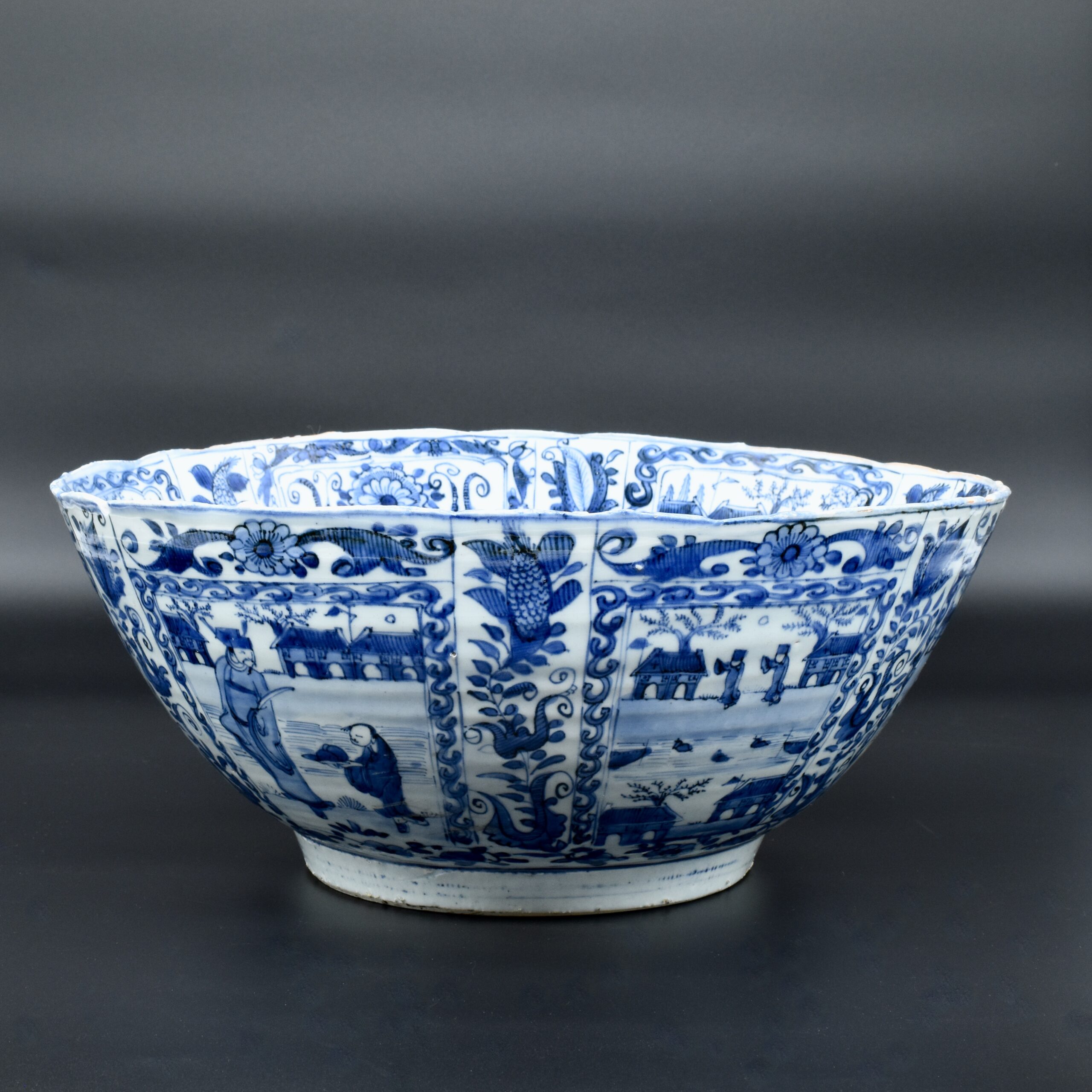
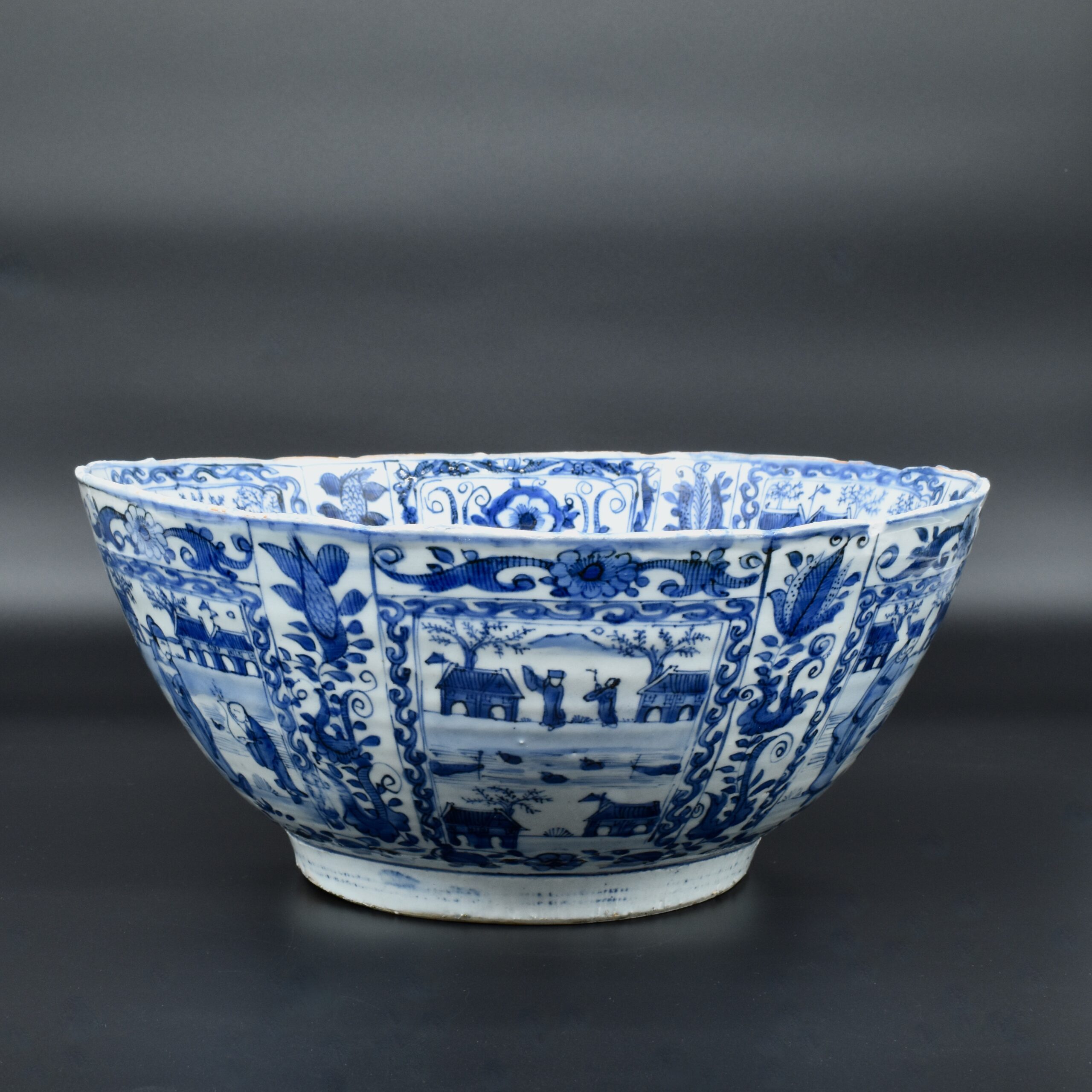
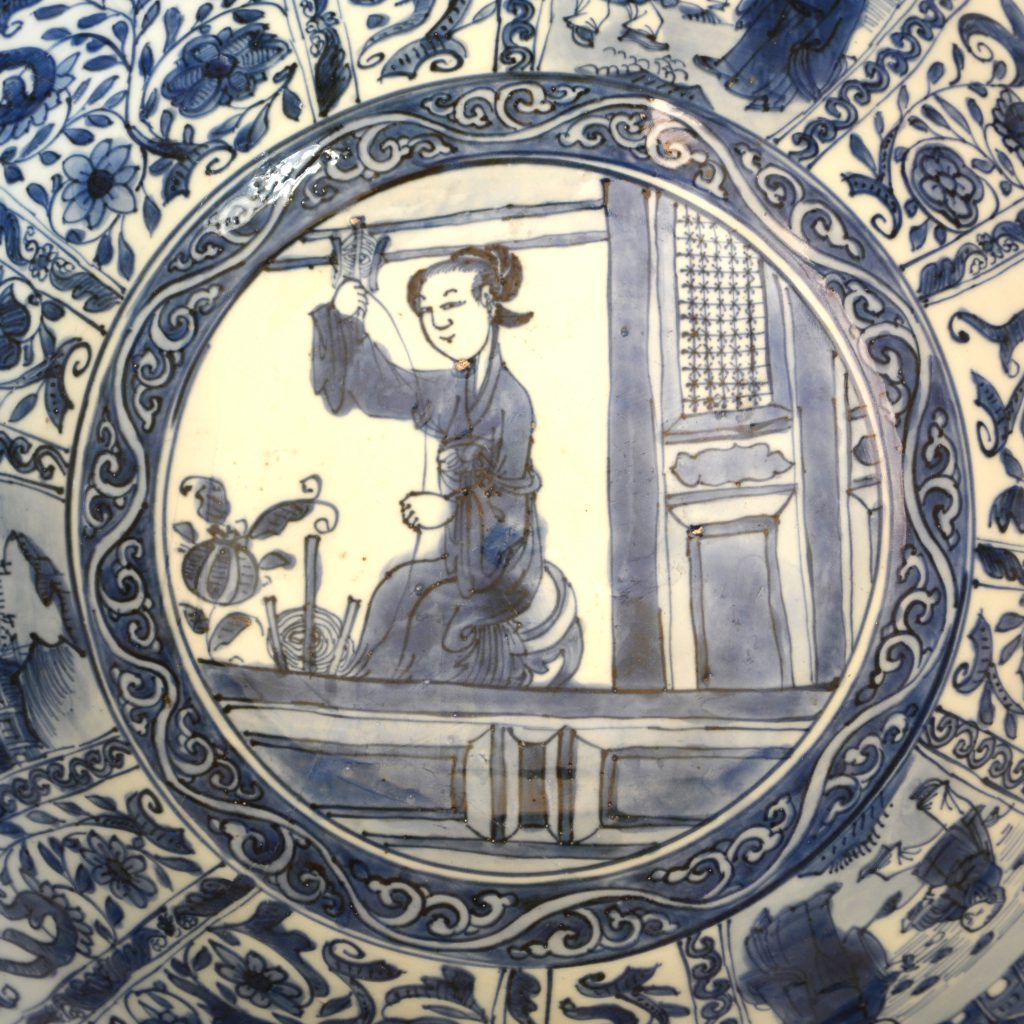
A Related Large Ming Kraakware Bowl, Chongzhen Period.
Robert McPherson Antiques Sold Archive 24605. Collection of Mary and Peter White.
SOLD
Condition
Four large sections from the rim restuck. Small chips filled.
Size
Width : 36 cm (14 inches)
Provenance
Amsterdam (Christie's or Sotheby's) R&G McPherson Antiques. The Roy Davids Collection of Chinese Ceramics, Purchased June 1st 2002. Collection label to the base no. 140.
Stock number
24605
References
For three bowls in this late Kraak style that incorporate transitional porcelain elements see : Kraak Porcelain, A Moment in the History of Trade (Maura Rinaldi, Bamboo Publishing,1989) Pages 163 - 164 Plates 202 - 204. Plate 202 includes the 'spinner' design, but none have a continuous to the exterior. Dated c.1635-1650. For another large Kraakware bowl of this type with a 'spinning' scene to the well but again without the rare continuous scene to the interior see : Kraak Porcelain, The Rise of Global Trade in the Late 16th Century and Early 17th Century (Jorge Welsh Book, London. 2008. ISBN 0-9550992-9-3) page 314, plate 59. Dated 1628-1644. A further Ming porcelain bowl of this type is illustrated in : Chinese Porcelain in the Collection of the Rijksmuseum Amsterdam, The Ming and Qing Dynasties (Christiaan Jorg, Phillip Wilson, The Rijksmuseum, 1997) page 64, plate 48.
Condition
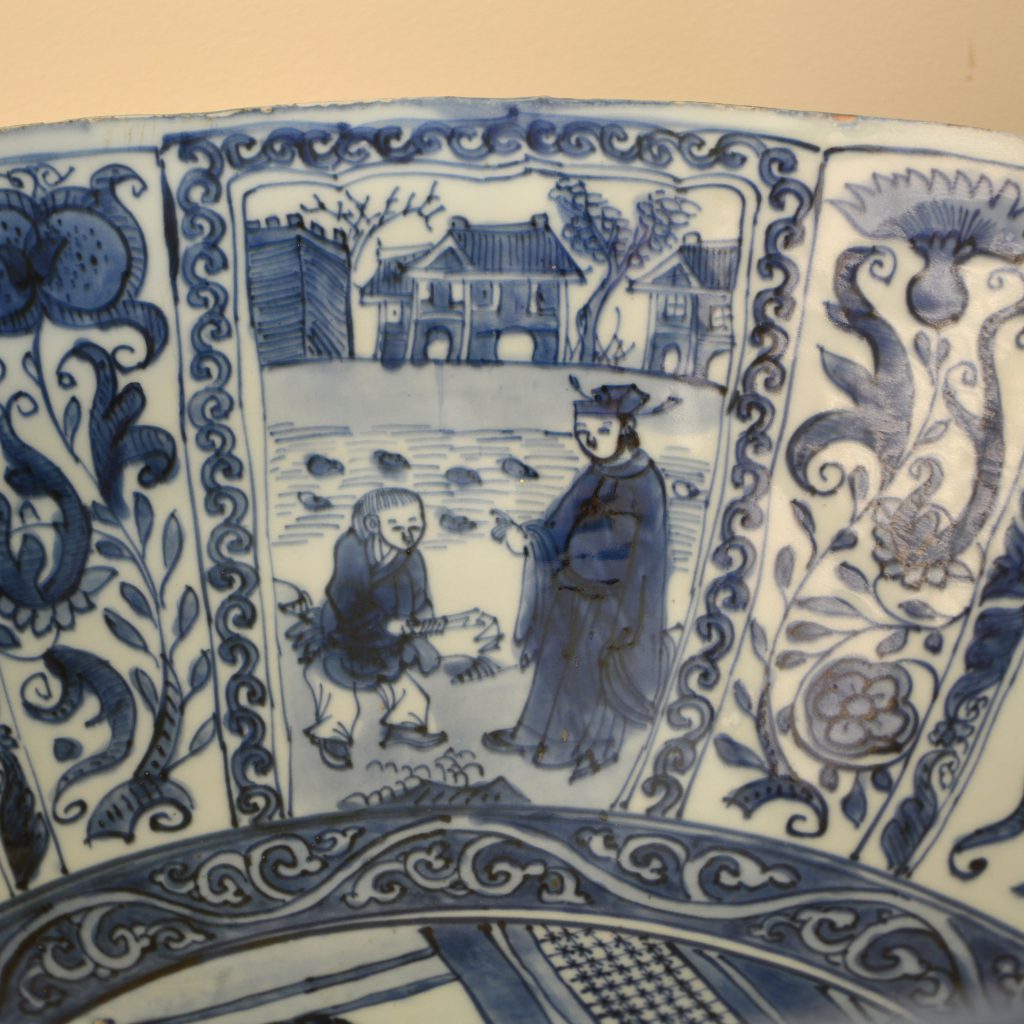
Four large sections from the rim restuck. Small chips filled.
Size
Width : 36 cm (14 inches)
Provenance
Amsterdam (Christie's or Sotheby's) R&G McPherson Antiques The Roy Davids Collection of Chinese Ceramics, Purchased June 1st 2002. Collection label to the base no. 140.
Stock number
24605
References
For three bowls in this late Kraak style that incorporate transitional porcelain elements see : Kraak Porcelain, A Moment in the History of Trade (Maura Rinaldi, Bamboo Publishing,1989) Pages 163 - 164 Plates 202 - 204. Plate 202 includes the 'spinner' design, but none have a continuous to the exterior. Dated c.1635-1650. For another large Kraakware bowl of this type with a 'spinning' scene to the well but again without the rare continuous scene to the interior see : Kraak Porcelain, The Rise of Global Trade in the Late 16th Century and Early 17th Century (Jorge Welsh Book, London. 2008. ISBN 0-9550992-9-3) page 314, plate 59. Dated 1628-1644. A further Ming porcelain bowl of this type is illustrated in : Chinese Porcelain in the Collection of the Rijksmuseum Amsterdam, The Ming and Qing Dynasties (Christiaan Jorg, Phillip Wilson, The Rijksmuseum, 1997) page 64, plate 48.