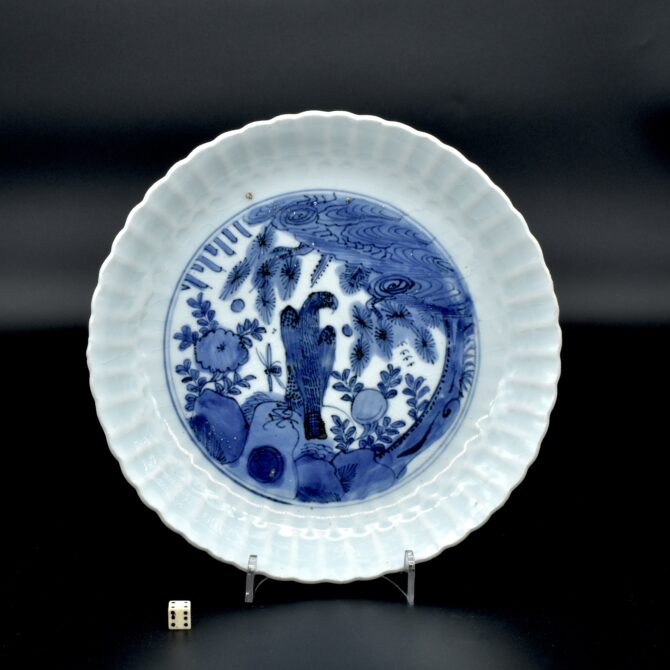
A Wanli Kraak Porcelain Blue and White Porcelain Saucer Shaped Dish c.1600.
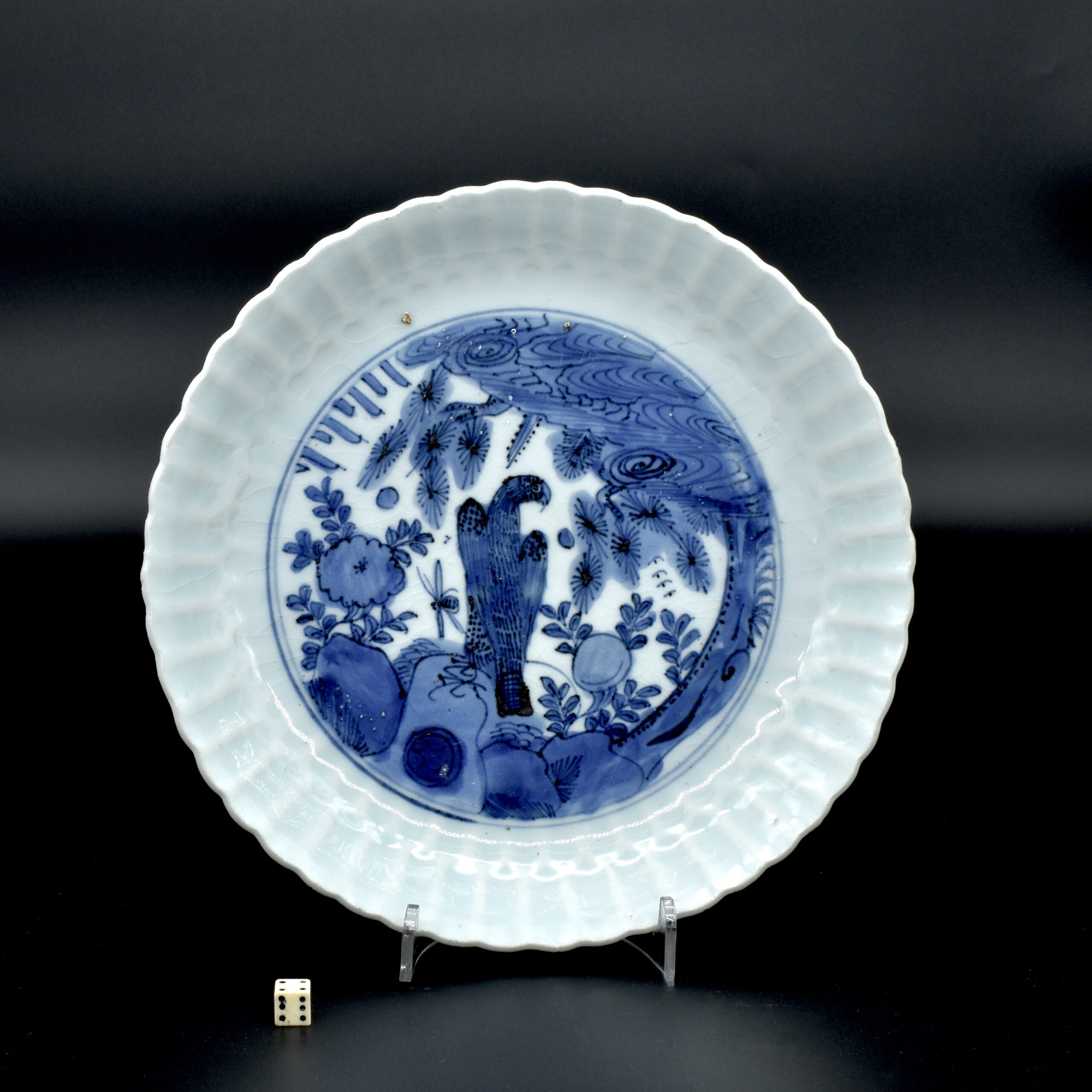
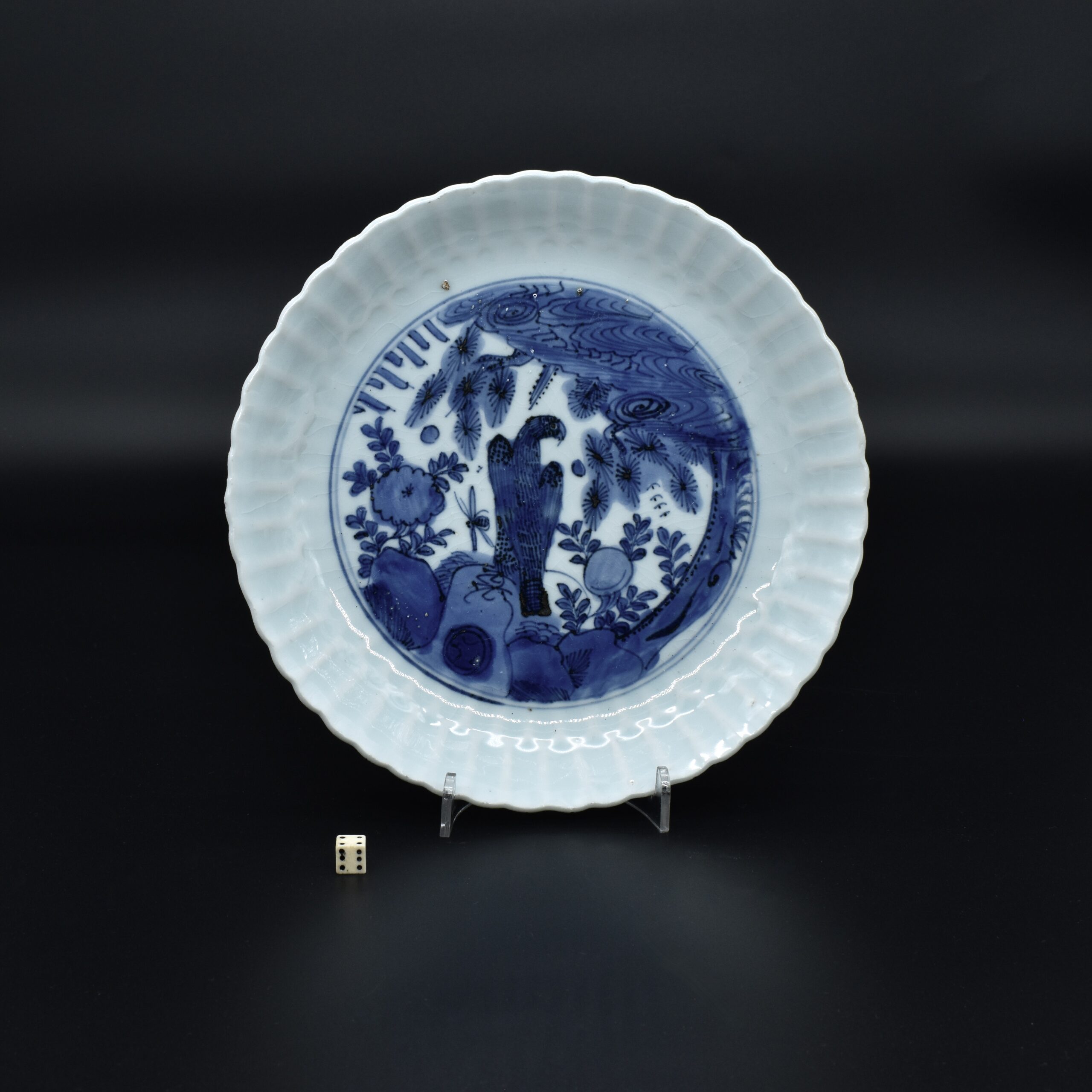
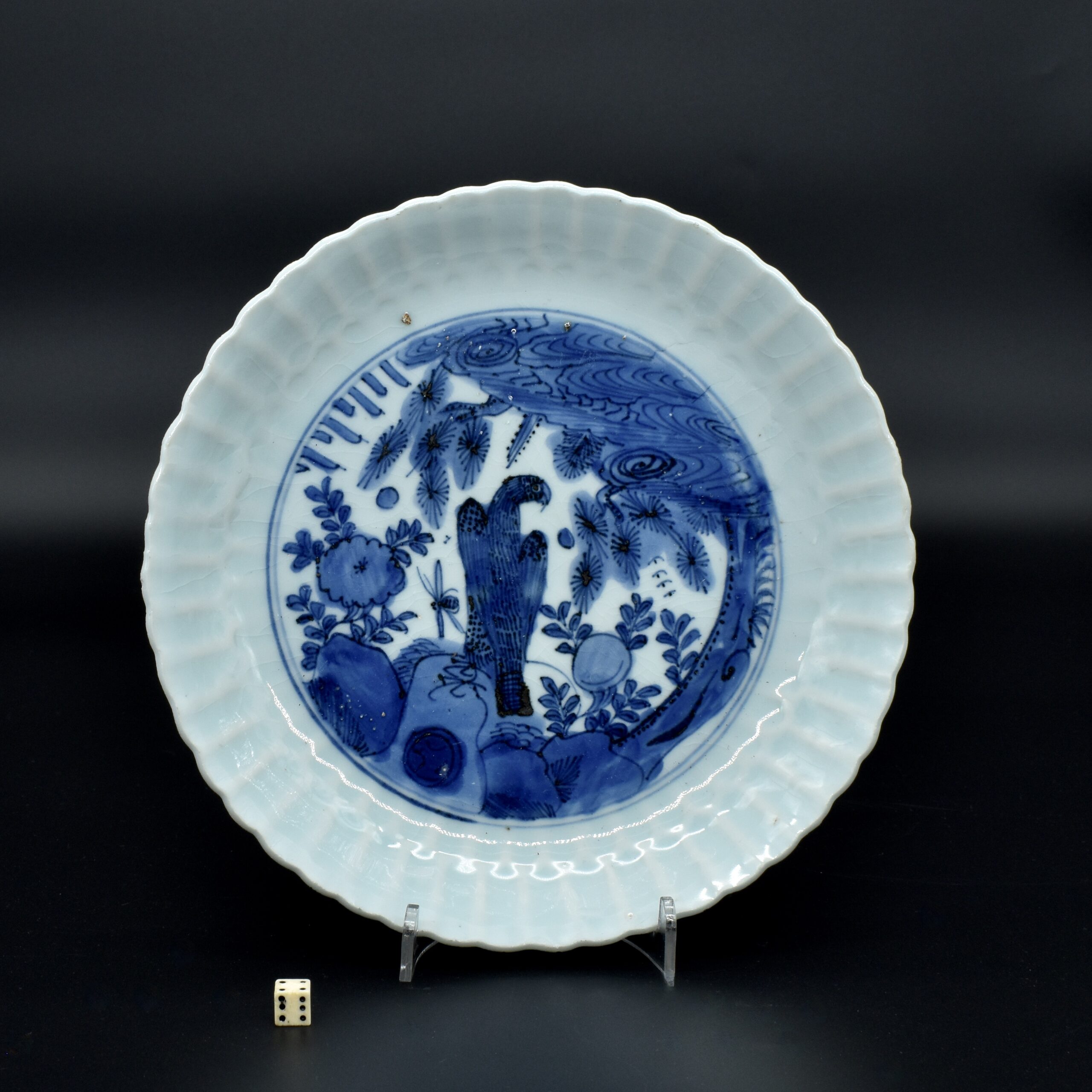
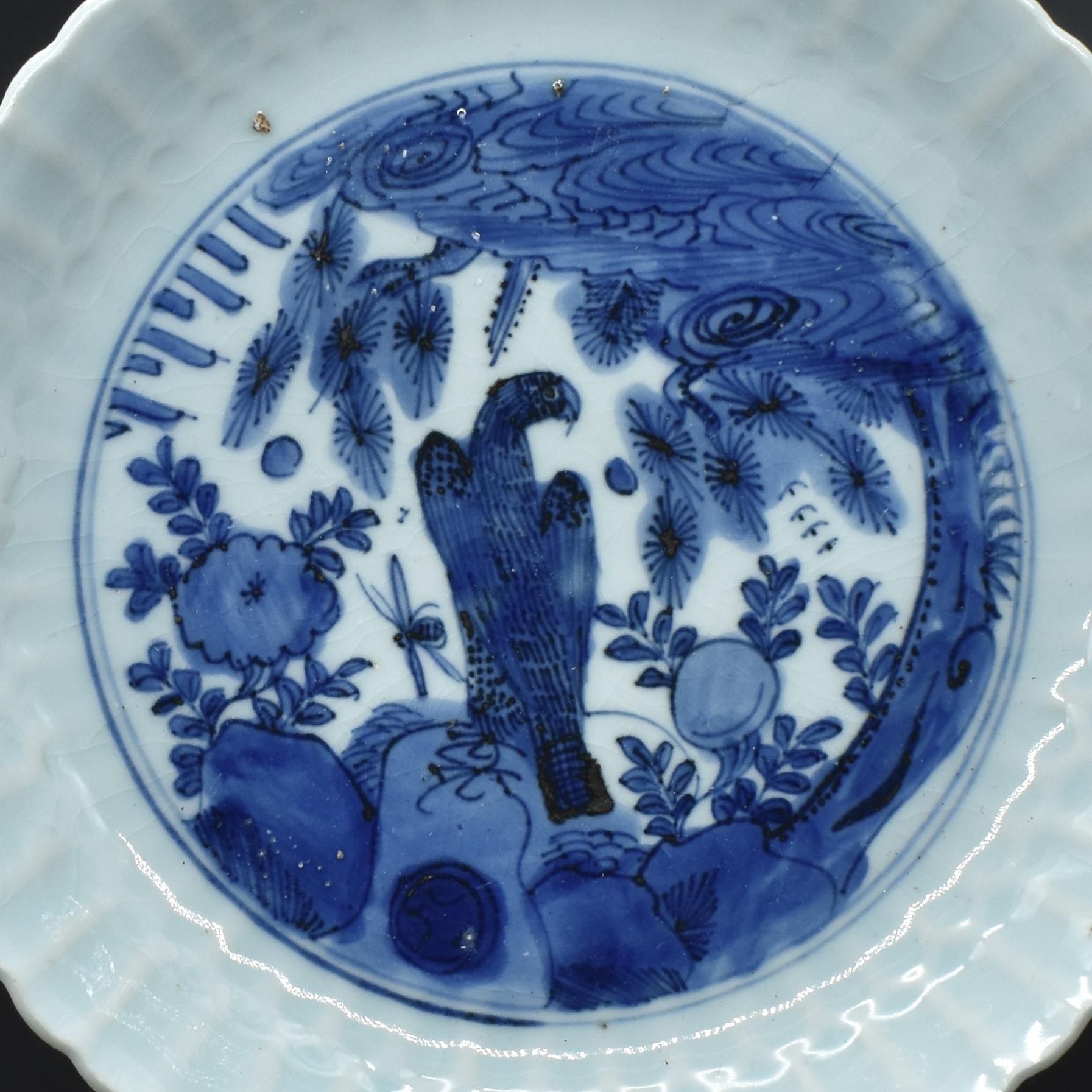
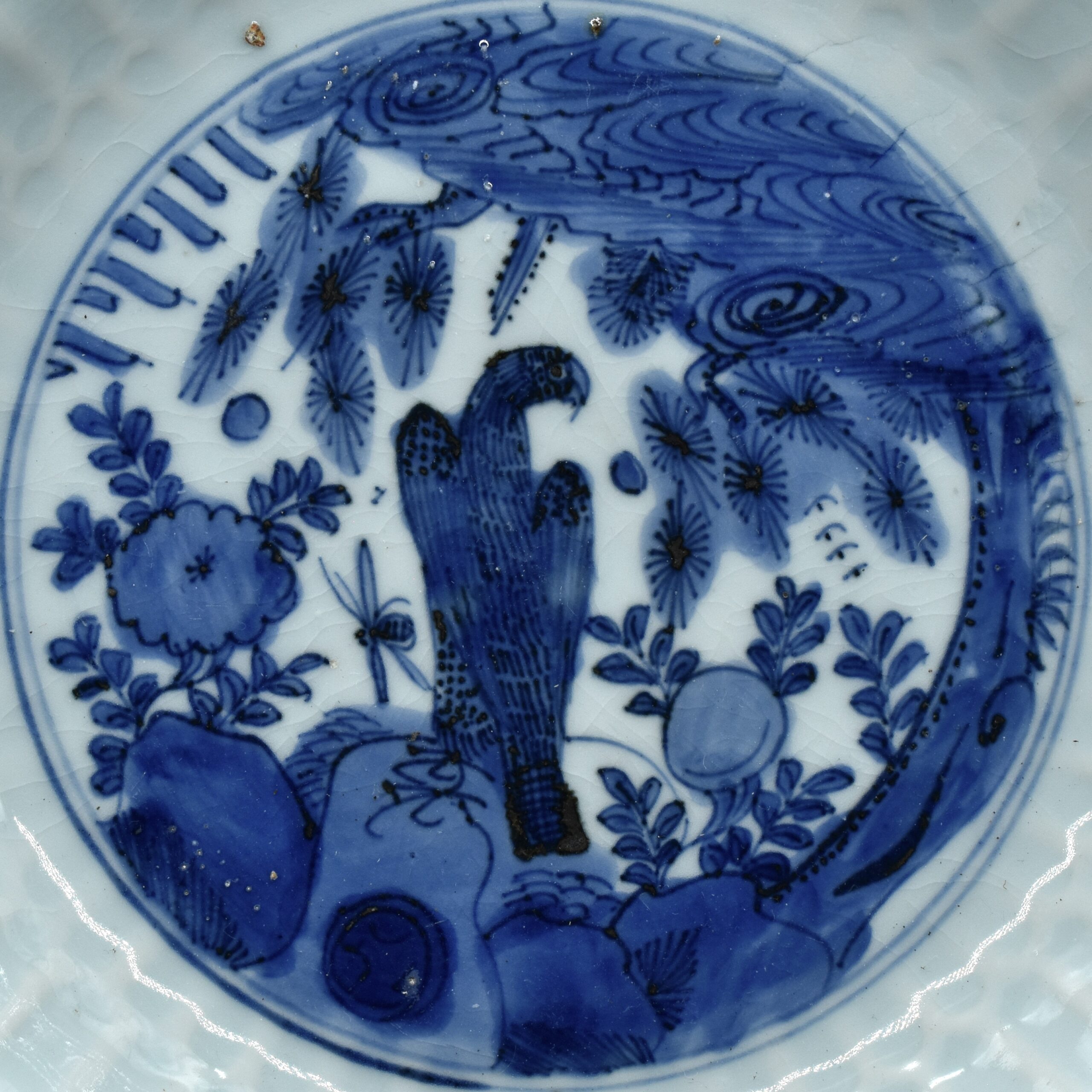
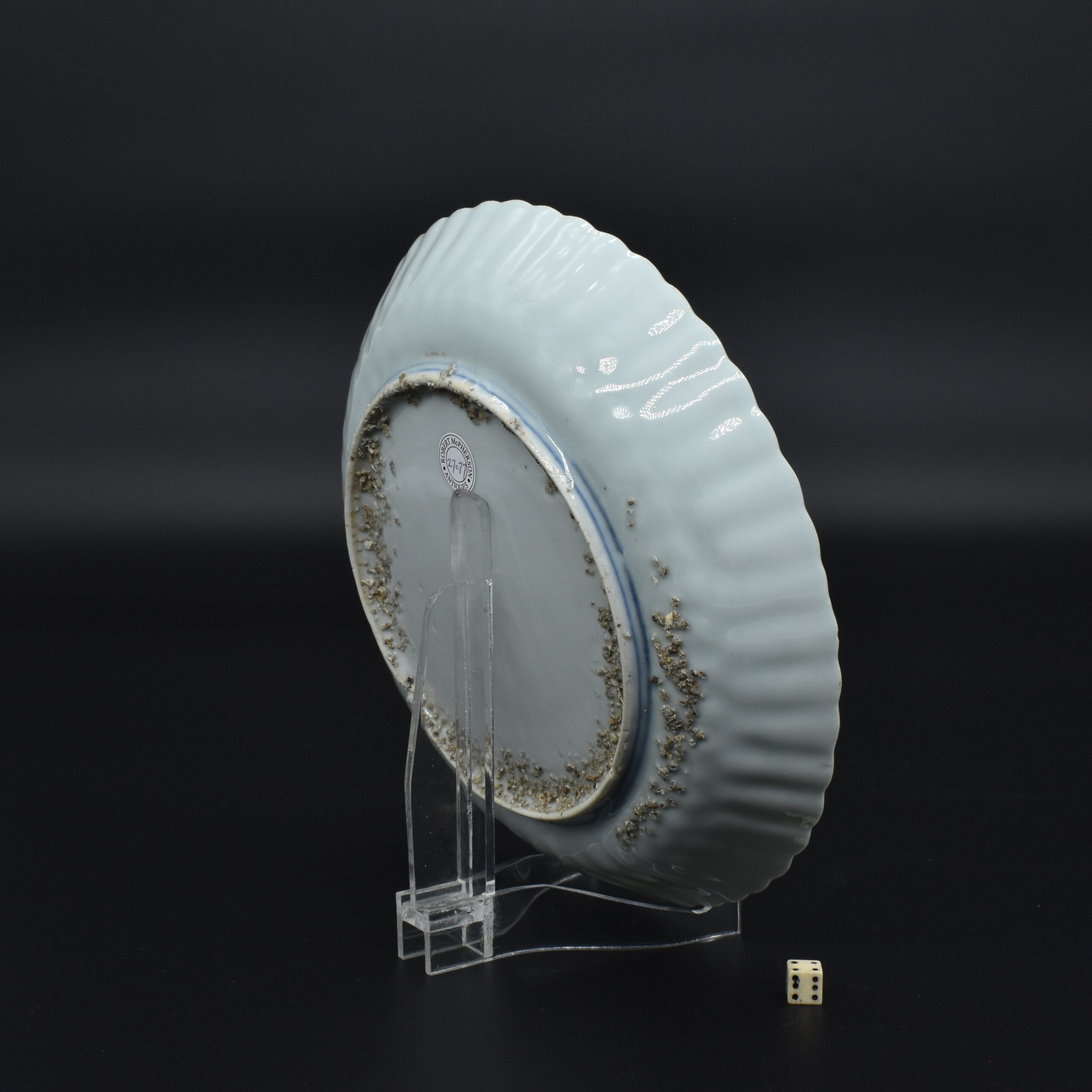
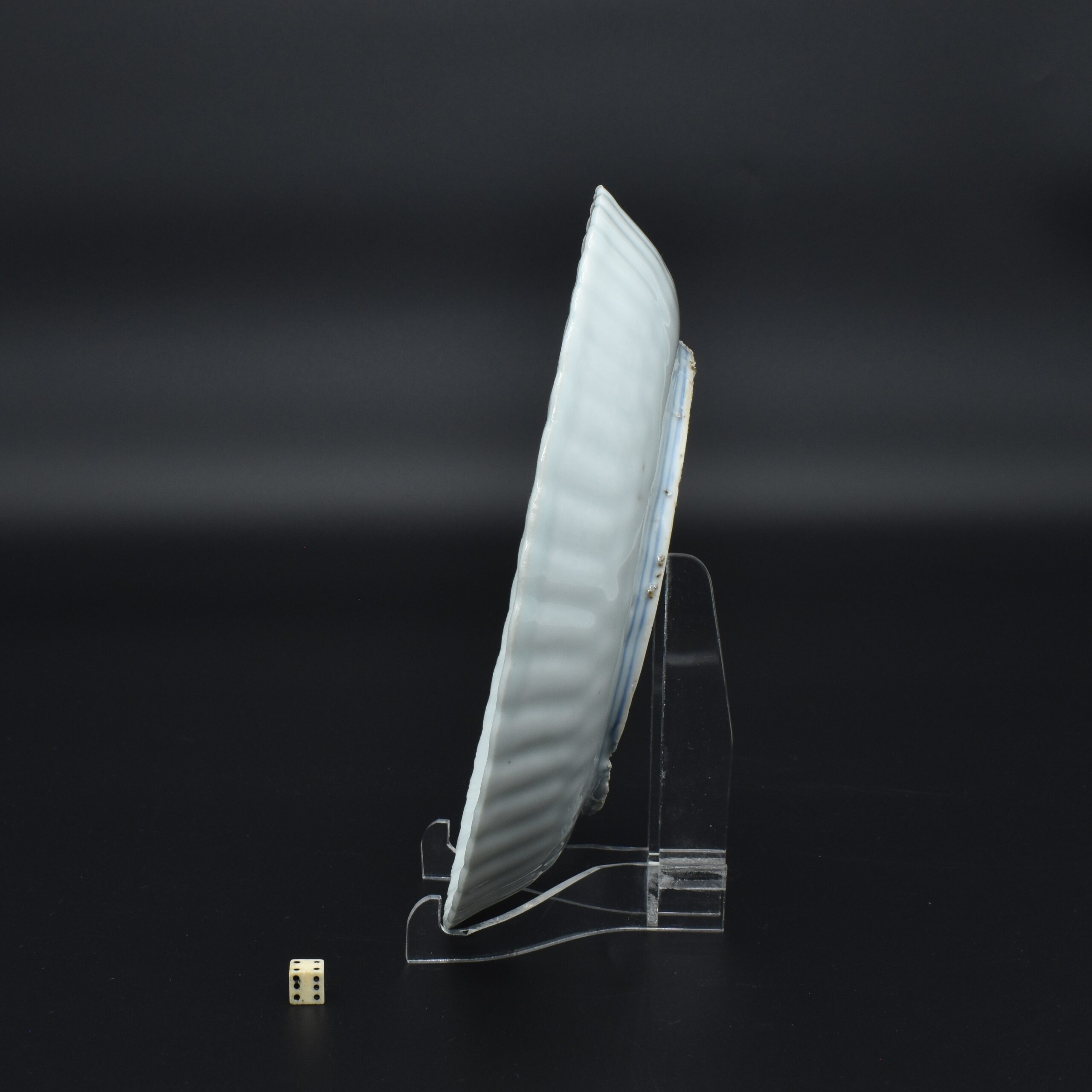
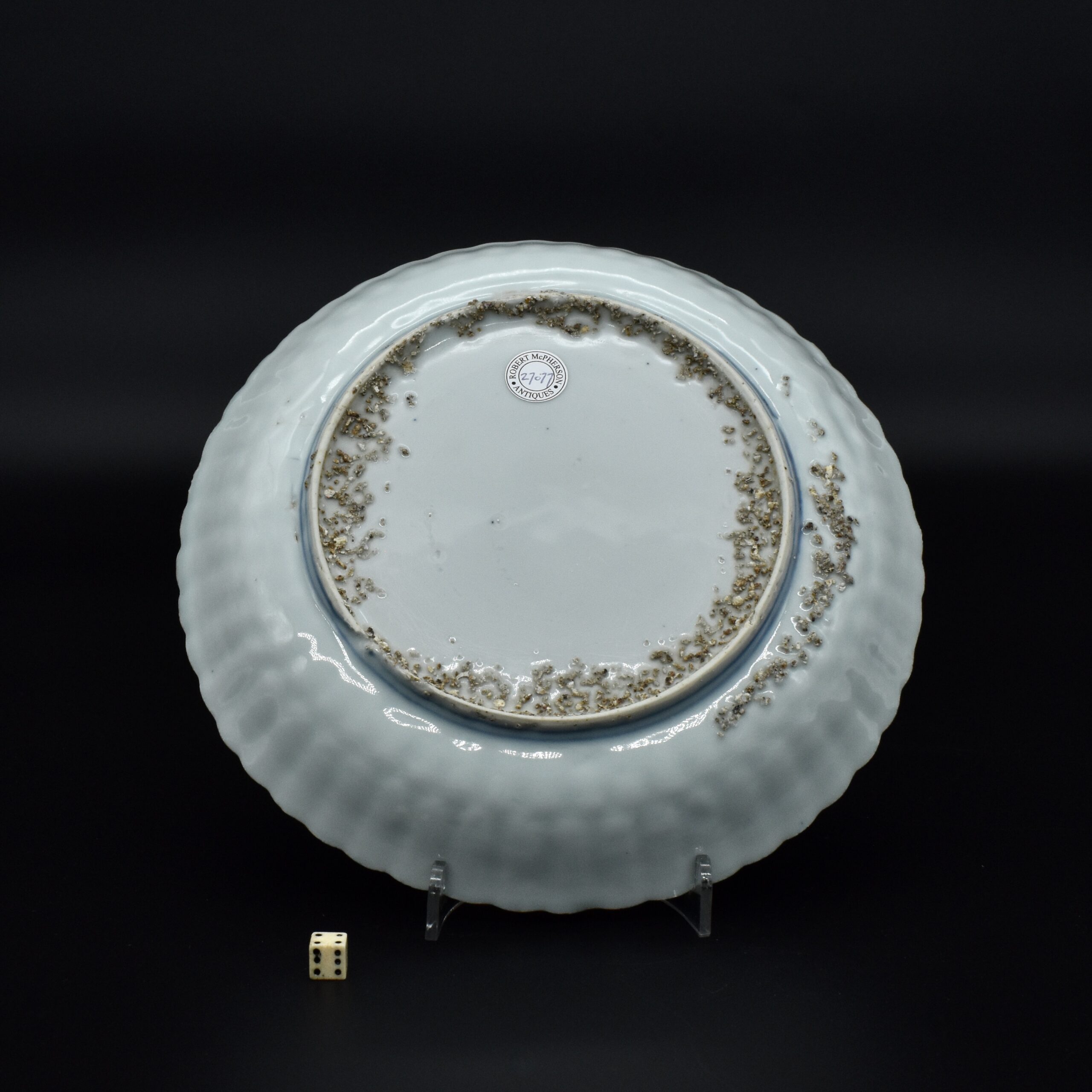
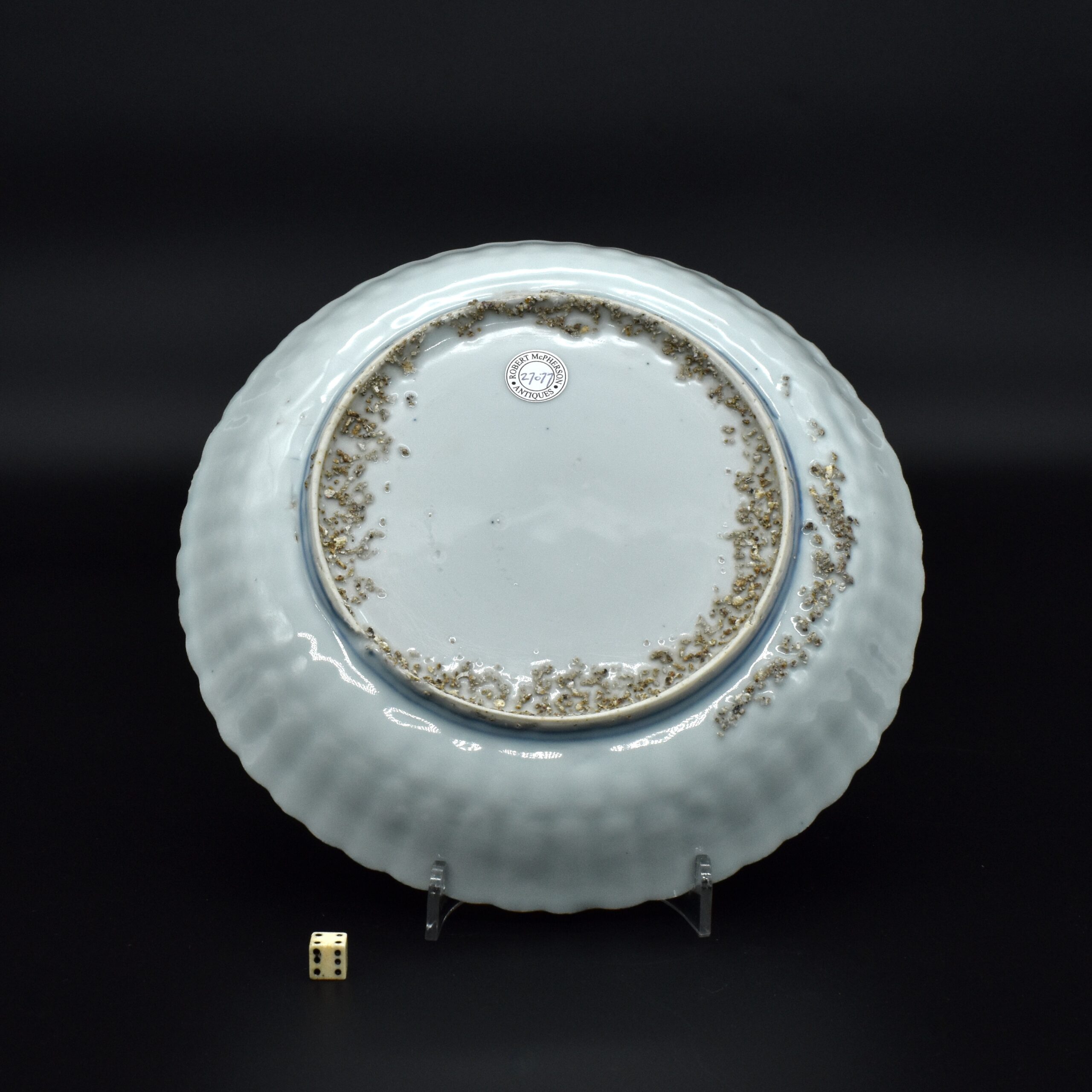
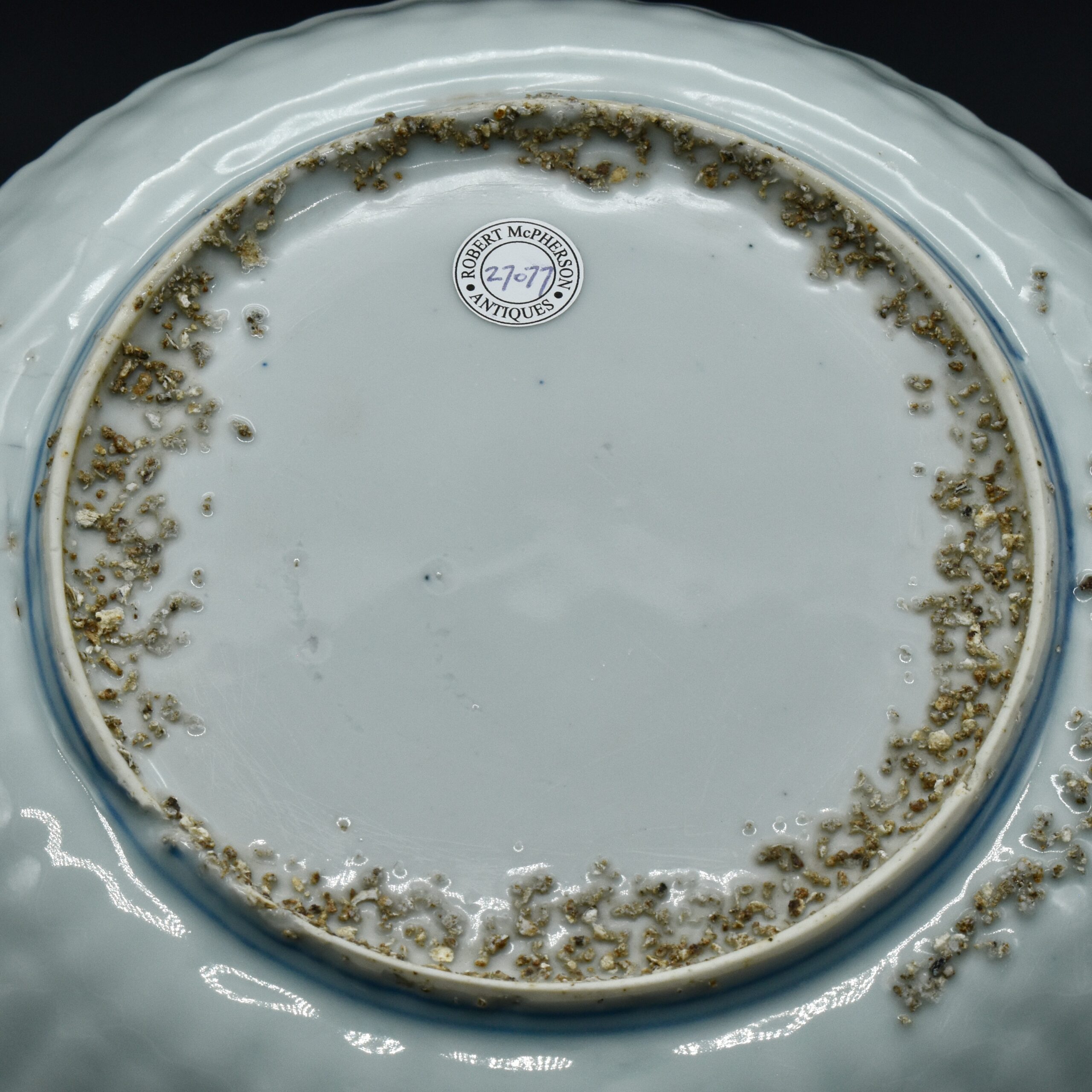
A Wanli Kraak Porcelain Blue and White Porcelain Saucer Shaped Dish c.1590-1615. Perhaps made at Shibaqiao Kilns, part of Jingdezhen, Jiangxi (see references). The central decoration is of a bird of prey, probably a hawk or an eagle. It is perched on a rock with a pine tree to the right, its branches are partially obscured by cloud. There are two plants in the foreground, one of which is a fruiting peach (to the right). Kraak porcelain dishes were exported to Japan, the Middle East as well as Colonies in the New World. Dishes with birds perched on a rock were recovered the shipwreck of the Spanish galleon San Diego of 1600. The moulded border is typical of this period, the unpainted bass-relief border is probably meant to represent chrysanthemum petals. The back has firing-grit which is meant to stop the porcelain getting stuck to the kiln furniture. This was appreciated by the Japanese as it was an element suggesting that nothing is perfect. Shards of a Kraak saucer-dish with the same border design but decorated in cobalt blue were excavated at Santa Fe La Vieja, Argentina. Archaeology, as well as extant pieces shows that this type of Kraak porcelain was popular in Portugal and Spain as well as their colonies in the New World. See, Jingdezhen to the World, The Lurie Collection of Chinese Export Porcelain from the Late Ming (Teresa Canepa, 2019. ISBN 978-1-912168-09-5) pages 130-131 plate 38. For more information about Kraak porcelain click on the link Kraak Ware Porcelain
See Below For More Photographs and Information.
- Condition
- A small very shallow glaze chip to the otter rim. Some crazing.
- Size
- Diameter 20 cm (7.9 inches).
- Provenance
- N/A
- Stock number
- 27077
- References
- For two related pieces and comparison pieces, a sherds, see : Jingdezhen to the World, The Lurie Collection of Chinese Export Porcelain from the Late Ming (Teresa Canepa, 2019. ISBN 978-1-912168-09-5) pages 128 plate 37 and pages 130 to 131. Shibaqiao Kilns, part of Jingdezhen, Jiangxi province see page 131 Figs I.38.1a and b.
- £ GBP
- € EUR
- $ USD
Photos
Information
Robert McPherson Antiques, Sold Archive 26144.
An Unusual Wanli Kraak Ware Saucer Shaped Porcelain Dish c.1590 - 1615. Perhaps made at Shibaqiao Kilns, part of Jingdezhen, Jiangxi.
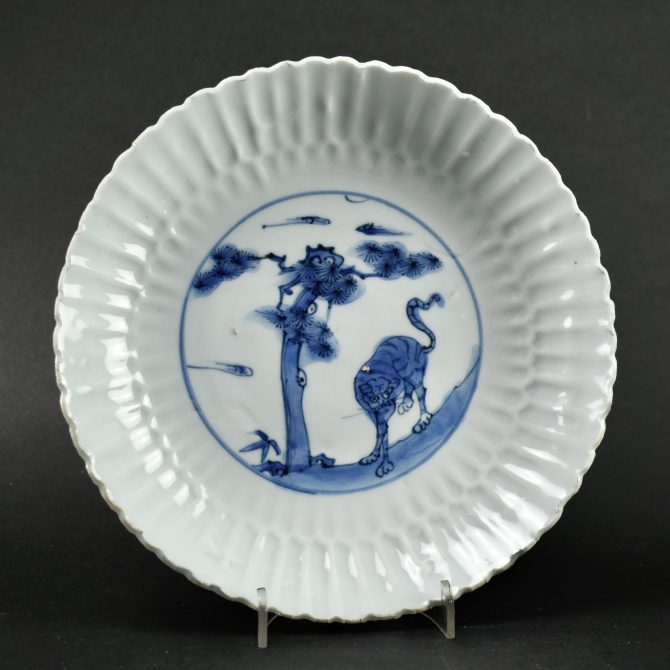
For more information about Kraak Ware porcelain you can go to the History section of our website-menu, or click on the link: Kraak Ware Porcelain.
A Highly Recommended Book :
Jingdezhen to the World, The Lurie Collection of Chinese Export Porcelain from the Late Ming Dynasty.