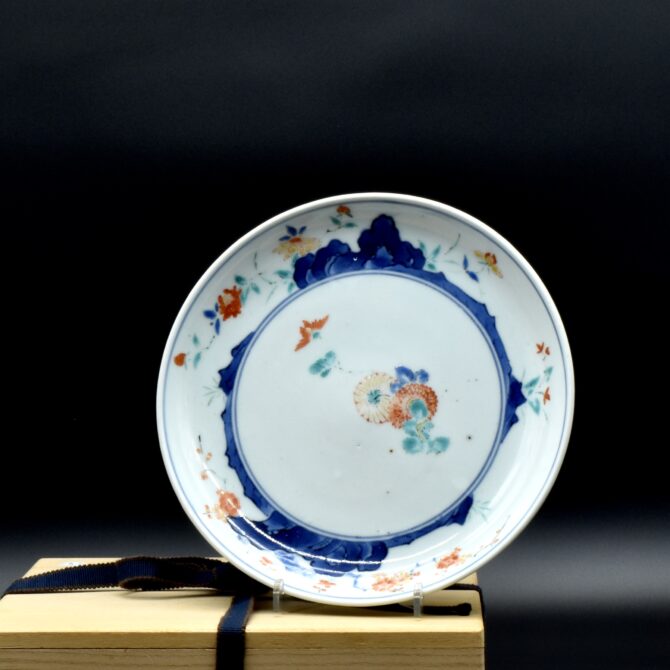
17th Century Japanese Kakiemon, or Possibly Arita Porcelain Dish.
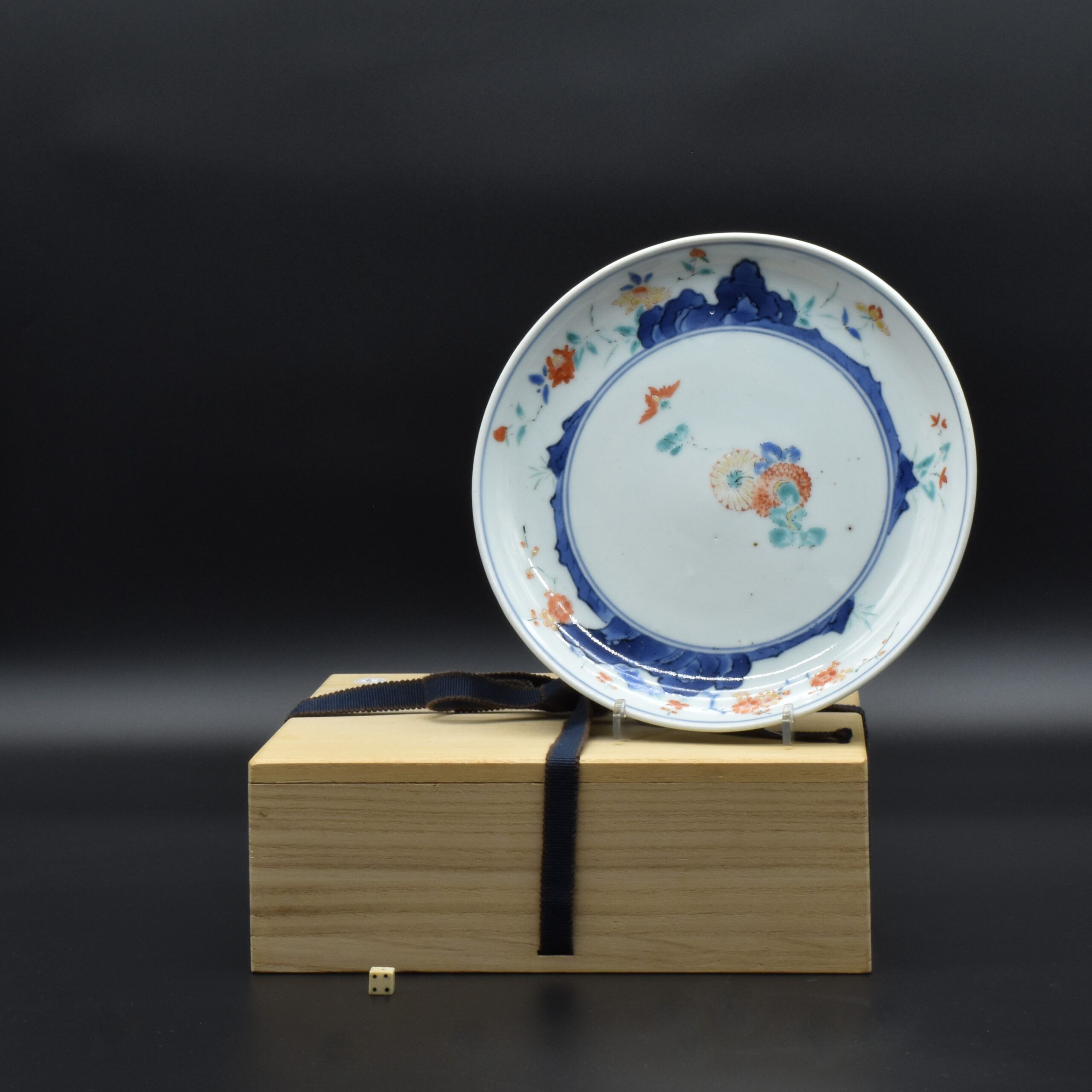
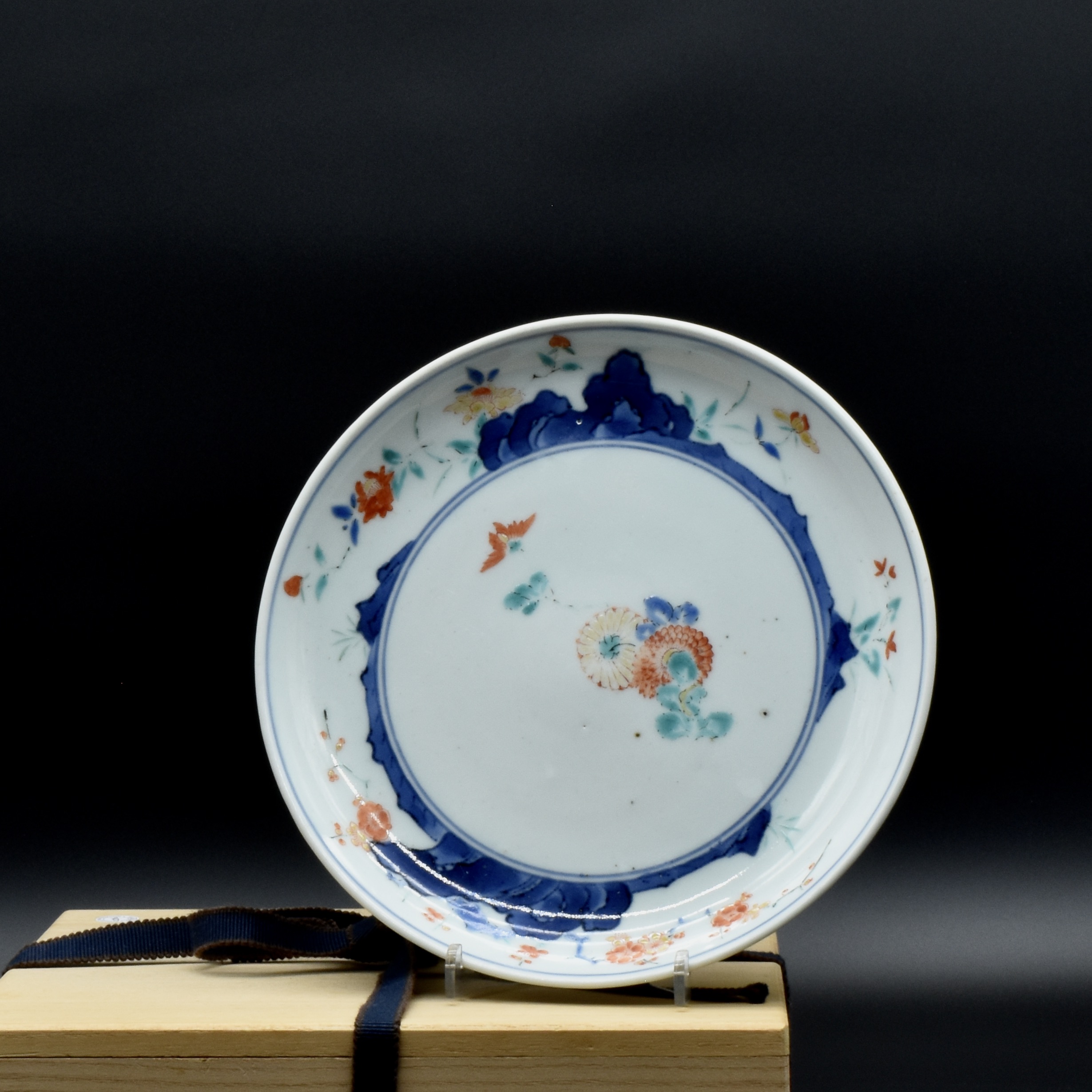
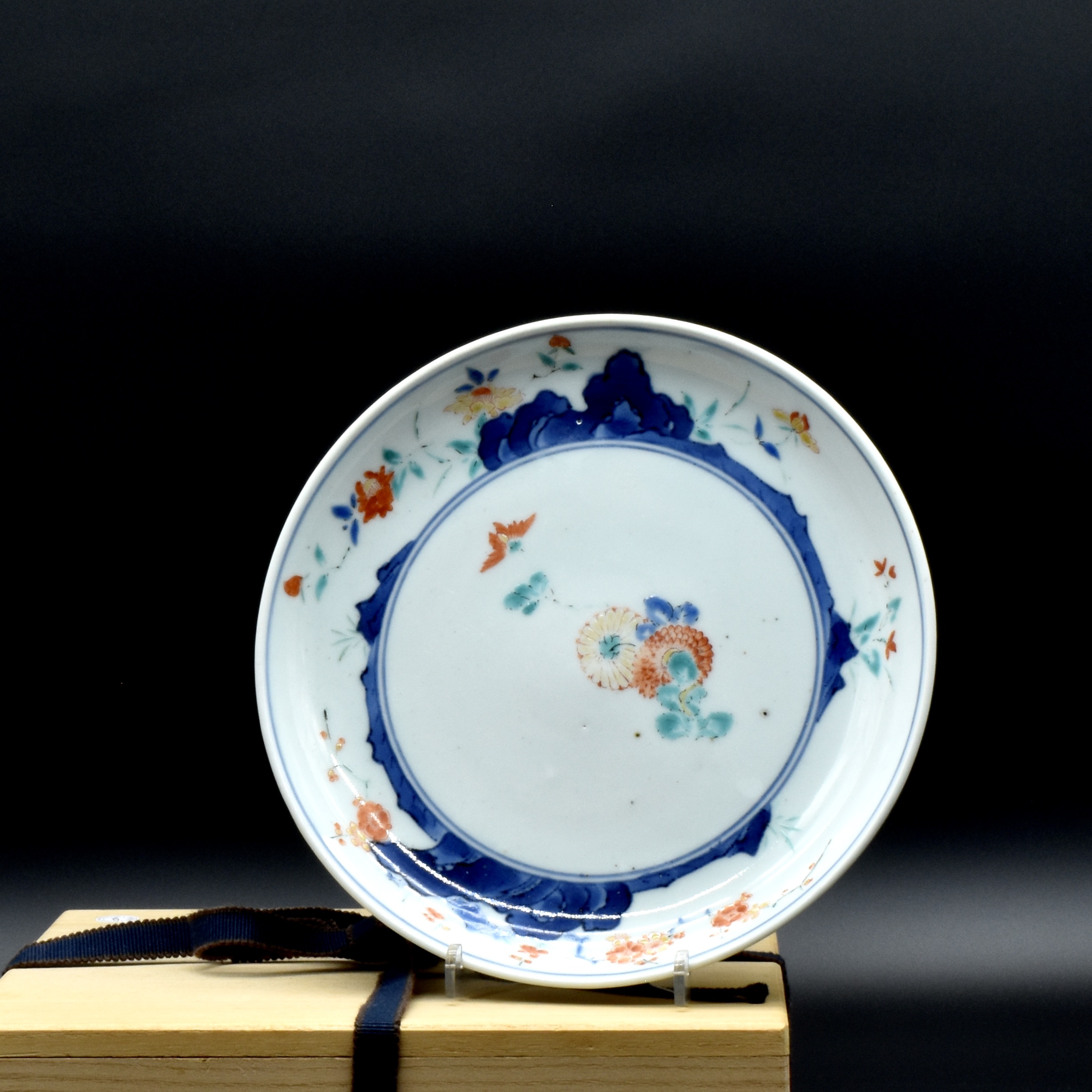
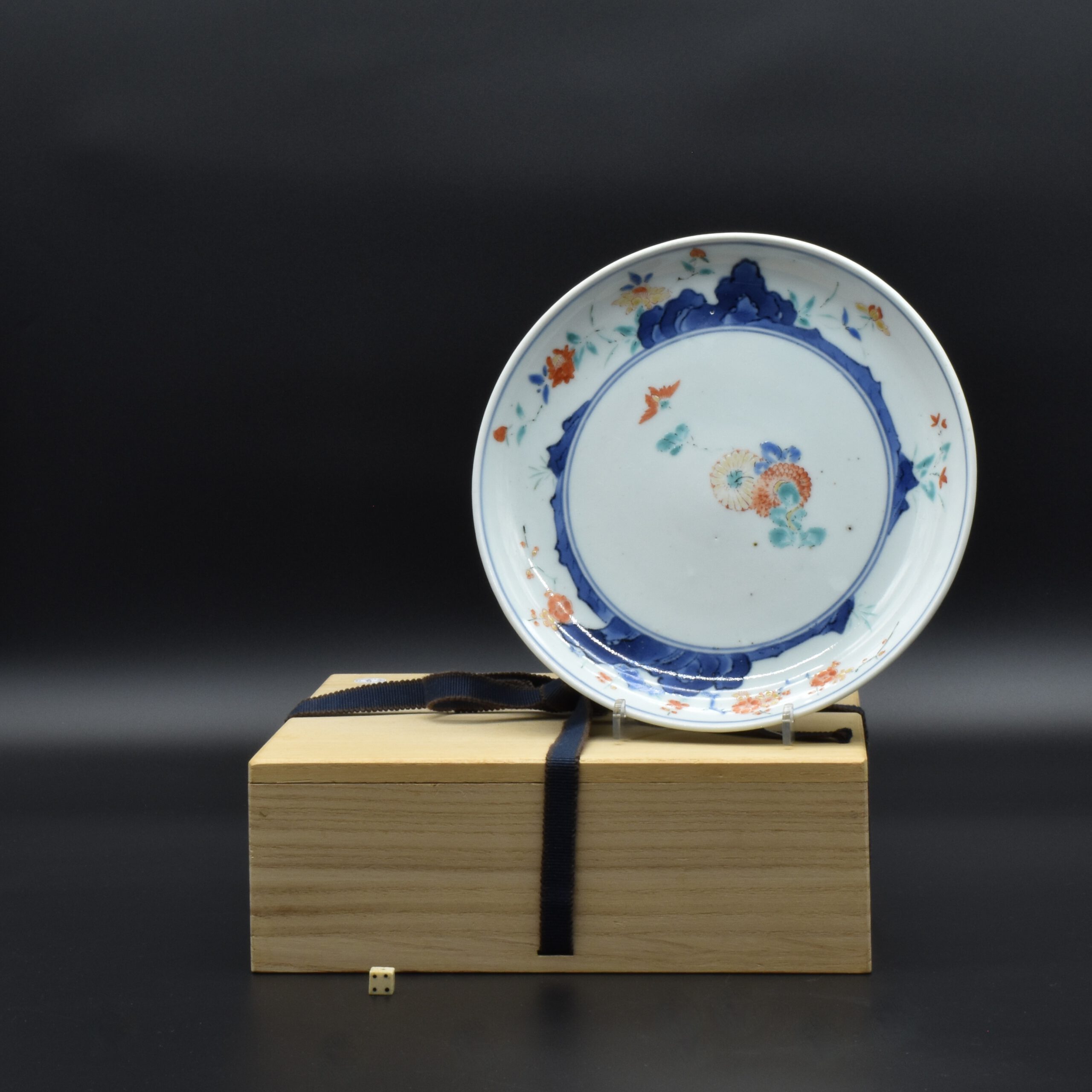
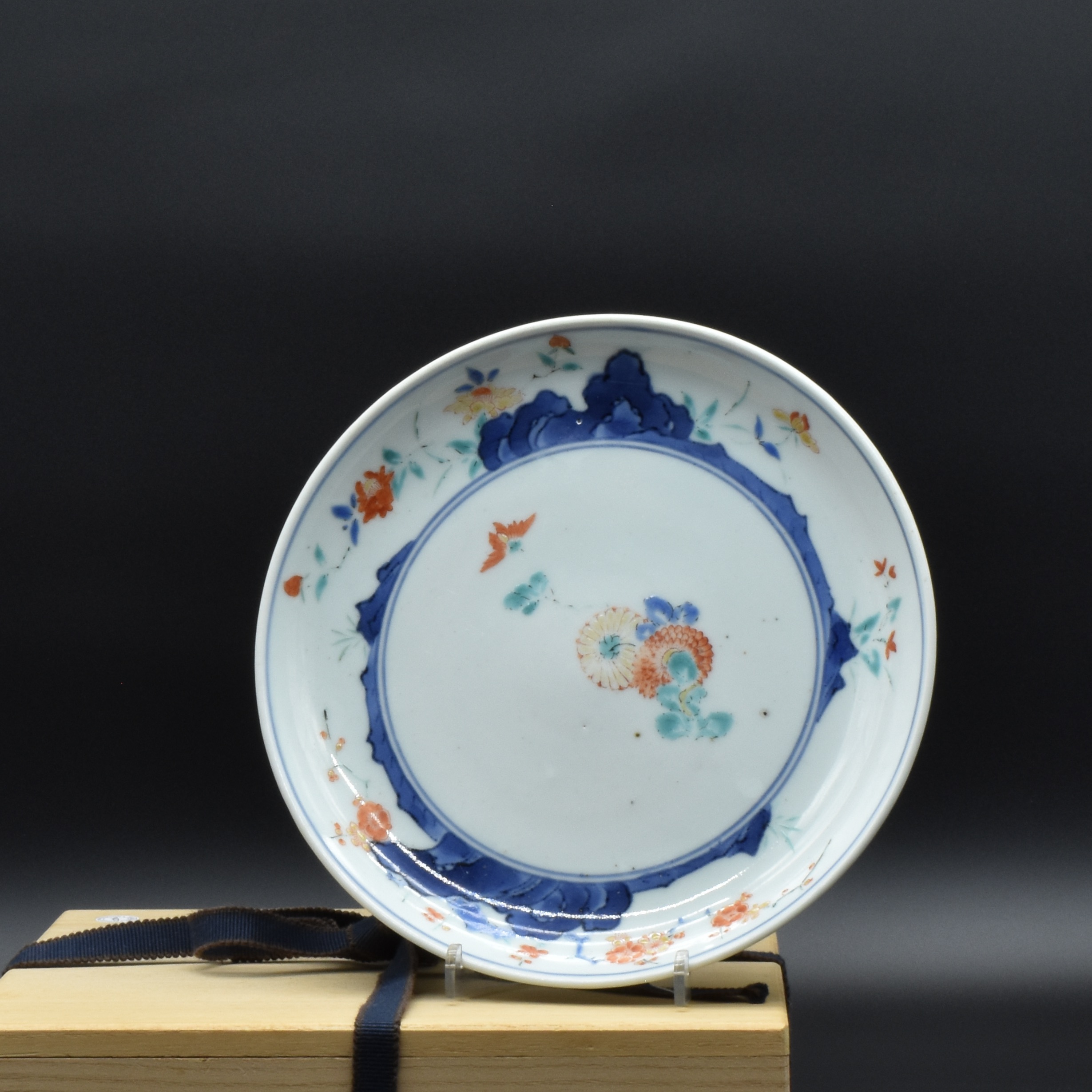
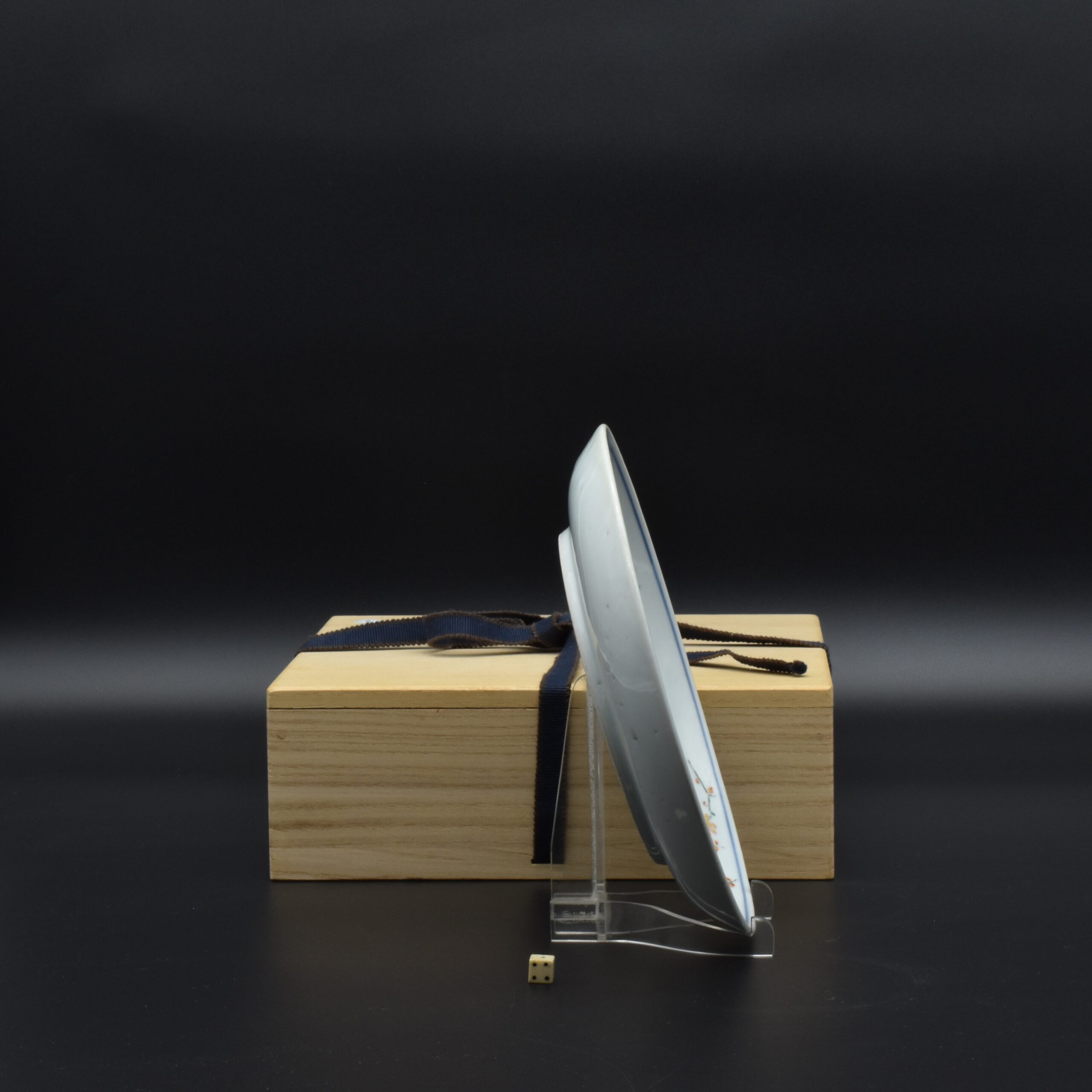
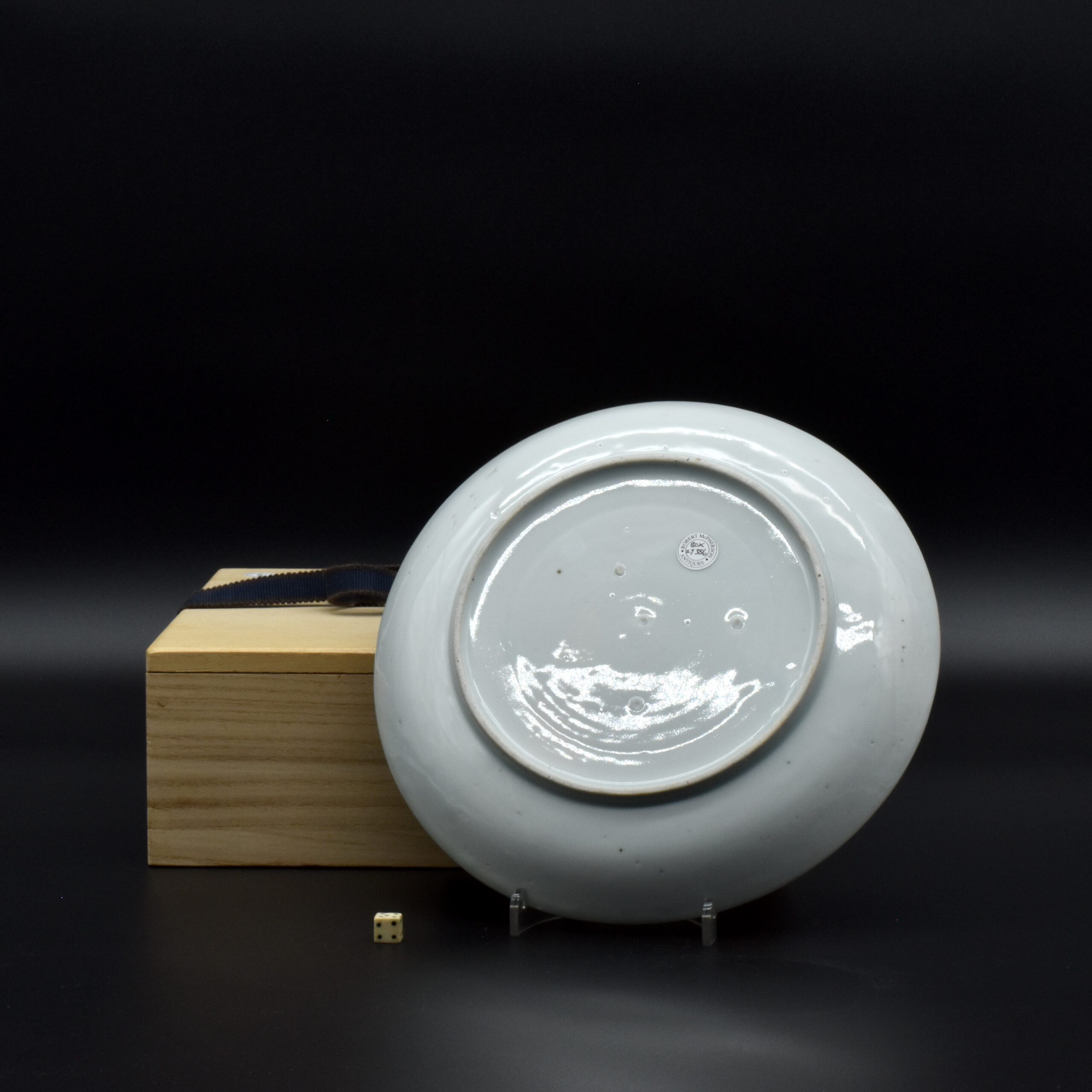
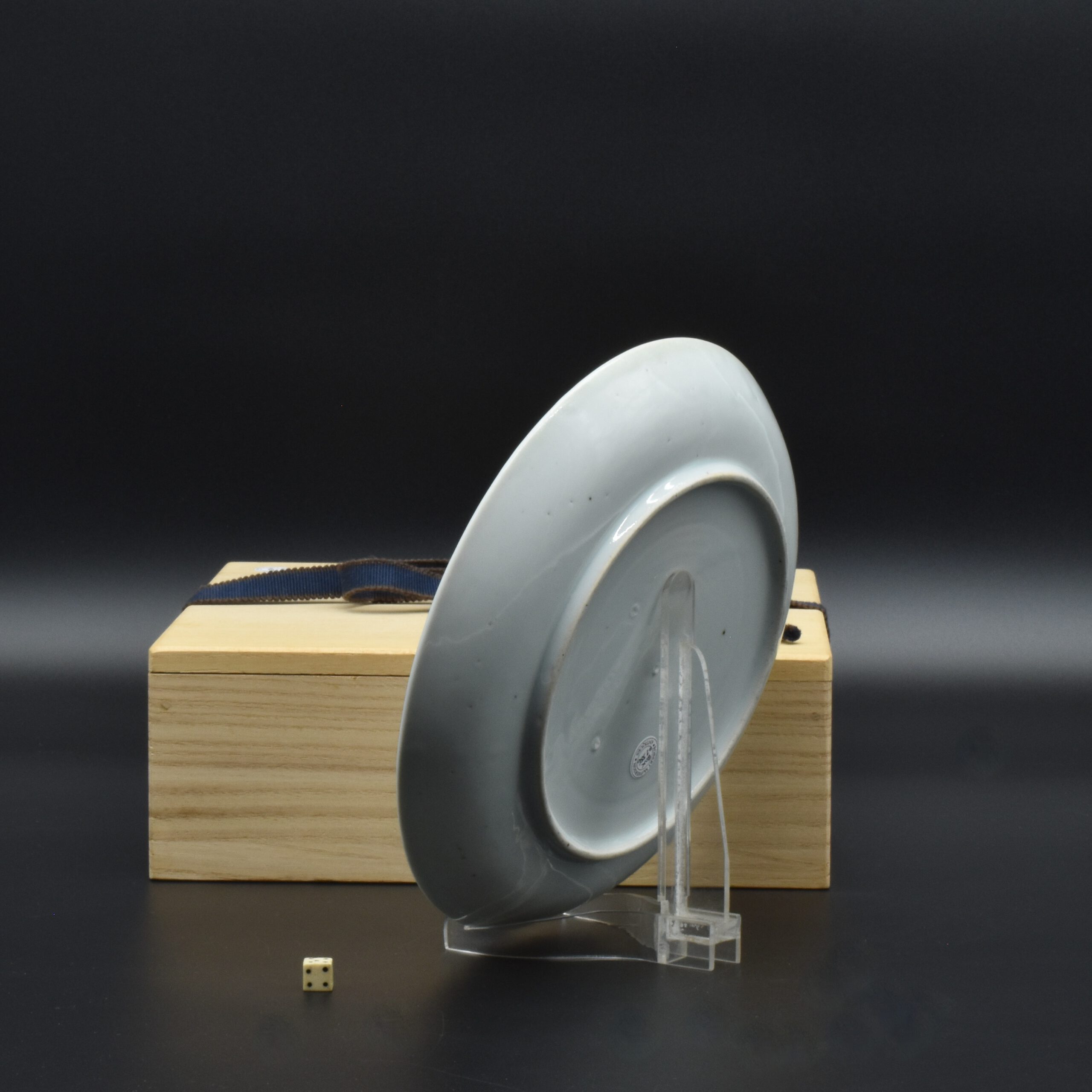
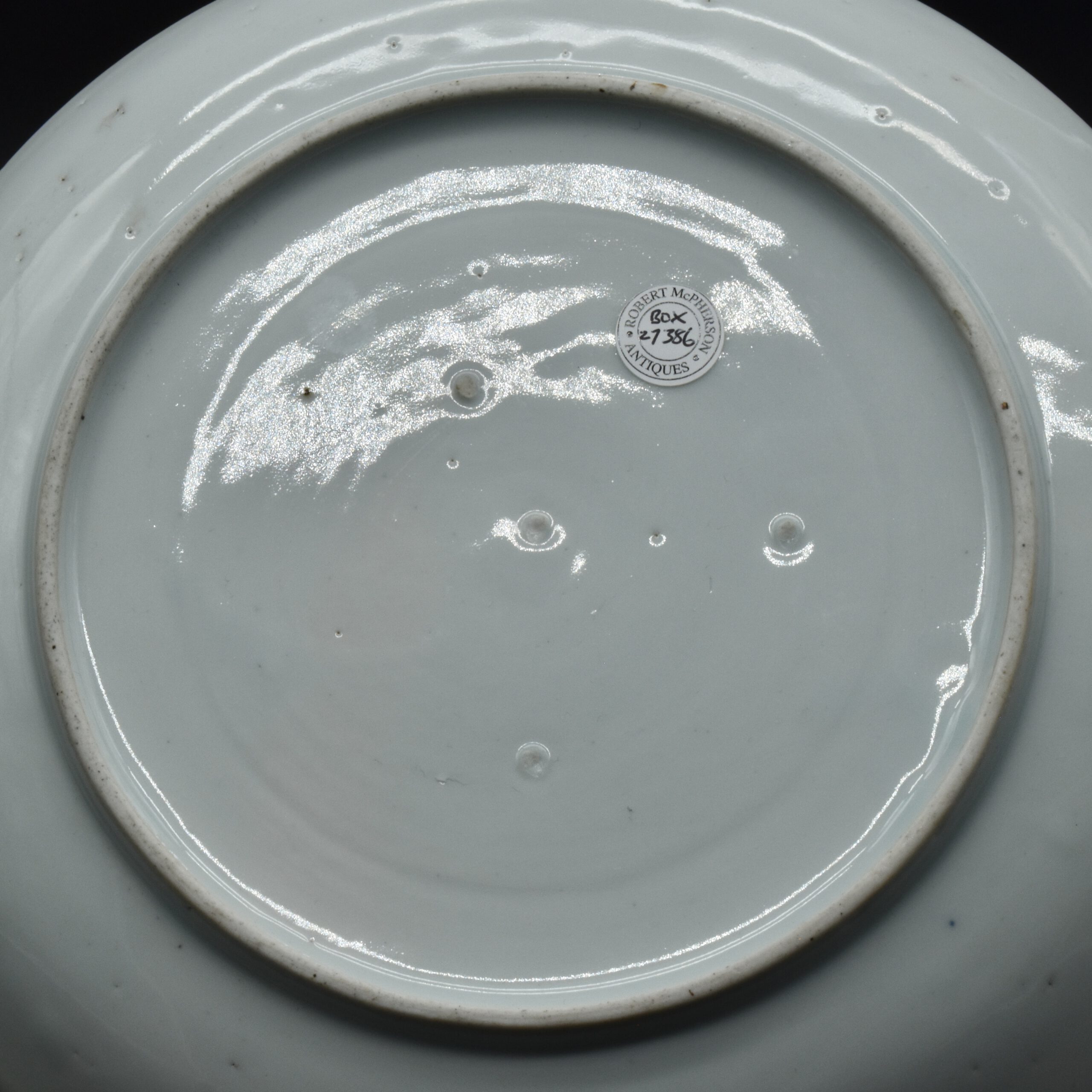
A 17th Century Japanese Kakiemon Porcelain Dish, Kakiemon Kilns or Arita c.1670-1690. This 17th Century foliate dish has underglaze blue and overglaze Kakiemon enamel colours. The design at the center of the dish is of flowering chrysanthemum in enamels. The cavetto is painted with a rocky landscape in underglaze cobalt blue with overglaze decoration of the Three Friends of Winter, Pine, Bamboo and Prunus. The base has an underglaze blue pseudo-Chenghua six-character mark (Ming dynasty 1465-1487). The outer border is in underglaze blue and is a continuous Karakusa scroll designs. A similar dish but with a blue and white landscape to the center is illustrated in the Oriental Ceramics Societie’s catalogue to the exhibition held in the British Museum ; Porcelain for Palaces, The Fashion for Japan in Europe 1650 – 1750 (Various authors, The Oriental Ceramic Society,1990. ISBN 0-903421-24-0) where it is dated to the early 18th century, recent research in Japan points to an earlier date of c.1670-1690. The dish in the catalogue is from the Ashmolean Museum where Dr. Oliver Impey was curator, the notes to the O.C.S. exhibition state that sherds of dishes similar to this have been found at the Kakiemon kiln site, this information probably come from Dr.Impey who was a regular visitor to Japan. See ‘References’.
See Below For More Photographs and Information.
- Condition
- In excellent condition, some wear to the center.
- Size
- Diameter 18.4 cm (7 1/4 inches).
- Provenance
- N/A
- Stock number
- 27386
- References
- Complete Catalogue of Shibata Collection (Contributors Saga Kenritsu Kyūshū Tōji Bunkakan. Published by the Kyushu Ceramic Museum, 2019) page 204, plate 1621 for a Kakiemon dish of this type with a phoenix and chrysanthemum to the center. For another Kakiemon dish of this type see Porcelain for Palaces, The Fashion for Japan in Europe 1650 - 1750 (Various authors, The Oriental Ceramic Society,1990. ISBN 0-903421-24-0) page 143, plate 107.
- £ GBP
- € EUR
- $ USD
Photos
Information
Kakiemon Porcelain
Kakiemon decoration is usually of high quality, often delicate and with well-balanced asymmetric designs. The designs were normally quite sparse emphasizing the fine white porcelain body known in Japan as Nigoshide (milky white). The opaque white milky Nigoshide body was used on the finest pieces, it appears that it was reserved for fine quality enamelled decoration. Kakiemon porcelain was decorated with a great variety of imaginative designs which include elements such as the `banded hedge`, `flying squirrel`, and the `Quail and Millet` design. The `Three Friends of Winter` were also a very popular group of designs, other subject taken from nature include flowers (especially the chrysanthemum, the national flower of Japan) as well as birds and rock-work. Figural subjects such as the `Hob in the Well` were also popular. This design illustrates a Chinese folk tale where a sage saves his friend who has fallen into a large fish-bowl by throwing stones at it, braking open the pot. Banded-Hedges were a formal device within Japanese traditional gardens, they were often incorporated in designs, includes `The Three Friends of Winter` (Pine, Bamboo and Prunus). These three plants signify perseverance, as neither the pine nor the bamboo shed their leaves in winter and the plumb (Prunus) flowers at the very end of the winter, heralding the arrival of spring.
Tomobako Storage Boxes :
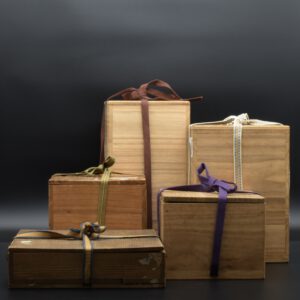
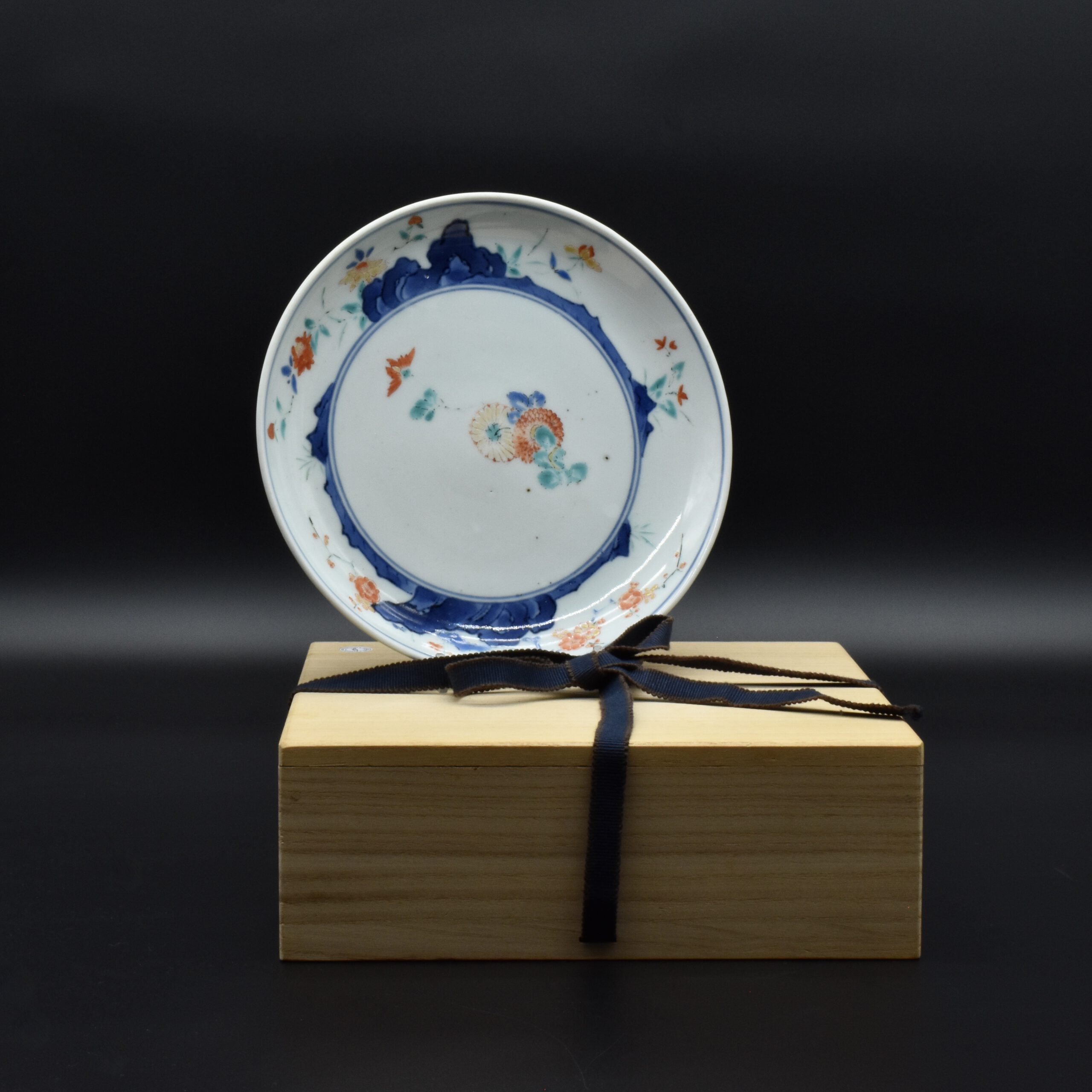
Traditional Japanese ceramic storage boxes, referred to as Tomobako are highly valued and much used in Japan. Most boxes are made from paulownia wood, it is lightweight hardwood and it’s also fire resistant, which is very useful in because Japanese buildings tend to be made of timber and have paper dividers inside. The Islands of Japan are located on a highly complex, unstable, and active geological junction where four major tectonic plates collide and subduct. These islands are essentially built upon the boundaries of these plates, with the archipelago forming as a result of the subduction and volcanic activity caused by these tectonic movements. Therefore the use of tradition tomobako is essential for the survival of ceramics in Japan. Japanese museums don’t have this luxury, so they secure the ceramic objects with nylon, which looks very much like fishing line. The paulownia is a fast growing tree, so it isn’t too expensive. It is believed that the phoenix, symbolising wisdom and prosperity, will only land on a paulownia tree when a worthy ruler is in power.
Tomobako containers that protect, store, and often certify the authenticity of the pottery inside. They are typically signed by the owner of the antique ceramic item in the box. They are tied with cord in a specific way, this is regarded as part of the ritual ceremony among a gathering of friends in Japan. Of course not everything in these boxes is what it might seem. Some contain surprising objects, so you will have to wait and see what we have in these boxes.