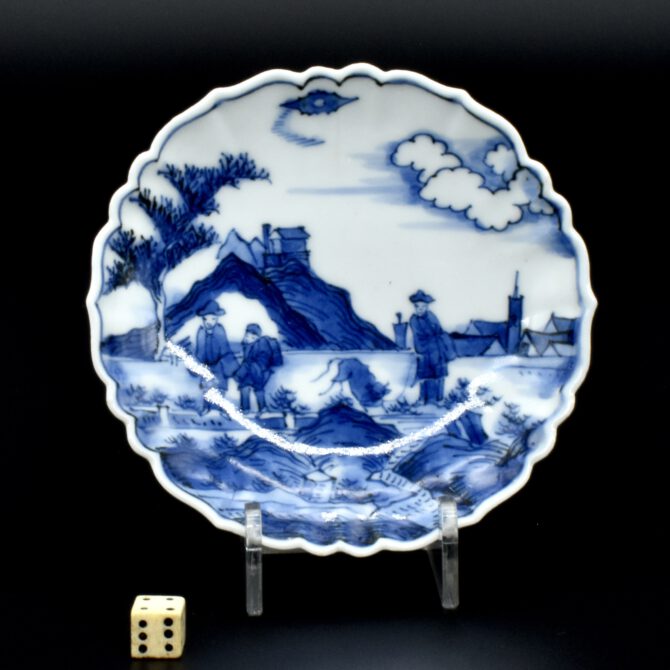
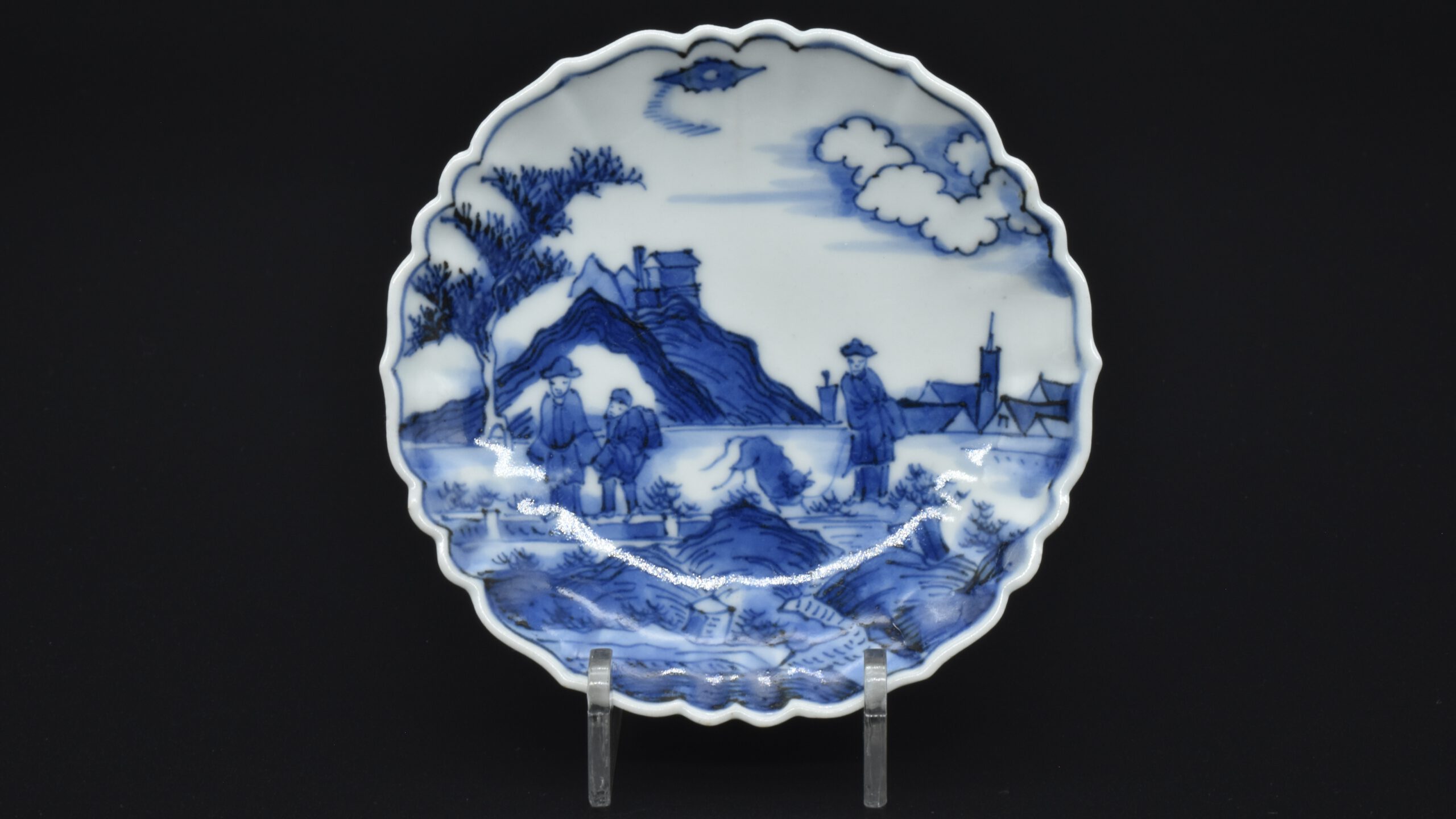
A Very Rare Small Japanese Porcelain Saucer After Frederik Van Frytom.
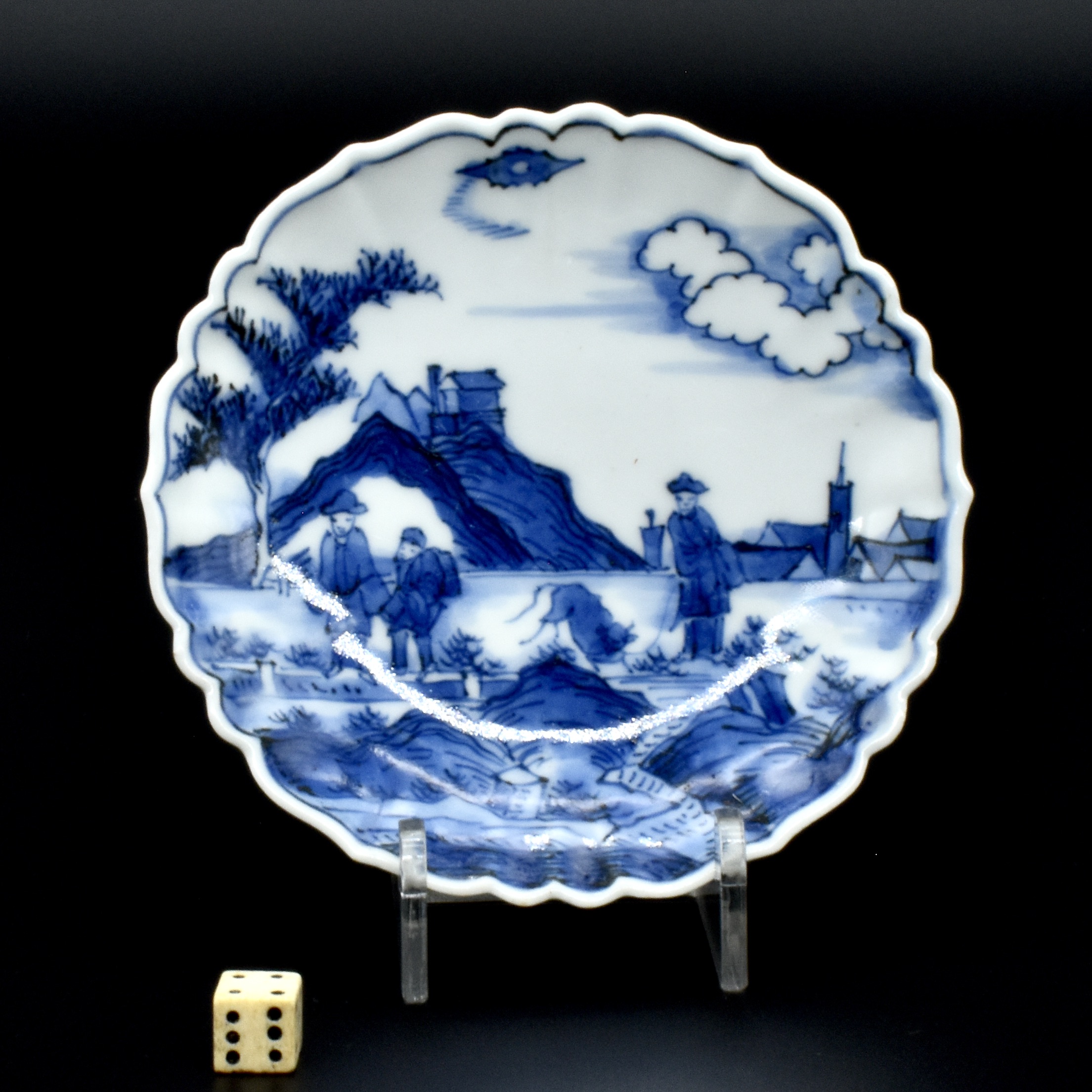
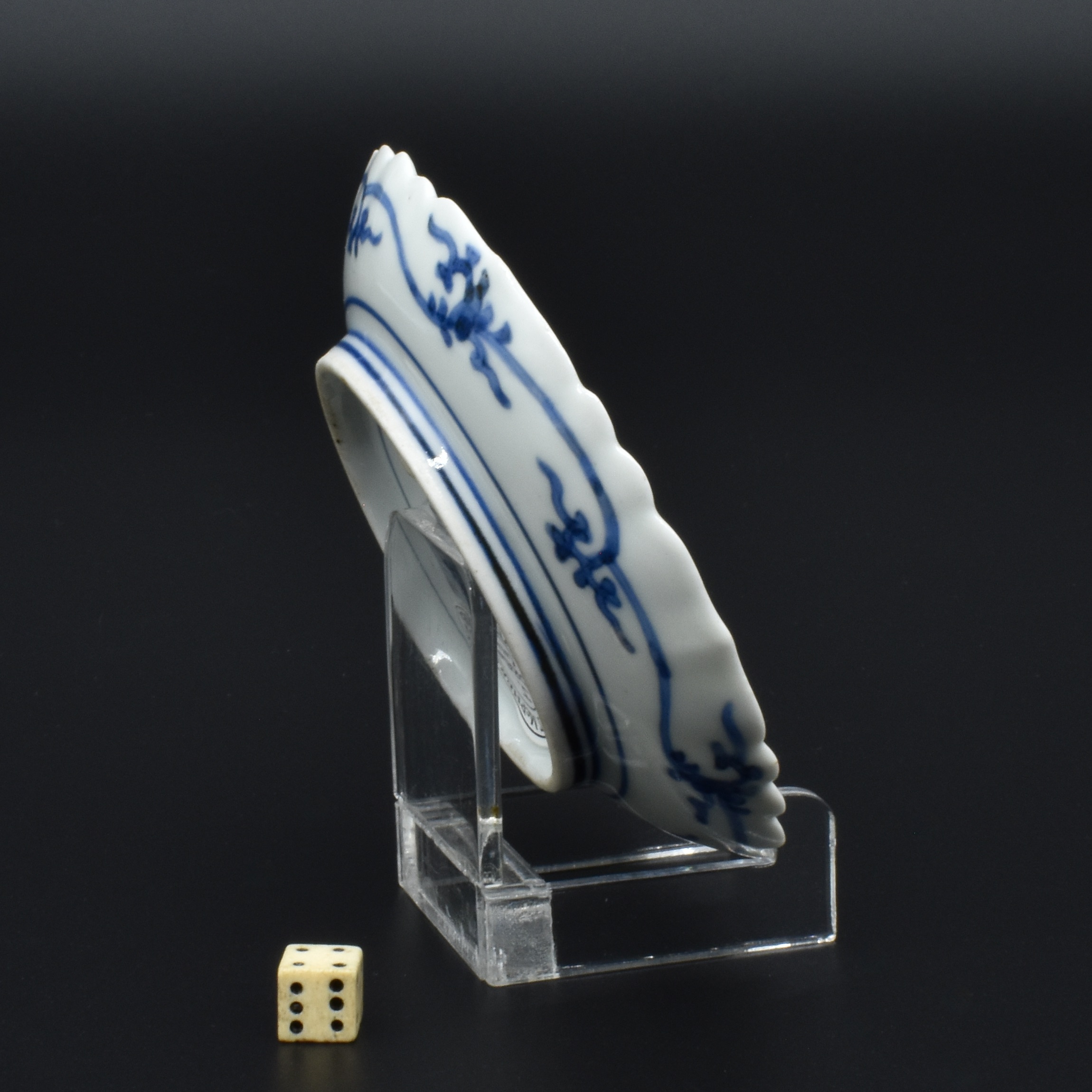
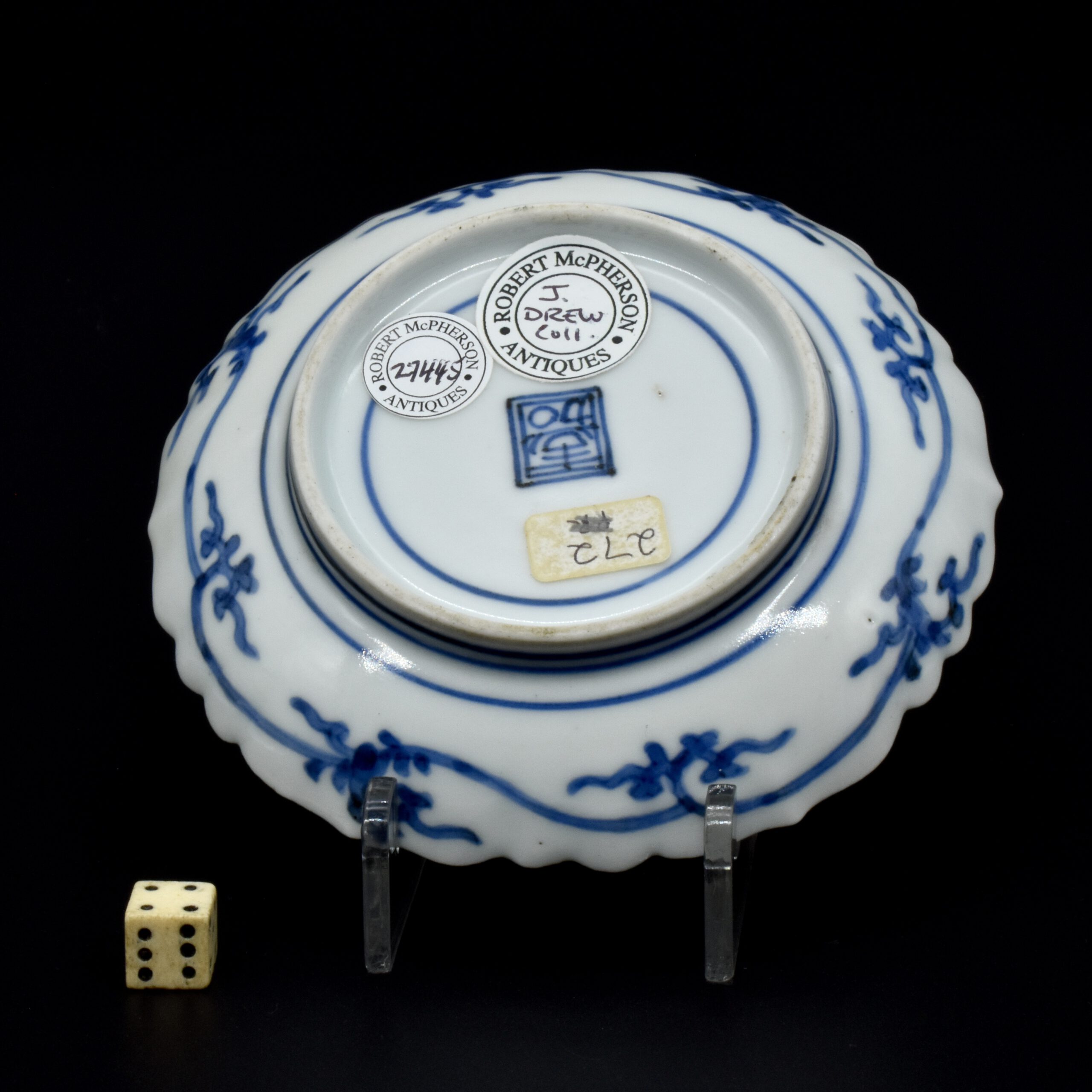
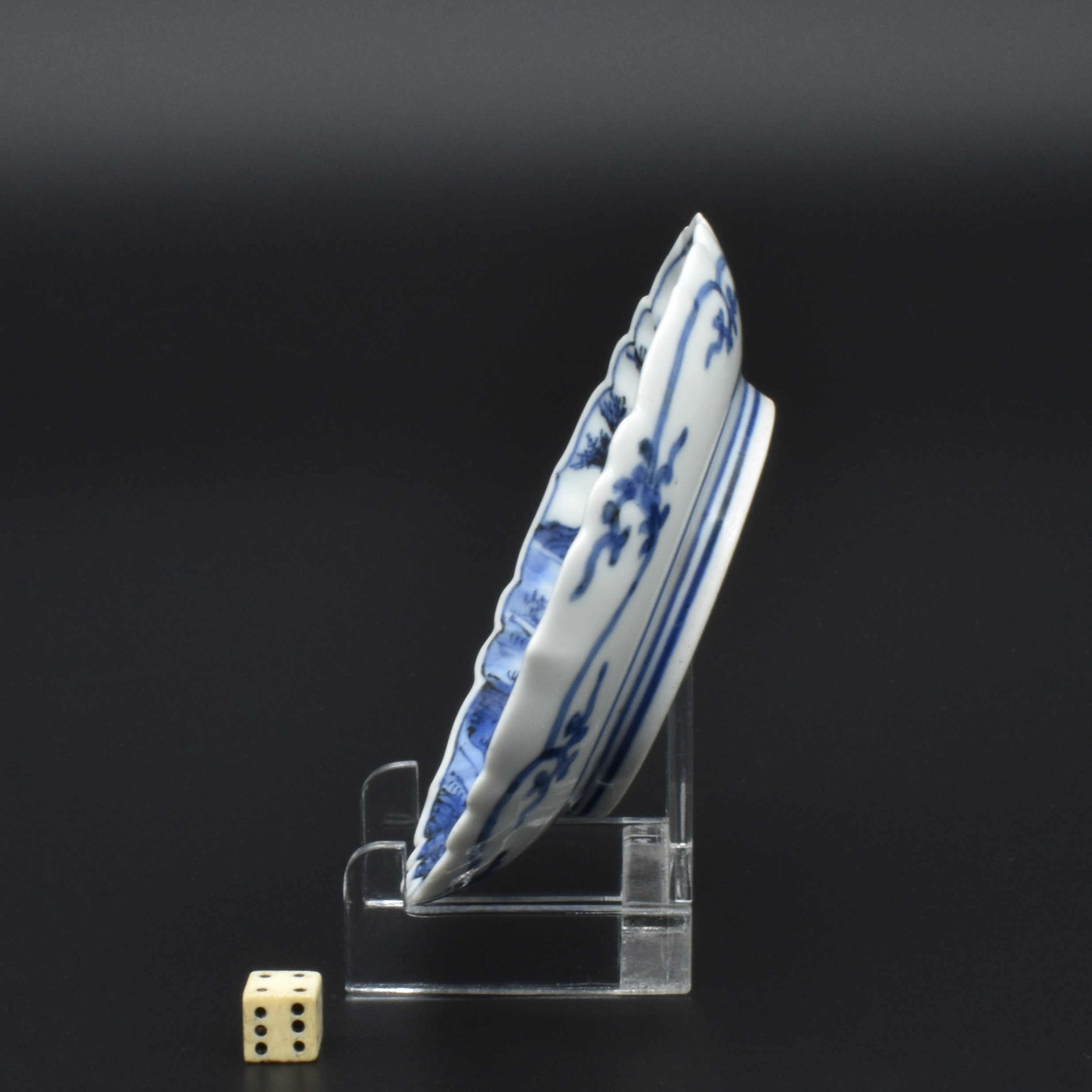
A Very Rare Small Arita Blue and White Porcelain Saucer in the style of the Dutch Delft painter Frederik van Frijtom (or Frytom) circa 1632 – 1702. From the Collection of John Drew (1933 – 2006). This finely potted barbed rimmed small saucer is painted in rich tones of cobalt blue, varying from dark to the pale shadows around the clouds. The quality of porcelain used, with a clear glaze without obvious bubbles, good cobalt and fine potting might point to this little dish being produced at the Kakiemon kilns, but it is more likely to be a better quality Arita example. A very similar saucer from a private collection dated to c.1700, is illustrated by Christiaan Jörg in ‘Fine and Curious, Japanese Export Porcelain in Dutch Collections’, where he suggests that “this rather small saucer probably had a teacup. It is the only indication we have that this design was also used on tea ware” (see References).
See Below For More Photographs and Information.
SOLD
- Condition
- In perfect condition.
- Size
- Diameter 8.8 cm (3 3/4 inches).
- Provenance
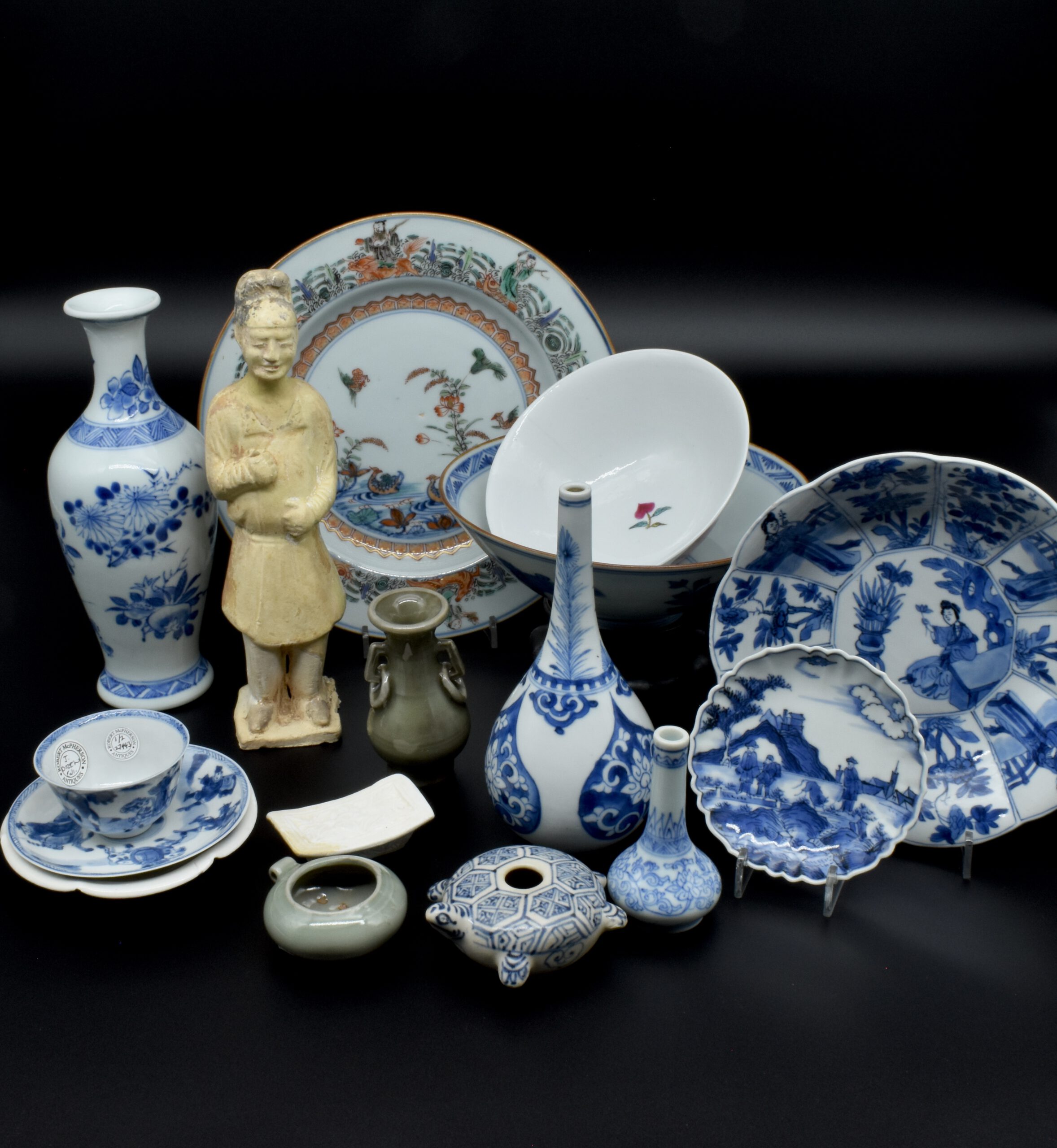
- Robert McPherson Antiques. The John Drew Collection. The John Drew Collection : John Drew was born in 1933 in Tideswell, Derbyshire, where his father was curate. The family moved to Norfolk whilst he was still a baby and his father became the rector of the parish of Intwood and Keswick. He was educated at Sedbergh School and after National Service in the R.A.F. being taught Russian, he went to Queens College, Oxford to read Greats (Classics). He spent nearly all his working life in various African countries as an archivist, moving to a post at Cape Town University in 1978. He remained in Cape Town after his retirement until his death in 2006. He had a great love of the English countryside (but not the climate) and this is shown in many of the pieces he collected. His taste was varied and ranged from Neolithic right through to the 18th Century. When we sent photograph to his home in Cape Town of pieces we thought he might be interested in, he would write long funny well observed letters back, wanting to add many of the items to his growing collection. Over the years we got to know him better and better, and during the last few years it was very rare for him to not want all the pieces we offered him. We knew his taste, even though his taste was so varied. This was in no small part because he had a very good eye and it was a pleasure finding things that interested him, because they were also very interesting to us. He never got to put his collection on display, something he hoped to do while on retirement in England, so it is with a mixture of pleasure and sadness that we offer these pieces from his collection this June. Each piece has a John Drew collection label, so when the collection is split up there will be some lasting record of the love and hard work he put into his two decades of collecting.
- Stock number
- 27445
- References
- Christiaan Jörg suggests "this rather small saucer probably had a teacup. It is the only indication we have that this design was also used on tea ware" in 'Fine and Curious, Japanese Export Porcelain in Dutch Collections' (Christian J.A. Jorg, Hotei Publishing, 2003. ISBN 90-74822-16-9) page 242, plate 310.
Photos

Information
Frederik Van Frytom (1632 – 1702) :
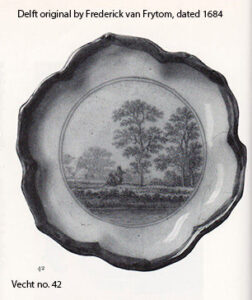
The Dutch artist Frederik Van Frytom (1632 – 1702) was an important painter of Delft pottery, his style of painting fits very well within the 17th century Dutch landscape tradition, it includes typically scenes of the Netherlands, rustic landscapes with small bridges, farmsteads, pollarded willow, and cows scattered about small fields. His ceramic painting technique was individual, more akin to a painting than merely filling in a design on a ceramic body. Van Frytom's connection with oriental ceramics stems from a series of small blue and white Delftware dishes painted by him that were found in Japan and were said to be made for the Tea-Ceremony in Japan, the bases of which were marked MB and dated 1684 (See Frederik Van Frytom 1632 – 1702, Life And Work Of A Dutch Pottery-Decorator, A.Vecht, Scheltema and Holkema NV, Amsterdam, 1968). However, it is also possible, or in fact, more likely to have been sent to Japan by the V.O.C. to be copied. As far as I know, not conclusion has been reached.
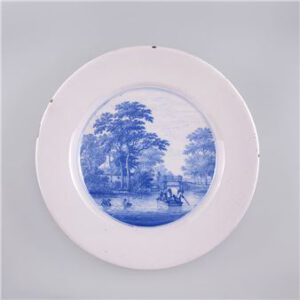
A Delftware Dish Attributed to Frederik van Frijtom (or Frytom) circa 1632 - 1702.
The Museum of Art, Den Haag, Netherlands.
A Delftware Dish by Frederik van Frijtom (or Frytom) circa 1632 - 1702. Dated 1684 found in a Japanese Collection.
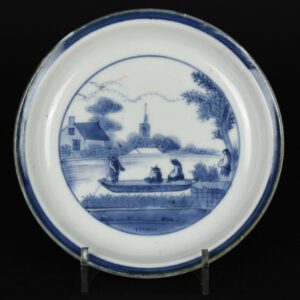
A Japanese Blue and White Porcelain ‘Van Frytom’ Saucer, Arita Kilns c.1690 – 1710.
Robert McPherson Antiques, Sold Archive Number 24745
SOLD
Condition
In perfect condition, there are two firing cracks, one to the front (in the clouds) the other to the base.
Size
Diameter 12.4 cm (4 3/4 inches)
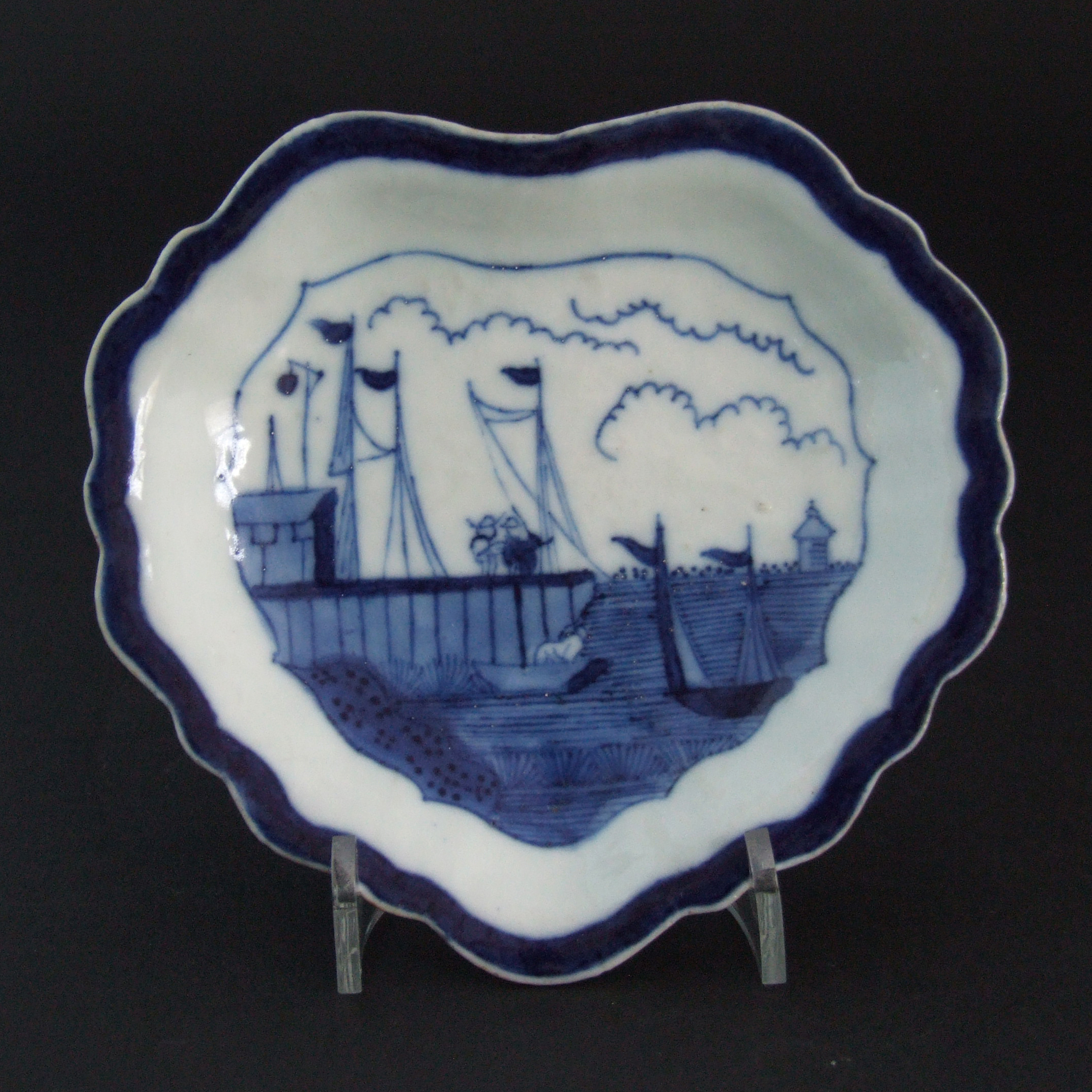
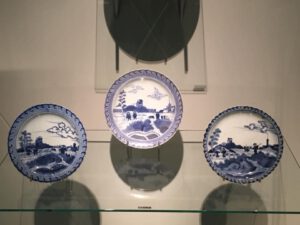
The best known of Van Frytom`s designs is the so-called Deshima Island pattern, now known to be a view of Holland. Porcelain plates of this pattern, as well as related designs, were produced at the Arita Kilns in Japan and then in China at the Jingdezhen kilns, related designs also occurs on Chinese soft-paste porcelain. Plates and dishes of the so-called Deshima Island pattern dating to the Yongzheng period (1723-1735) were sold at Sotheby's Amsterdam Sale of Chinese Porcelain from the Ca Mau Cargo, “Made in Imperial China”. This Western style was then re-used, probably via Japanese or Chinese interpretations, in England at The Bow Factory using soft-paste porcelain, at least some of these Bow pieces closely relate to Chinese soft-paste porcelain versions of the design. However, the Chinese soft-paste examples are quite late in date, so it might well be possible that they are based on the Bow examples that are copying the Japanese or Chinese versions of the Delft. A complex and somewhat confusing inter-connection of design and trade.
Japanese 'Van Frytom' Style Van Frytom Porcelain from Robert McPherson Antiques
Below are a few late 17th and early 18th century Van Frytom style Japanese porcelain objects.
See Robert McPherson Antiques - Sold Items, search 'Van frytom'.
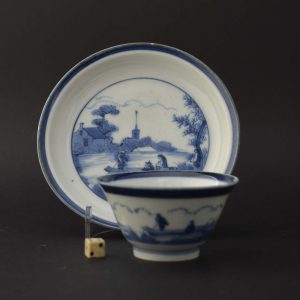
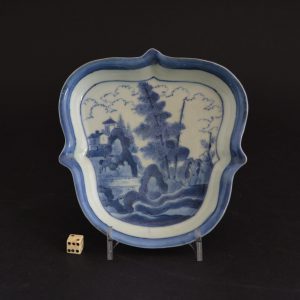
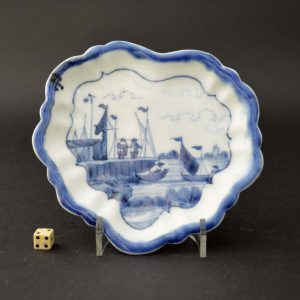
Japanese porcelain dish after Van Frytom.
A Yongzheng Blue and White Porcelain Plate 1723-1735.
In the Style of Frederik Van Frytom (1632 – 1702).
Robert McPherson Antiques, Sold Archive Number 27082.
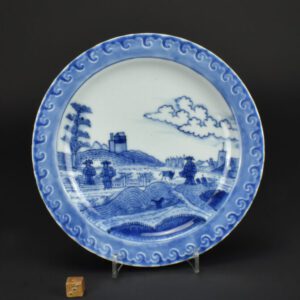
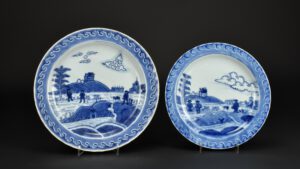
Groninger Museum, Netherlands
A Japanese Porcelain Dish After Van Frytom and a Rare Chinese Export Porcelain Dish, soft-paste porcelain, Qianlong Period c.1760. The
Robert McPherson Antiques Sold Archive.
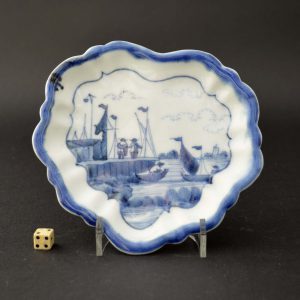
A Rare Chinese Export Porcelain Dish, soft-paste porcelain, Qianlong Period c.1760.
Robert McPherson Antiques Sold Archive.
This dish is a copy of a rare Dutch Delft dish painted by Frederik Van Frytom (1632 – 1702) . An English version made at the Bow Porcelain factory in London, that version of this pattern from c.1748-1752.