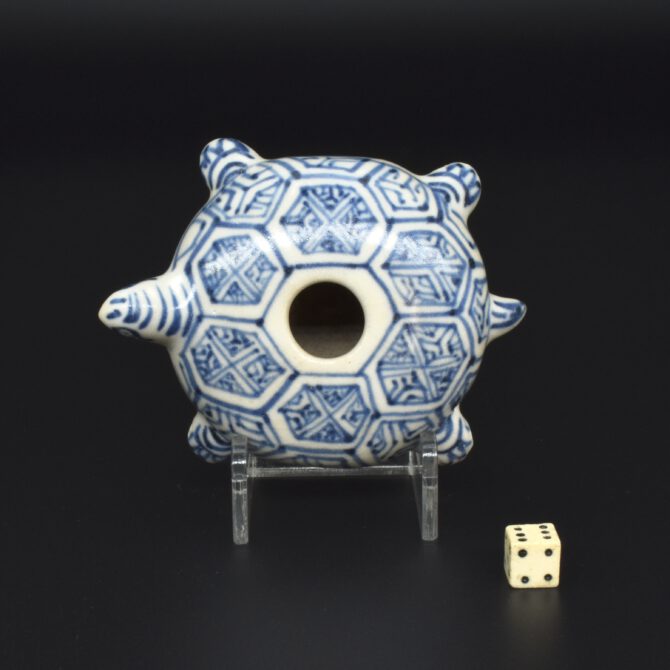
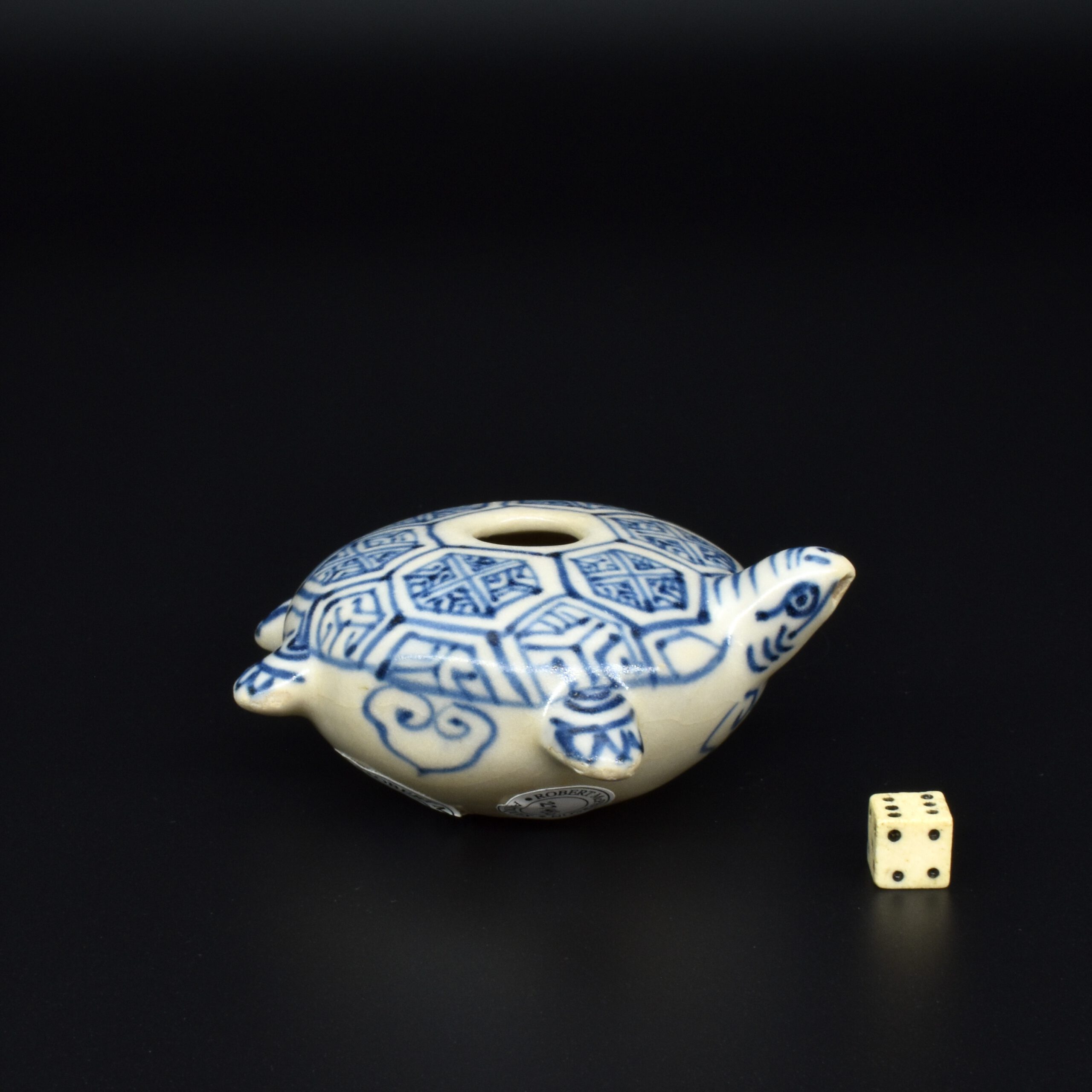
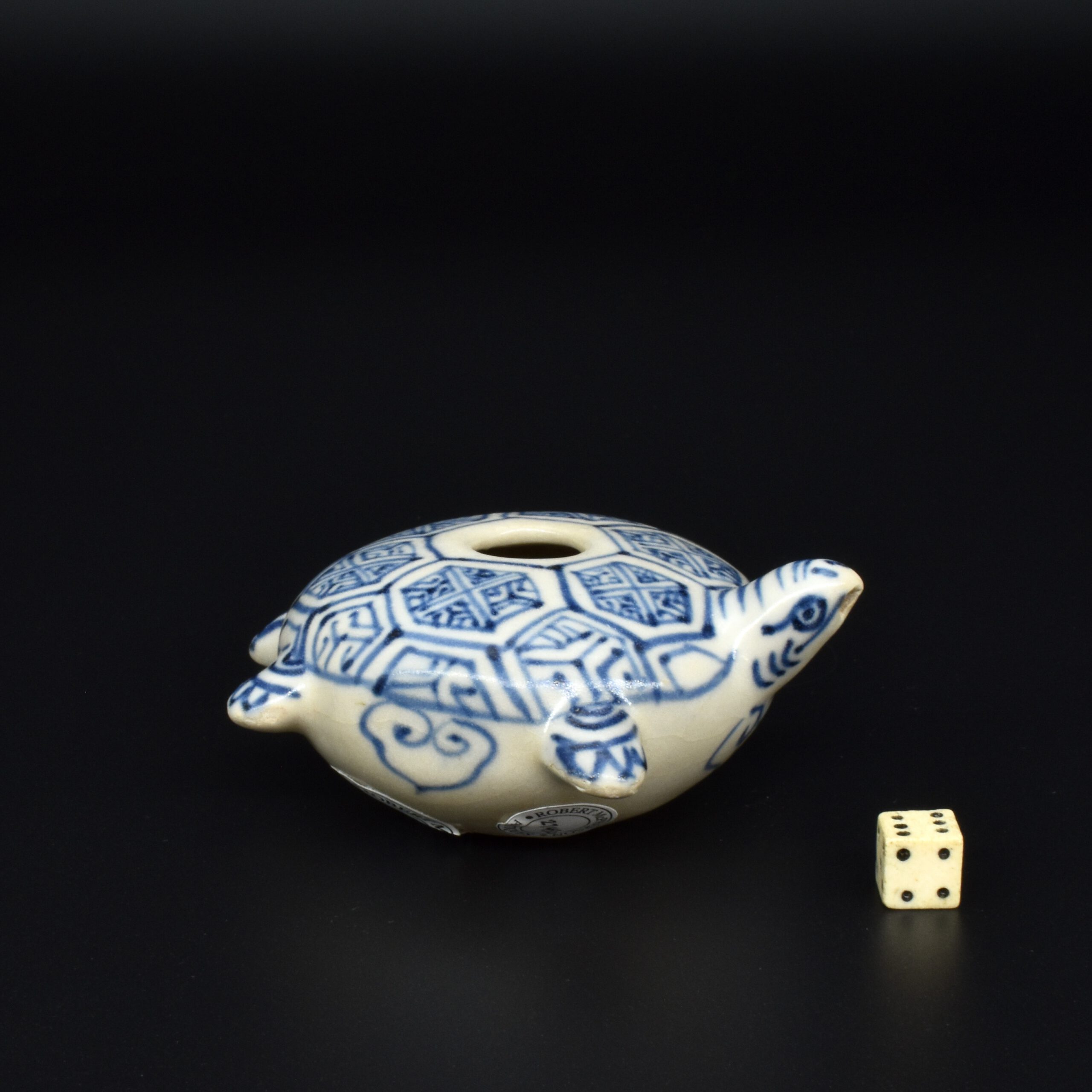
A Rare 15th Century Vietnamese Turtle Shaped Pottery Water Dropper.
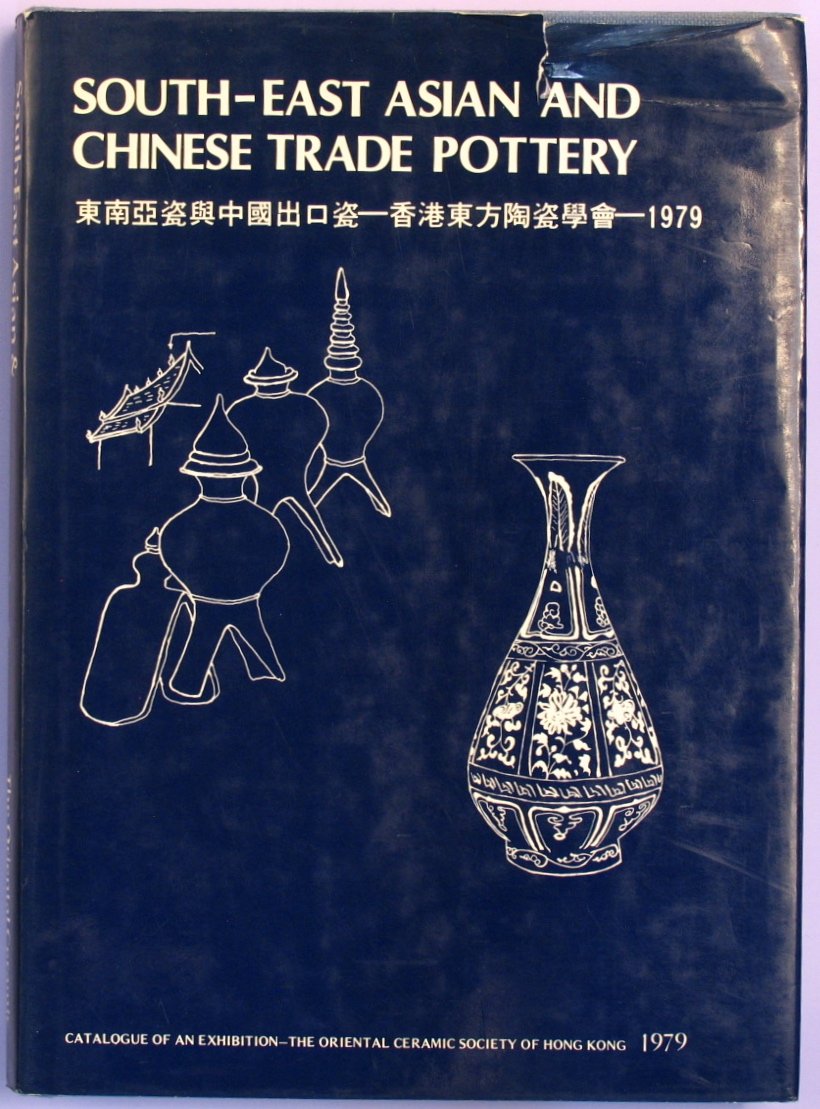
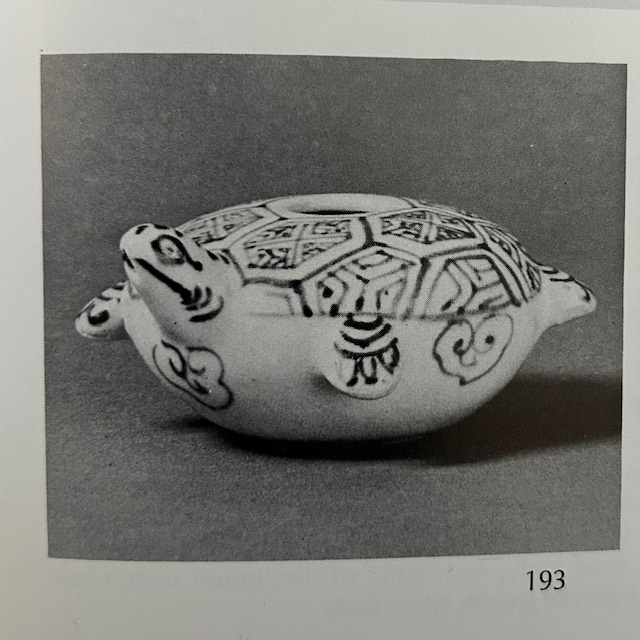
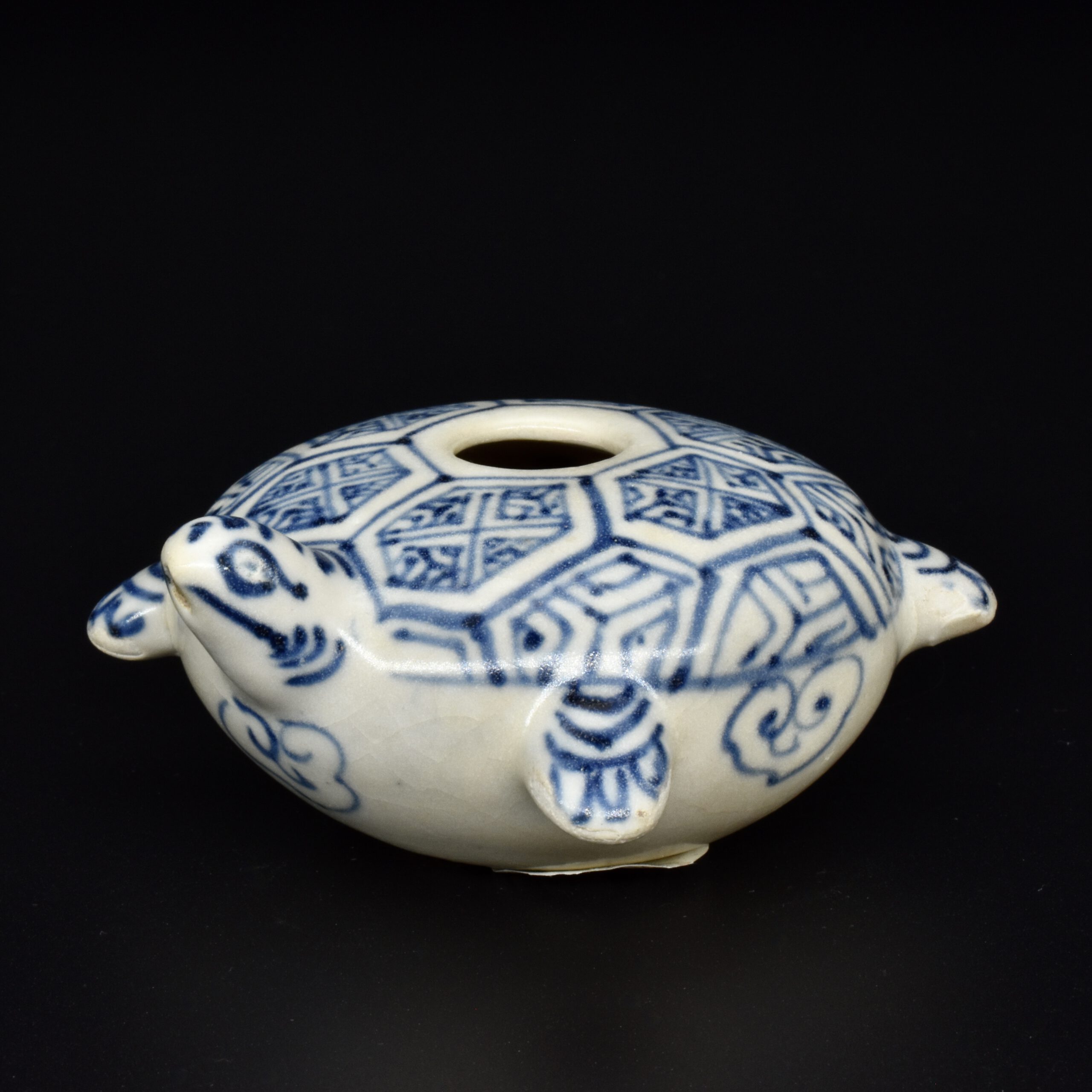
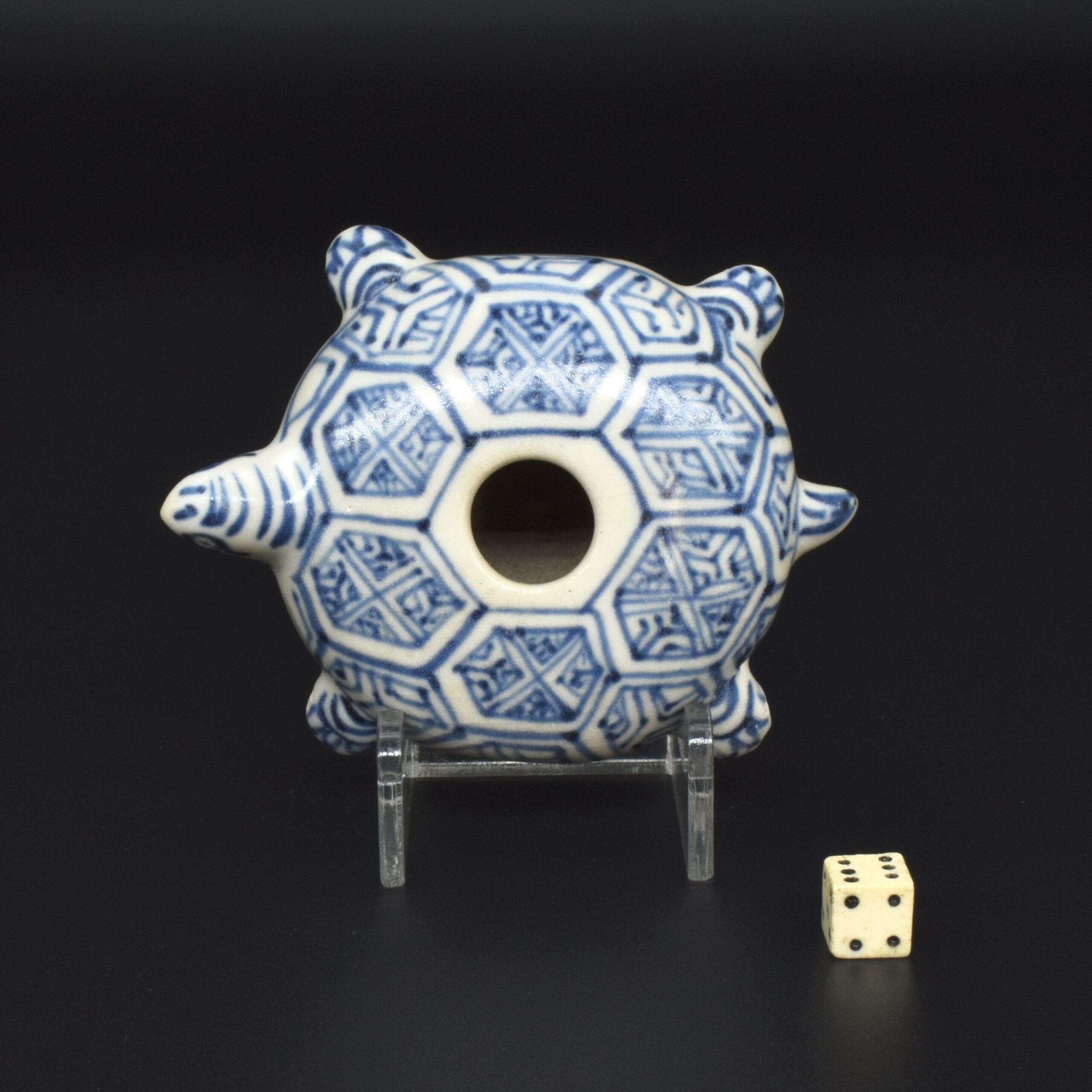
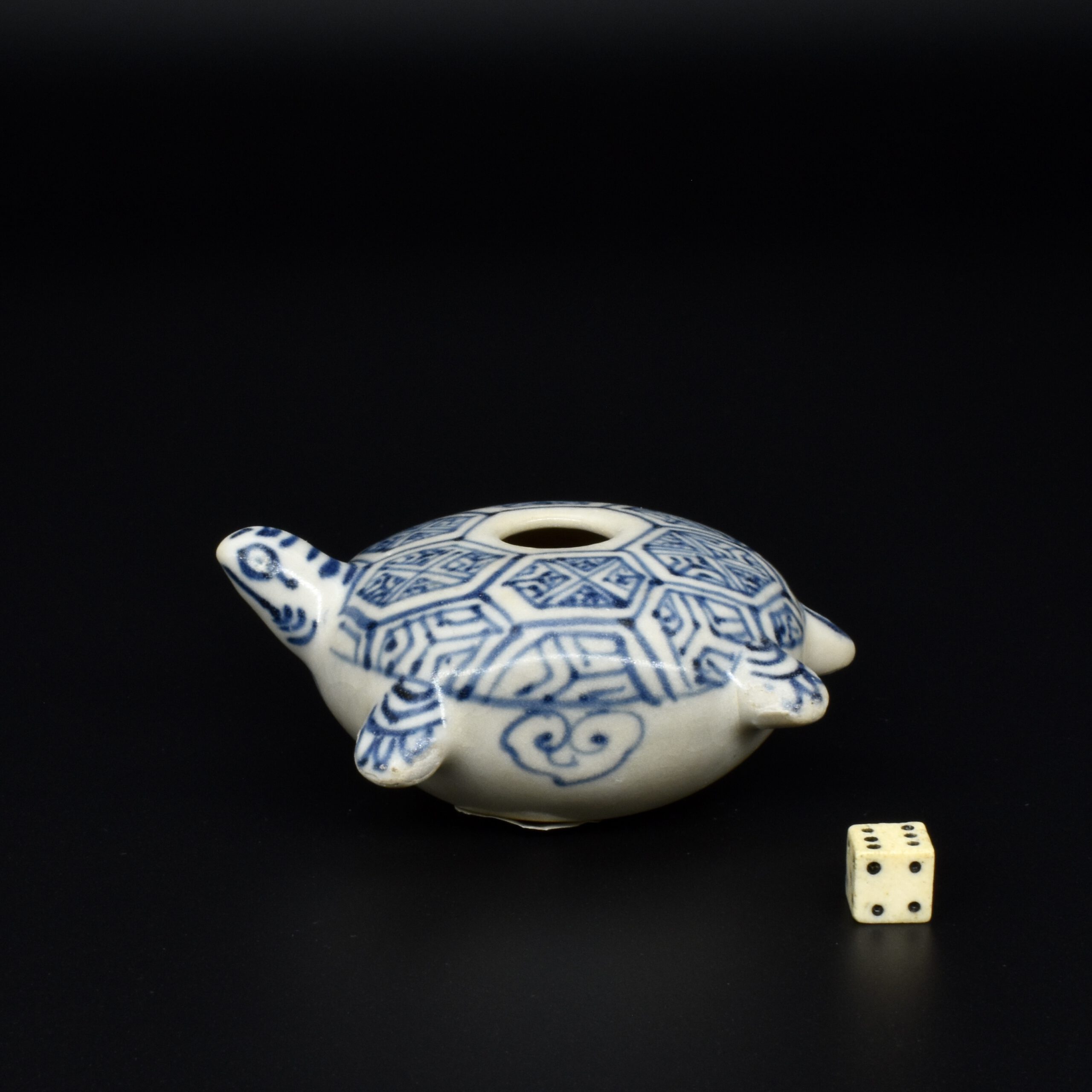
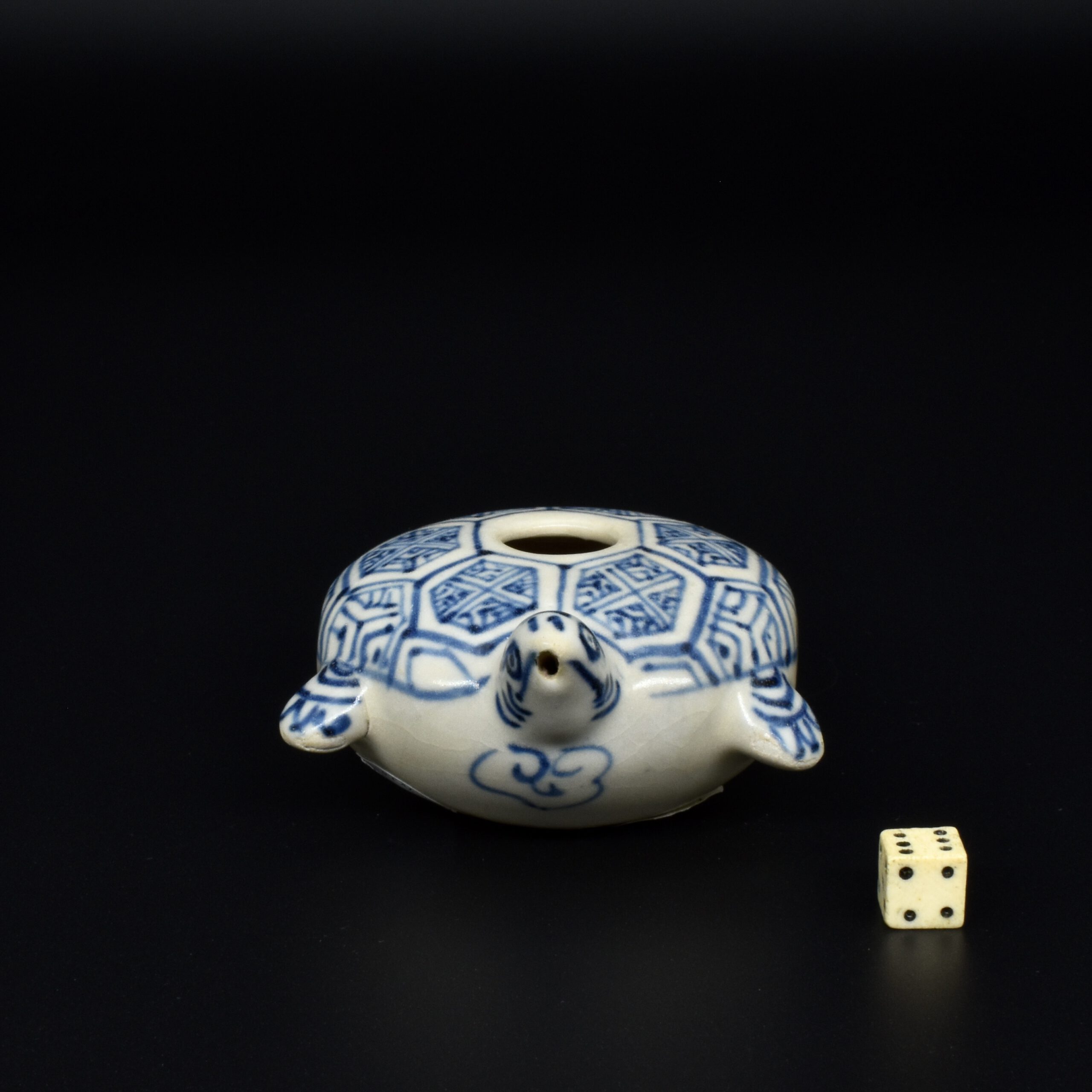
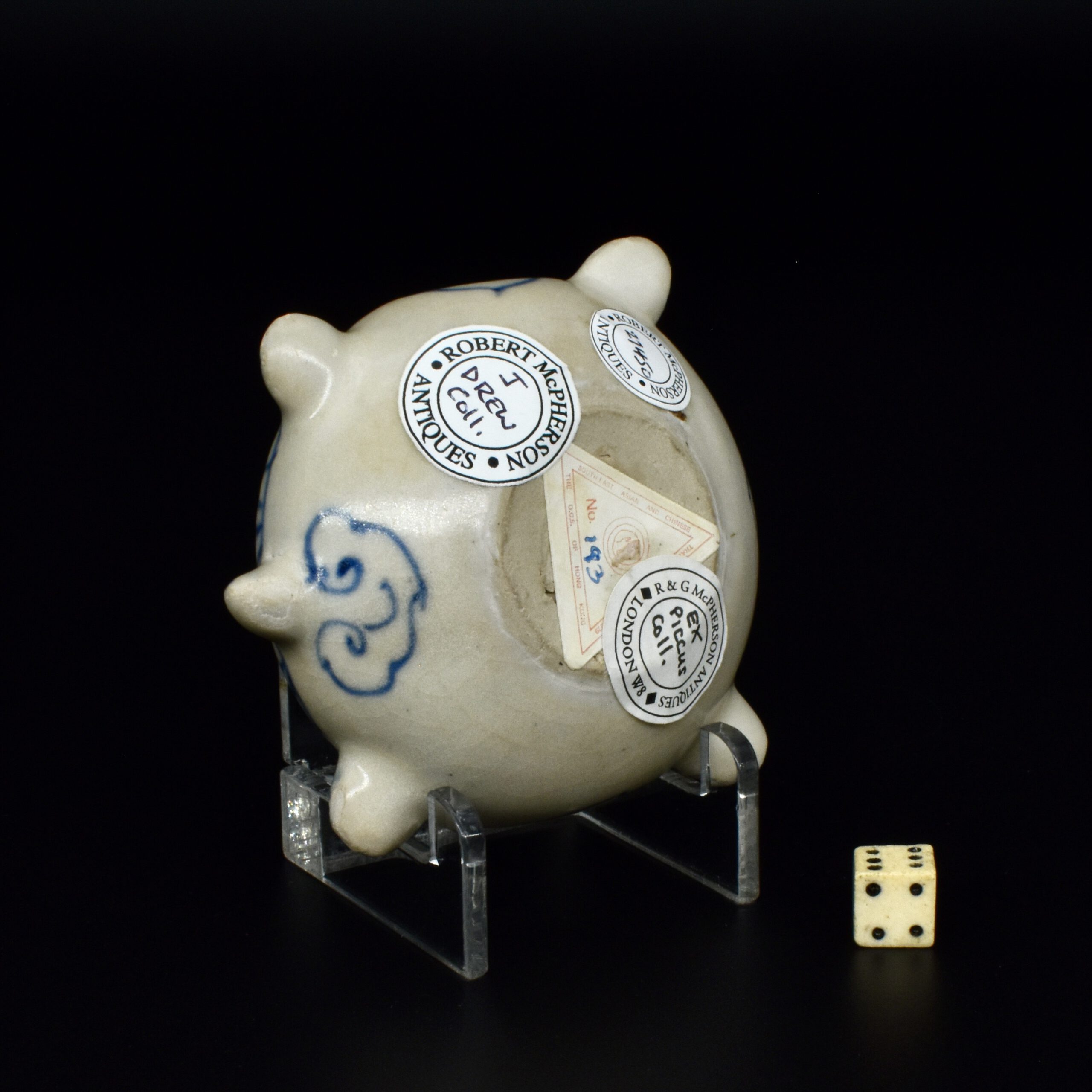
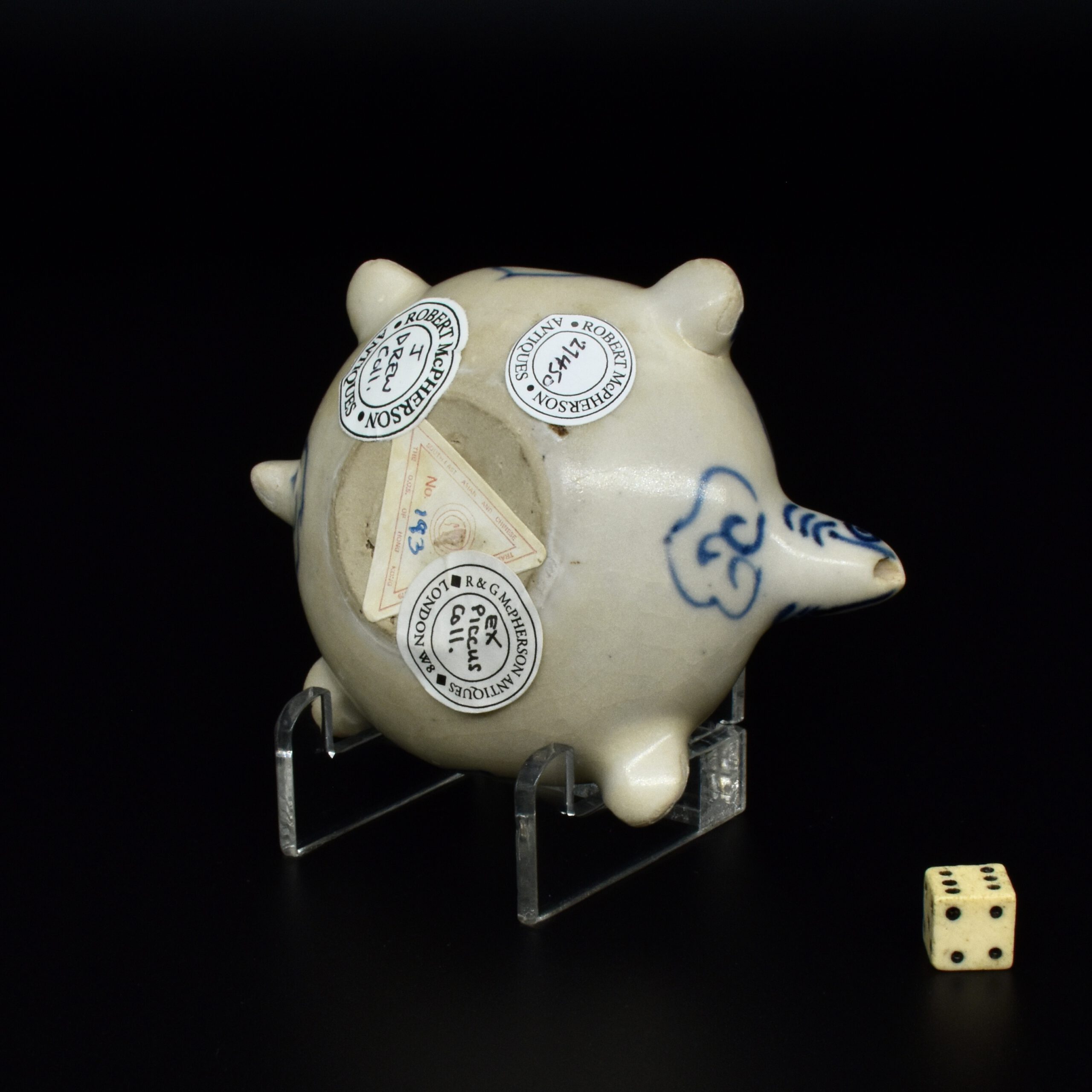
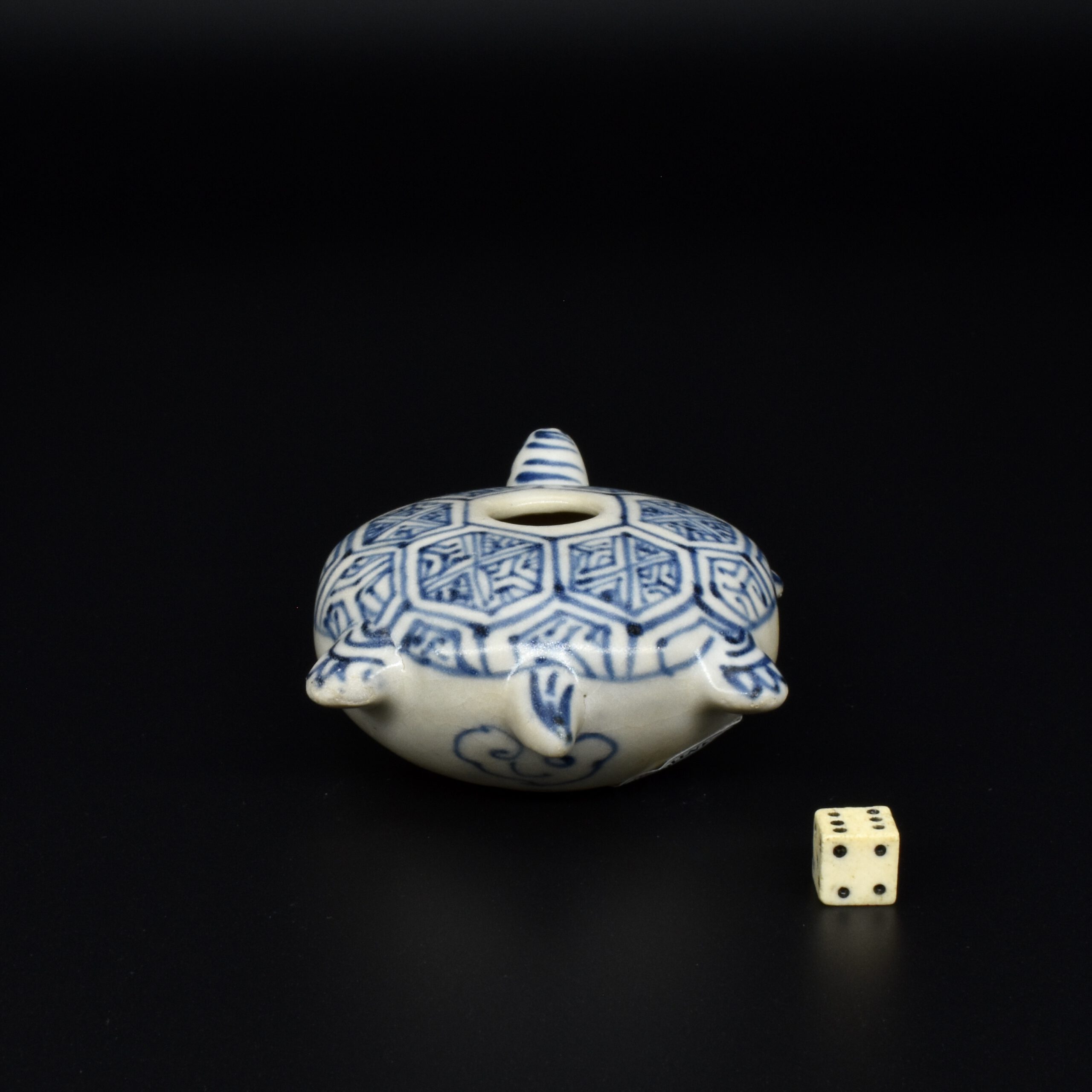
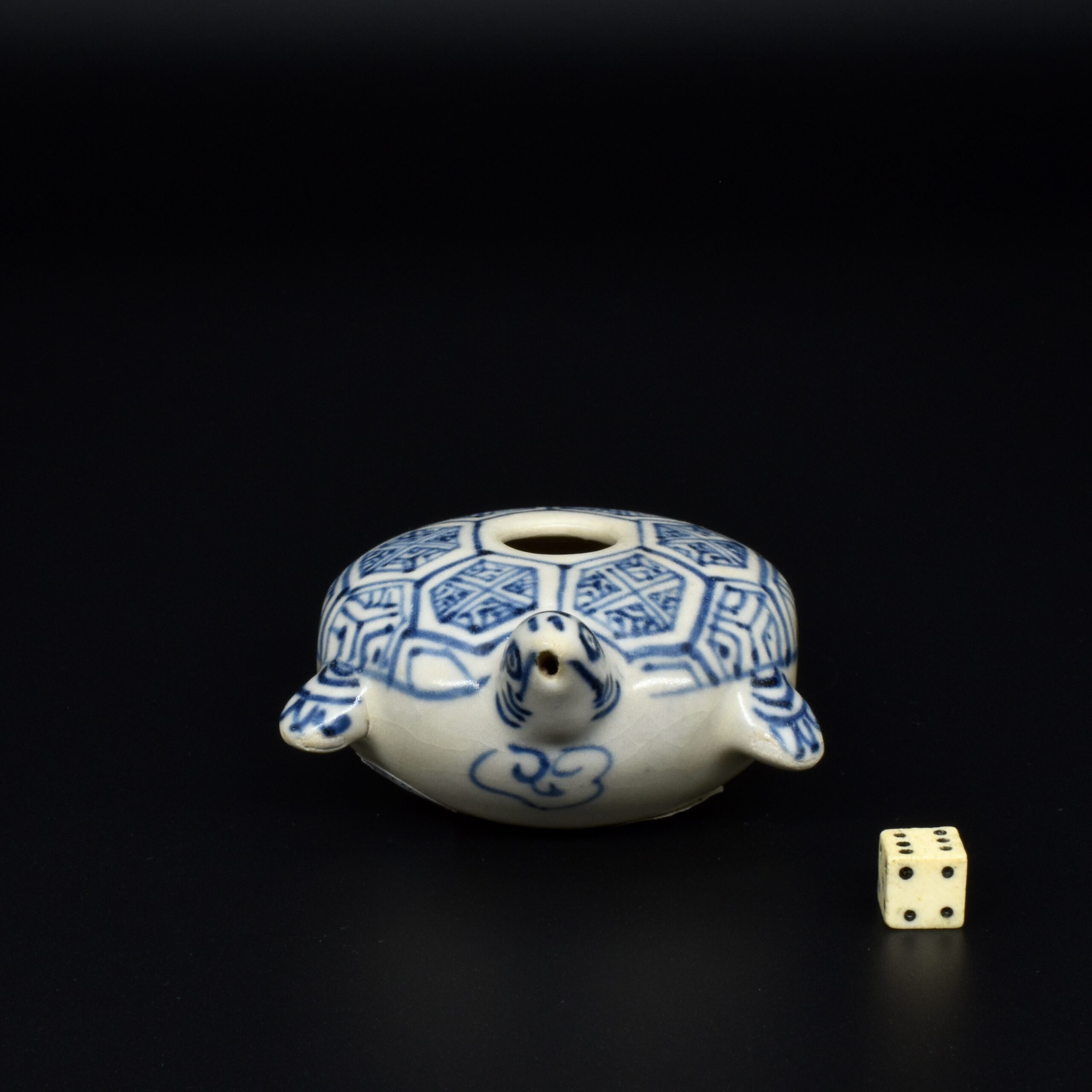
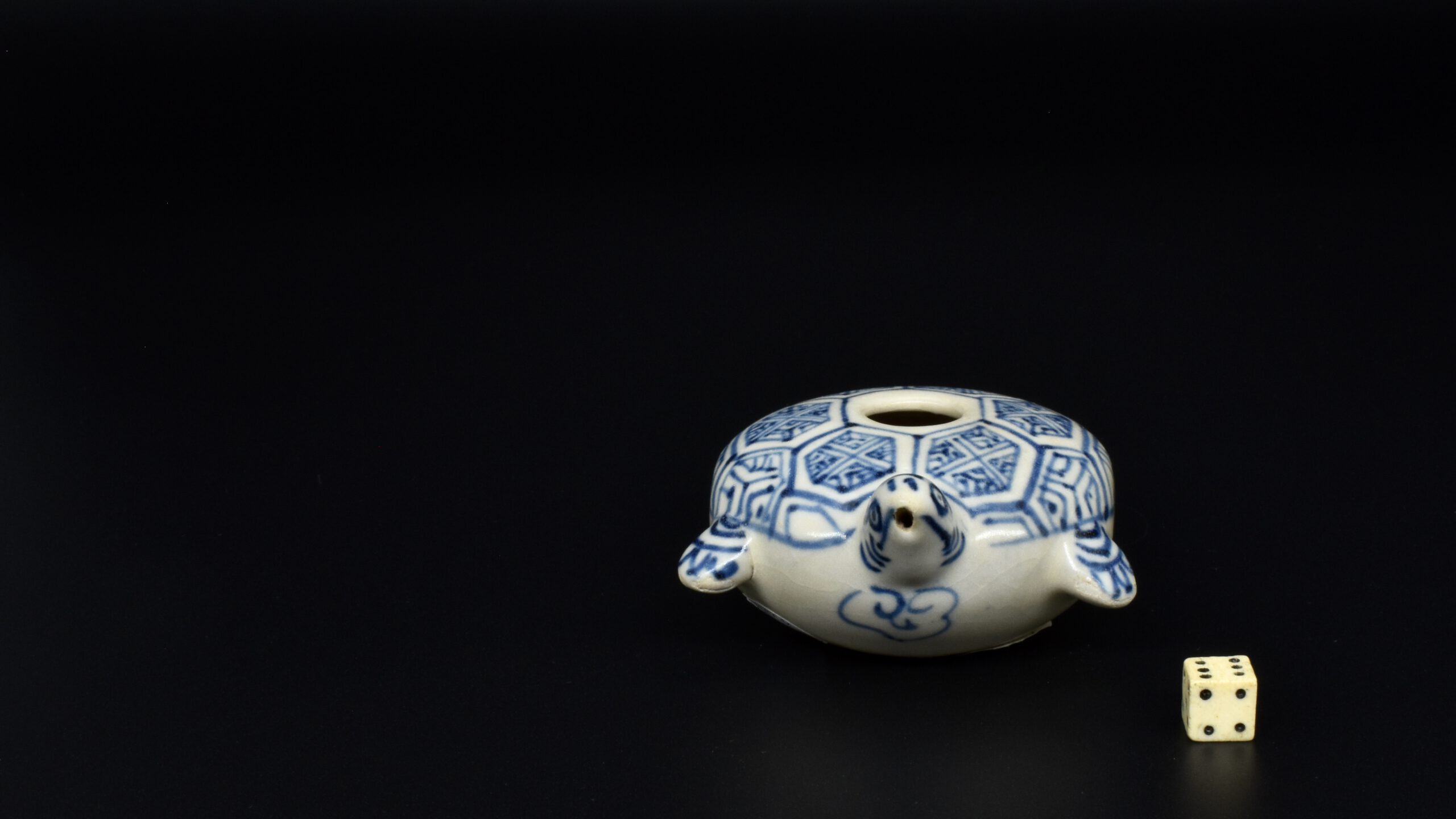
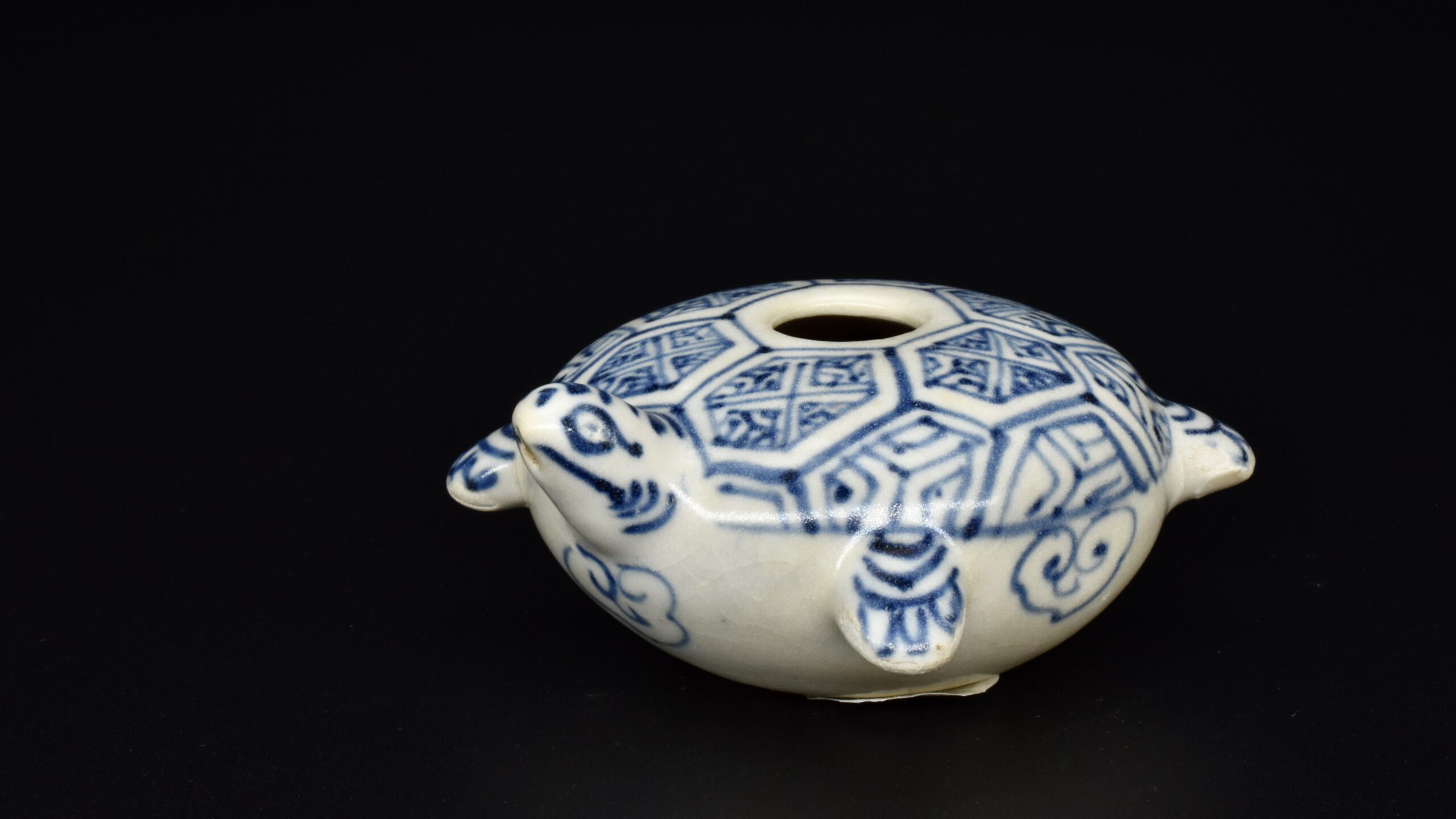
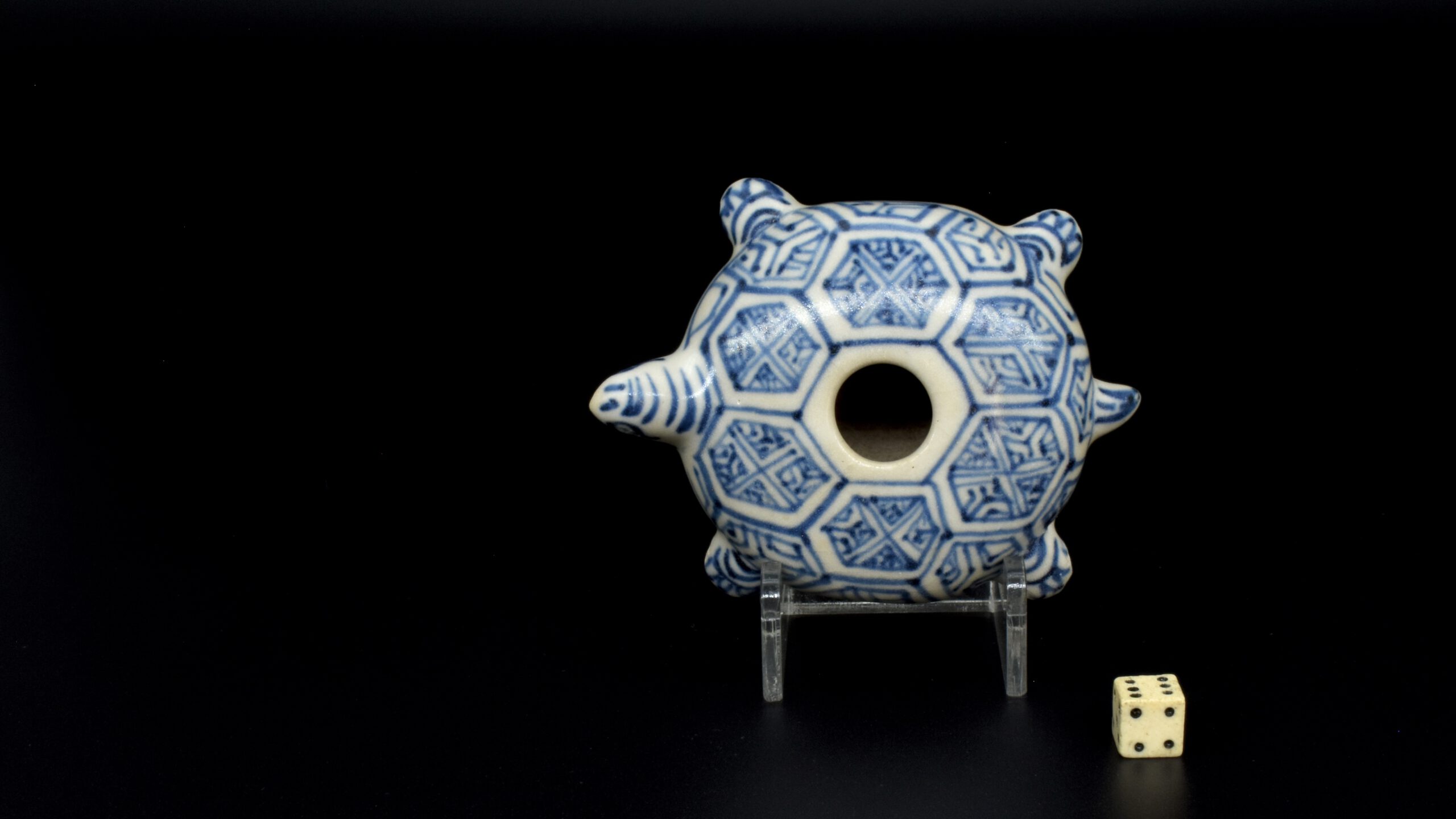
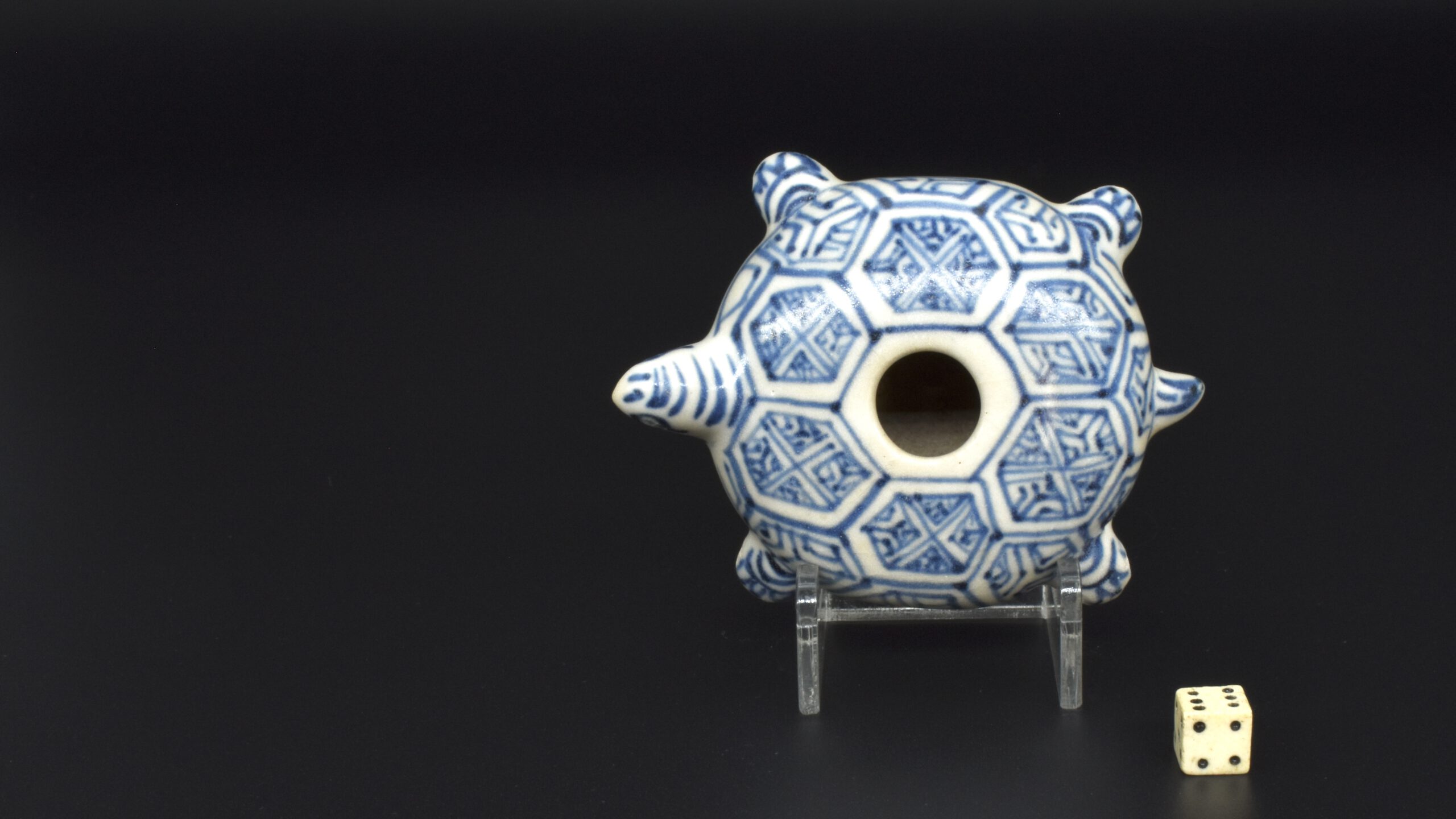
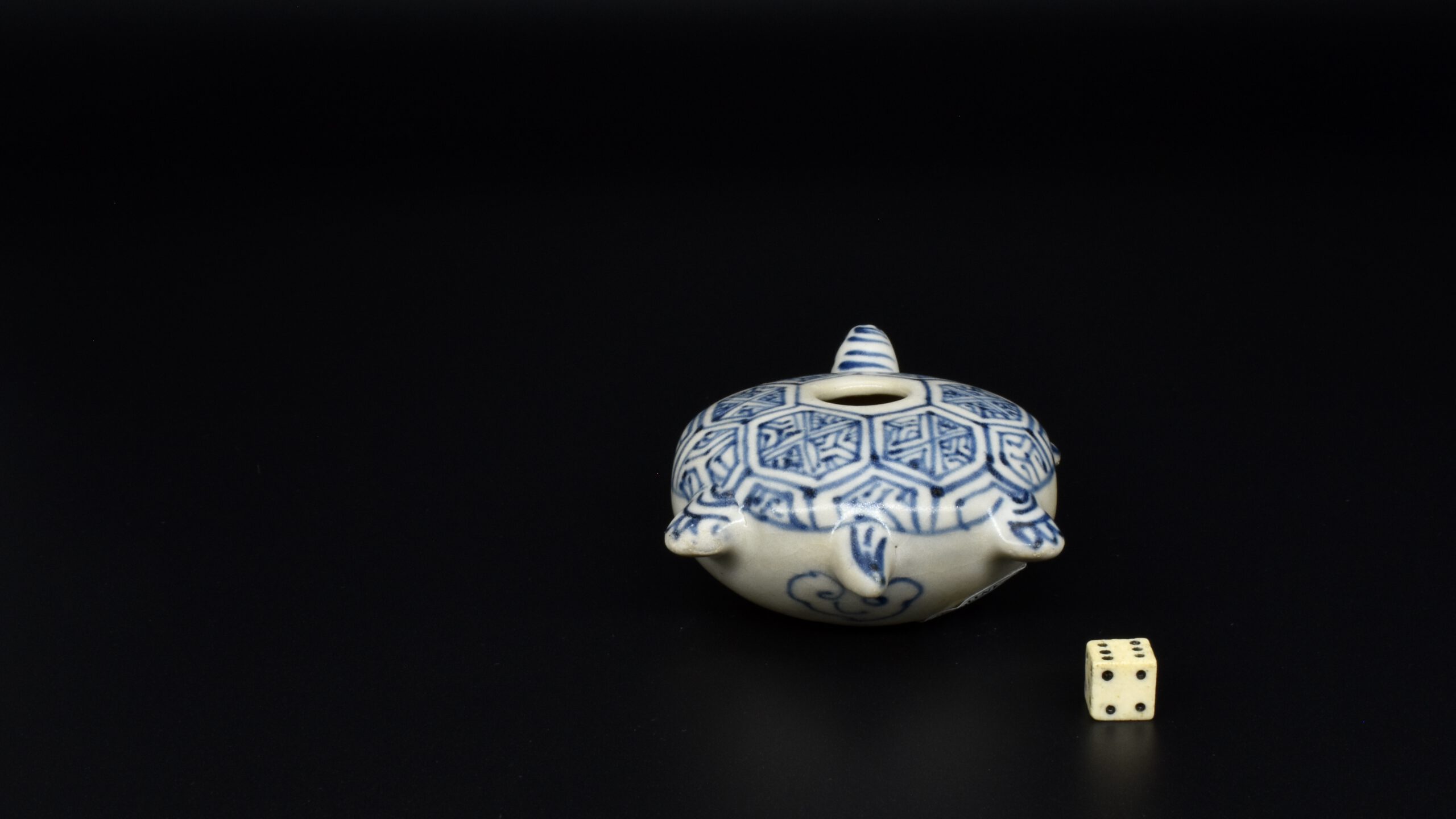
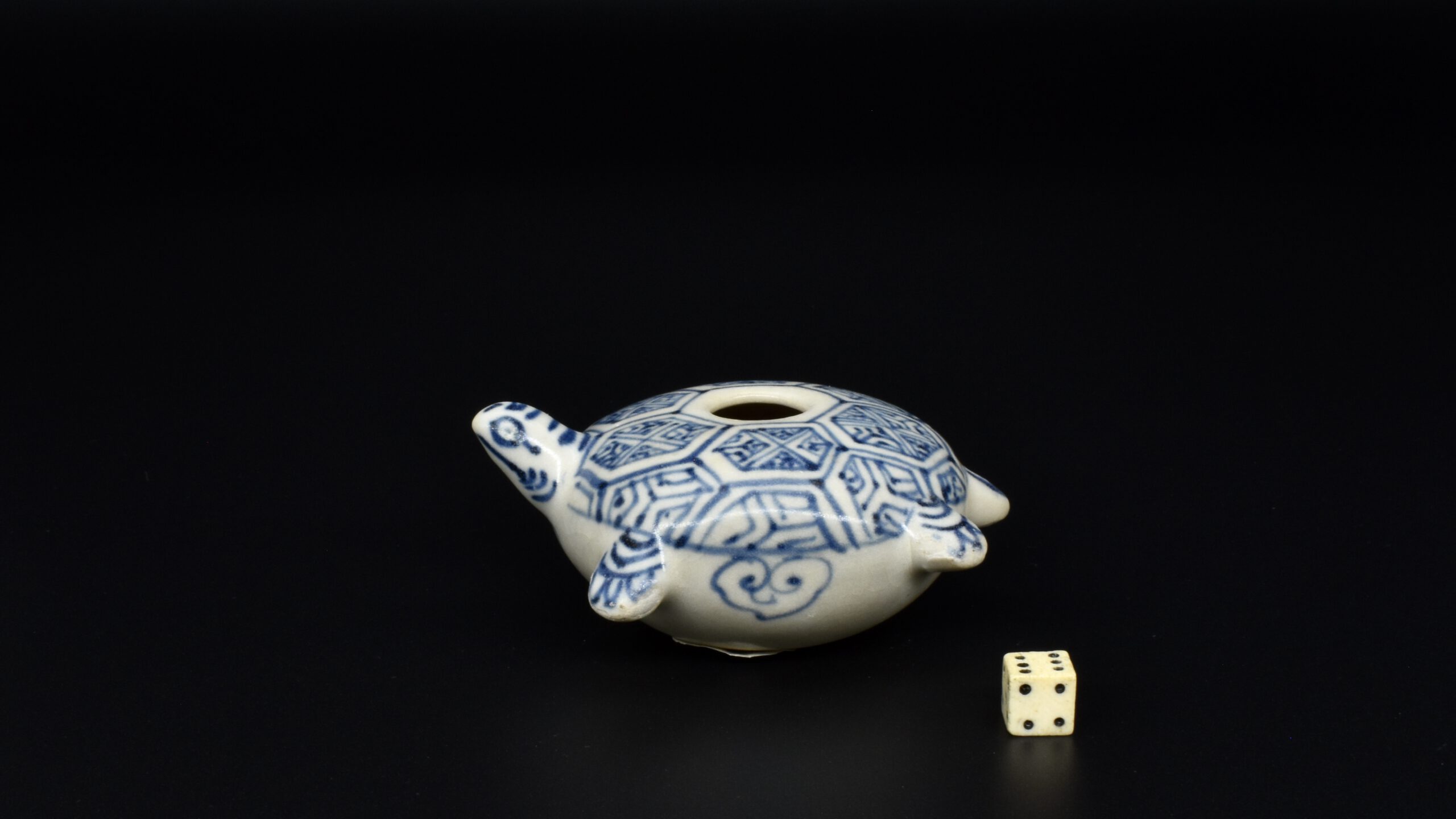
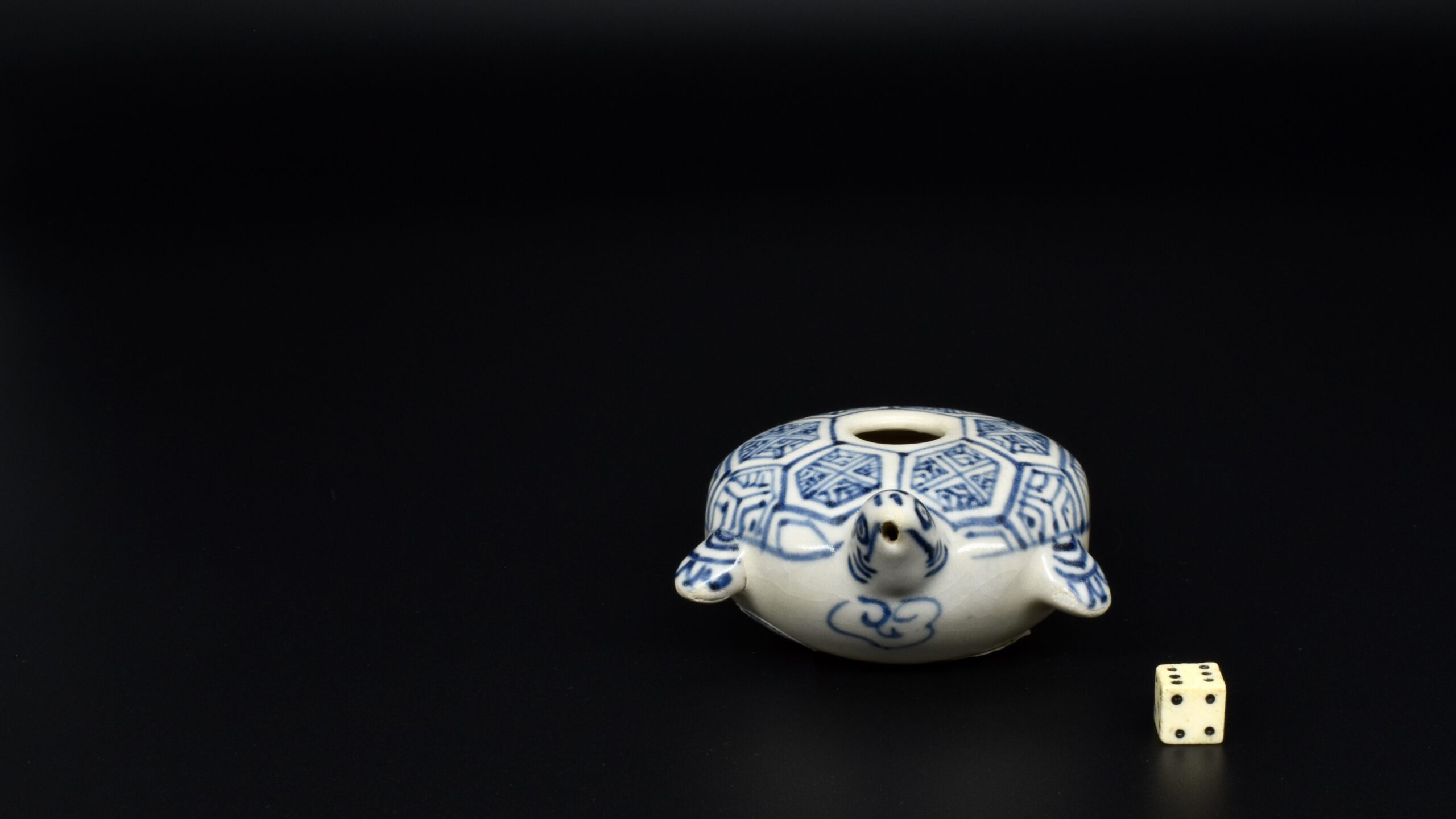
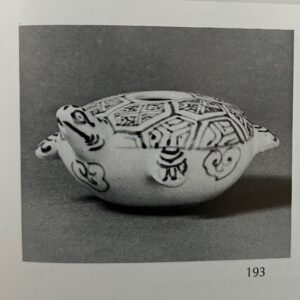
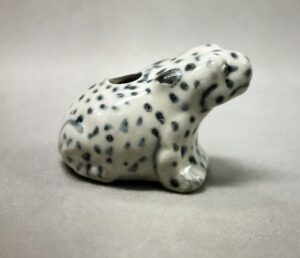
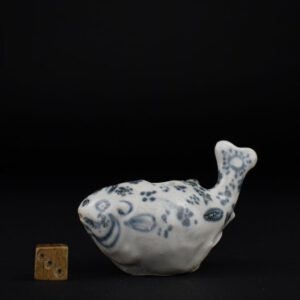
A Rare 15th Century Vietnamese Turtle Shaped Pottery Water Dropper. From the collection of Robert and Alice Piccus, Robert McPherson Antiques, from the Collection of John Drew (1933 – 2006). This finely potted and well painted water-dropper is of high quality, the neat and confident painting makes good use of the strong bright cobalt blue. There was a wide range of Vietnamese of water droppers made in the second half of the 15th century to the early 16th century. The Hoi An Hoard had a number of novel forms, including what are described as frogs, but I think they are toads (they are painted with spotty skin). See below for a toad water-dropper from the Hoi An Hoard wreck that is part of a small gift I made to the British Museum in 2001. The present example was published in The Oriental Ceramic Society of Hong Kong’s Exhibition Catalogue : South-East Asian and Chinese Trade Pottery: An Exhibition Catalogue (Hardcover) 1st of January 1979. page 188, plate 193. See below for a photograph of the catalogue and the extry for this Vietnamese pottery turtle.
Vietnamese Pottery From the Chu Dou Kilns : Chu Dou Kilns, six kilometres from Hai Dong was the largest centre of ceramic production in medieval Vietnam. The quality of the ceramics ranged from crude everyday vessels to exquisite pieces decorated with great skill. Large quantities were produced, moulds were employed to form dishes and bowls, the rims were then wiped clean of glaze so they could be fired rim to rim without sticking in the kiln. The style of the decoration was very free and appears often to have been painted at speed using a very wet brush. Individual lines of the decoration have a visible starting and finishing point. The exact spot where the artist first touched the surface of the ceramic object with his brush can be identified and then where he removed it. I say “he” but a most important jar in the Topkapi Saray Museum in Istanbul is signed and dated by a female artist. Men, women and many children were all employed in ceramic production in Vietnam.
See Below For More Photographs and Information.
SOLD
- Condition
- In excellent condition, some minor friting to the turtles paddles. Very slight crazing.
- Size
- Length 8.4 cm (3 1/4 inches).
- Provenance
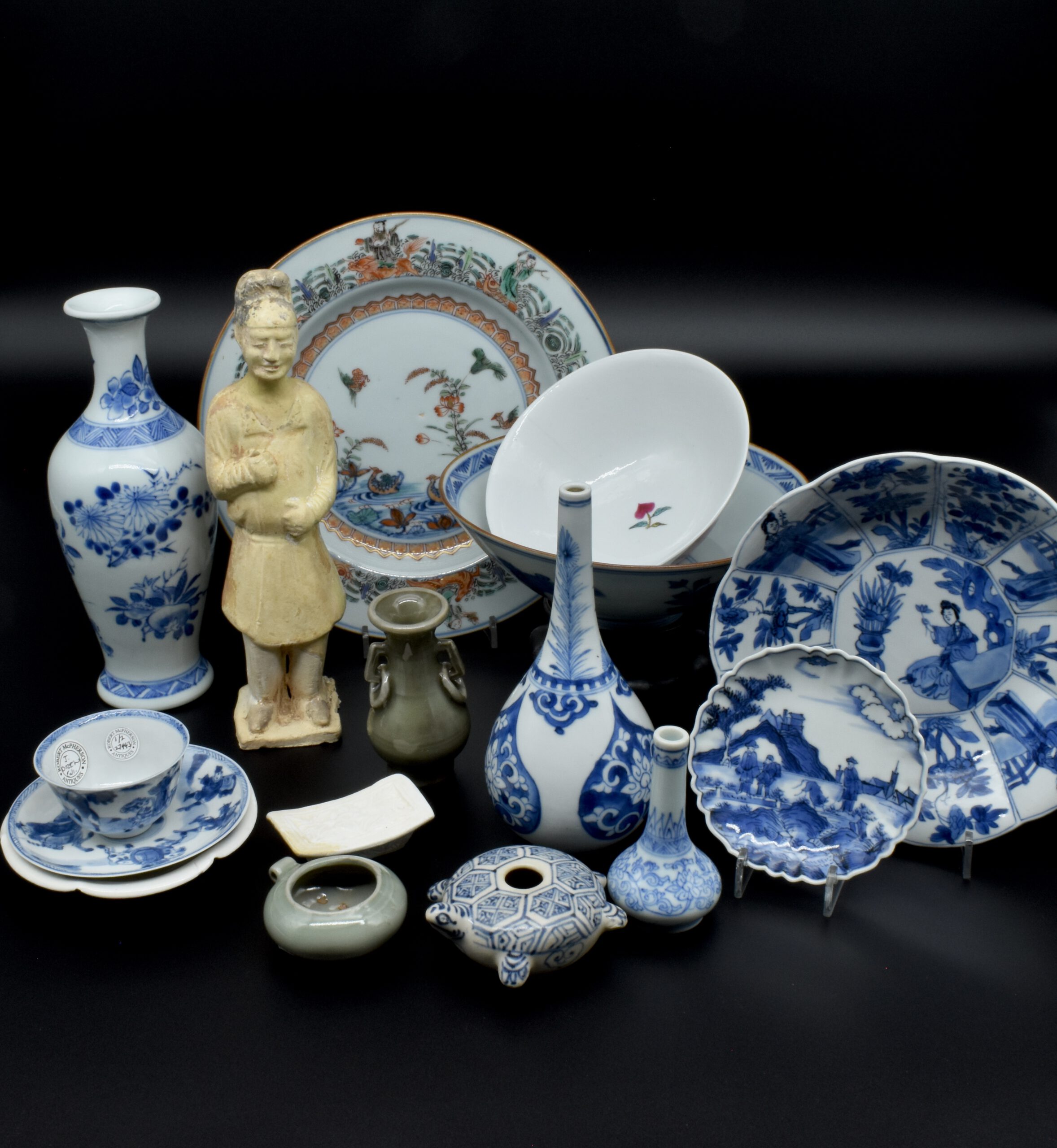
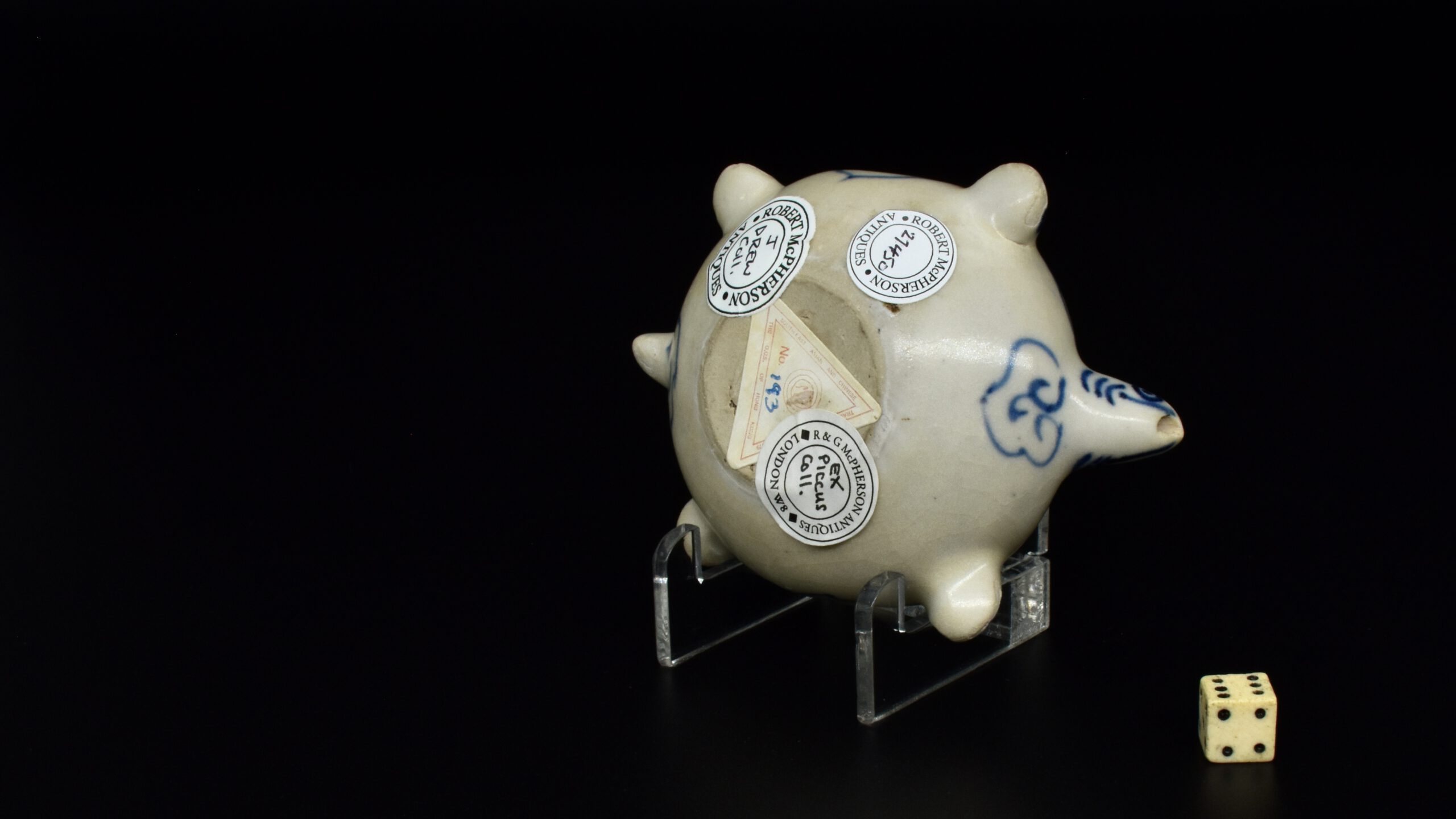
- Published in The Oriental Ceramic Society of Hong Kong's Catalogue : South-East Asian and Chinese Trade Pottery: An Exhibition Catalogue (Hardcover) 1st of January 1979. page 188, plate 193. From the Robert & Alice Piccus Collection ; The Piccus Collection was an important private private collection of Vietnamese ceramics, particularly blue-and-white wares from the 14th-16th centuries, amassed by Robert and Alice Piccus. The collection is known for its quality and scholarly importance, culminating in major auctions at Christie's in 1984 and being featured in key books like "Vietnamese Ceramics: A Separate Tradition". This collection included many rare and important pieces from Vietnamese kilns like Chu Dau Robert McPherson Antiques purchased from Sue Ollemans at the Olympia Fine Art and Antiques Fair in around 2000. The John Drew Collection. The John Drew Collection : John Drew was born in 1933 in Tideswell, Derbyshire, where his father was curate. The family moved to Norfolk whilst he was still a baby and his father became the rector of the parish of Intwood and Keswick. He was educated at Sedbergh School and after National Service in the R.A.F. being taught Russian, he went to Queens College, Oxford to read Greats (Classics). He spent nearly all his working life in various African countries as an archivist, moving to a post at Cape Town University in 1978. He remained in Cape Town after his retirement until his death in 2006. He had a great love of the English countryside (but not the climate) and this is shown in many of the pieces he collected. His taste was varied and ranged from Neolithic right through to the 18th Century. When we sent photograph to his home in Cape Town of pieces we thought he might be interested in, he would write long funny well observed letters back, wanting to add many of the items to his growing collection. Over the years we got to know him better and better, and during the last few years it was very rare for him to not want all the pieces we offered him. We knew his taste, even though his taste was so varied. This was in no small part because he had a very good eye and it was a pleasure finding things that interested him, because they were also very interesting to us. He never got to put his collection on display, something he hoped to do while on retirement in England, so it is with a mixture of pleasure and sadness that we offer these pieces from his collection this June. Each piece has a John Drew collection label, so when the collection is split up there will be some lasting record of the love and hard work he put into his two decades of collecting.
- Stock number
- 27450
Photos
Information
Published in The Oriental Ceramic Society of Hong Kong
Catalogue Description.
193
青花龜形水注
WATER DROPPER IN THE SHAPE OF A TURTLE
十五至十六世紀
Water dropper, with a hole at the back and the spout at the mouth, modelled and painted in a dull medium hue of blue to resemble a turtle; the base flat and the body greyish white.
Length 9 cm, 15th/16th centuries
Note: Another, although much simpler turtle, is illustrated in Willetts, No 65.
A Hoi An Hoard Blue and White Pottery Toad Water Dropper c. 1450-1500.
One of a number of Vietnamese pottery pieces from the Hoi An Hoard that I gave to the British Museum.
Given by Robert McPherson to the British Museum
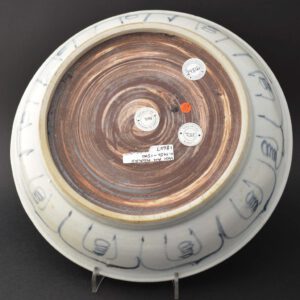
A Hoi An Hoard Blue and White Pottery Dish c. 1450-1500.
Robert McPherson Antiques.
Ex. John Drew Collection.
Sold Archive Number : 26069.
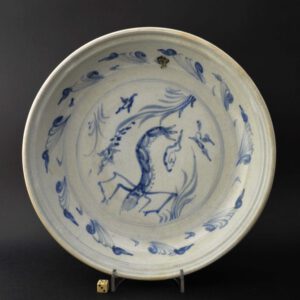
The Hoi An Hoard, as has been the case with several other wrecks, was not found by archaeologists nor even by historians, but by fishermen, though happily not excavated by them. It became in fact the only commercial underwater site to have been excavated in a correct archaeological manner. It is one of the earliest cargoes (dated c. 1450-1500) to have come on to the market and to my mind is the most interesting and important of them all. Moreover, it is the only large Vietnamese cargo to have been discovered. A partnership was formed, to take charge of this landmark excavation, between the Vietnamese Government and M.A.R.E., the Maritime Archaeological Research Unit of the University of Oxford, under the Directorship of Mensun Bound, Triton Senior Research Fellow, Saint Peter’s College, Oxford.
Vietnamese ceramics were not treated with the importance they deserved until very recently. Several excellent new books have now been published on the subject and an exhibition of Vietnamese Blue and White has been held at the British Museum, where objects from the Hoi An Hoard featured among the exhibits. Together with the recent excavation of the kiln sites, this cargo underlines the importance and individuality of Vietnamese ceramics. I believe that the cargo in fact contains more Vietnamese ceramics of the period than exist worldwide, taking into account not only all the museums but also all the private collections. The Hoard will be a source of research for years to come.
A Hoi An Hoard Blue and White Pottery Fish Water Dropper c. 1450-1500.
Robert McPherson Antiques.
Ex. John Drew Collection.
Sold Archive Number : 26069.
Robert McPherson Antiques :
Shipwreck Ceramics Exhibition.