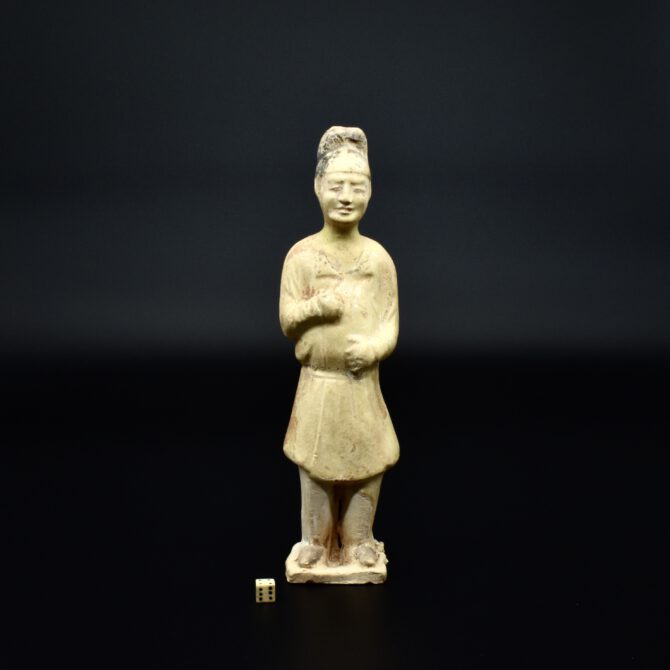
A Tang Straw Glazed Pottery Model of an Attendant.
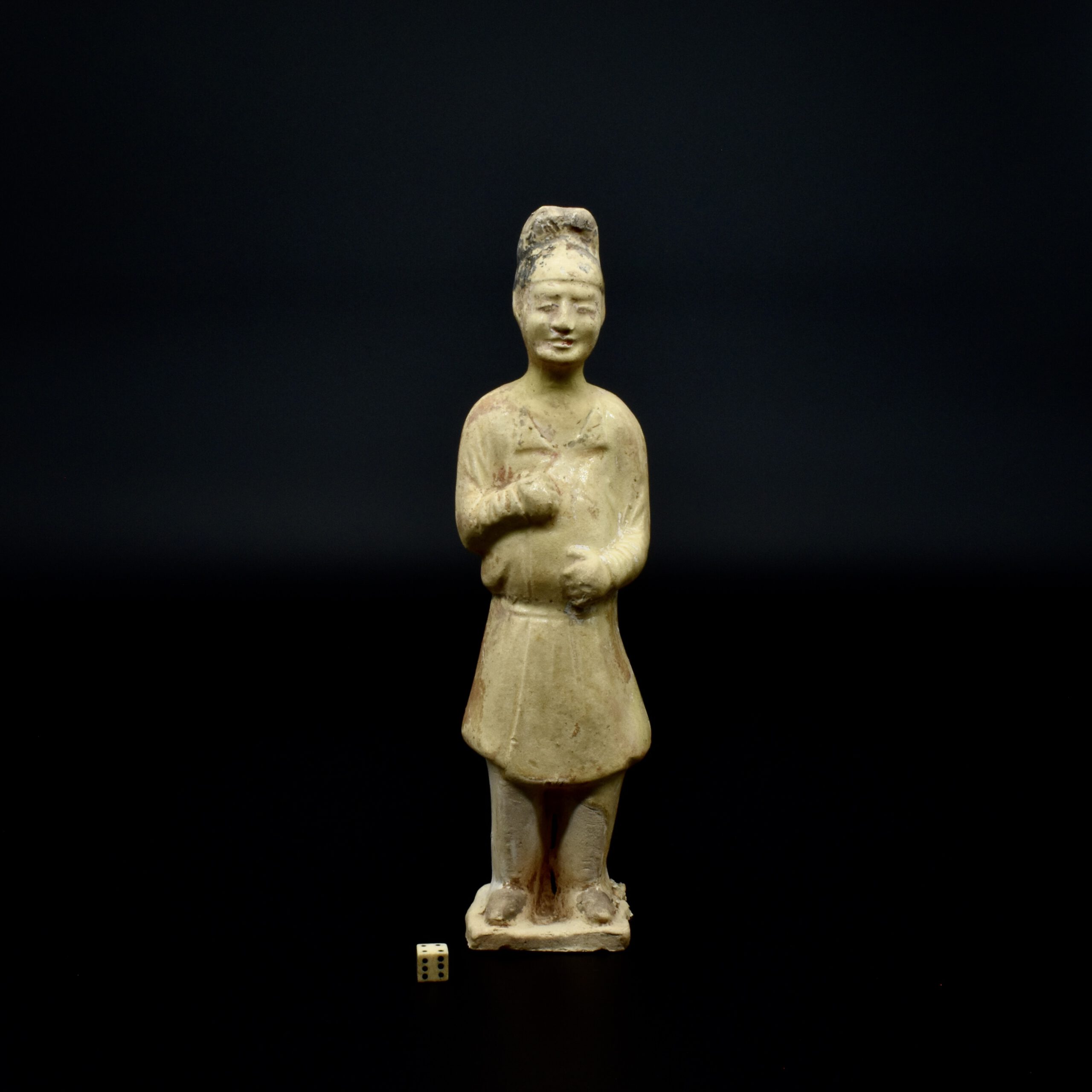
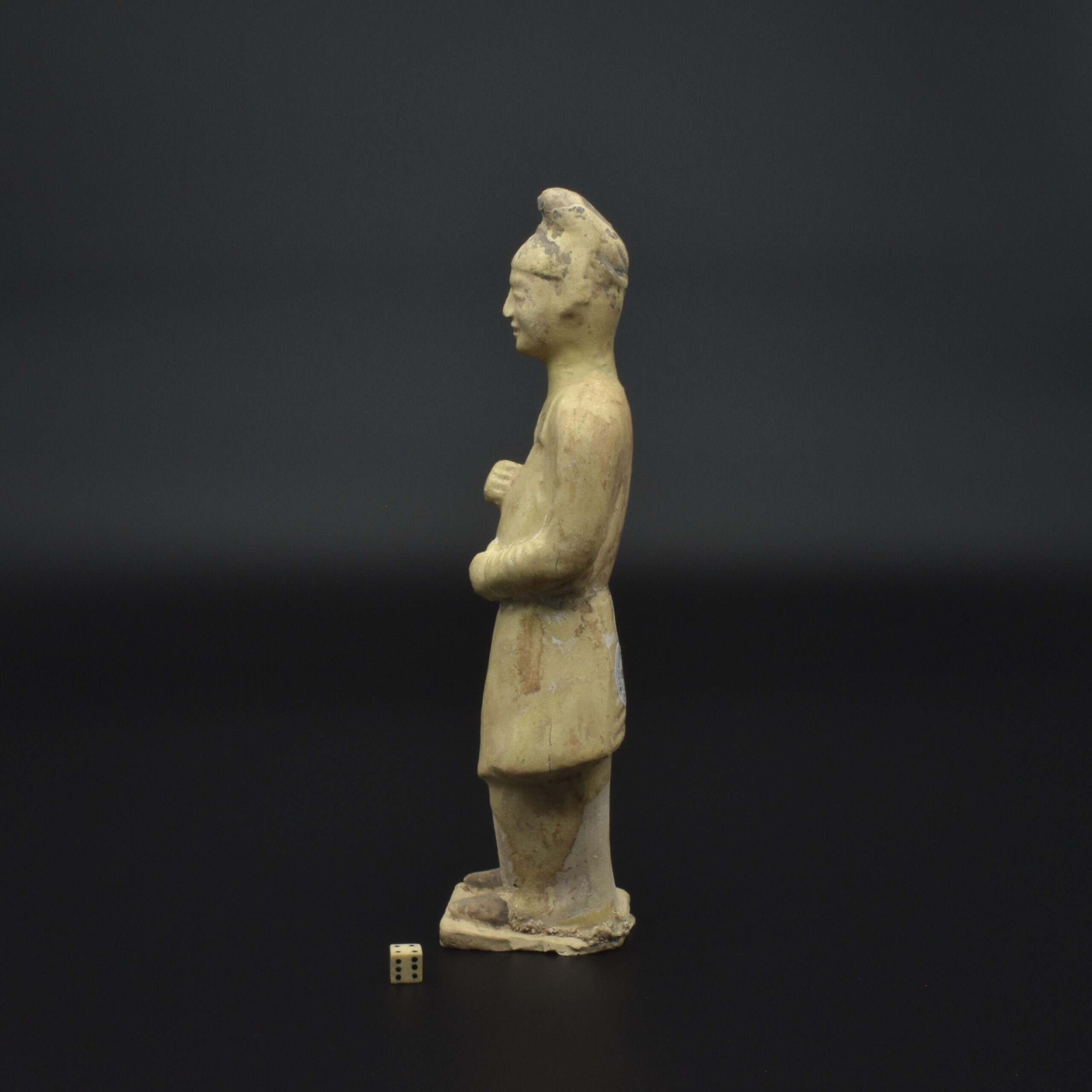
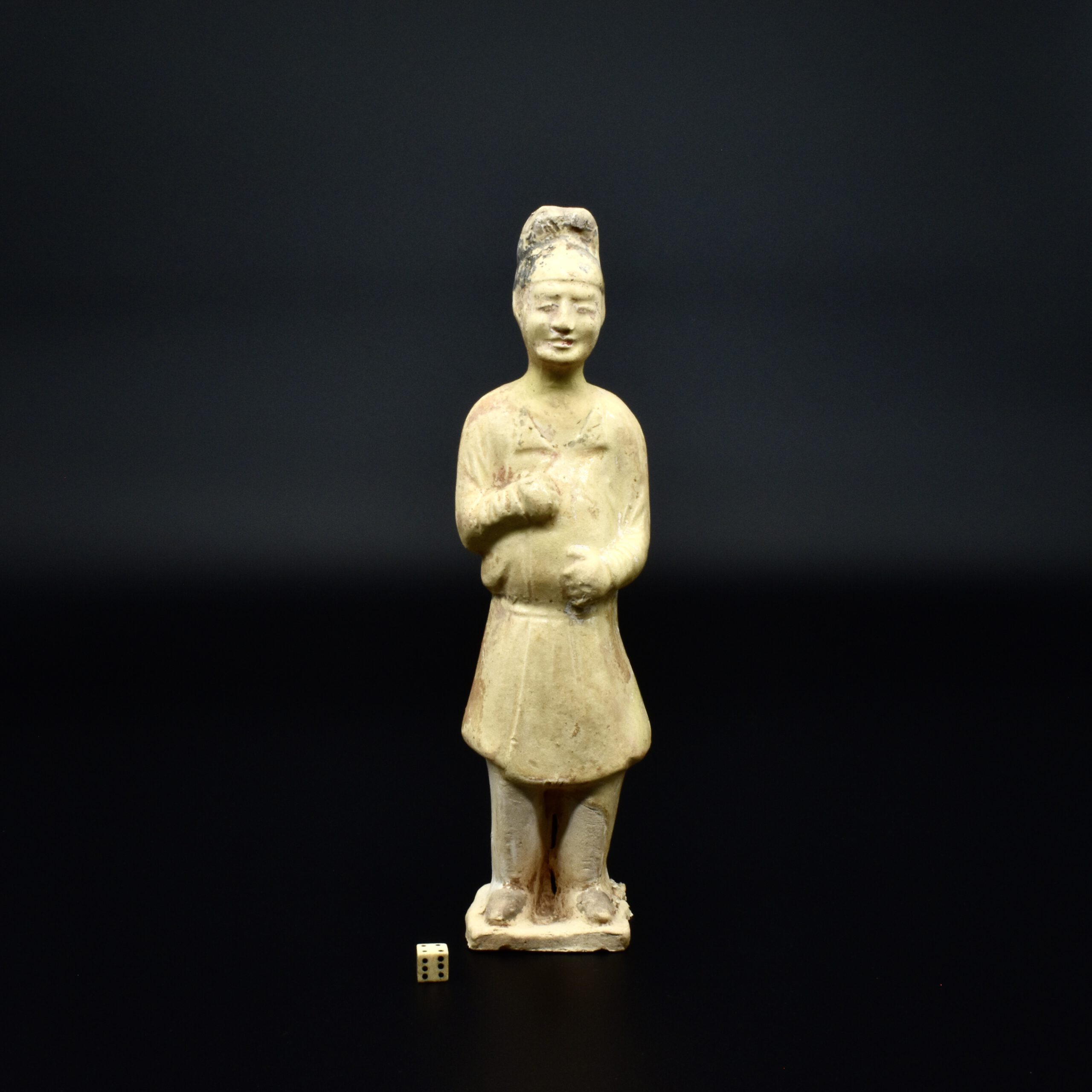
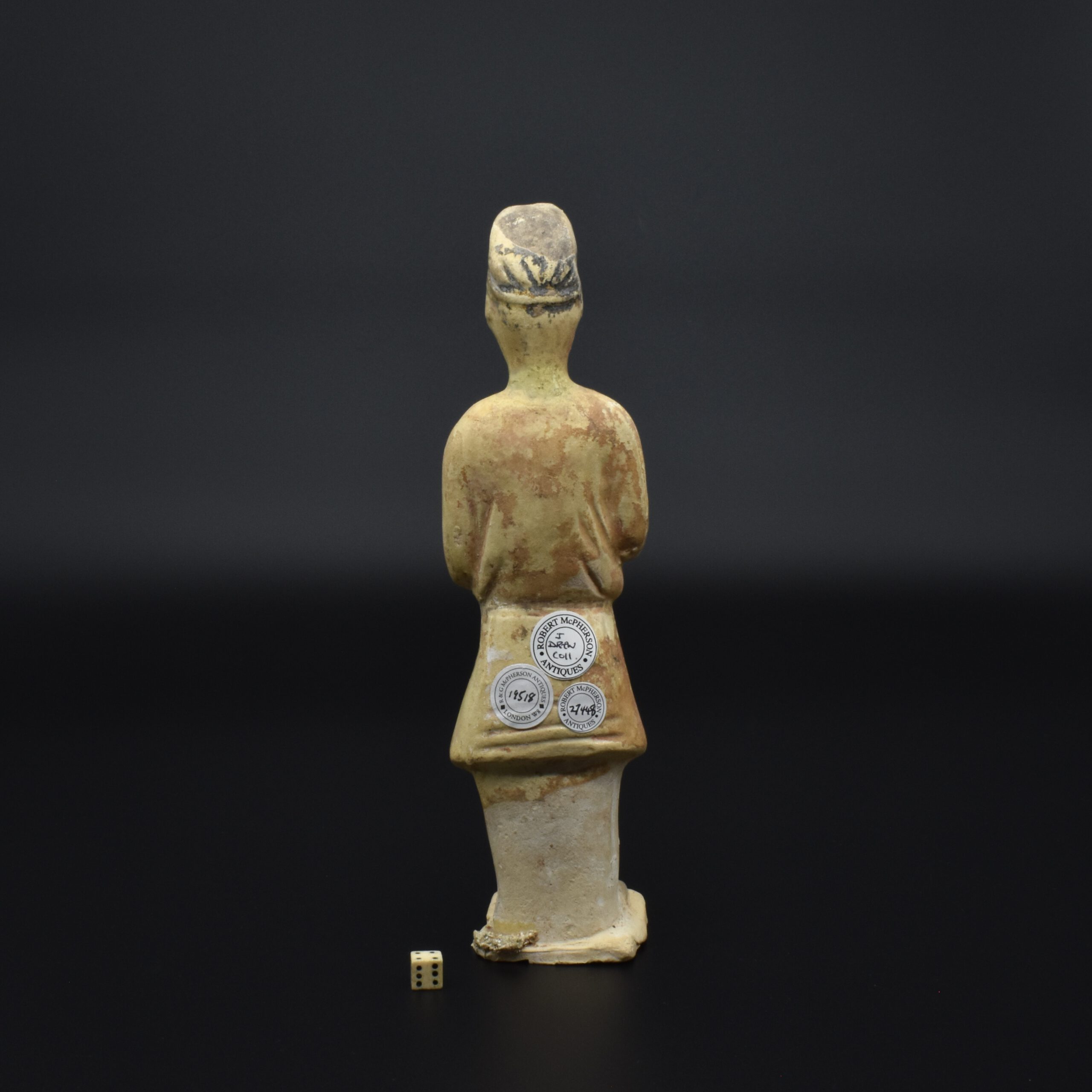
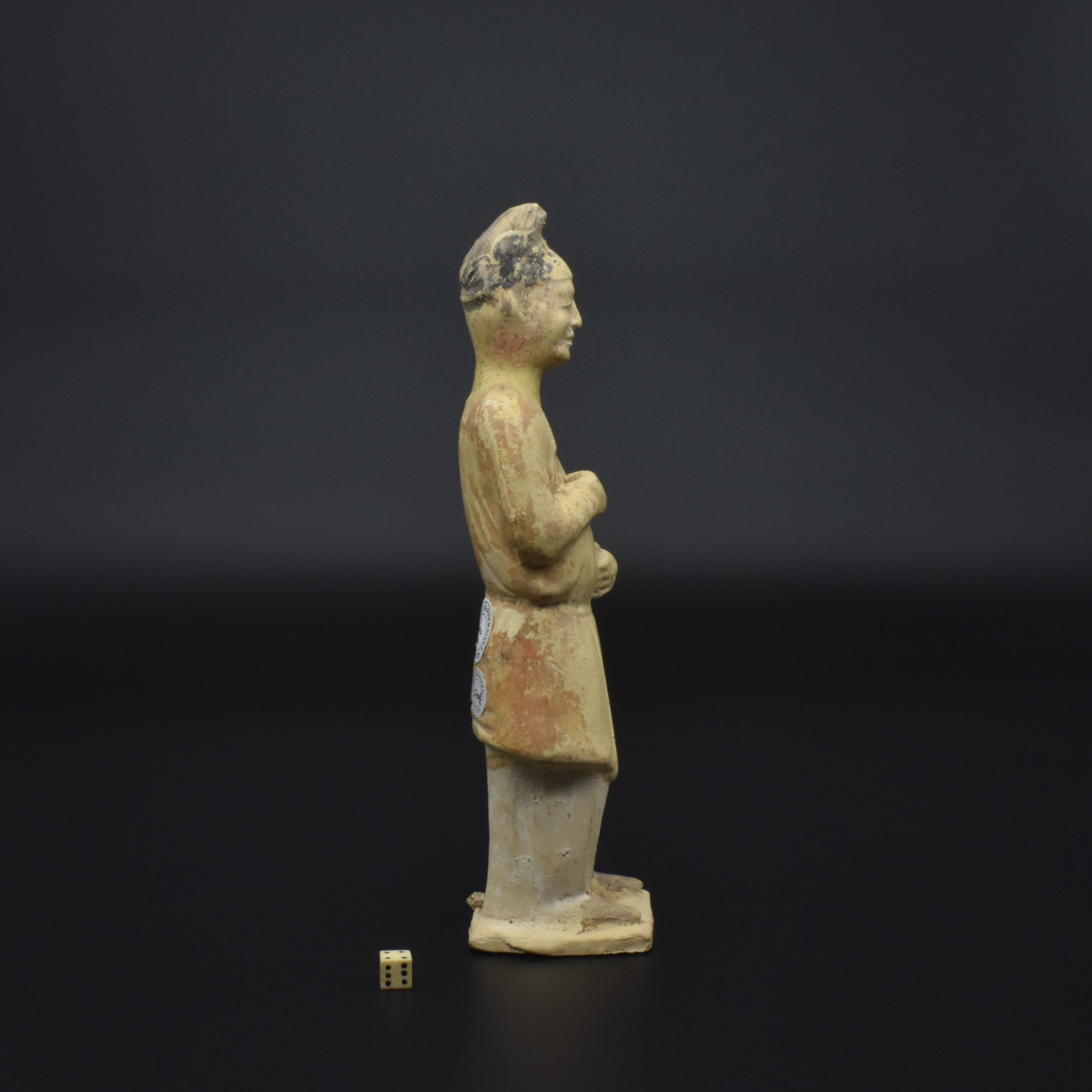
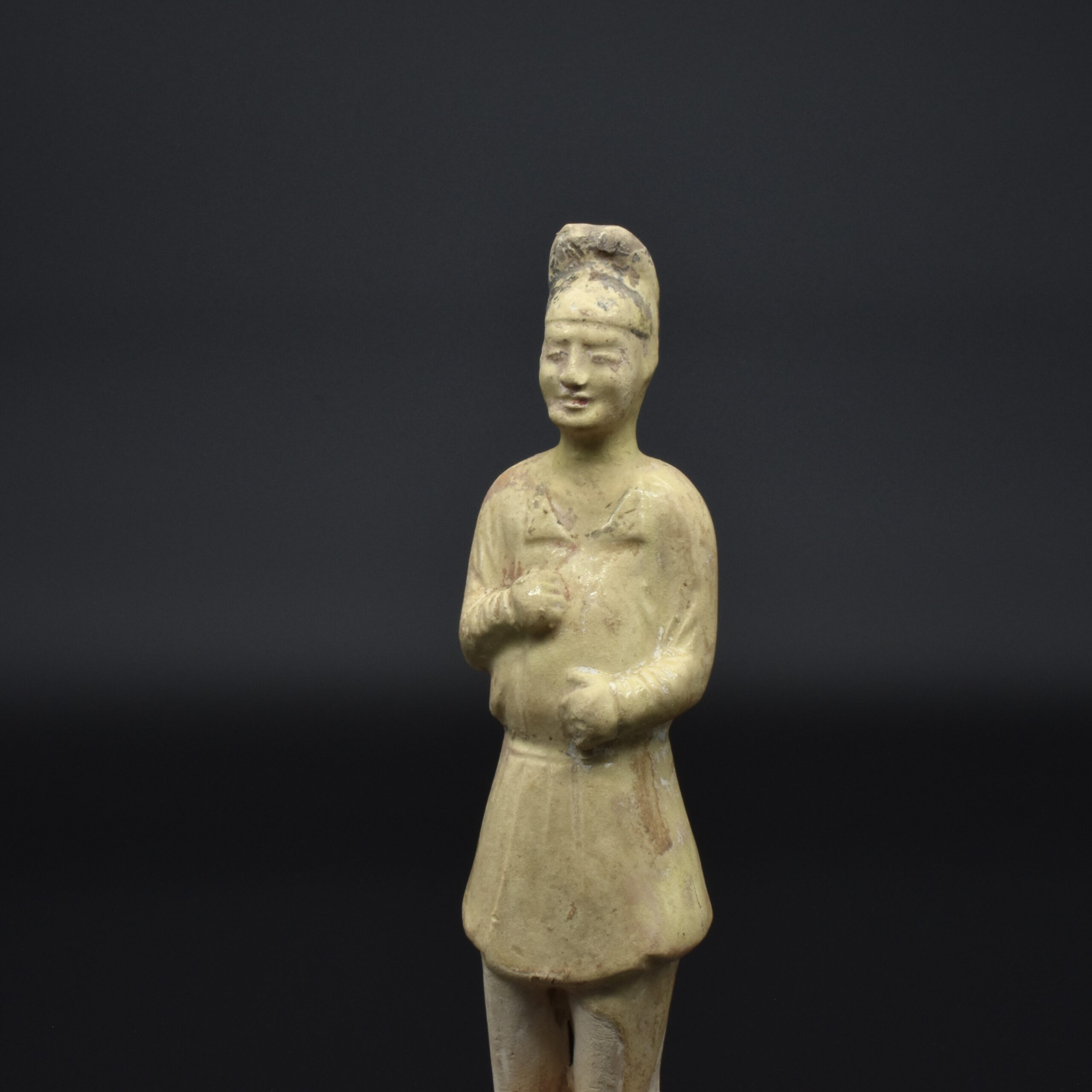
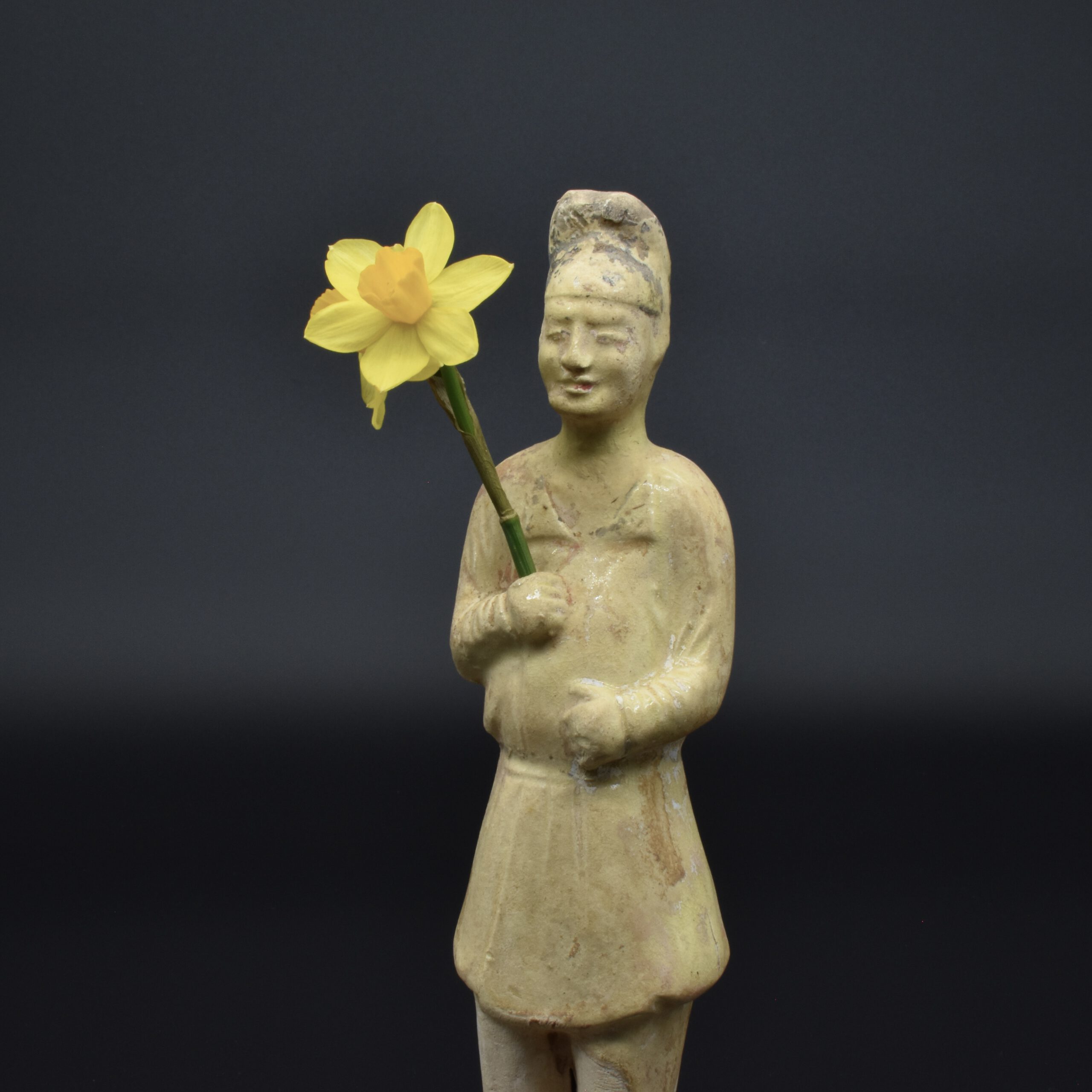
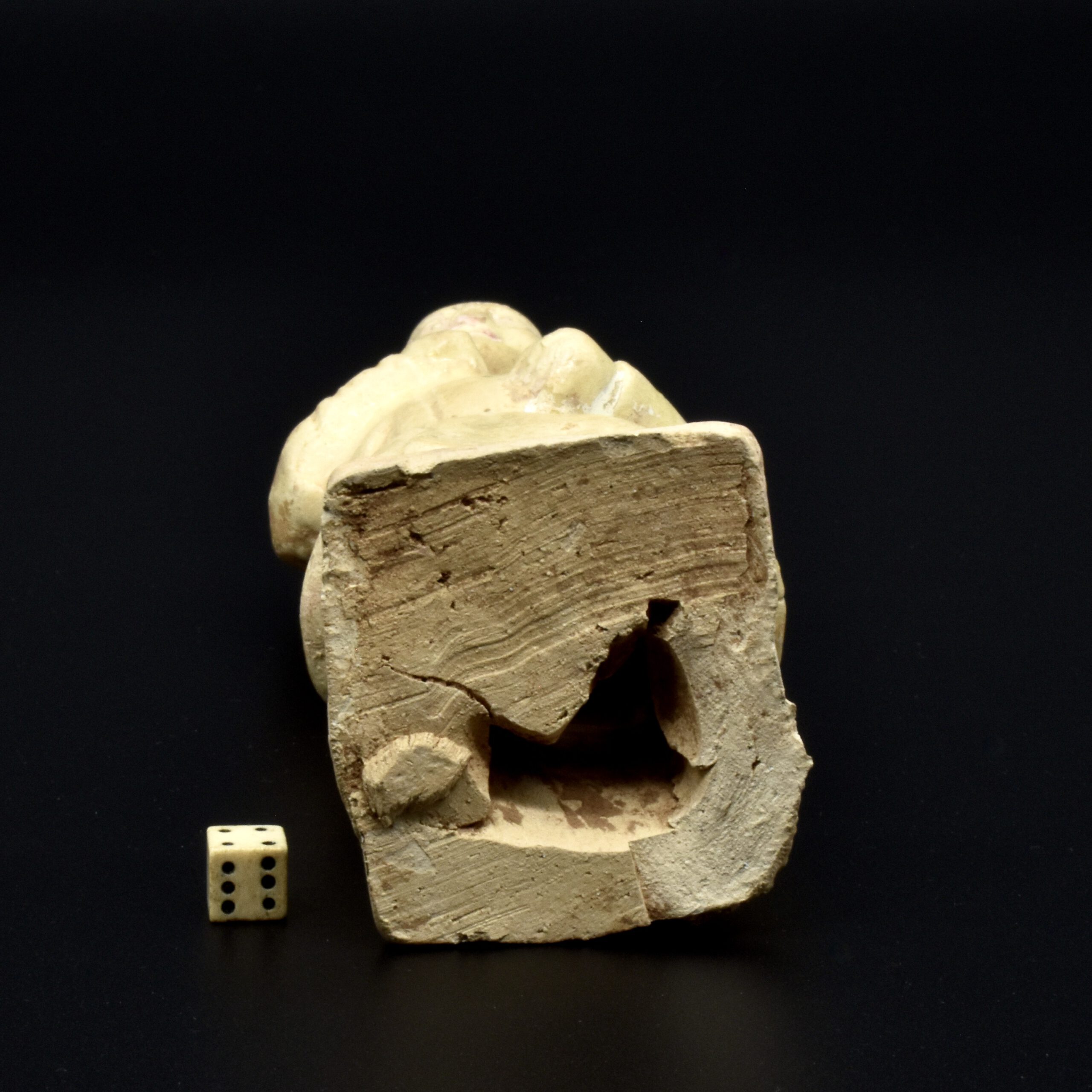
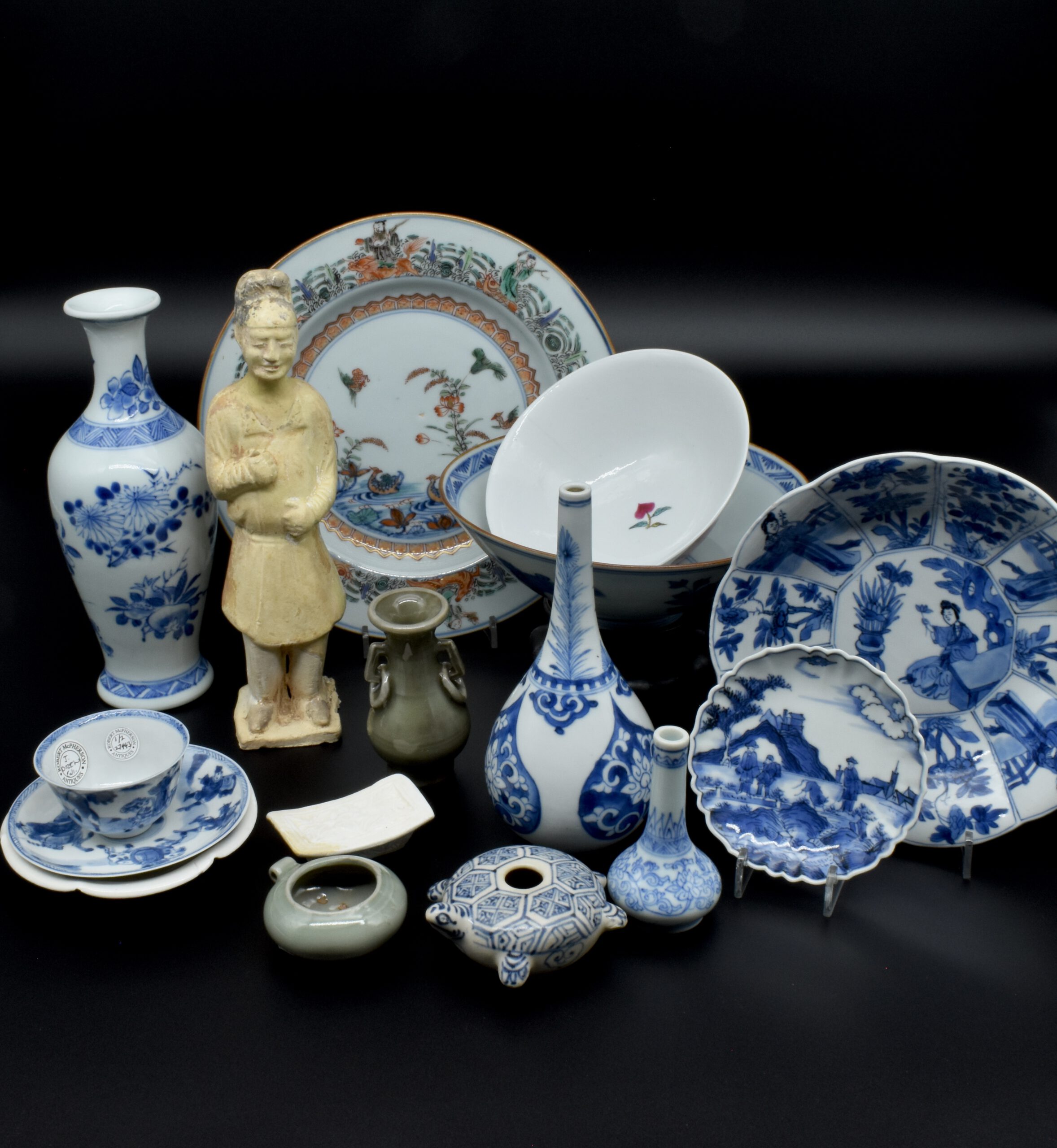
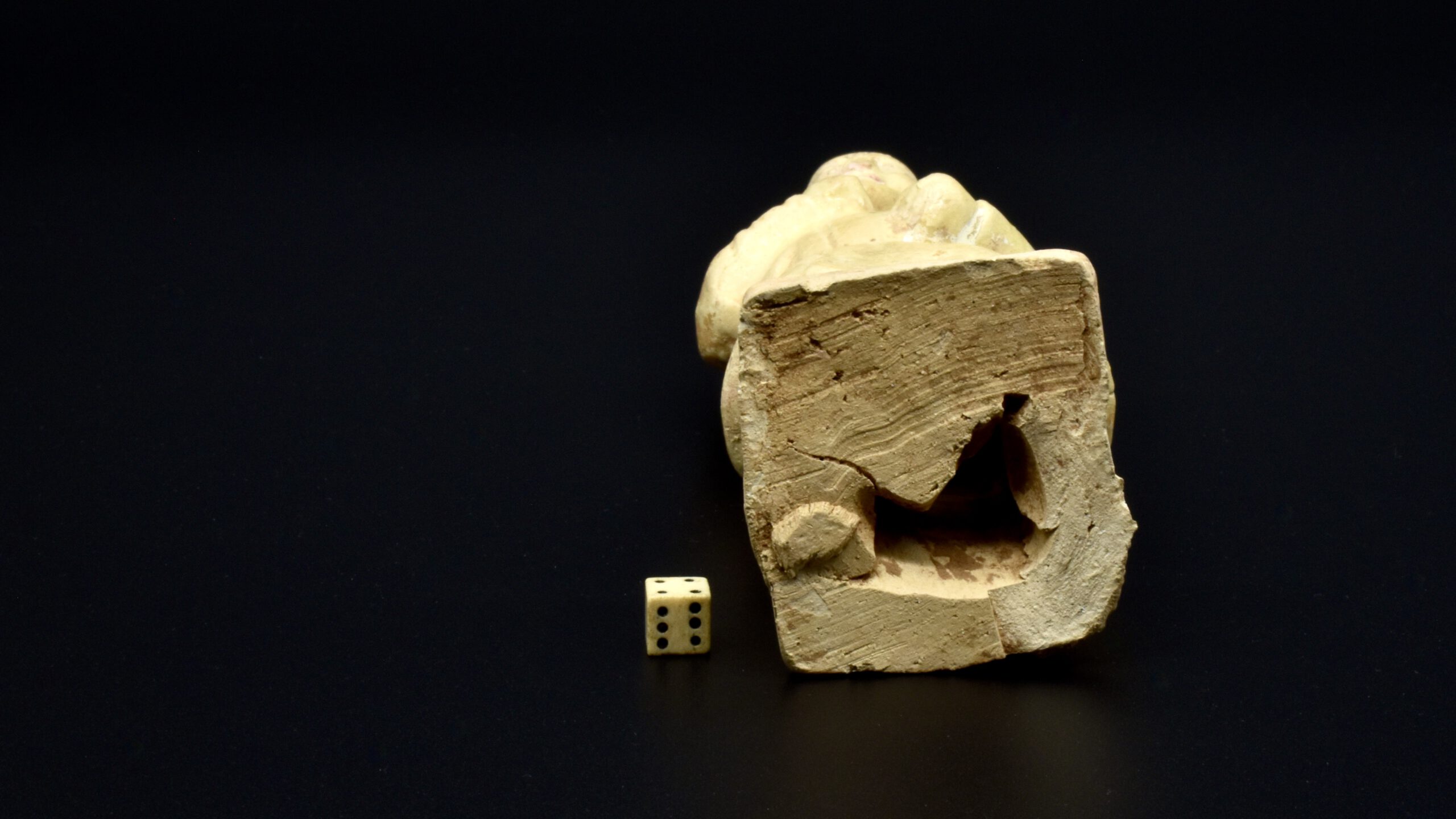
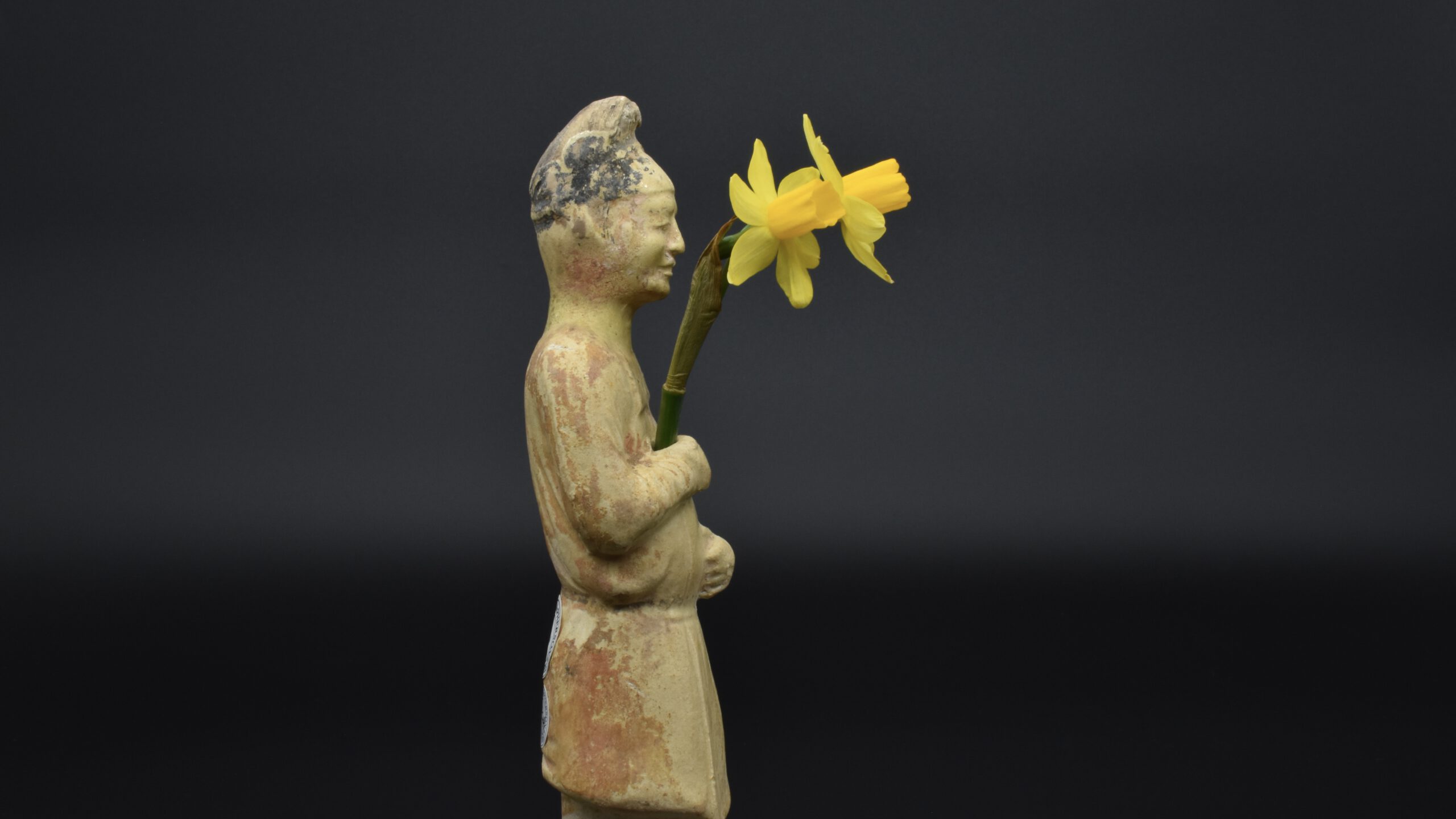
A Straw-glazed Tang Pottery Figure of a Male Attendant, Tang Dynasty 618-907, probably from a Kiln in Henan or Shaanxi Province. From the Collection of John Drew (1933 – 2006). This Tang pottery figure depicts an official attendant, it was made from a two piece mould, with the based being applied separately. If you look carefully, there are feint signs of moulding marks that were cleaned up prior to glazing, these run from the top of the head on either side of the figure, so its less visible when viewed from the front. Many Tang attendants are depicted with a purpose, this figure would have been carrying something, perhaps a long pike type weapon or a banner. A hole has been pushed into the top of his right hand, if you look from above, you can see light as the square base is ‘open’. There would have been extensive painting, in what is referred to as cold painting. It is in essence this is a water-colour, and would have been used over most of the surface area of the figure. This type of painting is vulnerable to humidity and abrasion, especially when painted on the shiny glazed surface. The head has retained quite allot of colour, part was left unglazed, the shoes have most of the colour. PLEASE NOTE this is 27448 on the additional photographs.
See Below For More Photographs and Information.
SOLD
- Condition
- The neck has been broken through and rather crudely repaired. There is a section of the flat base that is missing, it was probably damaged because it got stuck to its support while being fired.
- Size
- Height 22.4 cm (4 3/4 inches).
- Provenance
- R&G McPherson Antiques. The John Drew Collection. The John Drew Collection : John Drew was born in 1933 in Tideswell, Derbyshire, where his father was curate. The family moved to Norfolk whilst he was still a baby and his father became the rector of the parish of Intwood and Keswick. He was educated at Sedbergh School and after National Service in the R.A.F. being taught Russian, he went to Queens College, Oxford to read Greats (Classics). He spent nearly all his working life in various African countries as an archivist, moving to a post at Cape Town University in 1978. He remained in Cape Town after his retirement until his death in 2006. He had a great love of the English countryside (but not the climate) and this is shown in many of the pieces he collected. His taste was varied and ranged from Neolithic right through to the 18th Century. When we sent photograph to his home in Cape Town of pieces we thought he might be interested in, he would write long funny well observed letters back, wanting to add many of the items to his growing collection. Over the years we got to know him better and better, and during the last few years it was very rare for him to not want all the pieces we offered him. We knew his taste, even though his taste was so varied. This was in no small part because he had a very good eye and it was a pleasure finding things that interested him, because they were also very interesting to us. He never got to put his collection on display, something he hoped to do while on retirement in England, so it is with a mixture of pleasure and sadness that we offer these pieces from his collection this June. Each piece has a John Drew collection label, so when the collection is split up there will be some lasting record of the love and hard work he put into his two decades of collecting.
- Stock number
- 27447
Photos

Information
Mingqi Pottery :
This piece is an example of Mingqi, objects made specifically for burial, to be taken with you to the afterlife. The `Terracotta Army` is the most famous example of this type of burial object. Mingqi objects represented people, houses, farms, granaries, livestock and indeed anything important from this world that would give you comfort and status in the next. The `Terracotta Army` were made life size and on a vast scale, reflecting the importance of the first emperor of China but most Mingqi objects were small models, far smaller than the object or indeed person they were meant to represent. Mingqi ceramics were not the only goods to appear in early Chinese tombs, objects that functioned were also buried, some of these had clearly been worn or even damaged, presumably these objects were prized possessions belonging to the deceased that might have been used on a daily basis.
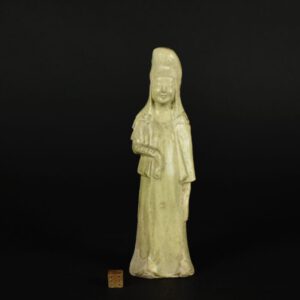
A Sui or Early Tang Pottery Figure of an Attendant, North China, 7th Century.
Robert McPherson Antiques.
Sold Archive Number 25755
Condition
In very good condition, the glaze is finely crazed, minor wear.
Size
Height 20.5 cm (8 inches).