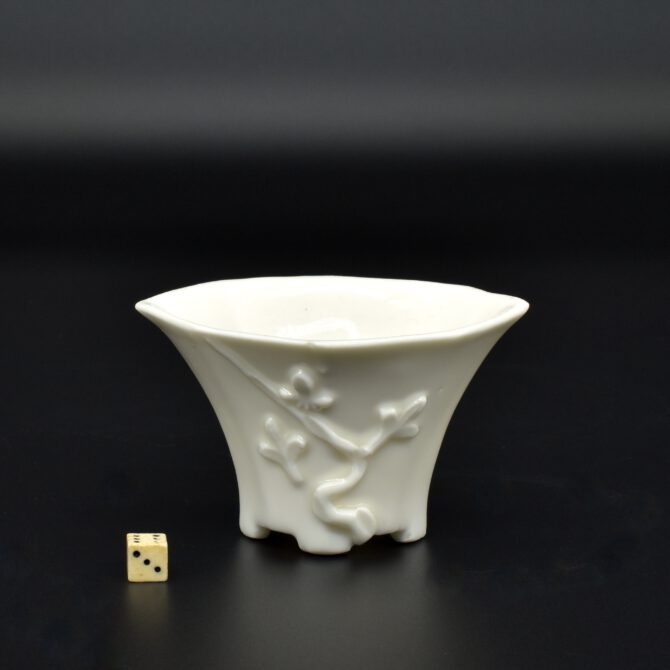
A 17th Century Blanc de Chine Porcelain ‘Libation Cup’.
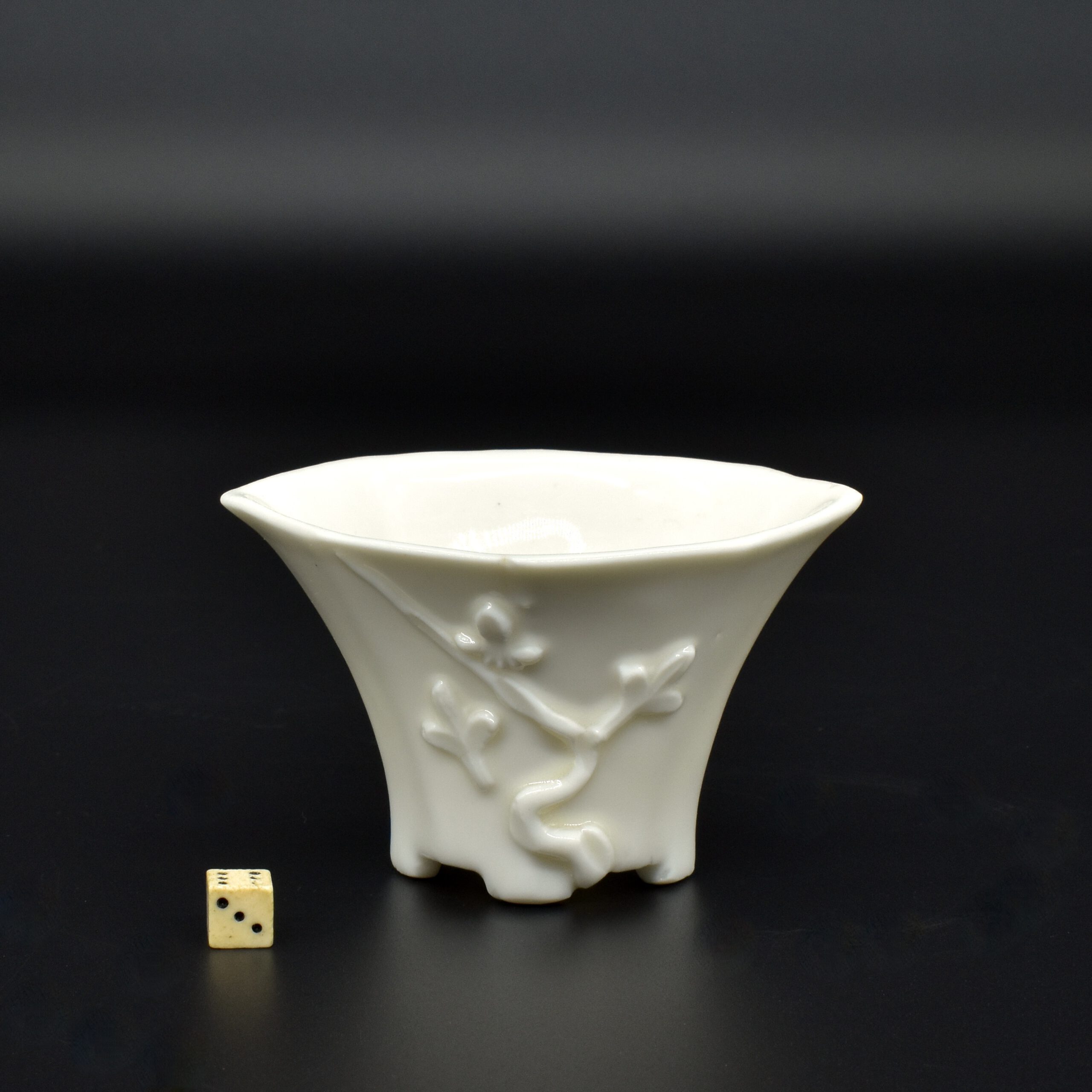
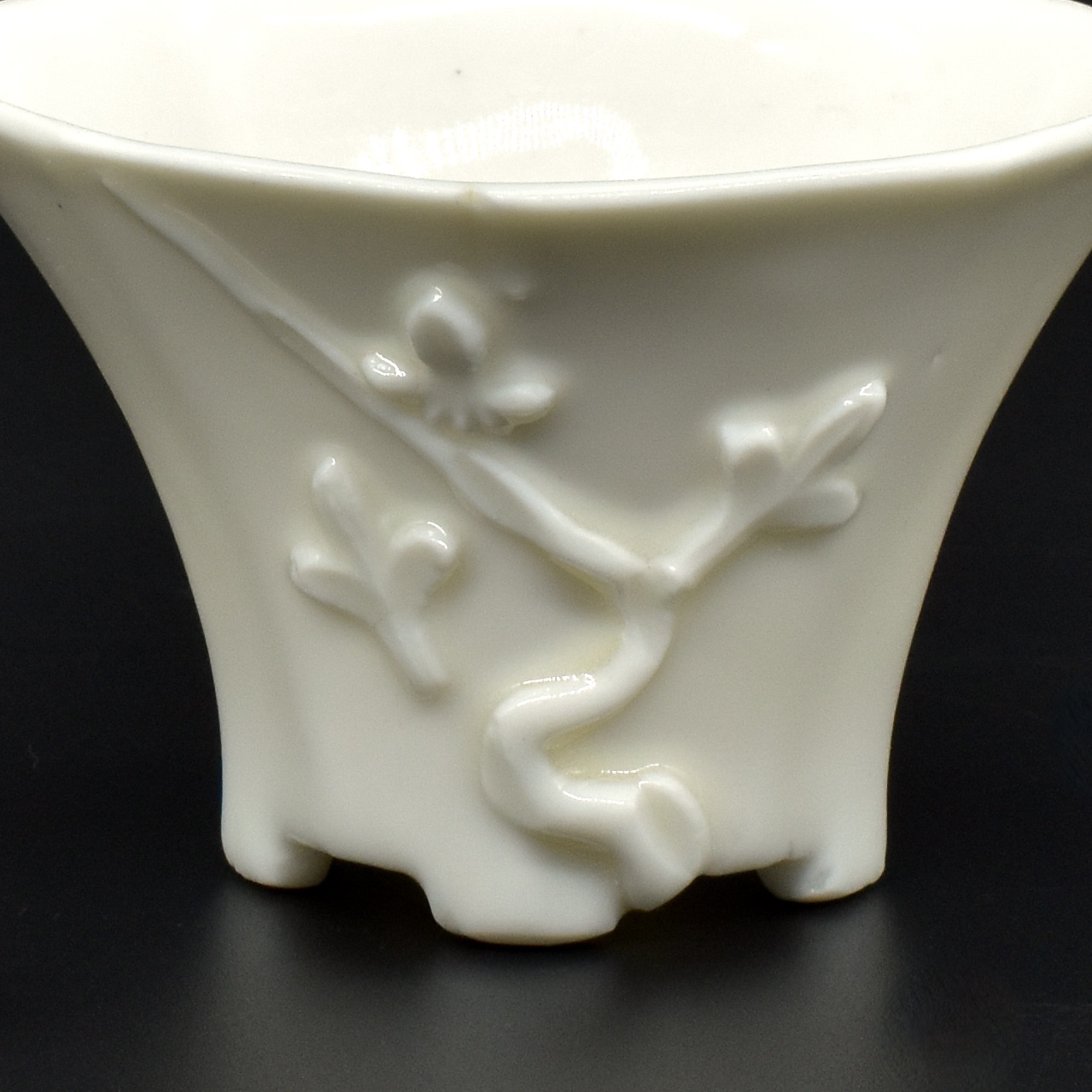
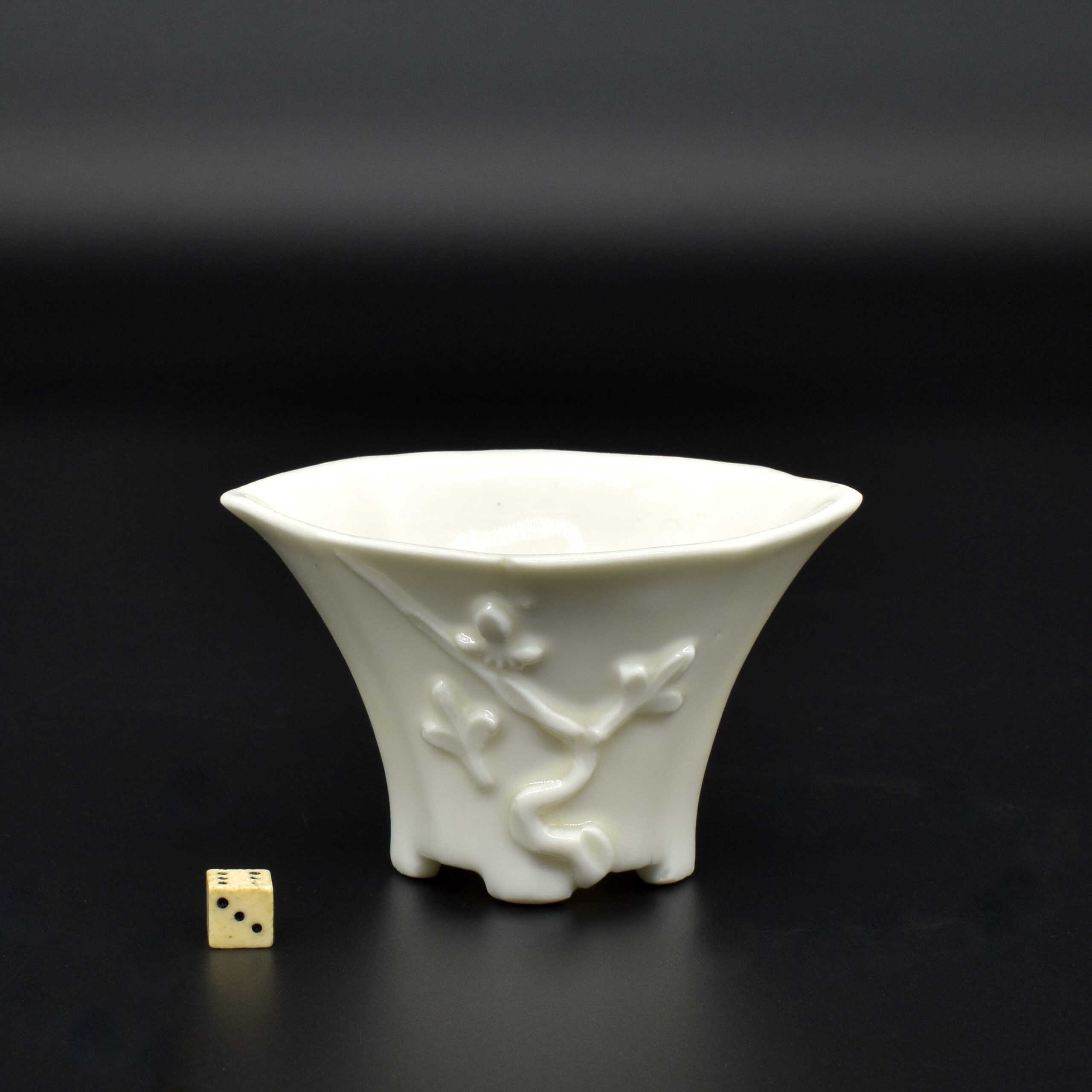
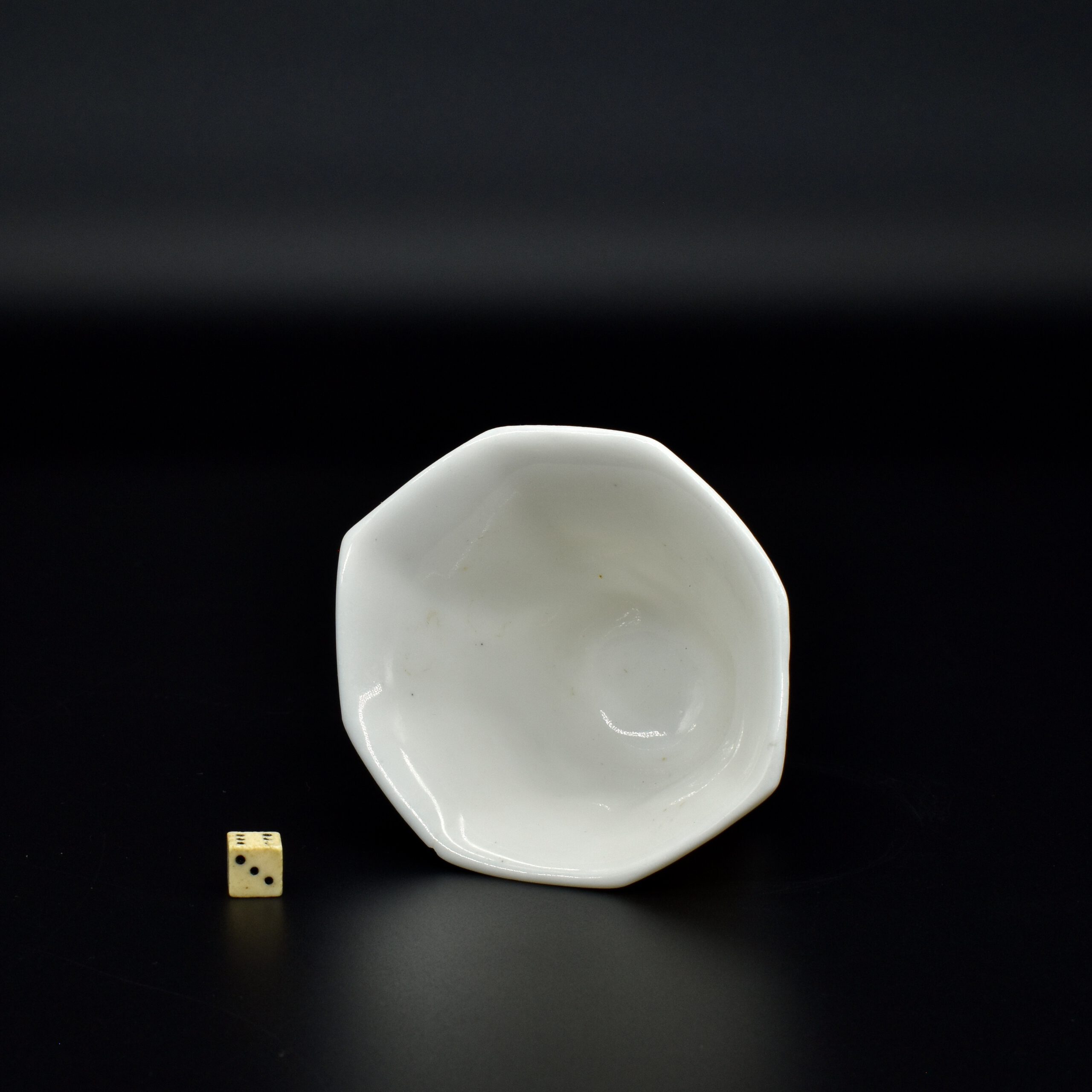
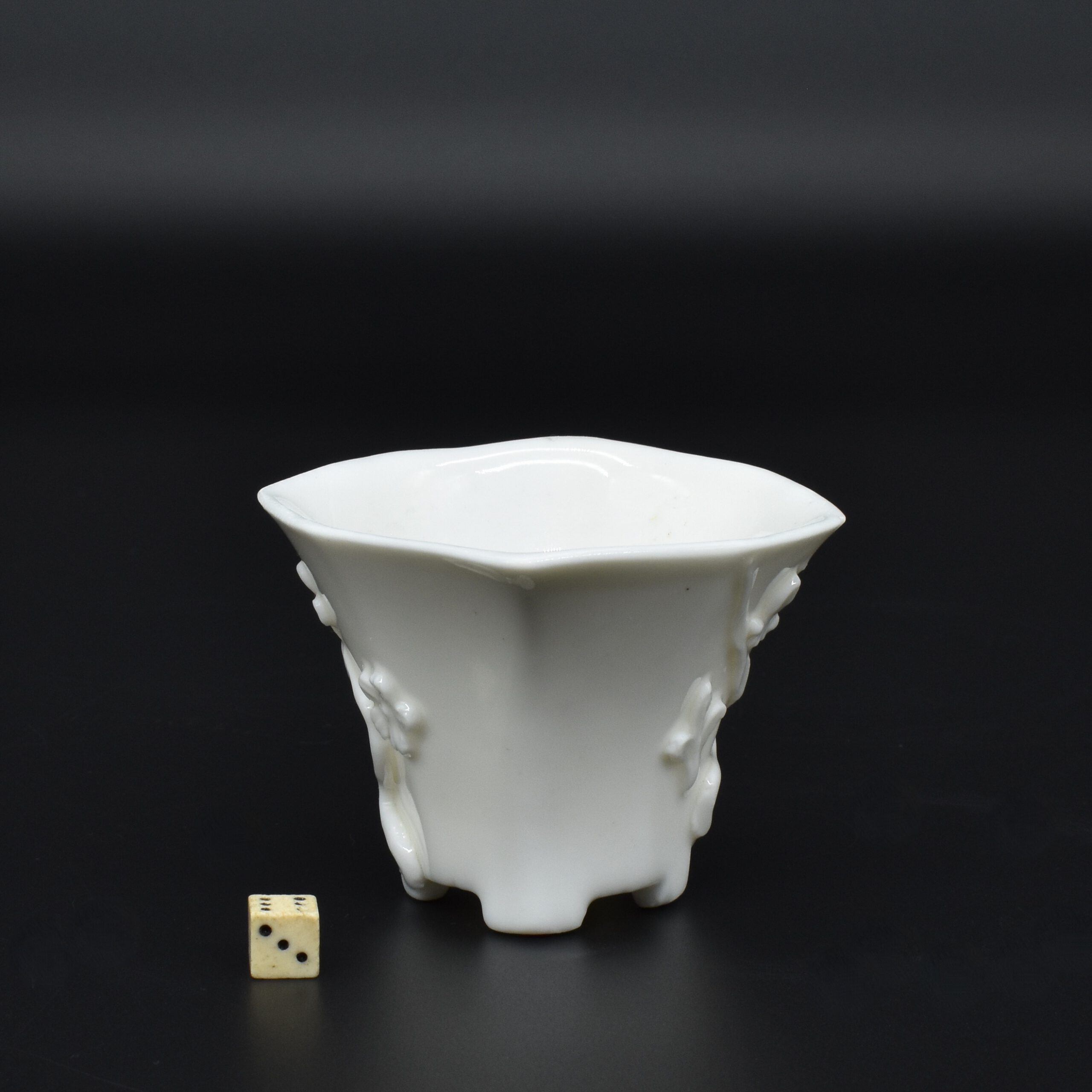
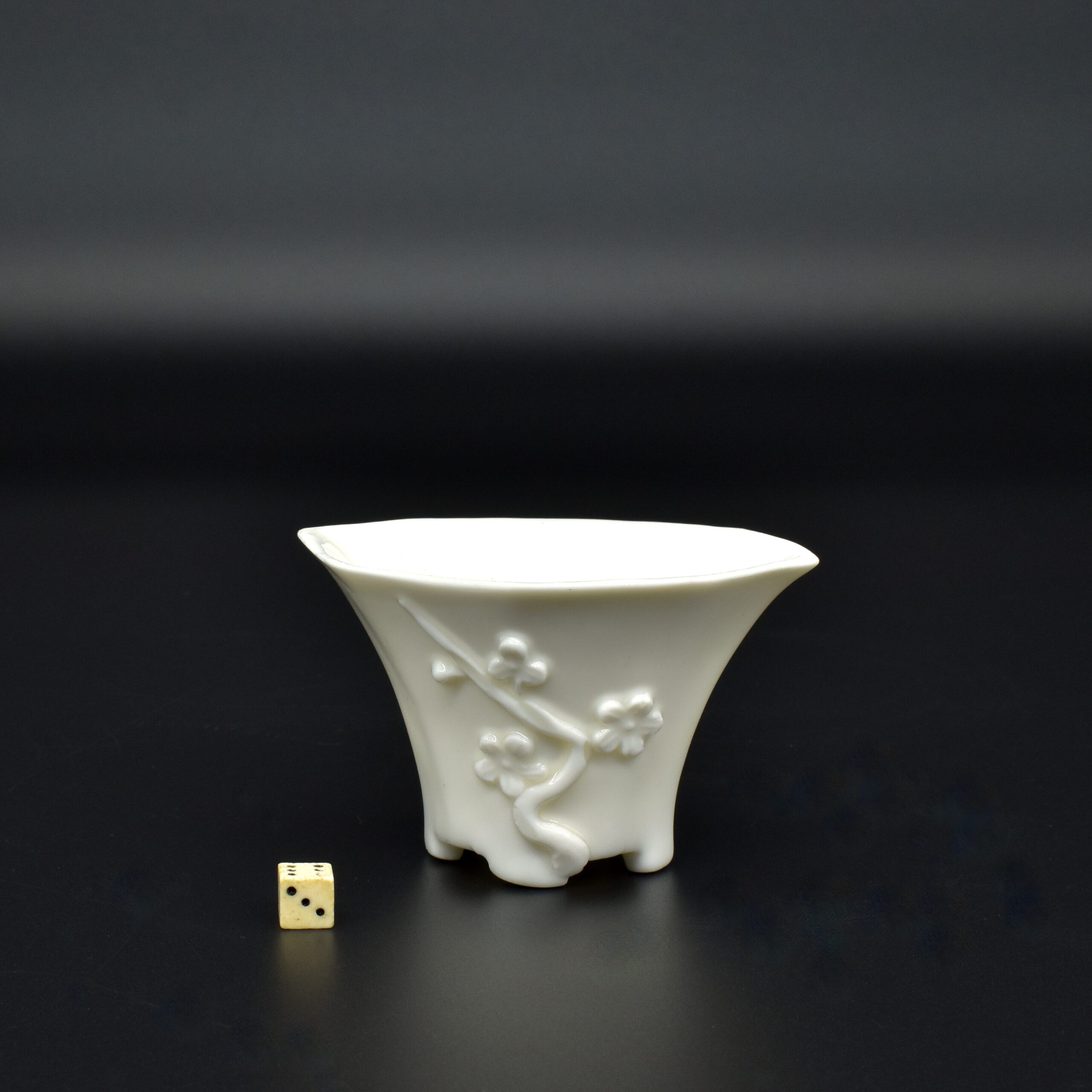
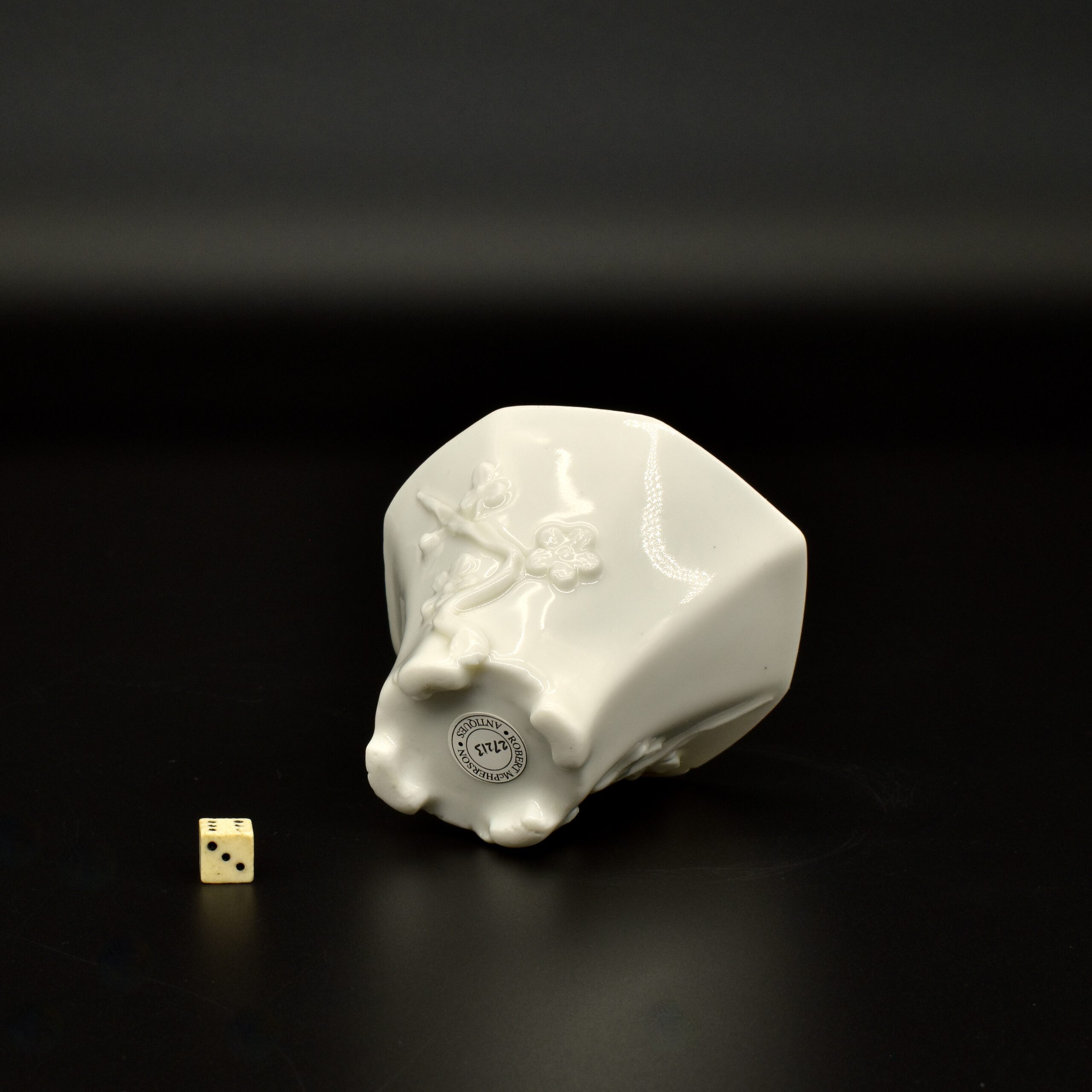
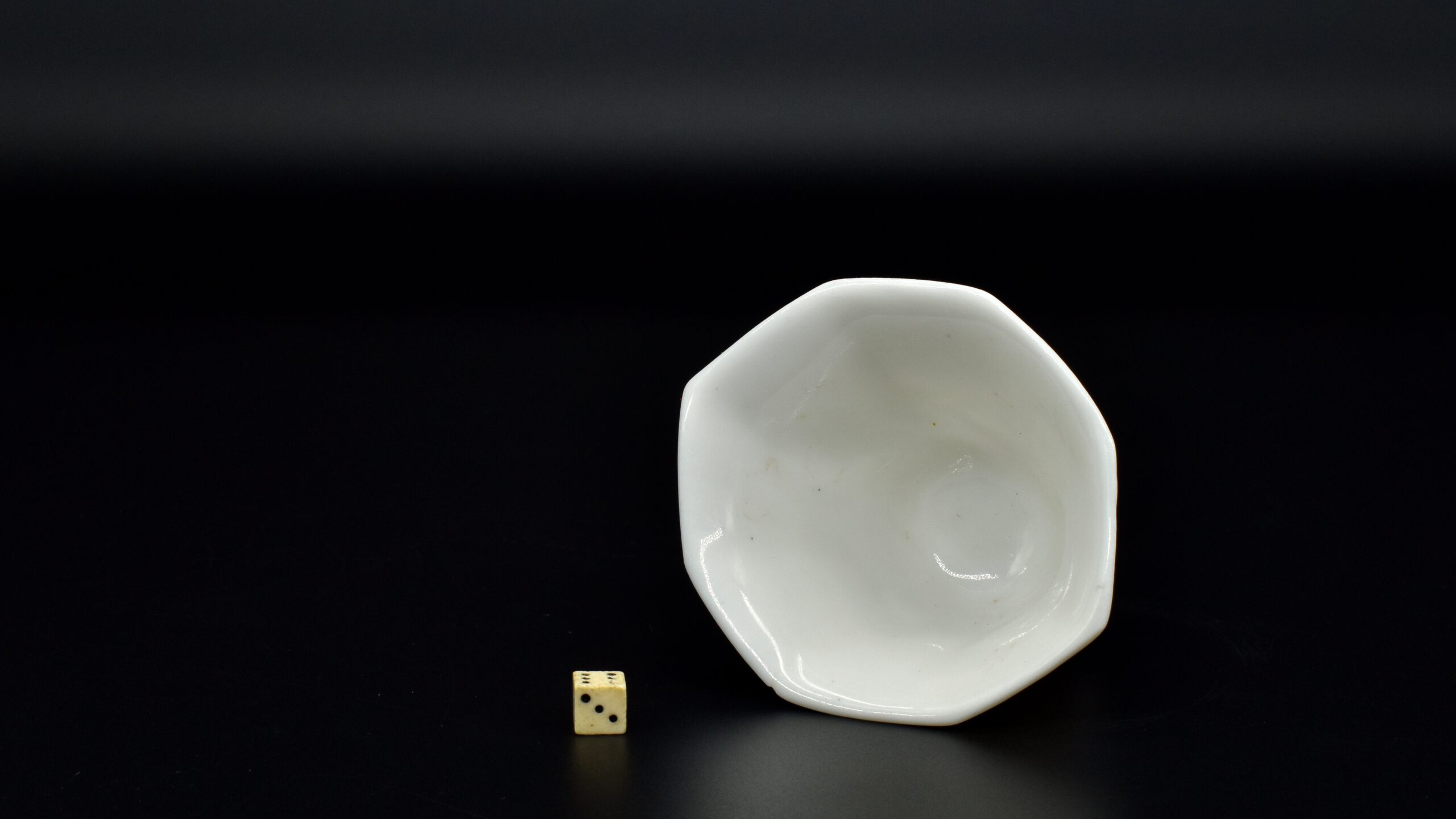
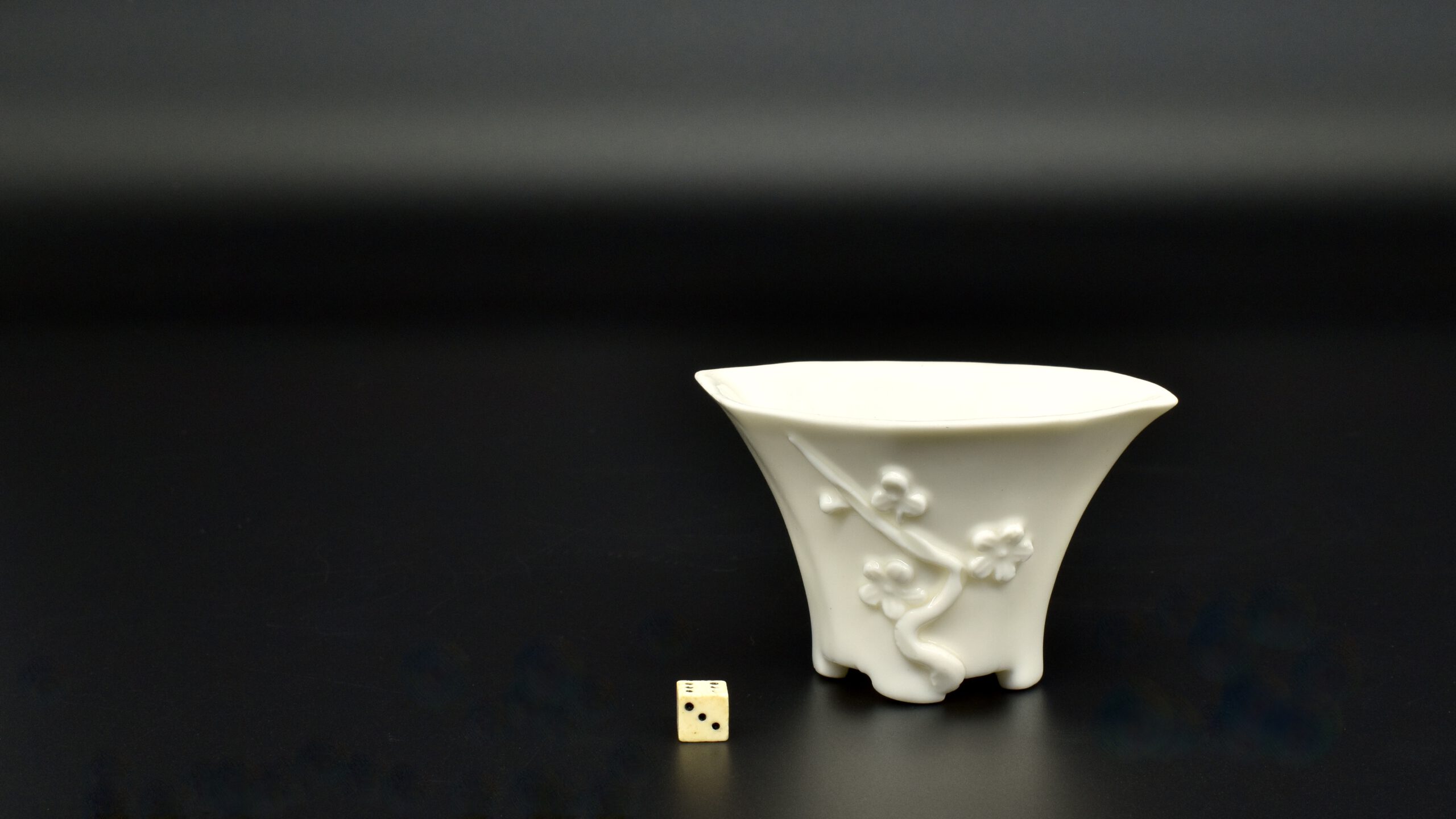
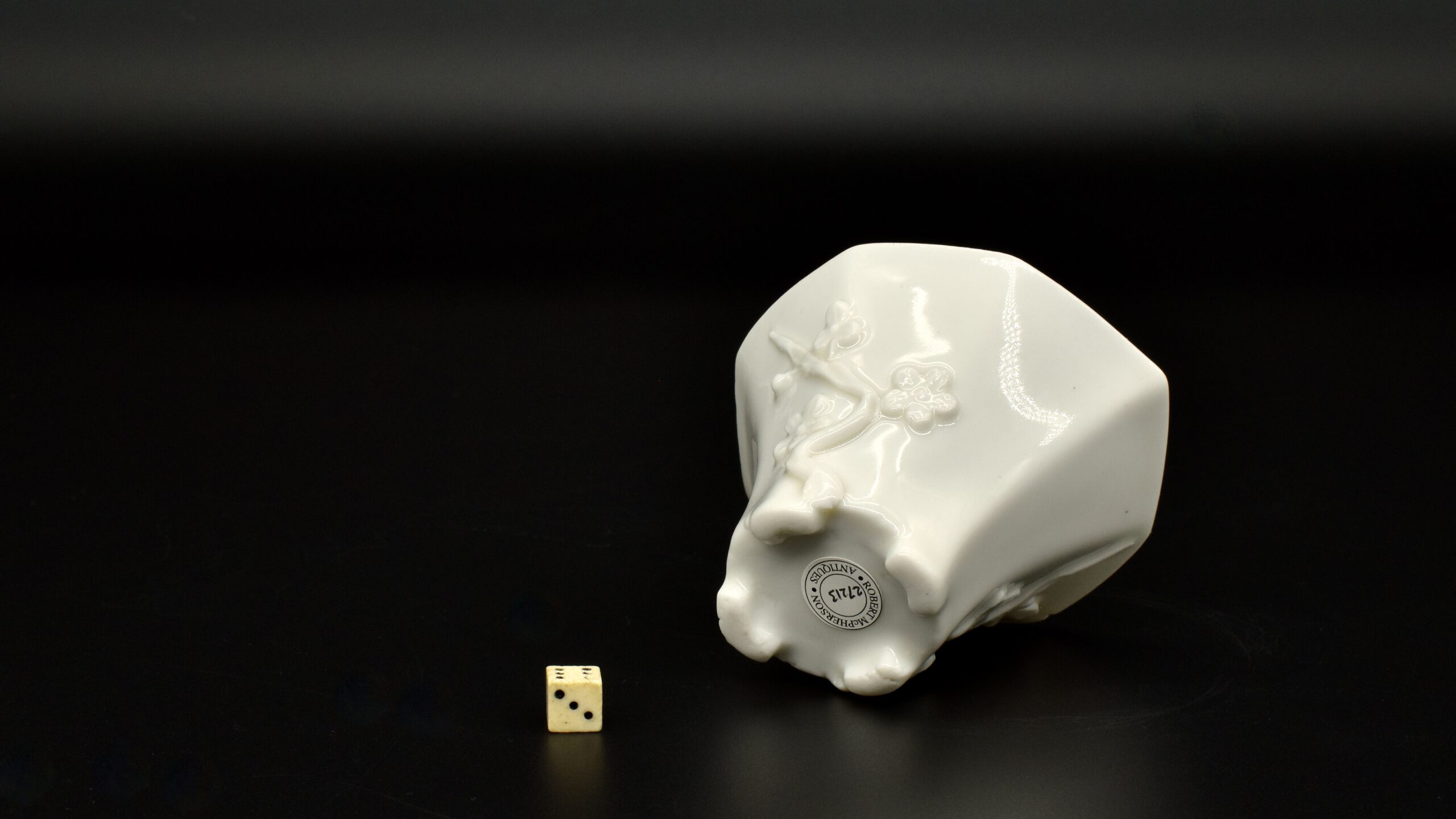
A Fine 17th Century Blanc de Chine Porcelain cup, Dehua kilns, Fujian Province c.1640 – 1680. One side with applied prunus decoration, the other is of magnolia, it sits on four raised pads with a glazed base. Blanc de Chine porcelain cups of oval tapering form with integral supports have been traditionally referred to as ‘Libation Cups’. This is unlikely to be correct, their shape follows that of rhinoceros horn cups which was made locally, it is interesting bearing in mind the important powers that the Chinese attach to this material. By having a Blanc de Chine cup of this form some of the powers of real rhinoceroses’ horn might be conveyed to the drinker. The appliqués were many and varied, there arrangement alters from cup to cup giving an infinite variety. A painting by Leonard Knyff of 1681 showing a similar wine cup with European works of art. National Gallery London. See Information below the Photograph Gallery.
SOLD
See Below For More Photographs and Information
- Condition
- There is a tiny chip about two mm wide with a small hairline crack c.3mm.
- Size
- Diameter 9.2 cm (3.6 inches)
- Provenance
- N/A
- Stock number
- 27213
- References
- Leonard Knyff of 1681 showing a similar wine cup with European works of art. National Gallery London. See Information below the Photograph Gallery.
Photos

Information
Blanc de Chine Libation Cups :
Blanc de Chine cups of of oval tapering form with integral supports have been traditionally referred to as `Libation Cups`. This is unlikely to be correct, their shape follows that of rhinoceros horn cups which was made locally, it is interesting baring in mind the important powers that the Chinese attach to this material. By having a Blanc de Chine cup of this form some of the powers of real rhinoceros horn might be conveyed to the drinker. The appliqués were many and varied, there arrangement alters from cup to cup giving an infinite variety.
Plum Blossom (Prunus) Meihua
Plumb Blossom is one of the most important plants in Chinese art. Their flowers grow on knurled old angular branches, the flowers are fragile and pure, so they can be a symbol of vigour in old age as well as purity. The tree is the first to flower after the long hard winter, symbolically it can represent perseverance as well as renewal. This meaning is enhanced by a background of cracked-ice, the design can be seen as representing the end of winter and the beginning of spring with the ice of winter cracking to reveal a new year dawning. Branches of plum blossom convey the `Five Blessings` Meikai wufu, longevity, wealth, health, love of virtue and a peaceful death. The number five, an auspicious number to the Chinese, is taken from the five petals of the plum flower.
A Related 17th Century Blanc de Chine Cup made before 1681.
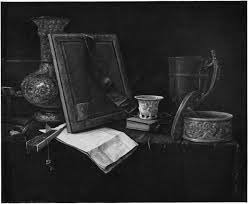
(National Gallery London).