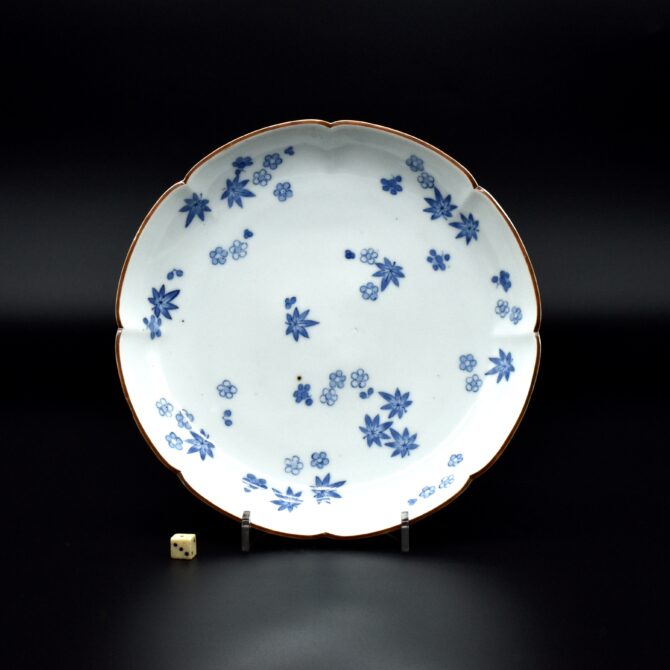
A 17th Century Japanese Blue and White Kakiemon Dish.
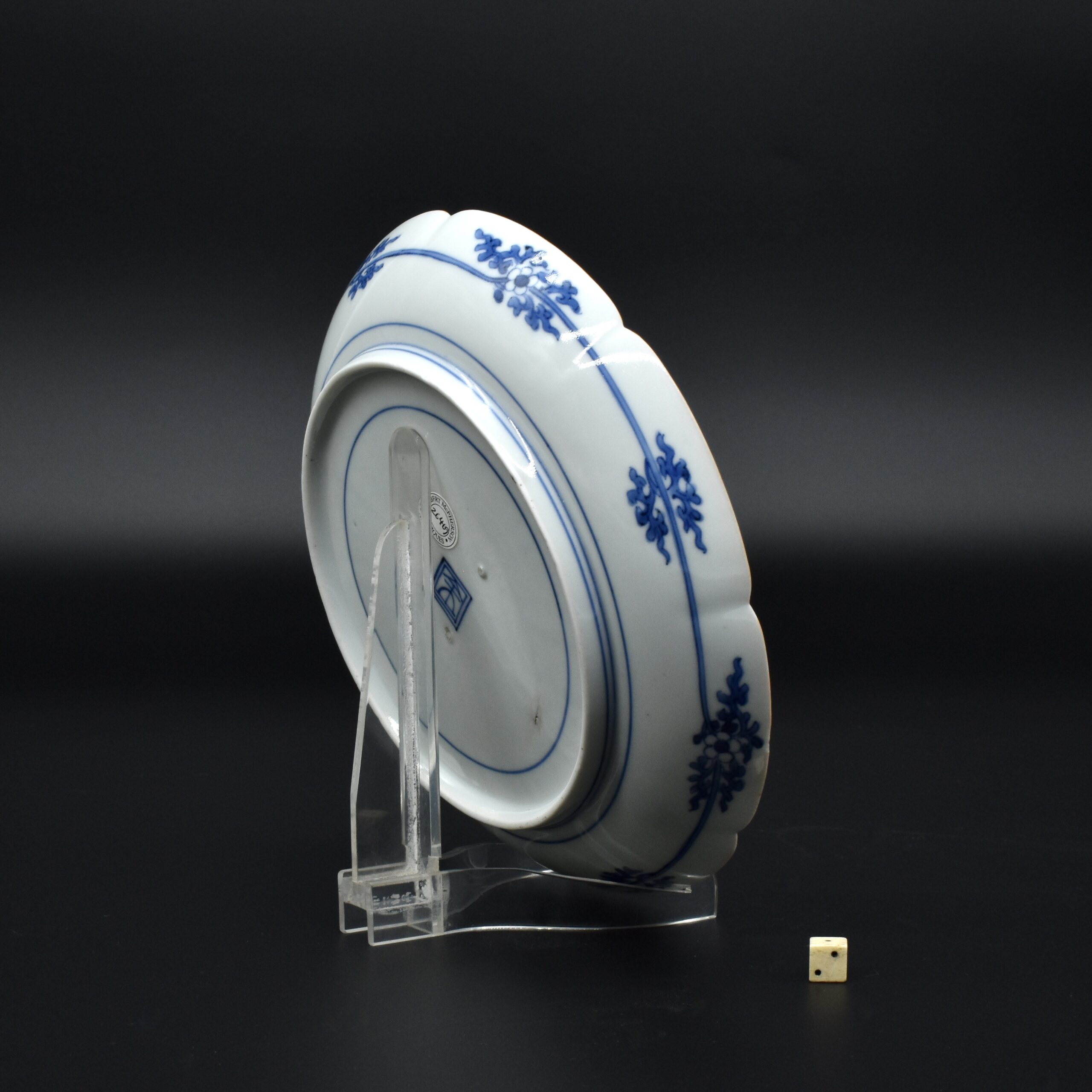
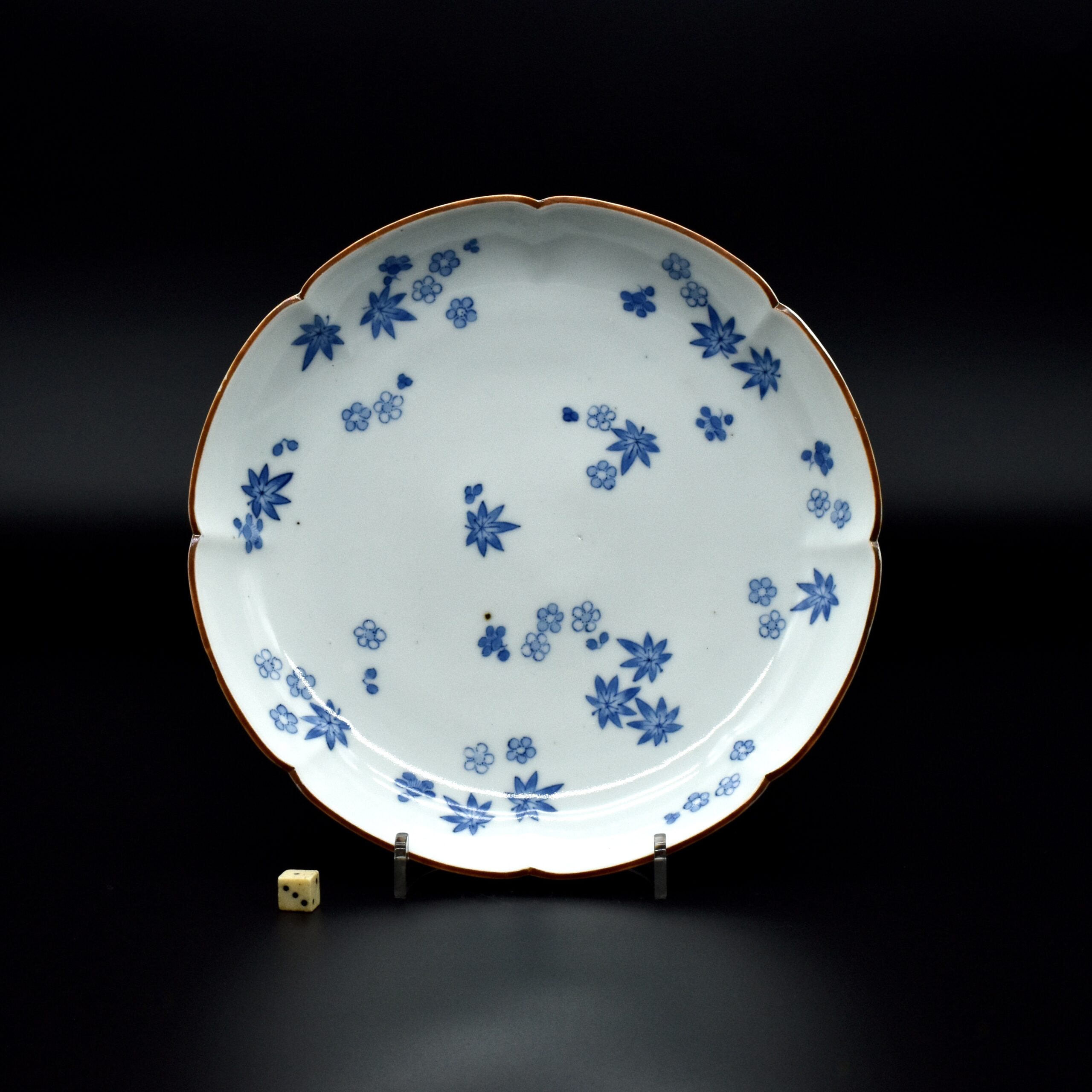
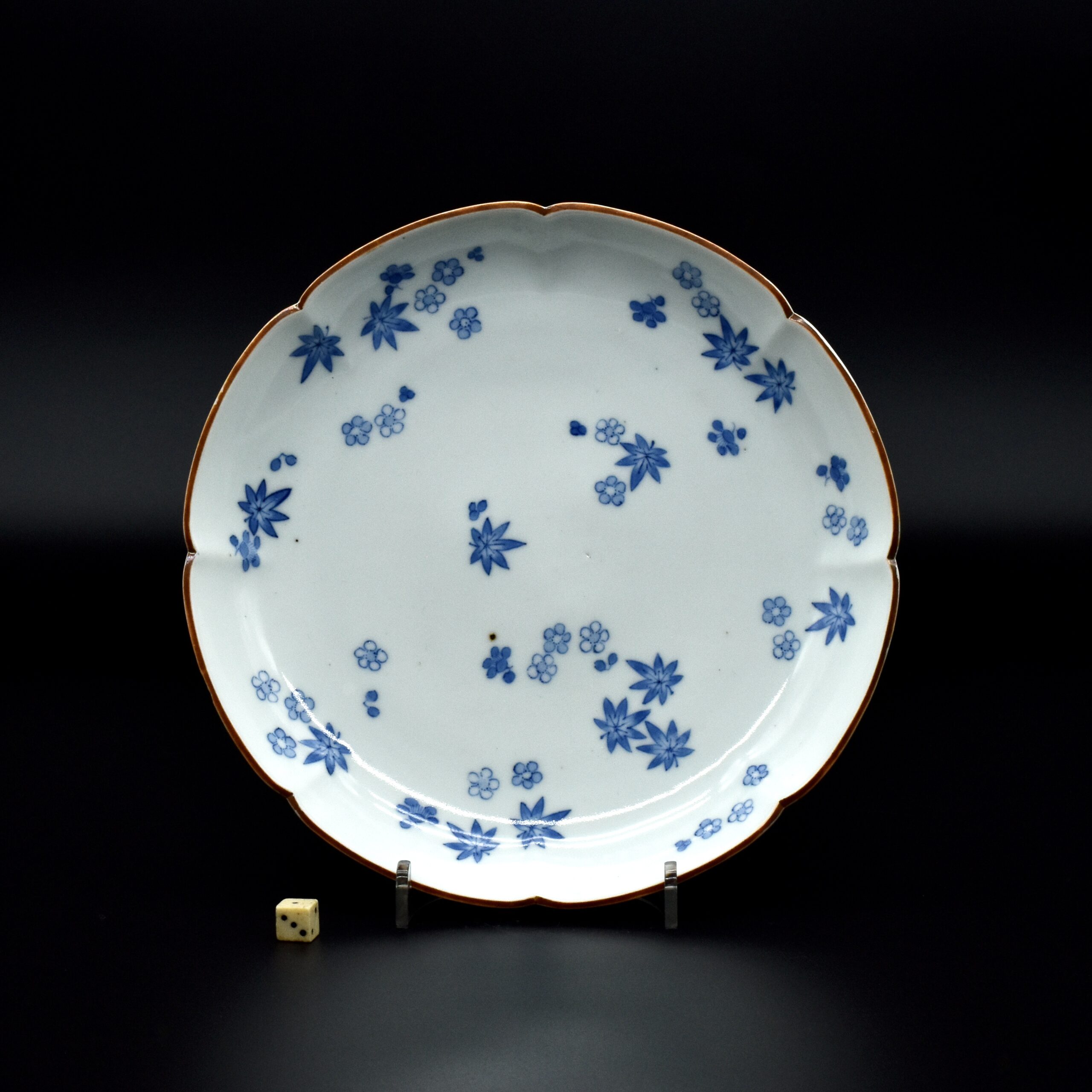
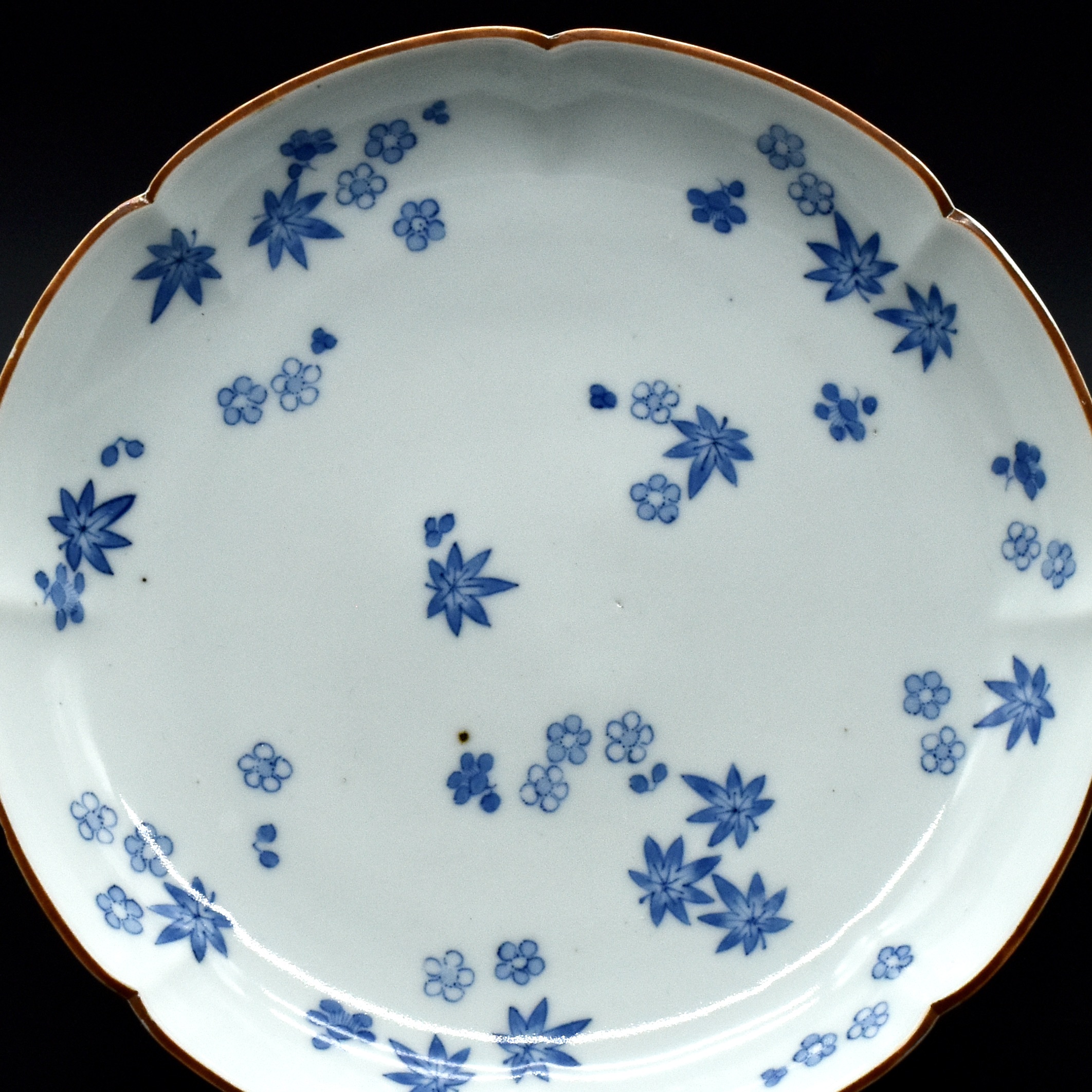
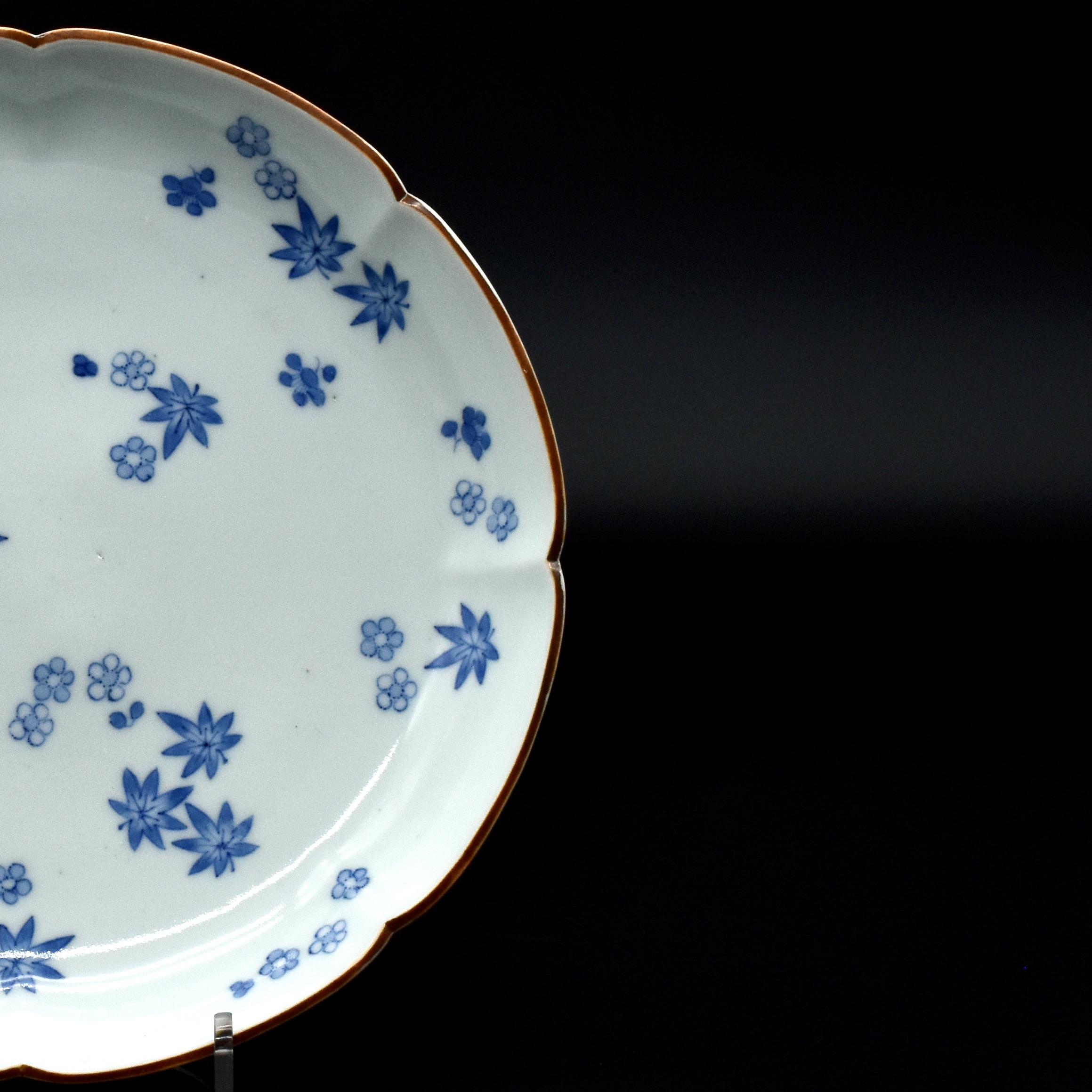
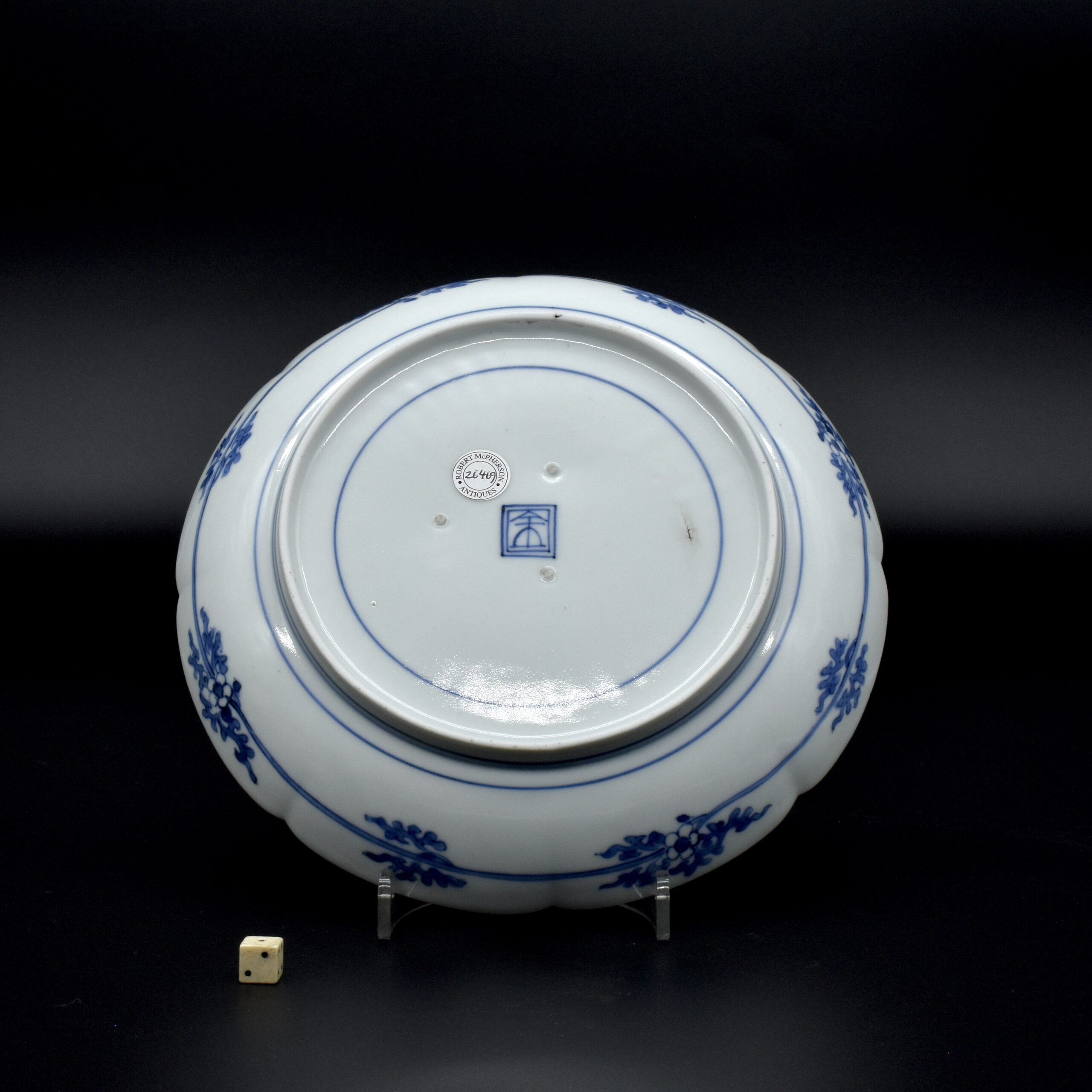
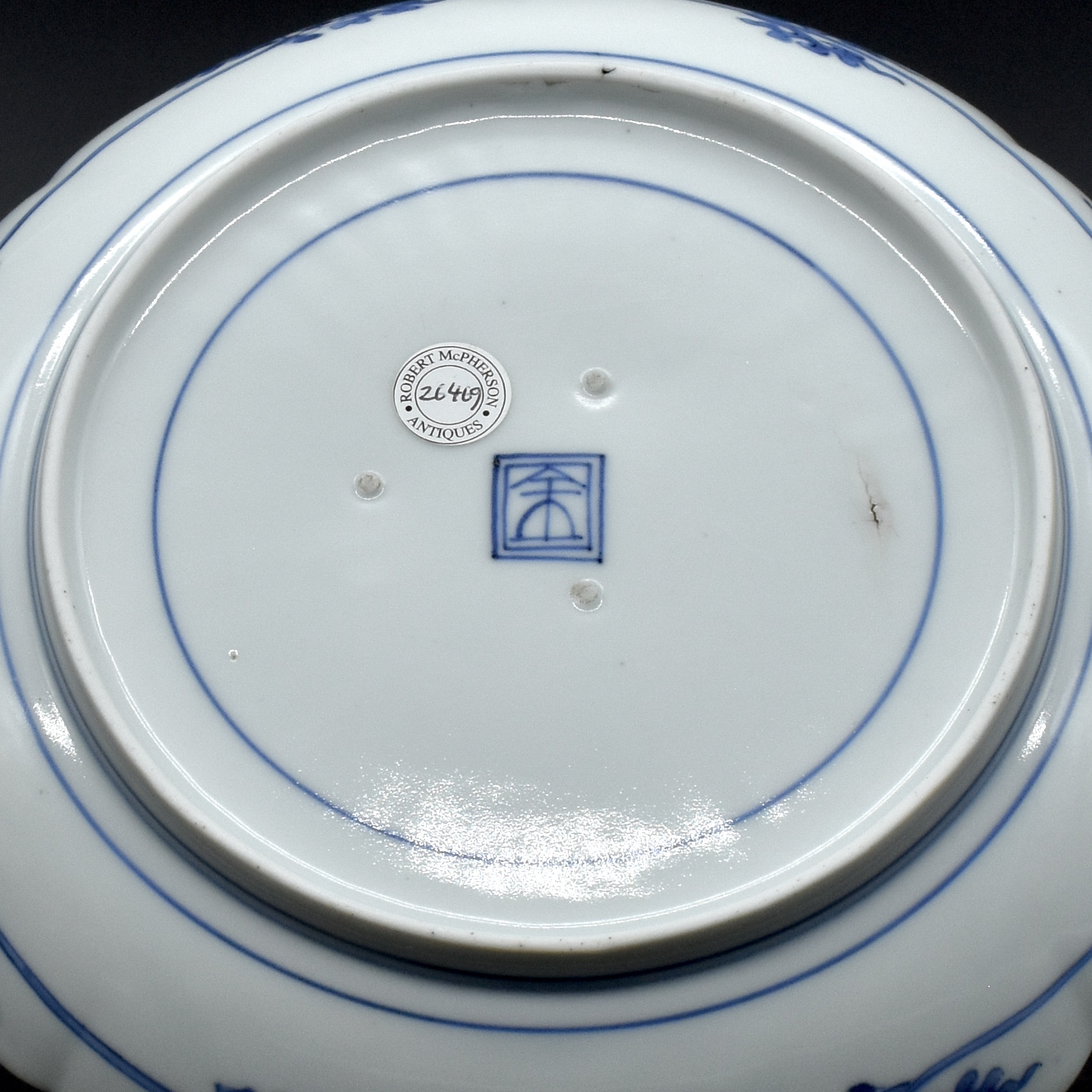
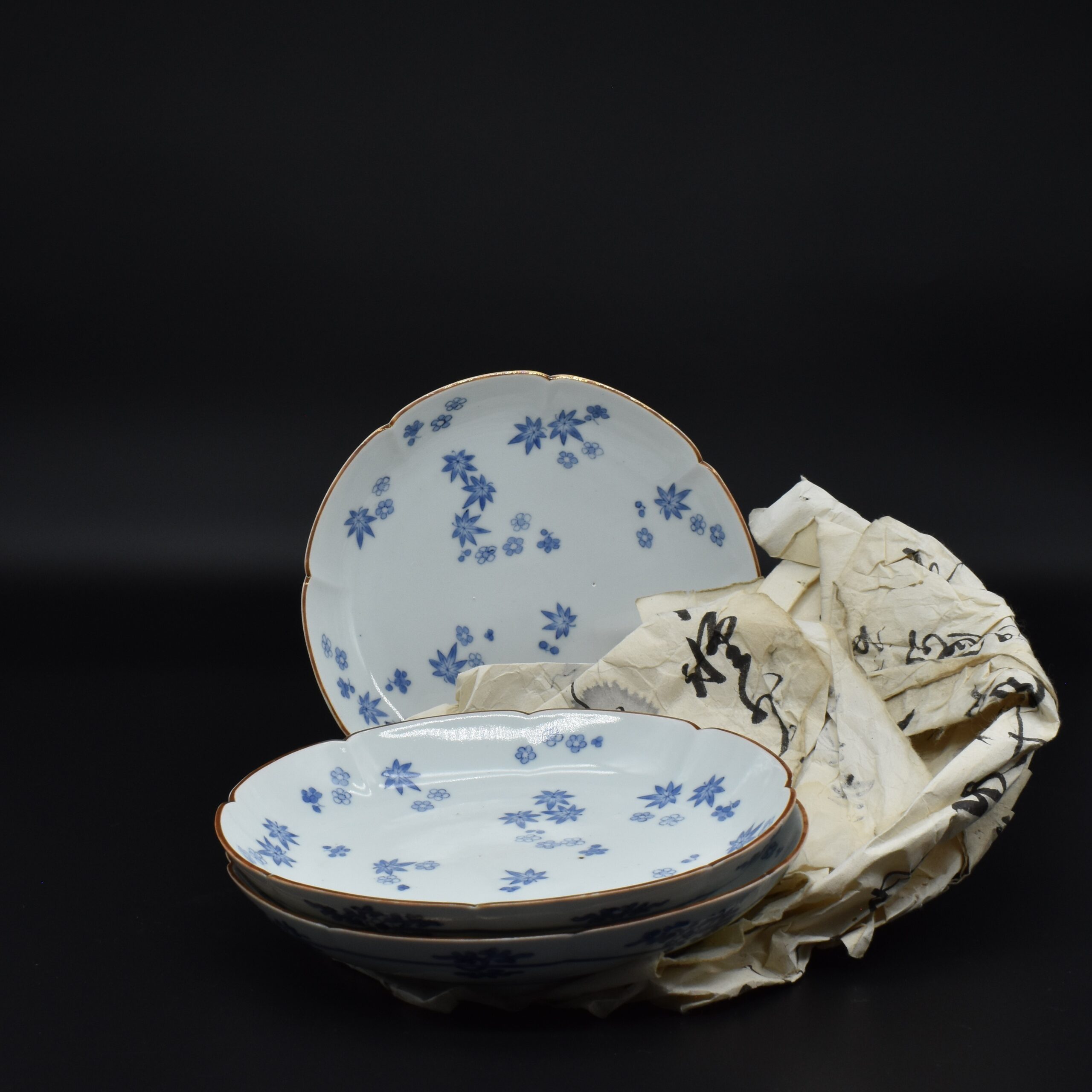
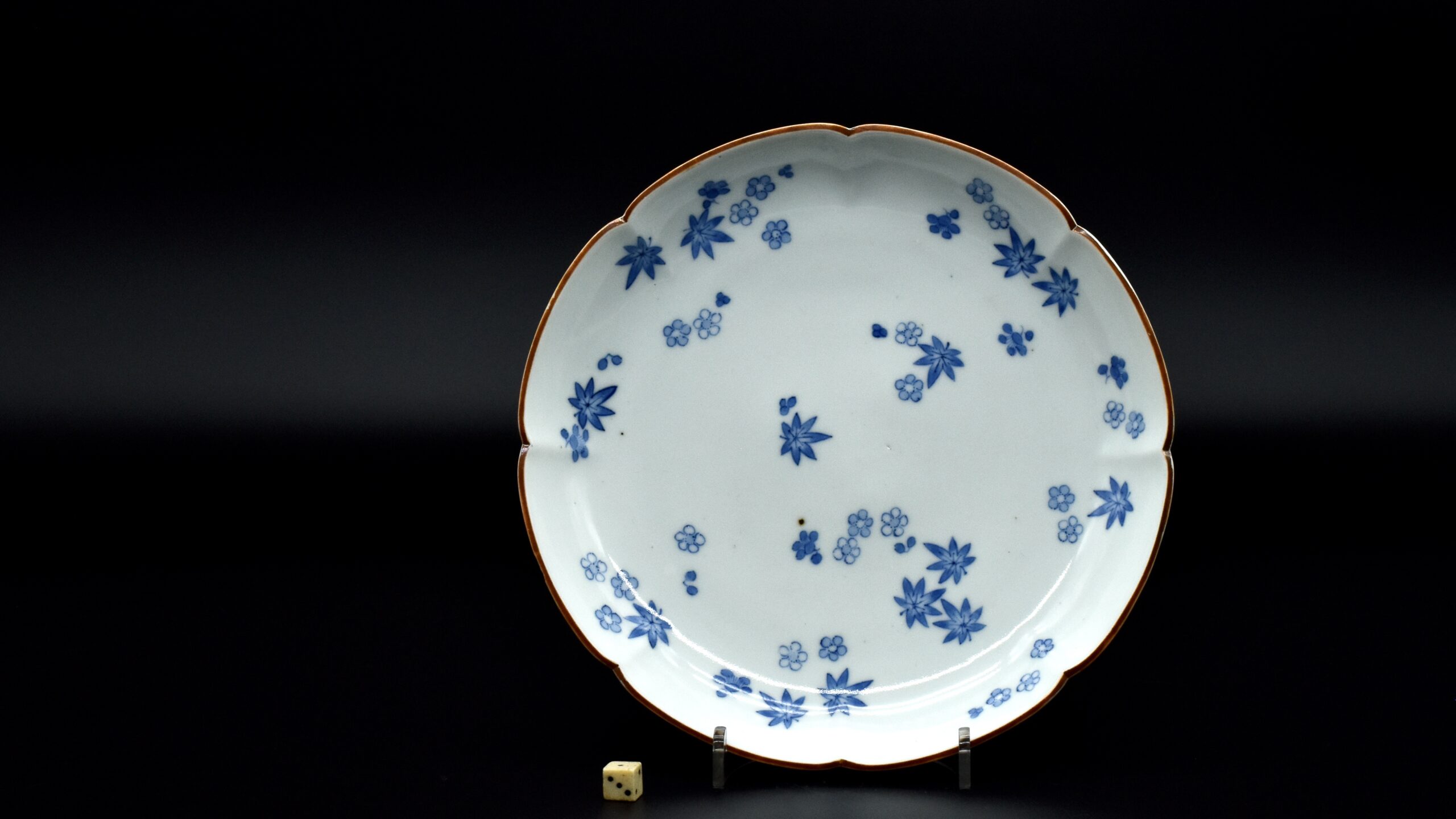
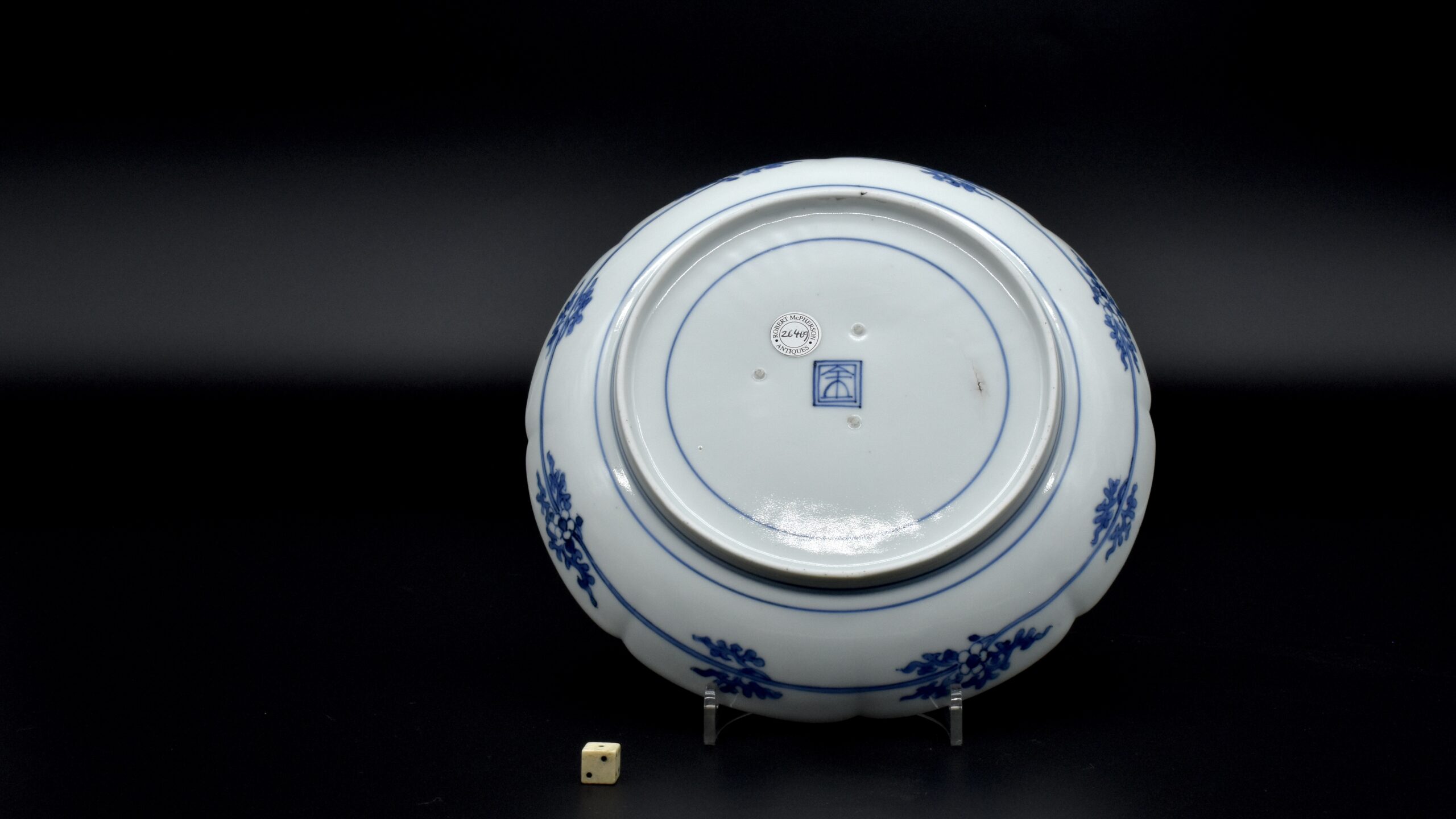
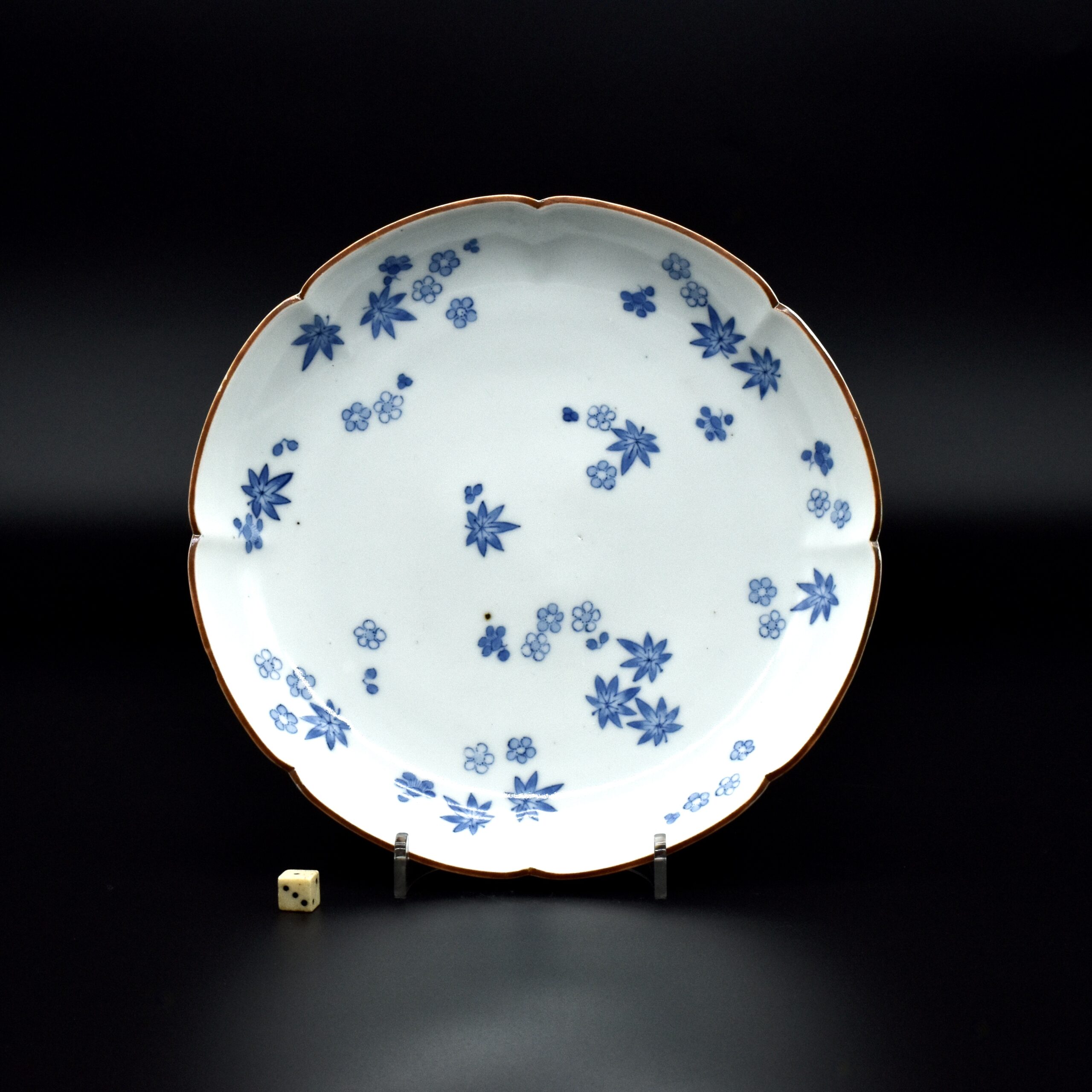
An Unusual 17th Century Japanese Kakiemon Porcelain Dish, Kakiemon Kilns, Nagawara, Arita, Saga Prefecture, c.1670 – 1700. This very well-made flower shaped dish is carefully painted with scattered maples leaves, what I think might be a water Forget-me-not, and what appear to be a few pairs of cherries held by stalks. This loose design of seemingly random flowers and leaves has no border, no clear organisation. Its as if a white porcelain dish was left for nature creating the design. That is of course entirely wrong, this design has been very carefully thought out to look like it was created by the vagaries of nature. We have three of these blue and white Kakiemon dishes, each design is very similar to the other, yet no two dishes are the same. The painting is very neat, highly controlled with some detail as small a tiny dot. The tone of blue is very consistent, a mid-blue. The depiction of nature is done with the organised mind, and precision of a painter of miniatures. The back is painted with Karakusa scroll border and a ‘Kin’ character mark within a double square. ‘Kin’ means 金 gold and is a well-known Kakiemon mark ; see Kakiemon Porcelain, A Handbook (Meno Fitski, Leiden University Press 2011. ISBN 978-90-8728-126-7) page 165. Meno Fitski notes that “the mark 金 ‘Kin’ (gold)” is used around 1670 to 1700 in Nagawara. “It is clearly written, with plenty of white space. The mark reappears in the 18th century, but by then it appears more crowded, with thicker lines”. The rim of this 17th century Japanese porcelain is dressed with an iron-oxide enamel, called 口紅 Fuchibeni in Japanese, meaning lipstick. It was used to frame ceramic designs but it also adds some strength to the fragile rim, as well as showing that the rim was not chipped. The word Fuchibeni, comes from kuchi meaning mouth and beni meaning red/safflower red. Although the mark is unknown, it occurs on Kakiemon porcelain from around 1670 to 1700.
SALE PENDING
See Below For More Photographs and Information.
- Condition
- In excellent condition.
- Size
- Diameter 18.2 cm (7.1 inches).
- Provenance
- Purchased in Japan.
- Stock number
- 26469
- References
- For a dish with a related design see : Complete Catalogue of Shibata Collection (Contributors Saga Kenritsu Kyūshū Tōji Bunkakan. Published by the Kyushu Ceramic Museum, 2019) page 203, plate 1609.
Photos
Information
Blue and White Kakiemon Porcelain.
Robert McPherson Antiques.