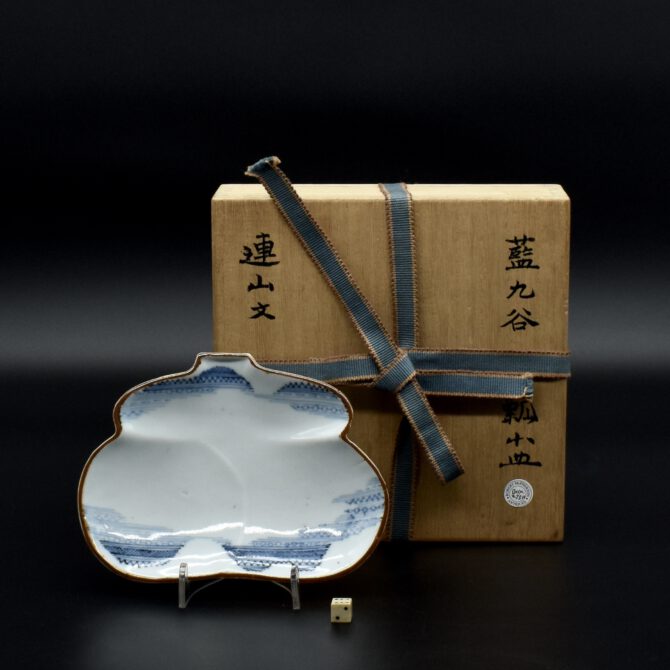
A 17th Century Japanese Double Gourd Shaped Porcelain Dish.
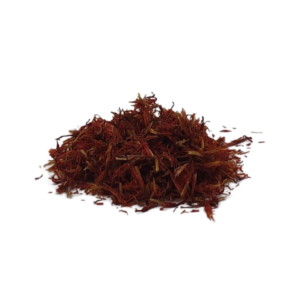
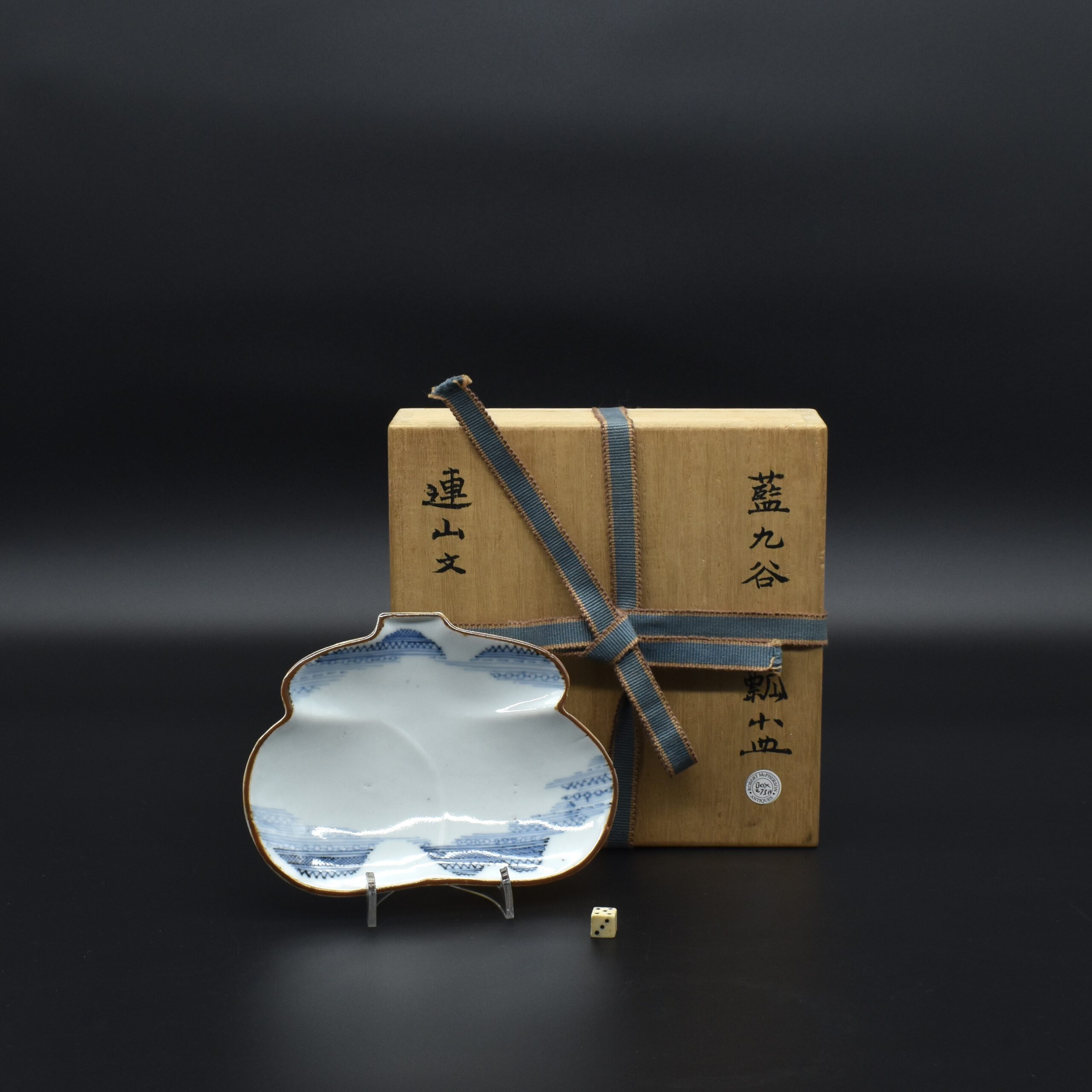
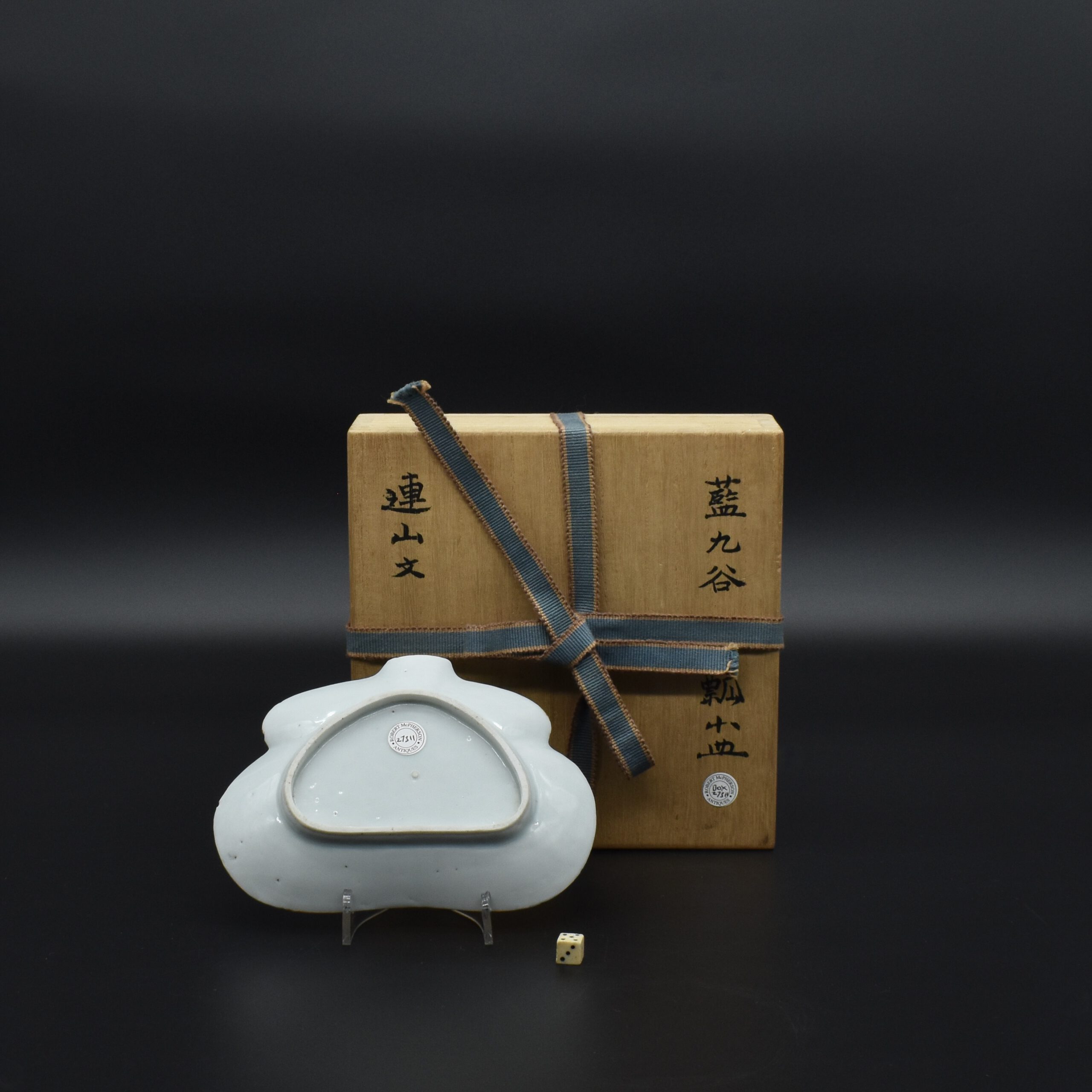
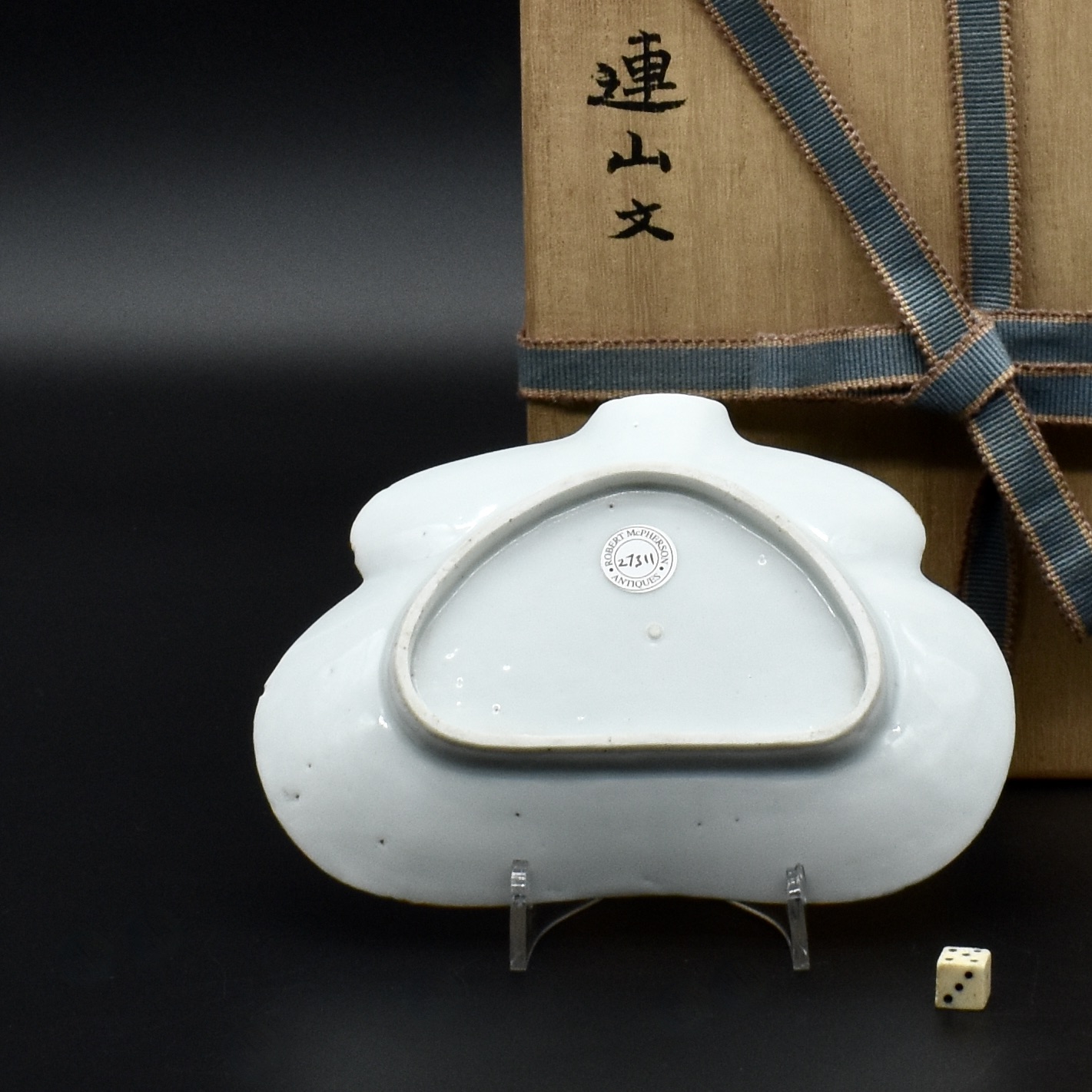
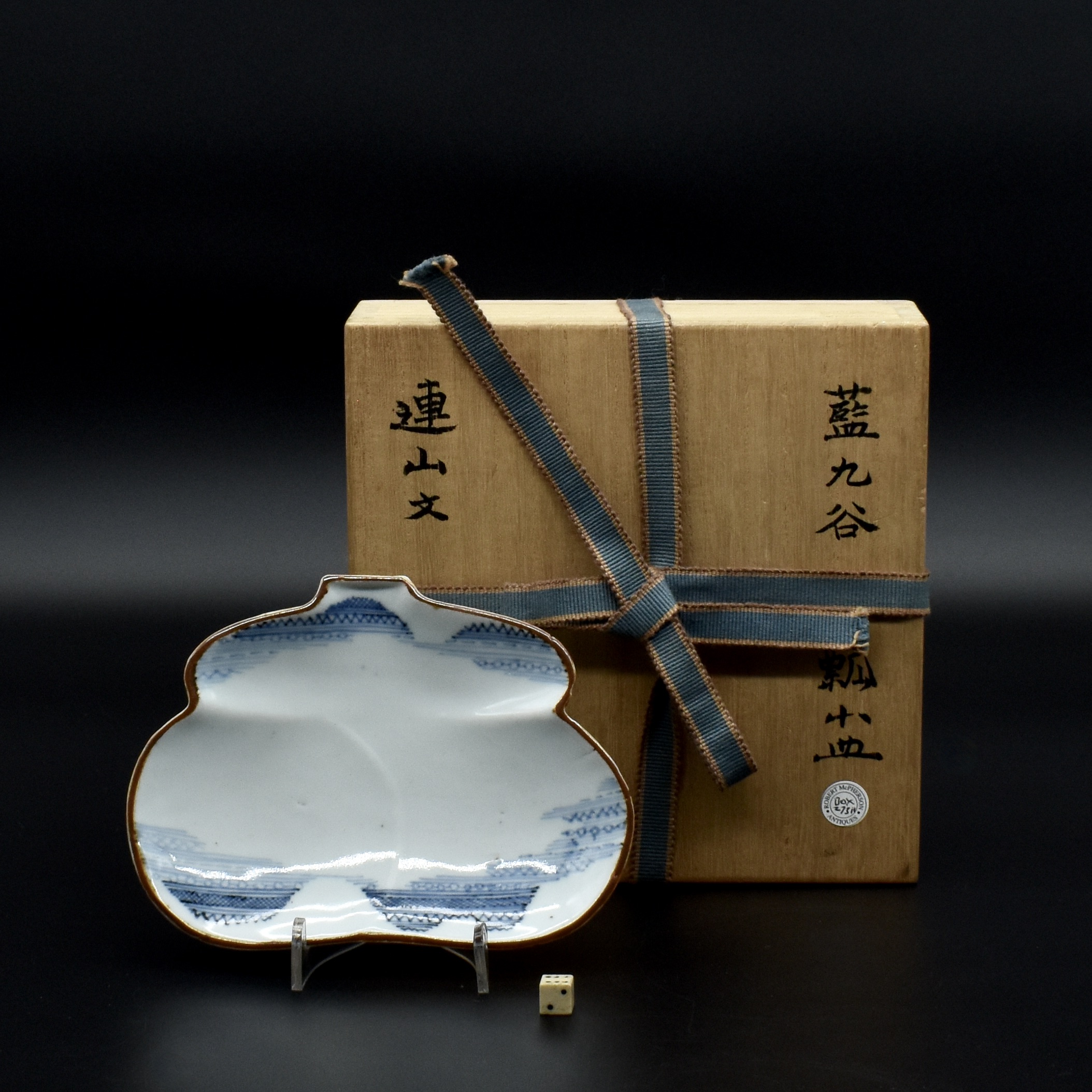
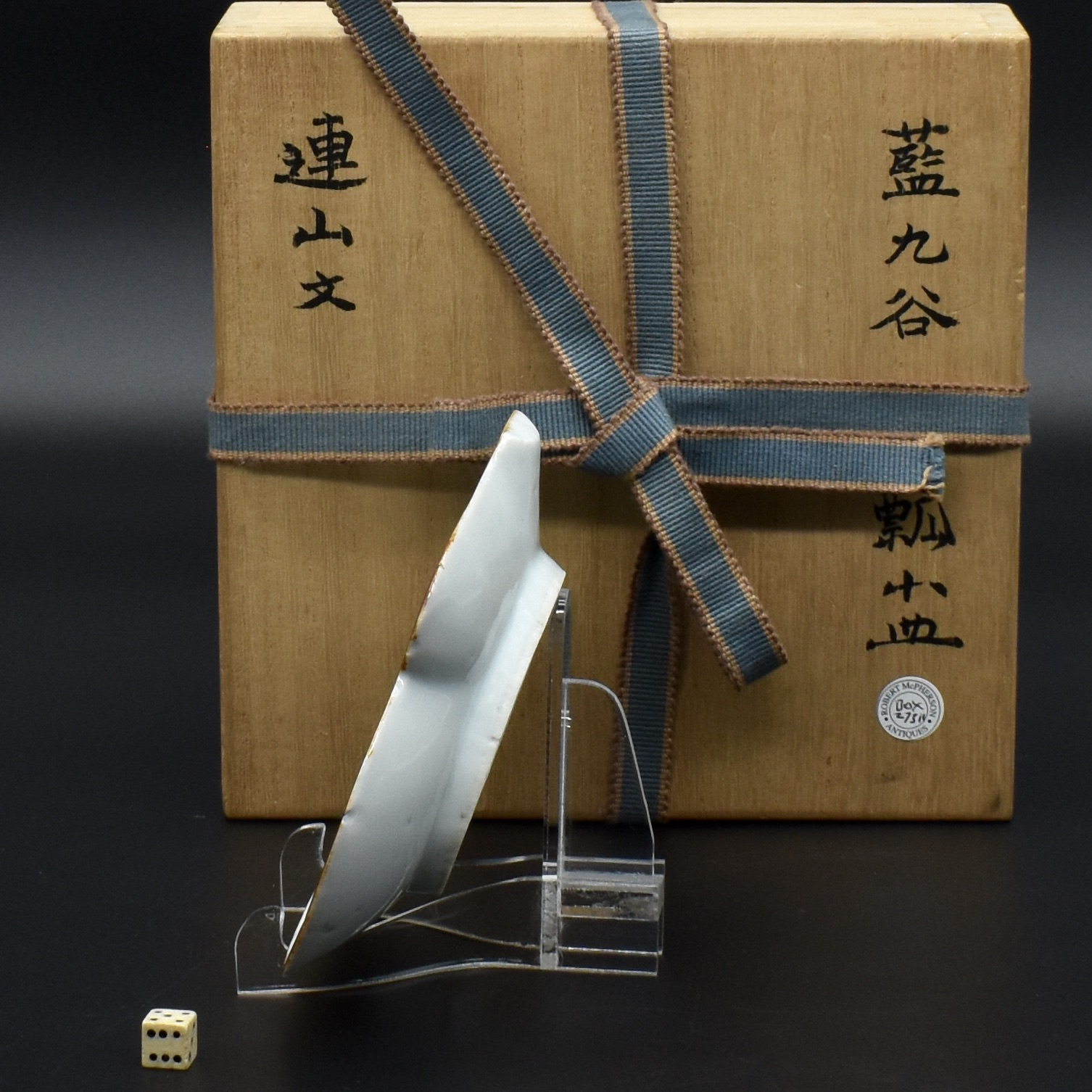
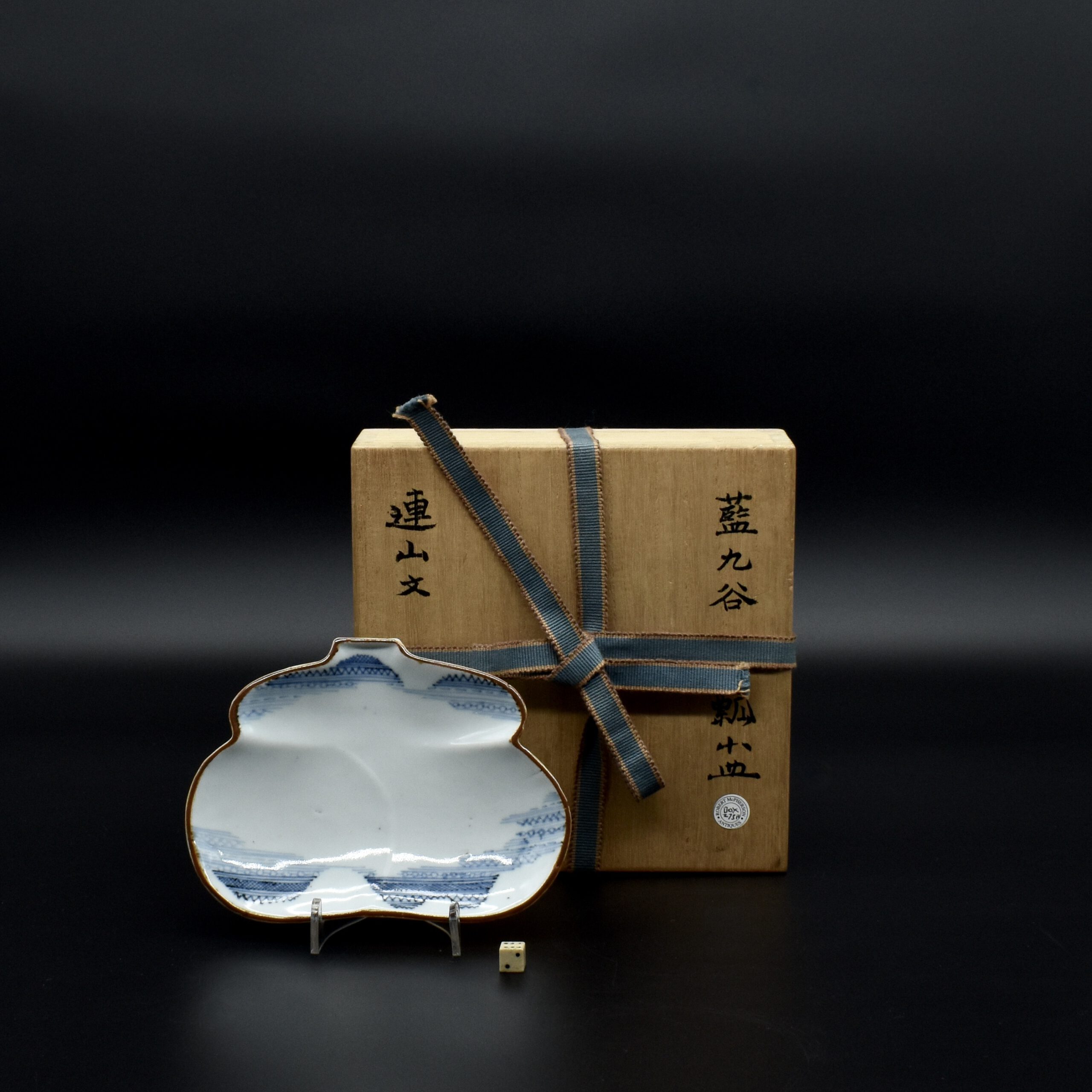
A 17th Century Japanese Double Gourd Shaped Porcelain Dish, Arita Kilns c.1660-1680. This unusual blue and white Japanese porcelain serving dish was probably made using a hump mould. This shape is well known among the small serving dishes of this period, however the abstract design is very unusual. Using lines, zig-zagged lines, circles, broken lines and cross-hatching, I think it conveys the sense of water with ripples and reflections. The flat rim is dressed with an iron-oxide enamel, called 口紅 Fuchibeni in Japanese, meaning lipstick. It was used to frame ceramic designs but it also adds some strength to the fragile rim, as well as showing that the rim was not chipped. The word Fuchibeni, comes from kuchi meaning mouth and beni meaning red/safflower red.
SOLD
See Below For More Photographs and Information
- Condition
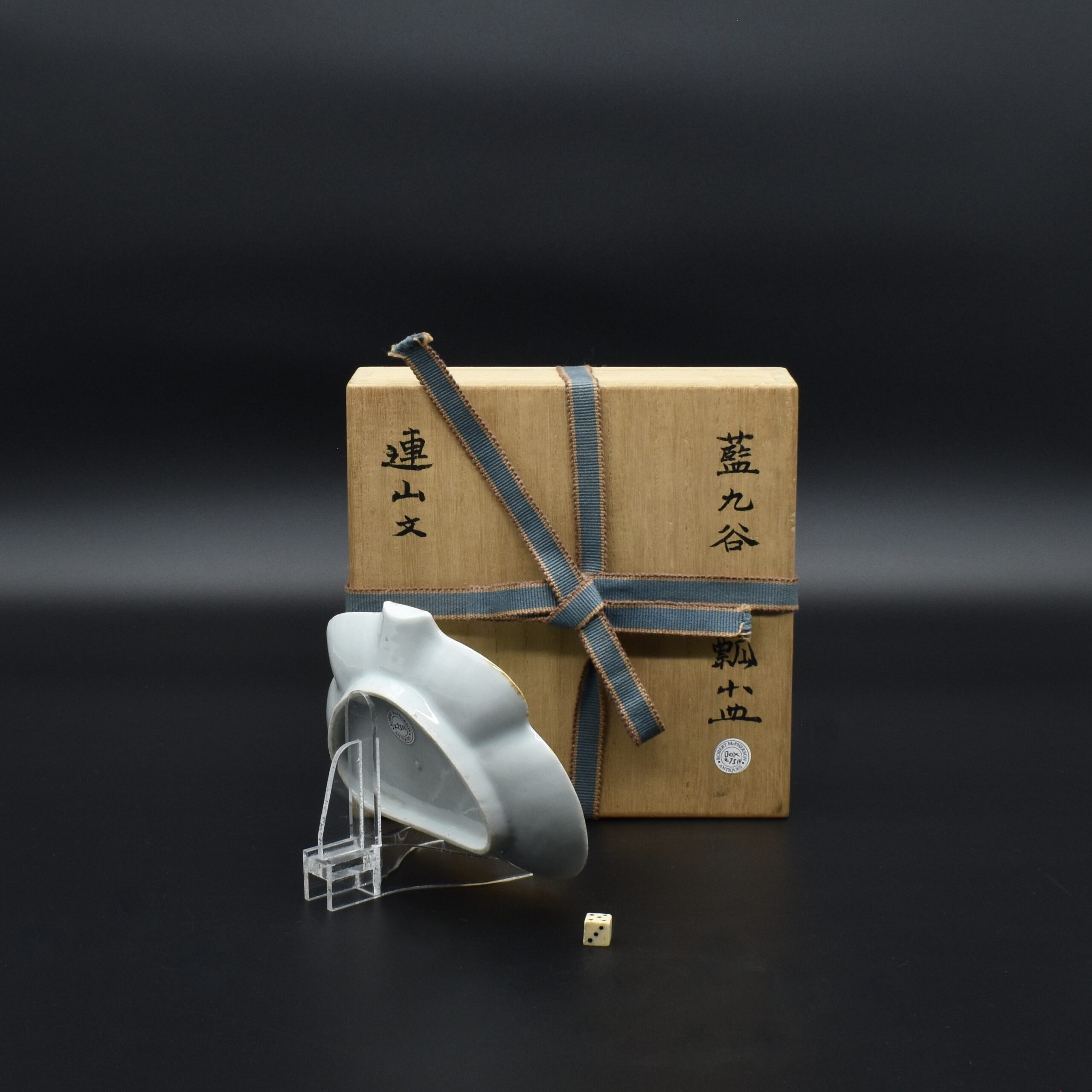
- In good but not perfect condition, there is a small shallow flake to the back of the edge.
- Size
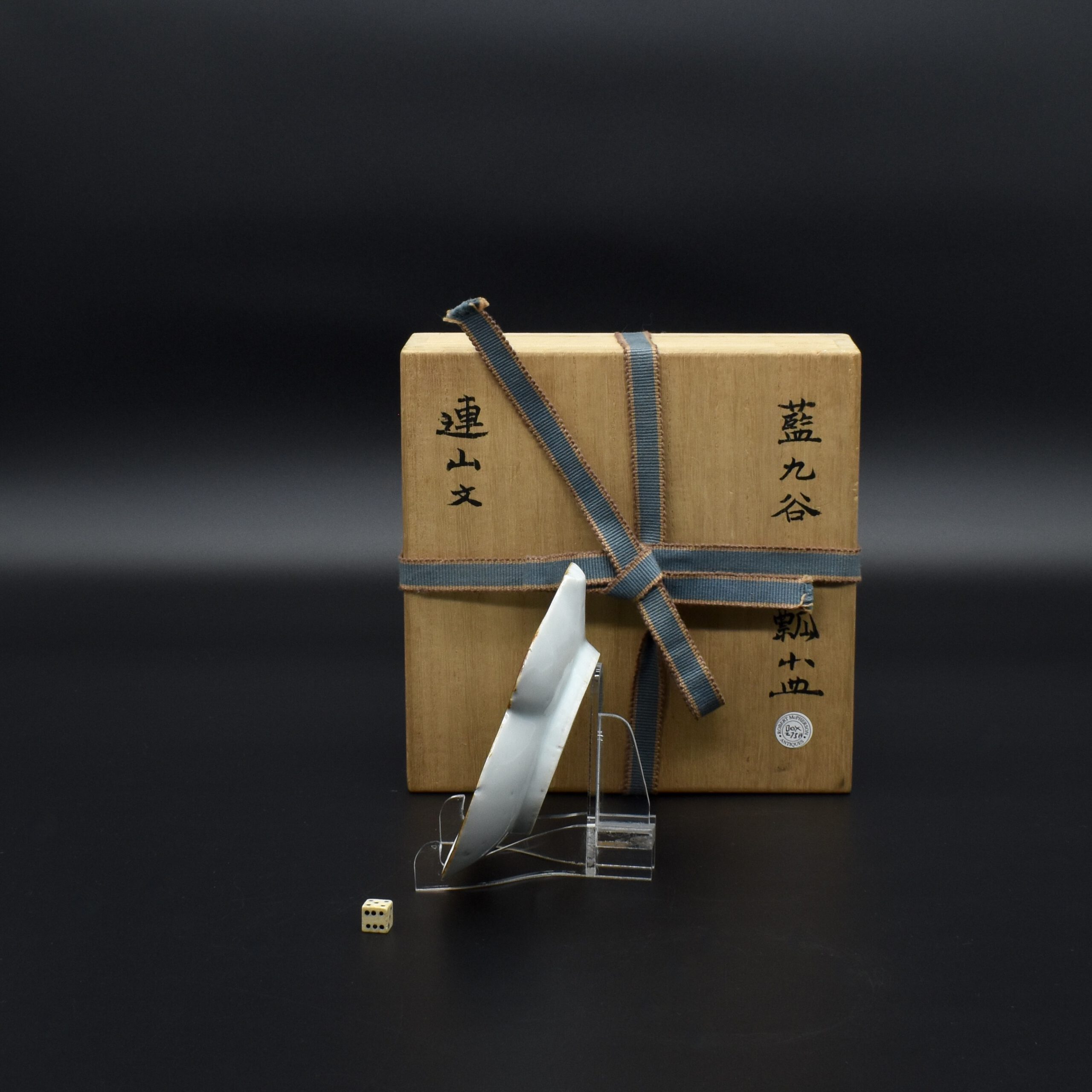
- Diameter 14.4 cm (5 2/3 inches). Depth 2.2 cm (3/4 of an inch).
- Provenance
- N/A
- Stock number
- 27311
Photos
Information
Tomobako Storage Boxes :
Traditional Japanese ceramic storage boxes, referred to as Tomobako are highly valued and much used in Japan. Most boxes are made from paulownia wood, it is lightweight hardwood and it’s also fire resistant, which is very useful in because Japanese buildings tend to be made of timber and have paper dividers inside. The Islands of Japan are located on a highly complex, unstable, and active geological junction where four major tectonic plates collide and subduct. These islands are essentially built upon the boundaries of these plates, with the archipelago forming as a result of the subduction and volcanic activity caused by these tectonic movements. Therefore the use of tradition tomobako is essential for the survival of ceramics in Japan. Japanese museums don’t have this luxury, so they secure the ceramic objects with nylon, which looks very much like fishing line. The paulownia is a fast growing tree, so it isn’t too expensive. It is believed that the phoenix, symbolising wisdom and prosperity, will only land on a paulownia tree when a worthy ruler is in power.
Tomobako containers that protect, store, and often certify the authenticity of the pottery inside. They are typically signed by the owner of the antique ceramic item in the box. They are tied with cord in a specific way, this is regarded as part of the a ritual ceremony among a gathering of friends in Japan. Of course not everything in these boxes is what it might seem. Some contain surprising objects, so you will have to wait and see what we have in these boxes.

Fuchibeni : Glazed rims on Japanese Porcelain.