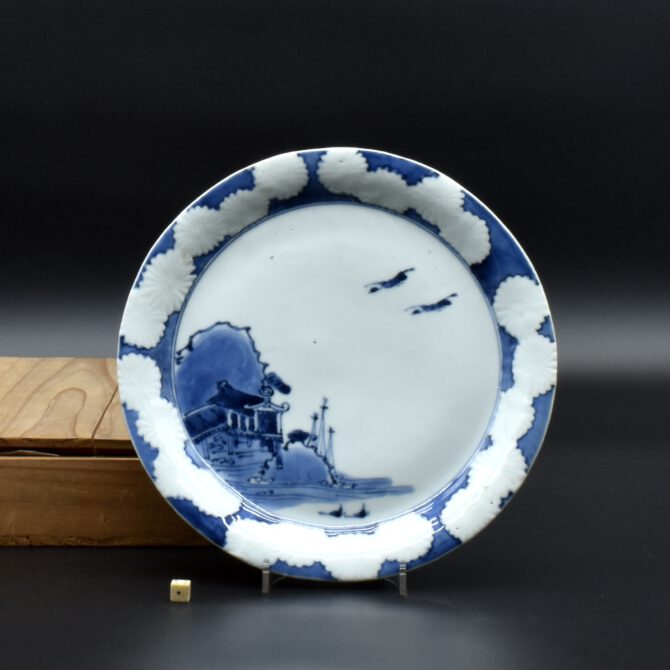
A 17th Century Japanese Moulded Blue and White Arita Dish.
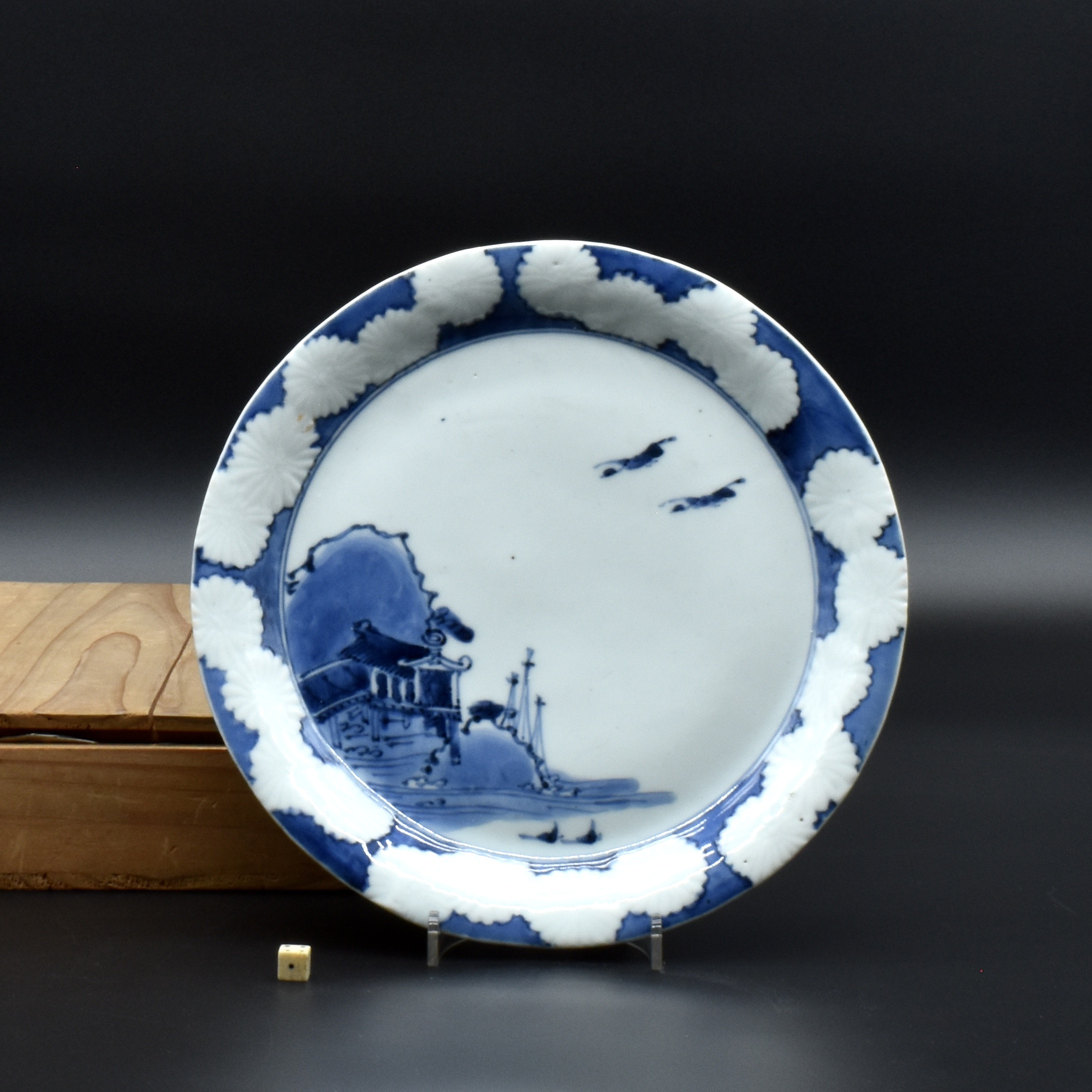
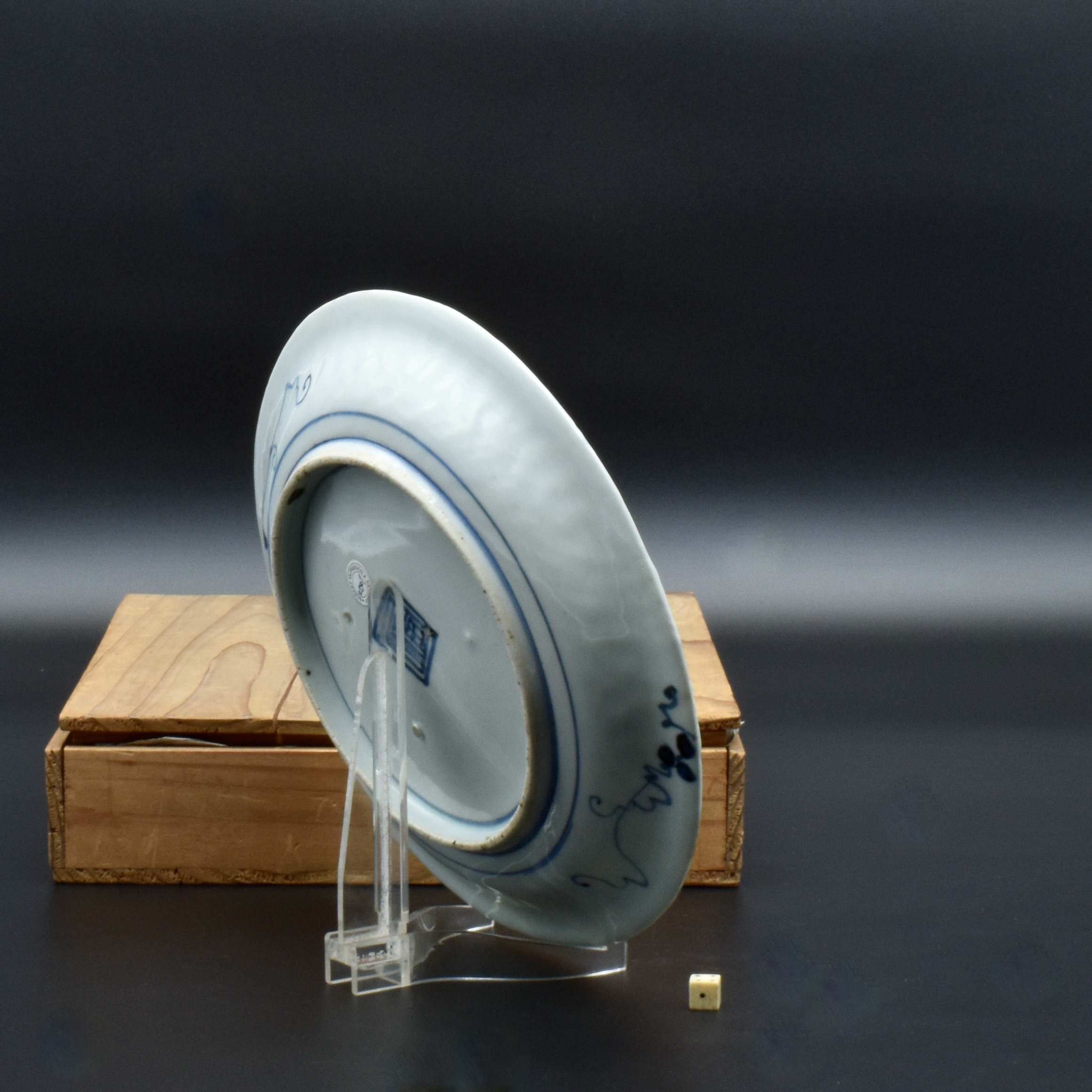
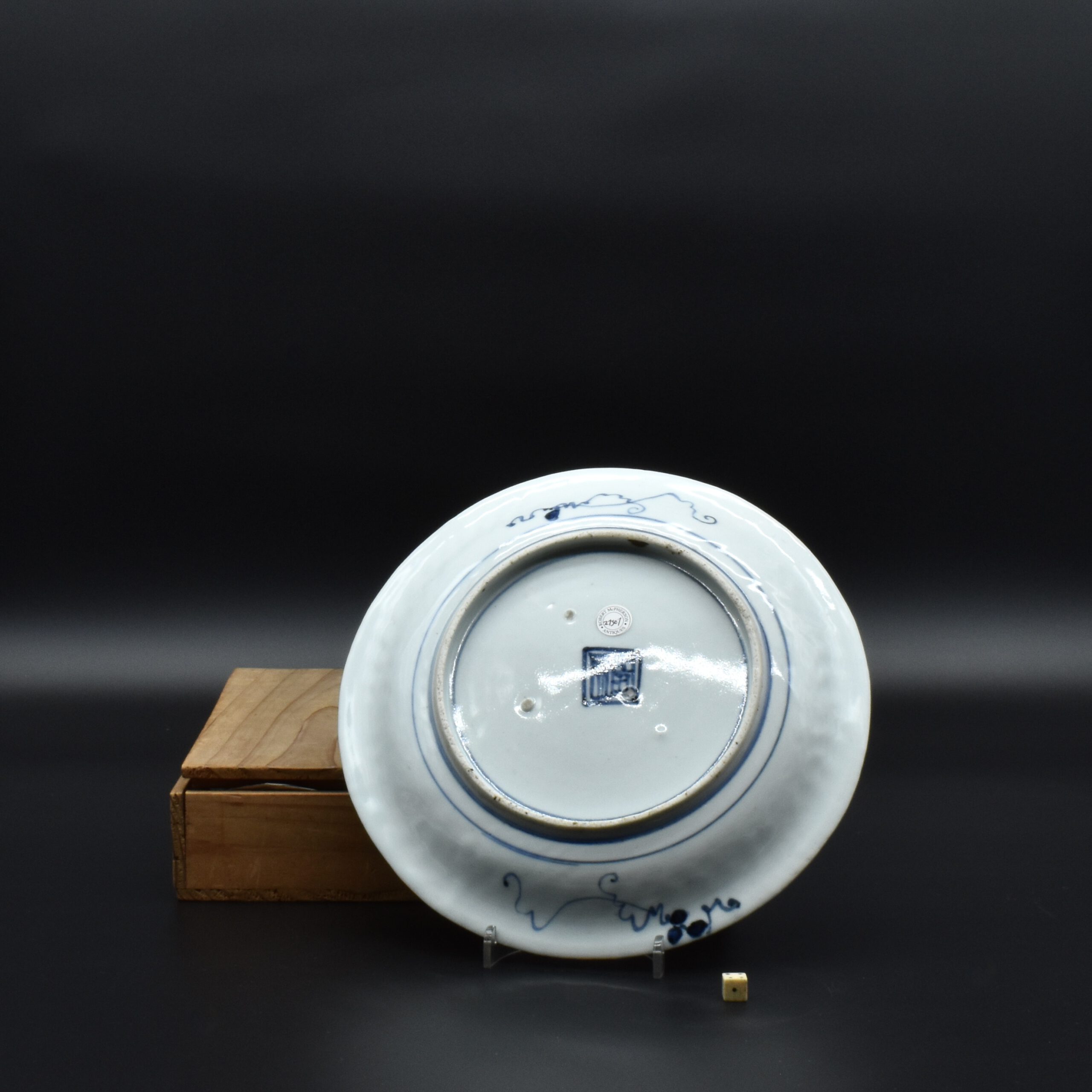
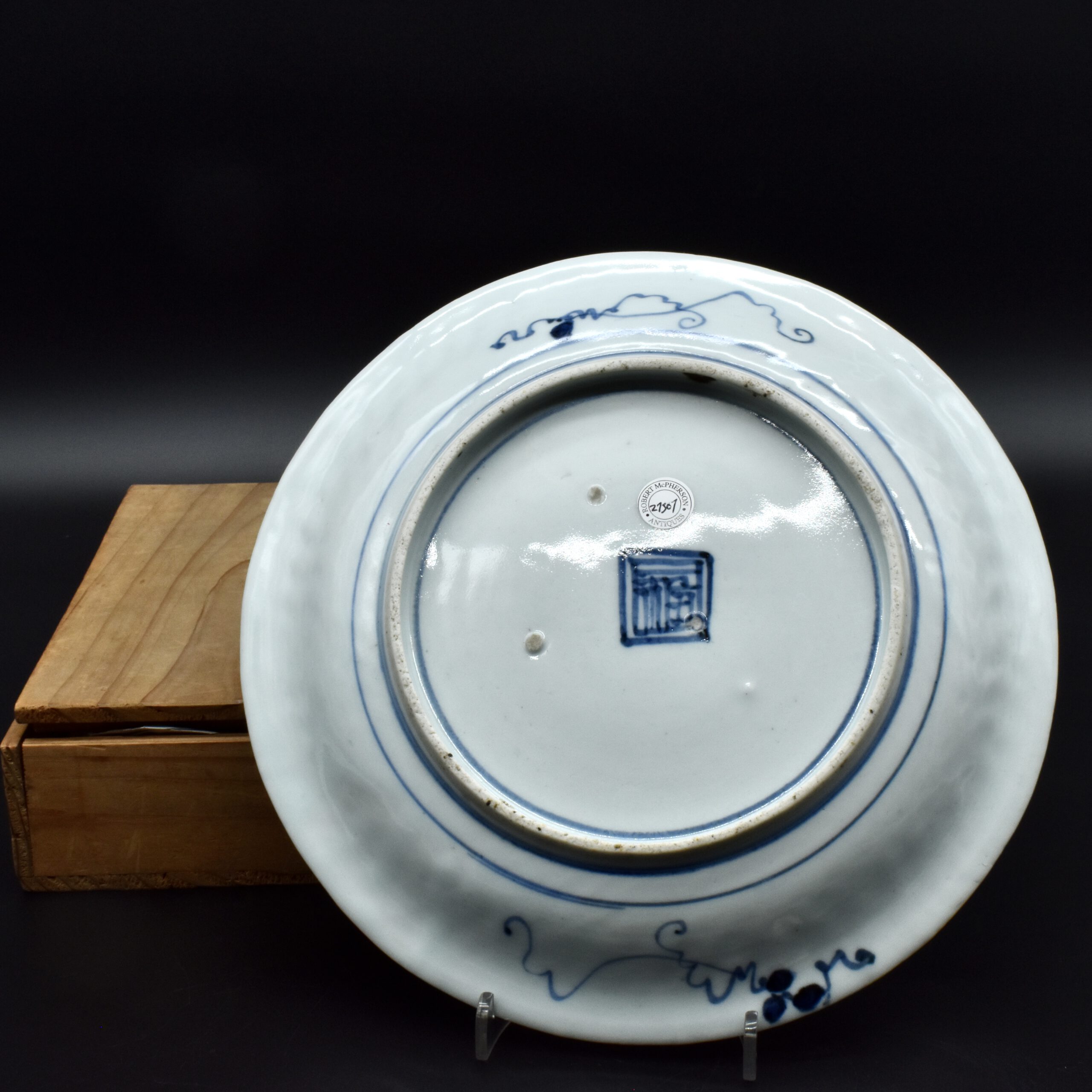
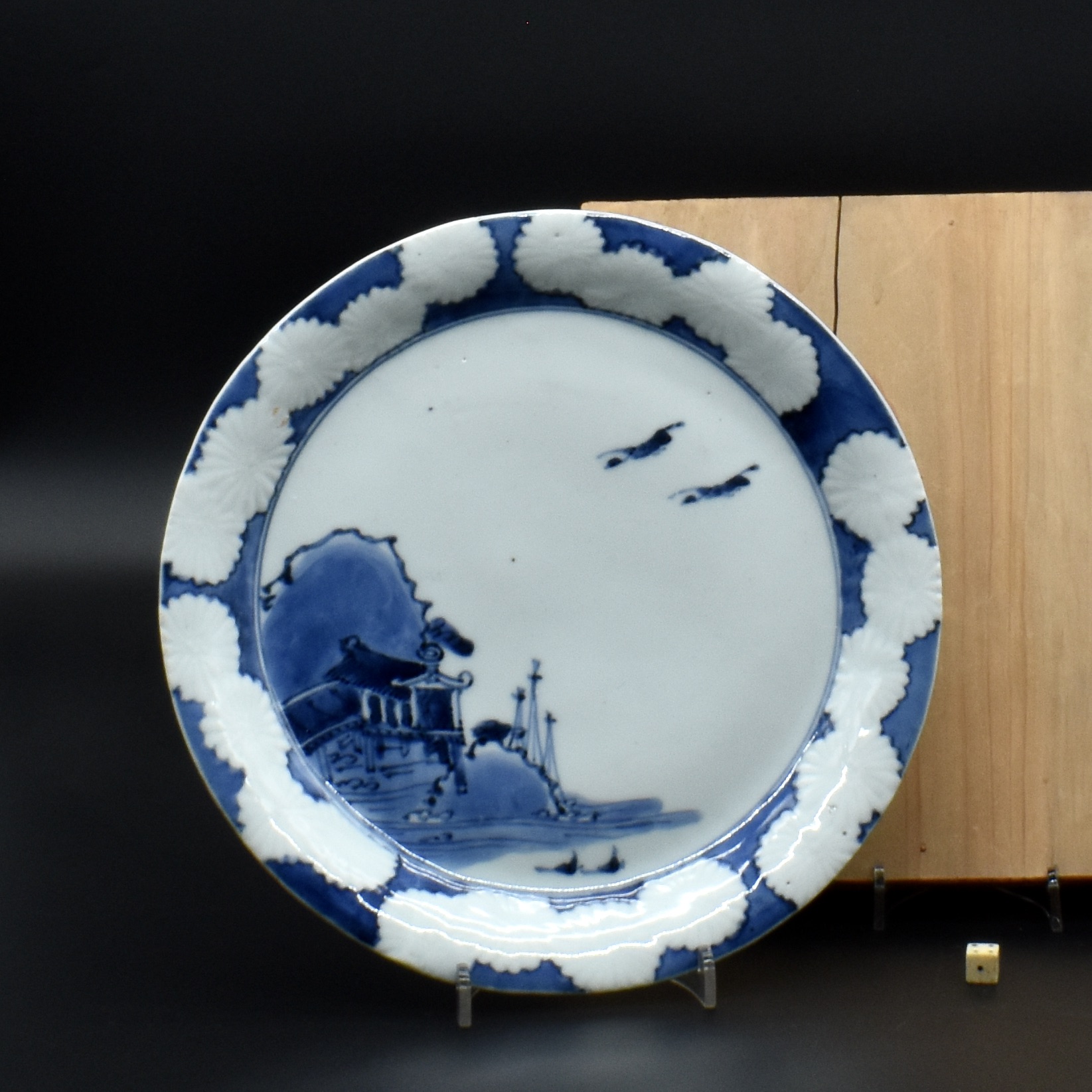
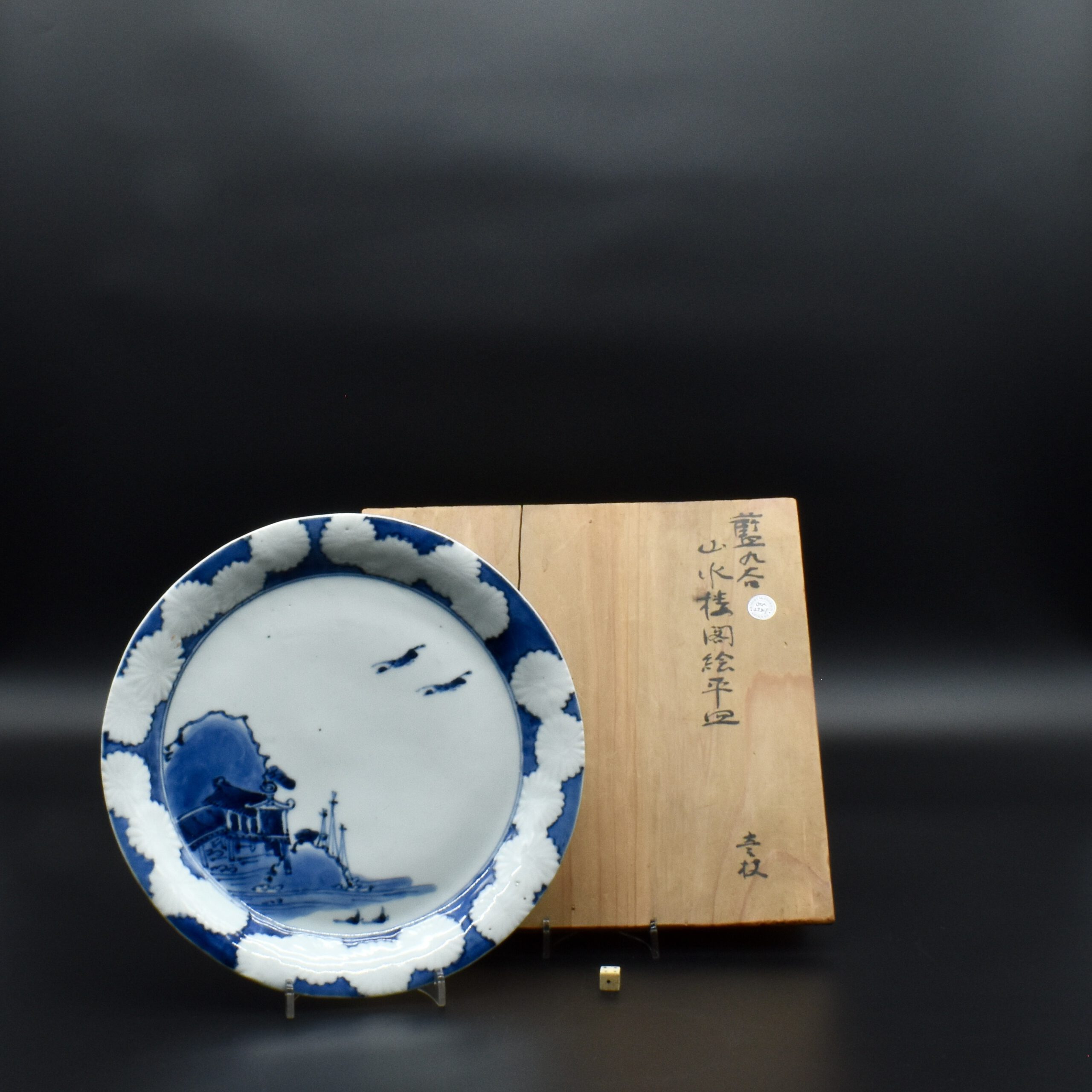
A 17th Century Japanese Moulded Blue and White Arita Dish. This unusual dish dates to the around the 1660s, and is from a group referred to as Ko-Kutani, even though this dish was made at the Arita kilns. The dish is Arita porcelain has moulded embossed chrysanthemum flower heads to the curved edge, which have been highlighted by a wash of cobalt blue leaving a thicker and therefore darker line of blue around the edges of the moulded flowers. The central scene to the well of the dish has been confidently painted at speed with jagged outlines to the rock on the left. Beneath the rock is a building on stilts next to the water, three fishing nets are hanging up at the edge of the promontory. In the foreground are diminutive two boats, to the right are two geese in flight. The back has two freely drawn fruiting vines, there is a seal mark to the center of the base.
SOLD
See Below For More Photographs and Information
- Condition
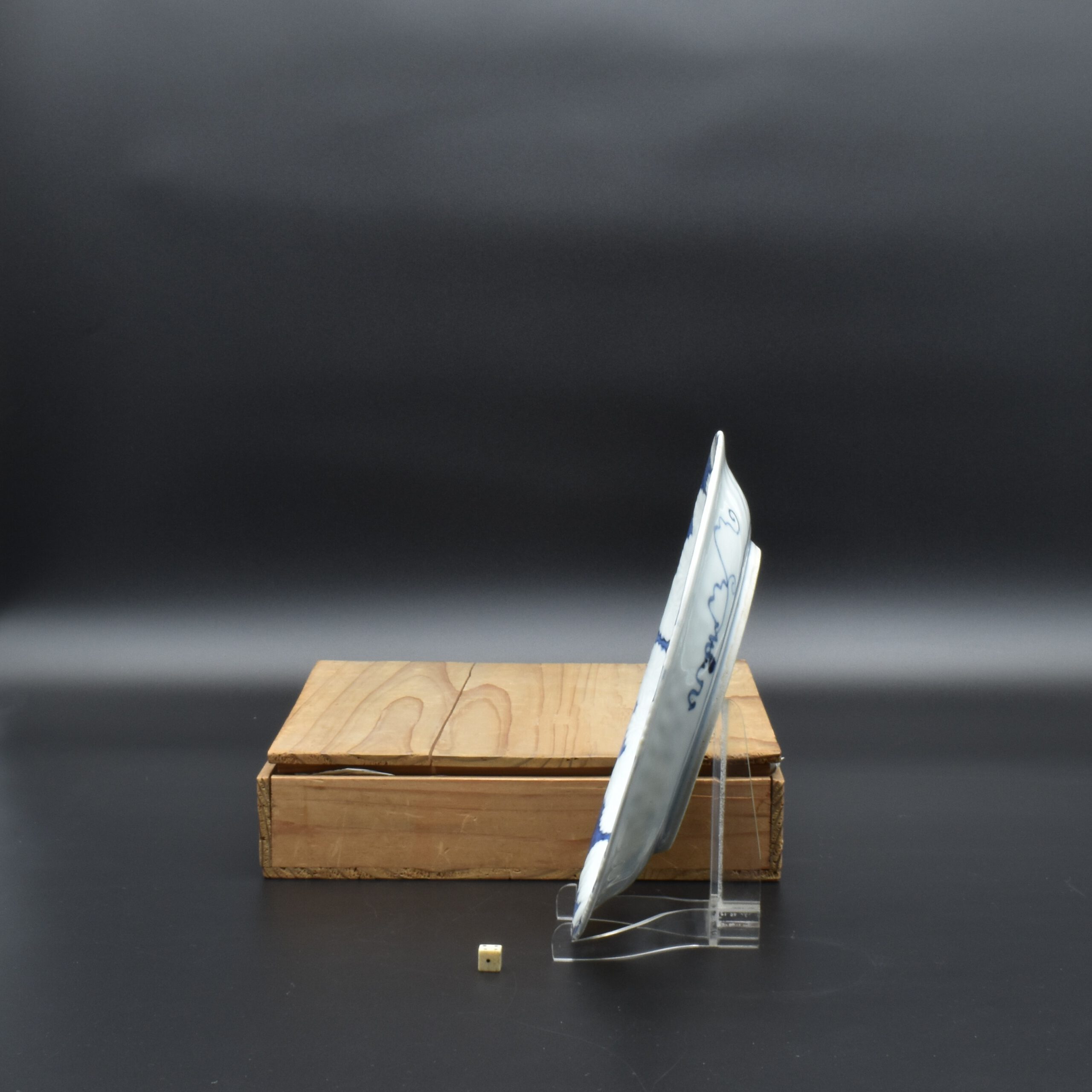
- There isn't any damage, however it is a bit warped.
- Size
- Diameter 22 cm (8 2/3 inches).
- Provenance
- N/A
- Stock number
- 27307
- References
- For a dish of this design and size, see : Complete Catalogue of Shibata Collection (Contributors Saga Kenritsu Kyūshū Tōji Bunkakan. Published by the Kyushu Ceramic Museum, 2019) see plate 0380.
Photos
Information
Tomobako Storage Boxes :
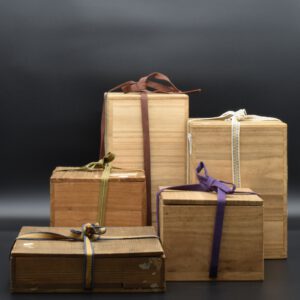
Traditional Japanese ceramic storage boxes, referred to as Tomobako are highly valued and much used in Japan. Most boxes are made from paulownia wood, it is lightweight hardwood and it’s also fire resistant, which is very useful in because Japanese buildings tend to be made of timber and have paper dividers inside. The Islands of Japan are located on a highly complex, unstable, and active geological junction where four major tectonic plates collide and subduct. These islands are essentially built upon the boundaries of these plates, with the archipelago forming as a result of the subduction and volcanic activity caused by these tectonic movements. Therefore the use of tradition tomobako is essential for the survival of ceramics in Japan. Japanese museums don’t have this luxury, so they secure the ceramic objects with nylon, which looks very much like fishing line. The paulownia is a fast growing tree, so it isn’t too expensive. It is believed that the phoenix, symbolising wisdom and prosperity, will only land on a paulownia tree when a worthy ruler is in power.
Tomobako containers that protect, store, and often certify the authenticity of the pottery inside. They are typically signed by the owner of the antique ceramic item in the box. They are tied with cord in a specific way, this is regarded as part of the ritual ceremony among a gathering of friends in Japan. Of course not everything in these boxes is what it might seem. Some contain surprising objects, so you will have to wait and see what we have in these boxes.
Traditional Japanese ceramic storage boxes, referred to as Tomobako are highly valued and much used in Japan. Most boxes are made from paulownia wood, it is lightweight hardwood and it’s also fire resistant, which is very useful in because Japanese buildings tend to be made of timber and have paper dividers inside. The Islands of Japan are located on a highly complex, unstable, and active geological junction where four major tectonic plates collide and subduct. These islands are essentially built upon the boundaries of these plates, with the archipelago forming as a result of the subduction and volcanic activity caused by these tectonic movements. Therefore the use of tradition tomobako is essential for the survival of ceramics in Japan. Japanese museums don’t have this luxury, so they secure the ceramic objects with nylon, which looks very much like fishing line. The paulownia is a fast growing tree, so it isn’t too expensive. It is believed that the phoenix, symbolising wisdom and prosperity, will only land on a paulownia tree when a worthy ruler is in power.
Tomobako containers that protect, store, and often certify the authenticity of the pottery inside. They are typically signed by the owner of the antique ceramic item in the box. They are tied with cord in a specific way, this is regarded as part of the a ritual ceremony among a gathering of friends in Japan. Of course not everything in these boxes is what it might seem. Some contain surprising objects, so you will have to wait and see what we have in these boxes.