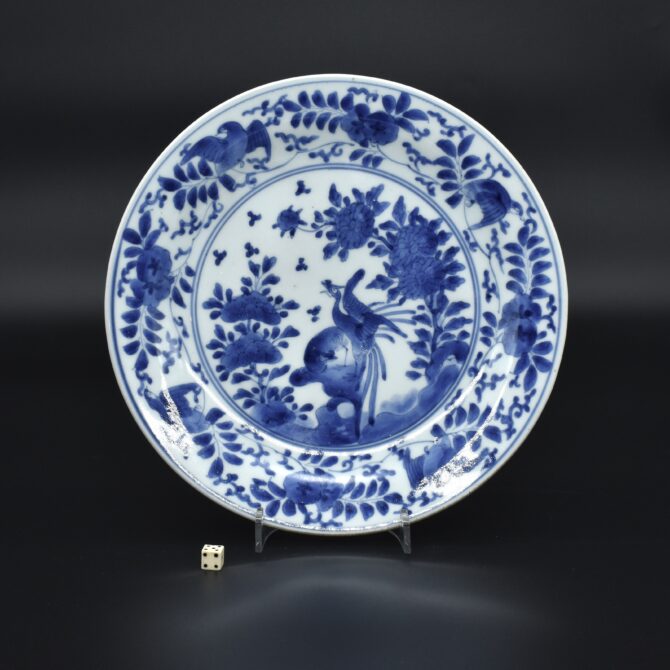
A 17th Century Kakiemon Blue and White Porcelain Plate.
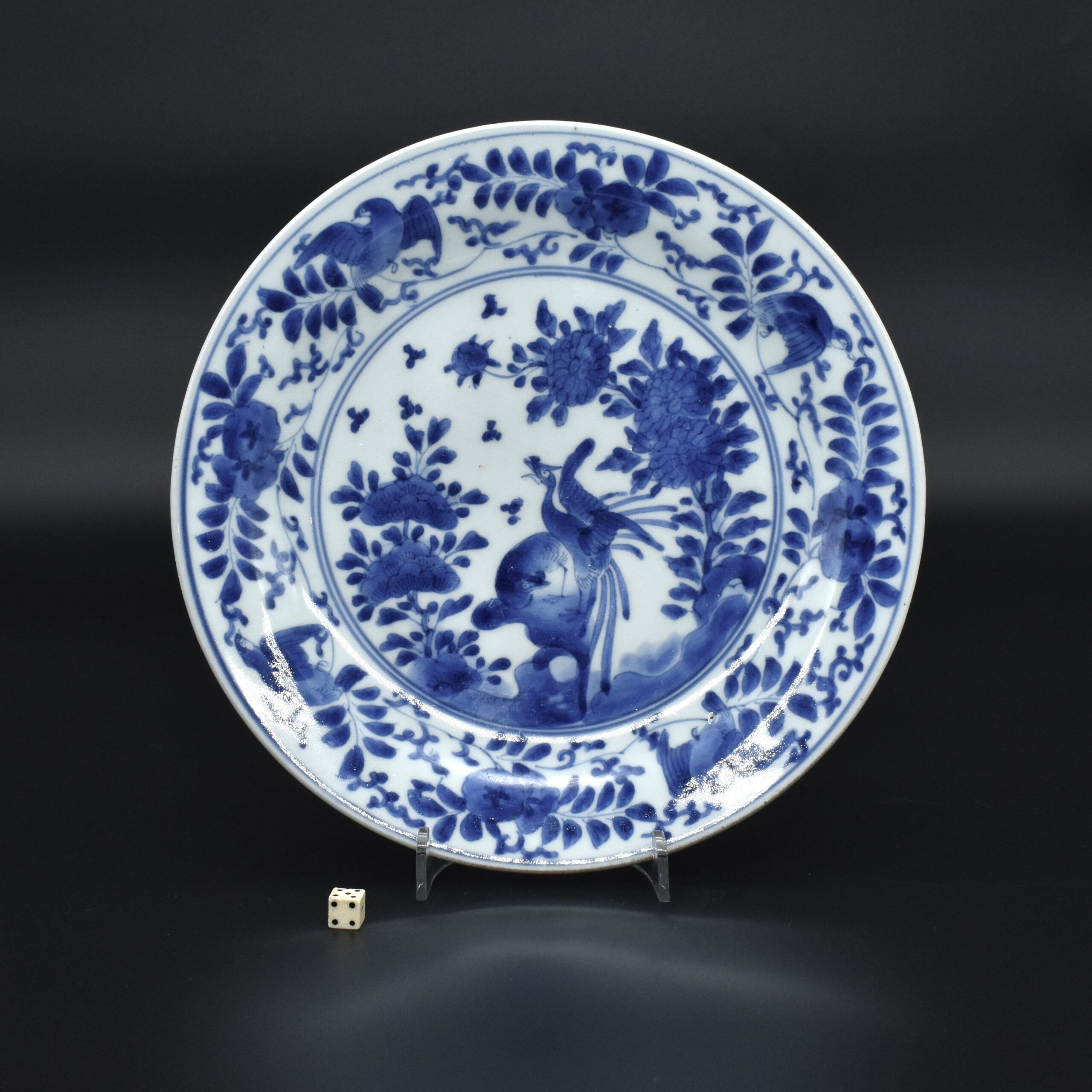
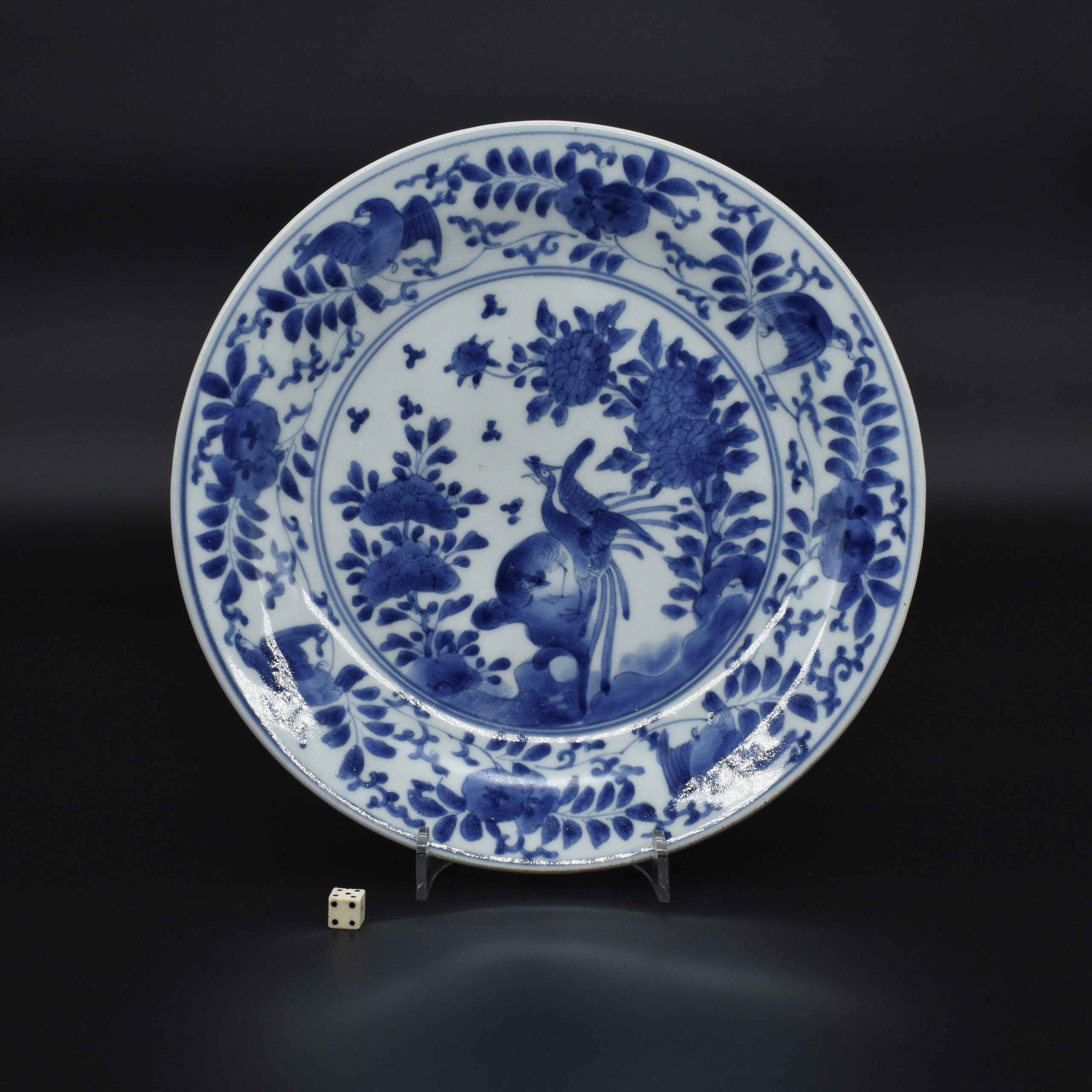
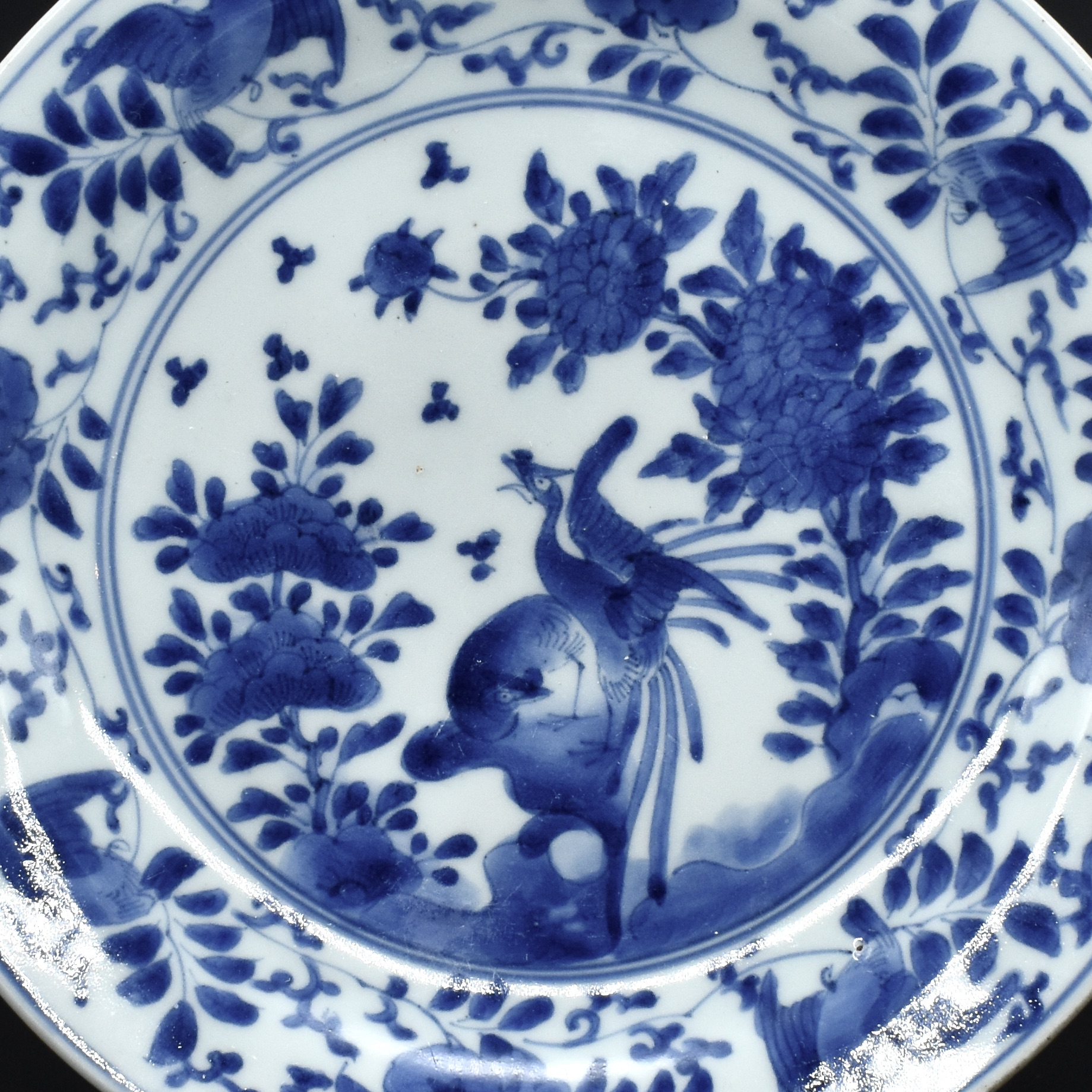
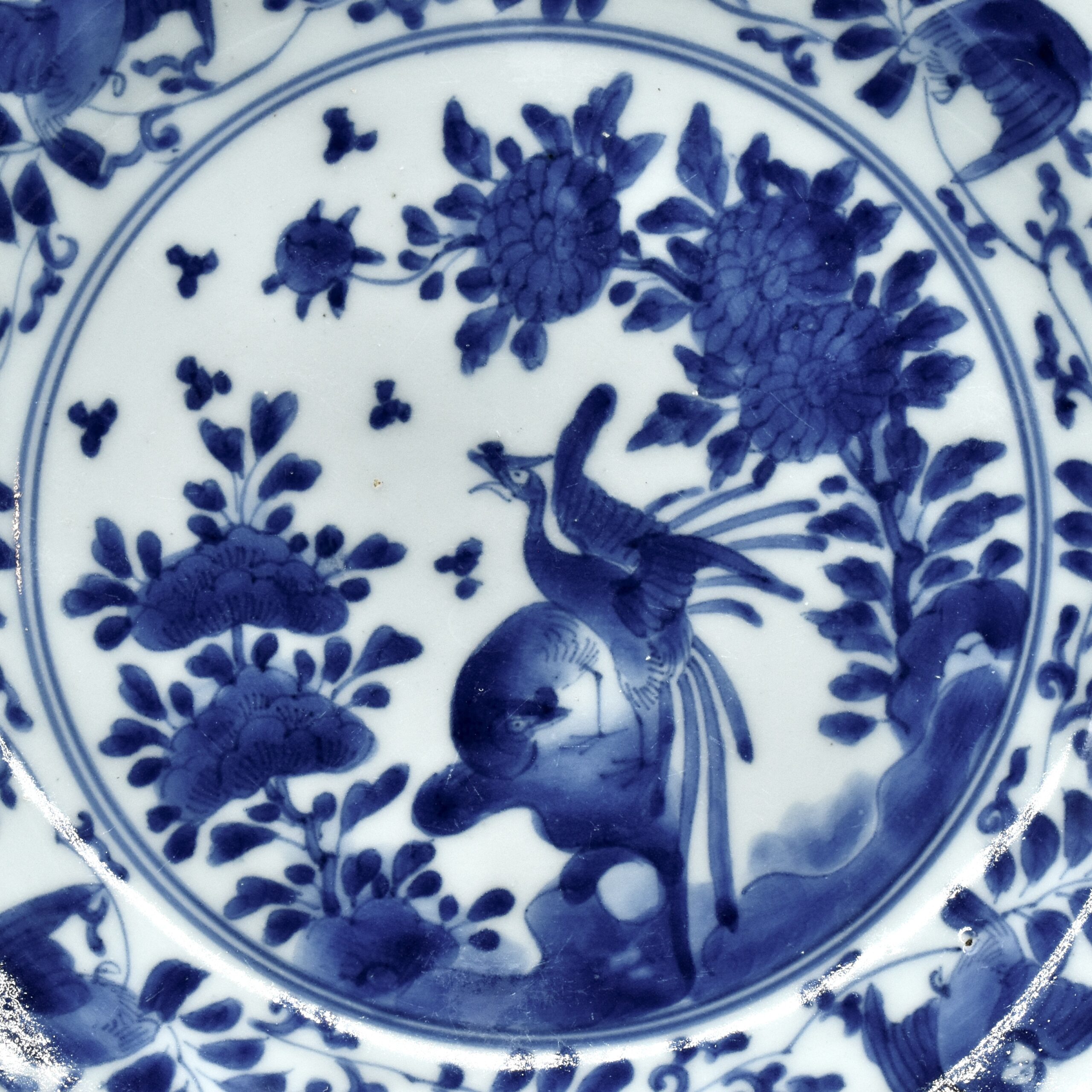
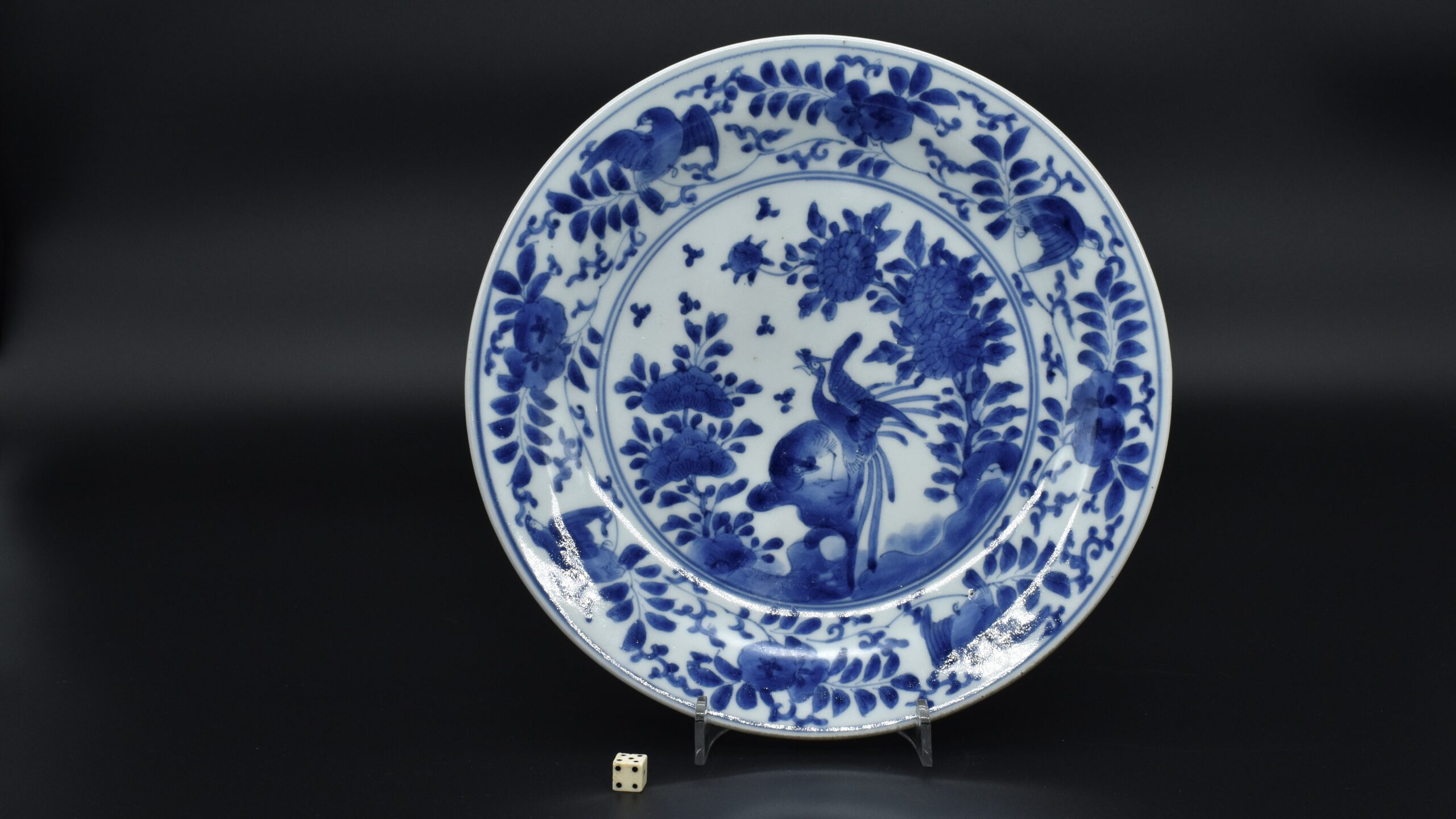
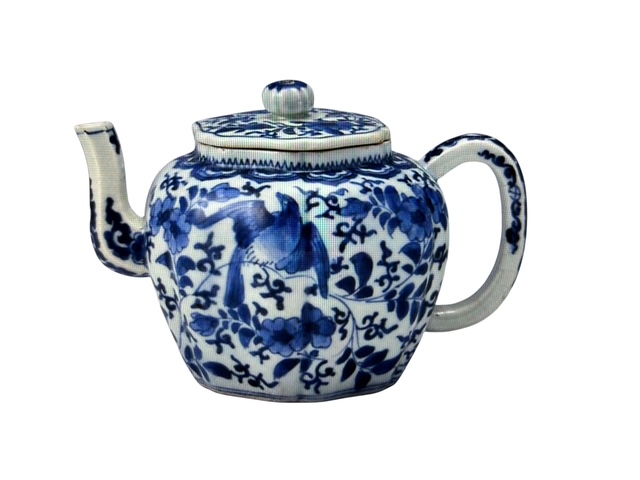
A 17th Century Kakiemon Blue and White Porcelain Plate, Kakiemon Kilns c.1670-1690. This design is well known in the West and is represented in many European collections of Japanese porcelain, it was clearly a popular export type in the late 17th century. For a related teapot at the British Museum see ‘Information’ below. The design shows a pair of Japanese Hō-ō birds perched on a rock with chrysanthemum to the right and peony to the left. The border is with birds among scrolling foliage. A plate of this design and approximate size, but with a Ko mark, from the collection of Dr. Oliver Impey is illustrated in the book Ko-Imari Porcelain from the Collection of Oliver Impey (see References). The catalogue entry states that sherds of similar examples have been excavated at the Kakiemon kiln site.
See Below For More Photographs and Information.
Hō-ō Bird / Ho-Ho Bird :
The Japanese Hō-ō bird is type of auspicious phoenix and is similar to the Chinese Fenghuang. the Hō-ō appears only in peaceful and prosperous times (nesting, it is said, in paulownia trees), and hides itself when there is trouble. As the herald of a new age, the Hō-ō descends from heaven to earth to do good deeds, and then it returns to its celestial abode to await a new era. It is both a symbol of peace (when the bird appears) and a symbol of disharmony (when the bird disappears). The Hō-ō Bird appears frequently in Japanese porcelain of the late 17th and early 18th centuries, especially in Kakiemon wares. Ho-Ho is often used when referring to English porcelain versions of these Kakiemon designs.
- Condition
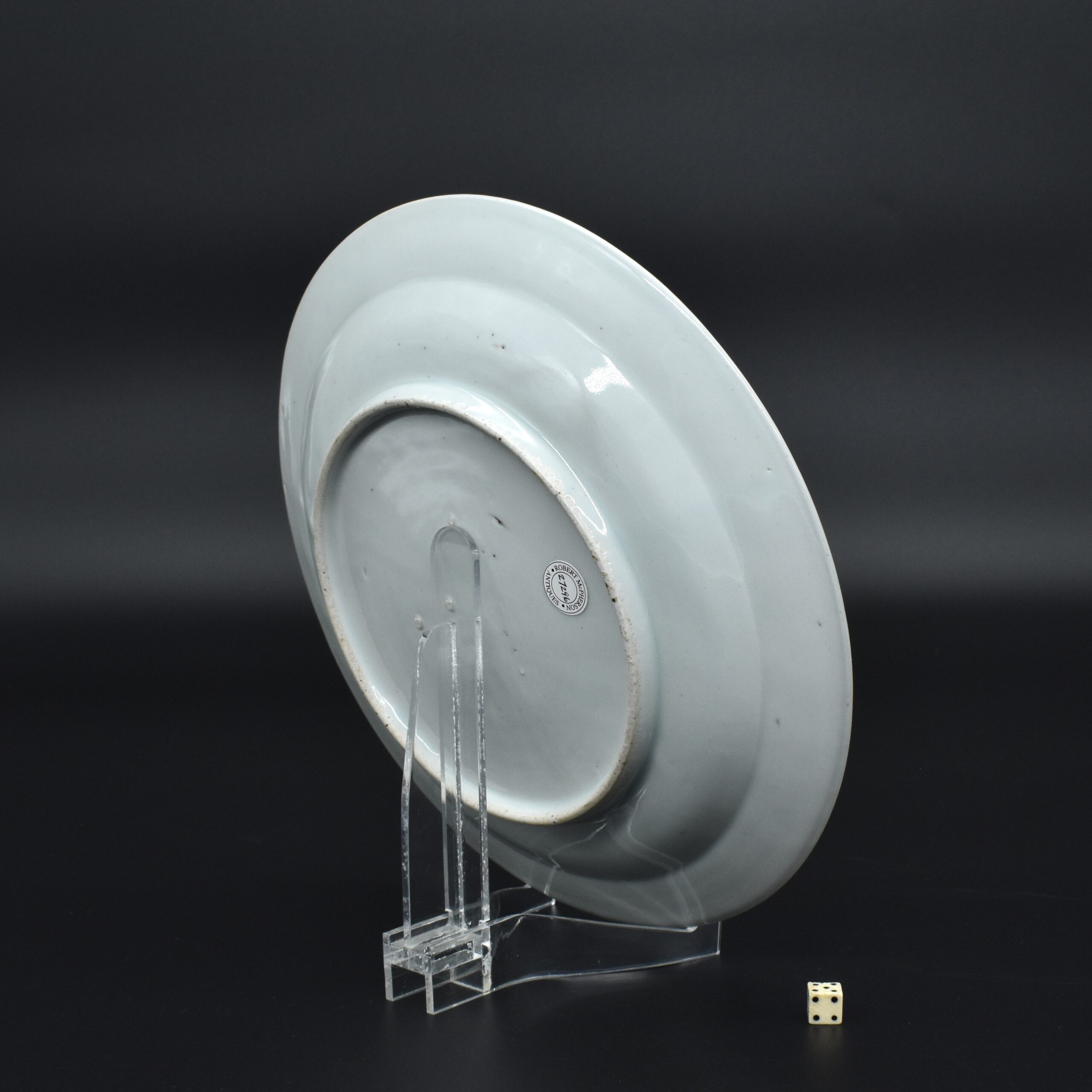
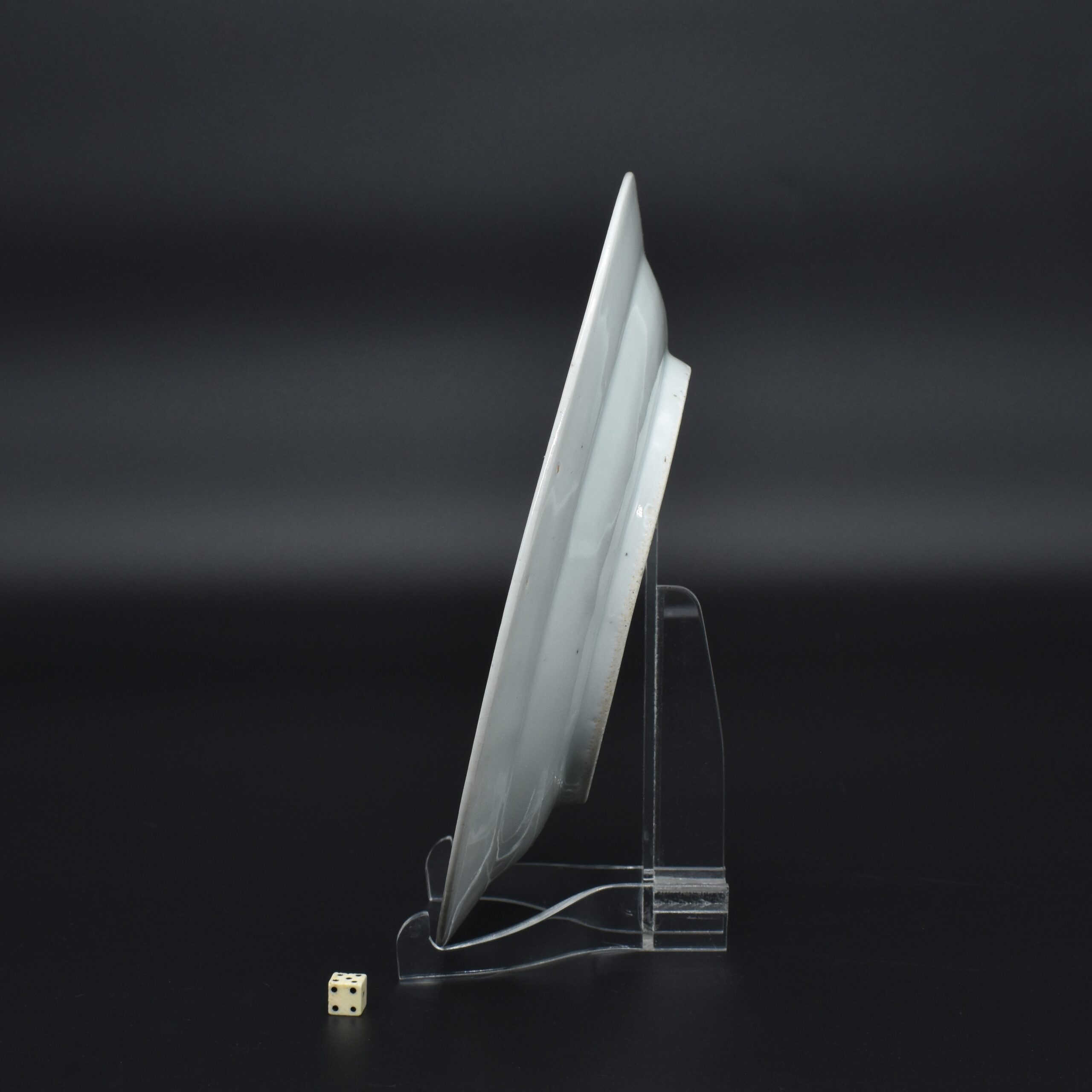
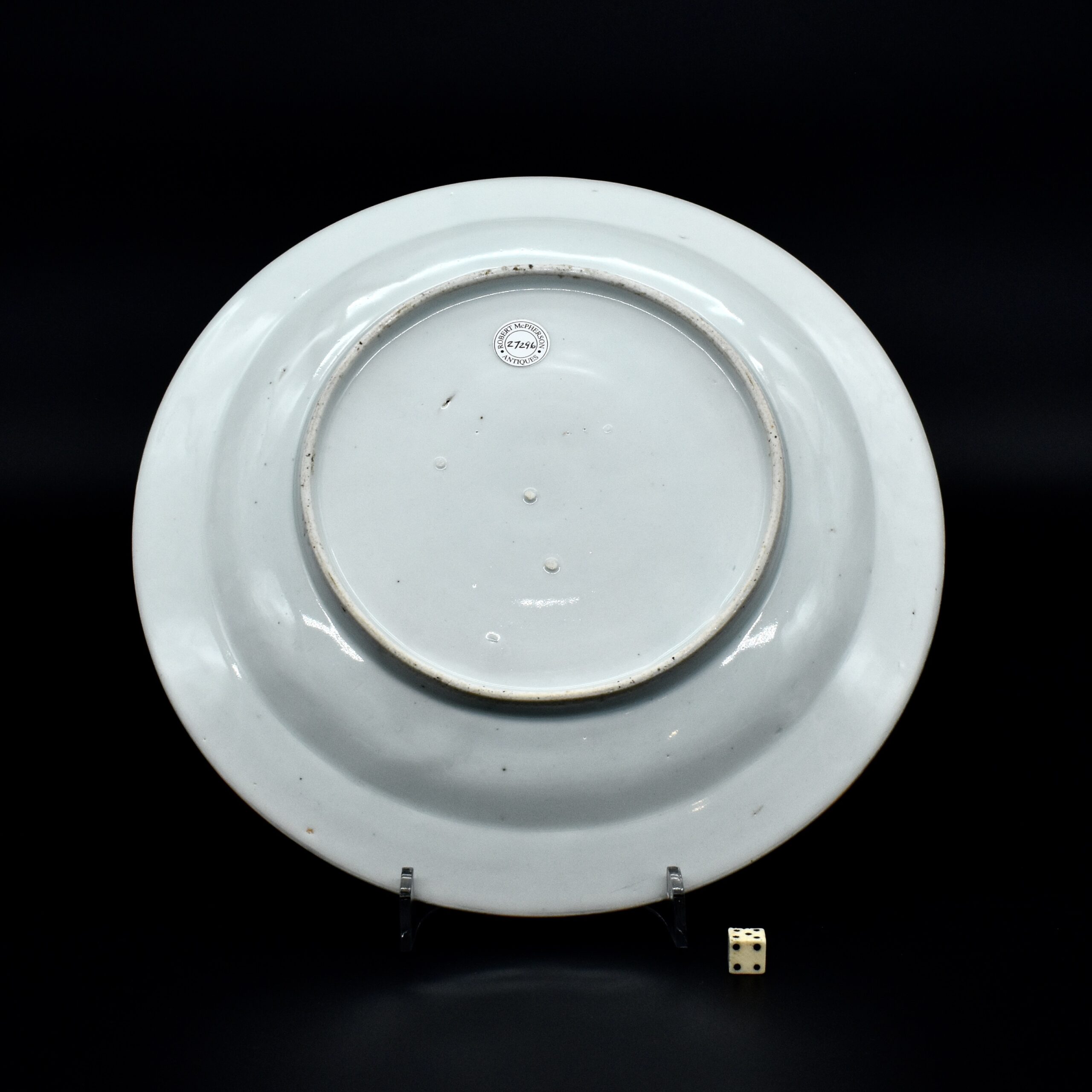
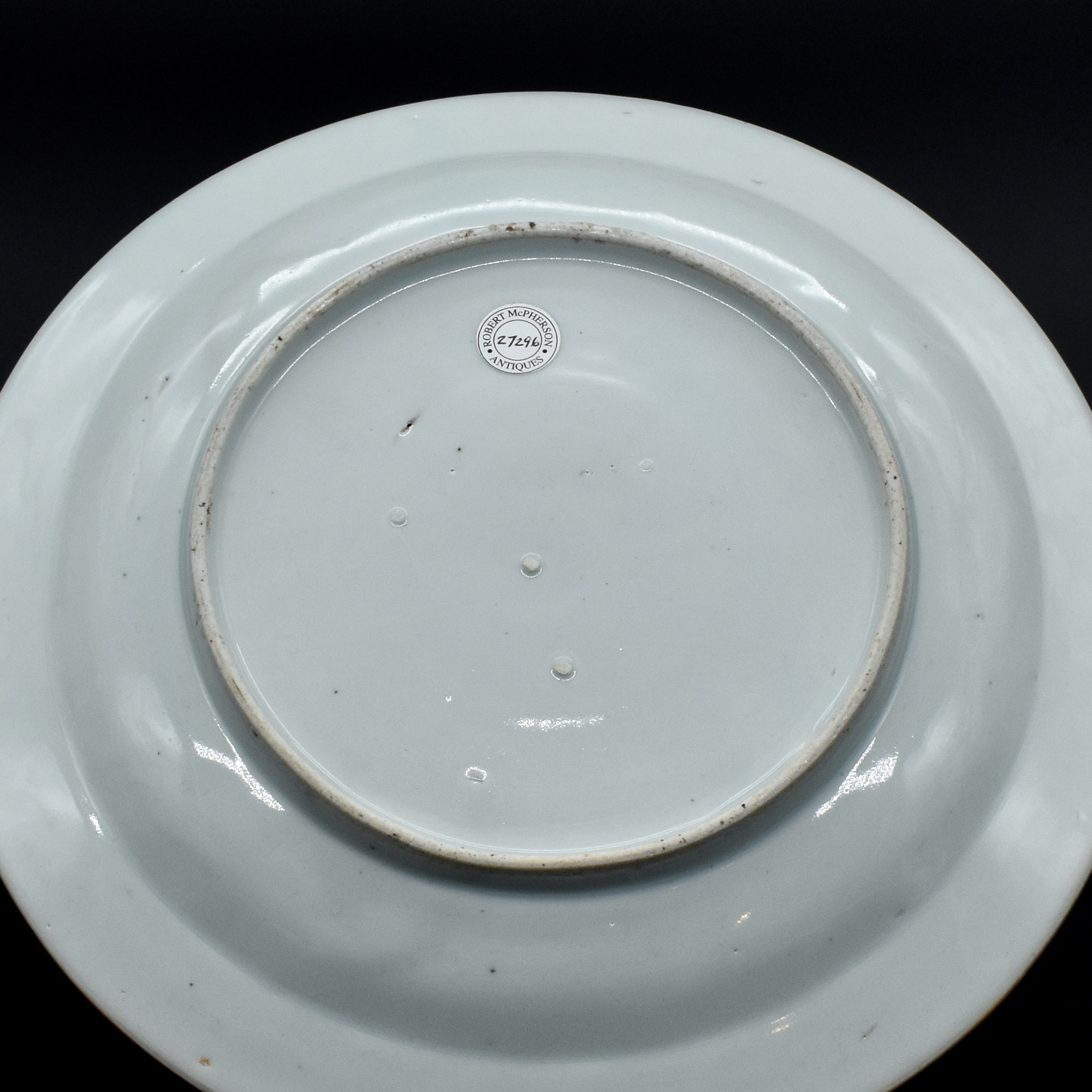
- Minor stacking wear, a few light scratches. A small section of the rim has slight grey discolouration due to firing.
- Size
- Diameter 21.3 cm (8.4 inches).
- Provenance
- Purchased from a dealer in the Netherlands.
- Stock number
- 27296
- References
- For a Kakiemon plate of this design and size see : Ko-Imari Porcelain From The Collection of Oliver Impey (Barry Davies Oriental Art Ltd, 1 Davies Street. Exhibition 17th to 27th of June 1997) page 100, item 49. This was a sale catalogue. For a related teapot at the British Museum see Information below.
- £ GBP
- € EUR
- $ USD
Photos
Information
A similar blue and white Kakiemon teapot at British Museum
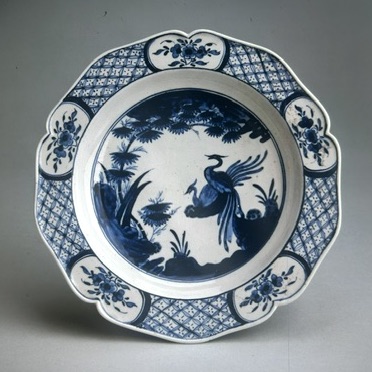
A related Chelsea Porcelain Plate
Kakiemon Porcelain
While there is much debate about what was actually made at the Kakiemon kilns, and was made at Arita, it seems clear that the Nigoshide body was exclusively used at Kakiemon. There has been allot of Japanese research undertaken at the Kakiemon kilns, and fragments of porcelain as well as moulds have been recovered from the kiln sites, unfortunately I have only found this information in Japanese books (in Japanese). Nigoshide refers to a fine milky-white porcelain body that glows with a warm tint, in Japan it is said to be reminiscent of rice-water. While white porcelain usually sports a blue tint, Nigoshide porcelain has a soft milky-white appearance. Nigoshide was invented in the 1670s as the perfect porcelain body for complimenting the brilliant polychrome overglaze enamel colours created at Kakiemon. It is notable that the Kakiemon enamel decorated pieces with underglaze blue do not use the Nigoshide body, yet fragments of this type have been recovered from the Kakiemon kiln sits. The main period of production of Kakiemon Nigoshide ware was from about 1670 to 1690. Due to lack of the right materials and economic cutbacks, Nigoshide porcelain went out of production by the mid-18th century, however there was a notable decline in production from around 1690.
Kakiemon decoration is usually of high quality, often delicate and with well-balanced asymmetric designs. The designs were normally quite sparse emphasizing the. Kakiemon porcelain was decorated with a great variety of imaginative designs which include elements such as the `banded hedge`, `flying squirrel`, and the `Quail and Millet` design in the West. The `Three Friends of Winter` were also a very popular group of designs, other subject taken from nature include flowers (especially the chrysanthemum, the national flower of Japan) as well as birds and rock-work. Figural subjects such as the so-called `Hob in the Well` were also popular. This design illustrates a Chinese folk tale where a sage saves his friend who has fallen into a large fish-bowl by throwing stones at it, breaking open the pot. Banded-Hedges were a formal device within Japanese traditional gardens, referred as brushwood hedges. Other elements incorporated in the designs, includes `The Three Friends of Winter` (Pine, Bamboo and Prunus). These three plants signify perseverance, as neither the pine nor the bamboo shed their leaves in winter and the plumb (Prunus) flowers at the very end of the winter, heralding the arrival of spring.