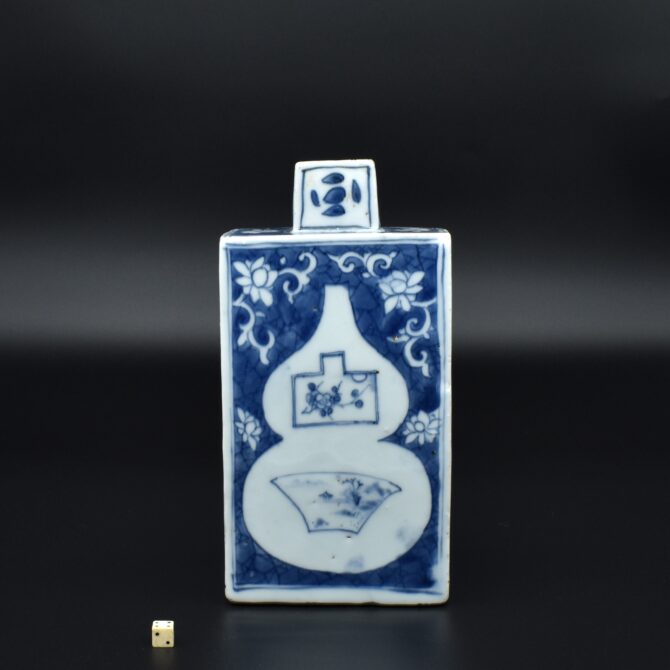
An Unusual Chongzhen Blue and White Export Porcelain Canister c.1640.
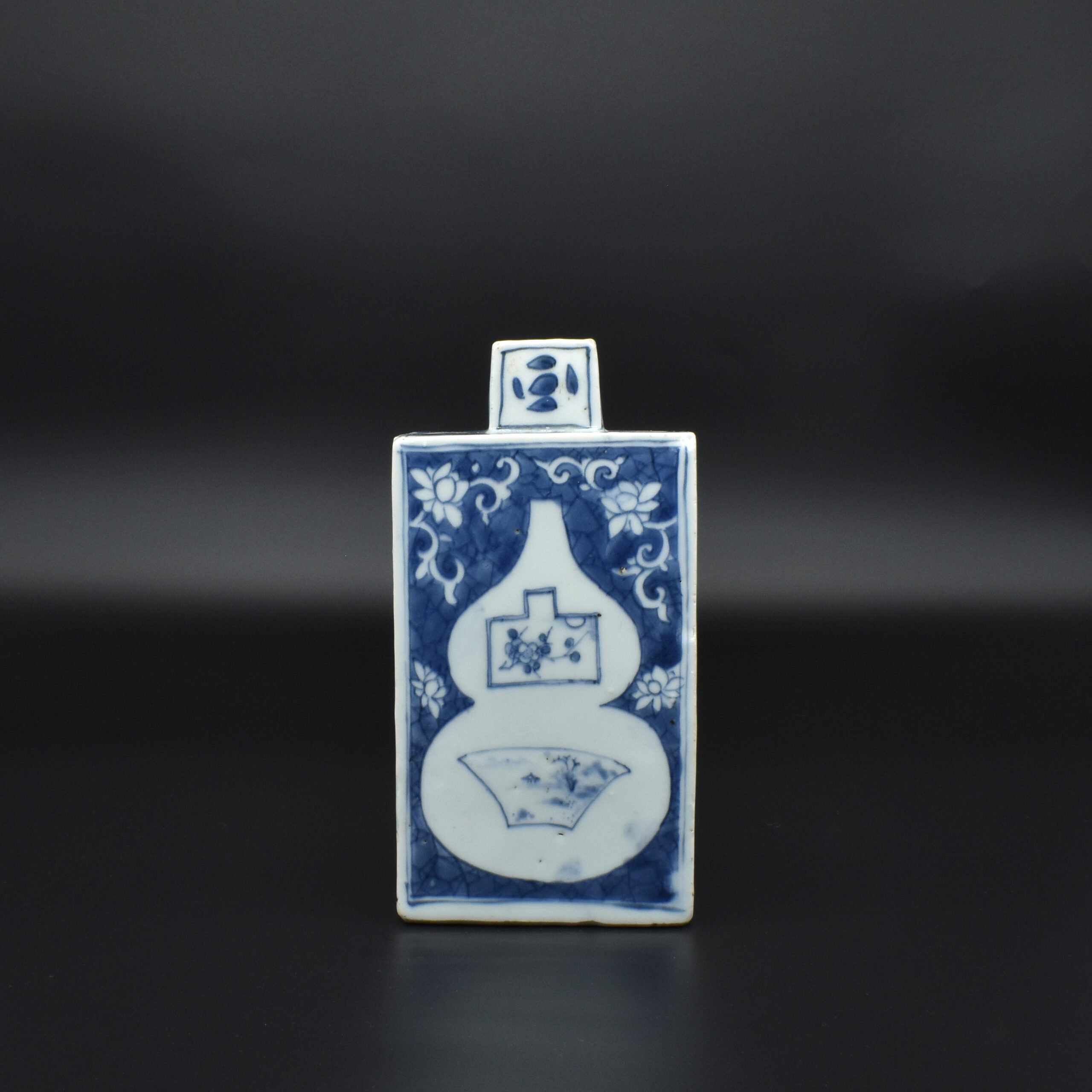
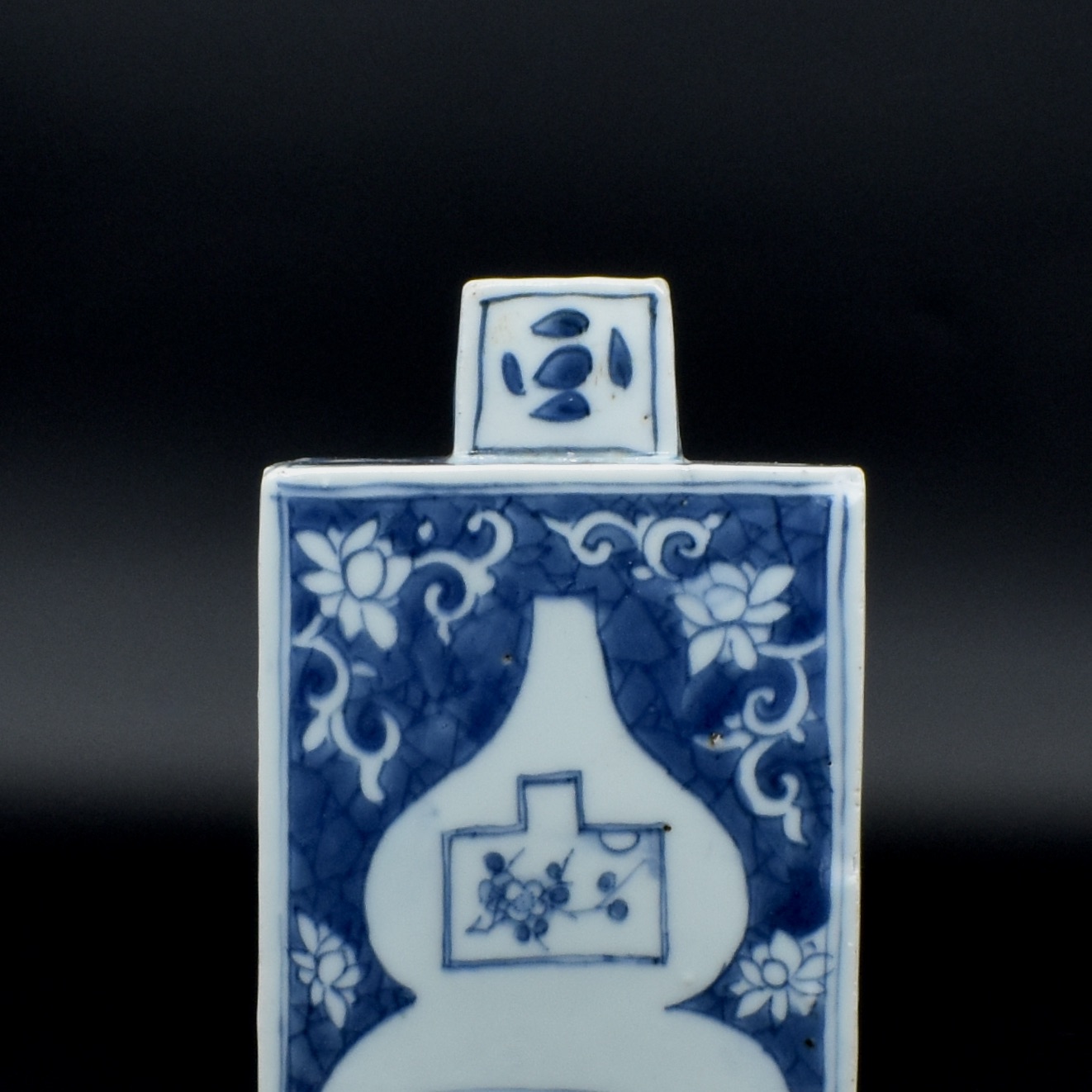
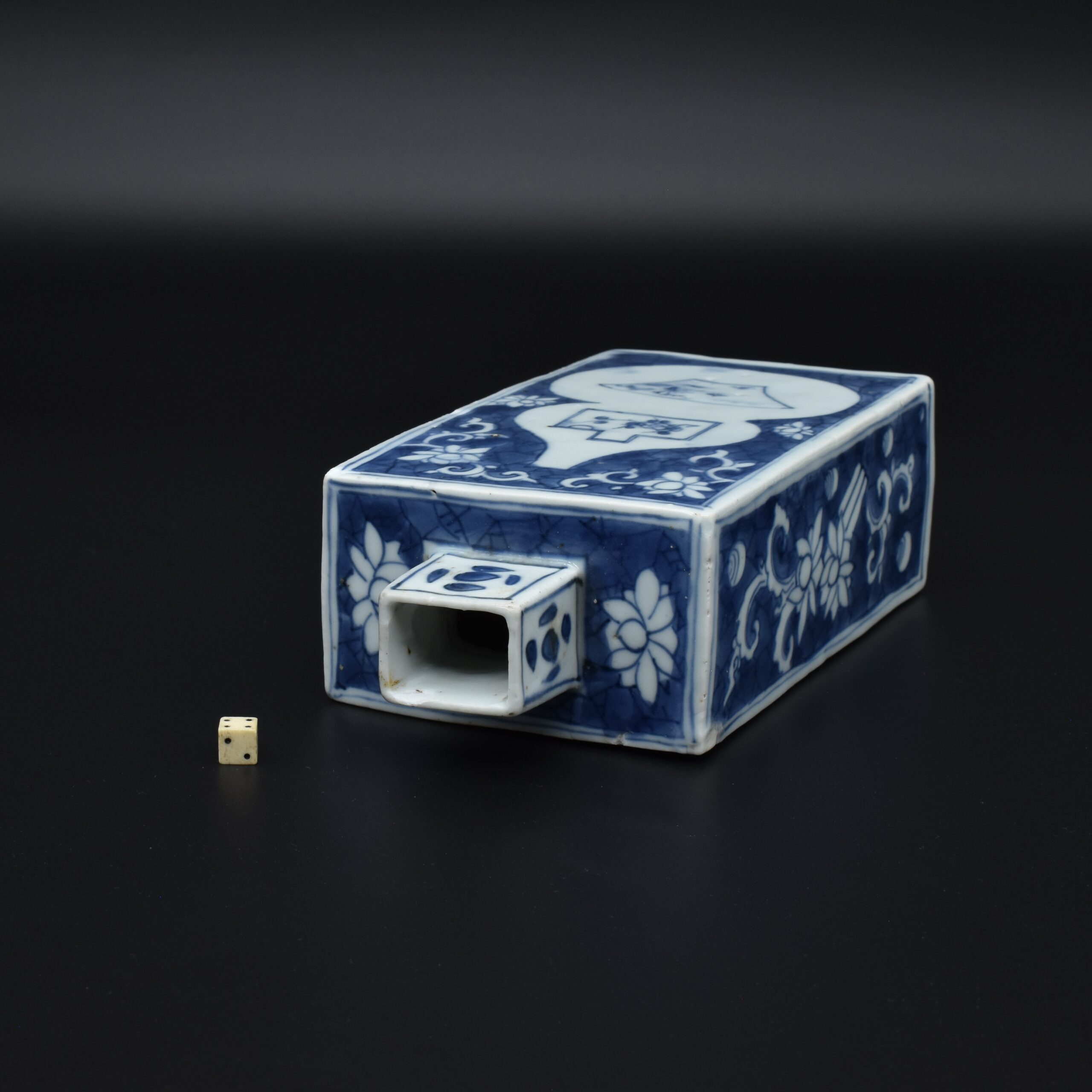
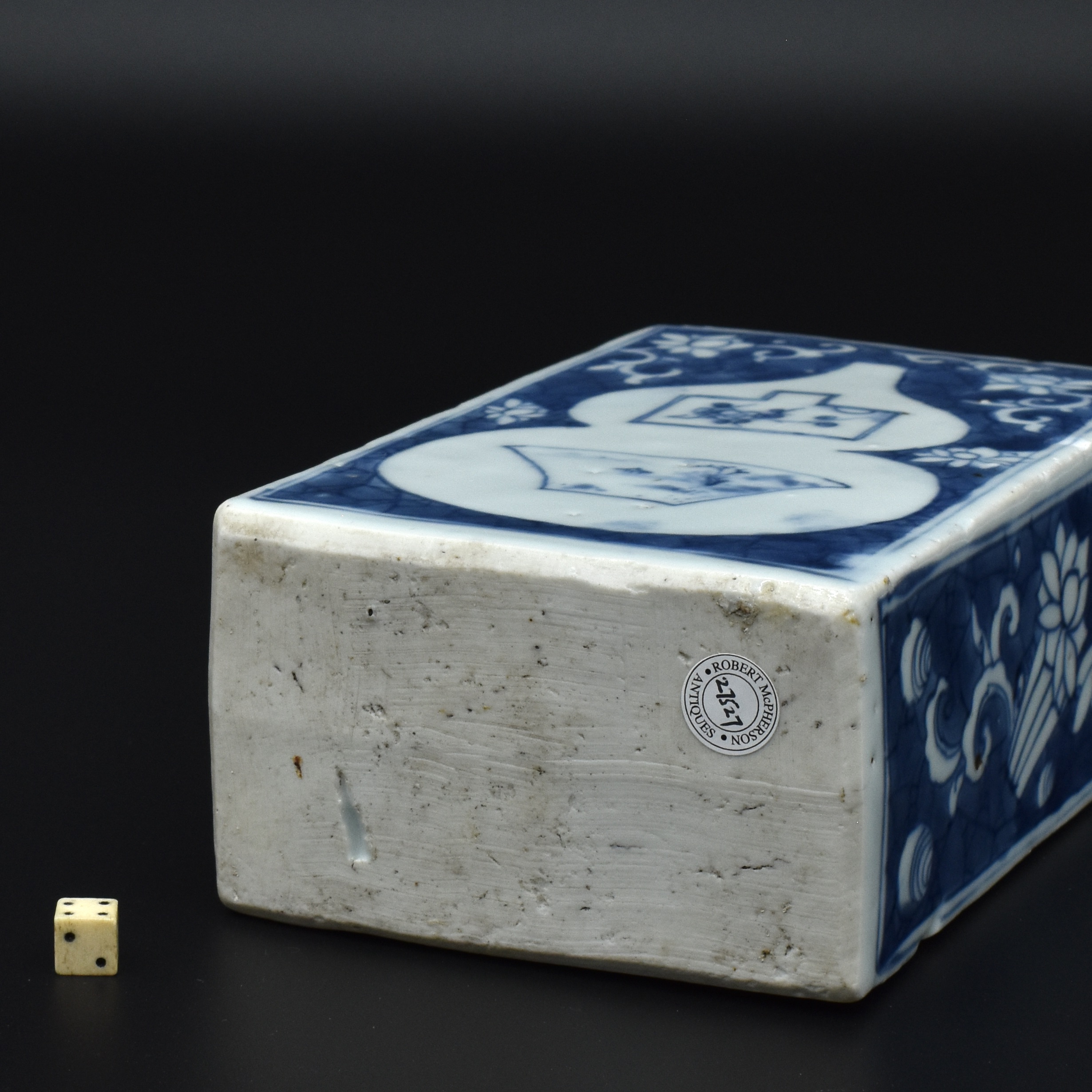
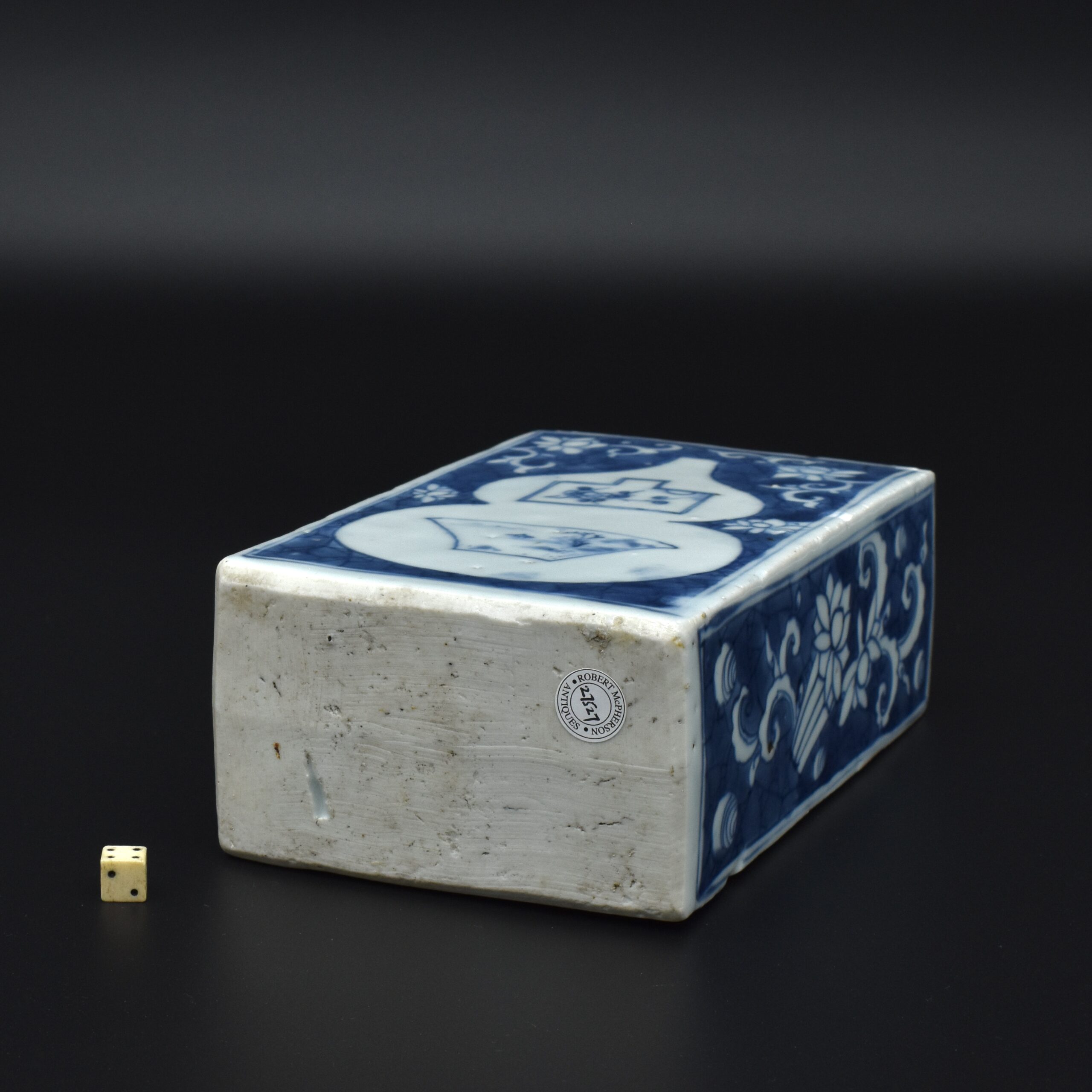
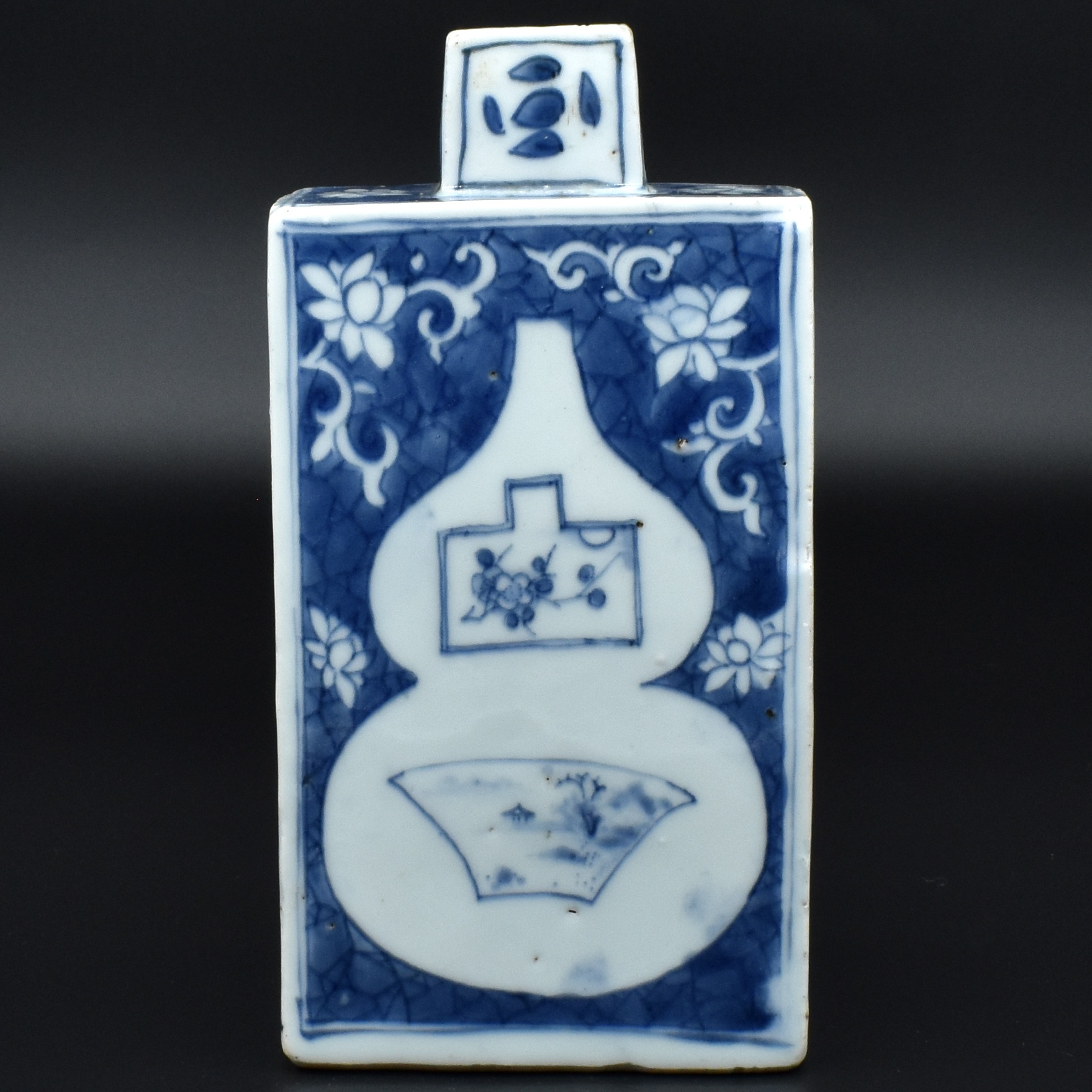
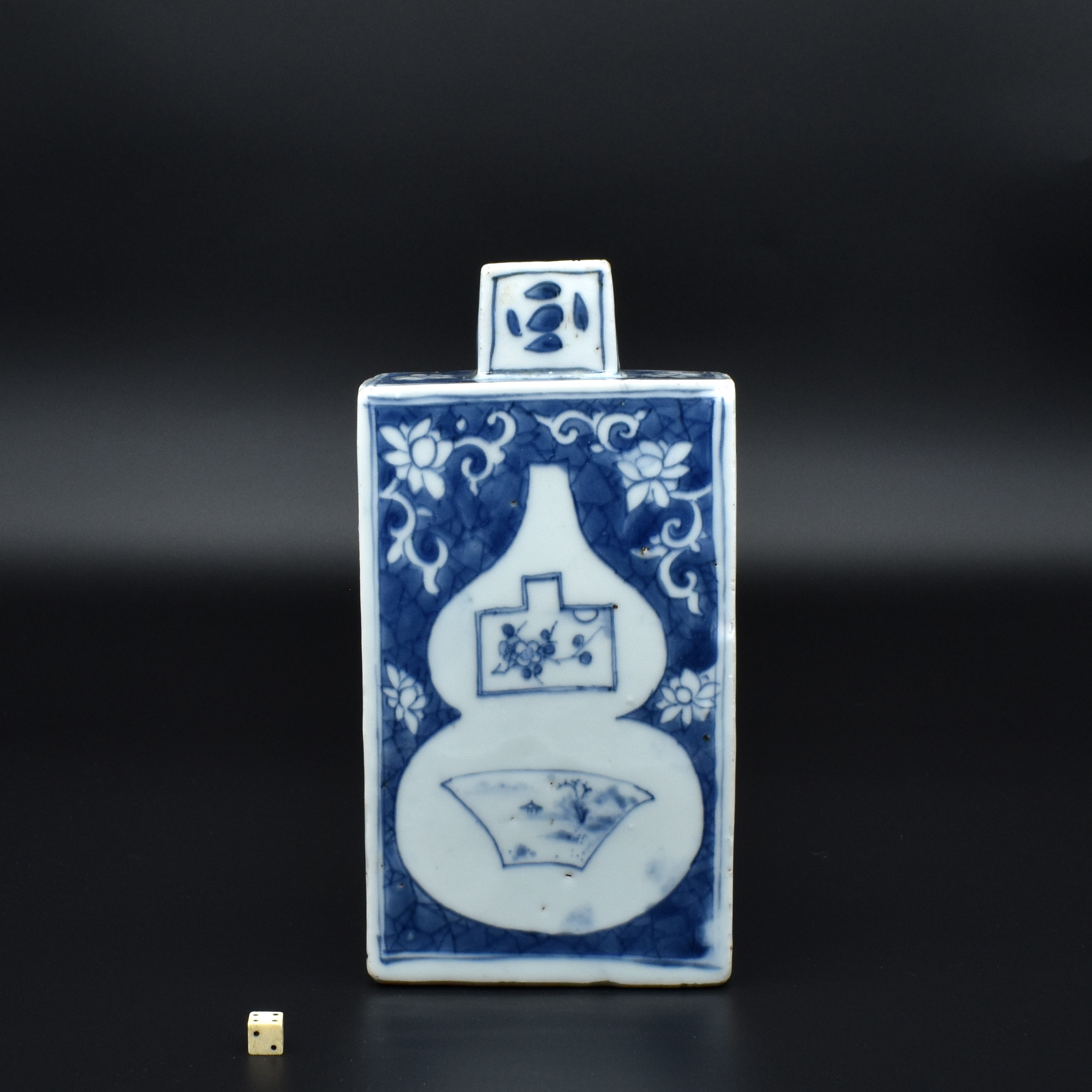
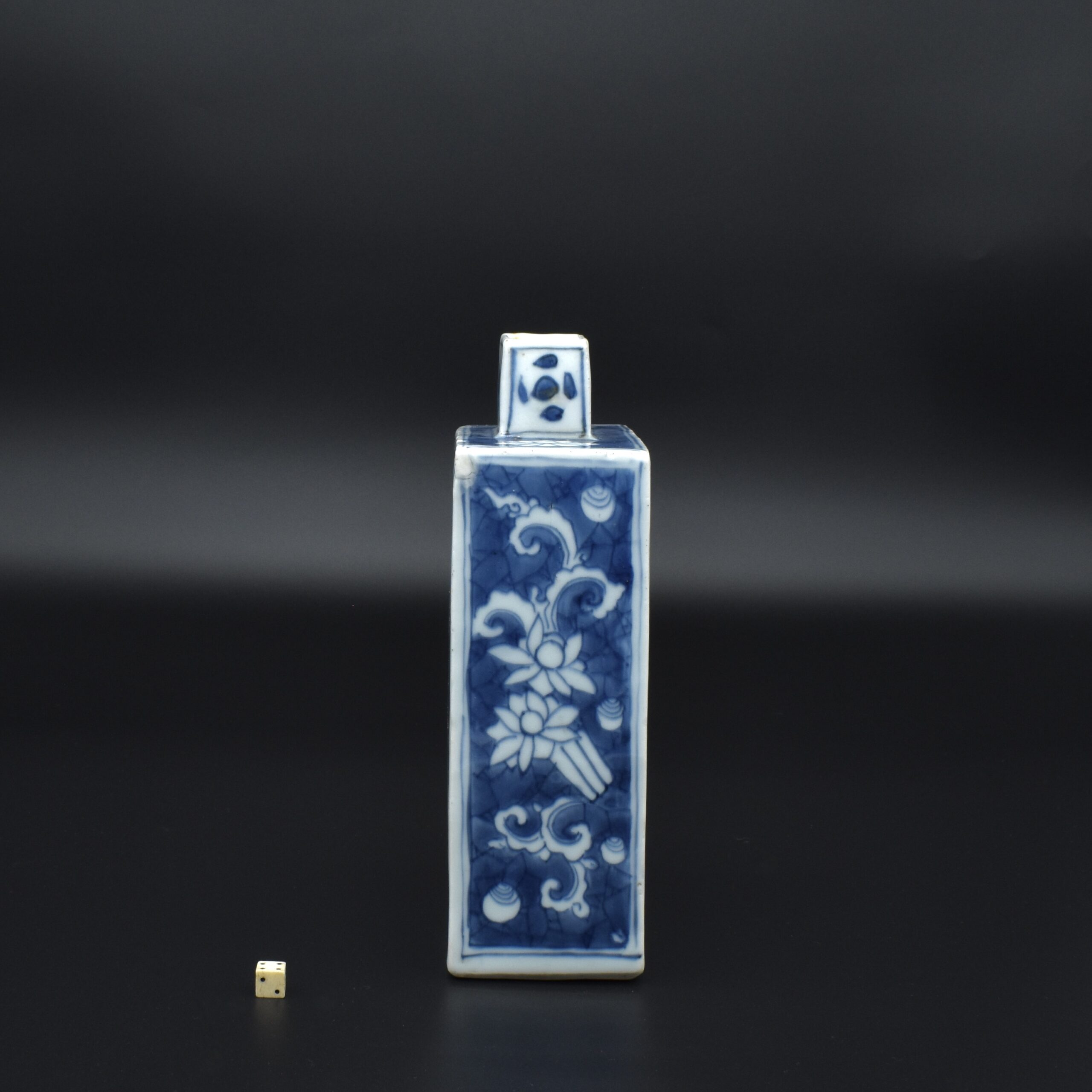
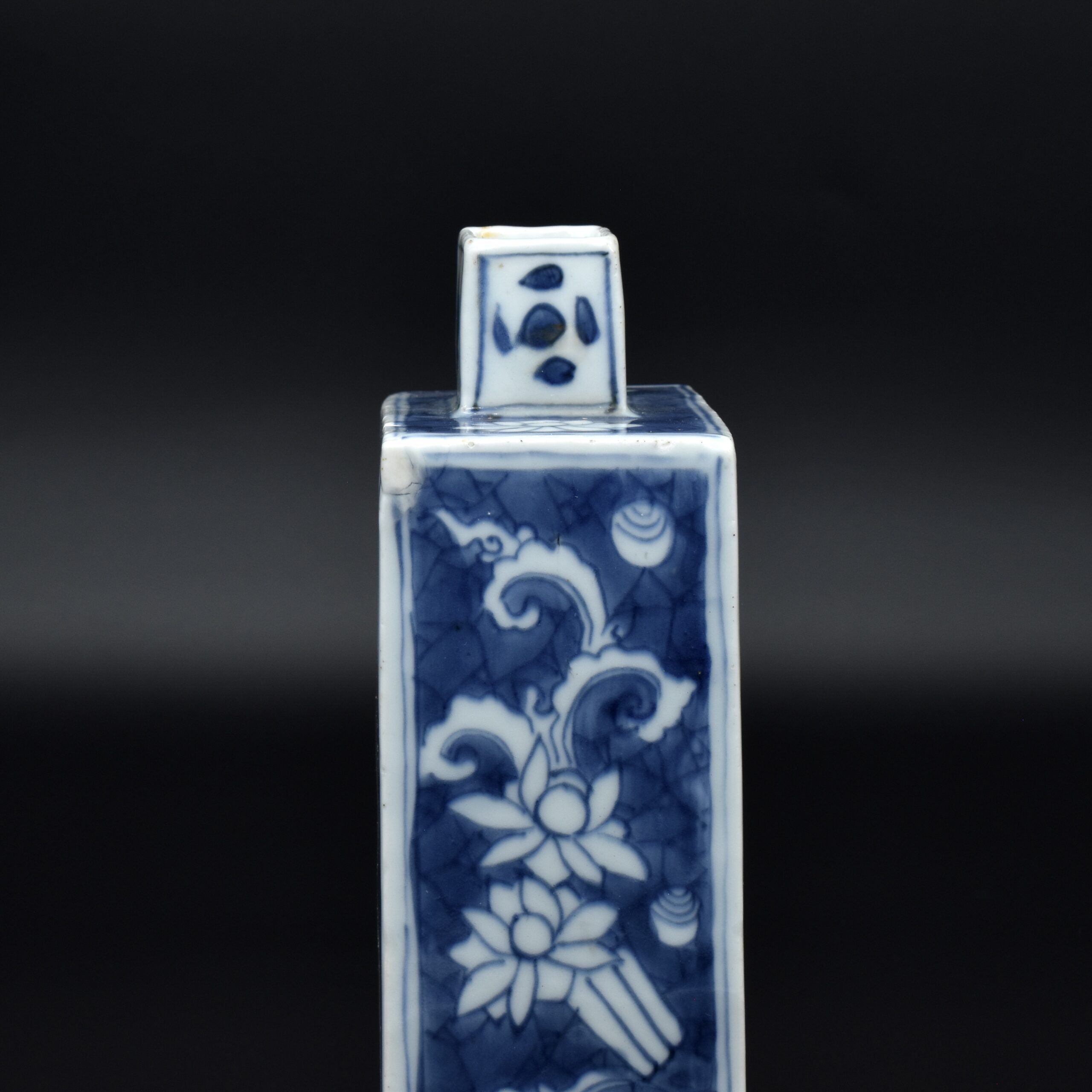
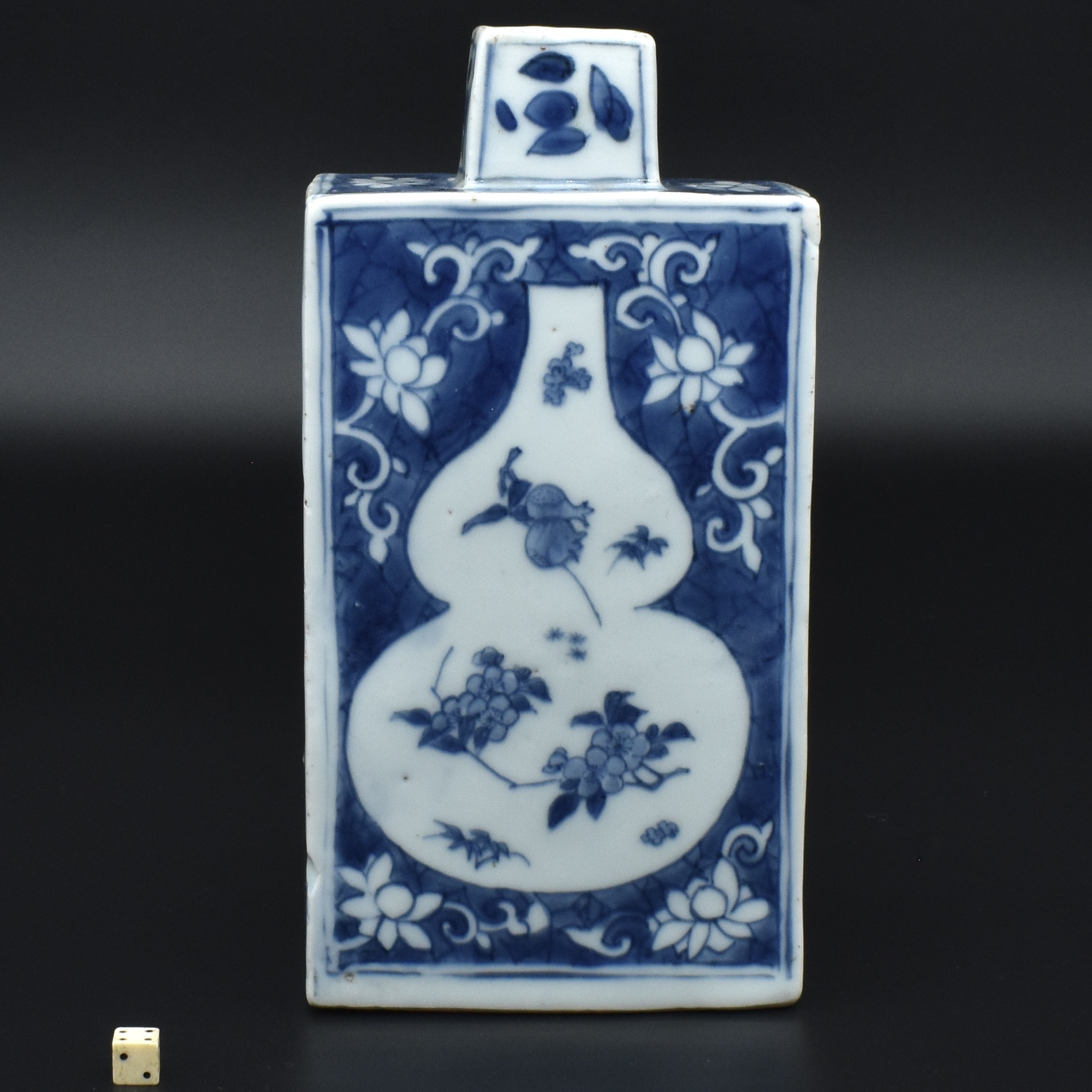
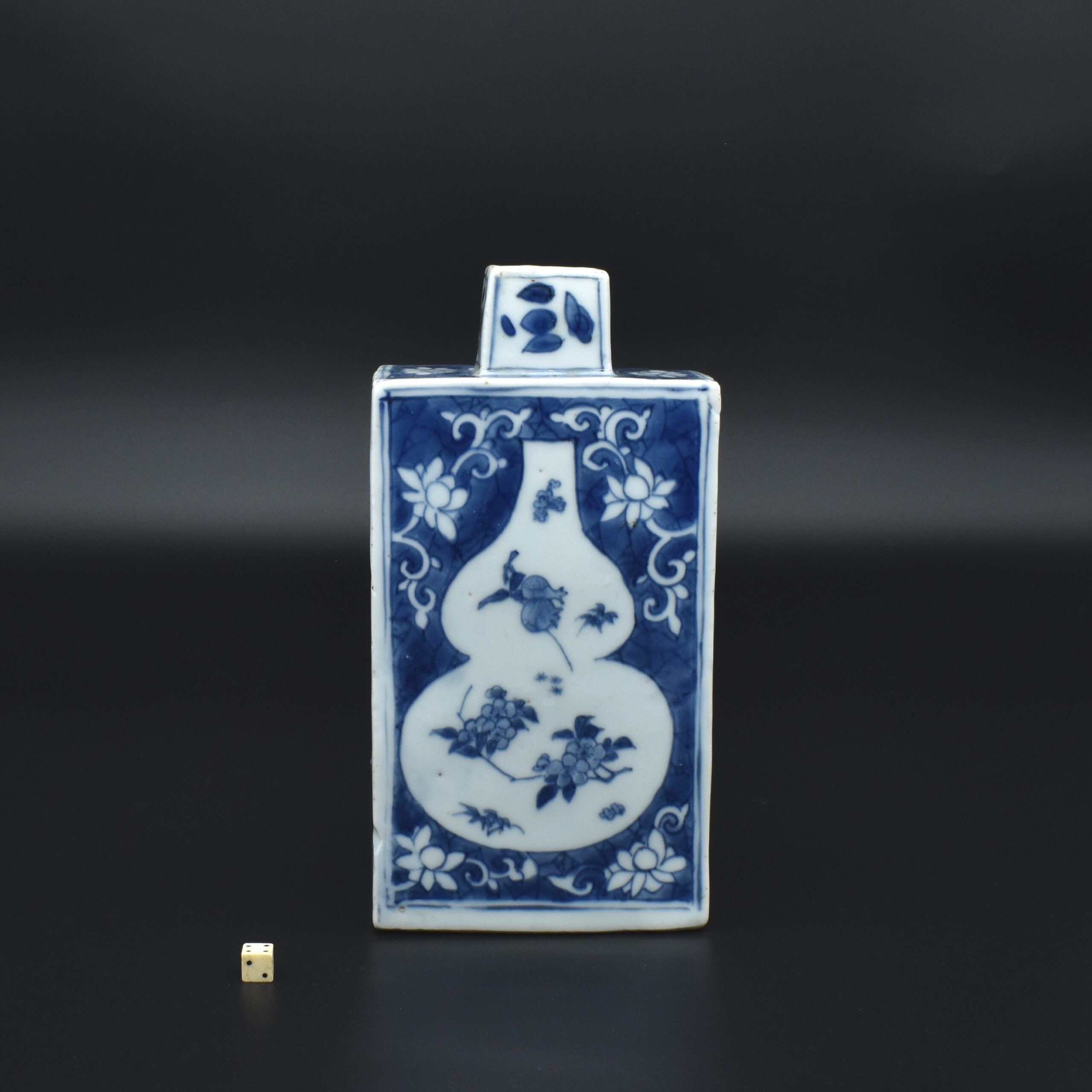
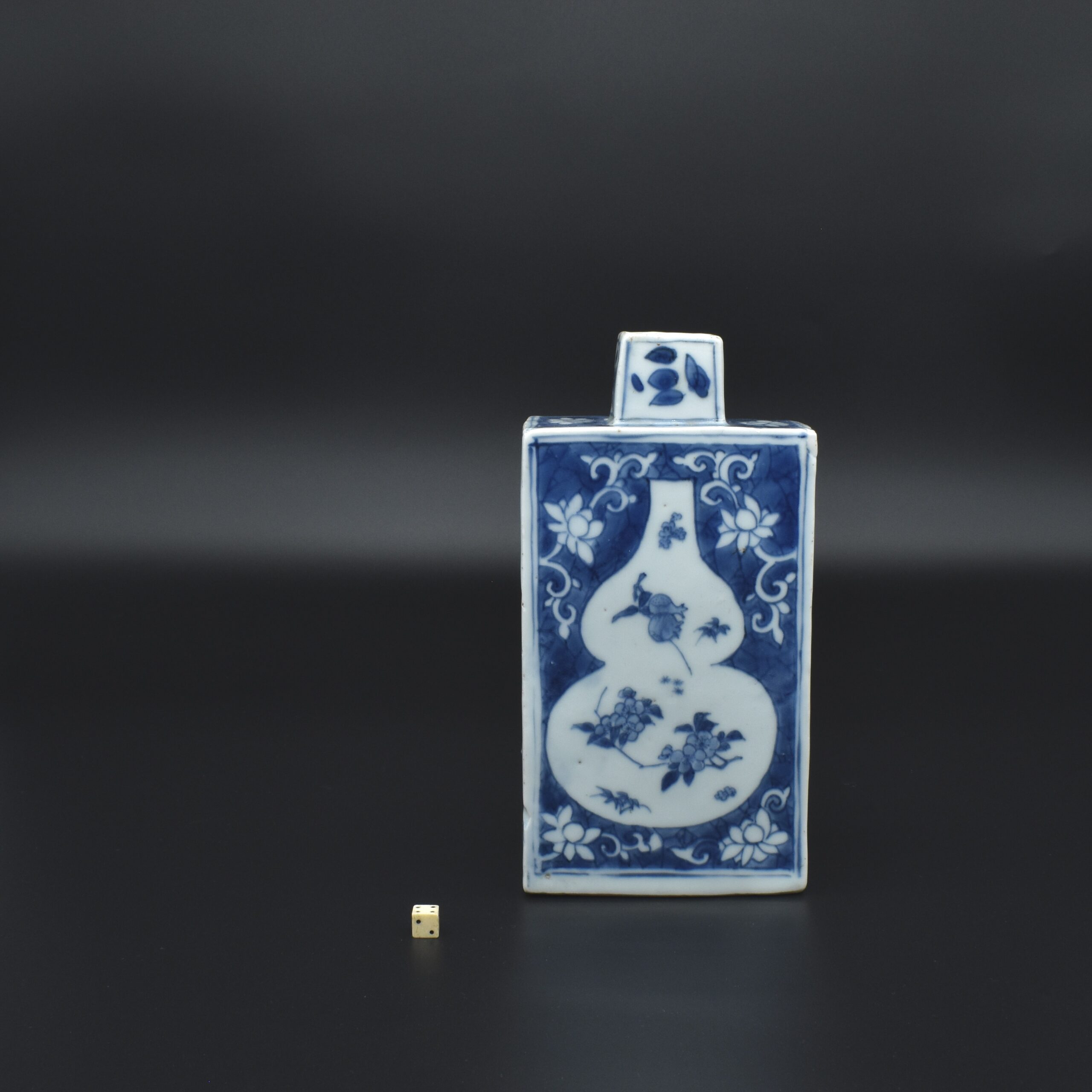
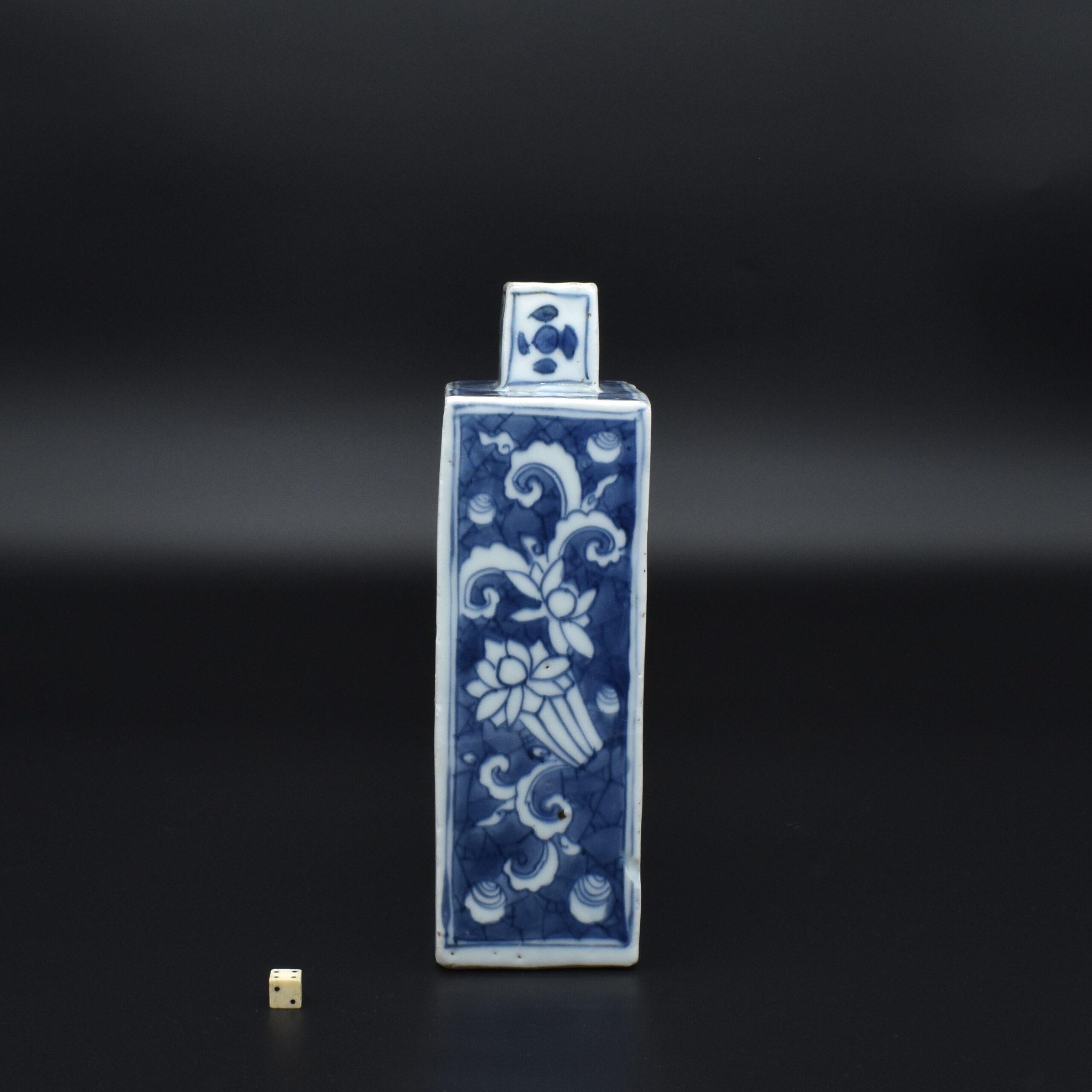
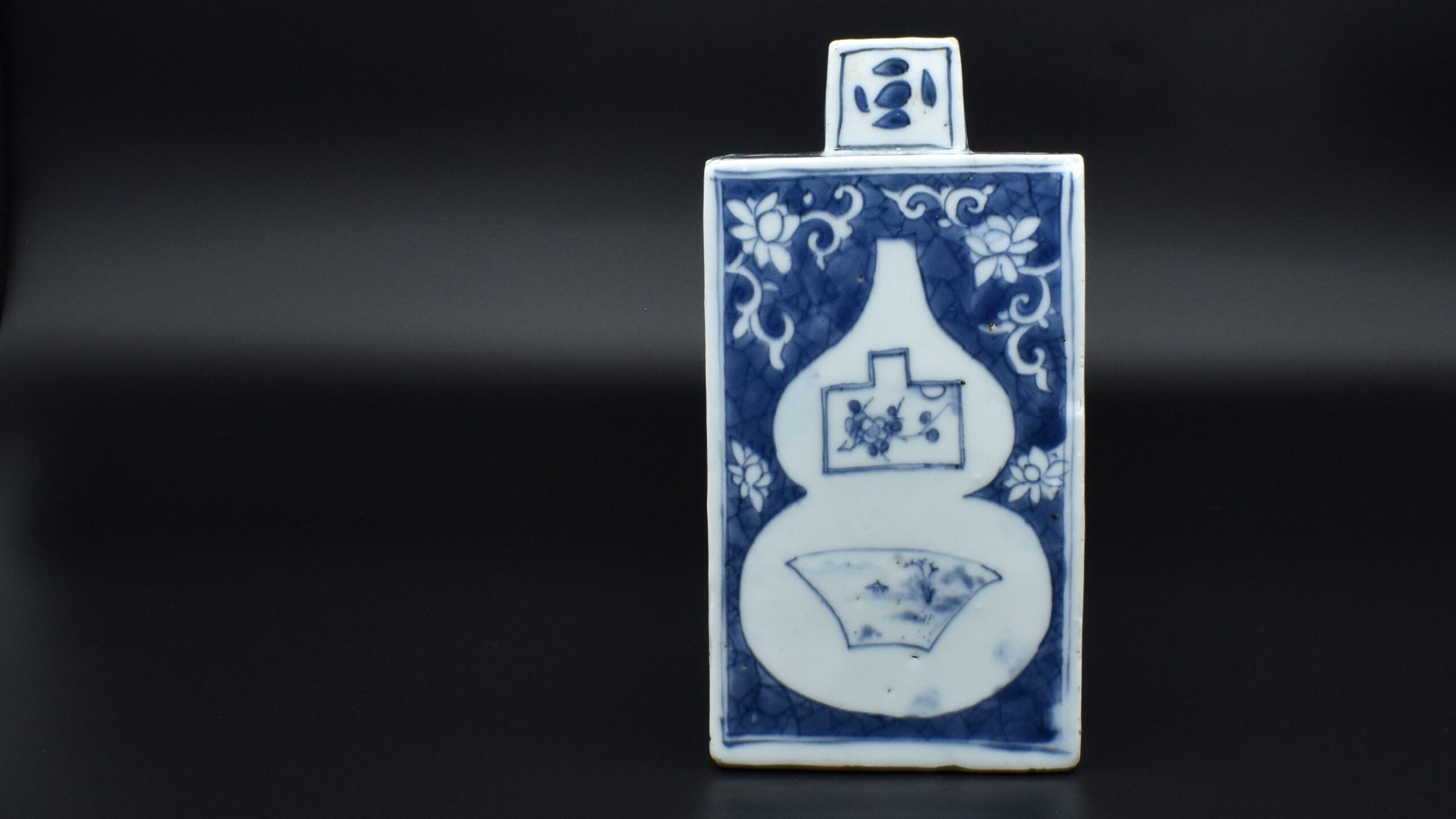
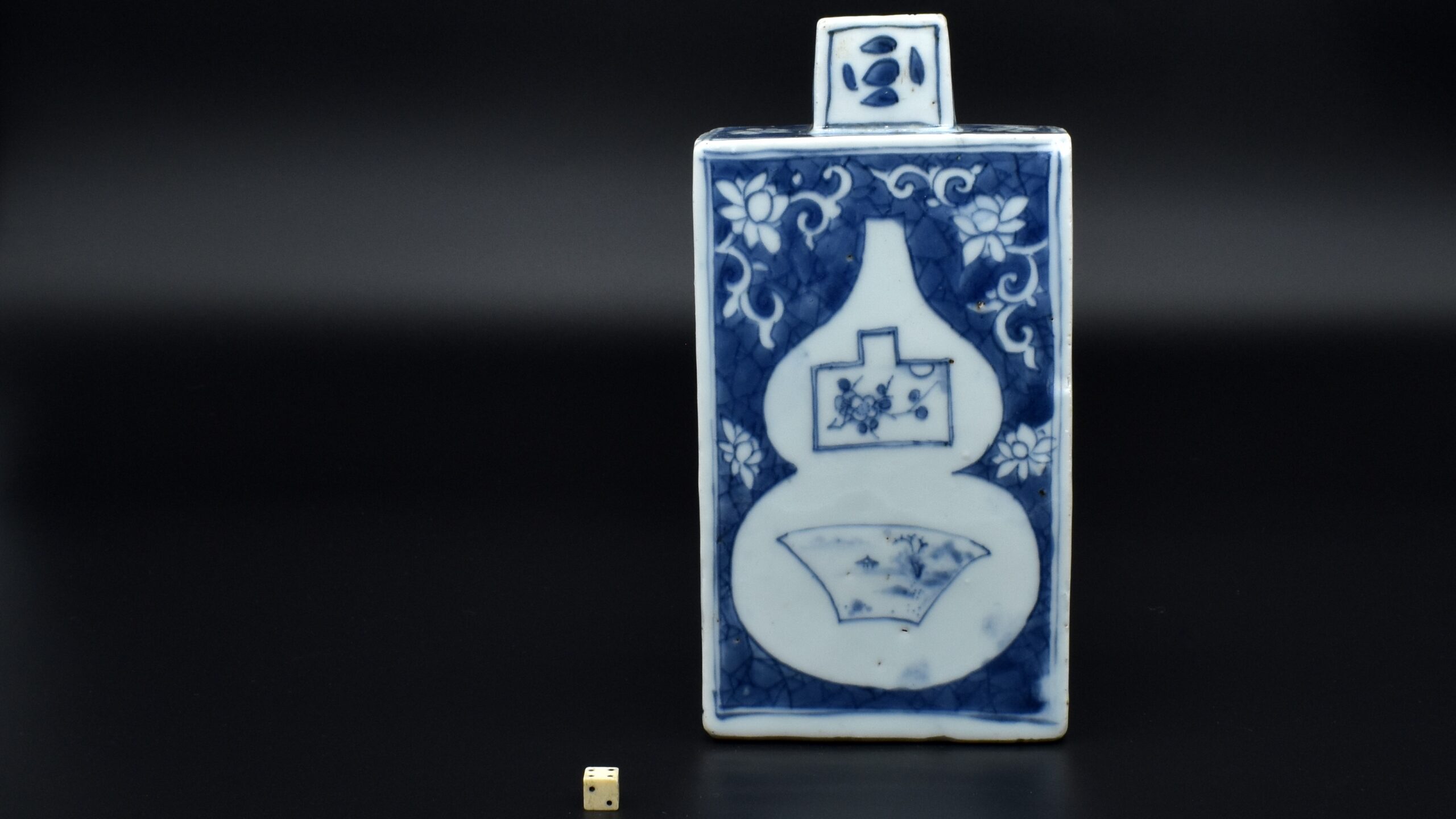
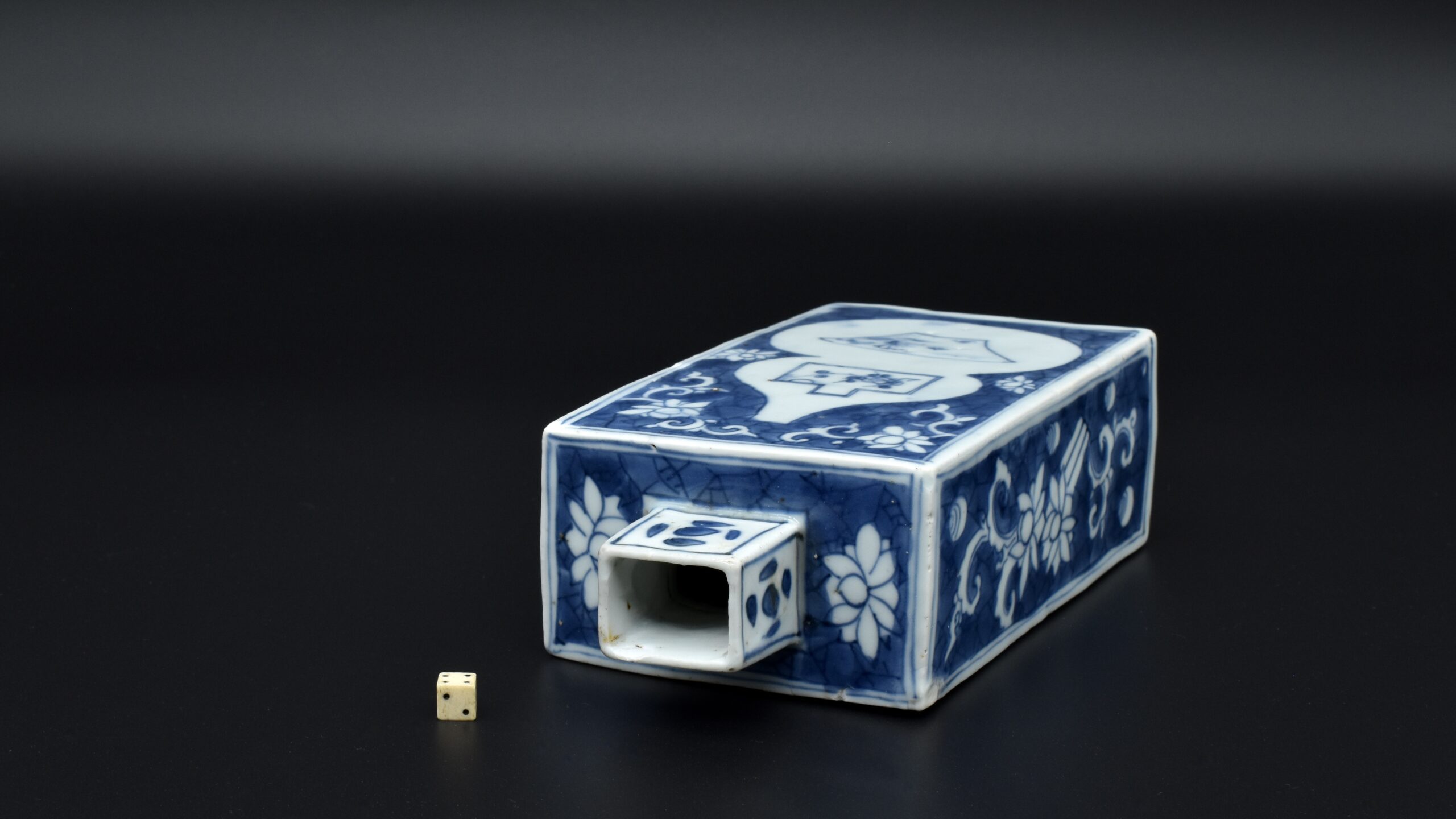
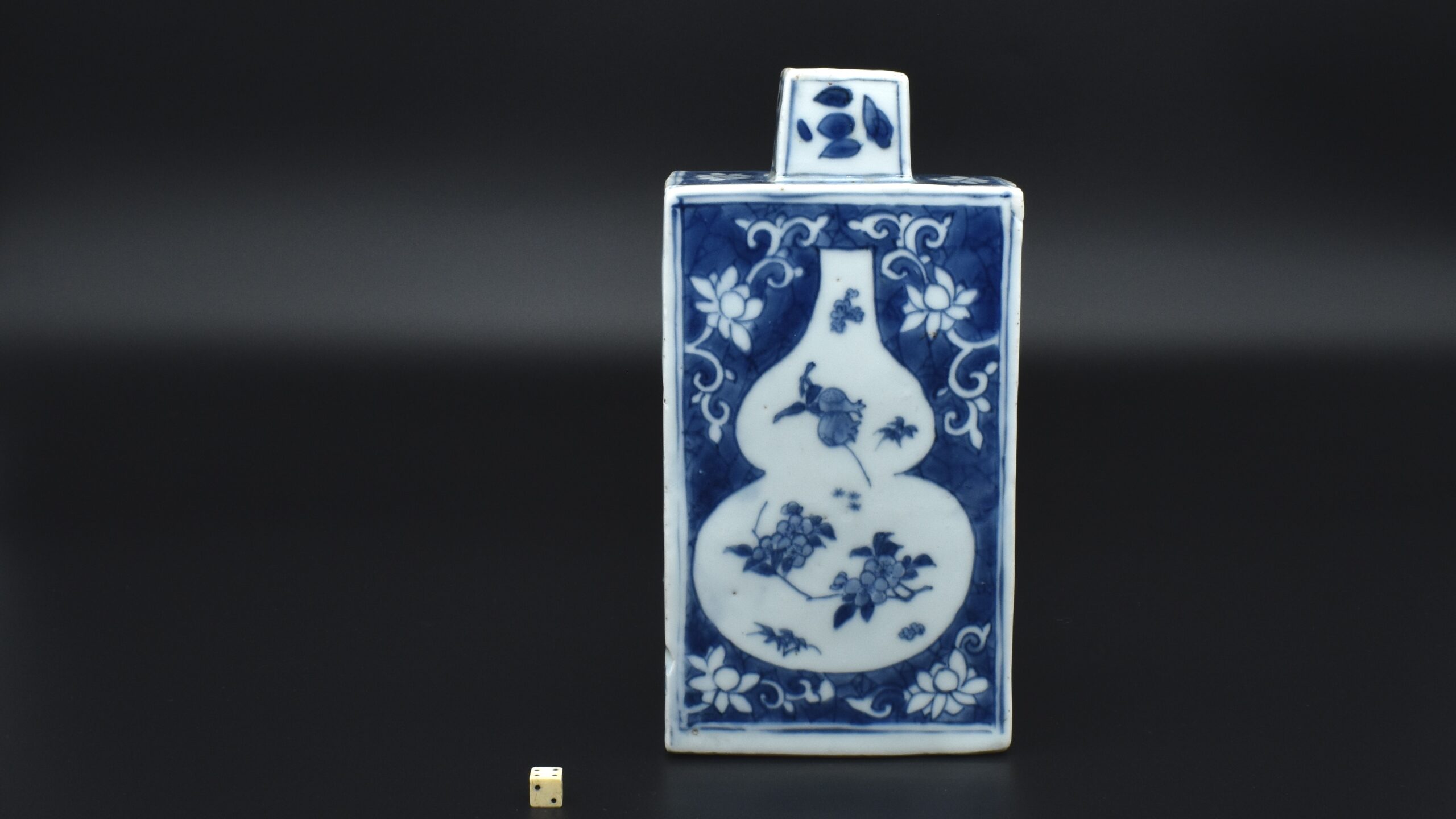
An Unusual Transitional Blue and White Export Porcelain Canister, Jingdezhen Kilns, Late Ming Dynasty, Chongzhen Period (1628-1644). This heavily potted rectangular canister has blue ground panels framed within blue lines. The main panels and side panels have a deep cobalt blue ground which is painted to resemble cracked ice, symbolic of the arrival of Spring. Flowering lotus and a double gourd are left in the white, with a lotus flower either side on the flat top. One side has a painting of flowering cherry in the moonlight, below is a painted fan with a winters landscape. The gourd panel on the other side is decorated with what are sometimes referred to as floating flowers. Including flowering prunus, fruiting pomegranate and bamboo sprigs.
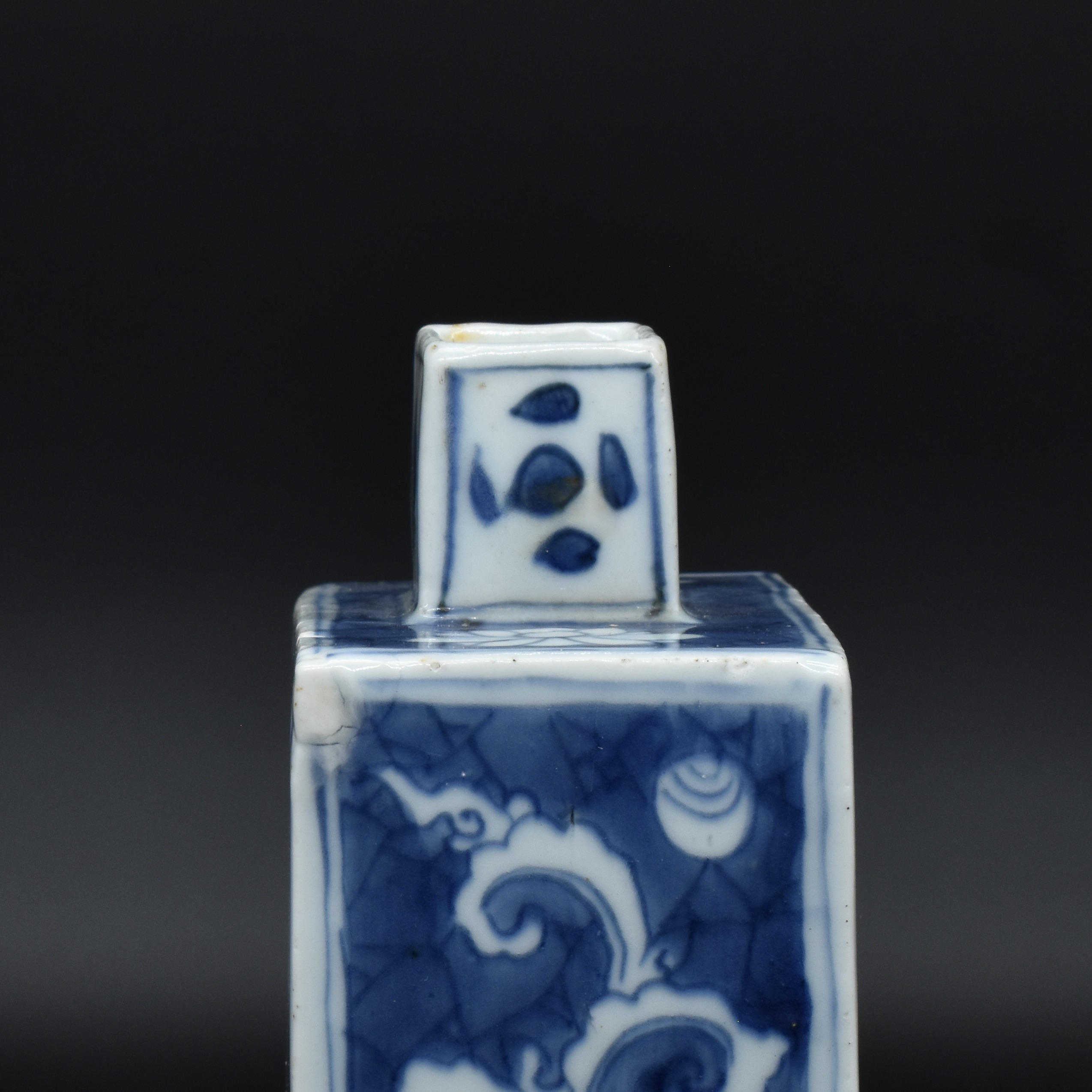
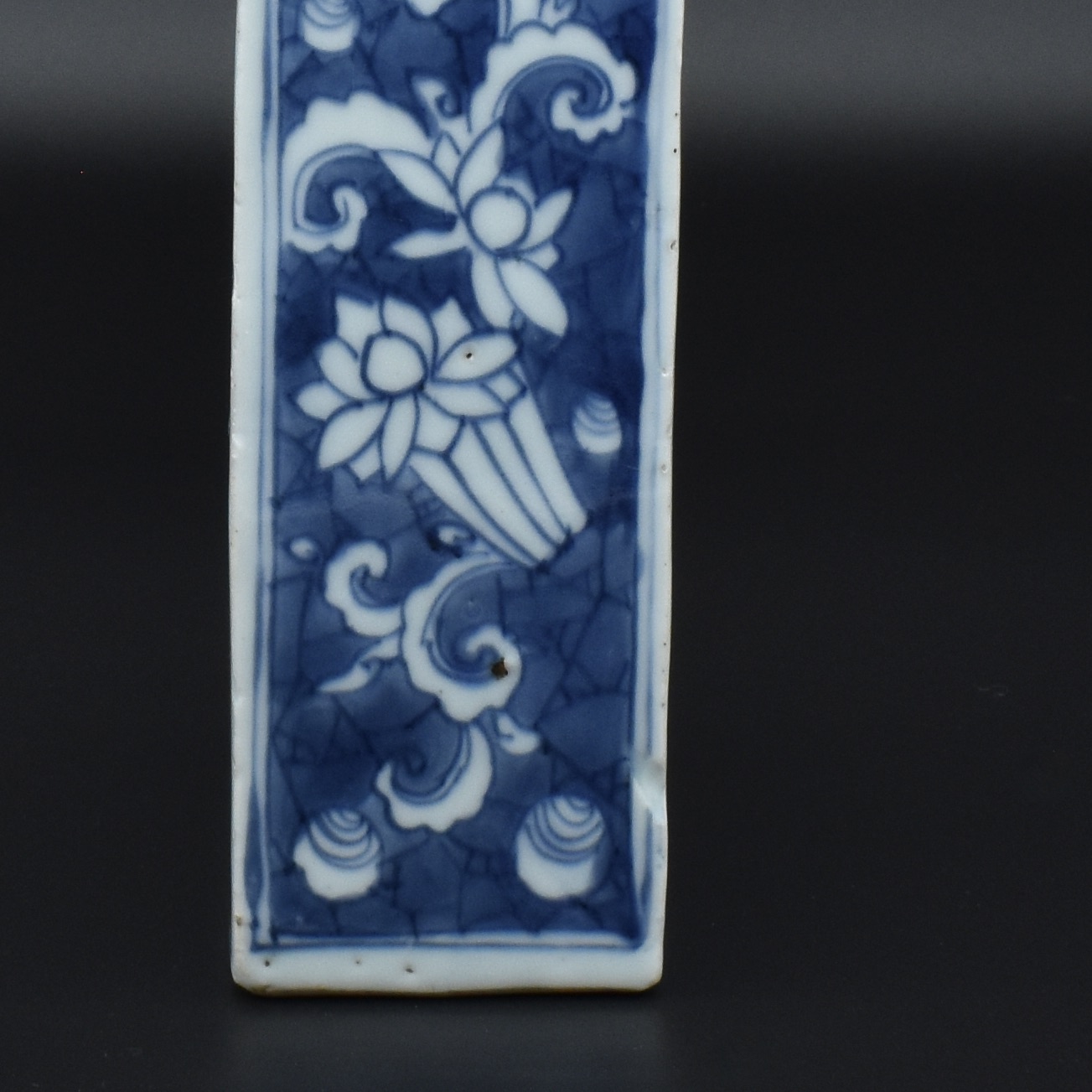
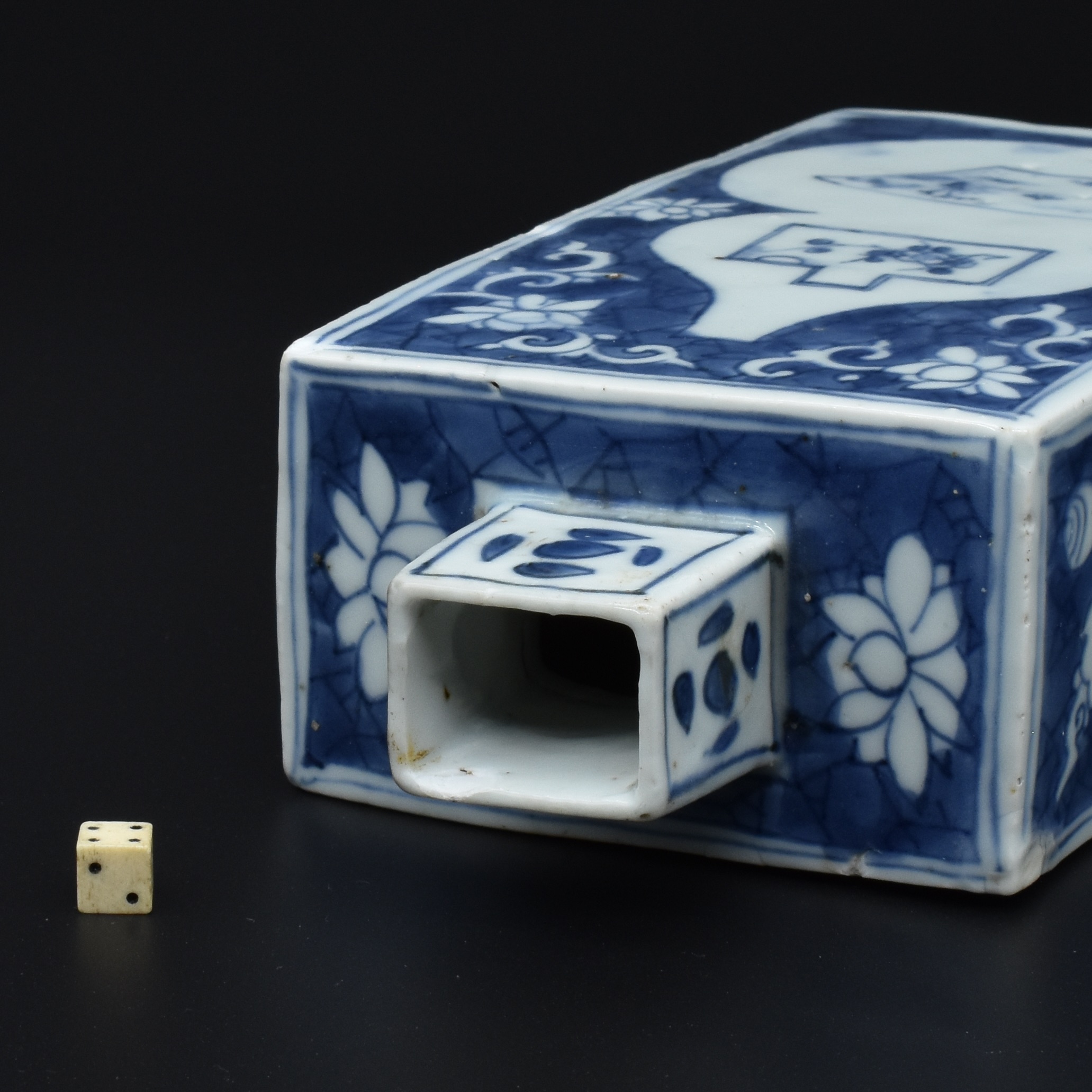
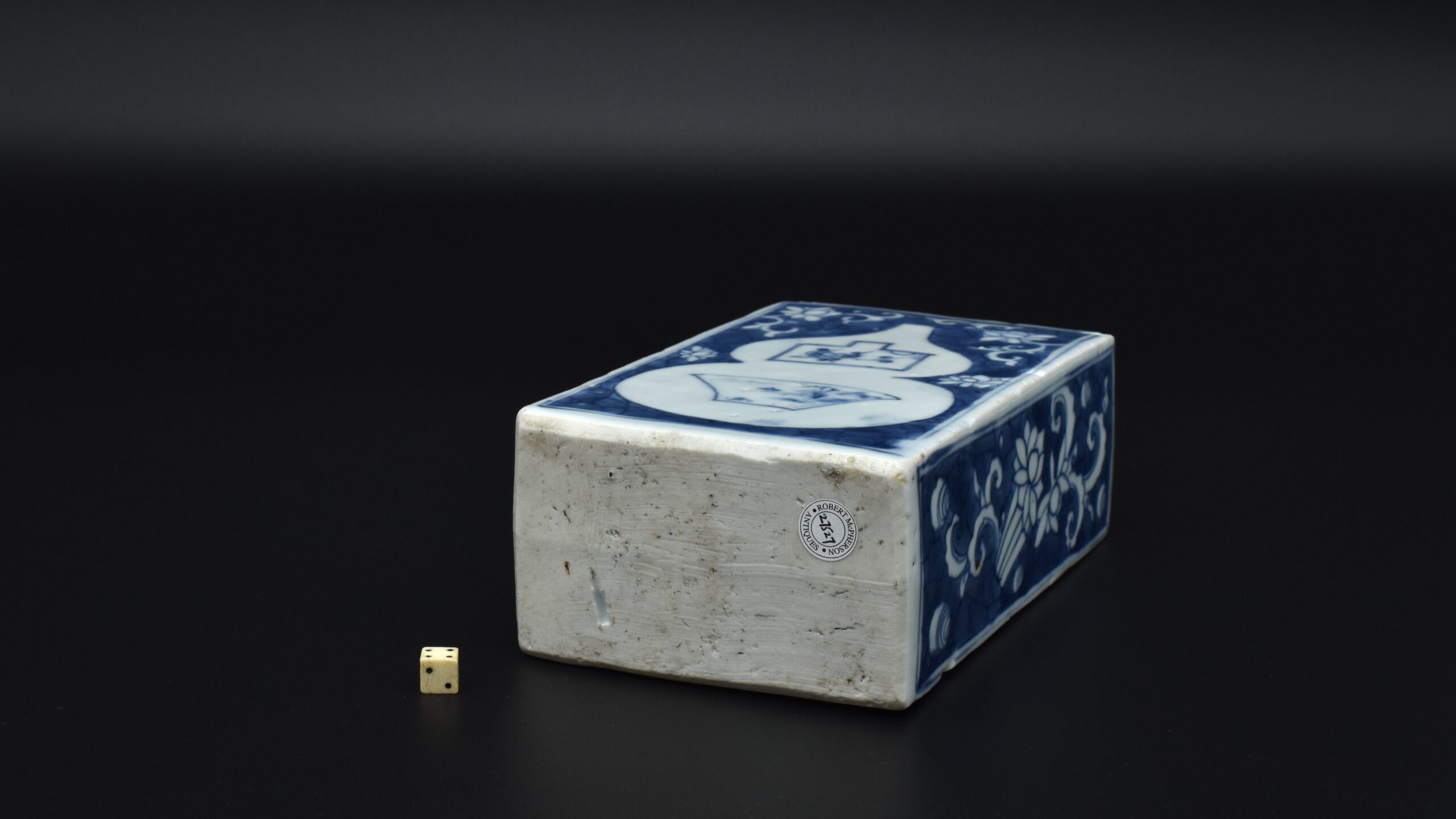
This early Chinese export porcelain canister is not based on a Chinese form, it is likely to have been based on a Western original, perhaps Dutch. The Dutch sent out wooden models to be made in porcelain at Jingdezhen, this could be one such example. It seems that at this period the decoration was mostly left to what the Chinese artists wanted to paint. Rectangular and square forms don’t come naturally to ceramics, unlike the more natural clay forms thrown by a potter on a wheel. The present example likely derives its form from a metal original. Sheets of metal can easily be soldered together to create this form, they have strong resilient edges. Ceramics with sharp edges are more tricky to construct because the clay often dries unevenly and the sharp damp edges especially vulnerable. The Chinese potter who made this canister has had to repair a corner by adding a small piece of clay before it was fired (see photographs and condition). The sharp edges are also a cause for problems after firing, they are easy to chip. Porcelain with sharp edges made during the Kangxi period (1662-1722) were more likely to have small glaze frits to the edges than pieces from the Chongzhen period. Technology is often two steps forward, one step back. The present example has decoration that appears on other Chongzhen pieces, see ‘Information’ below the Photograph Gallery.
There are a pair of very Transitional porcelain canisters with covers at Burghley House. They are recorded in the 1690 Devonshire Schedule, an inventory recording an enormous bequest from Elizabeth, Countess of Devonshire (1619-1689), to her daughter Anne, Countess of Exeter (1649-1703). Under the heading ‘Large plain China’ are listed: ‘A pair of blue and white flatt square Bottles with hollow fflatt cover to them.’ For a link to this pair of canisters see ‘Information’ below the Photograph Gallery.
SOLD
- Condition
- There are some chips (large panel with a fan in the gourd panel) : a shallow chip to the top right, and a small flake shaped chip about half way down the right-hand edge. From this side you can see a chip to the inside of the top rim. (side with the floating flowers) A potters repair to the top right hand corner, this was added by the potter using wet clay that was the glazed over. The lower right hand side has another firing fault, chip that was glazed over. The cover is lacking. Minor friting. See close up photographs for details of condition.
- Size
- Height 20.2 cm (8 inches).
- Provenance
- N/A
- Stock number
- 27527
- References
- There are a pair of very Transitional porcelain canisters with covers at Burghley House. They are recorded in the 1690 Devonshire Schedule, an inventory recording an enormous bequest from Elizabeth, Countess of Devonshire (1619-1689), to her daughter Anne, Countess of Exeter (1649-1703). Under the heading ‘Large plain China’ are listed: ‘A pair of blue and white flatt square Bottles with hollow fflatt cover to them.’ For a link to this pair of canisters see 'Information' below the Photograph Gallery.
Photos
Information
One of a Pair of Closely Related Chongzhen (1628-1644)
At Burghley House, Stamford, Staffordshire, England.
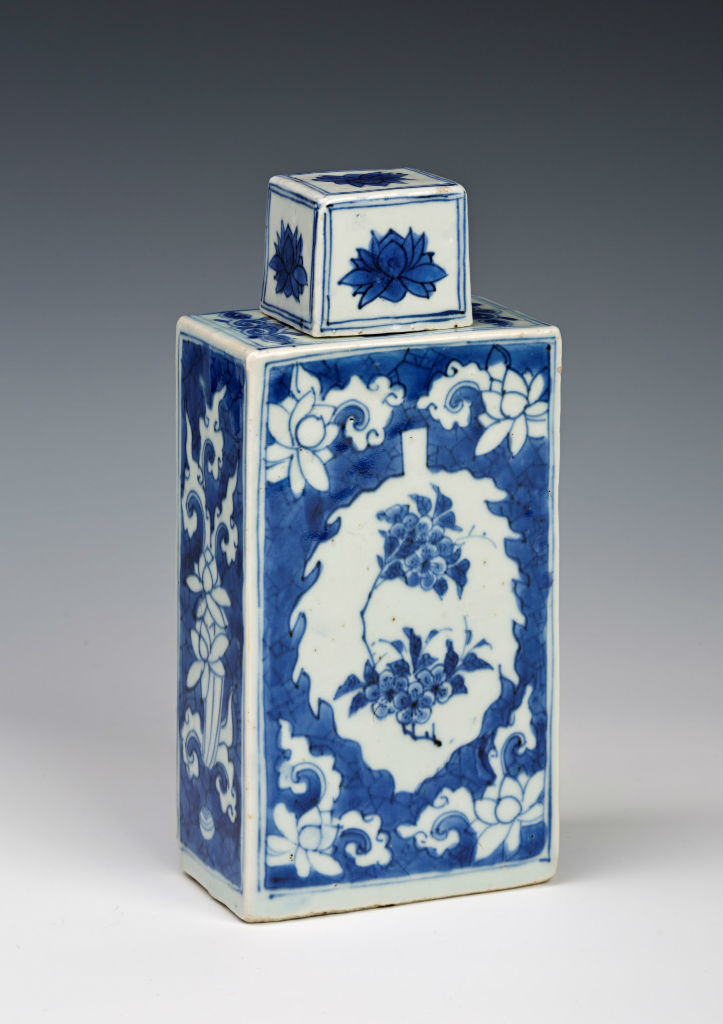
The canisters are decorated with leaf-shaped reserves of blossom on a cracked ice ground, surrounded by lotus sprays in reverse technique.
The white ground covers have a lotus bloom on each facet, 21.5cm.
They are recorded in the 1690 Devonshire Schedule, an inventory recording an enormous bequest from Elizabeth, Countess of Devonshire (1619-1689), to her daughter Anne, Countess of Exeter (1649-1703).
Under the heading ‘Large plain China’ are listed: ‘A pair of blue and white flatt square Bottles with hollow fflatt cover to them.’
REFERENCE: CER0340.
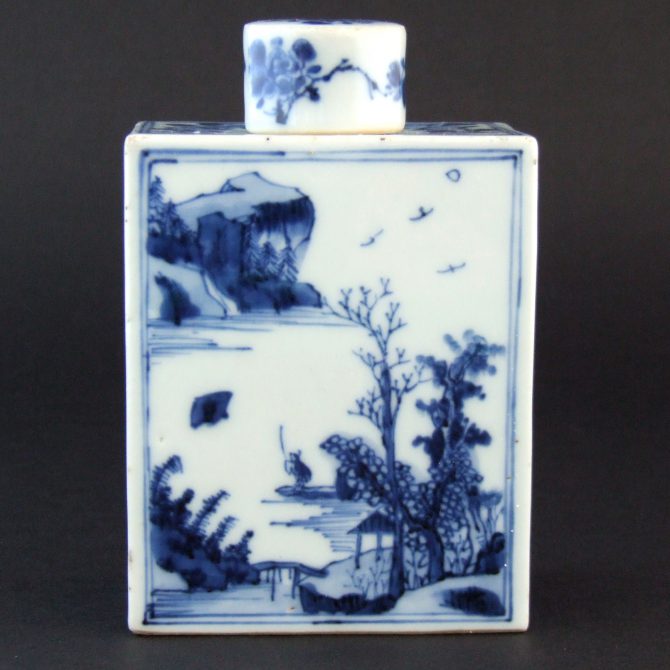
An Early Chinese Export Porcelain Blue and White Tea Canister and Cover, Kangxi c.1690-1710.
A later but clearly related form.
Robert McPherson Antiques, Sold Archive 23927.
SOLD
Condition
In very good condition. The tea canister with unusually few minute frits to the edges. The cover with a crack to the rim c.17 mm.
Size
Height : 12.5 cm (5 inches)
Stock number
23927
References
For a very similar Kangxi blue and white tea canister and cover see : Chinese and Japanese Ceramics and Works of Art Christie`s Amsterdam 4th of November 2003, lot 73. For a related silver tea canister and cover by Lewis Mettayer dated 1697 now in the Royal Ontario see : Museum Tea Trade & Tea Canister (Antonia Agnew, David Doxey & Felicity Marno, A Loan Exhibition in March 2002) page 14 Figure 7
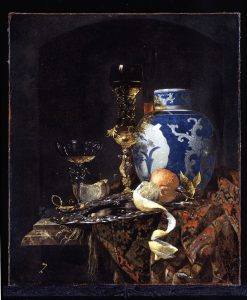
Willem Kalf's Painting of 1669.
Depicting a late Ming, Chongzhen jar (1628-1644).
The jar shown in this painting has the same type of cracked ice ground with lotus reserved in white.
The panels are of leaf shaped reserves, rather than the double gourd reserved on the present example.
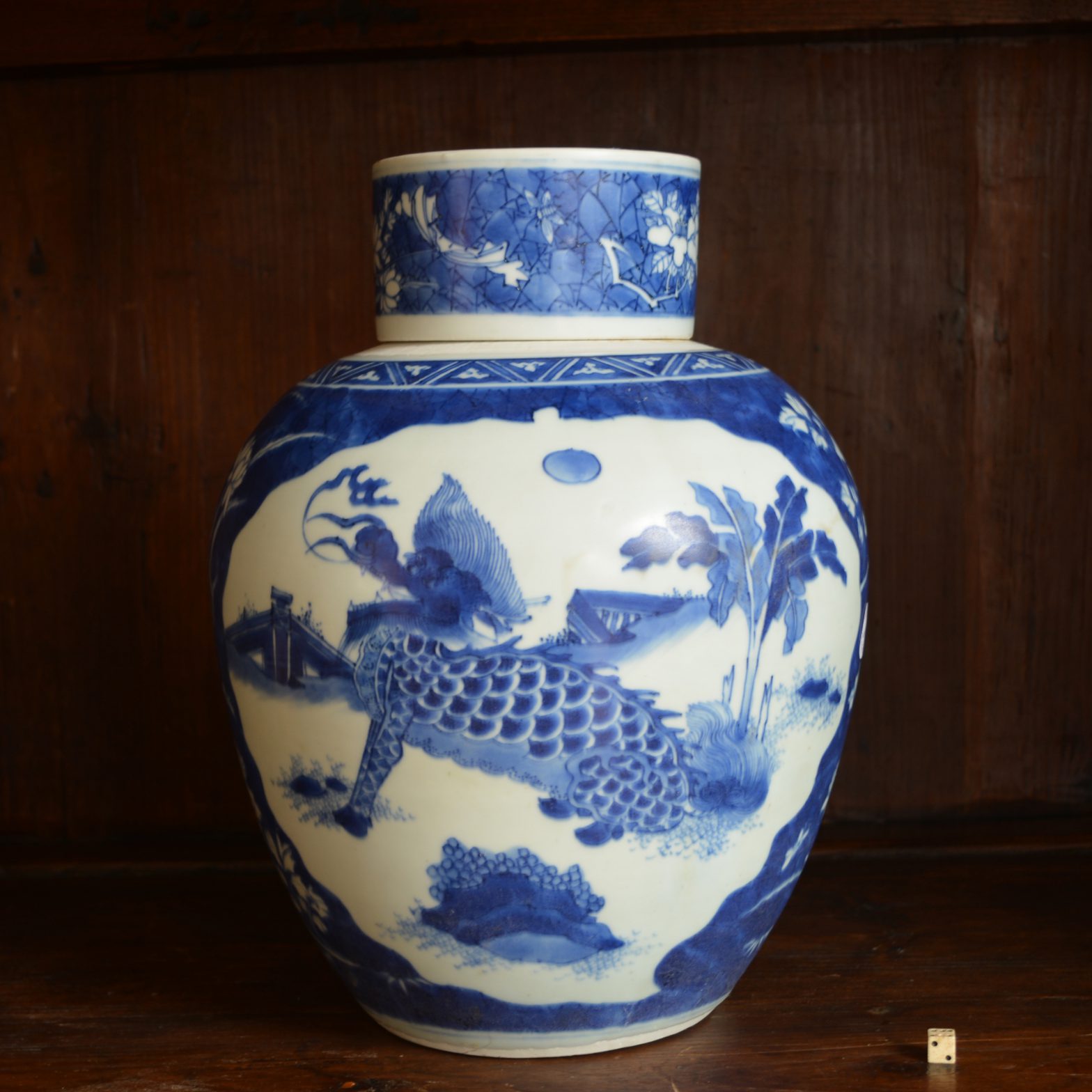
A Large Chongzhen (1628-1644) Blue and White Jar from the Hatcher Cargo of c.1643.
Robert McPherson Antiques, Sold Archive 24987.
SOLD
Condition
In very good condition, the glaze only shows very minimal signs of degradation due to immersion in sea water. There is a brown stain around the unglazed neck of the jar, however this is hidden by the cover.
Size
Height : 30cm (11 3/4 inches)
Provenance
Christie's Amsterdam, Fine and Important Late Ming And Transitional Porcelain, Recently Recovered from an Asian Vessel in the South China Sea. Property of Captain Michael Hatcher. Christie`s Amsterdam 14th March 1984. From the collection of the late Mr. And Mrs. Smidt Van Gelder, Landhuis Belverdere, Overveen near Haarlem, The Netherlands.
Stock number
24987
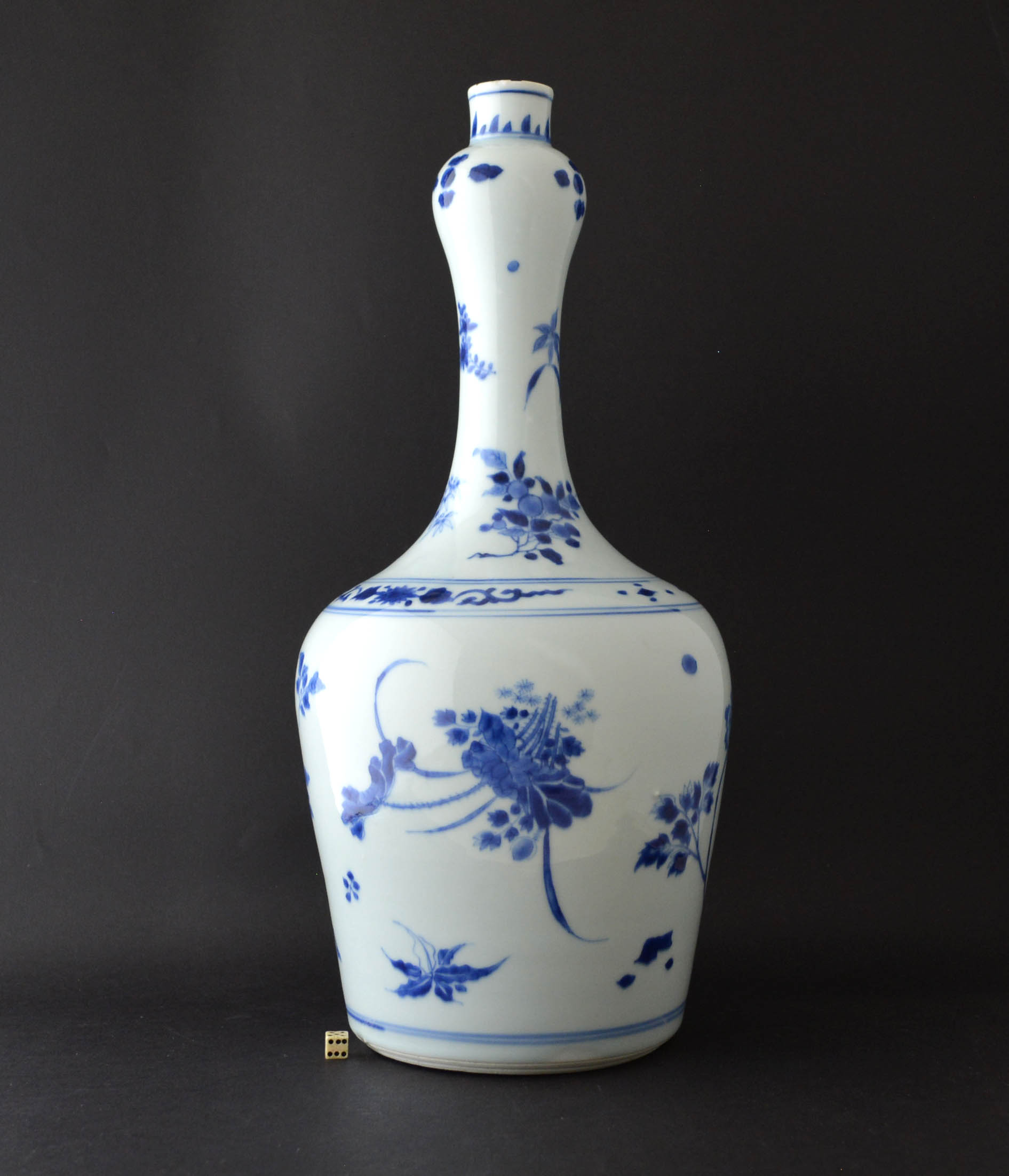
A Transitional Blue and White Porcelain Vase 'Floating Flowers'.
Robert McPherson Antiques - Sold Archive, Number 24763.
SOLD
Condition
There are two small rim chips : a slender shallow flake type chip to the inner rim c.9 x 2mm, a very shallow chip, mostly glaze chip, to the outer edge c.5 x 4 mm. minor fritting. The base is not totally even so if it is pushed it moves a bit.
Size
Height : 39 cm (15 1/4 inches)
Stock number
24763
References
For a similar late Ming or early Qing porcelain vase see : L`Odyssee De La Porcelaine Chinoise (Editions de la Reunion des Musees Nationaux,2003) Page 121 Item 53. For Transitional Porcelain vases of this type see : Fine and Important Late Ming and Transitional Porcelain, Recently Recovered From The South China Sea, The Property of Michael Hatcher (Christie`s Amsterdam, March 1984) Lot 181. For a further Blue and White Transitional Porcelain vases of this form see our `Sold Items` number 18943, 21372 and 23901.