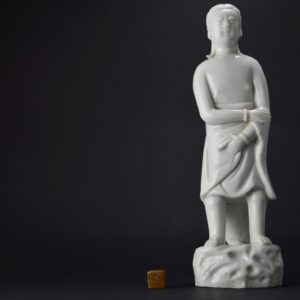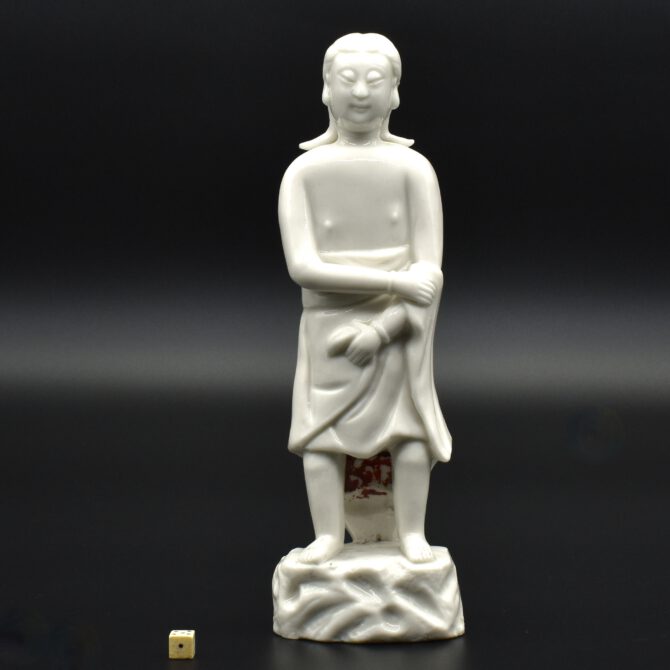
A Kangxi Blanc de Chine Porcelain Model of ‘Adam’.
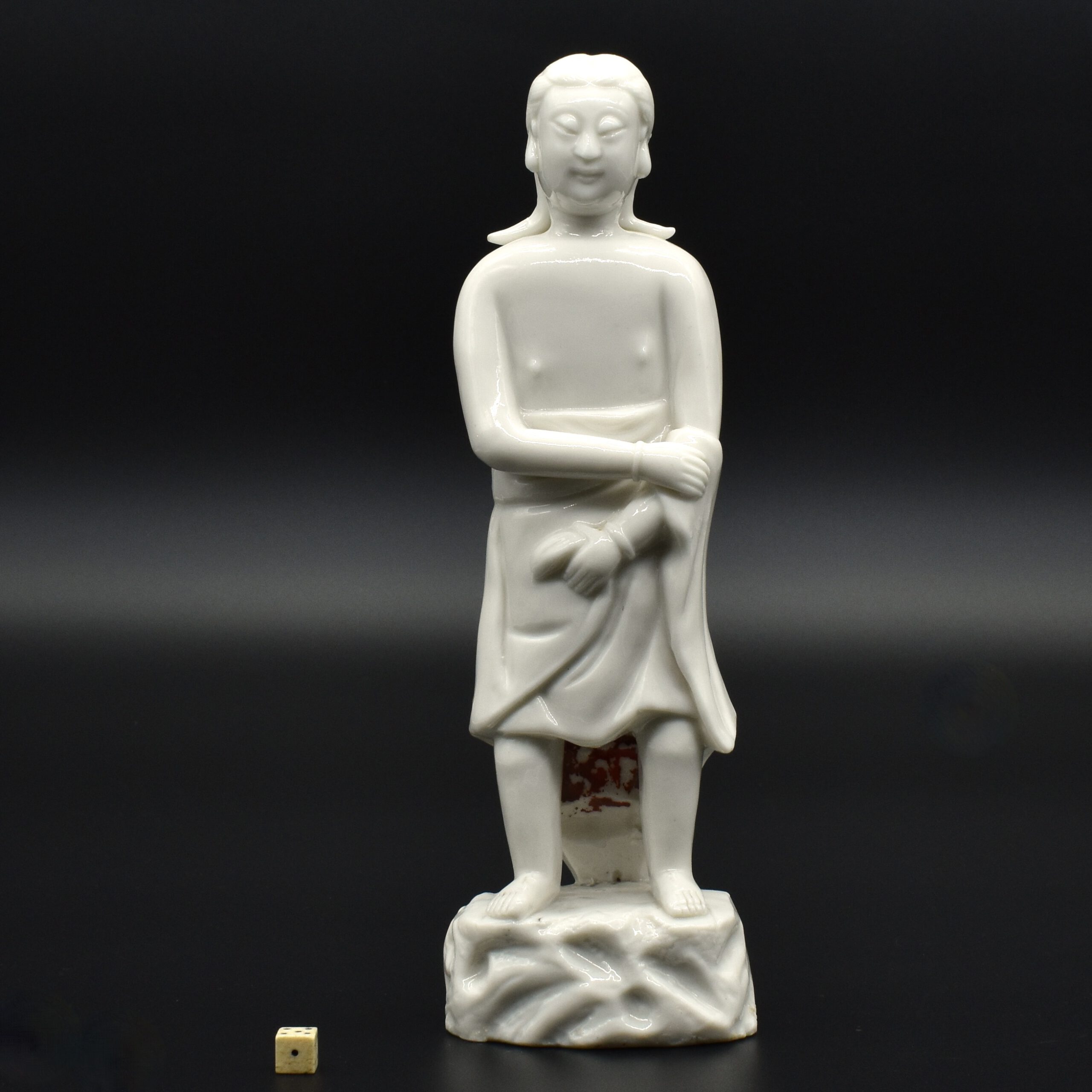
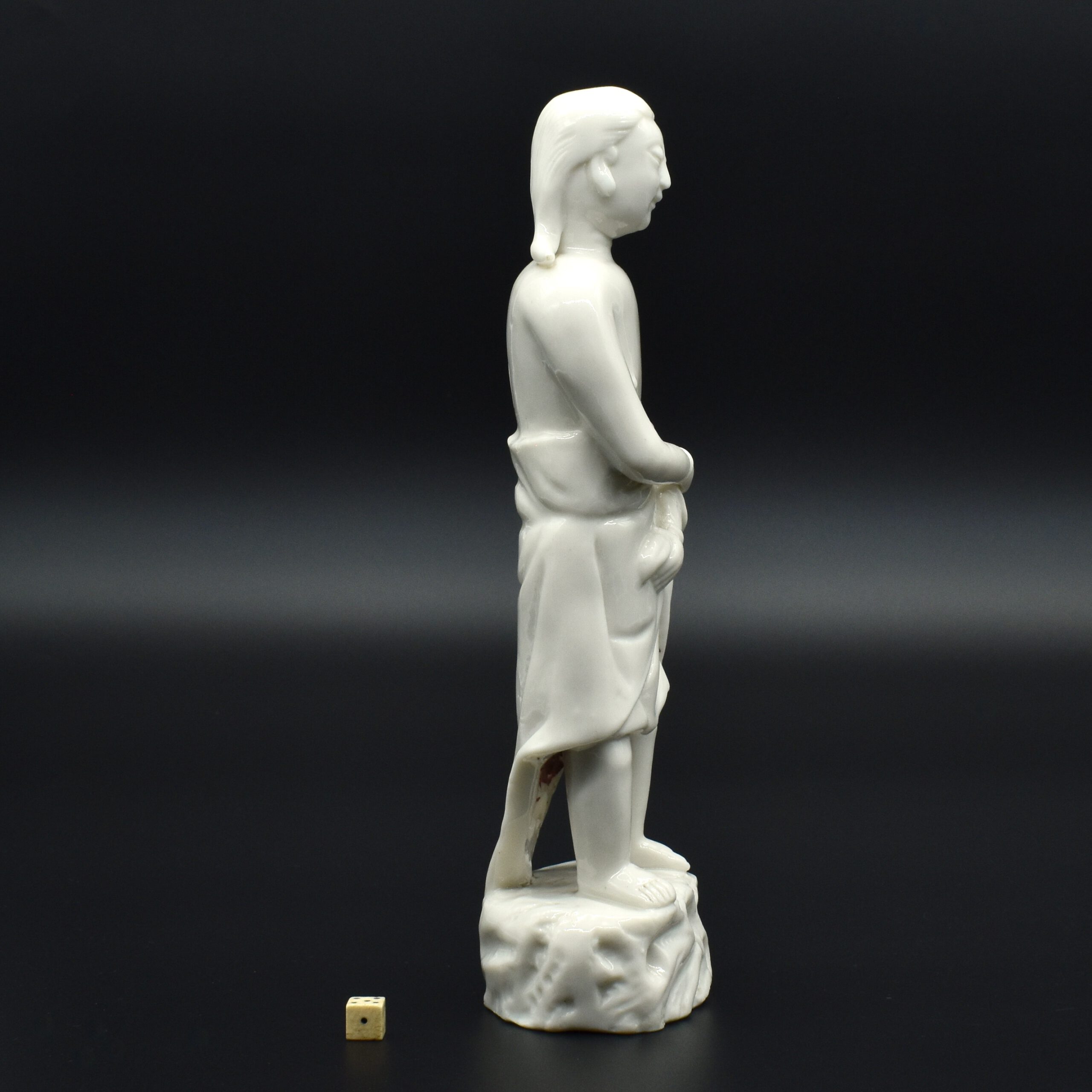
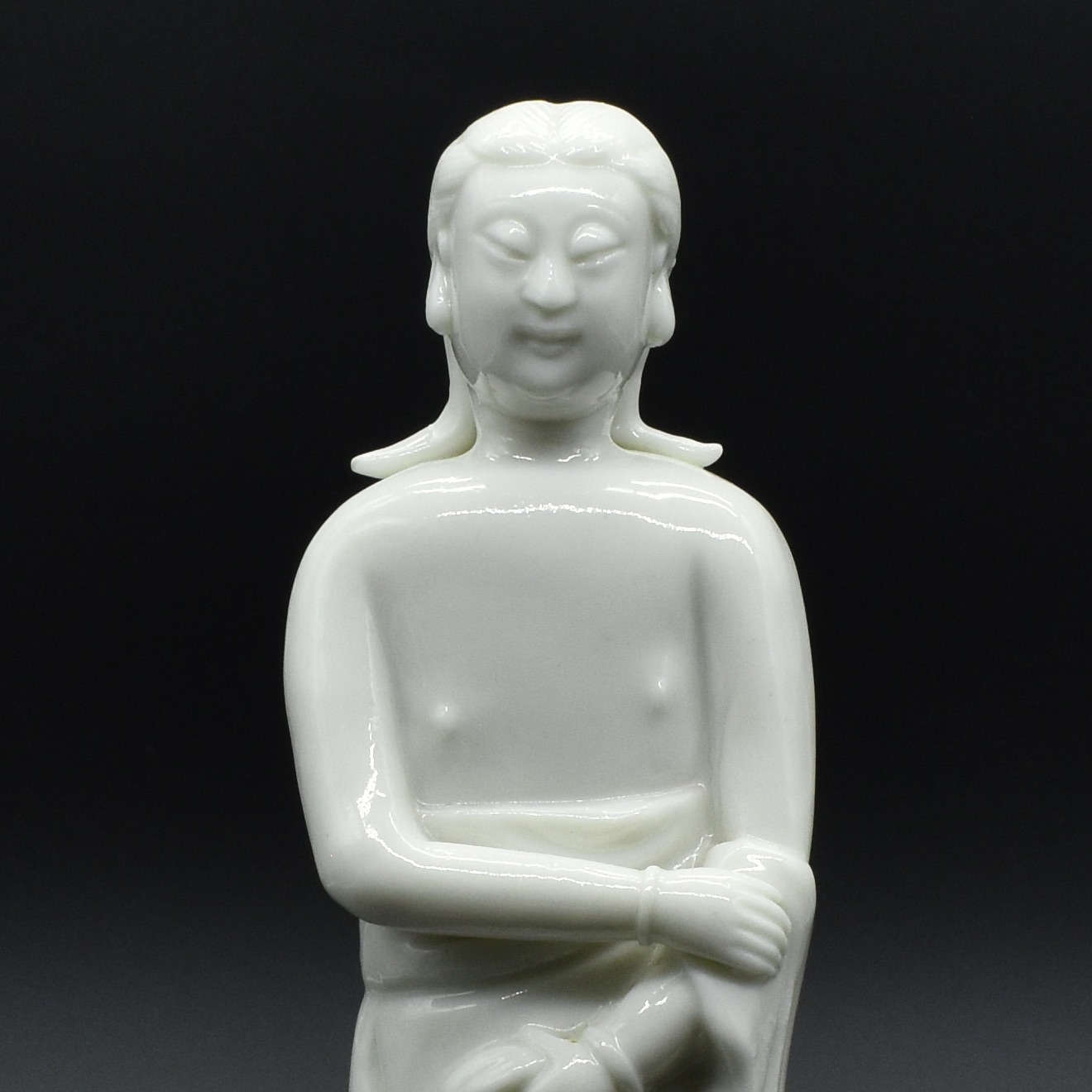
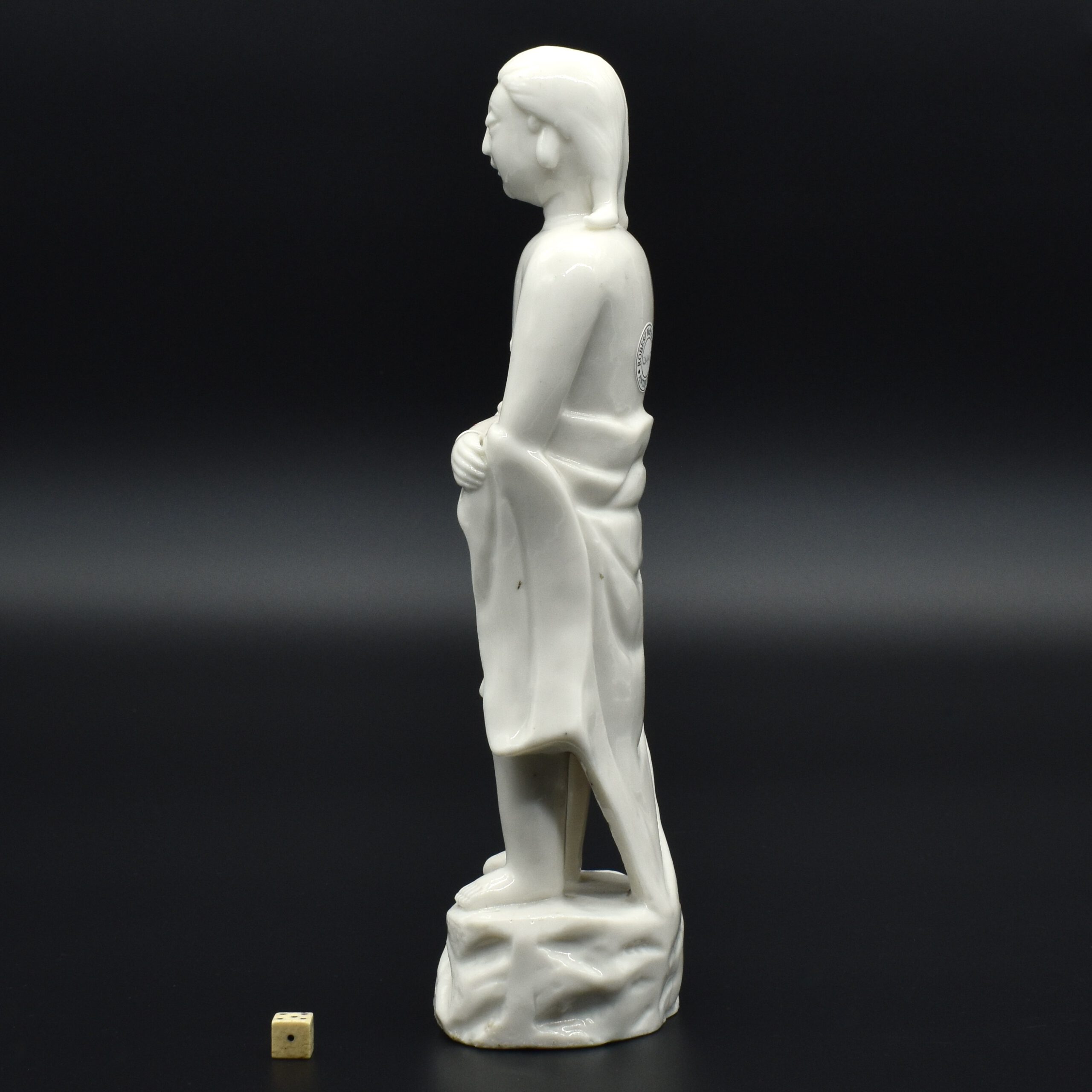
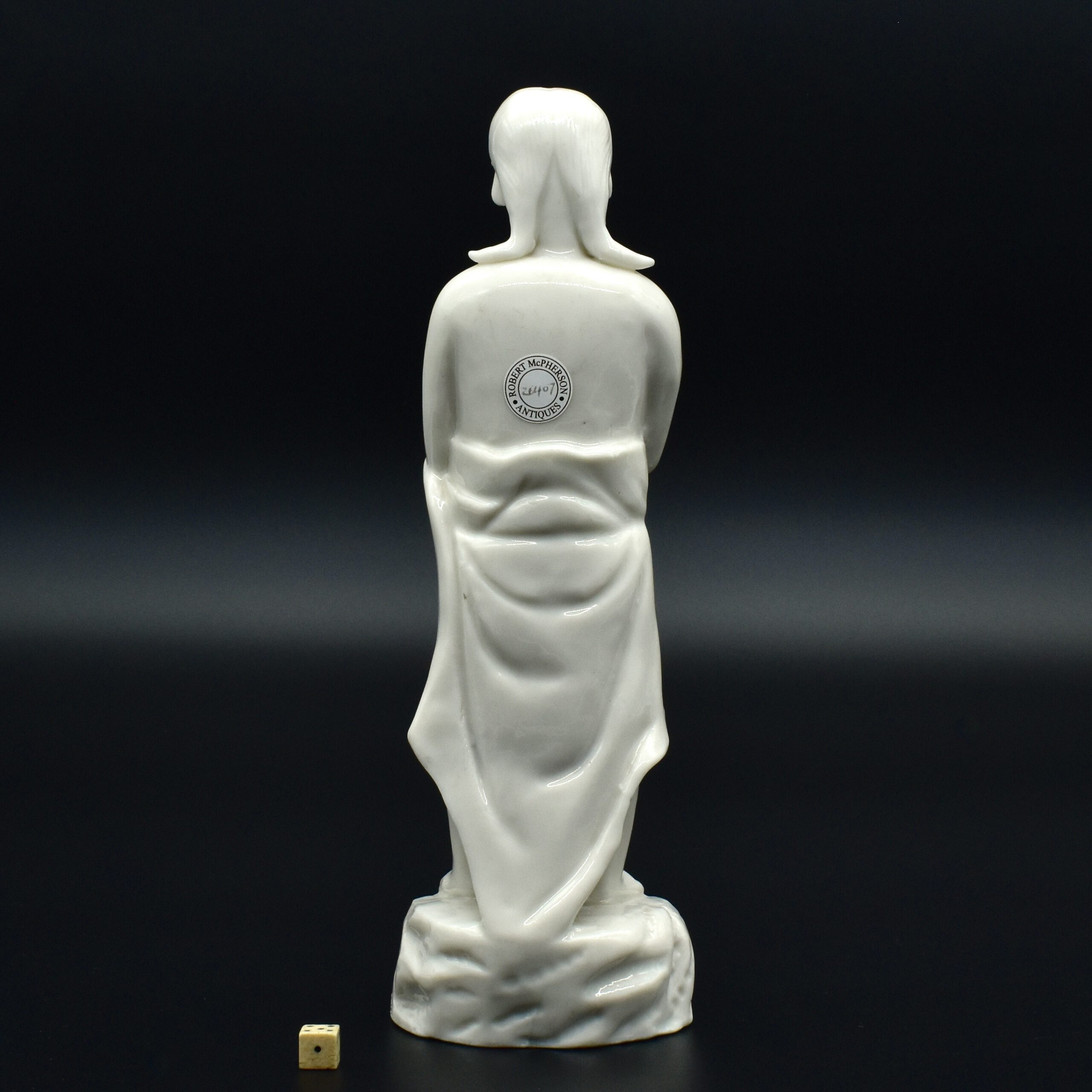
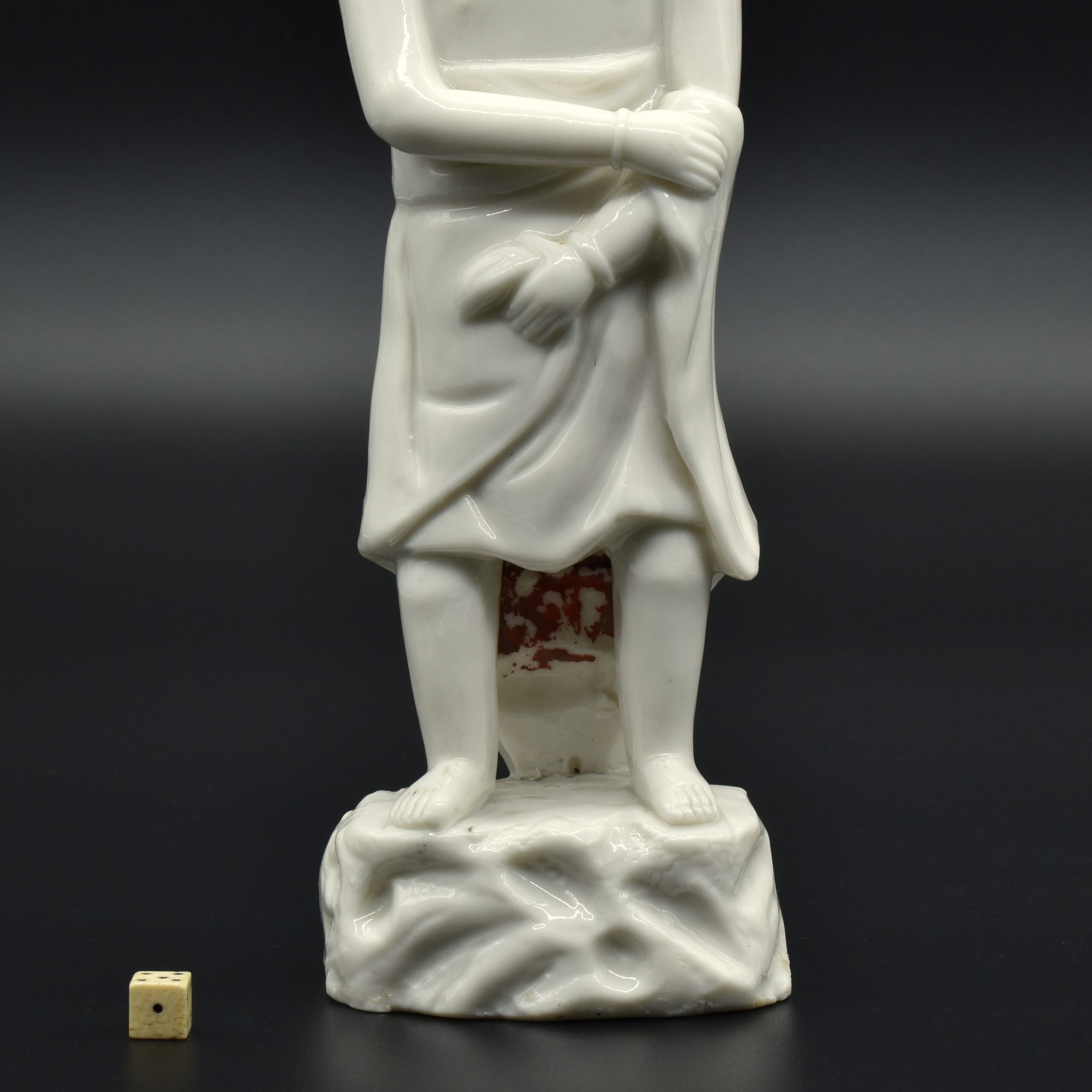
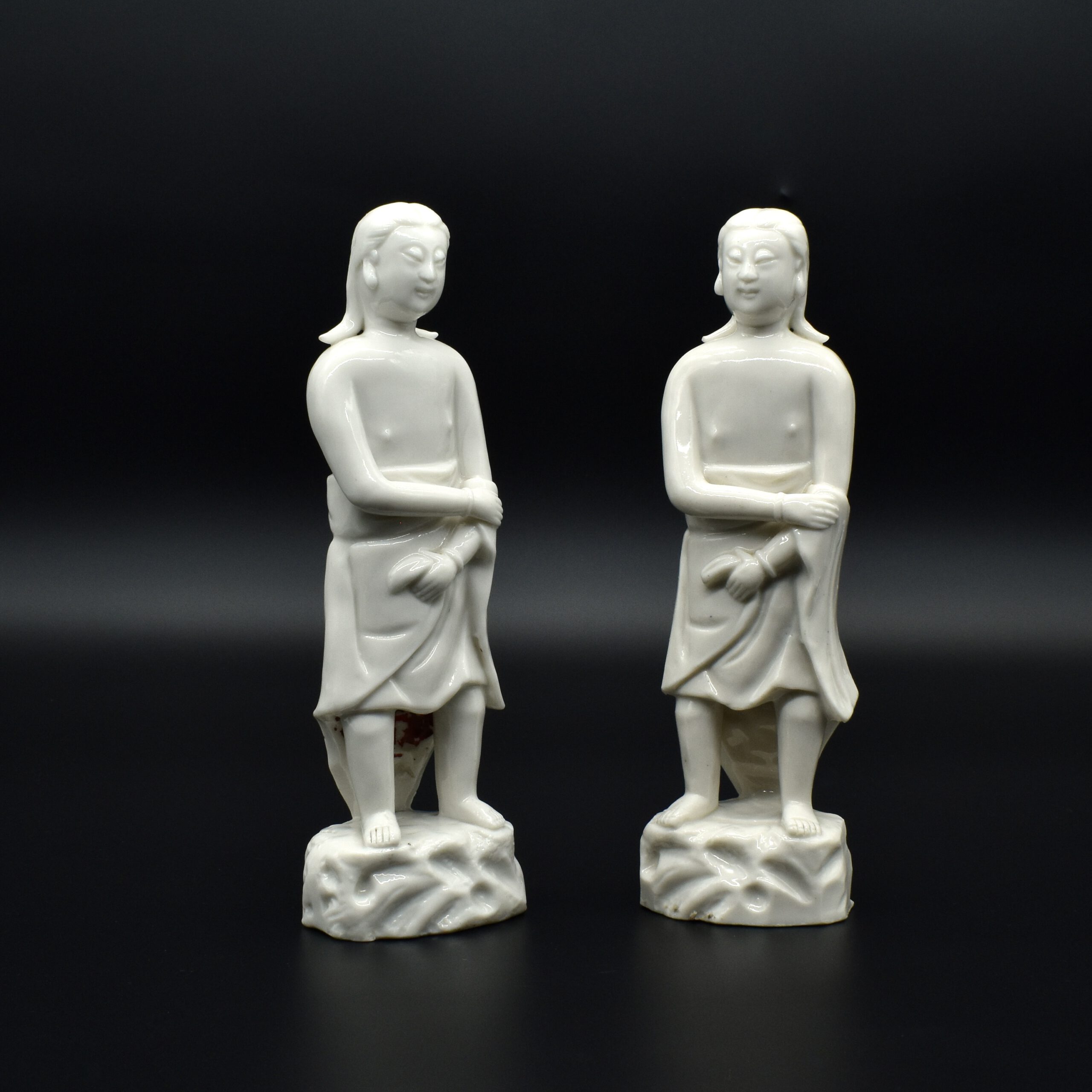
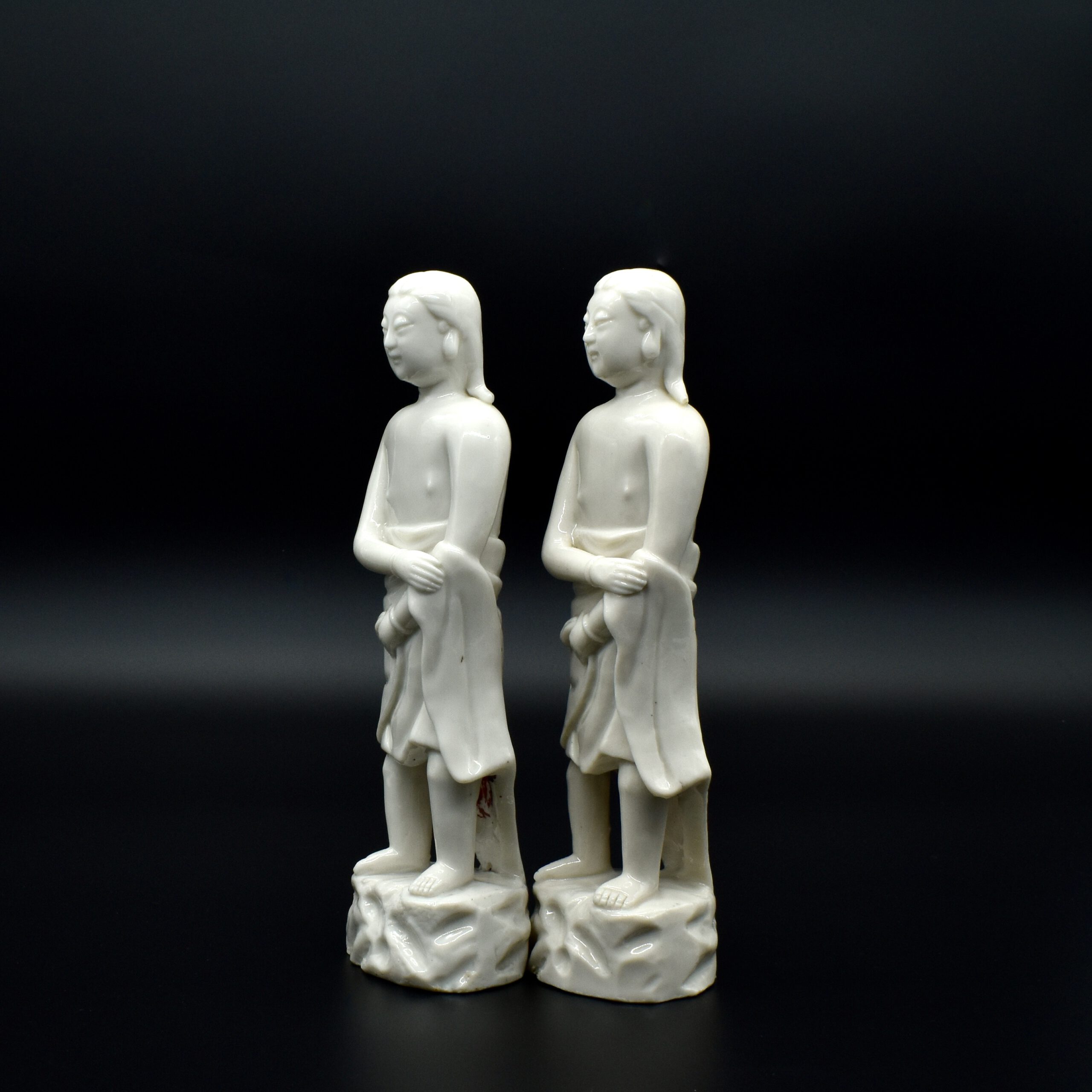
A Blanc de Chine Porcelain Model of a Man, sometimes referred to as `Adam`, Dehua Kilns, Fujian Province, Kangxi Period c.1690-1710. The Chinese man with his neatly divided and tied hair stands on a simple oval rusticated mound with nothing more than a cloth around his waist which he appears to be holding onto. A group of Blanc de chine porcelain models of of standing semi-naked figures on oval rusticated bases have traditionally been referred to as Adam and Eve. This is possibly because their clothing is so scant and simple they can be seen as having a passing resemblance to images of Adam and Eve in Western art. But as David Freedman points out in S.Marchant & Son`s 1985 catalogue of an exhibition of Blanc de Chine “.. there is no doubt that the face and hairstyle are Chinese and there is nothing to suggest a European model”. European models were used as prototypes for Blanc de Chine figures, but they always have something to betray their Western origin, indeed that was the point, as they were made for the West. It is more likely these figures depict an indigenous or foreign ethnic group in China. Although appearing to be made as a pair it is curious that there are more male figures than female one in existence. The variation among these figures is minimal, the method of production is also very similar, that and the fact they are uncommon all point to a short production period. They were produced at Dehua in Fujian province during the reign of Kangxi, somewhere between c.1690 and 1710. There is some red cold-painting (effectively red water colour) remaining to the inside part of his robe. Cold-painting was often used on Blanc de Chine export porcelain, I don’t know if it was added in Europe or not.
See Below For More Photographs and Information
SOLD
- Condition
- In very good condition, a minute frit to the end of his tied hair, approximately 1mm. Some firing faults.
- Size
- Height : 23.2 cm (9 inches)
- Provenance
- Private Collection, the owner's of the Royal Oak, Church Street, Nunnington, Yorkshire. Sadly this pub closed in December 2017. A planning application for change of use to a dwelling was granted on appeal in Feb 2020. This figure appeared on television in a series called the 'Yorkshire Auction House' on the Discovery Channel, it was sold with another Blanc de Chine figure of Adam. I purchased them from the auction, were sold together as being 19th century. The family were very pleased they sold so well, especially as they had made a very difficult and painful decision to sell the pub after a sudden bereavement. On the television program, they said the figures were purchased several years apart from different sources.
- Stock number
- 26407
- References
- For a very similar male figure dated to c.1690 see : Exhibition of Blanc de Chine (S.Marchant & Son, London, 1985) plate 53, offered for sale at £1,500. For a pair of male and female Kangxi porcelain figures of this model dated to c.1690 see : Blanc de Chine (Introduction by John Ayers, S.Marchant & Son, 2006. ISBN 0-9554009-0-2) page 64, plate 40. For a further pair of these Kangxi figures see : Exhibition of Blanc de Chine (Marchant, London, 2014. ISBN 978-0-9568400-7-3) page 76, plate 47. Offered for sale at £16,500).
Photos
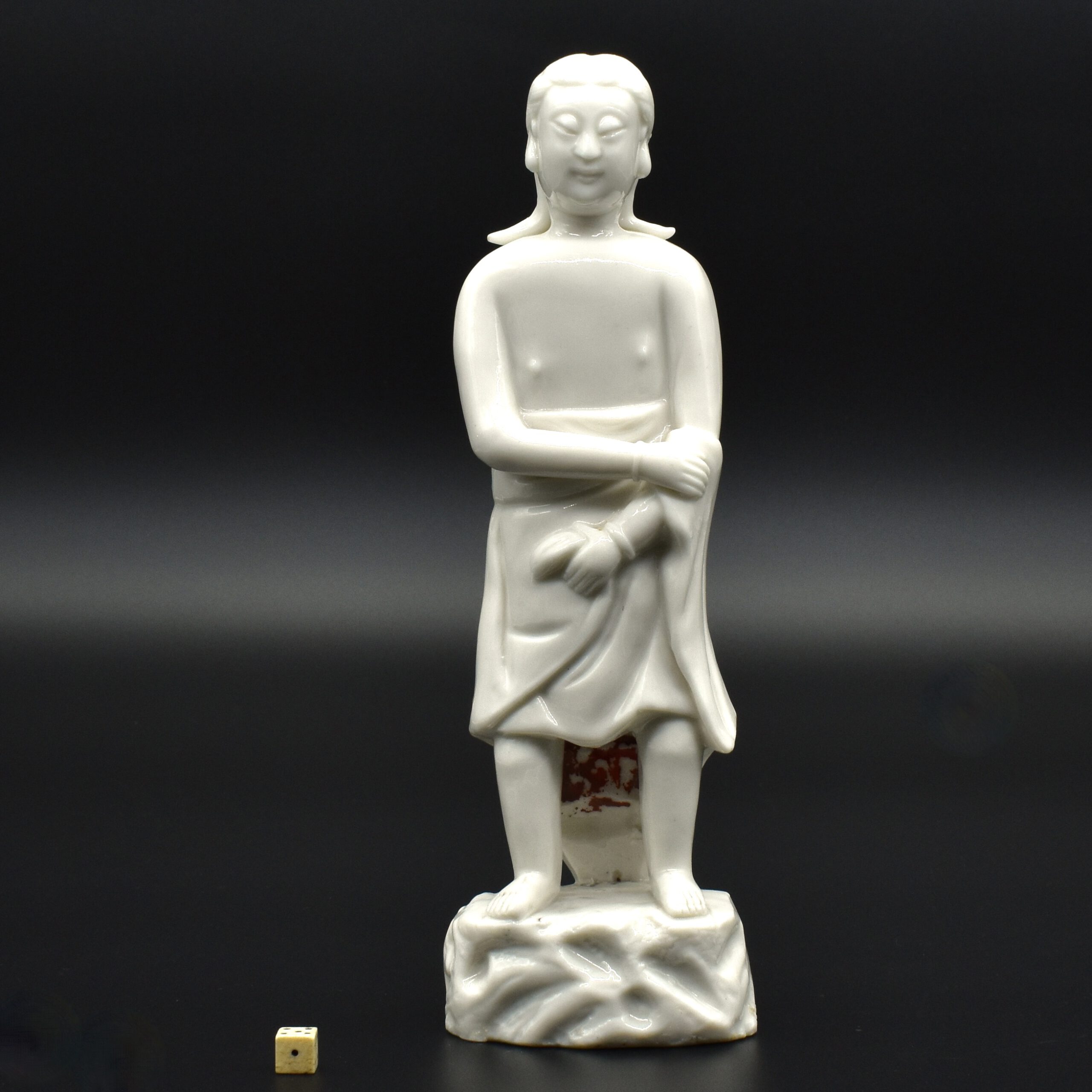
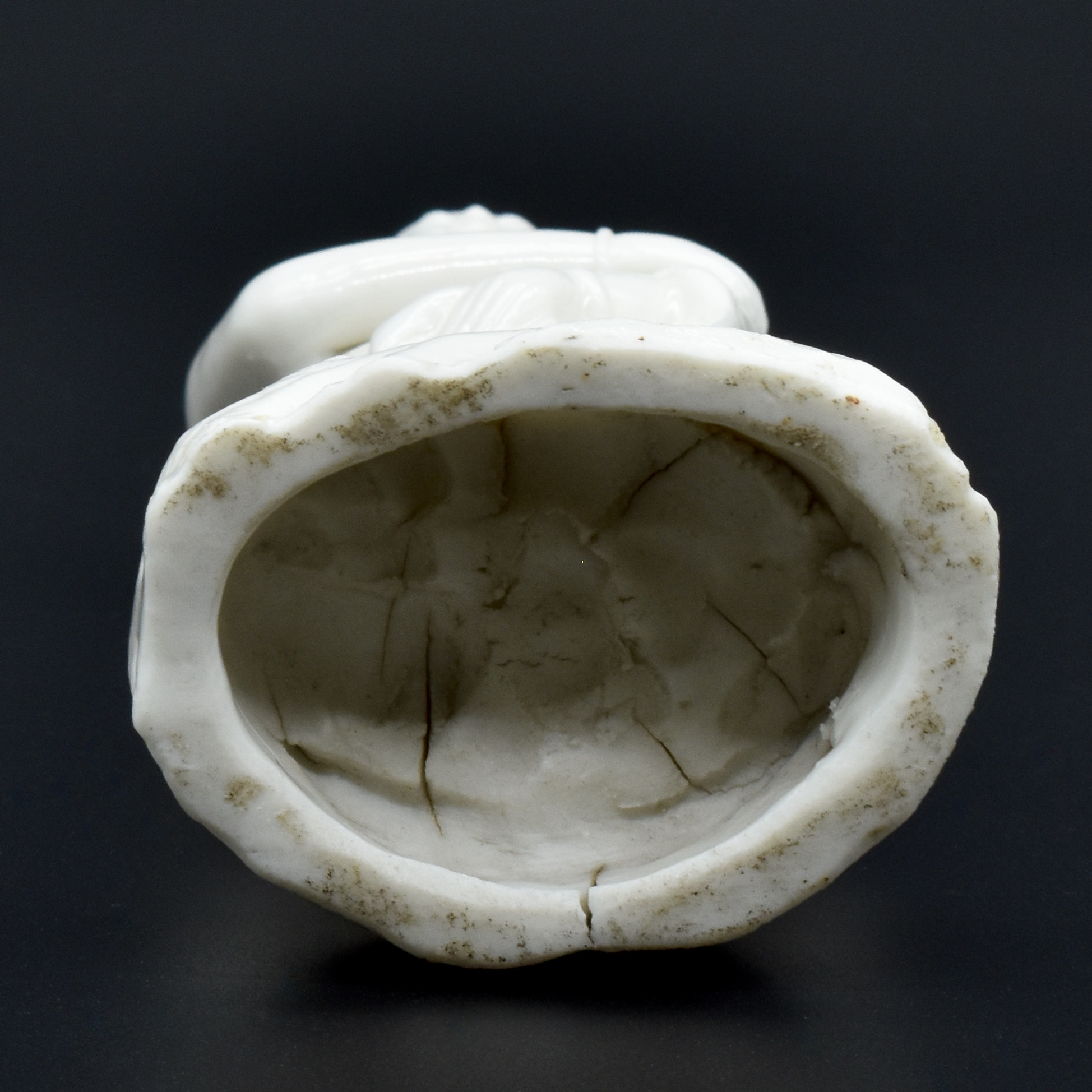
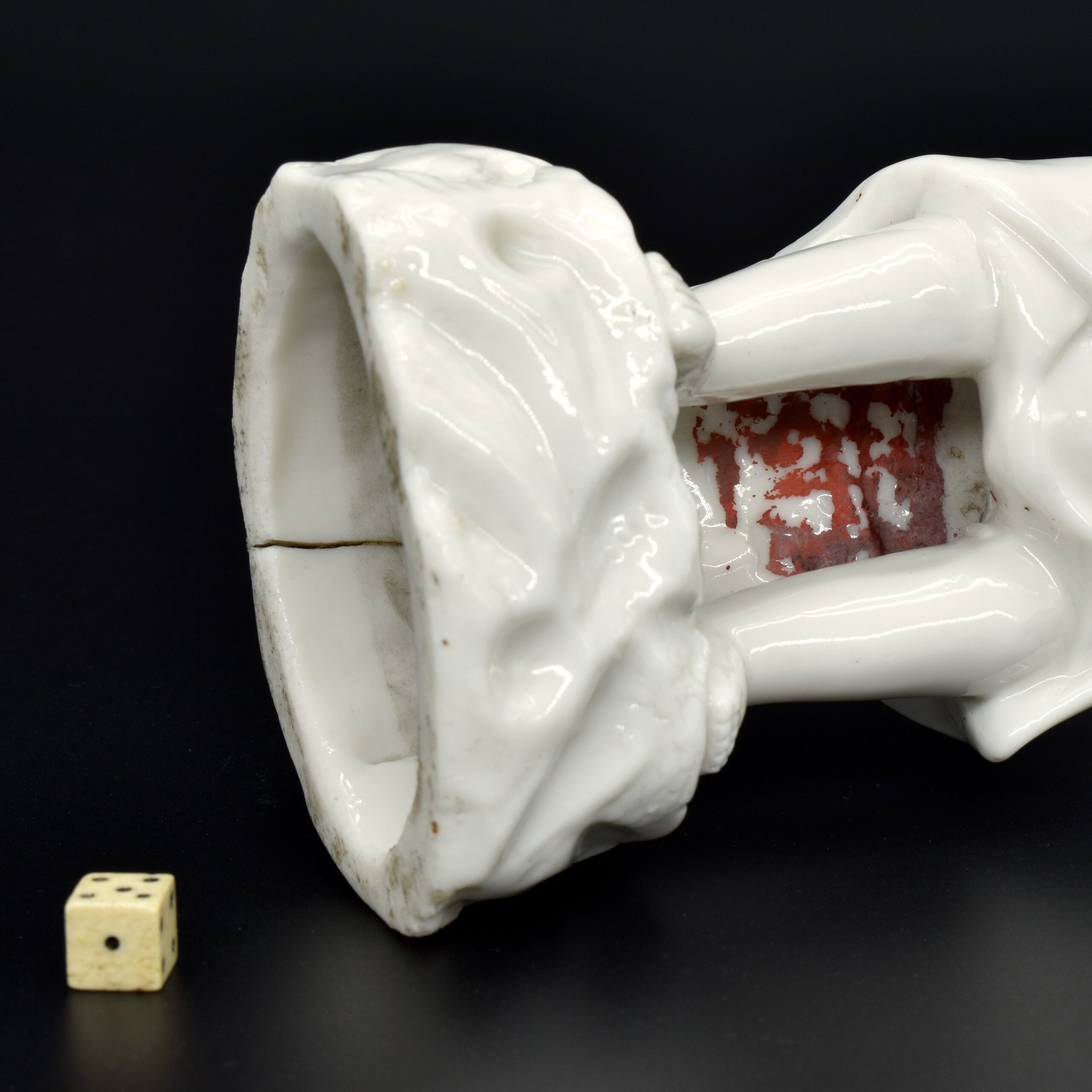
Information
Blanc de Chine Porcelain :
The porcelain known in the West as Blanc de Chine was produced 300 miles south of the main Chinese kiln complex of Jingdezhen. The term refers to the fine grain white porcelain made at the kilns situated near Dehua in the coastal province of Fujian, these kilns also produced other types of porcelain. A rather freely painted blue and white ware, porcelain with brightly coloured `Swatow` type enamels as well as pieces with a brown iron-rich glaze. However it is the white blanc de Chine wares that have made these kilns famous. The quality and colour achieved by the Dehua potters was partly due to the local porcelain stone, it was unusually pure and was used without kaolin being added. This, combined with a low iron content and other chemical factors within the body as well as the glaze, enabled the potters to produce superb ivory-white porcelain.
Blanc de Chine Figure of 'Adam and Eve' :
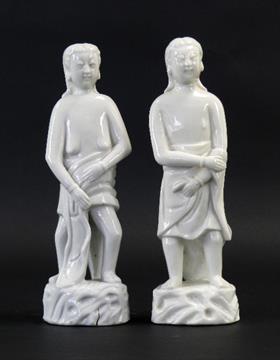
A group of Blanc de chine porcelain models of of standing semi-naked figures on oval rusticated bases have traditionally been referred to as Adam and Eve. This is possibly because their clothing is so scant and simple they can be seen as having a passing resemblance to images of Adam and Eve in Western art. But as David Freedman points out in S.Marchant & Son`s 1985 catalogue of an exhibition of blanc de chine “.. there is no doubt that the face and hair-style are Chinese and there is nothing to suggest a European model”. European models were used as prototypes for blanc de chine figures but they always have something to betray their Western origin, indeed that was the point, as they were made for the West. It is more likely these figures depict an indigenous or foreign ethnic group in China. Although appearing to be made as a pair it is curious that there are more male figures than female one in existence. The variation among these figures is minimal, the method of production is also very similar, that and the fact they are uncommon all point to a short production period. They were produced at Dehua in Fujian province during the reign of Kangxi, somewhere between c.1690 and 1710.
References :
For a Kangxi Blanc de Chine figure like this dated to c.1690 see : Exhibition of Blanc de Chine (S.Marchant & Son, Exhibition Catalogue December 1985) page 30, plate 53.
For a pair of Blanc de Chine porcelain figures, one of which is the same as the present example see : Exhibition of Blanc de Chine (S.Marchant & Son, Exhibition catalogue June 1994) page 30, plate 20.
A Pair male and female Blanc de Chine figures, described as “Adam and Eve” are illustrated in : Blanc de Chine (P.J. Donnelly, Faber and Faber, 1969 (ISBN 571-08078-2) plate 121c.
For a pair of male and female blanc de chine porcelain figures from this group see : Blanc de Chine, Divine Images in Porcelain (John Ayres, China Institute Gallery, New York, 2002) page 104, plate 55.
A Comparative Example
'Adam and Eve'
Kangxi Period c.1700
Blanc de Chine Porcelain From Dehua in Fujian Province
Kangxi Blanc de Chine Adam
Robert McPherson Antiques