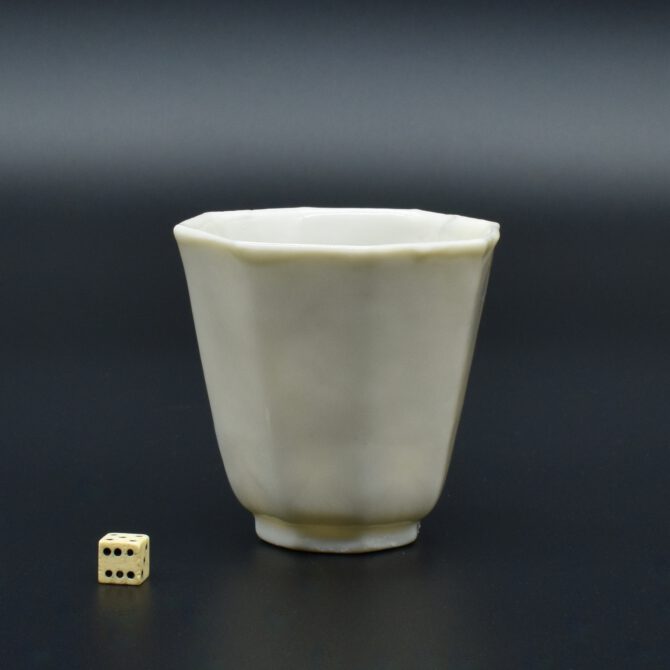
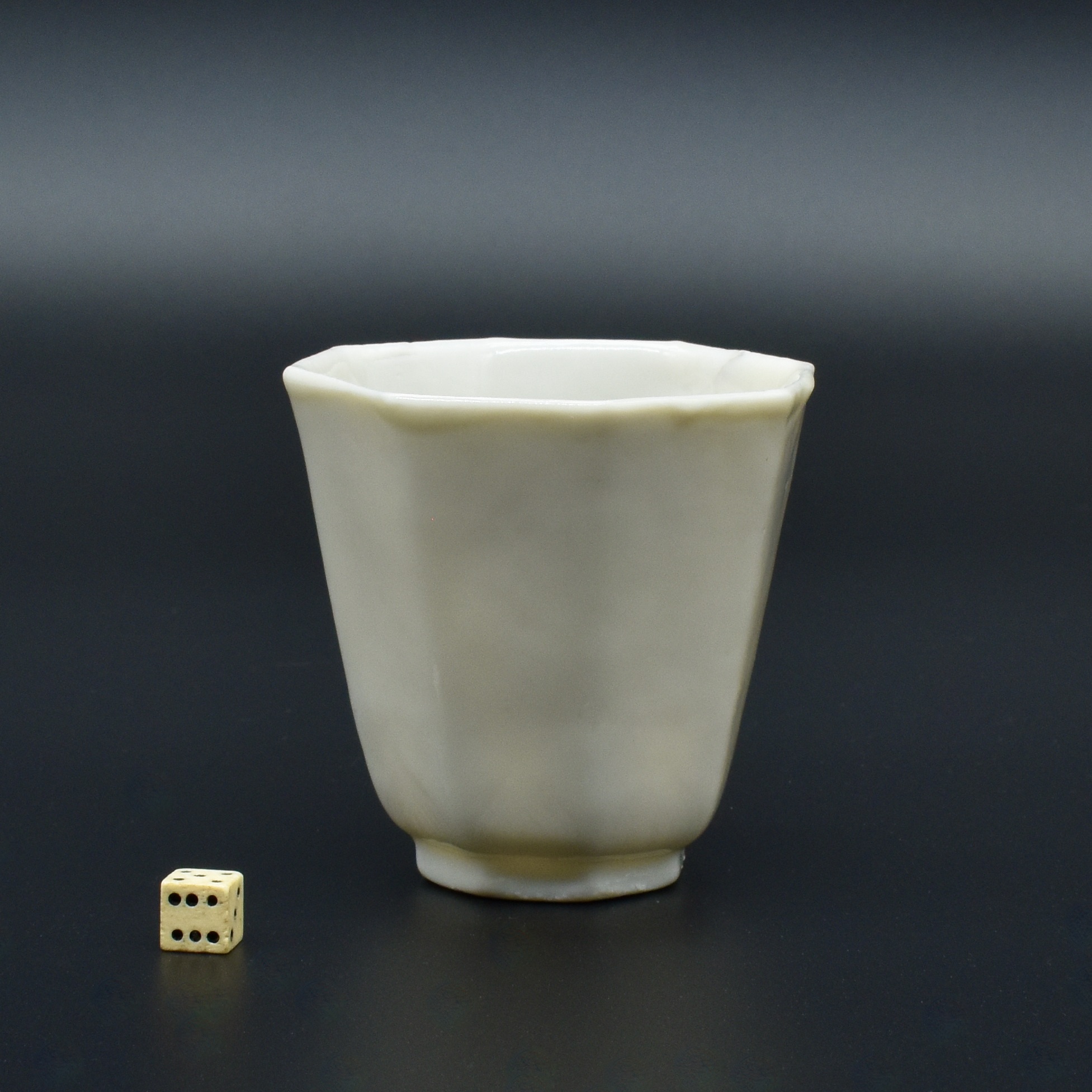
A Kangxi Octagonal Blanc de Chine Porcelain Beaker.
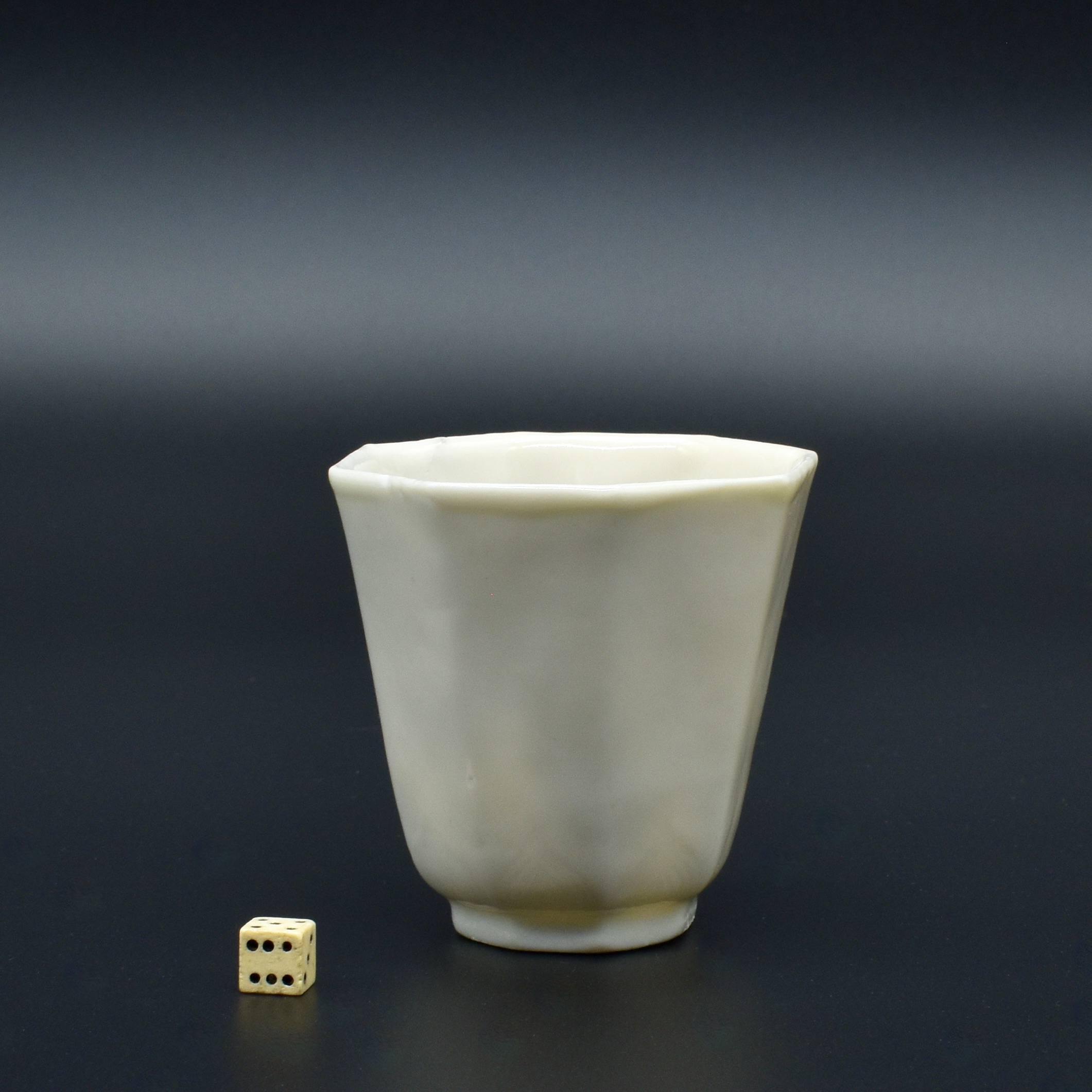
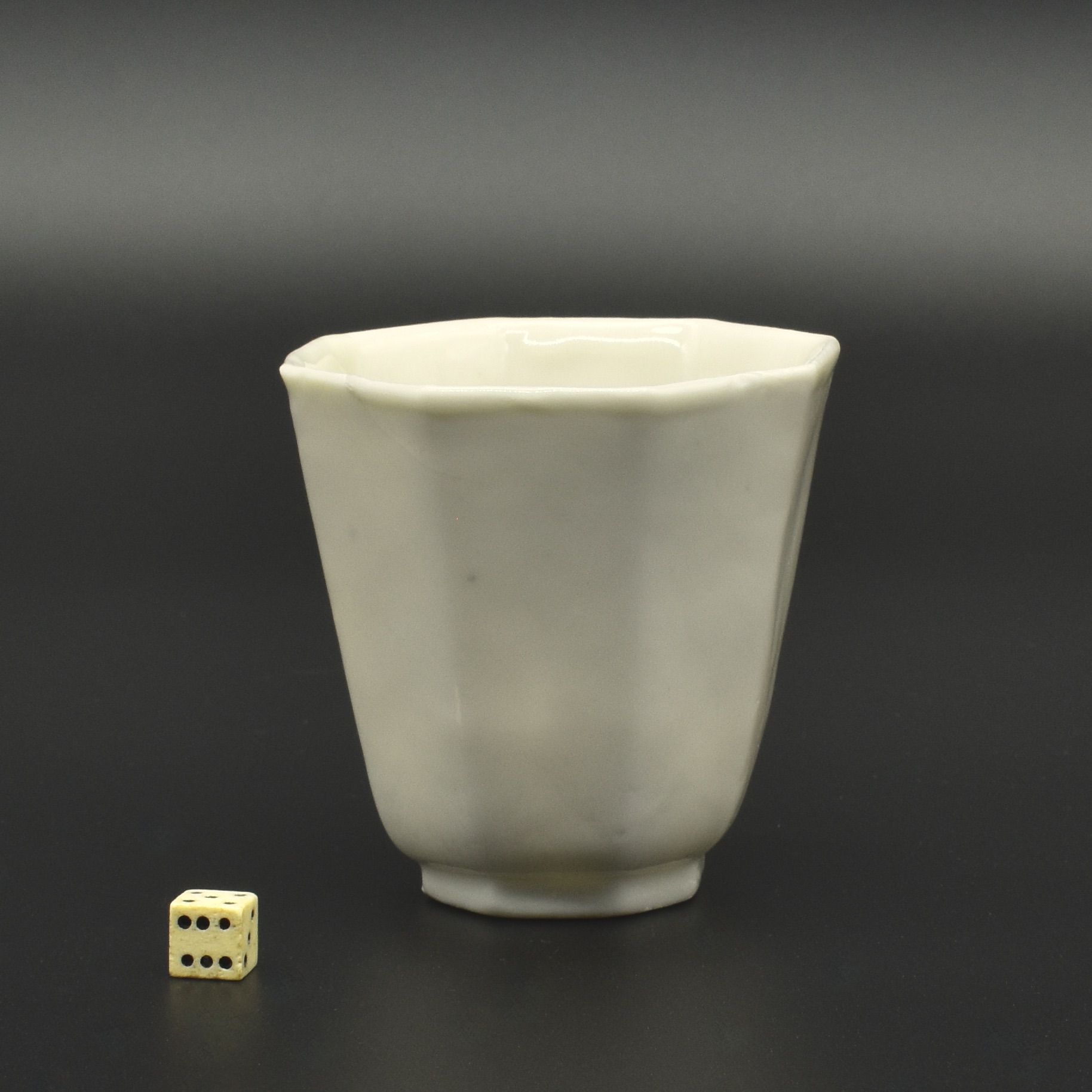
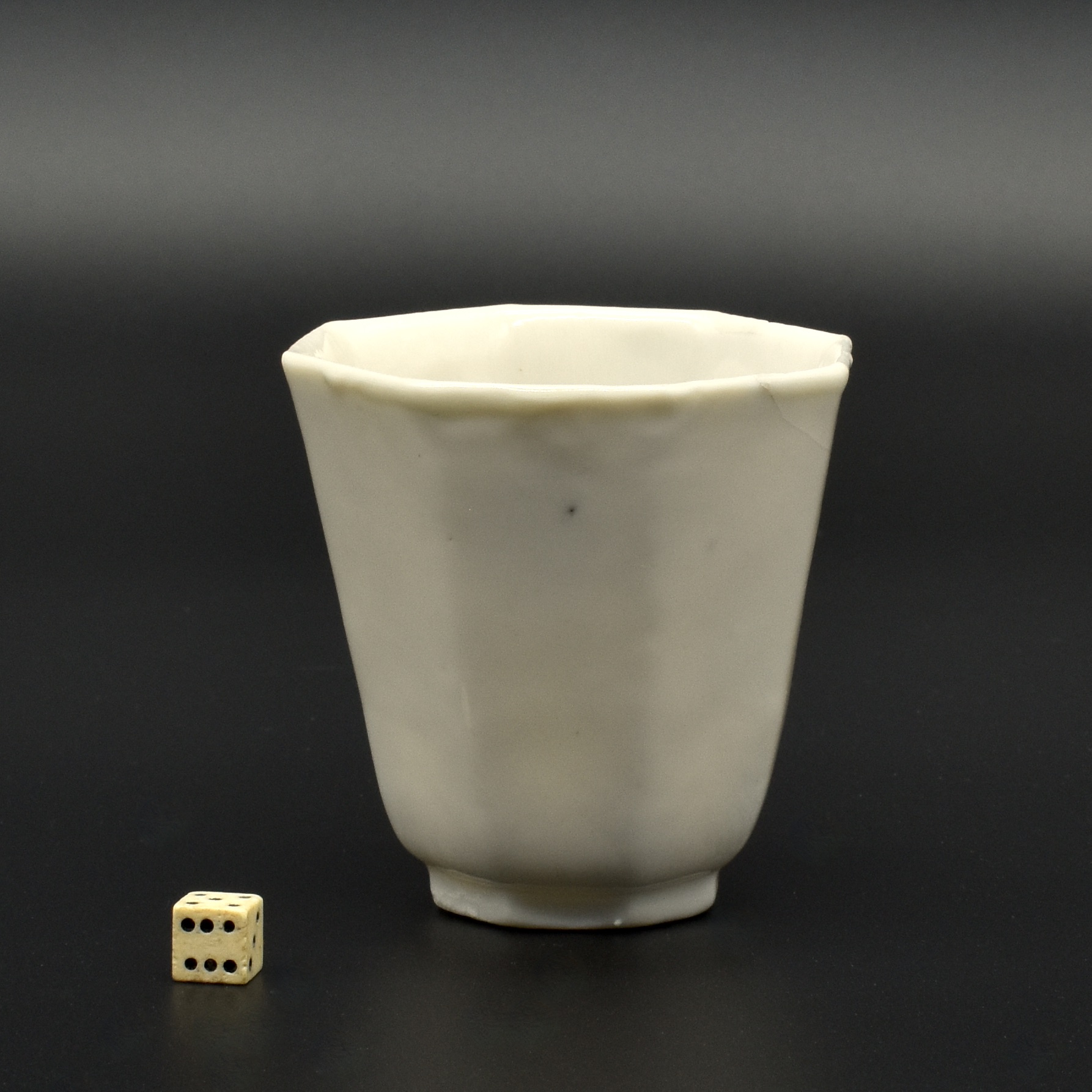
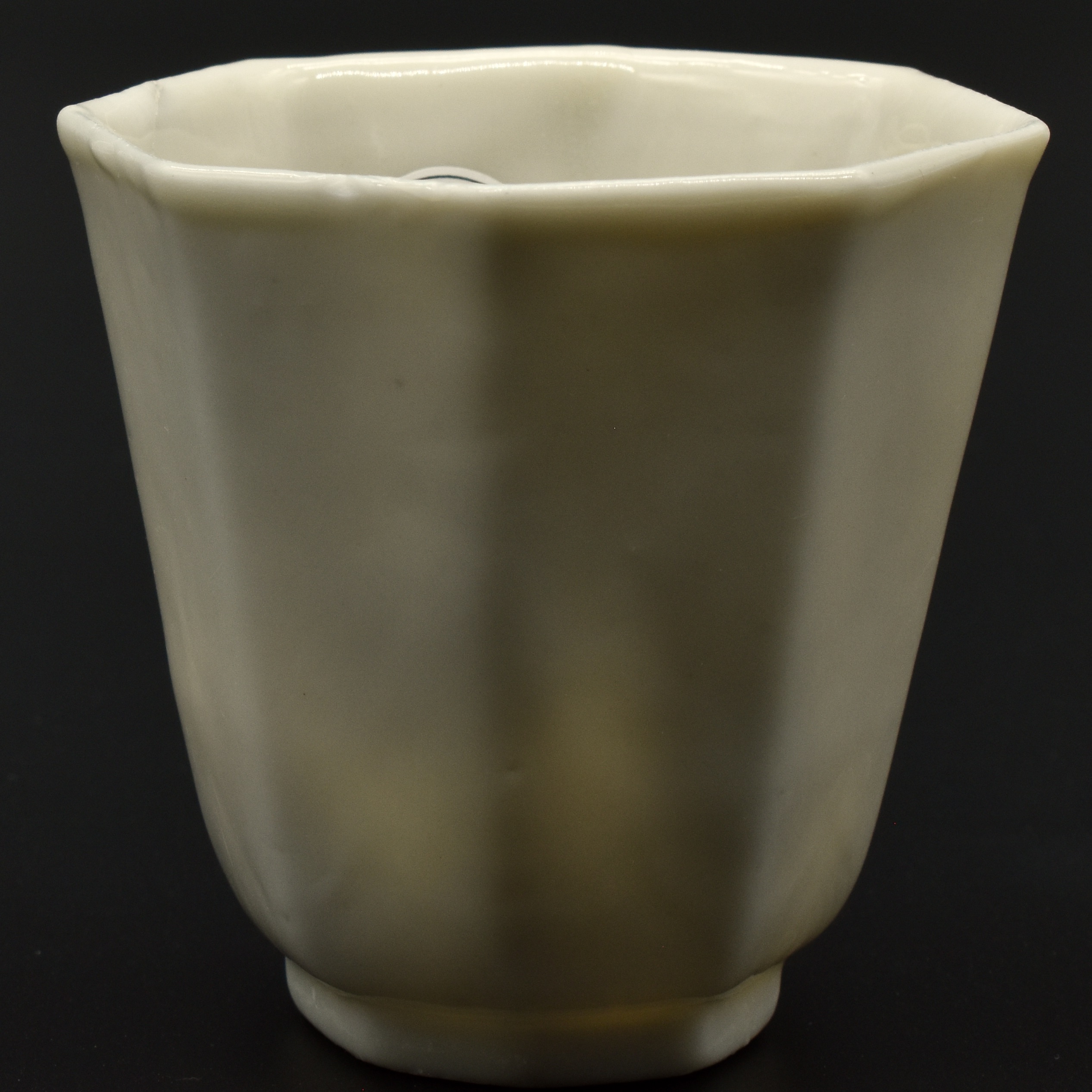
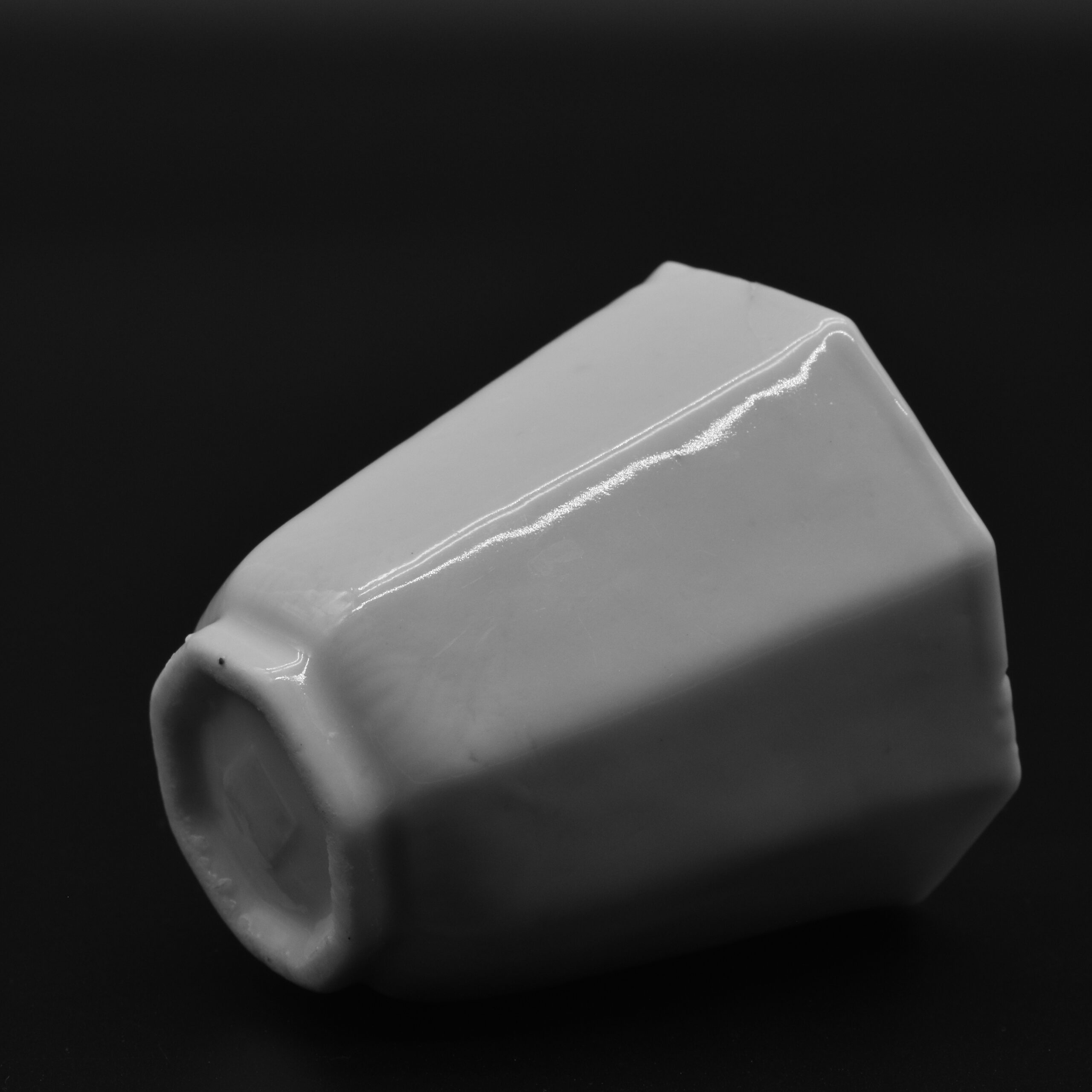
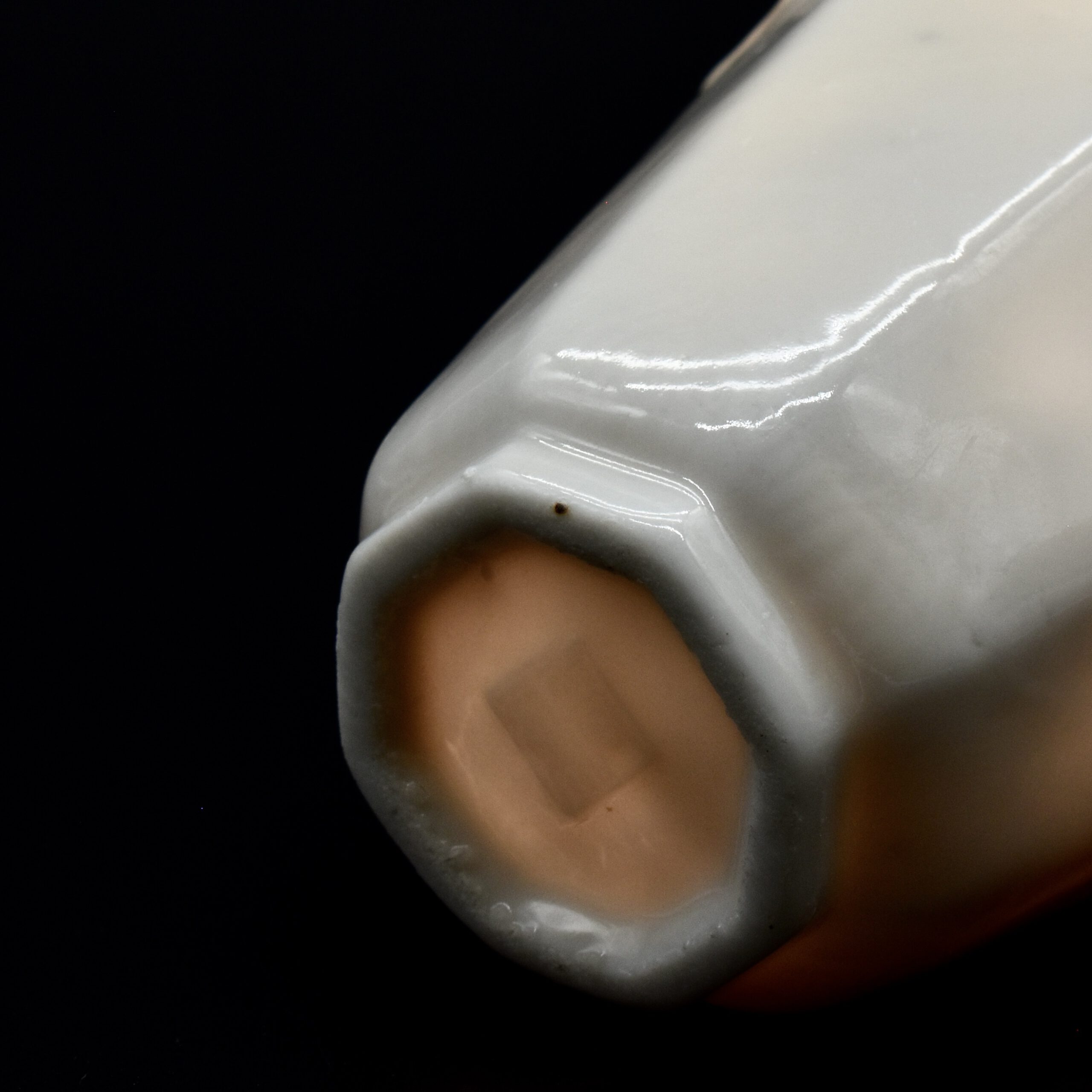
A Kangxi Octagonal Blanc de Chine Porcelain Beaker, Dehua kilns, Fujian Province c.1680 – 1720. The lower curved part of each panel has a lotus form lappet which has been moulded, the base has a raised seal-mark (see the additional photographs in the Photograph Gallery below). This simple form is rather more unusual than the other more thickly potted moulded examples, many of which bare a seal-mark for the workshop Zhongtun shi (Mr. Zhongtun). See below for a plain Blanc de Chine example and a beaker with enamel decorated added in London in around 1715 to 1720.
Blanc de Chine Porcelain :
The porcelain known in the West as Blanc de Chine was produced 300 miles south of the main Chinese kiln complex of Jingdezhen. The term refers to the fine grain white porcelain made at the kilns situated near Dehua in the coastal province of Fujian, these kilns also produced other types of porcelain. A rather freely painted blue and white ware, porcelain with brightly coloured `Swatow` type enamels as well as pieces with a brown iron-rich glaze. However it is the white Blanc de Chine wares that have made these kilns famous. The quality and colour achieved by the Dehua potters was partly due to the local porcelain stone, it was unusually pure and was used without kaolin being added. This, combined with a low iron content and other chemical factors within the body as well as the glaze, enabled the potters to produce superb ivory-white porcelain.
See Below For More Photographs and Information
SOLD
- Condition
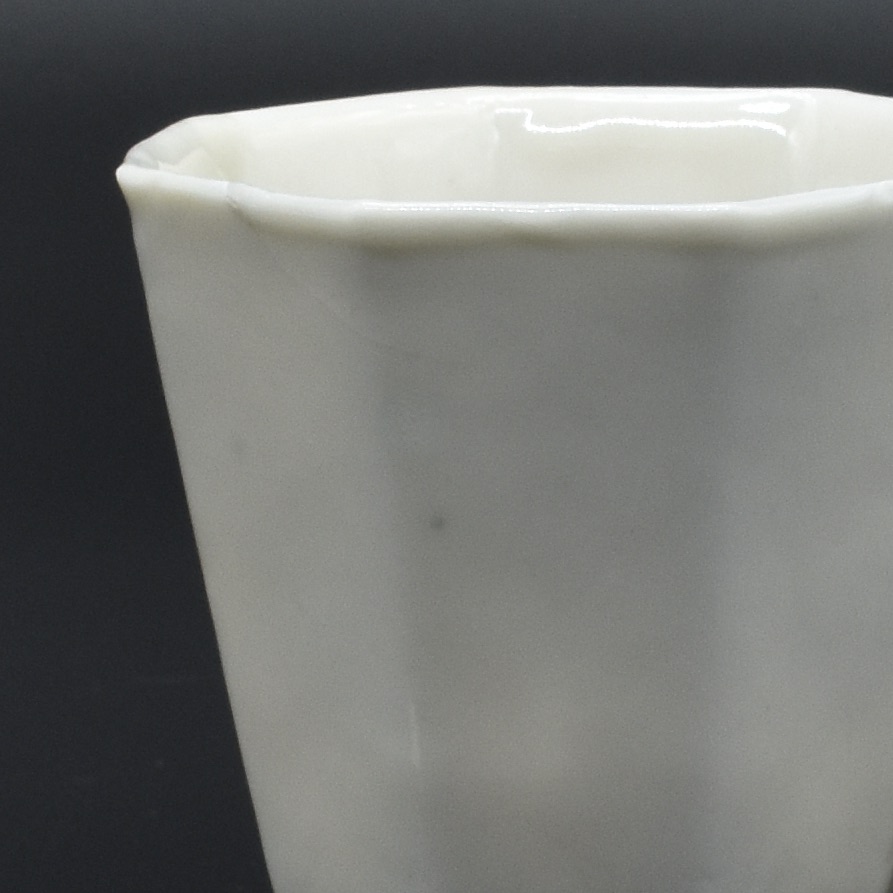
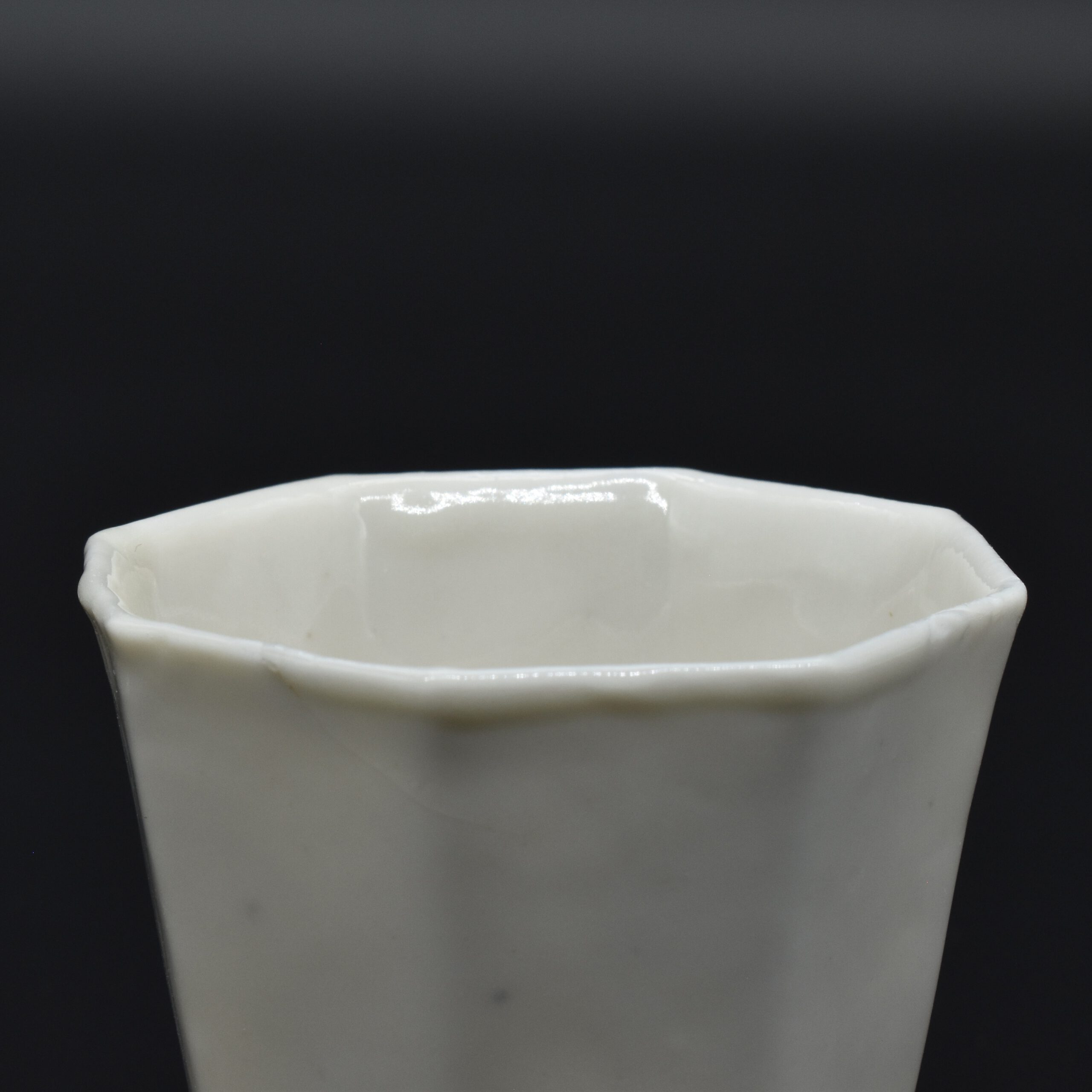
- There is a crack from the rim that runs to the right approximately 2.1 cm.There is also a small rim chip.
- Size
- Height 7 cm (2.7 inches).
- Provenance
- From a private collection of Blanc de Chine porcelain.
- Stock number
- 25674
Photos
Information
Two Related Kangxi Blanc de Chine Porcelain Beakers
Robert McPherson Antiques - Sold Archive.
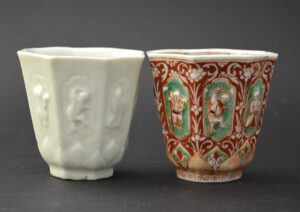
Shown next to an plain Blanc de Chine beaker of the same design (not included in the price)
Condition
In perfect condition.
Size
Height : 7 cm (2 3/4 inches)
Provenance
The Helen Espir Collection of European Decorated Chinese Export Porcelain : "a member of the Oriental Ceramic Society and collector, with her husband. Having made a typical collection of Song and provincial Ming blue and white, they decided to concentrate on what used to be called `clobbered` porcelain. She is the author of the standard work on the subject, European Decoration on Oriental Porcelain,2005, the first to examine the work of European decorators on Chinese porcelain throughout the eighteenth and nineteenth centuries, focusing on enamellers in Holland, Germany and England. She has learned Chinese." From Provenance ; Collectors, Dealers & Scholars : Chinese Ceramics in Britain & America (Roy Davids, Dominic Jellinek, Privately Printed, 2011. ISBN 978-0-9570148-0-0).
Stock number
24567
References
For a very similar Blanc de Chine Beaker with London Decoration of c.1700 to 1720 sold by R&G McPherson Antiques see our `Sold Items` 17976, for a Kangxi beaker of this design by Zhongtun shi (Mr. Zhongtun). For a similar English decorated blanc de chine beaker, also made by Zhongtun shi (Mr. Zhongtun) described as "painted in Holland" see : Ancient Chinese Trade Ceramics from The British Museum (Regina Krahl and Jessica Harrison-Hall, National Museum of History, Republic of China,1994. ISNB 957-00-3623-0) page 330, plate 149. For two similar London decorated blanc de chine porcelain beakers see : Chinese Export Ceramics (Rose Kerr, Luisa Mengoni, Ming Wilson, V&A Publishing 2011. ISBN 9781-85177-6320) page 99, plate 141. For the potters mark see : Blanc de Chine (P.J Donnelly, Faber and Faber, 1969) Page 358. For a very similar Blanc de Chine Porcelain beaker with the same potters mark also see Donnelly, Plate 31, top row second from the left.
The porcelain known in the West as Blanc de Chine was produced 300 miles south of the main Chinese kiln complex of Jingdezhen. The term refers to the fine grain white porcelain made at the kilns situated near Dehua in the coastal province of Fujian, these kilns also produced other types of porcelain. A rather freely painted blue and white ware, porcelain with brightly coloured `Swatow` type enamels as well as pieces with a brown iron-rich glaze. However it is the white blanc de Chine wares that have made these kilns famous. The quality and colour achieved by the Dehua potters was partly due to the local porcelain stone, it was unusually pure and was used without kaolin being added. This, combined with a low iron content and other chemical factors within the body as well as the glaze, enabled the potters to produce superb ivory-white porcelain.