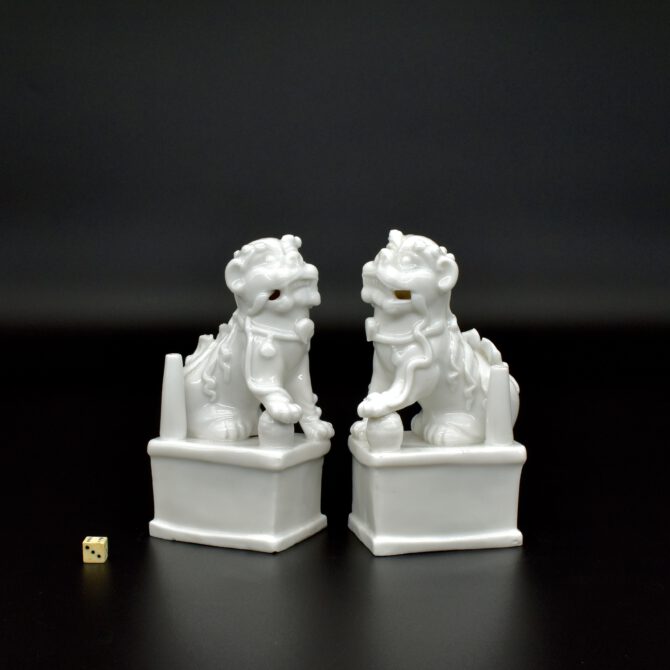
A Pair of Small Kangxi Blanc de Chine Porcelain Buddhist Lions.
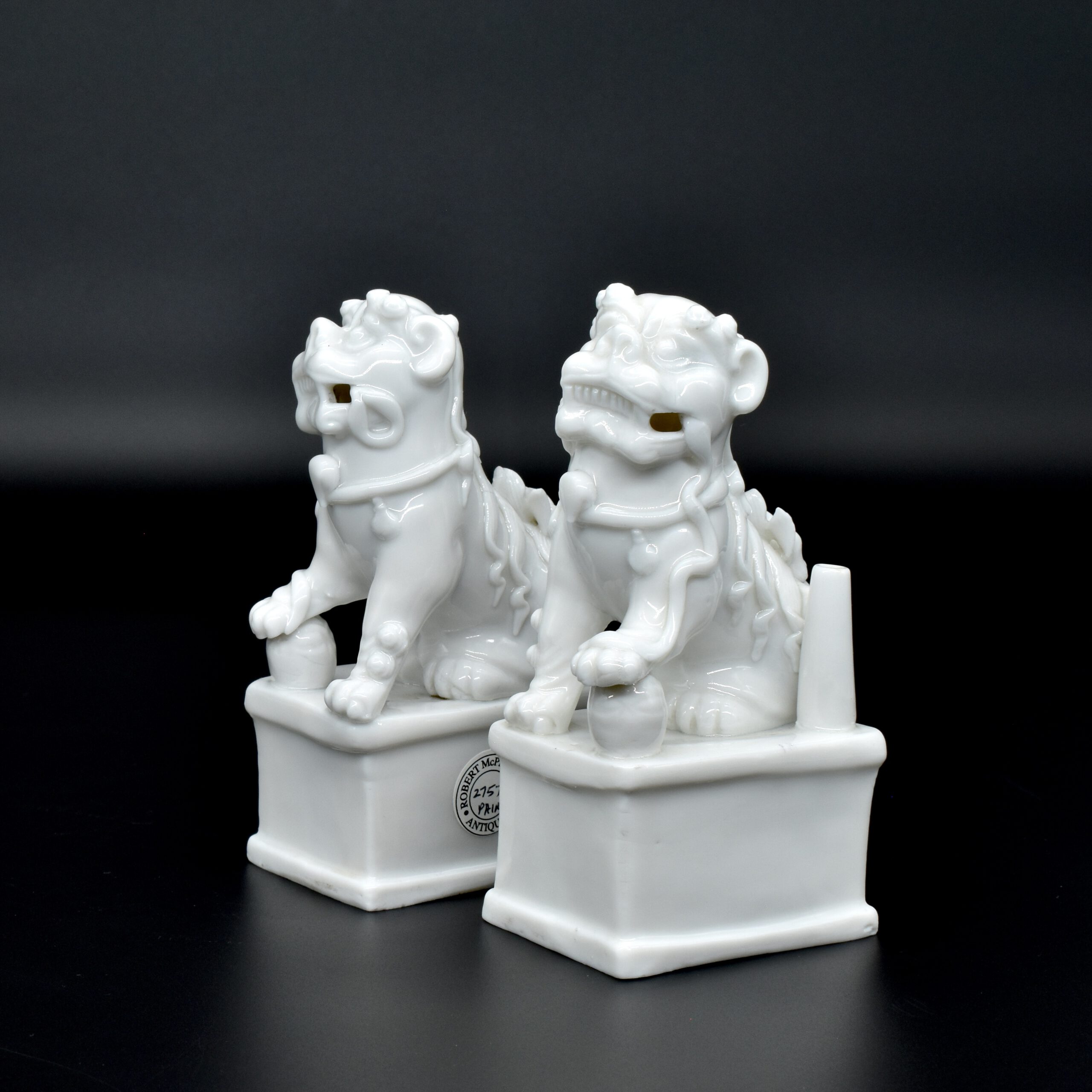
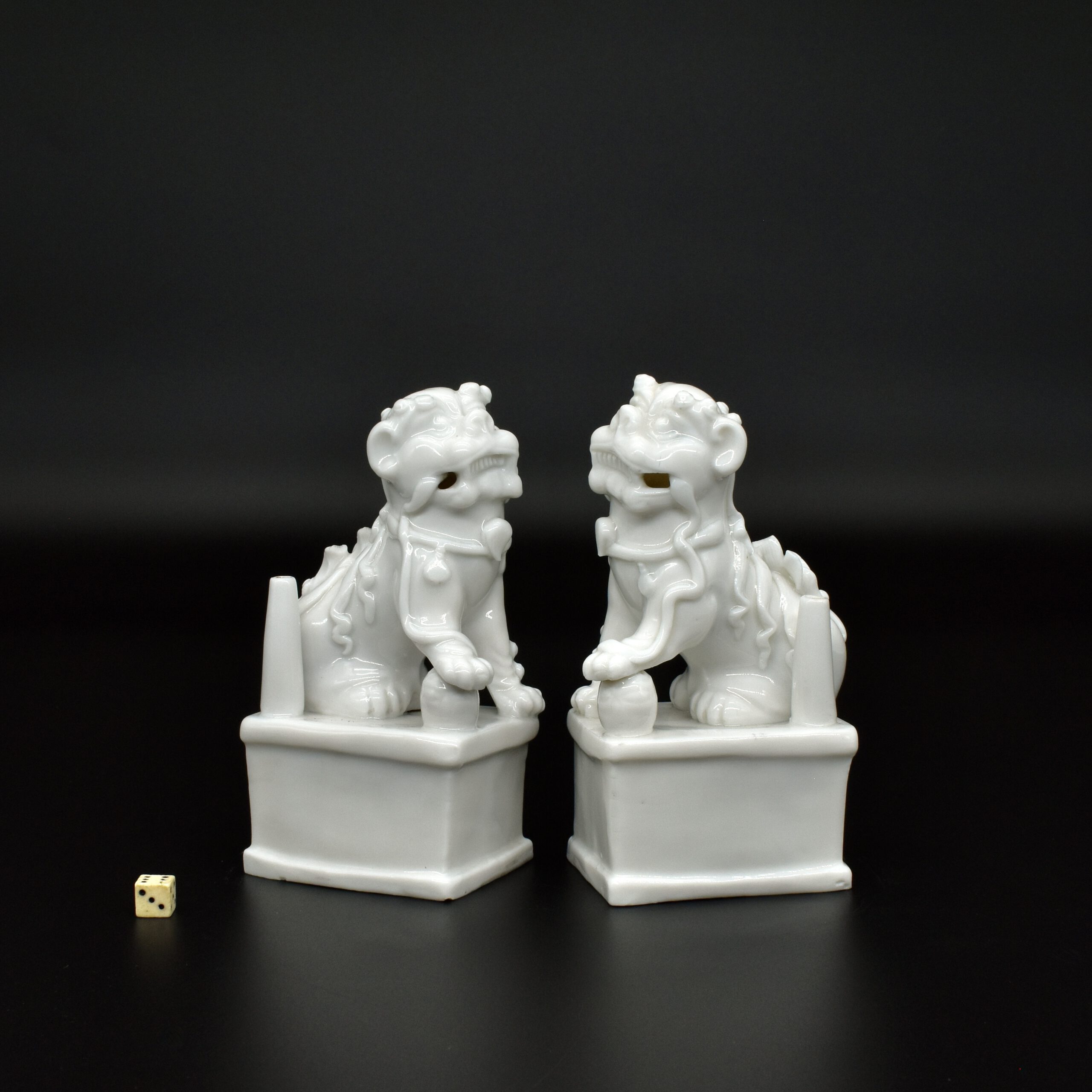
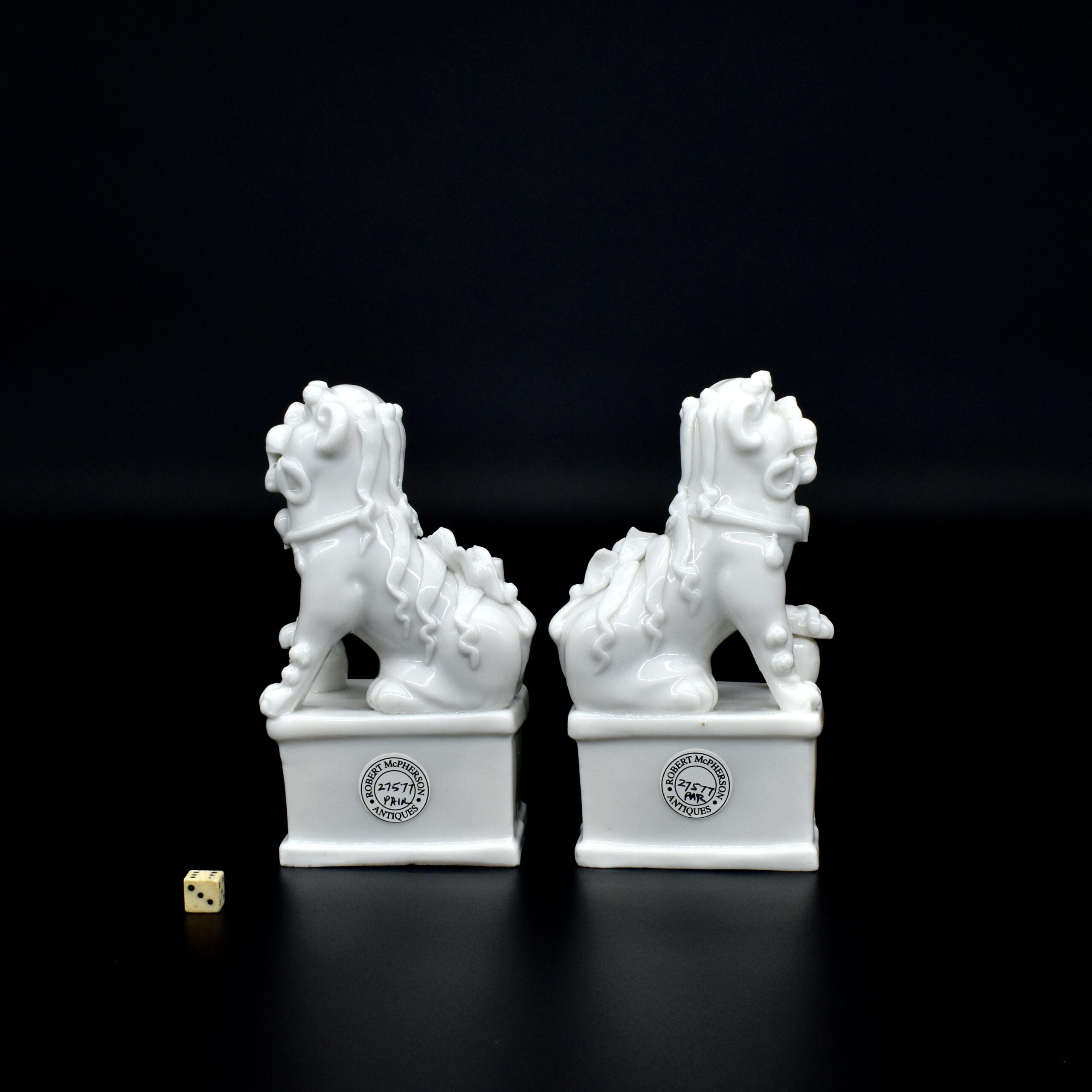
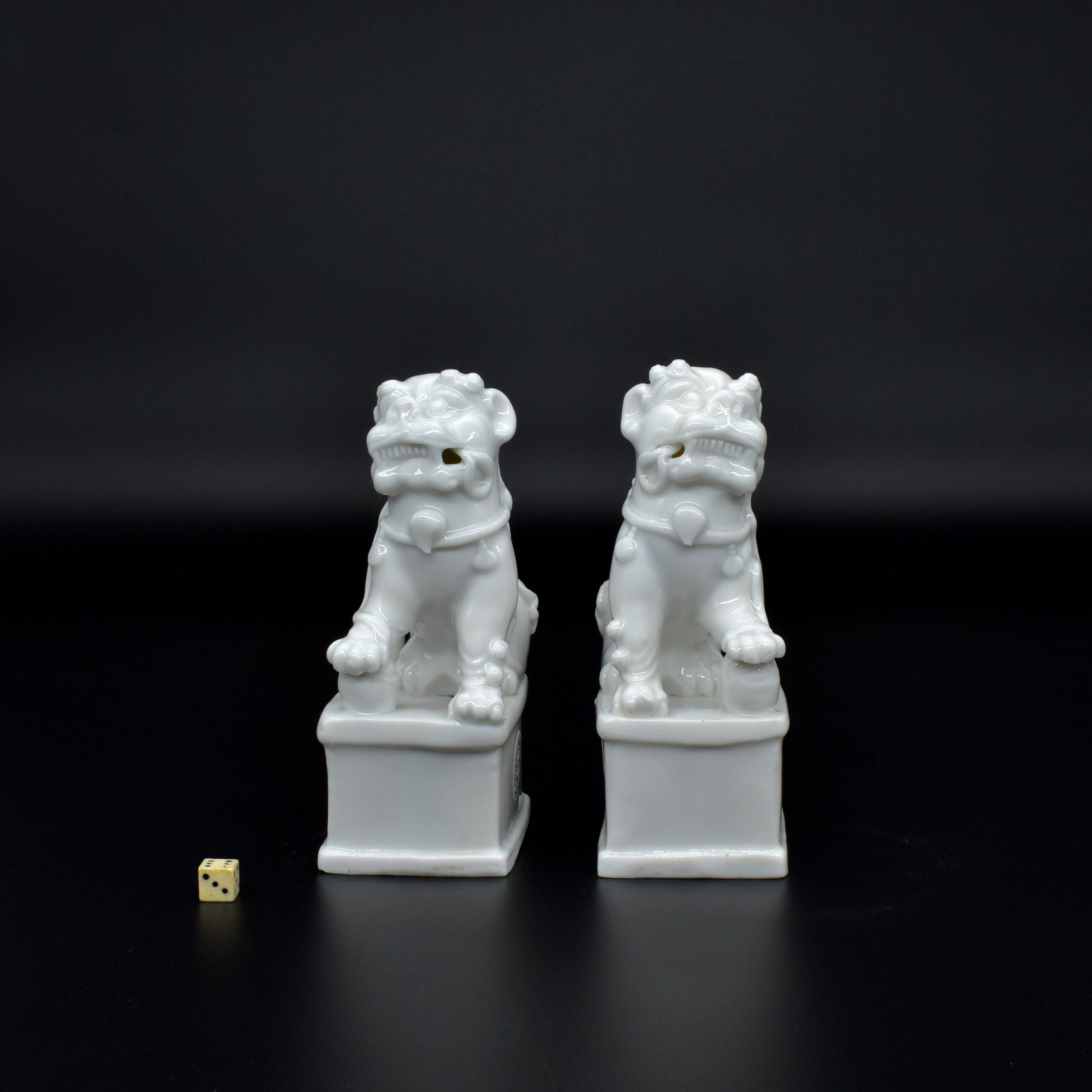
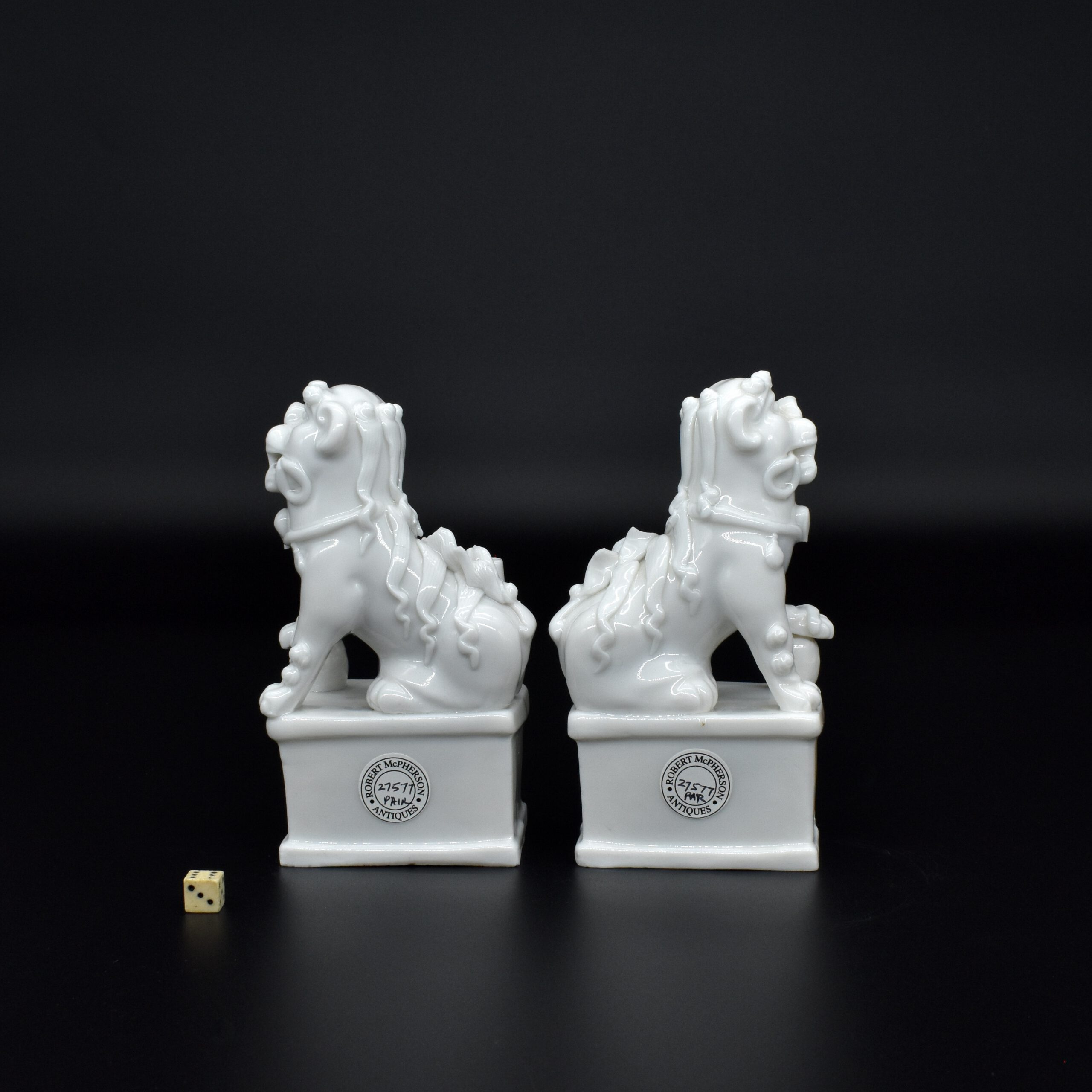
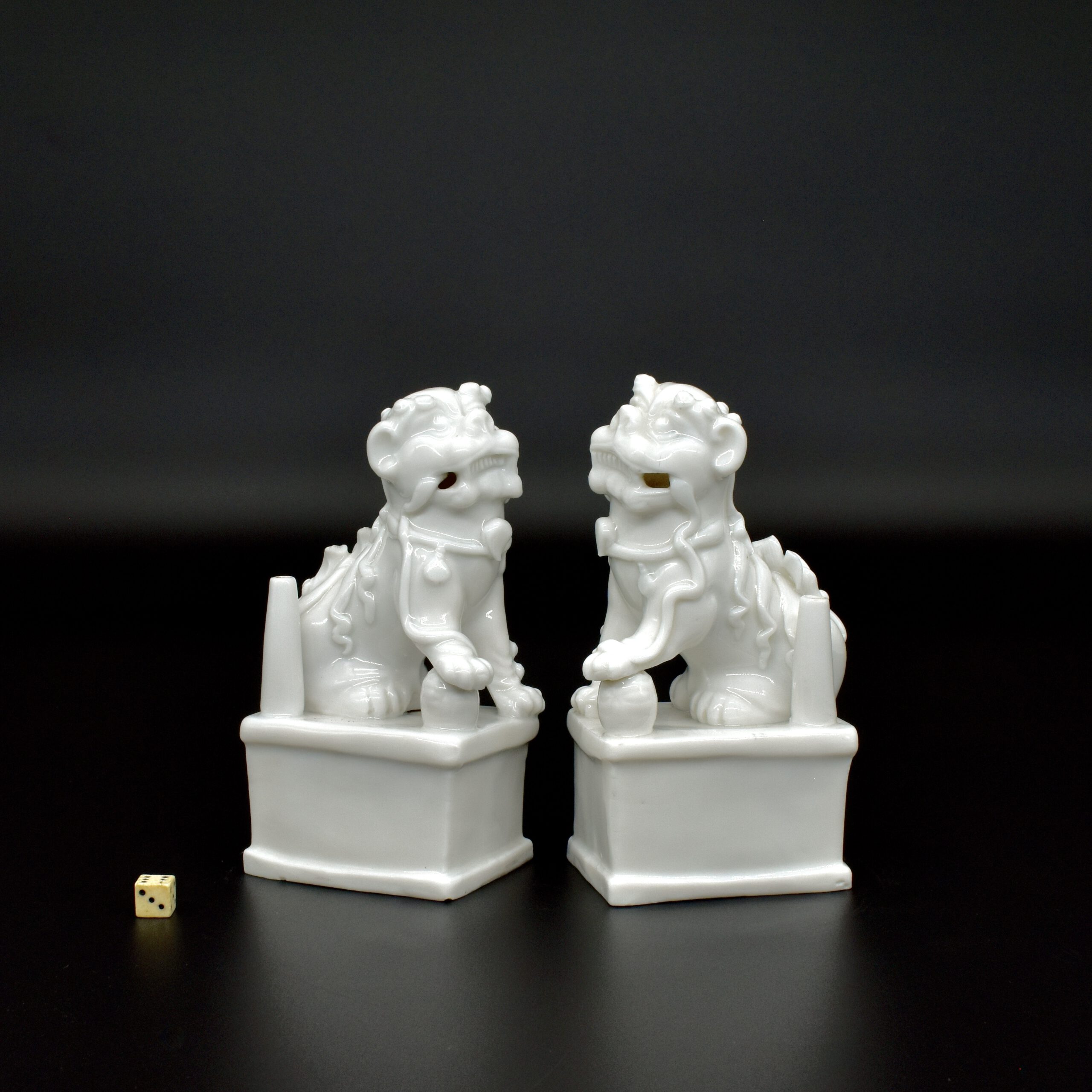
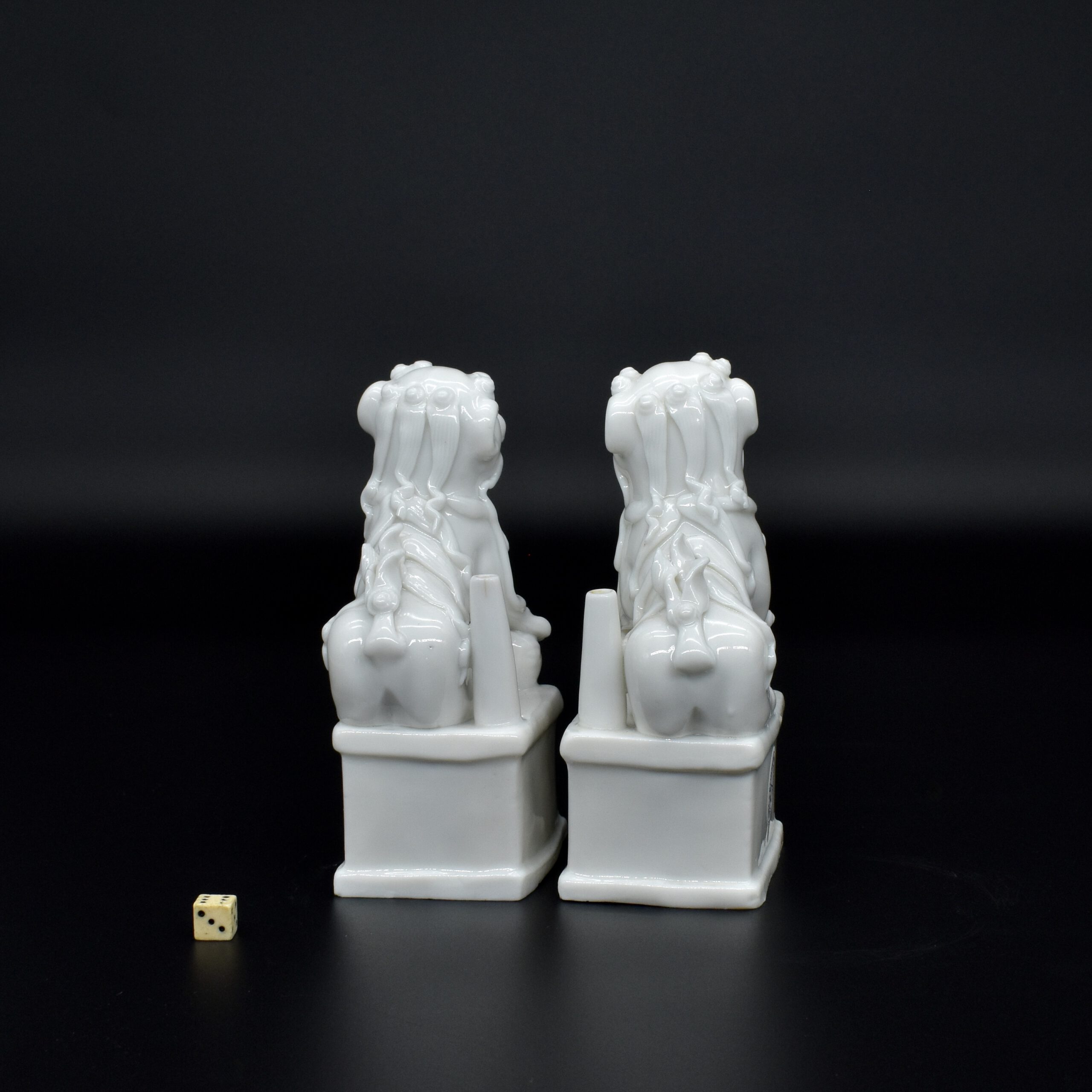
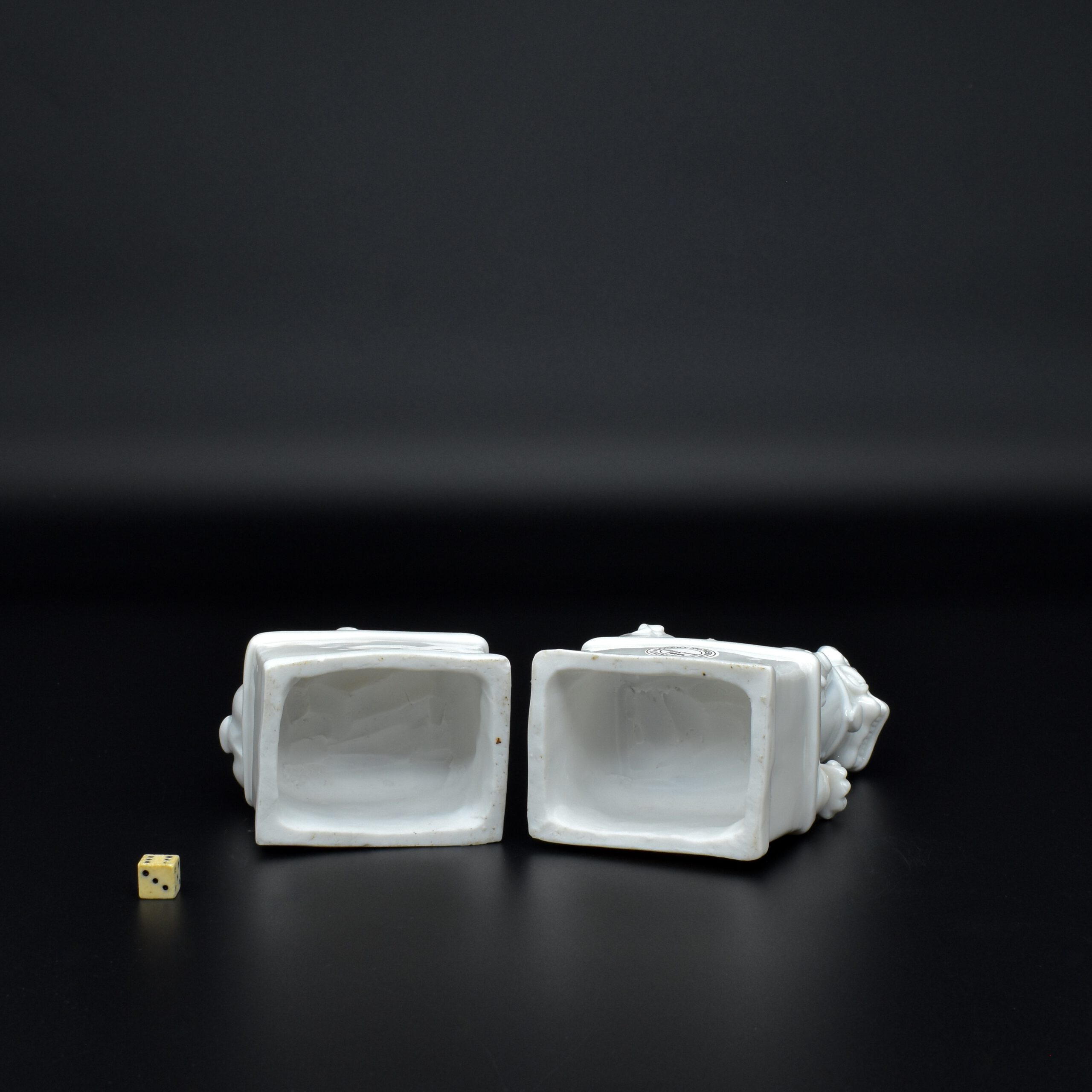
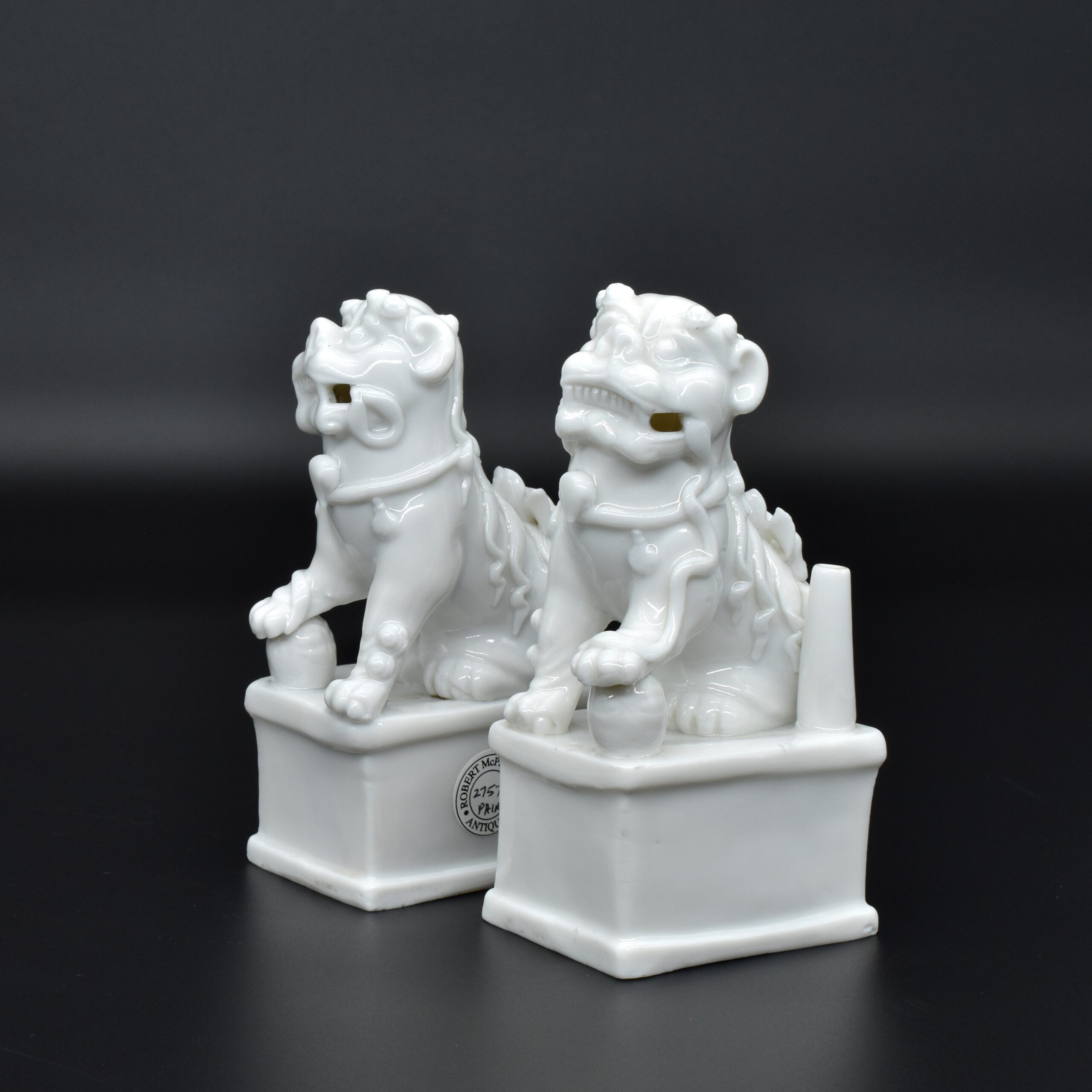
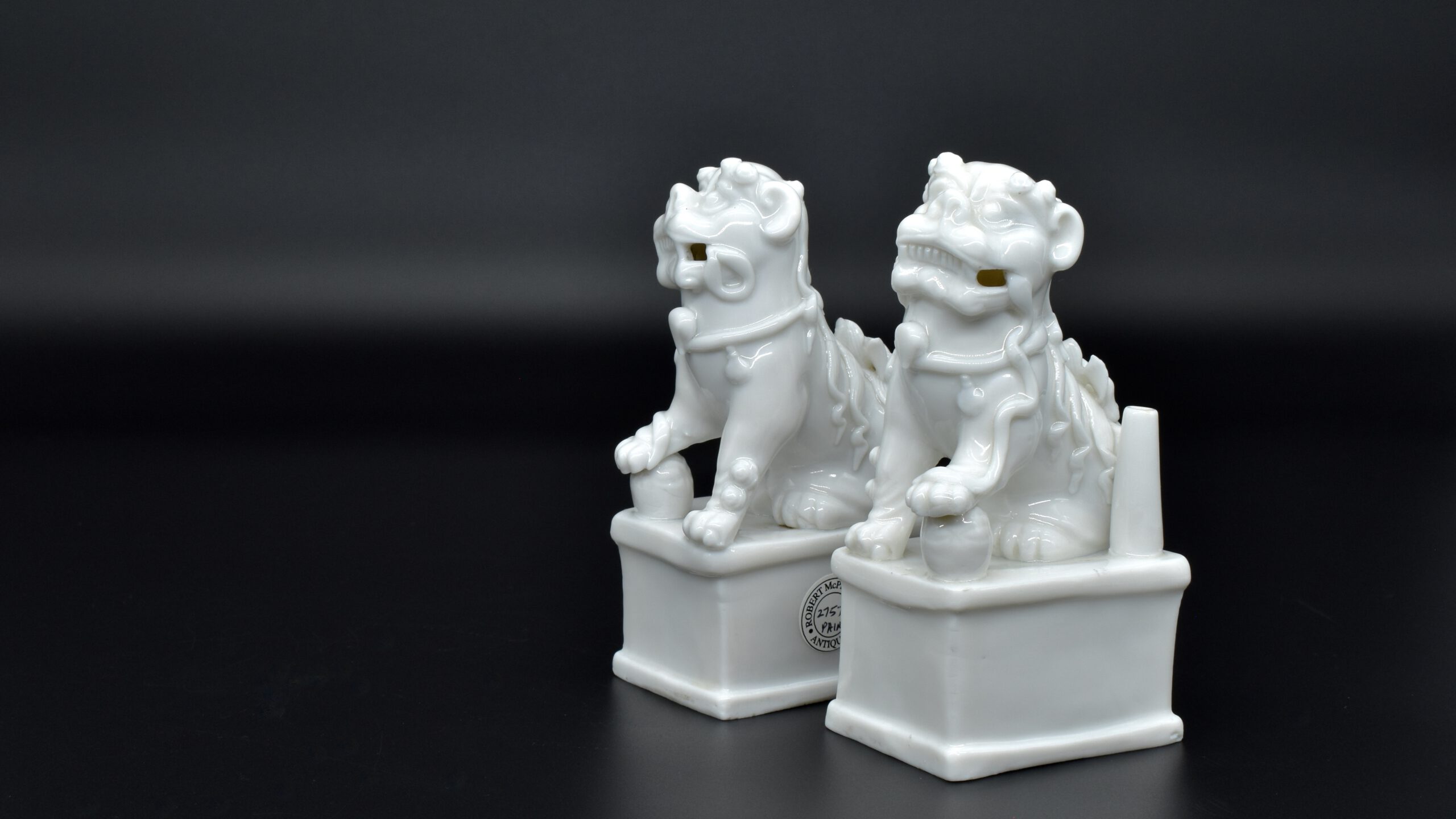
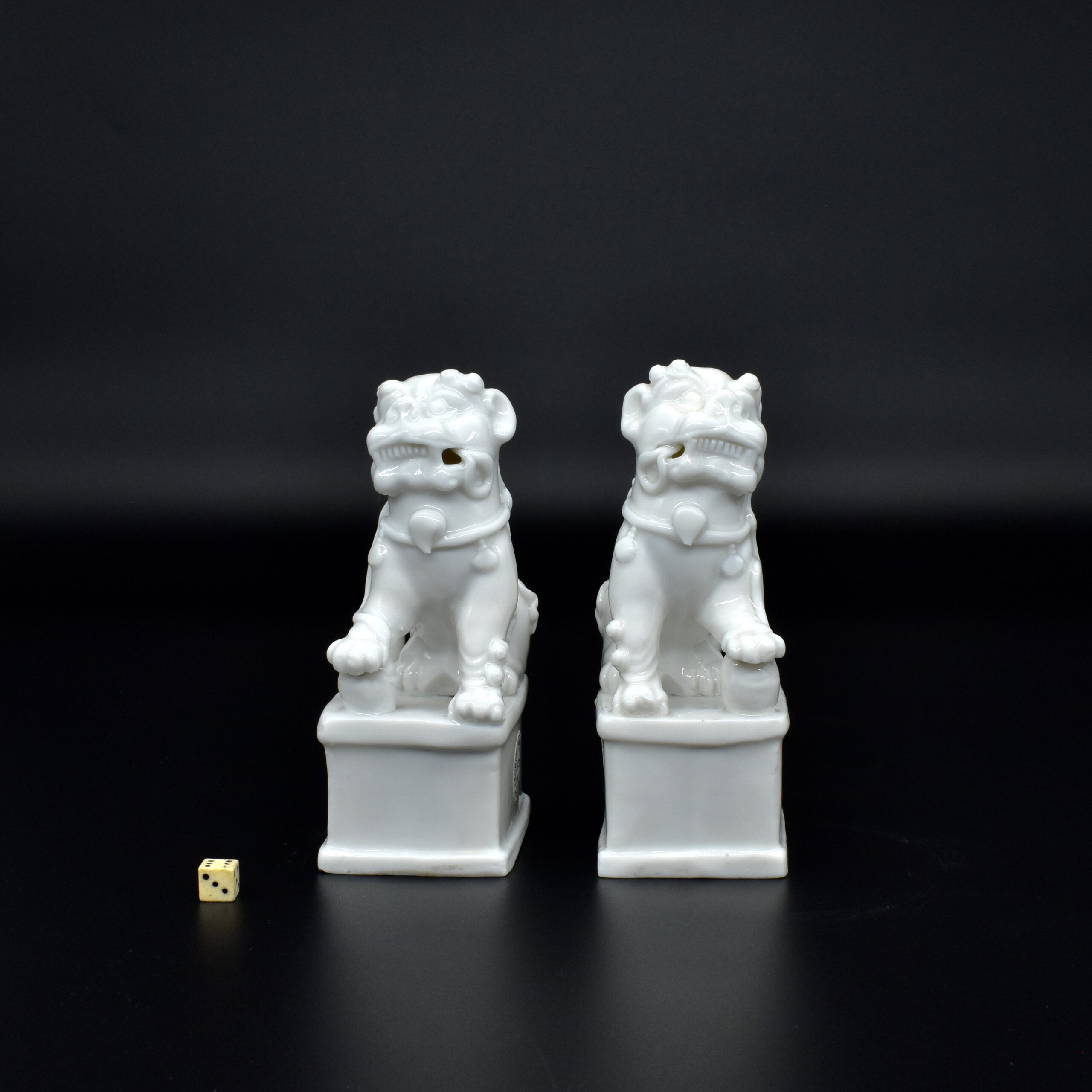
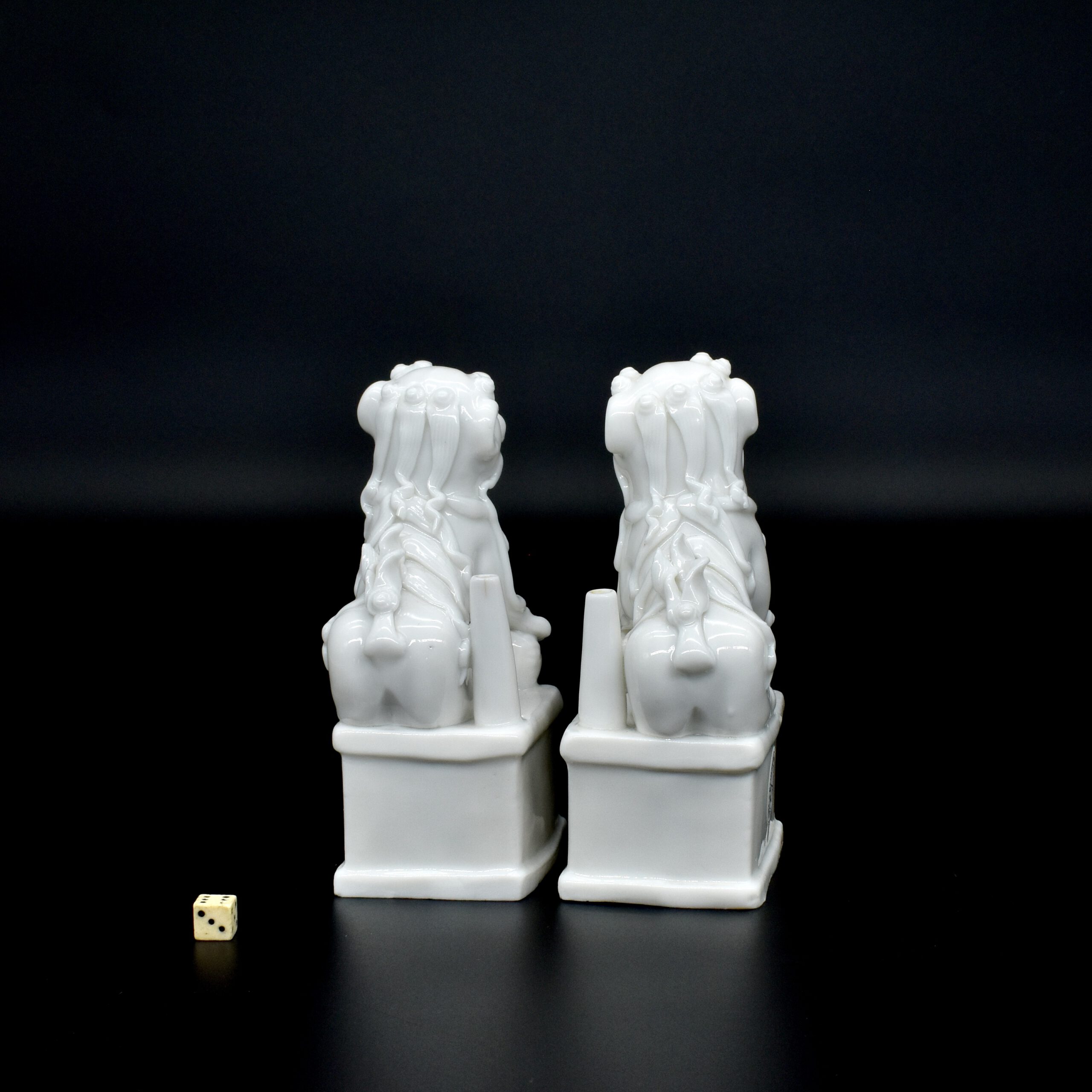
A Pair of Small Kangxi Blanc de Chine Porcelain Buddhist Lions, Rui Shi or ‘Dogs of Foo’, from a Kiln in Dehua Fujian Province c.1680 – 1720. The glaze is especially clear and bright, there is some hand modelling of the details but less than you would find on late Ming examples. This pair Rui Shi (auspicious lions) are from the Kangxi period, however they are difficult to date accurately. Blanc de Chine Buddhist lions on rectangular plinths have been made from the mid-16th century and are still made today. The vertical nozzle occur on nearly all of these Blanc de Chine lions, near the back legs, they were used for incense sticks. Most of the pairs comprise a male and female Buddhist lion. They match in their details, size and decoration. This is further proof, if any was needed, that these are a pair and started life together in a kiln in Fujian. Blanc de Chine Buddhist lions were used in China, they ward off evil and could be used on a family shrine. They were also popular in Europe. A pair of very ornate Blanc de Chine Buddhist lions are in the 1688 inventory of Burghley House. Under the heading “My Lords Anty Roome”… “China over ye Chimney”… “wt lyons”. For more references see Information below the Photograph Gallery.
SOLD
See Below For More Photographs and Information
- Condition
- The left hand Buddhist lion has small chips to the vertical ribbon like tail, the right hand one has larger chips in the same places. There is a short crack to the left side of the nozzle of the Buddhist lion on the left.
- Size
- Height 13.2 cm (5.2 inches).
- Provenance
- N/A
- Stock number
- 27577
- References
- For more references see Information below the Photograph Gallery.
Photos
Information
Blanc de Chine Dogs of Foo or Buddhist Lions / Rui Shi
Blanc de Chine Buddhist Lions or Foo Dogs are difficult to date, they were made in the provincial kilns of Dehua in Fujian province. There are very many versions, all of which are rather similar but really following the same basic model. Technically the production didn't change much either, on the whole the earlier models have more hand-working. However, the early Blanc de Chine Fu dogs from the Hatcher Cargo, datable to circa 1643 ( stock number 19961) have little hand-work. The potting, glaze colour and general finish all point to a specific period but accurate dating is, I believe, very difficult. As with most pairs of Blanc de Chine Foo Dogs the pair are not a pair in the way we know it today. For a start, both are male as they have a brocaded ball each. Only one has a nozzle to take a taper-stick. These would, I am sure, have been a pair originally, the colour, construction and especially the faces are very similar, although only one has his tongue sticking out.
Dogs of Foo
Interestingly, the lion is not indigenous to China. When Buddhist priests, or possibly traders, brought stories to China about stone dogs guarding the entry to Indian Buddhist temples, Chinese sculptors modelled statues after native dogs for use outside their temples. The mythical version of the animal, was known as the Dog of Foo. The Buddhist version of the dog was originally introduced to Han China as the protector of dharma and these dogs have been found in religious art as early as 208 BC. Gradually they were incorporated as guardians of the Chinese Imperial dharm. However, Chinese sensitivity metamorphosed the dog into a lion, since this seems more appropriate to the dignity of an emperor when he used the beasts to guard his gates. The mythic dog is sometimes associated with feng shui, and are often called Fu Dogs. Fu means `happiness` in Chinese; however, the term "Fu Dog," and its variant Foo Dog, are not used in Chinese. Instead, they are known as Rui Shi ("auspicious lions") or simply Shi ("lions"). There are various styles of imperial guardian lions reflecting influences from different time periods, imperial dynasties, and regions of China. These styles vary in their artistic detail and adornment as well as in the depiction of the lions from fierce to serene.
A Pair of Ming Dynasty or Qing Dynasty Blanc de Chine Porcelain Buddhist Lions
Robert McPherson Antiques Sold Archive 25573
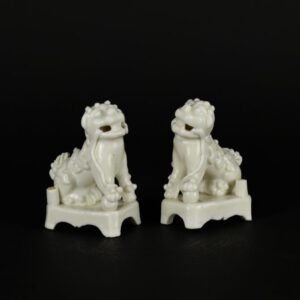
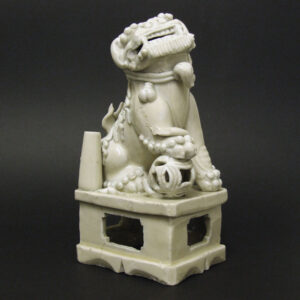
Two White Lions at Burghley House : Recorded in 1688.
They appear in the 1688 Burghley Inventory:
‘My Lords Anty Roome … 2 wt Lyons’ are listed under the heading ‘China over ye Chimney.'
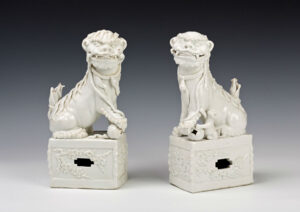
The lions are shown seated on rectangular pedestals, each with a forepaw resting on a brocade ball, one with a cub rearing at her side, 30cm.
The glaze is of a brilliant grey/white appearance.
They appear in the 1688 Burghley Inventory: ‘My Lords Anty Roome … 2 wt Lyons’ are listed under the heading ‘China over ye Chimney.’