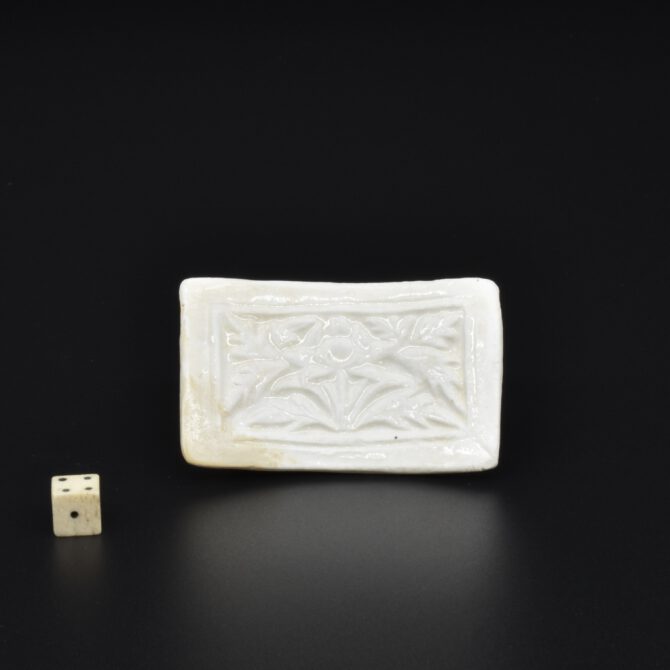
A Rare Song or Jin Dynasty Miniature Cizhou Cream Glazed Model of a Pillow.
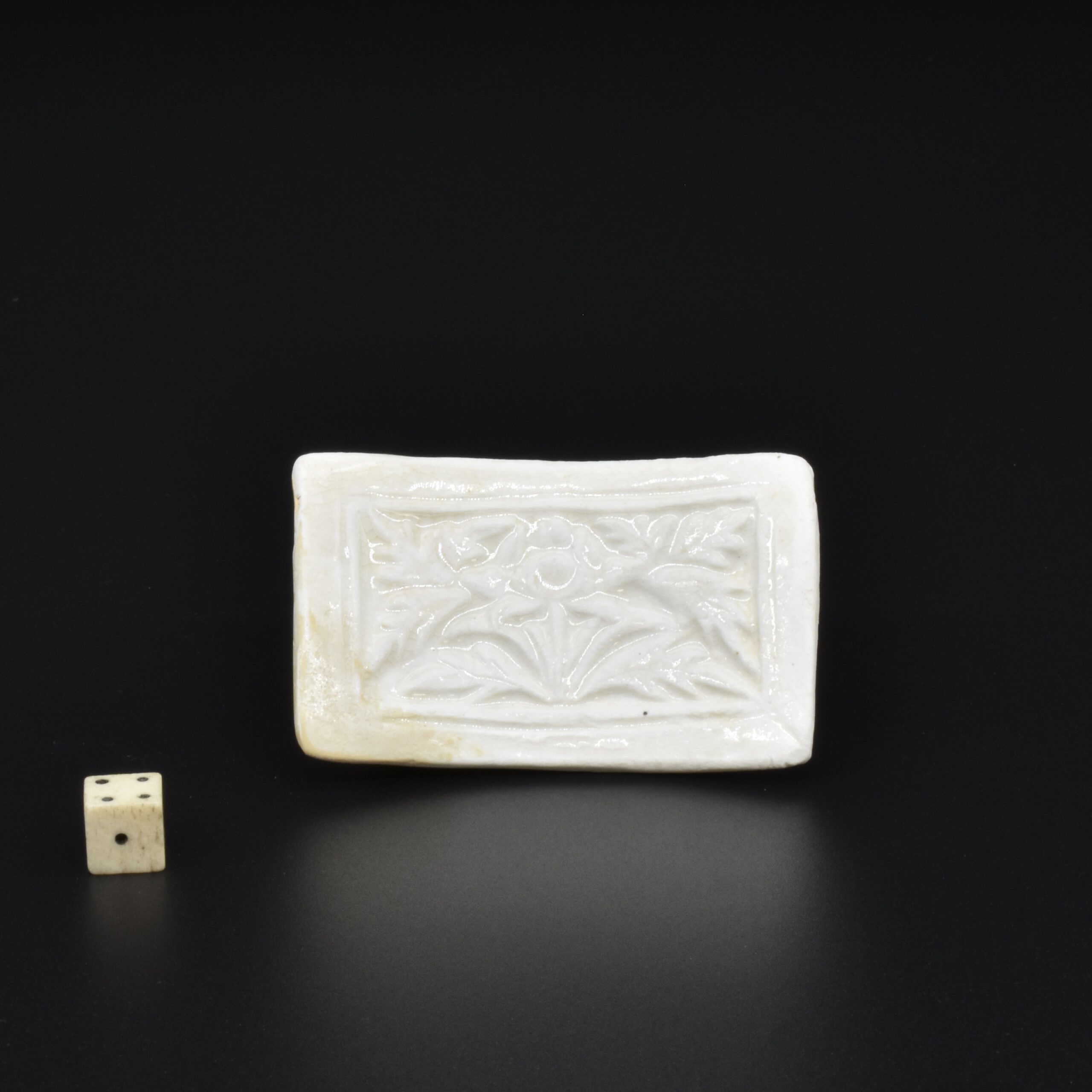
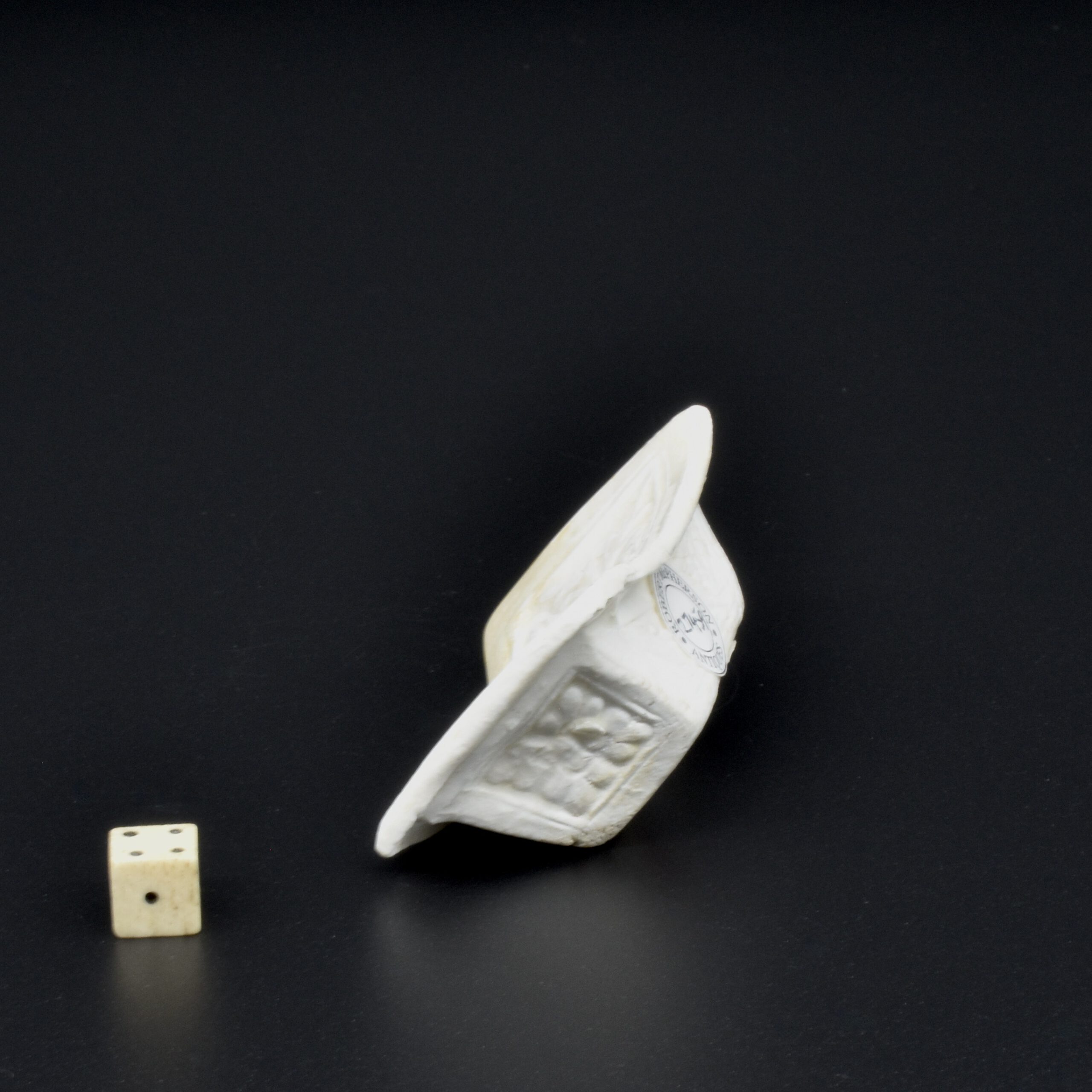
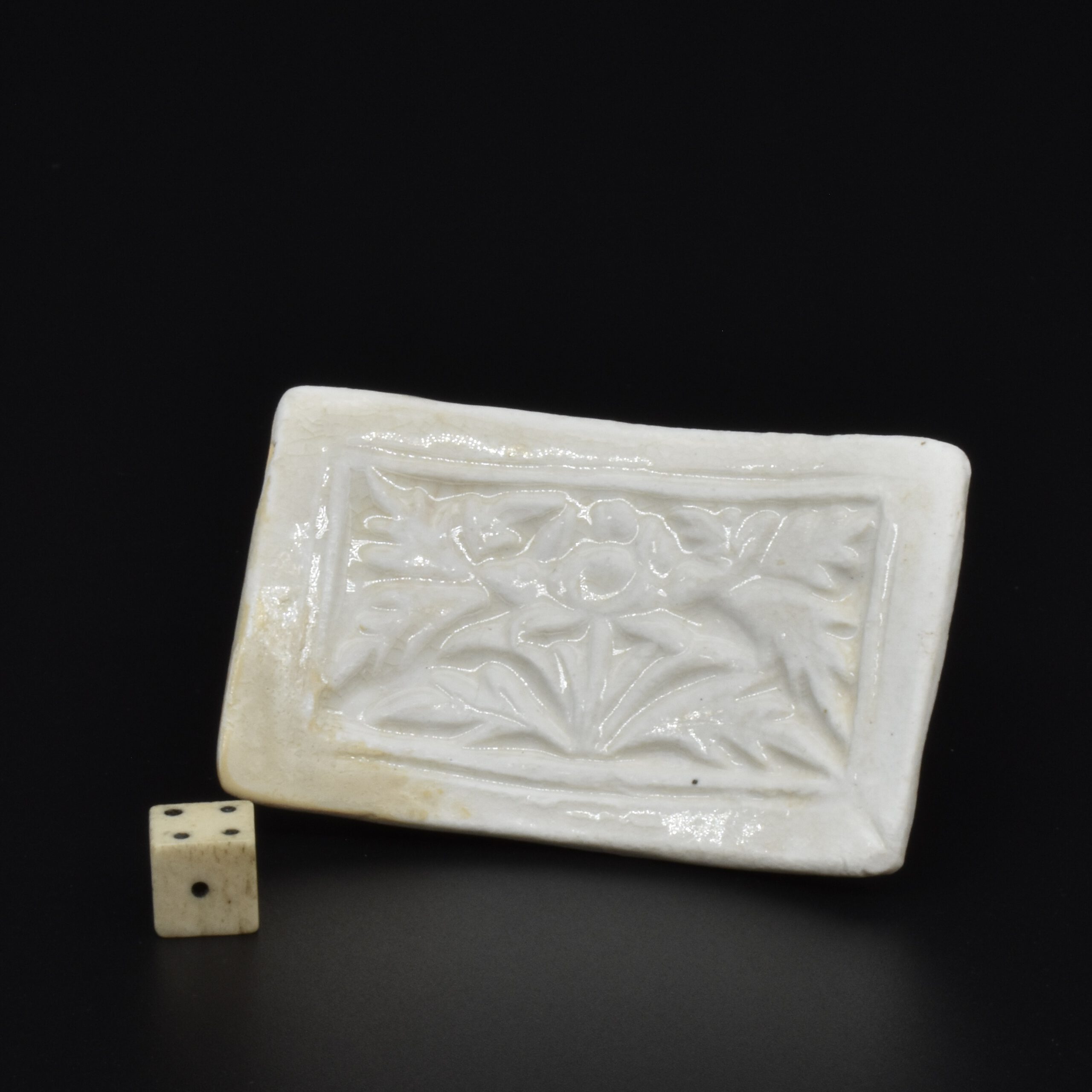
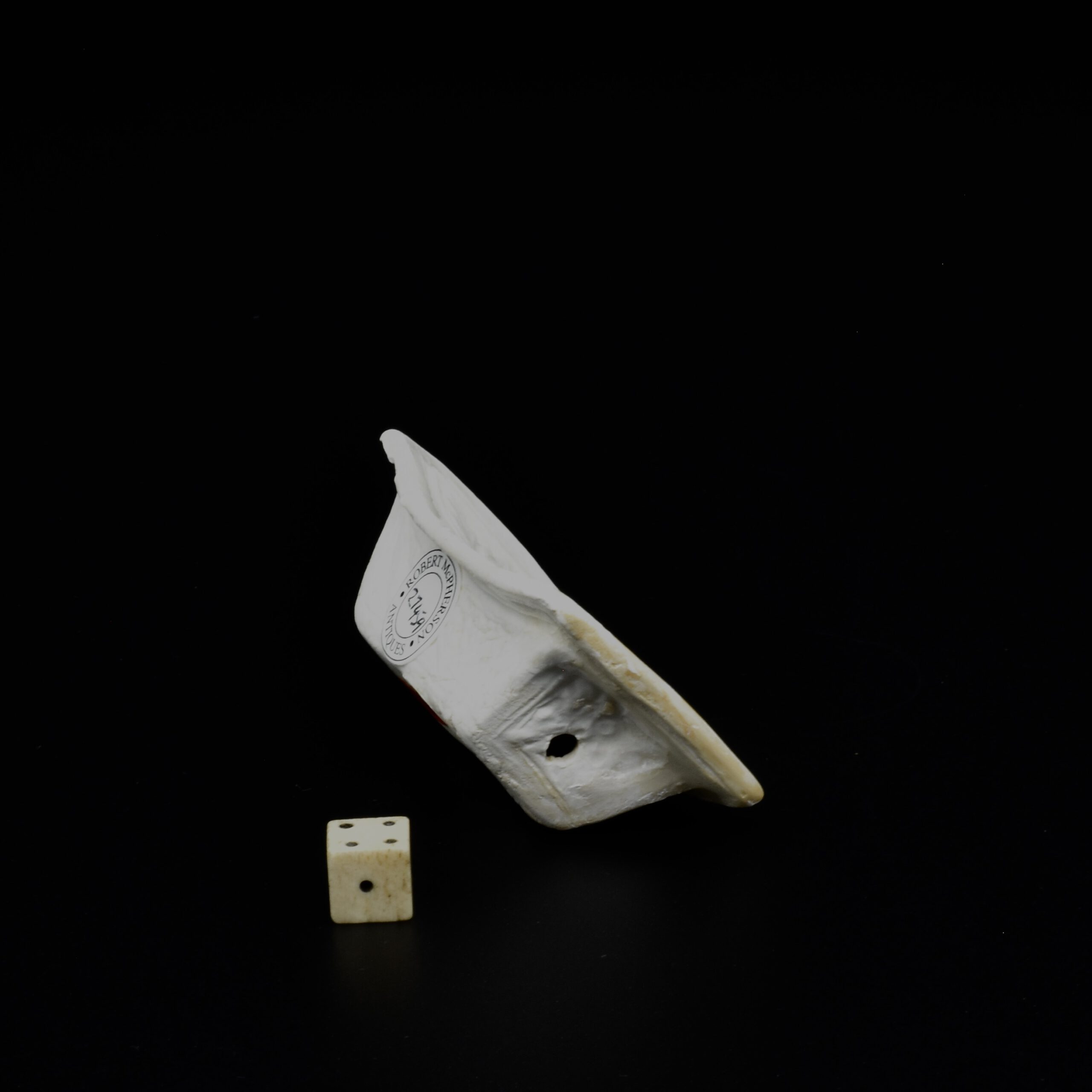
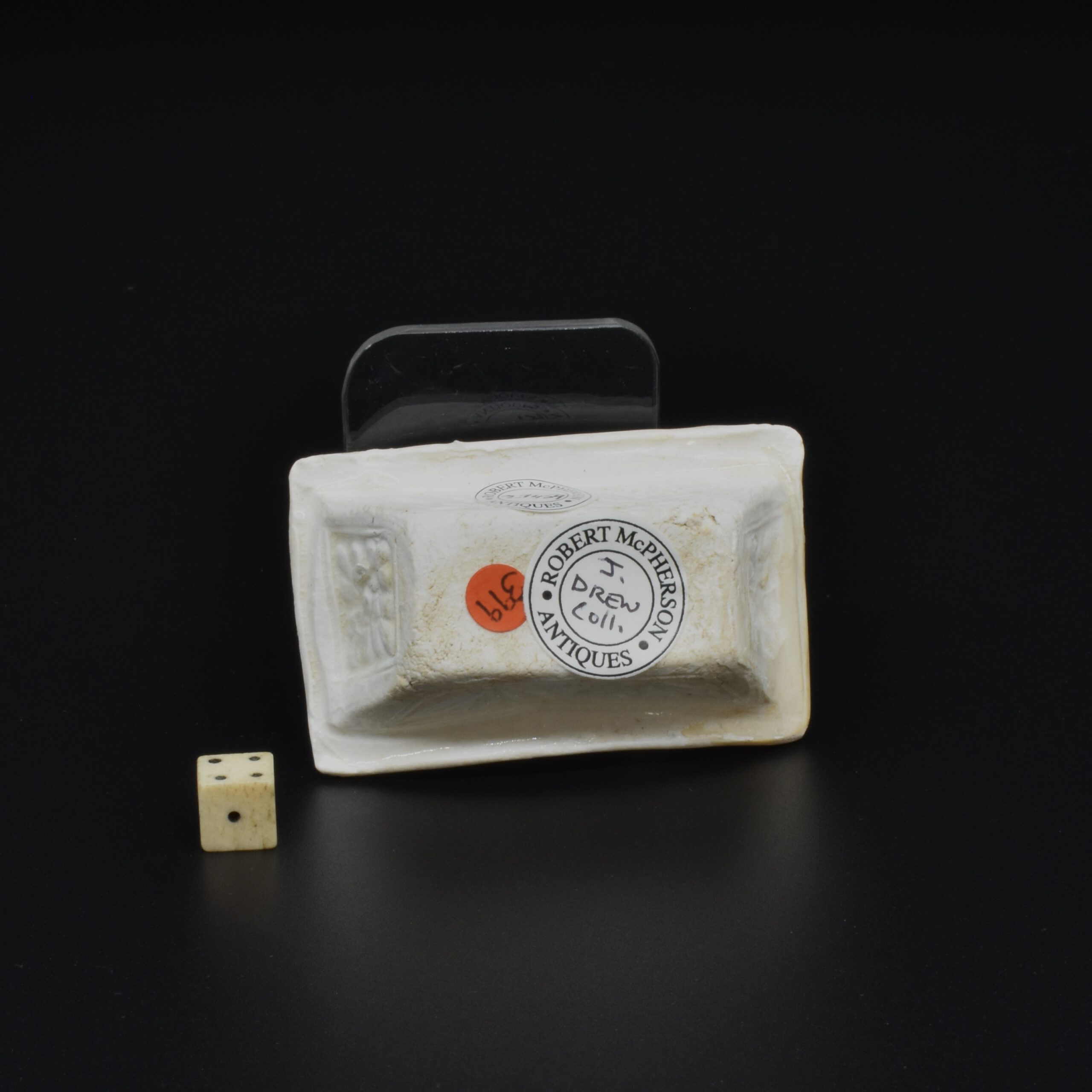
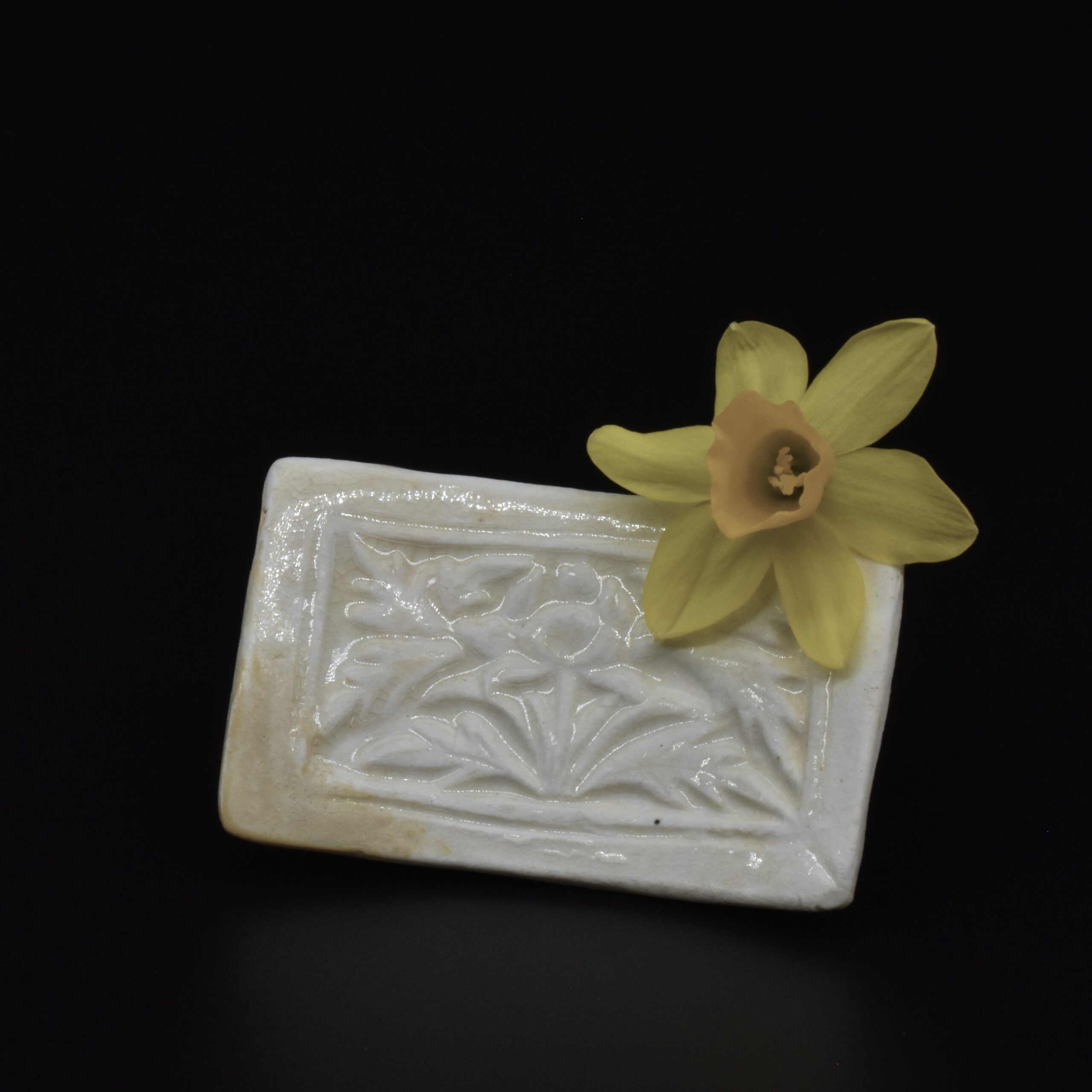
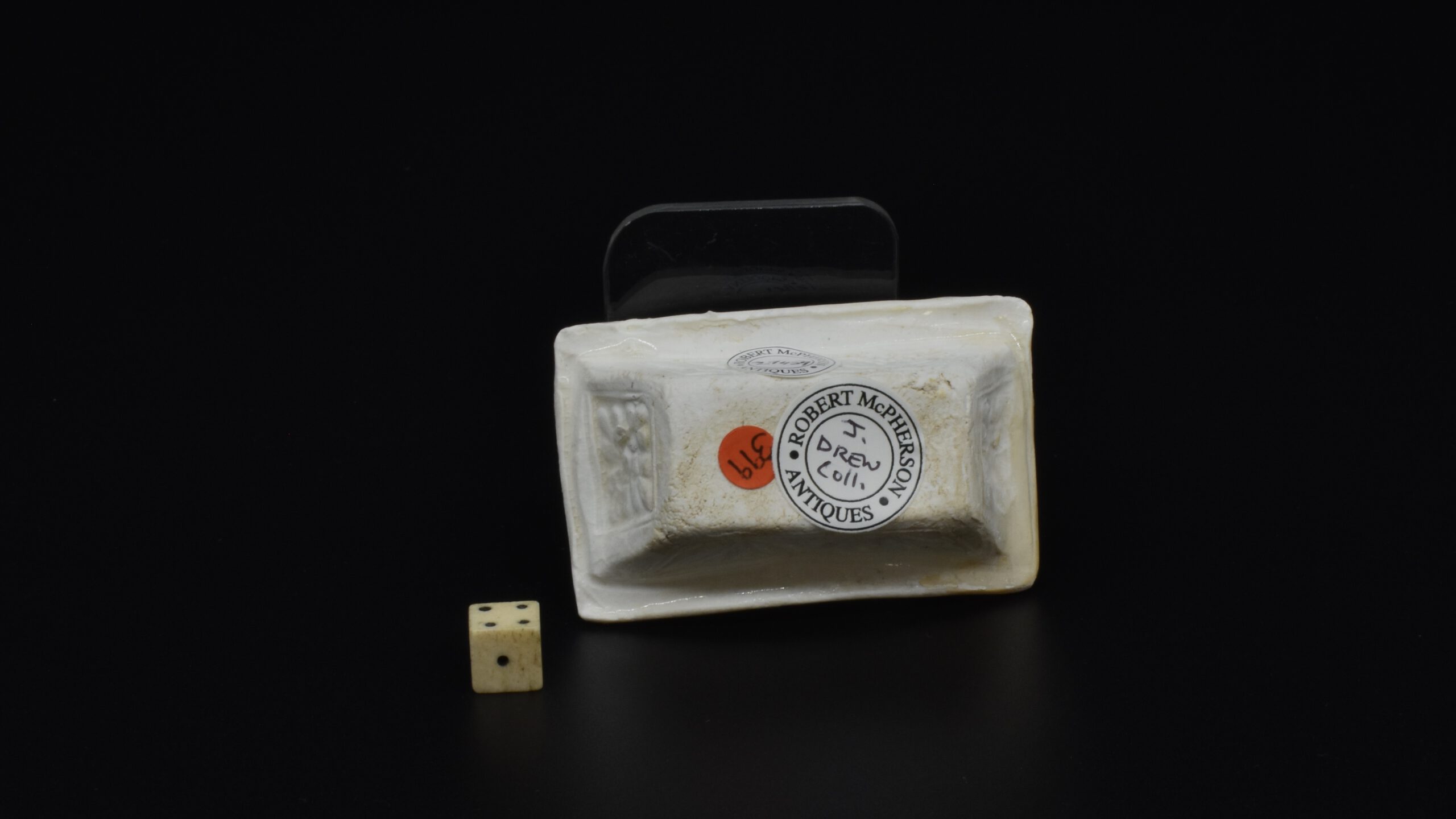
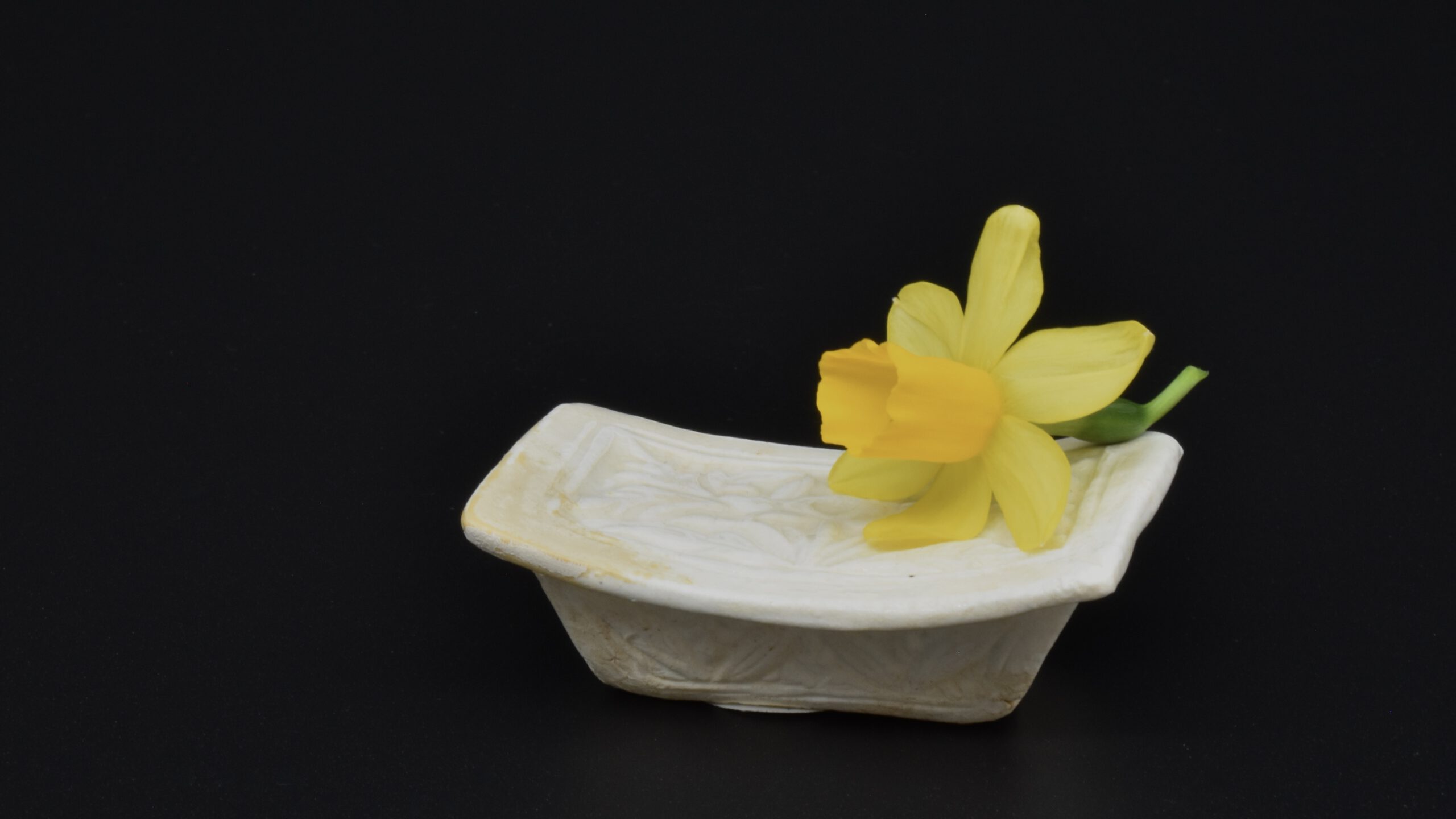
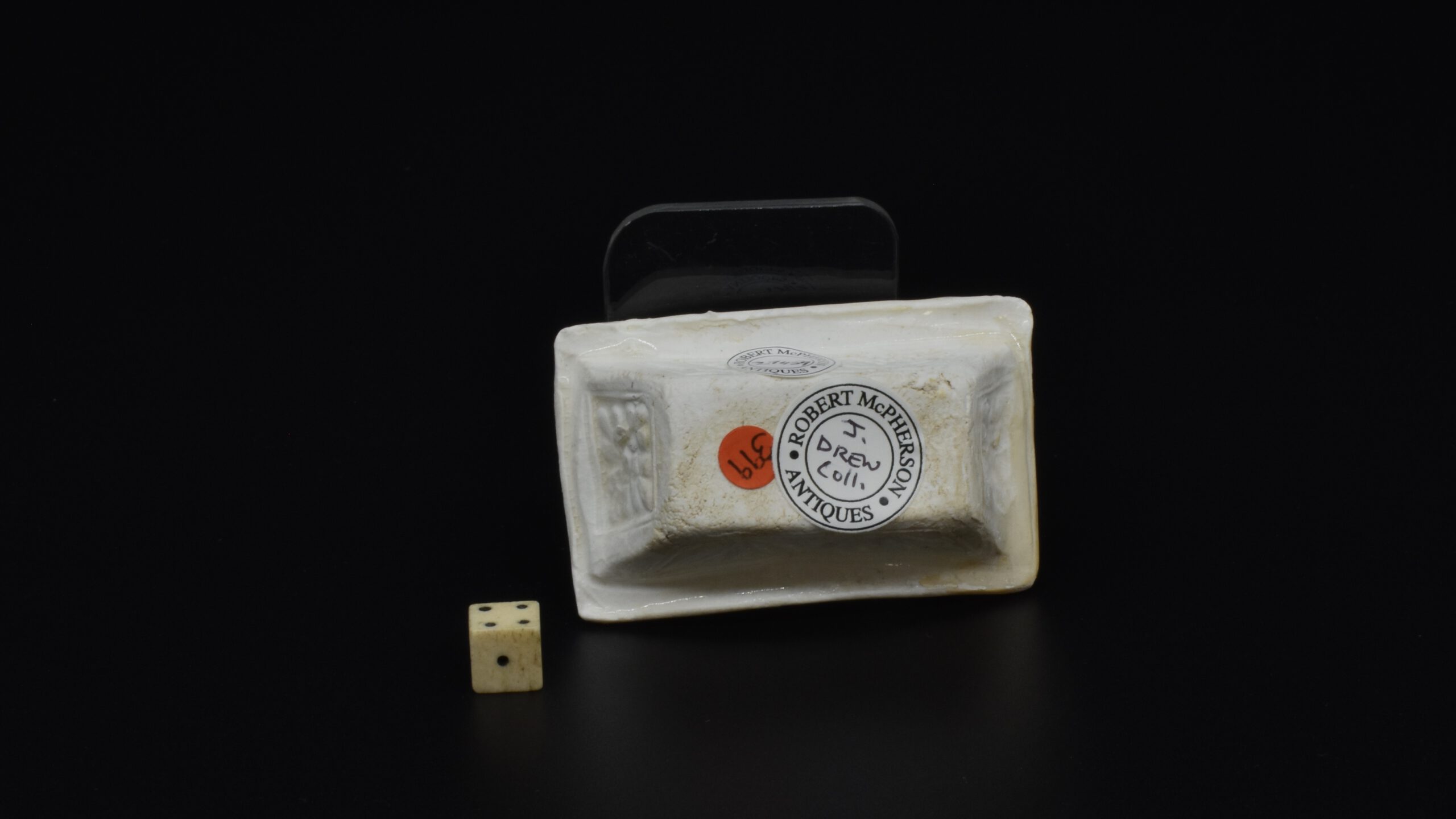
A Rare Miniature Cizhou Cream Glazed Model of a Pillow, Song or Jin Dynasty. From Northern Provinces of China, Probably Hebei, Henan, or Shaanxi. From the Collection of John Drew (1933 – 2006). This pillow is a very small model of a full sized Cizhou pottery pillow its correct in every detail. Miniatures like the present example are well know from this period, however, I think this is the only miniature pillow I have seen. Its too small to be a Mingqi piece made specifically for grave burial, so it’s far more likely to be a child’s toy. The moulded design is of a flowering peony.
See Below For More Photographs and Information.
SOLD
- Condition
- A repair to the lower left corner, this repair has discoloured to a yellow brown colour.
- Size
- Width 6.3 cm (2 1/2 inches)
- Provenance
- Robert McPherson Antiques. The John Drew Collection. The John Drew Collection : John Drew was born in 1933 in Tideswell, Derbyshire, where his father was curate. The family moved to Norfolk whilst he was still a baby and his father became the rector of the parish of Intwood and Keswick. He was educated at Sedbergh School and after National Service in the R.A.F. being taught Russian, he went to Queens College, Oxford to read Greats (Classics). He spent nearly all his working life in various African countries as an archivist, moving to a post at Cape Town University in 1978. He remained in Cape Town after his retirement until his death in 2006. He had a great love of the English countryside (but not the climate) and this is shown in many of the pieces he collected. His taste was varied and ranged from Neolithic right through to the 18th Century. When we sent photograph to his home in Cape Town of pieces we thought he might be interested in, he would write long funny well observed letters back, wanting to add many of the items to his growing collection. Over the years we got to know him better and better, and during the last few years it was very rare for him to not want all the pieces we offered him. We knew his taste, even though his taste was so varied. This was in no small part because he had a very good eye and it was a pleasure finding things that interested him, because they were also very interesting to us. He never got to put his collection on display, something he hoped to do while on retirement in England, so it is with a mixture of pleasure and sadness that we offer these pieces from his collection this June. Each piece has a John Drew collection label, so when the collection is split up there will be some lasting record of the love and hard work he put into his two decades of collecting.
- Stock number
- 27459
- References
- For related Cizhou pillows see : The Freedom of Clay and Brush Through Seven Centuries in Northern China : Tz`u-chou Type Wares, 960 – 1660 A.D. (Yutaka Mino, Indianapolis Museum of Art,1981).
Photos
Information
A Related Full Sized Song or Jin Cizhou Pottery Pillow.
Robert McPherson Antiques - Sold Archive Number 26002.
Condition
No damage but some signs of burial, especially on the top.
Size
Length : 28 cm (11 inches)
References
For related Cizhou pillows see : The Freedom of Clay and Brush Through Seven Centuries in Northern China : Tz`u-chou Type Wares, 960 – 1660 A.D. (Yutaka Mino, Indianapolis Museum of Art,1981).
Small China, Early Chinese Miniatures
By Koos de Jong
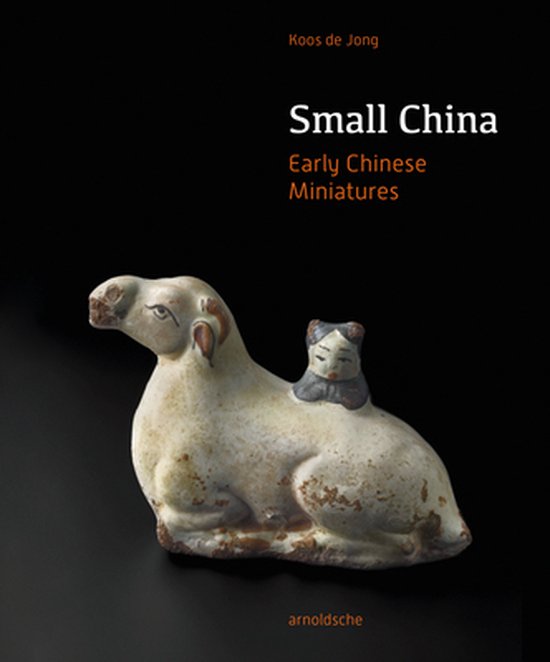
Small China presents Chinese miniatures from 5,000 BC up to the 15th century. The pocket size representations of supernatural beings, people, animals, or everyday objects are virtually uncharted in East Asian crafts – even in China, these objects in jade, bronze, ivory, and porcelain are little known. Koos de Jong explores their arcane meanings and traces their production and the market for such treasures, which, contrary to official secular and religious art, include those devoted to taboo subjects such as erotica or humour. The miniatures had many different functions, from insignia, fetishes and devotional objects to burial gifts or toys. They could express good wishes or even serve as bribes. A rare glimpse into the everyday life of ordinary people and into Chinese handicrafts from thousands of years ago.
Cizhou Ware :
A freedom of expression exists in Cizhou ware that is unparalleled by other Song dynasty (960-1279) ceramics. This was a direct result of not being under the control of the court; consequently, the liberty to explore and experiment created an innovative range of designs full of flavour and life unique to Cizhou ware. The utilization of enamelled decorations in tones of vivid reds, yellows, and greens on occasional Cizhou pieces placed it centuries ahead of its time as this was not kosher for early court wares. The ware also displays an amazing dexterity in the sketchily incised patterns which have such a sense of carefree abandon that they appear impressionistic. Today, Cizhou ware is prized for its natural appearance which often reveals the potter’s process from the wheel’s rings, to the inner spur marks, to the unevenly glazed base.
The white stonewares of the Tang dynasty (618-906) produced two extremely influential wares; the first, Ding ware, became the official ware while the second, Cizhou, became the “popular ware” among the varying classes. It was Cizhou wares utilization by society that assured its continuance during political and dynastic changes which extinguished other Song wares; consequently, Cizhou ware is still produced today though the wares created during the Song dynasty are considered to possess an unrivalled spirit. Since Cizhou ware embodies a diverse range of wares not confined to a specific location, kiln complex, or style it is difficult to precisely define its characteristics.
The name Cizhou originated from the ancient area of Cizhou, encompassing a broad arc across China, which was first recorded during the Sui dynasty (581-618). However, the location constantly shifted and though the area of Cizhou is mentioned in the Tang dynasty (618-906) and Five Dynasties (906-960), each referred to an altered location.During the Song, Jin (1125-1234), Yuan (1279-1368), and partly into the Ming dynasties (1368-1644) the kiln areas of Cizhou were primarily concentrated in the northern provinces of Hebei, Henan, and Shaanxi. (By Mindy MacDonald).