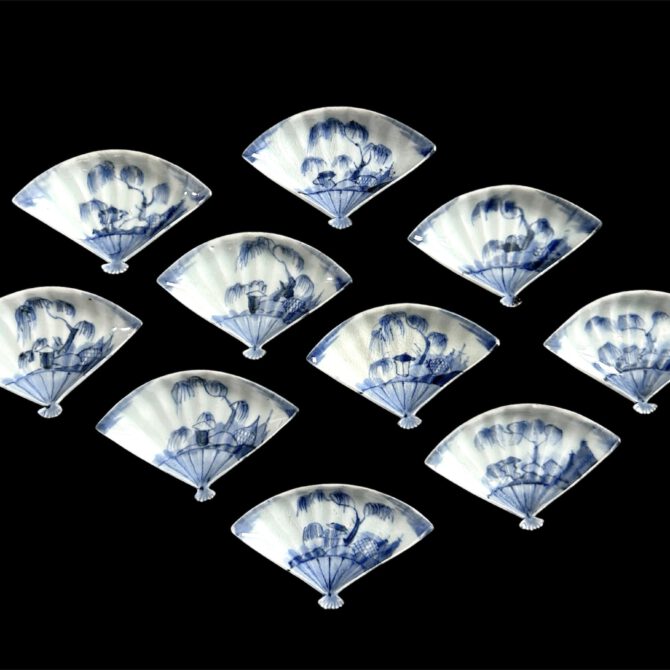
A Rare Set of Ten Small Japanese Blue and White Fan Shape Dishes.
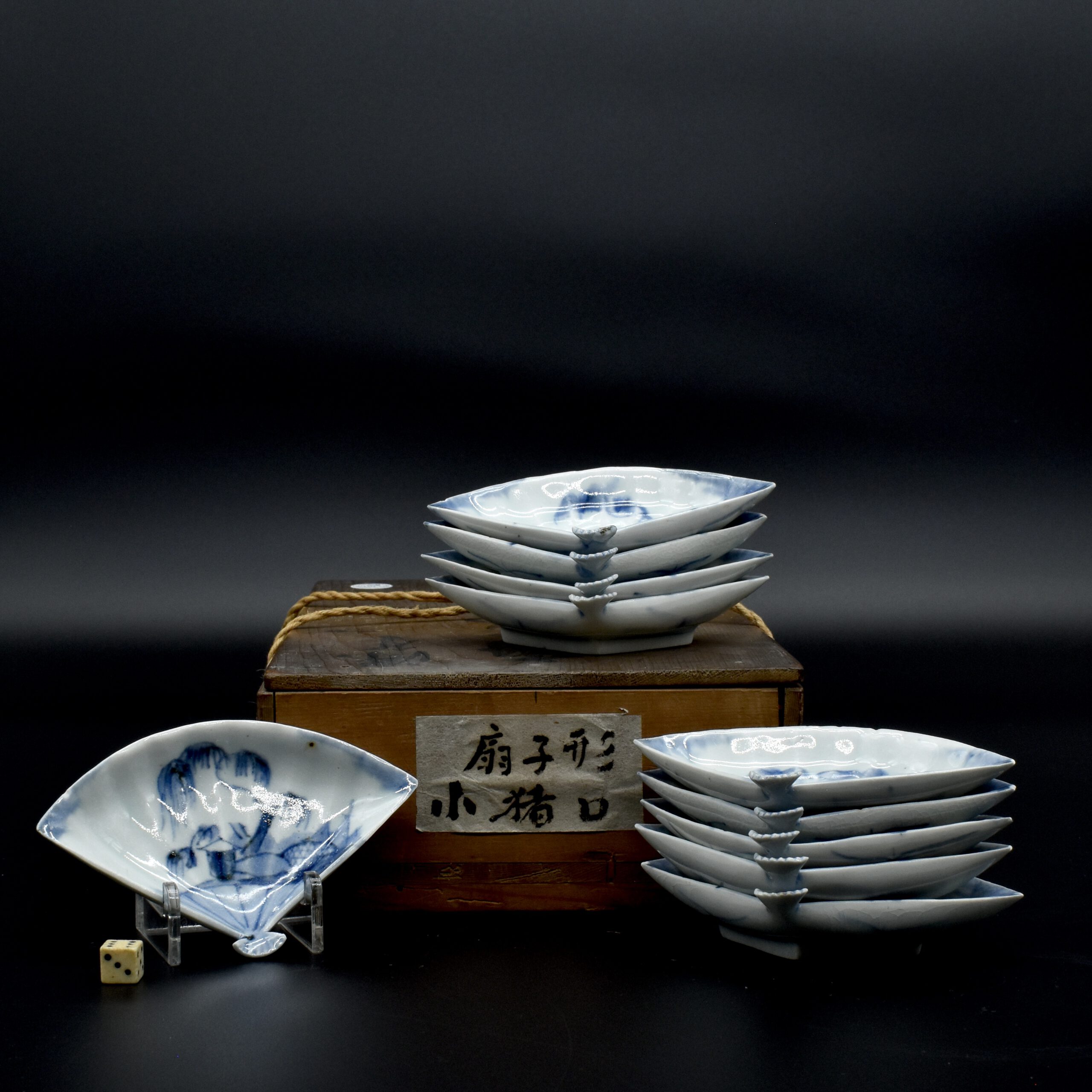
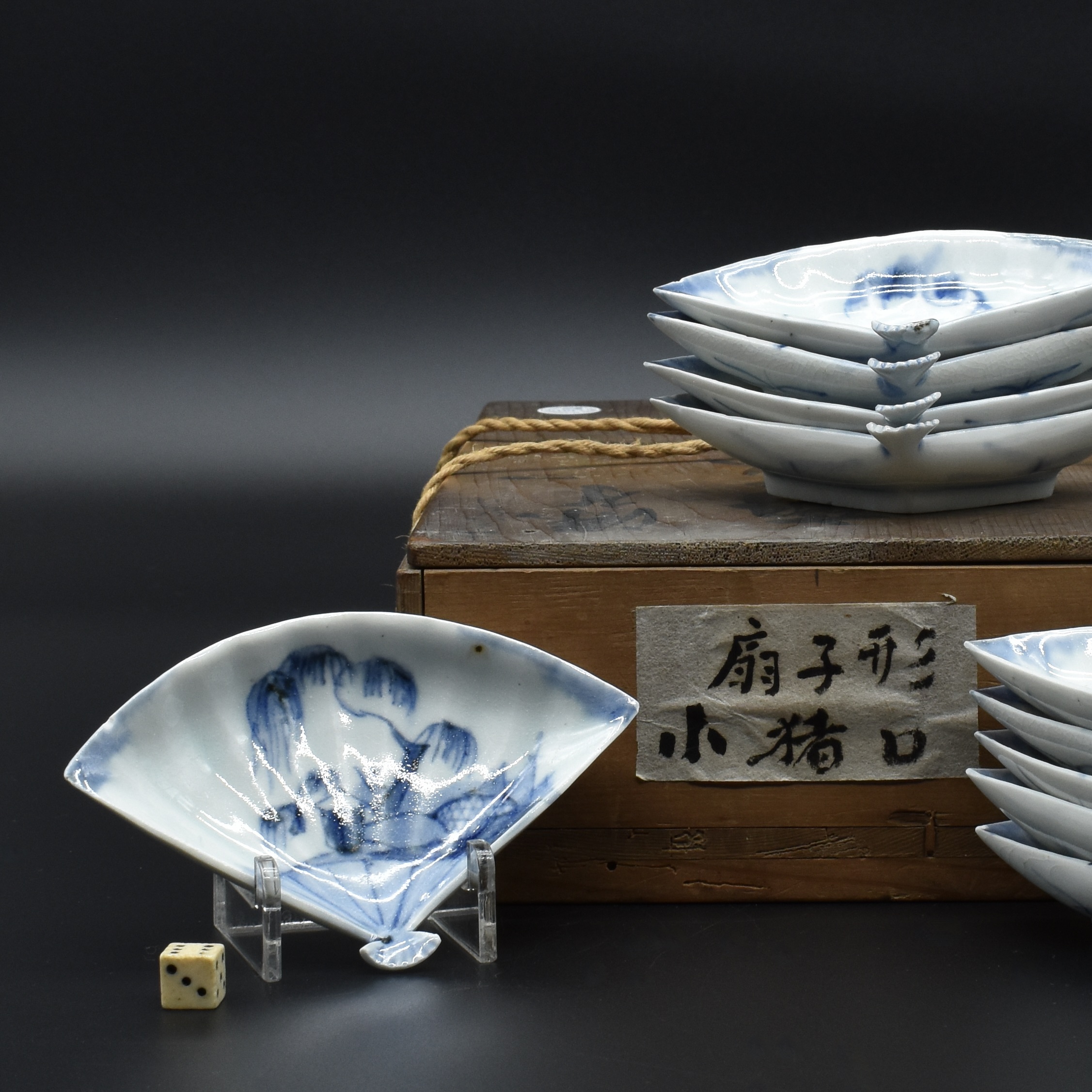
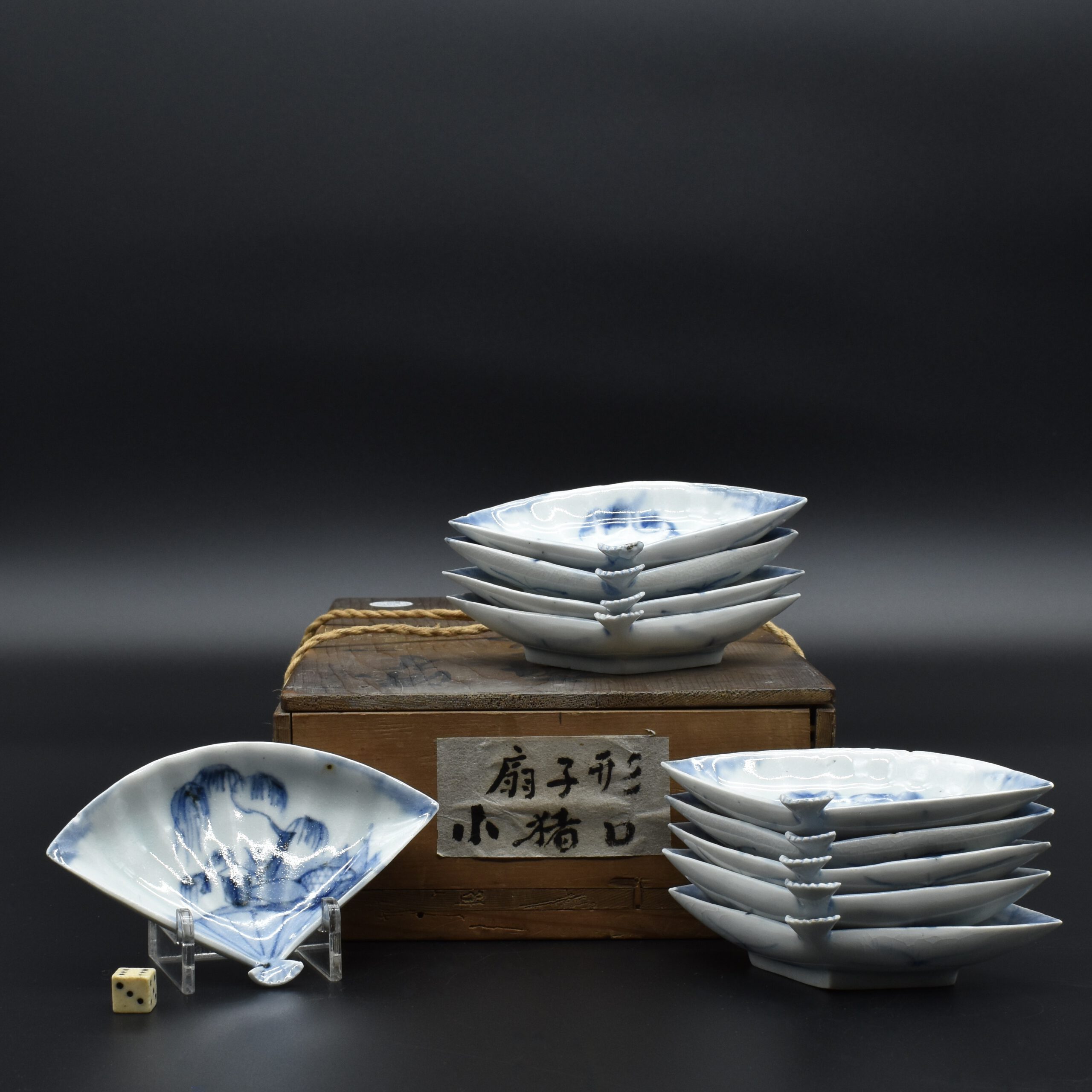
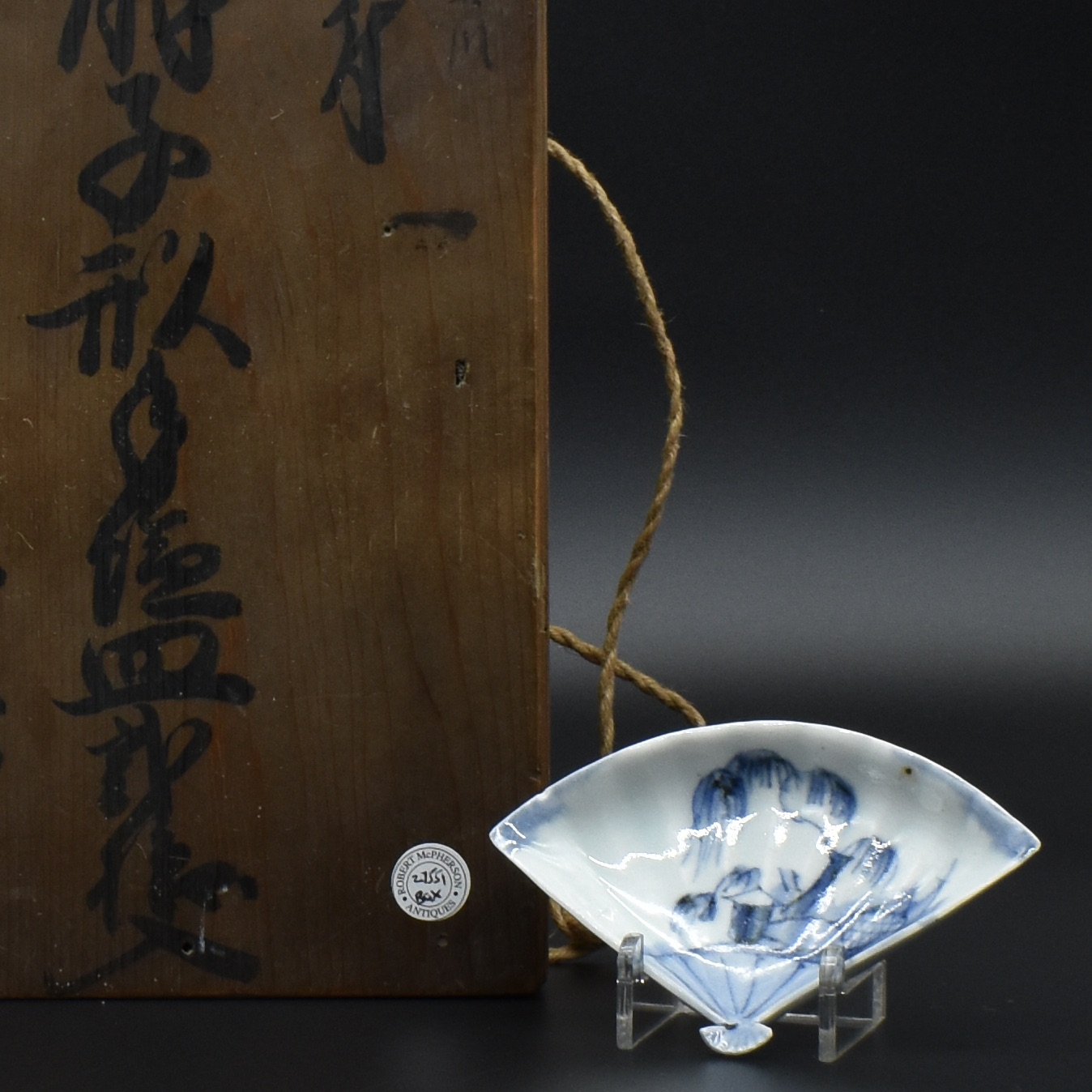
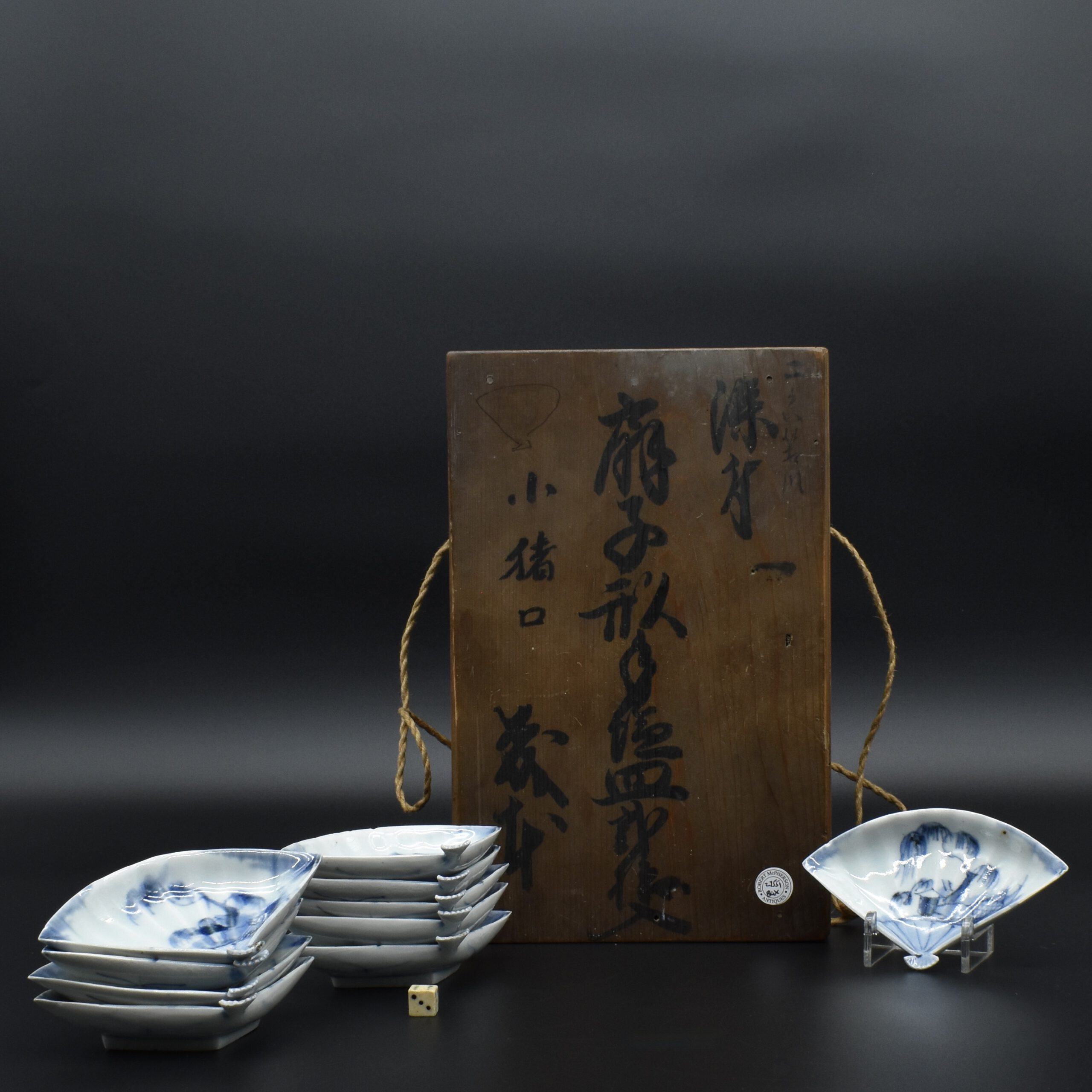
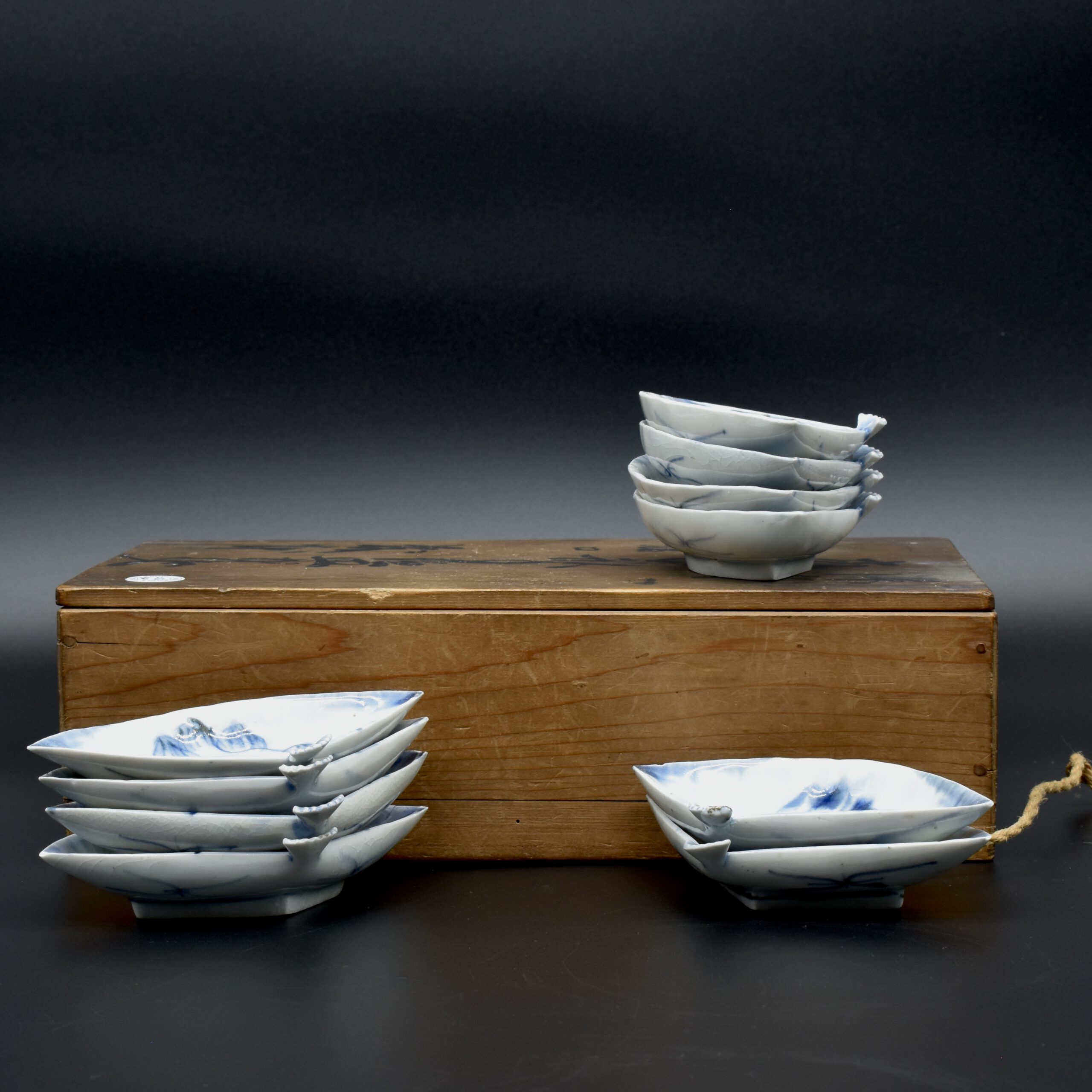
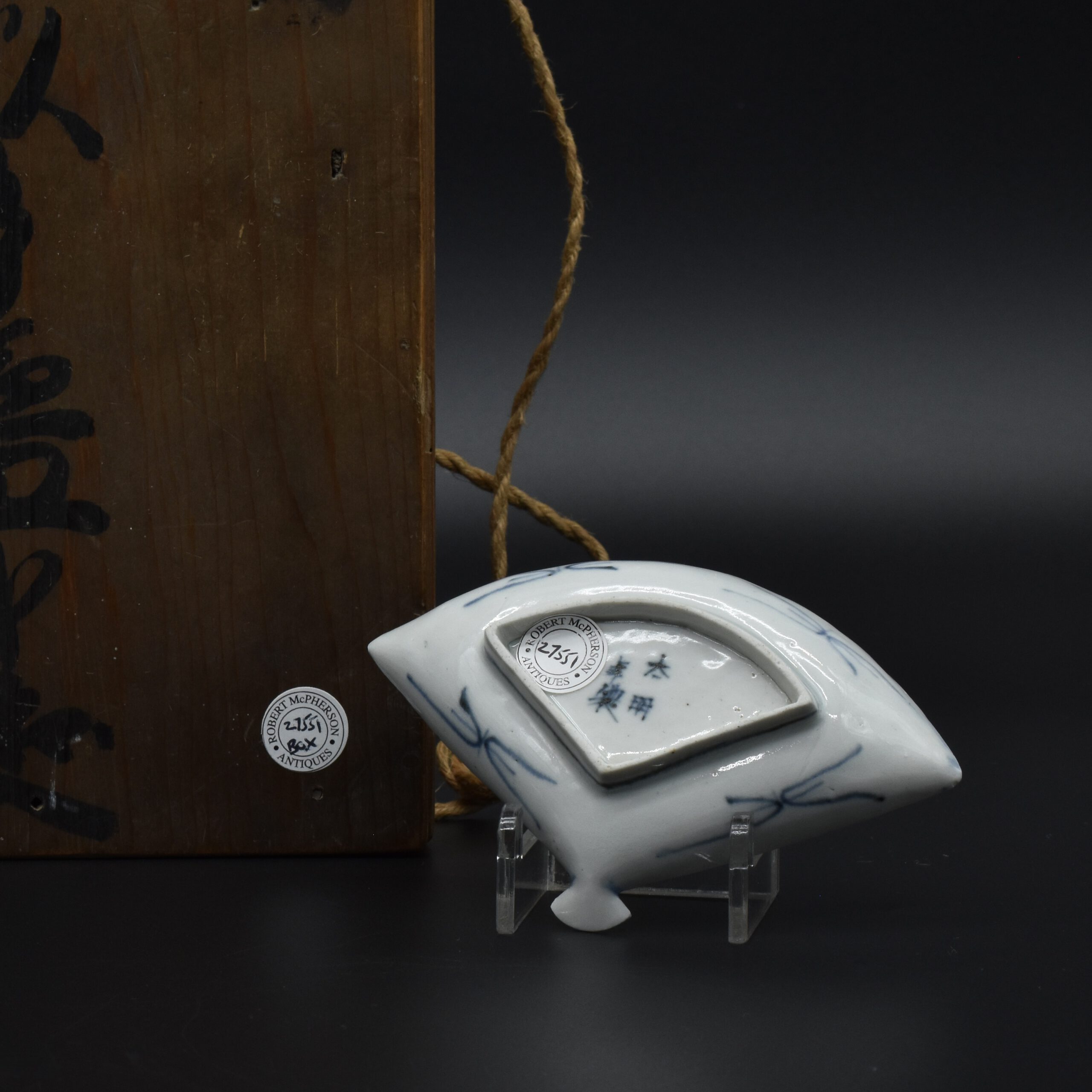
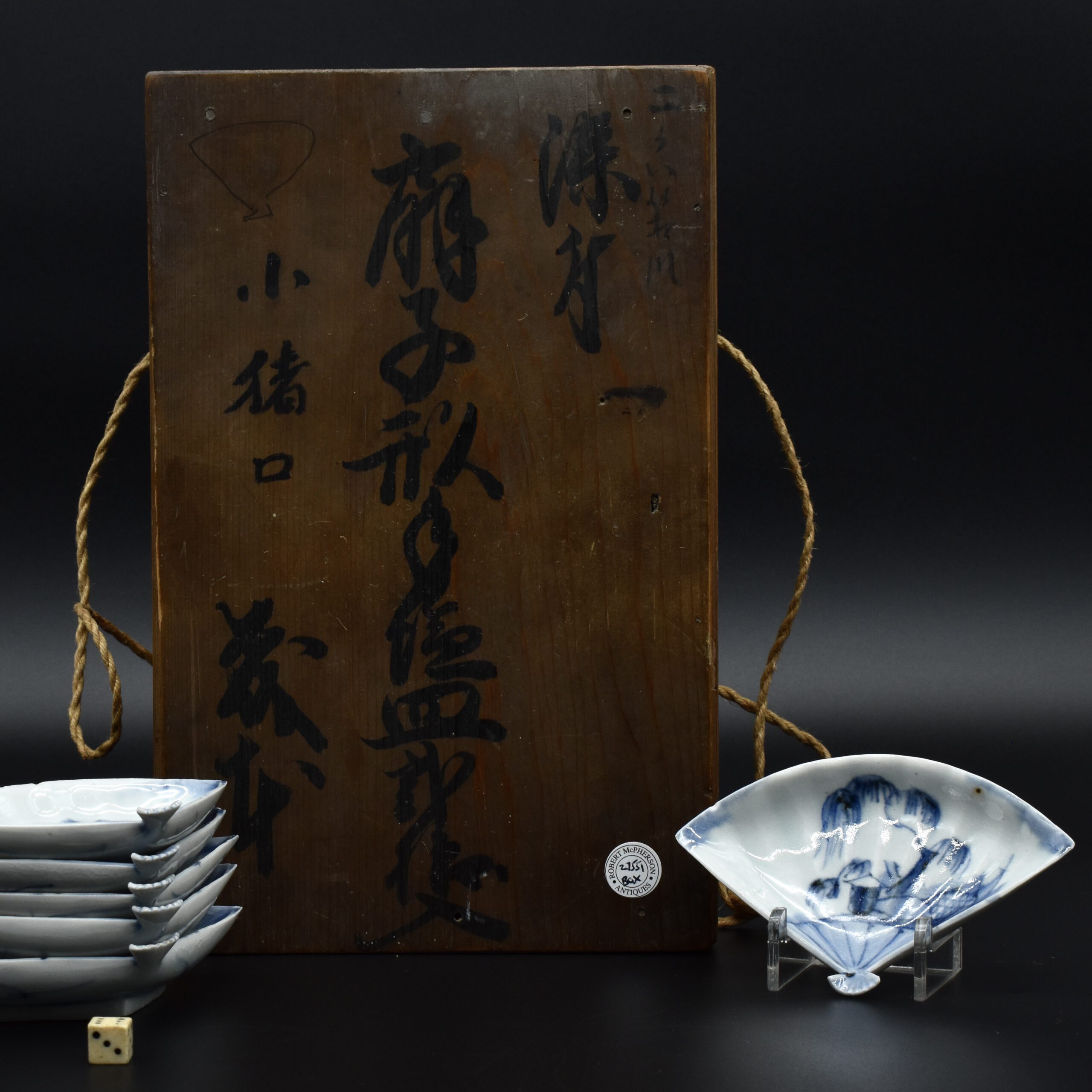
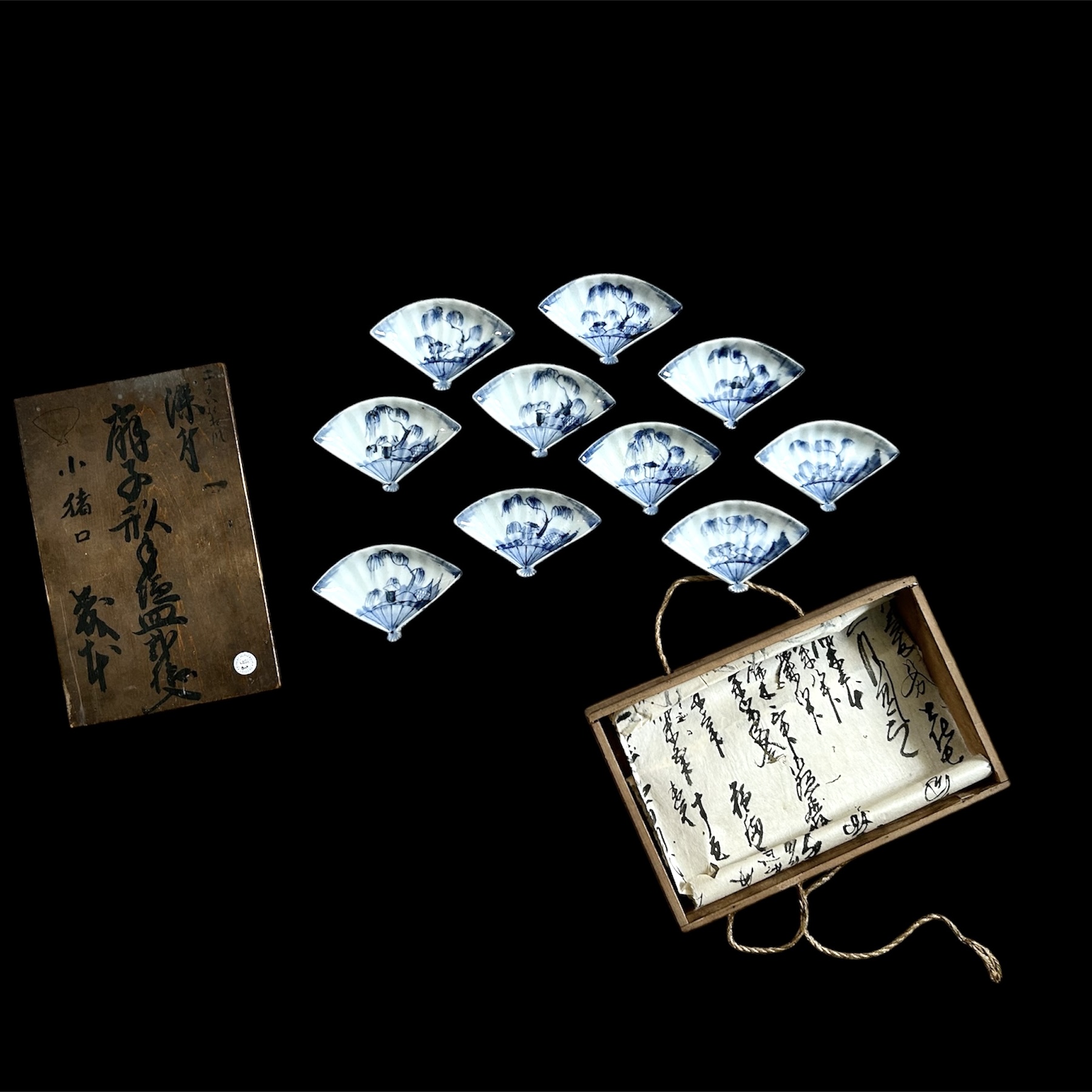
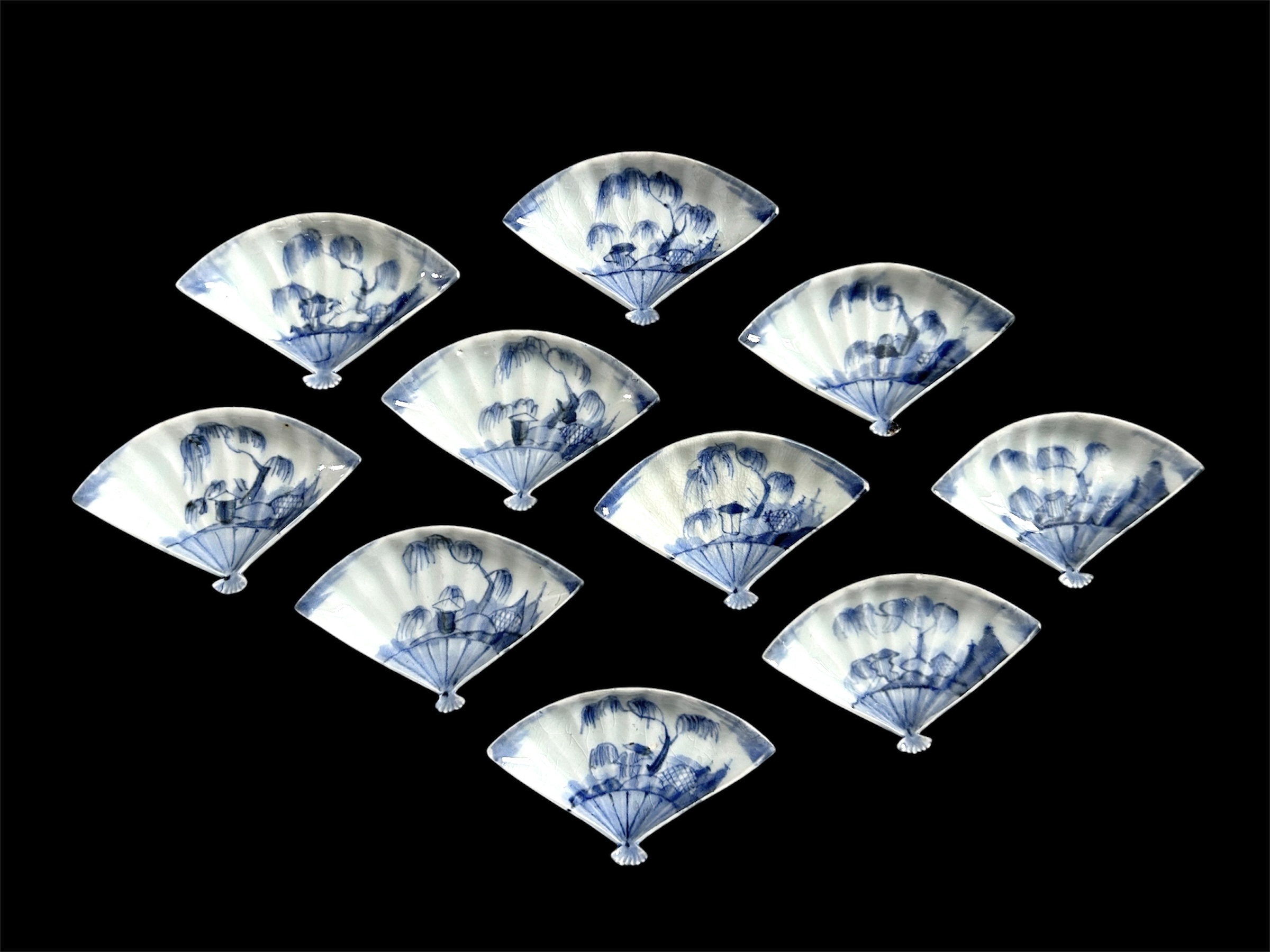
A Rare Set of Ten Small Japanese Blue and White Fan Shape Dishes, Arita Kilns c.1690 – 1720. These very small thinly potted Japanese porcelain dishes are mould made to represent an open fan. The scene fits onto what would be the paper part on the fan. It shows a water side with a large willow tree and a small building, a rustic shelter of some kind, next to that is a bound rock and fishing nets hung to dry. The reverse has an imitation four character Ming mark in cursive script. The H type design represents good luck, its very thin, perhaps suggesting pine needles. It’s rare to find a complete set of ten Japanese porcelain dishes complete with their box. The dishes are in an extensively inscribed Tomobako box.
SOLD
See Below For More Photographs and Information
- Condition
- One dish has two tiny chips, Six of these tiny Japanese porcelain dishes have one tiny chip, Only three are perfect.
- Size
- Diameter 9.9 cm (3.9 inches), depth 2 cm (0.8 inches).
- Provenance
- N/A
- Stock number
- 27551
- References
- For a single porcelain dish of this size, shape and design see : Complete Catalogue of Shibata Collection (Contributors Saga Kenritsu Kyūshū Tōji Bunkakan. Published by the Kyushu Ceramic Museum, 2019) page 314. Item 2502. The Shibata dish has a difference, the back design is of pine needles.
Photos
Information
A 17th Century Japanese Porcelain Dish with a Bound Rock.
Robert McPherson Antiques Sold Archive Number 25098.
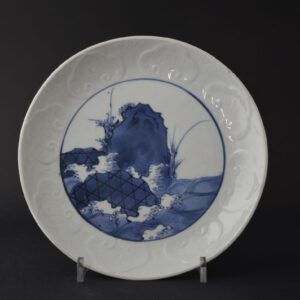
SOLD
Condition
In perfect condition.
Size
Diameter : 20.3cm (8 inches).
Provenance
From a Private English Collection of 17th Century Japanese and Chinese Porcelain.
Tomobako Storage Boxes :
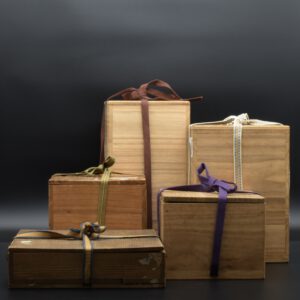
Traditional Japanese ceramic storage boxes, referred to as Tomobako are highly valued and much used in Japan. Most boxes are made from paulownia wood, it is lightweight hardwood and it’s also fire resistant, which is very useful in because Japanese buildings tend to be made of timber and have paper dividers inside. The Islands of Japan are located on a highly complex, unstable, and active geological junction where four major tectonic plates collide and subduct. These islands are essentially built upon the boundaries of these plates, with the archipelago forming as a result of the subduction and volcanic activity caused by these tectonic movements. Therefore the use of tradition tomobako is essential for the survival of ceramics in Japan. Japanese museums don’t have this luxury, so they secure the ceramic objects with nylon, which looks very much like fishing line. The paulownia is a fast growing tree, so it isn’t too expensive. It is believed that the phoenix, symbolising wisdom and prosperity, will only land on a paulownia tree when a worthy ruler is in power.
Tomobako containers that protect, store, and often certify the authenticity of the pottery inside. They are typically signed by the owner of the antique ceramic item in the box. They are tied with cord in a specific way, this is regarded as part of the ritual ceremony among a gathering of friends in Japan. Of course not everything in these boxes is what it might seem. Some contain surprising objects, so you will have to wait and see what we have in these boxes.