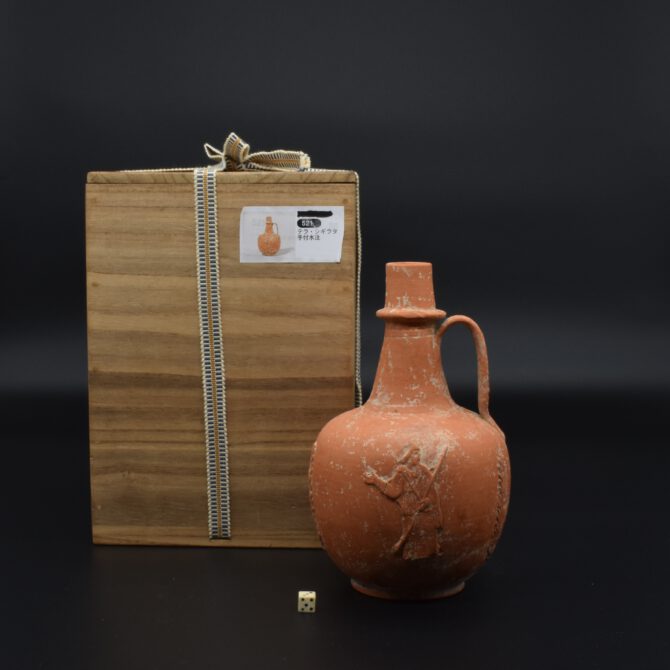
A Roman Red Ware Jug, Late Imperial, c.3rd Century A.D.
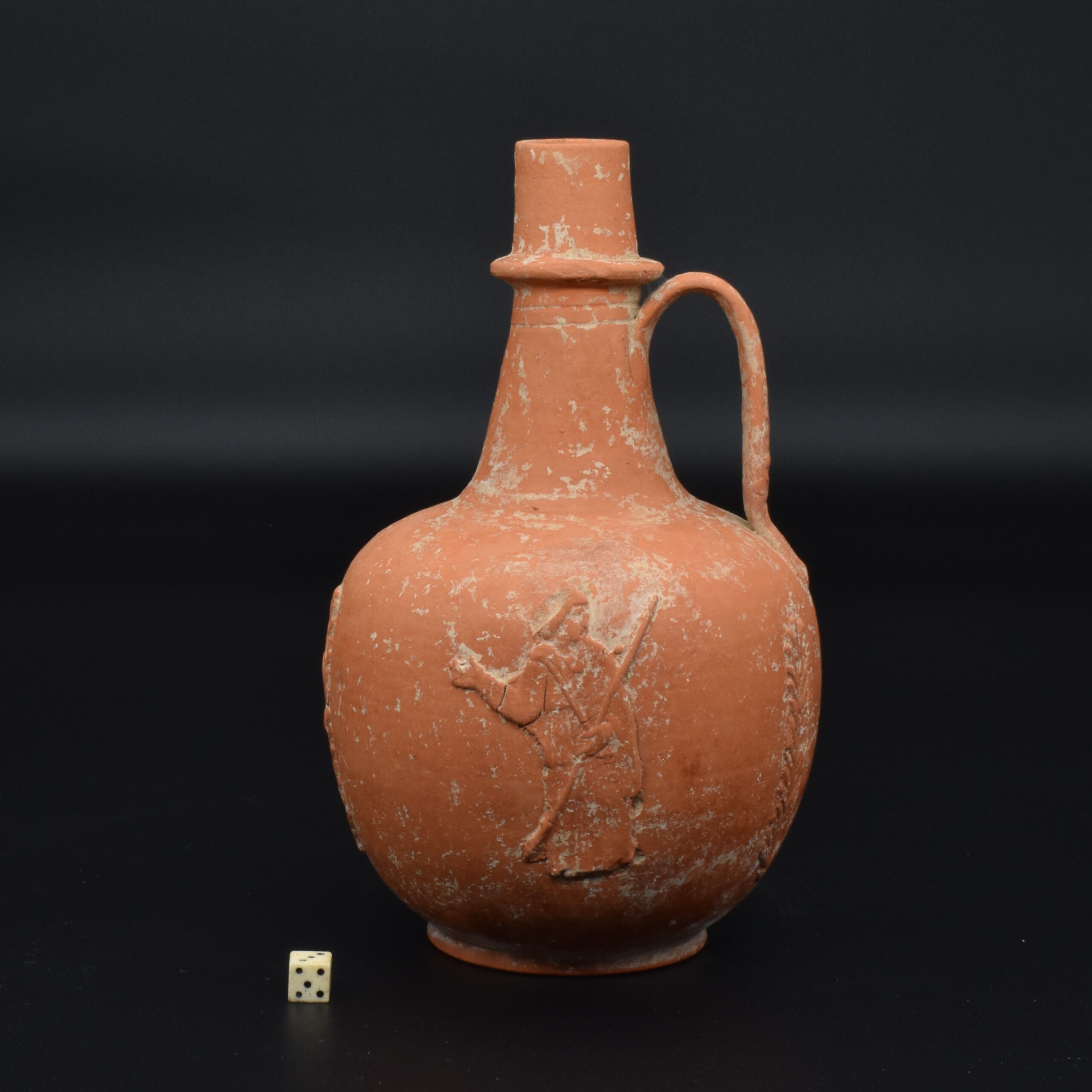
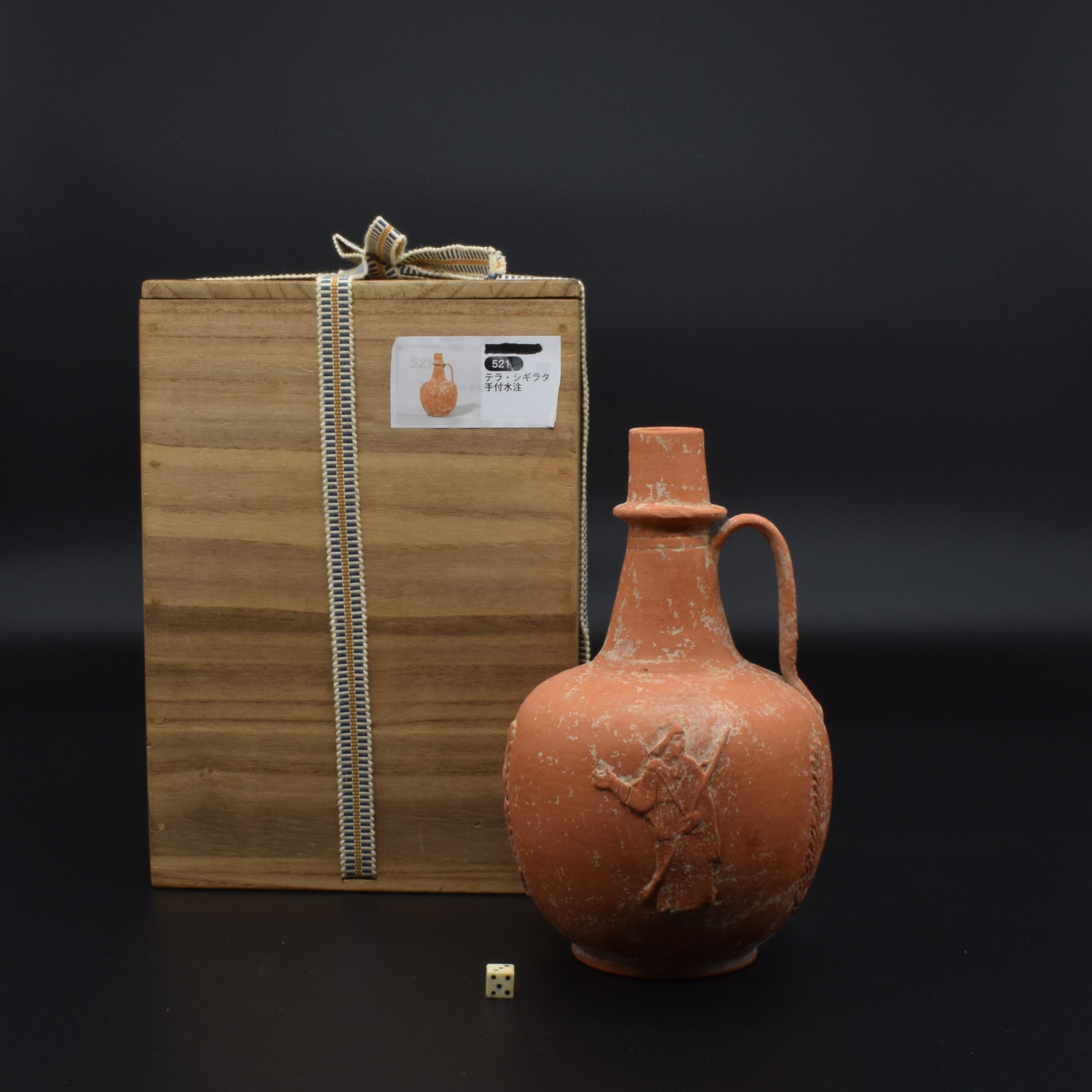
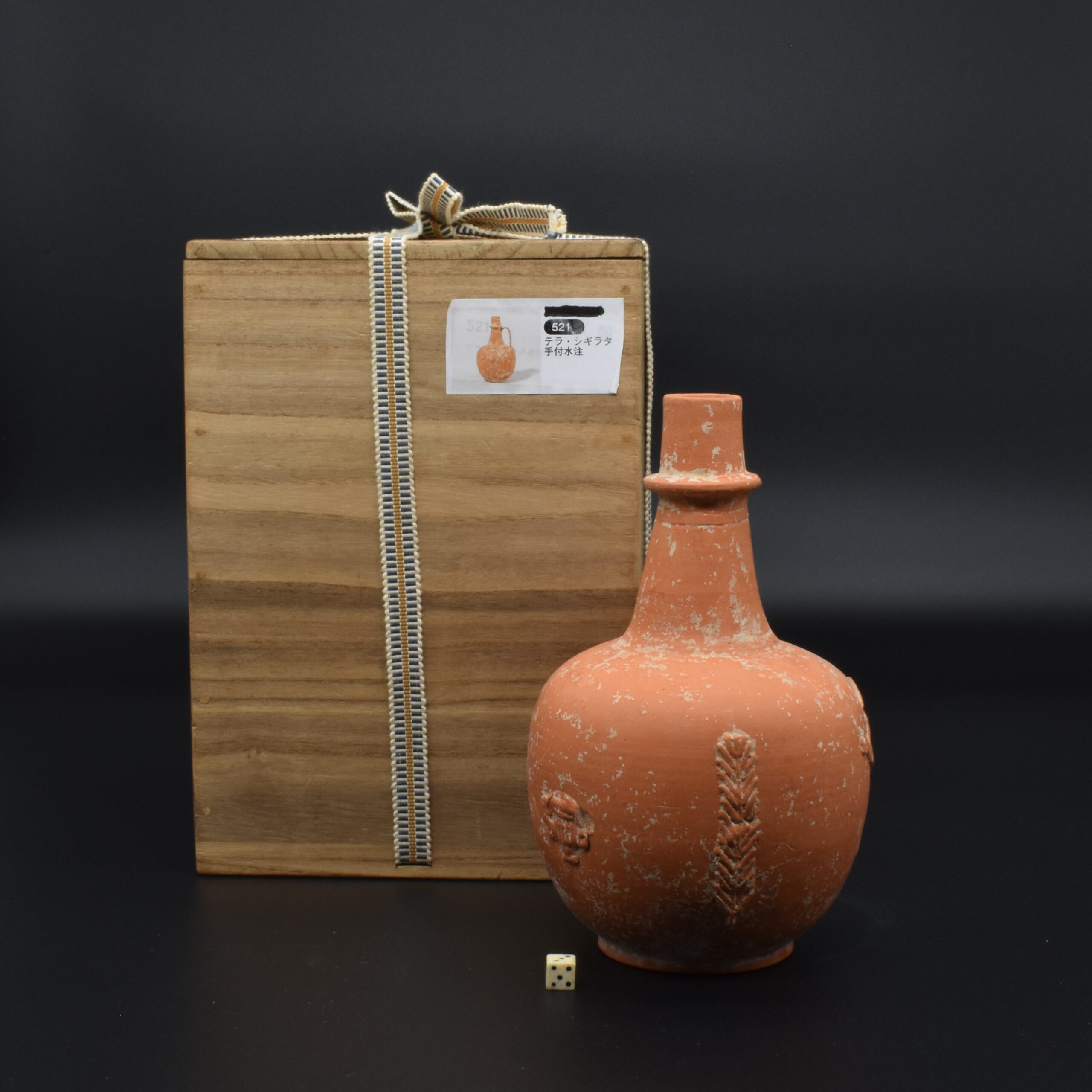
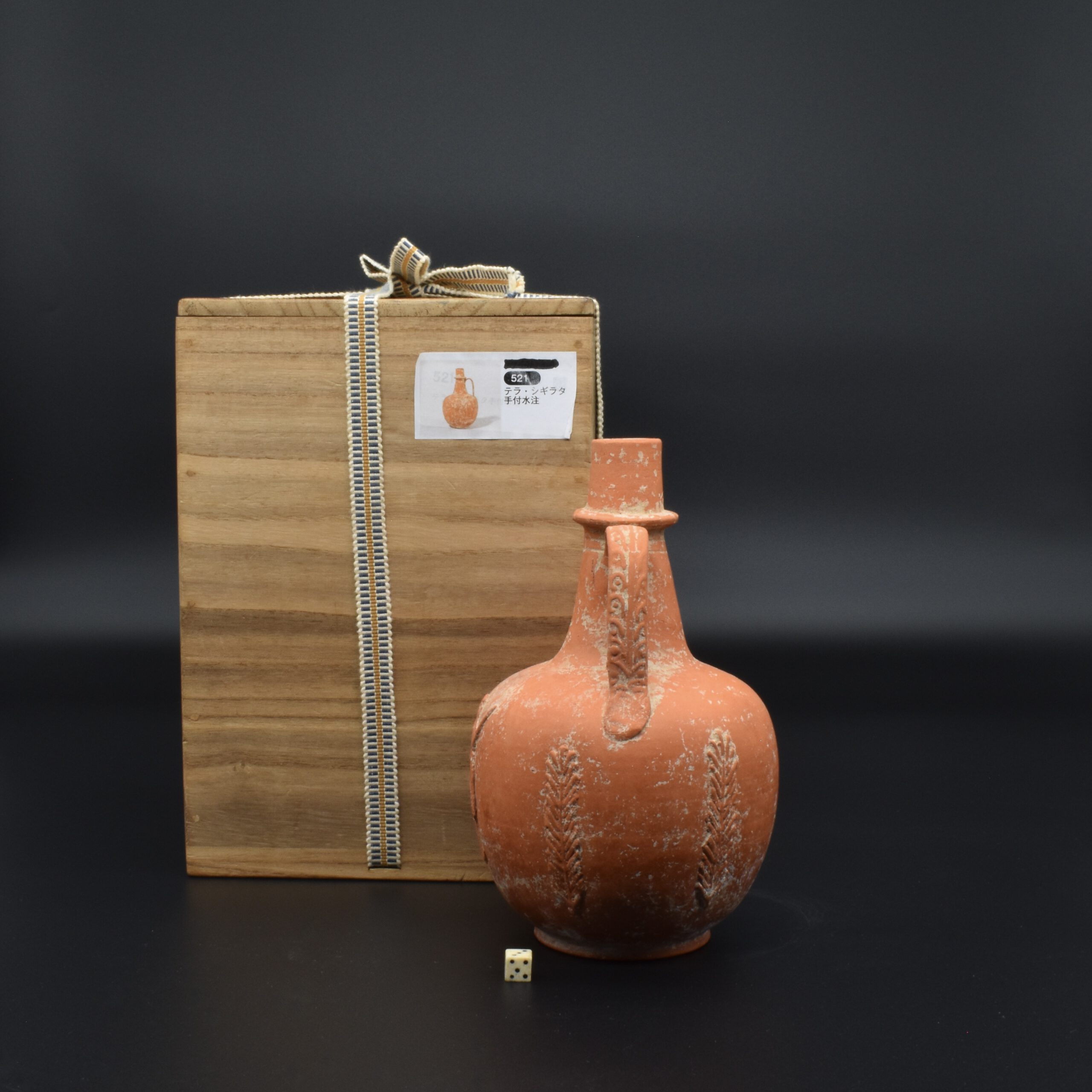
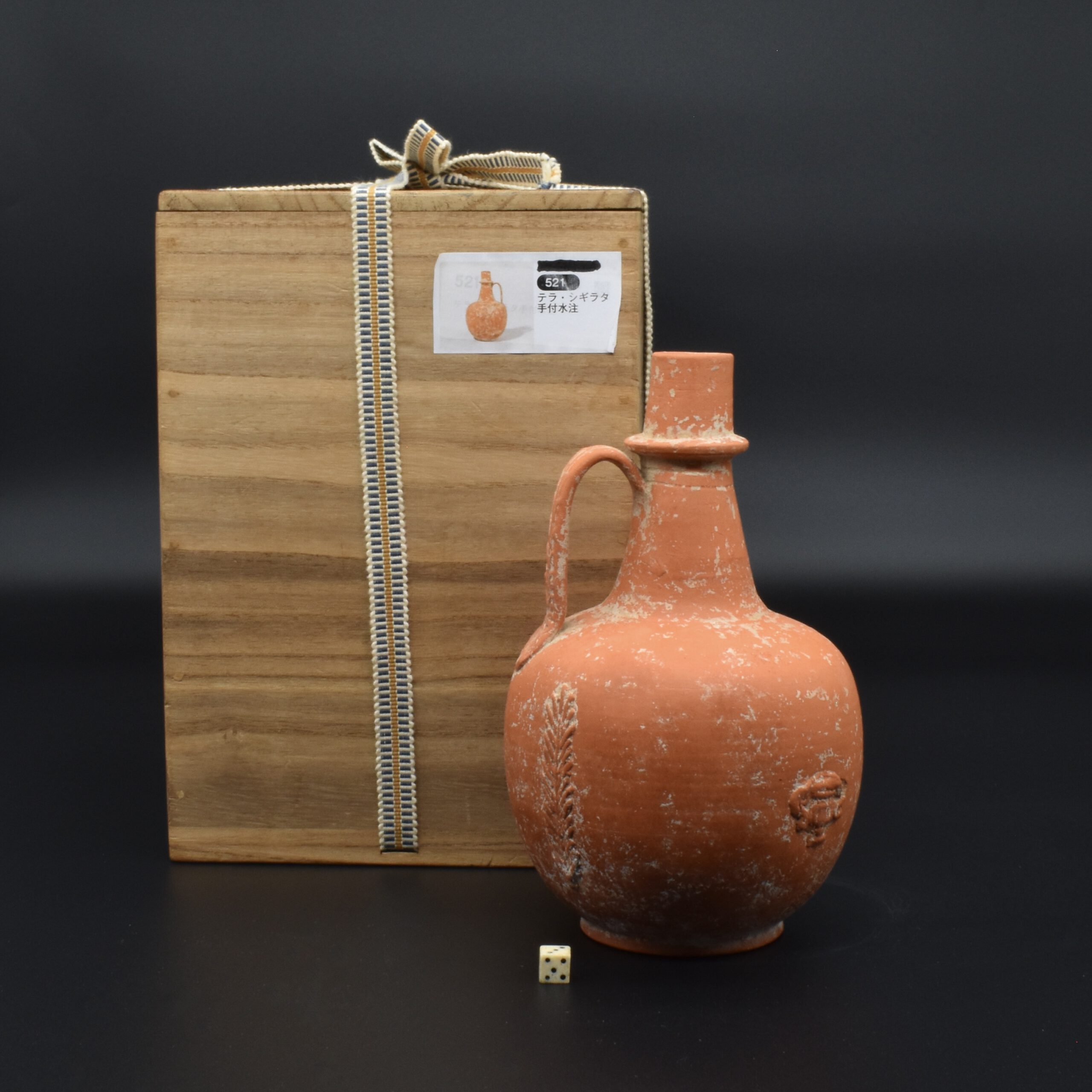
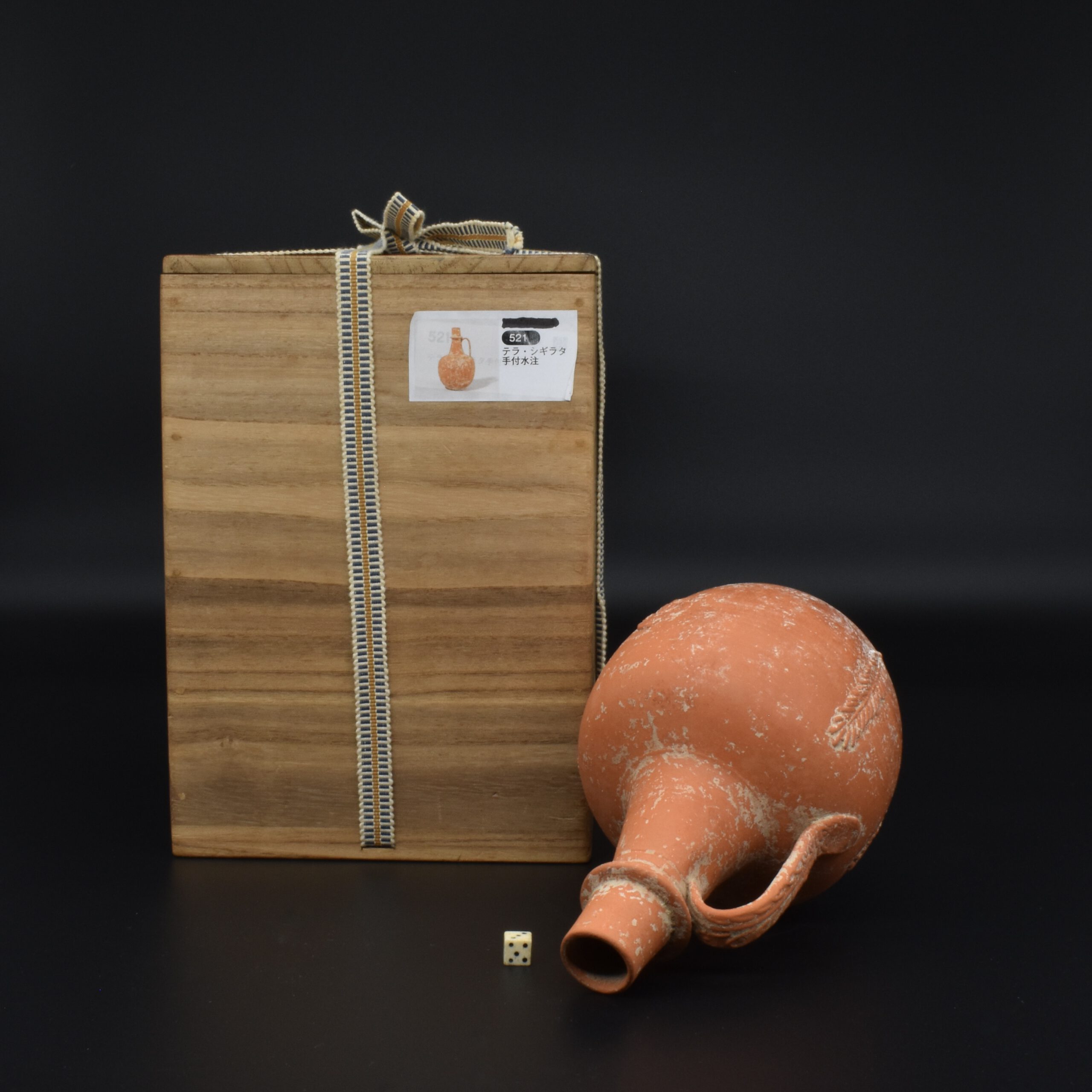
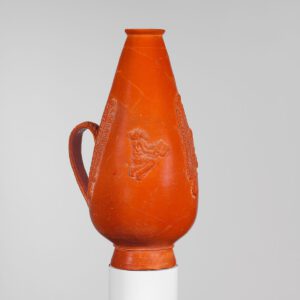
A Roman Red Ware Jug, Late Imperial c.3rd Century A.D. This North African red slipware pottery jug was made in an area that is now in Tunisia. Roman North Africa was a thriving area, especially in the later part of the Roman period when this jug was produced. Large villas were built and great cities traded from the ports of North Africa, Red Ware from these ports was exported across the Roman Empire. The front applique depicts a man in long loose flowing clothes, holding a staff, and the reverse shows a double handled urn. These scenes are divided by an ornamental up right applique, similar decoration can be seen either side of the moulded handle. This pottery is part of a larger group of Roman pottery called Terra Sigillata. For a related Roman pottery jug dated to the early 3rd Century see A Related Roman Jug at the Metropolitan Museum of Art
- Condition
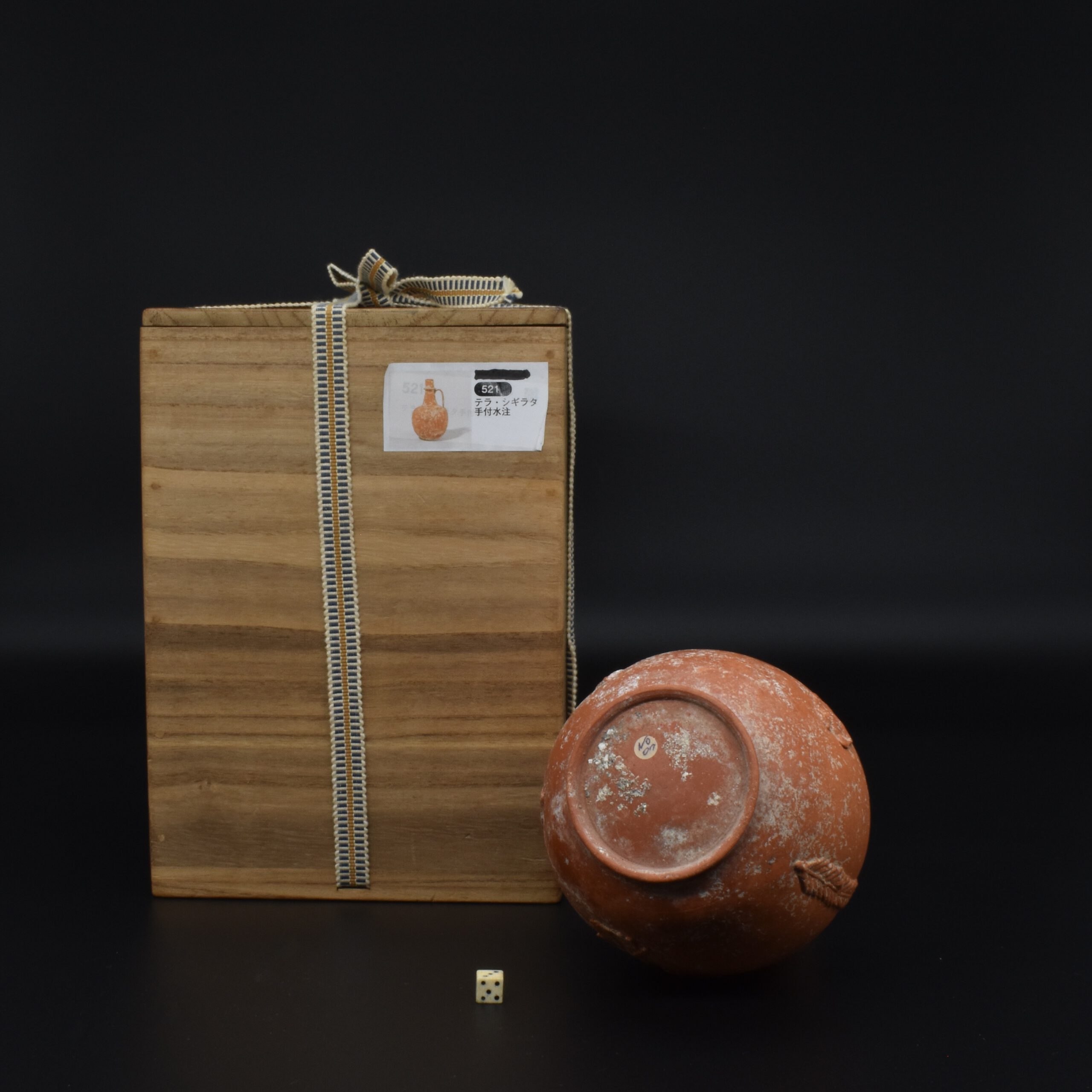
- This Roman pottery jug is a friable surface, as the burnish surface has completely degraded. Loss to the back of the figures head, the applique has detached from the surface. Small chips to the collar above the handel. The surface has caliche deposits, typical of objects left in arid conditions for a long time, such as North Africa.
- Size
- Height 18.1 cm (7.1 inches).
- Provenance
- N/A
- Stock number
- 27364
- £ GBP
- € EUR
- $ USD
Photos
Information
A Related Roman Jug at the Metropolitan Museum of Art
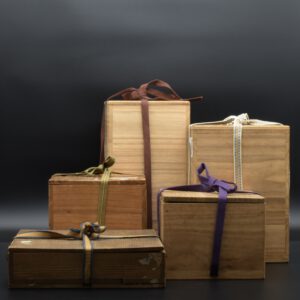
Tomobako Storage Boxes :
Traditional Japanese ceramic storage boxes, referred to as Tomobako are highly valued and much used in Japan. Most boxes are made from paulownia wood, it is lightweight hardwood and it’s also fire resistant, which is very useful in because Japanese buildings tend to be made of timber and have paper dividers inside. The Islands of Japan are located on a highly complex, unstable, and active geological junction where four major tectonic plates collide and subduct. These islands are essentially built upon the boundaries of these plates, with the archipelago forming as a result of the subduction and volcanic activity caused by these tectonic movements. Therefore the use of tradition tomobako is essential for the survival of ceramics in Japan. Japanese museums don’t have this luxury, so they secure the ceramic objects with nylon, which looks very much like fishing line. The paulownia is a fast growing tree, so it isn’t too expensive. It is believed that the phoenix, symbolising wisdom and prosperity, will only land on a paulownia tree when a worthy ruler is in power.
Tomobako containers that protect, store, and often certify the authenticity of the pottery inside. They are typically signed by the owner of the antique ceramic item in the box. They are tied with cord in a specific way, this is regarded as part of the a ritual ceremony among a gathering of friends in Japan. Of course not everything in these boxes is what it might seem. Some contain surprising objects, so you will have to wait and see what we have in these boxes.