A Small Kangxi Blue and White Porcelain Flower Form Lange Lyzen Dish.
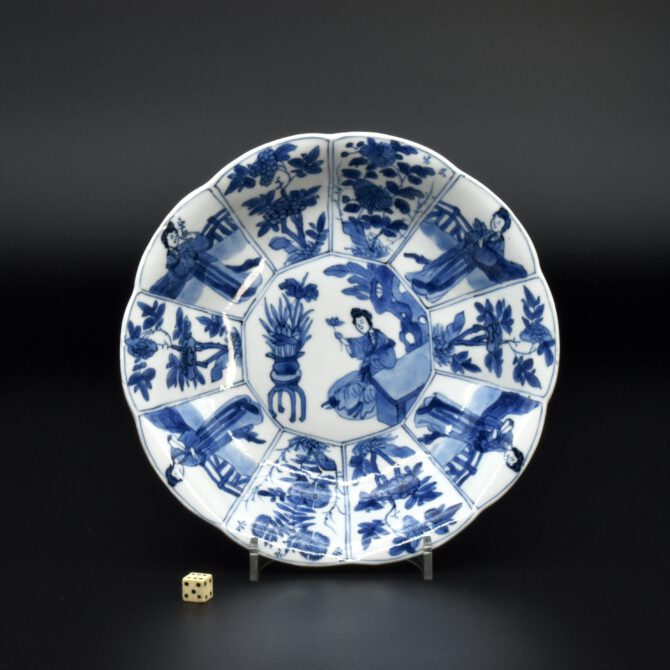
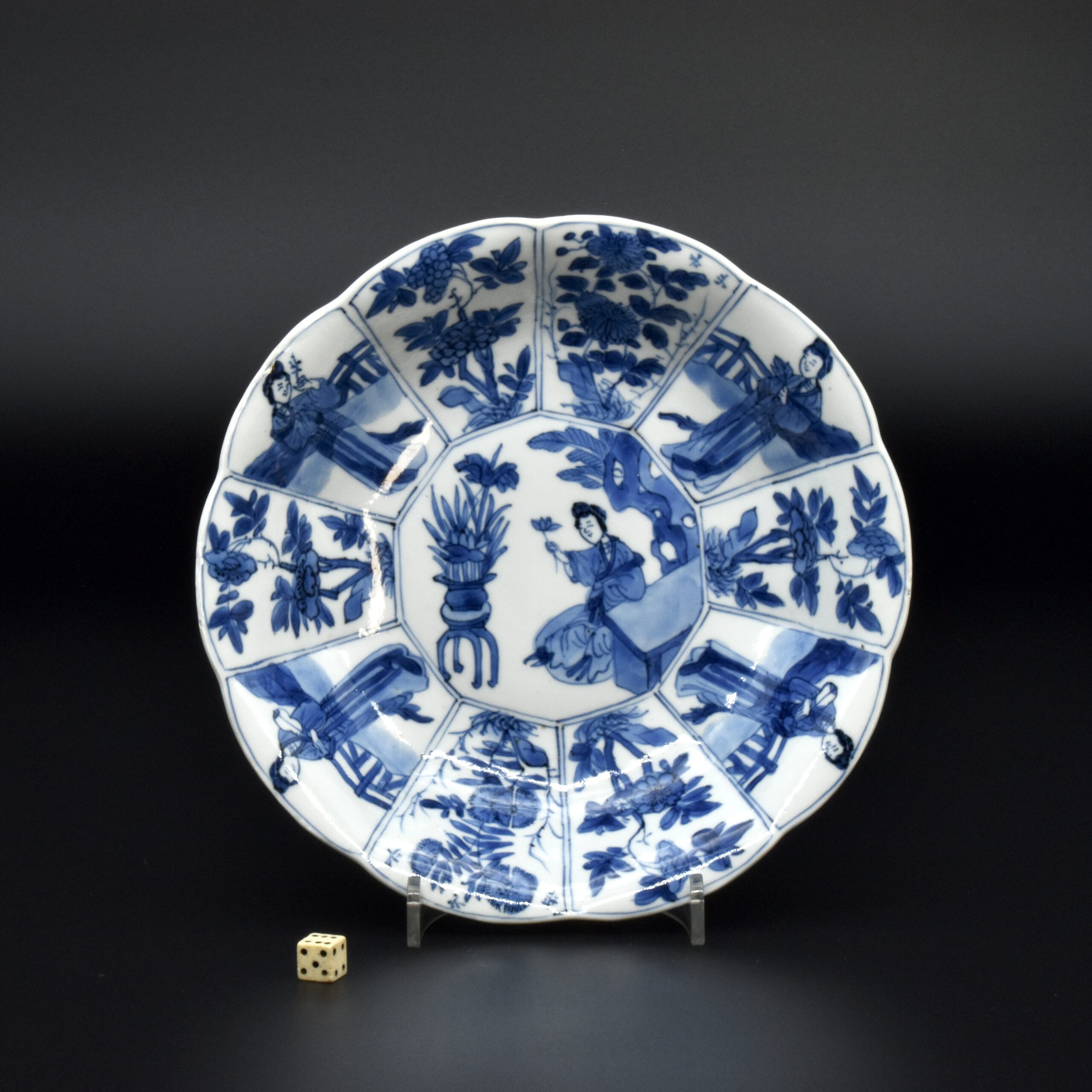
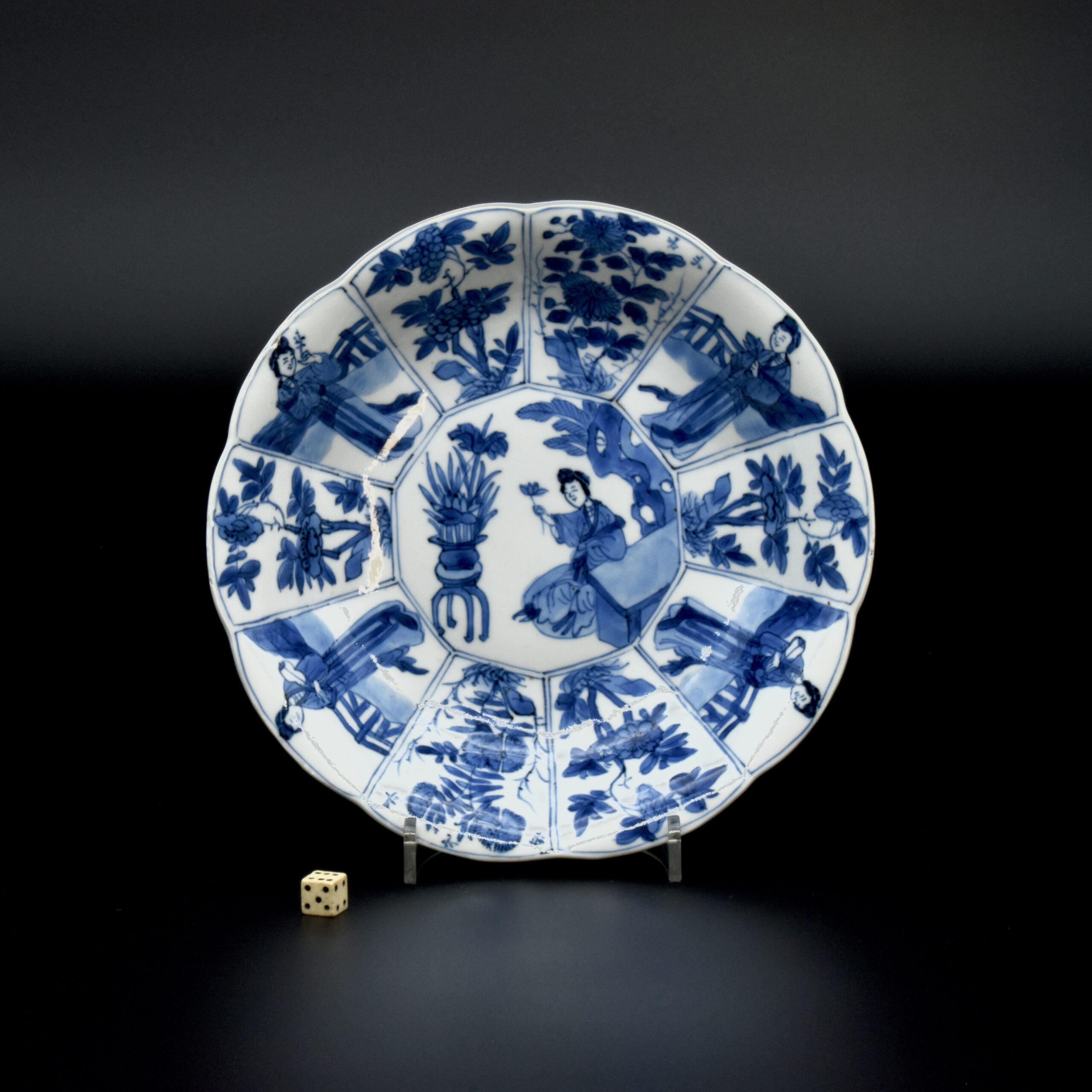
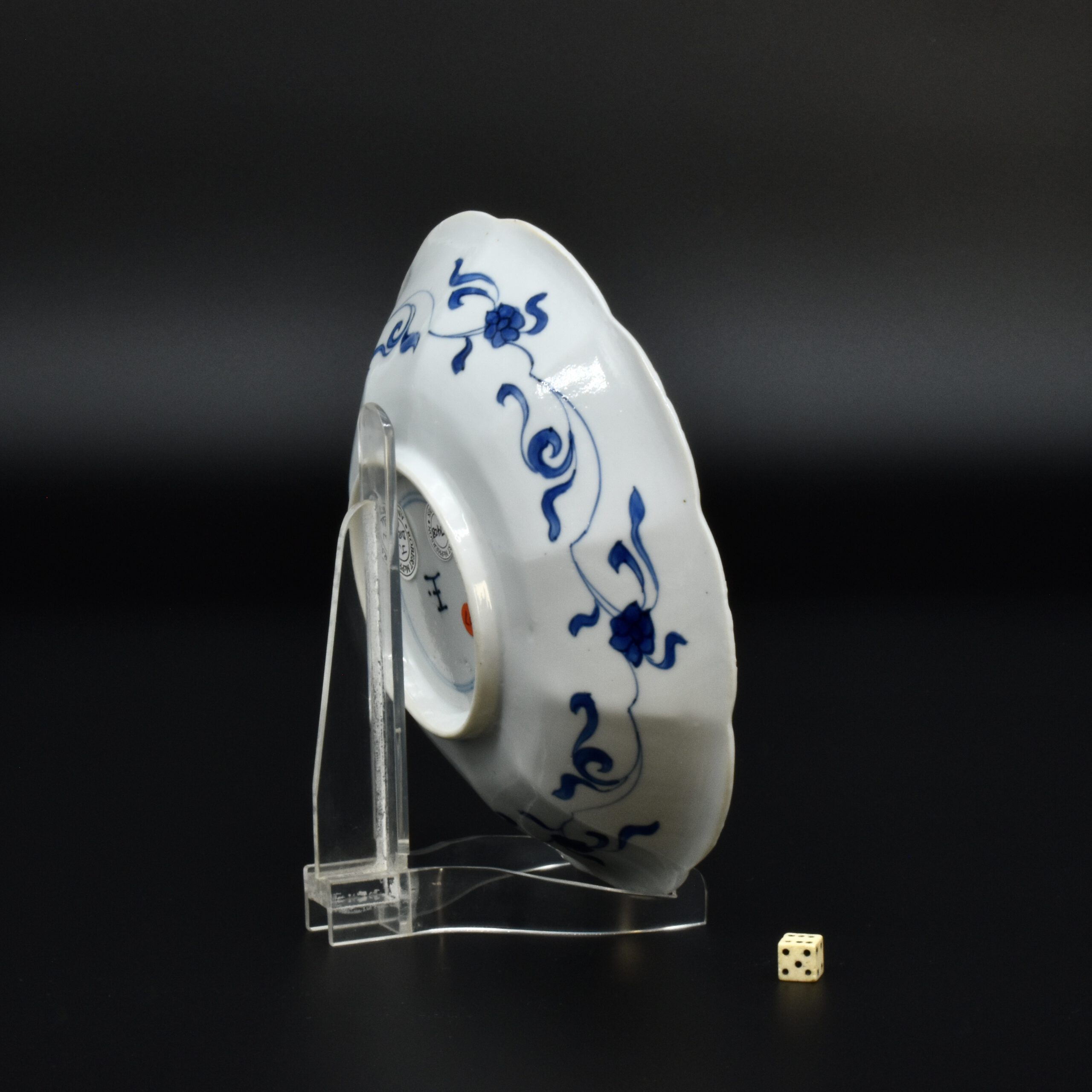
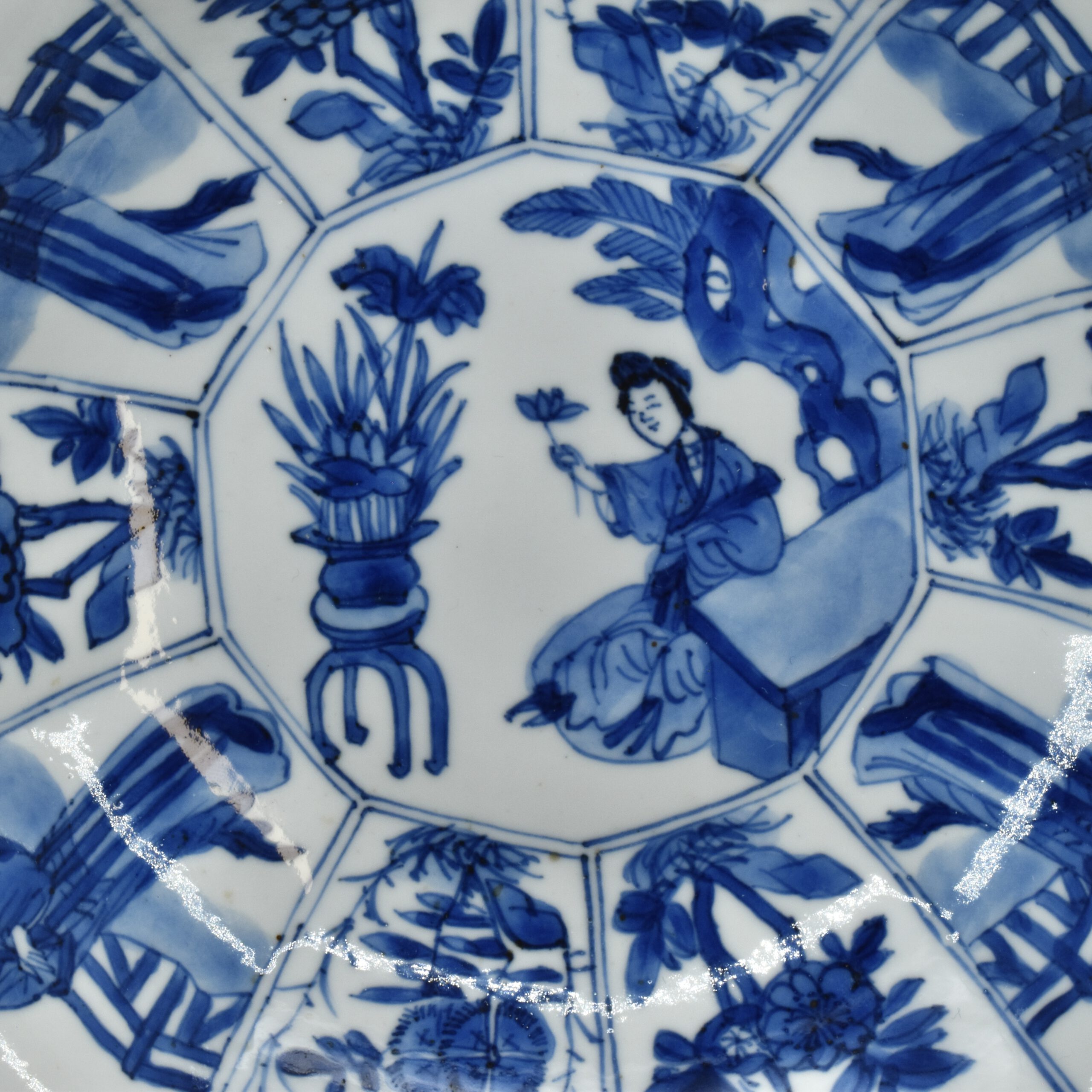
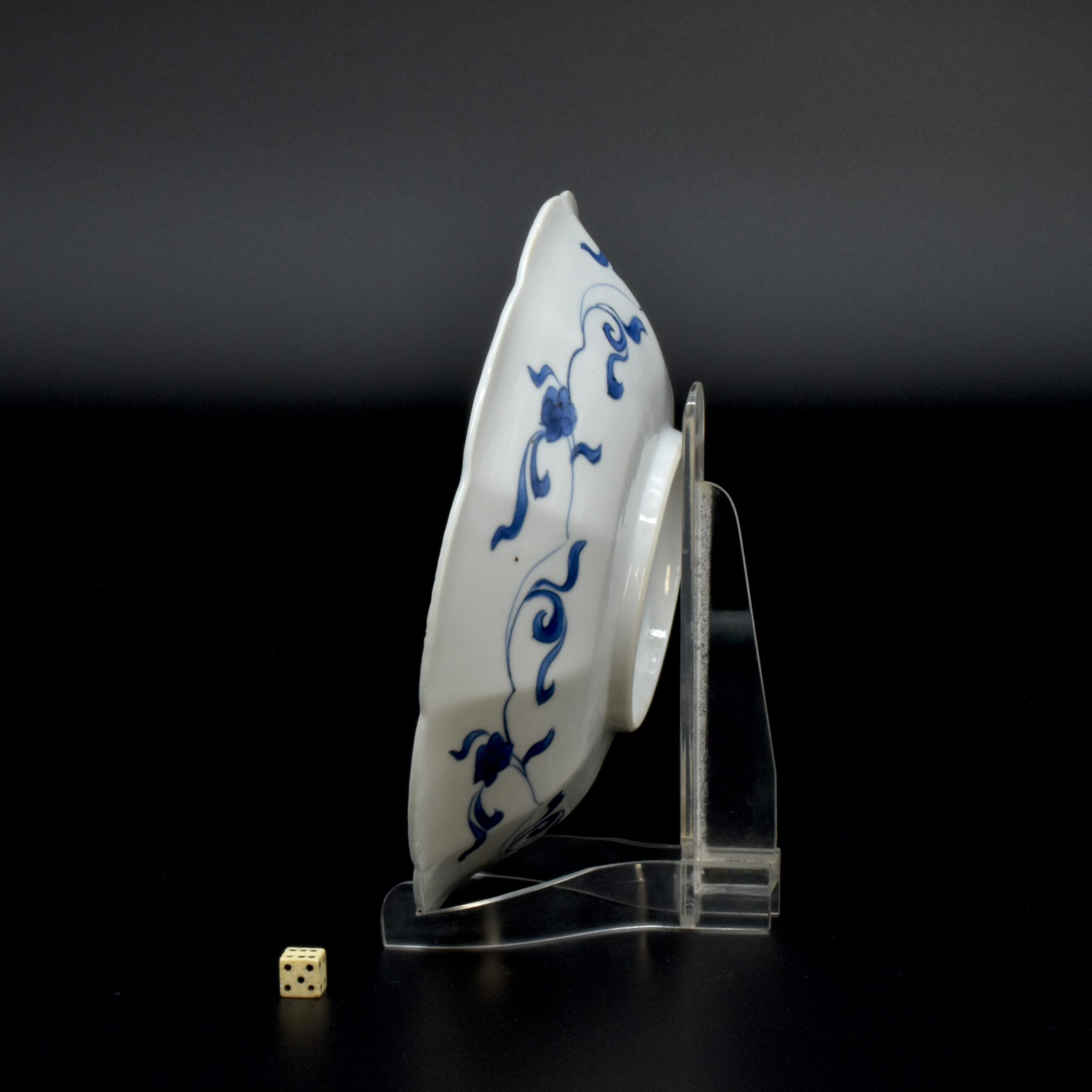
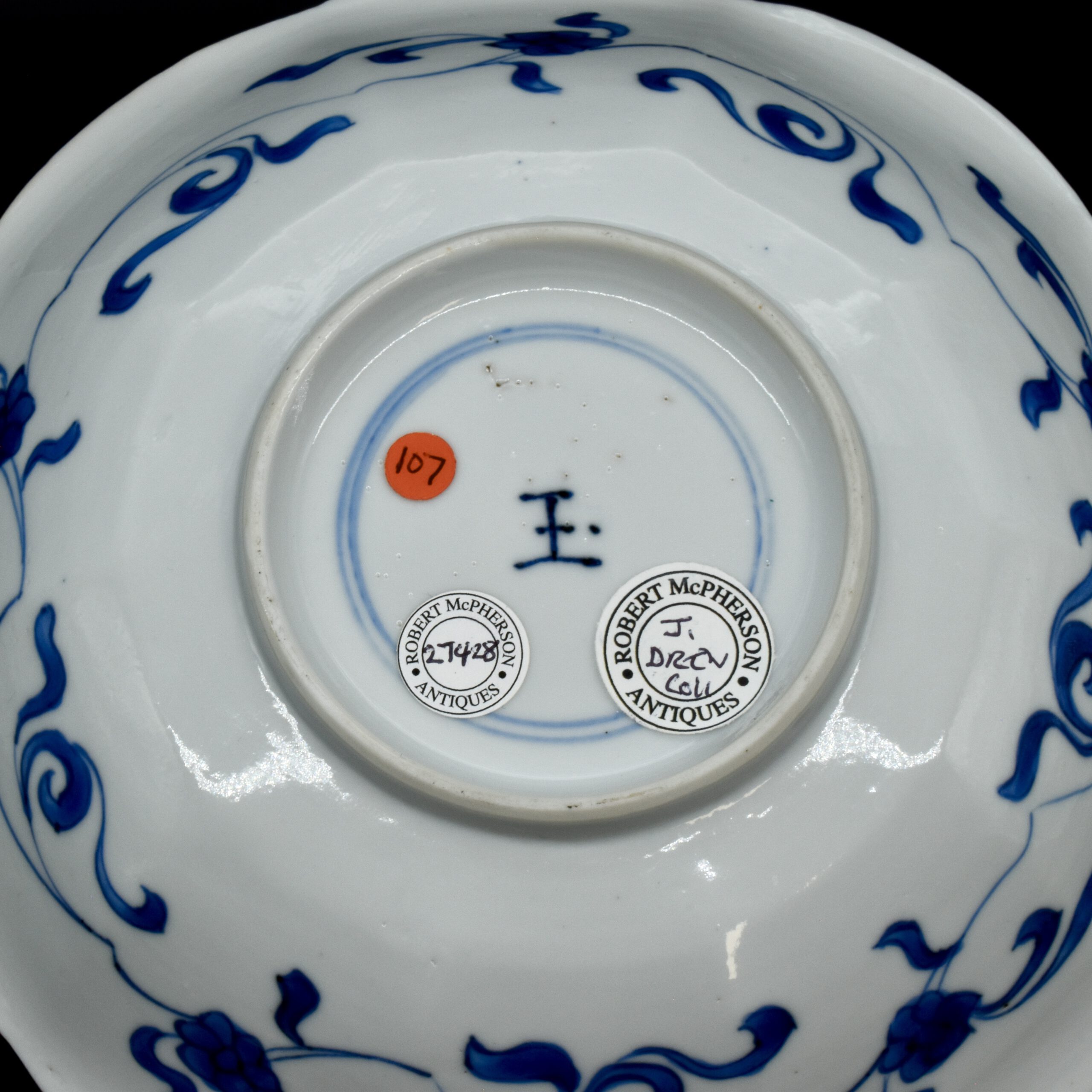
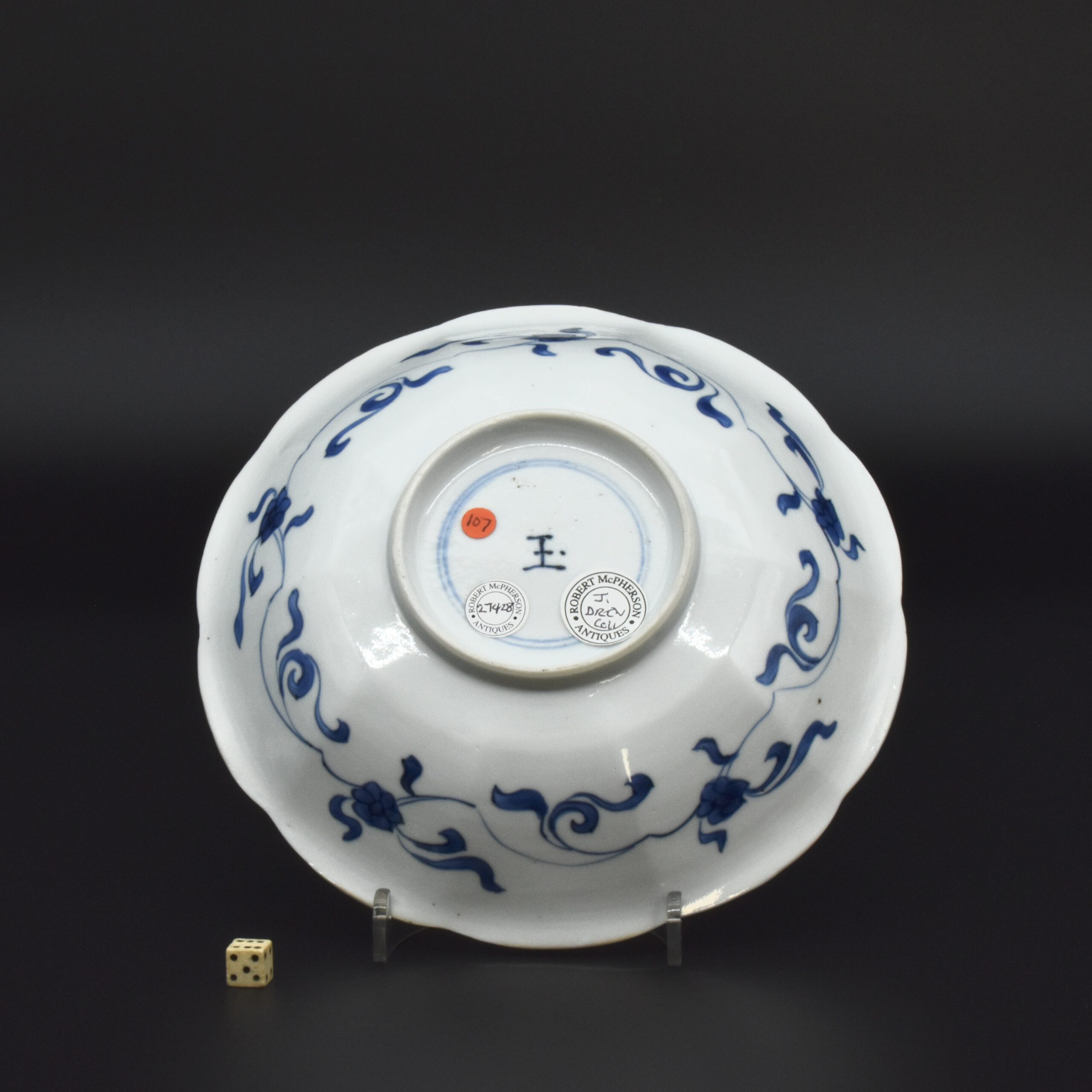
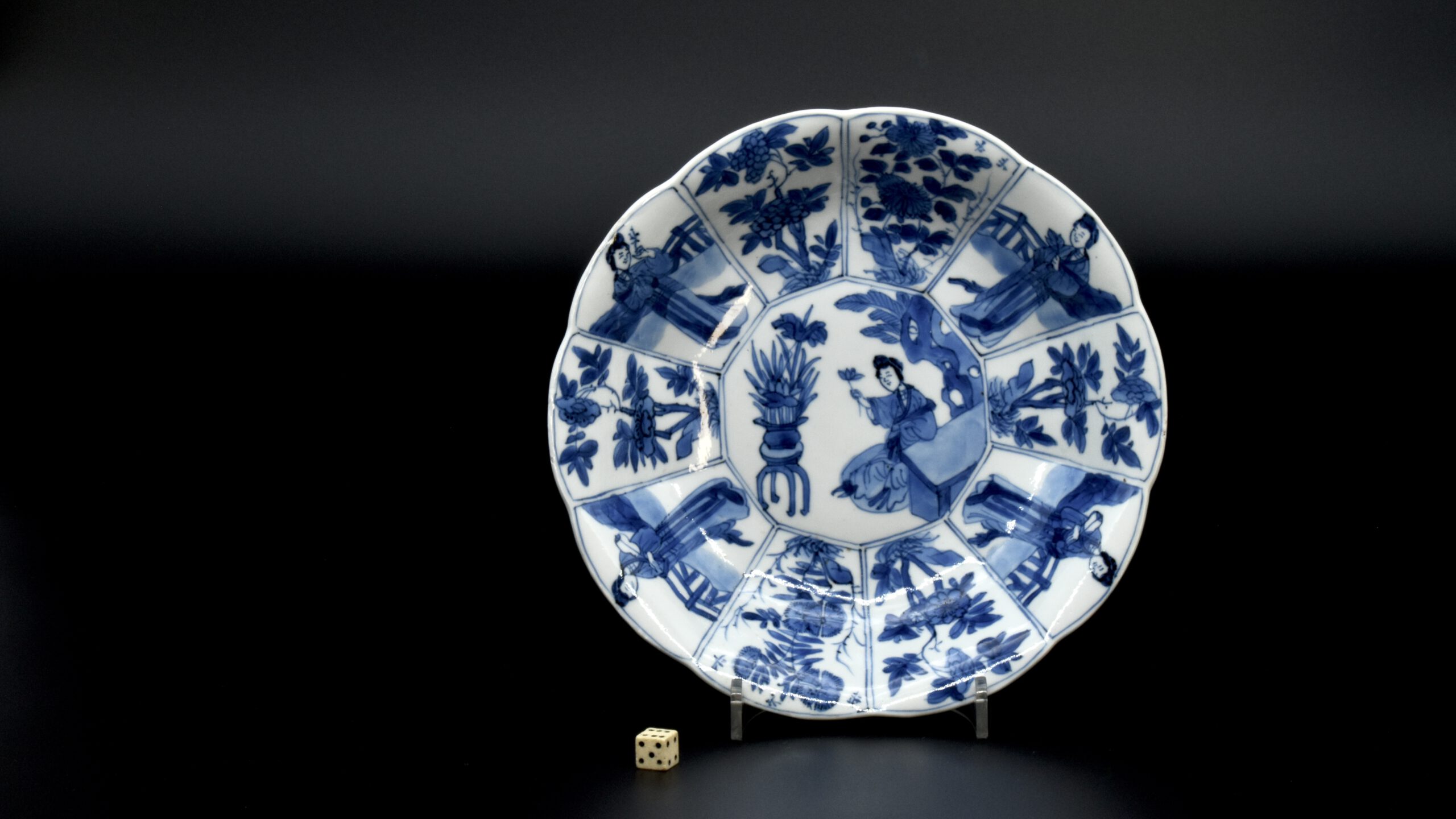
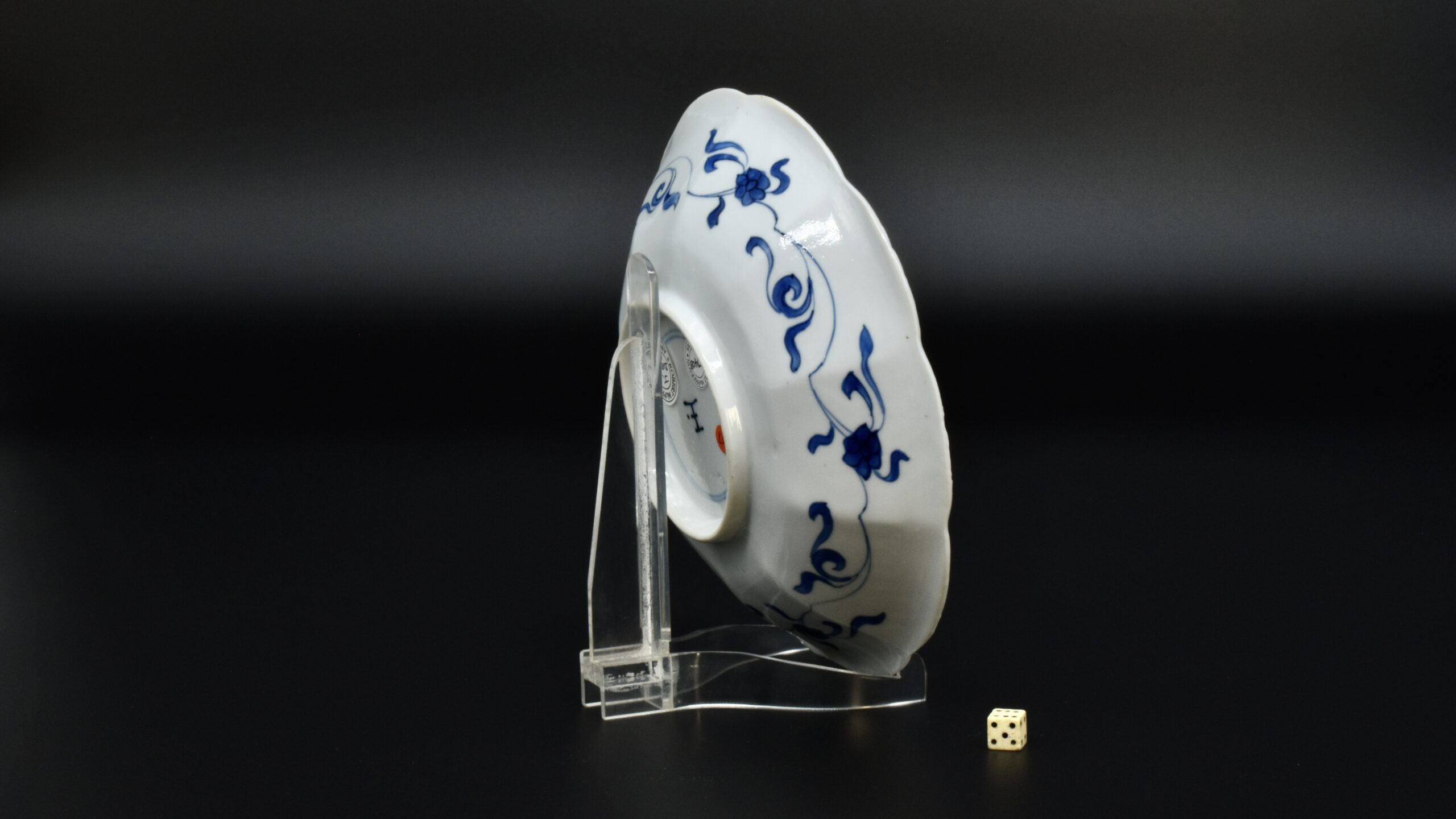
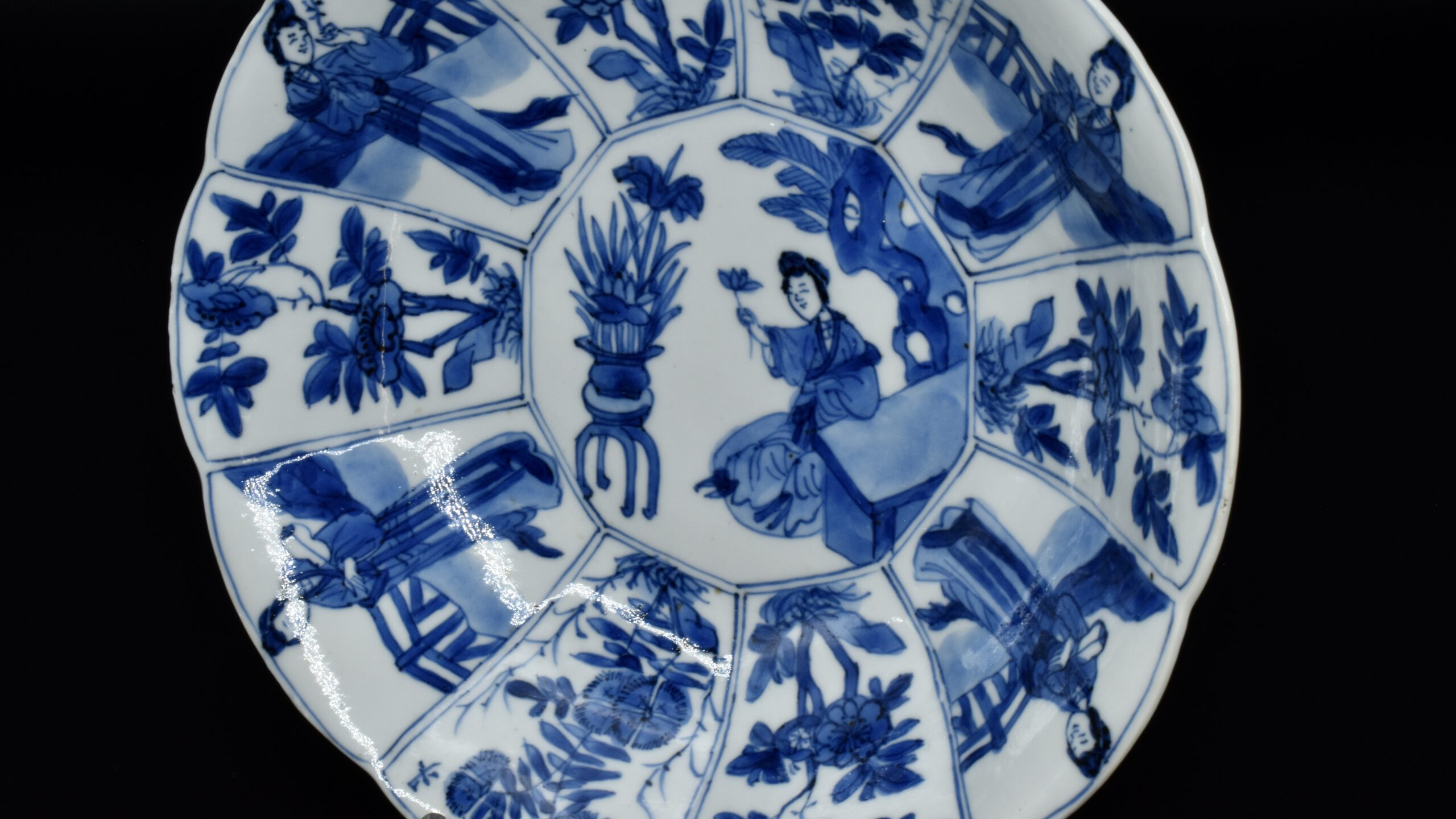
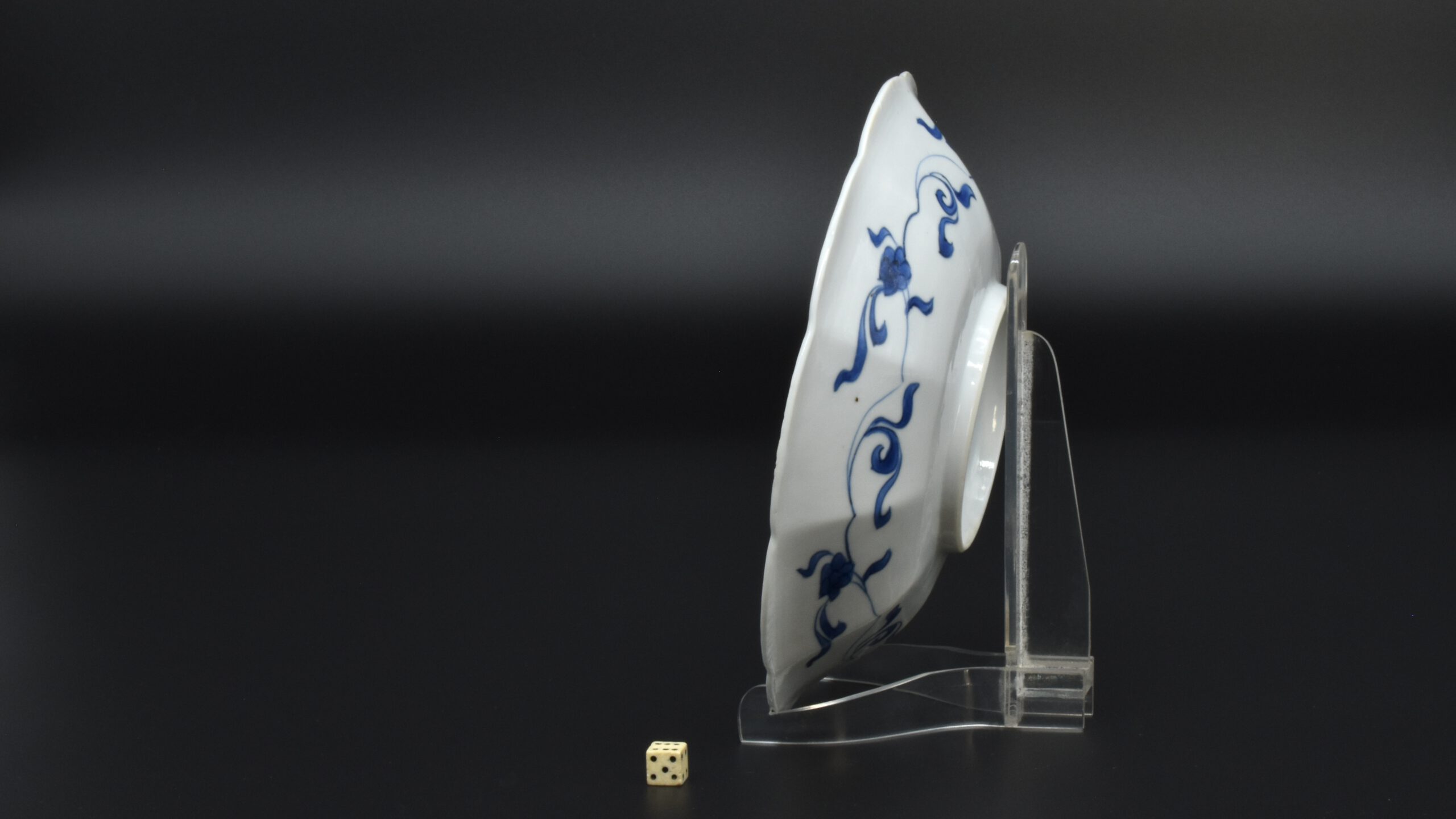
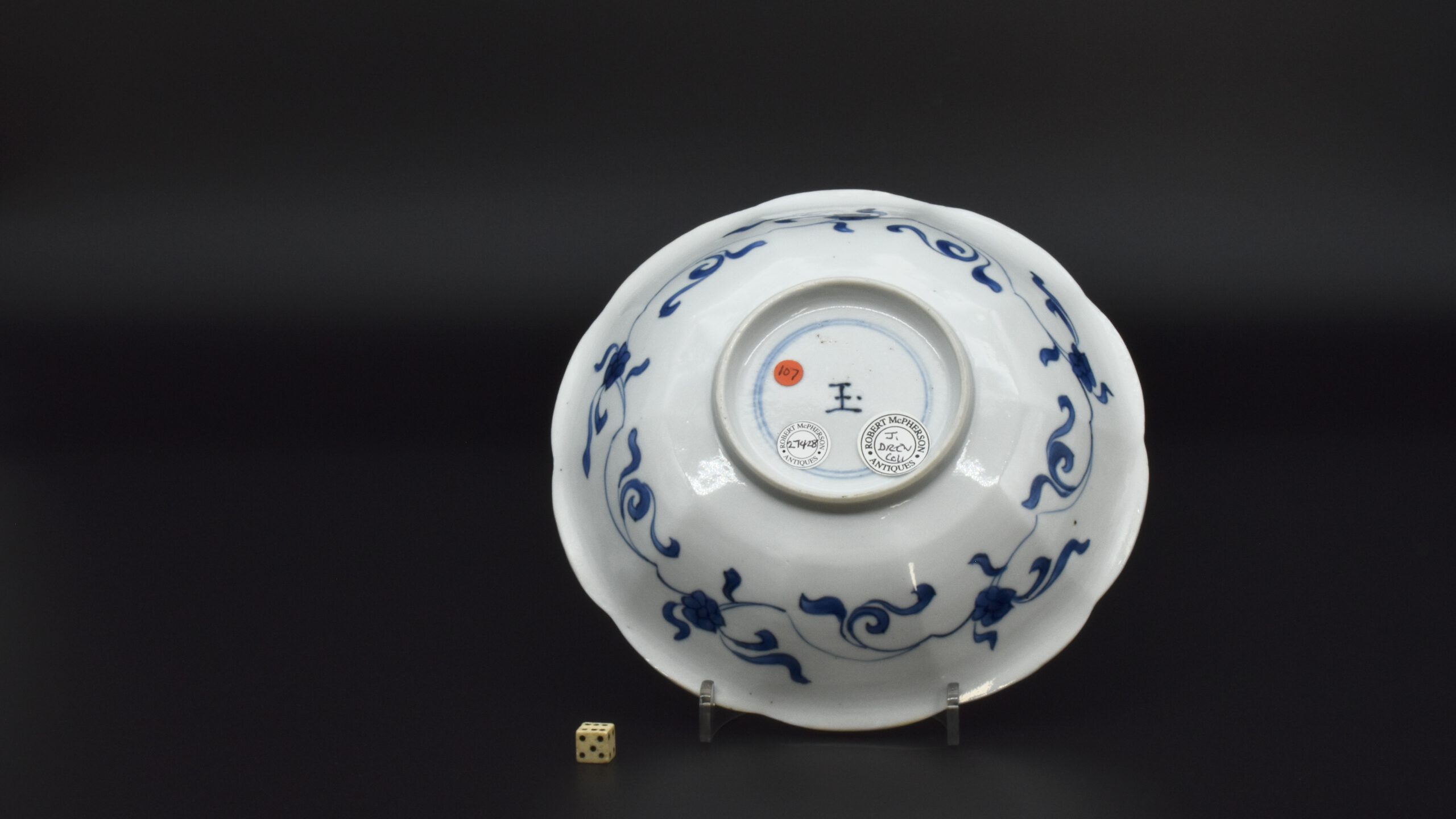
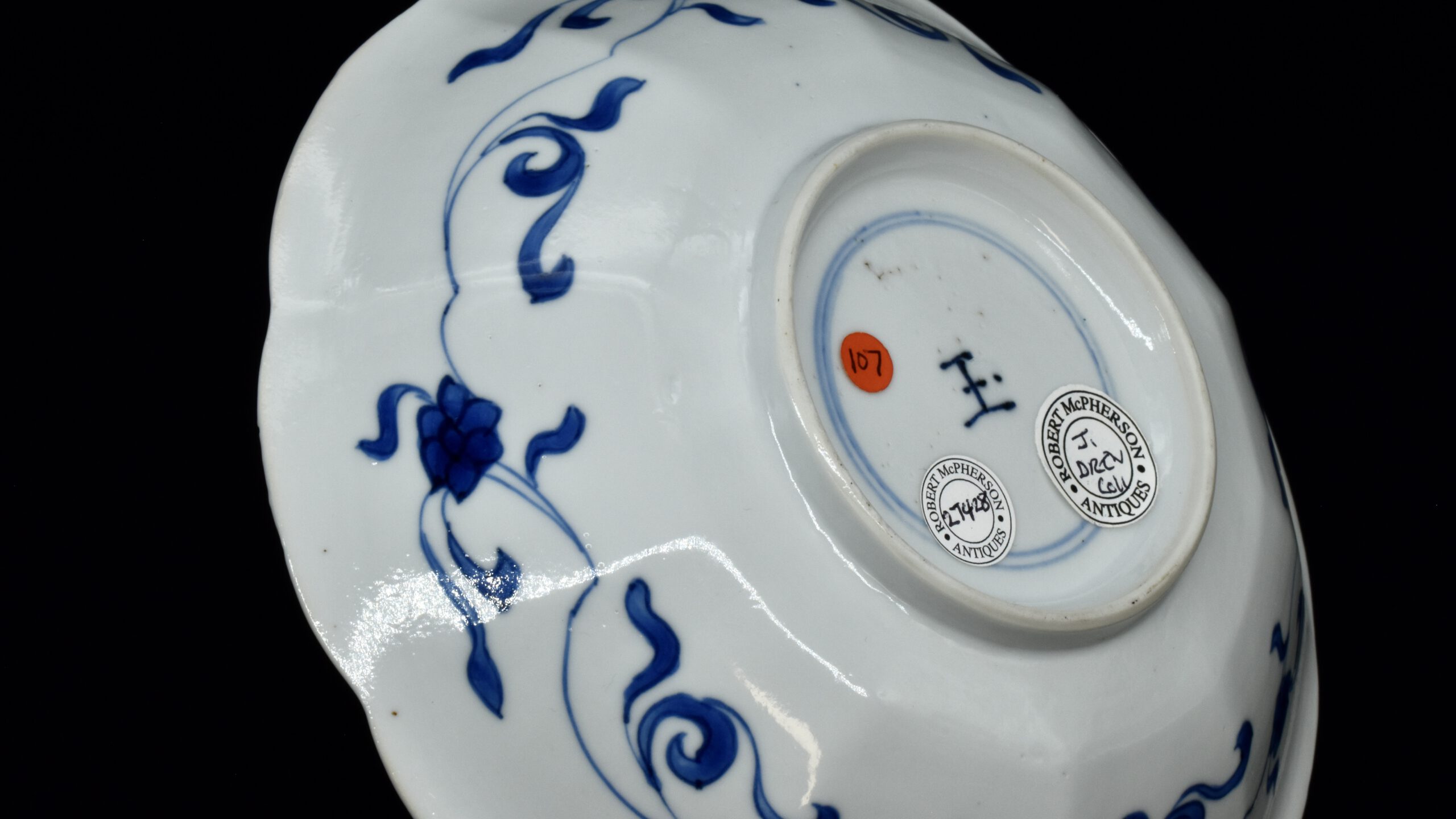
A Small Kangxi Blue and White Porcelain Flower Form Dish, Jingdezhen Kilns, c.1700. From the Collection of John Drew (1933 – 2006). This Kangxi porcelain dish was moulded to mimic the shape of a flower, the petal shaped panels are decorated with Lange Lyzen (Long Eliza in English), divided by two pairs of panels and two single panels of flowering plants. The plants include Dianthus chinensis referred to as a pink, peony, chrysanthemum. The central panel depicts a Lange Lyzen at a table with a table holding a lotus that was perhaps picked from the lotus display tin the jardiniere next to her. Small blue and white Chinese porcelain dishes, like the present Kangxi example, were very popular with the Dutch middle and upper classes at this time. In the Netherlands the thin elegant ladies were referred to as Lange Lyzen, and in England as `Long Eliza`. The base has the character 玉 pronounced Yu, meaning jade. The Chinese have a ranking system of materials, with jade being the highest of all materials.
See Below For More Photographs and Information.
SOLD
- Condition
- In excellent condition, some very minor frits to the glazed rim..
- Size
- Diameter 17cm (6 3/4 inches).
- Provenance
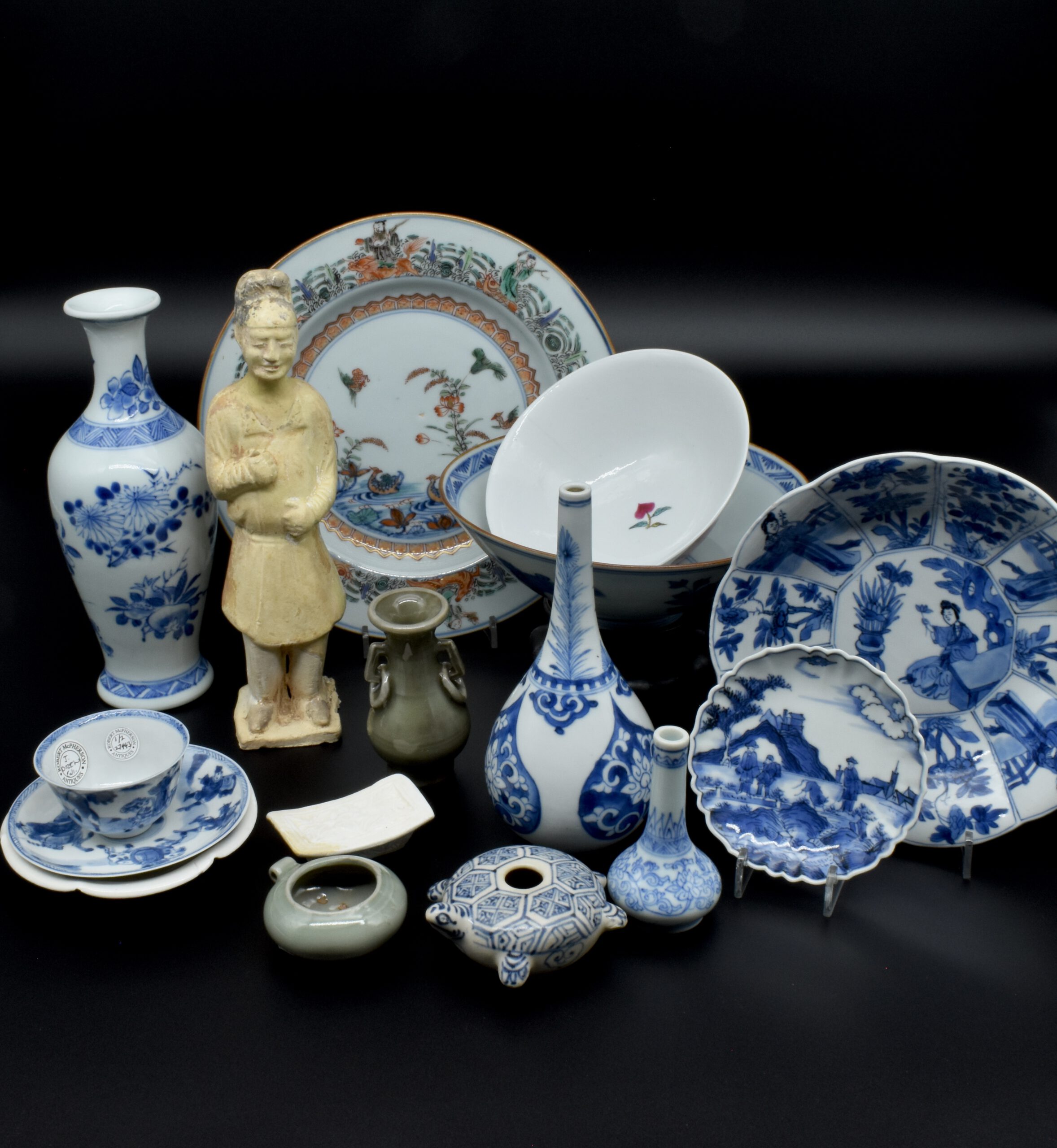
- Robert McPherson Antiques. The John Drew Collection. The John Drew Collection : John Drew was born in 1933 in Tideswell, Derbyshire, where his father was curate. The family moved to Norfolk whilst he was still a baby and his father became the rector of the parish of Intwood and Keswick. He was educated at Sedbergh School and after National Service in the R.A.F. being taught Russian, he went to Queens College, Oxford to read Greats (Classics). He spent nearly all his working life in various African countries as an archivist, moving to a post at Cape Town University in 1978. He remained in Cape Town after his retirement until his death in 2006. He had a great love of the English countryside (but not the climate) and this is shown in many of the pieces he collected. His taste was varied and ranged from Neolithic right through to the 18th Century. When we sent photograph to his home in Cape Town of pieces we thought he might be interested in, he would write long funny well observed letters back, wanting to add many of the items to his growing collection. Over the years we got to know him better and better, and during the last few years it was very rare for him to not want all the pieces we offered him. We knew his taste, even though his taste was so varied. This was in no small part because he had a very good eye and it was a pleasure finding things that interested him, because they were also very interesting to us. He never got to put his collection on display, something he hoped to do while on retirement in England, so it is with a mixture of pleasure and sadness that we offer these pieces from his collection this June. Each piece has a John Drew collection label, so when the collection is split up there will be some lasting record of the love and hard work he put into his two decades of collecting.
- Stock number
- 27428
Photos
Information
Kangxi Porcelain in Baroque Displays / China Mania :
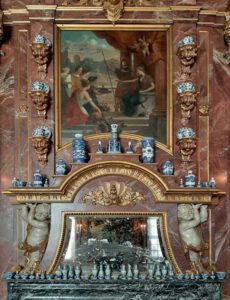
Small vases, dishes, and bowls such as the present Kangxi porcelain example were ordered in large quantities by the Dutch East India Company (V.O.C.) at the end of the Seventeenth Century. They were often used as part of fashionable Baroque decorative schemes, displayed on gilded brackets and on little ledges, in fact on any and every available surface. The desired effect was to show the pieces on mass as part of a grand room setting, arranged so as to overwhelm the spectator. This fashion, sometimes referred to as `China Mania` was bought from Holland to England by Mary II (Reigned 1689 -1694). Her rooms at Kensington Palace (5 Minutes Walk from our old shop) were decorated in this fashion. Daneil Defoe (1660-1731) Stated that "The Queen (Mary) bought in the custom or humour, as I may call it, of furnishing houses with China-Ware, which increased to a strange degree afterwards, piling their China upon the tops of cabinets, scrutores, and every chimney-piece, to the top of the ceilings, and every setting up of shelves for their China-Ware, where they wanted such places, till it became a grievance in the experience of it, and even injurious to their families and estates". Even allowing for artistic licence this give an idea of the extent of the fashion. This obsession with Chinese and Japanese Porcelain varied from country to country, the type of porcelain varied, for example French inventories are almost exclusively of Blue and White, where as Queen Mary`s included many pieces of Japanese Kakiemon and Imari. The way the pieces were displayed also varied. The formal display of porcelain may have derived from the Italian method of organising collections or the German Kunstkammer. These were a mixed displays, which would put exotic shells next to an animal skull, next to a pieces of Chinese Porcelain. Whatever it's origins earlier in the Seventeenth Century, it has traditionally been accredited to the Huguenot Daneil Marot (1661-1752). The Frenchman was well versed in the court taste of Louis XIV (King from 1643-1715), he took these new Ideas to Stadholder William of Holland, later to become William III of England, husband of Queen Mary II.
Het Loo, Palace, the Netherlands.