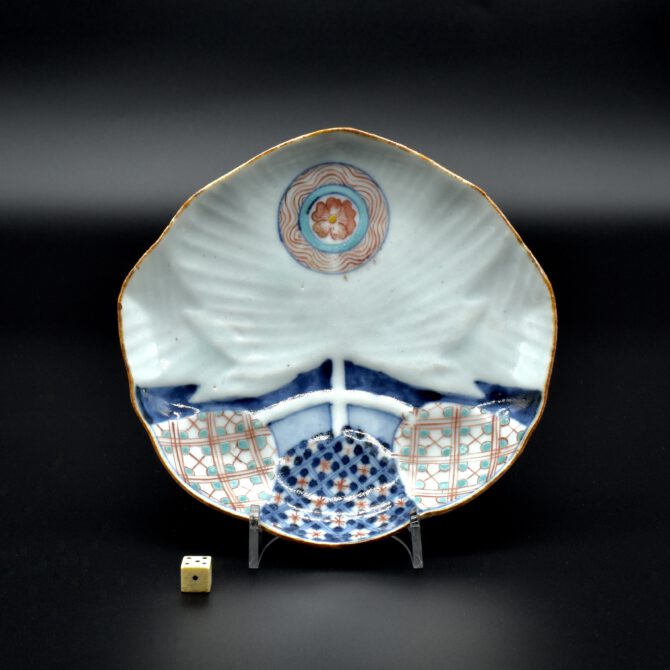
An Unusual Small Mid -17th Century Japanese Polychrome Porcelain Paulownia Design Dish.
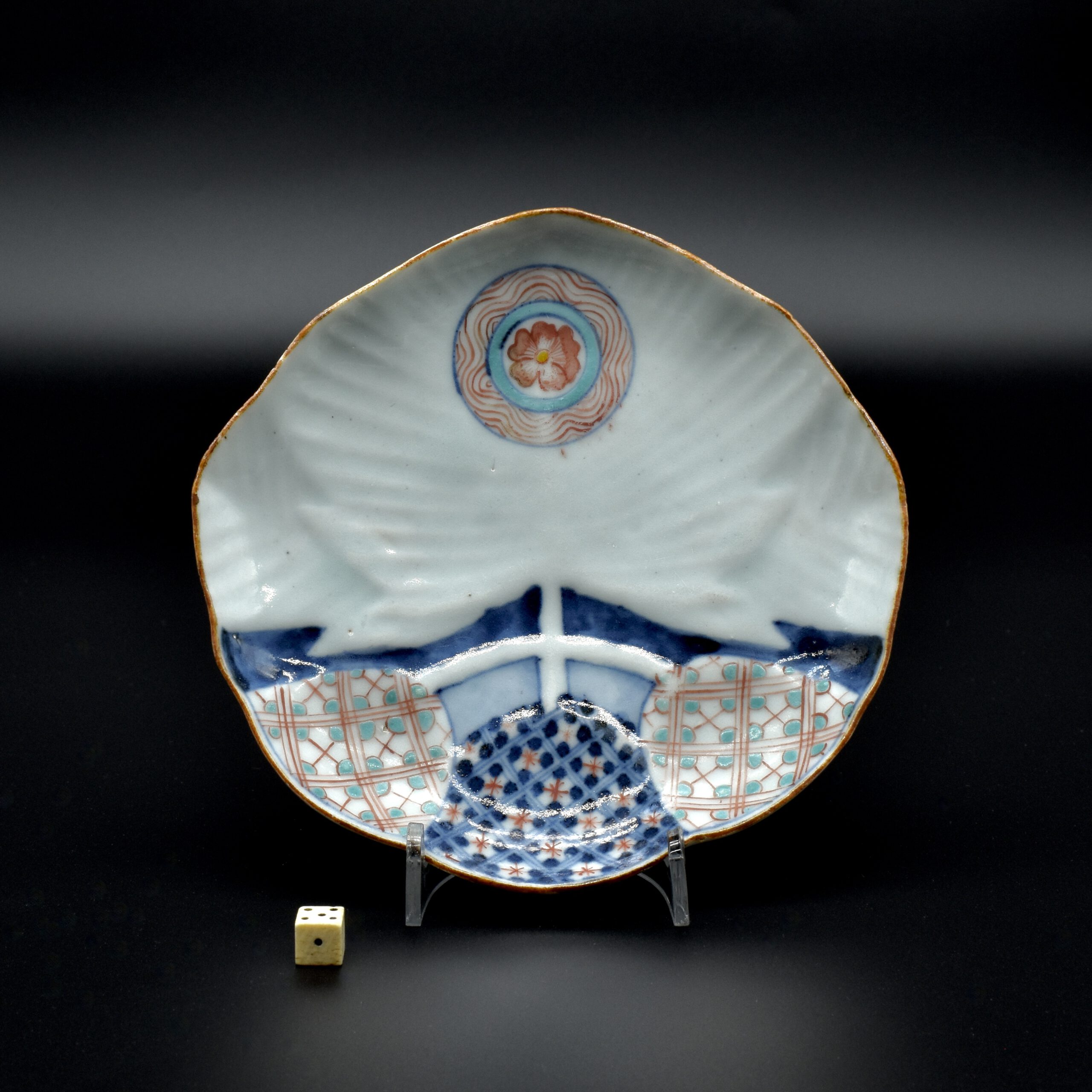
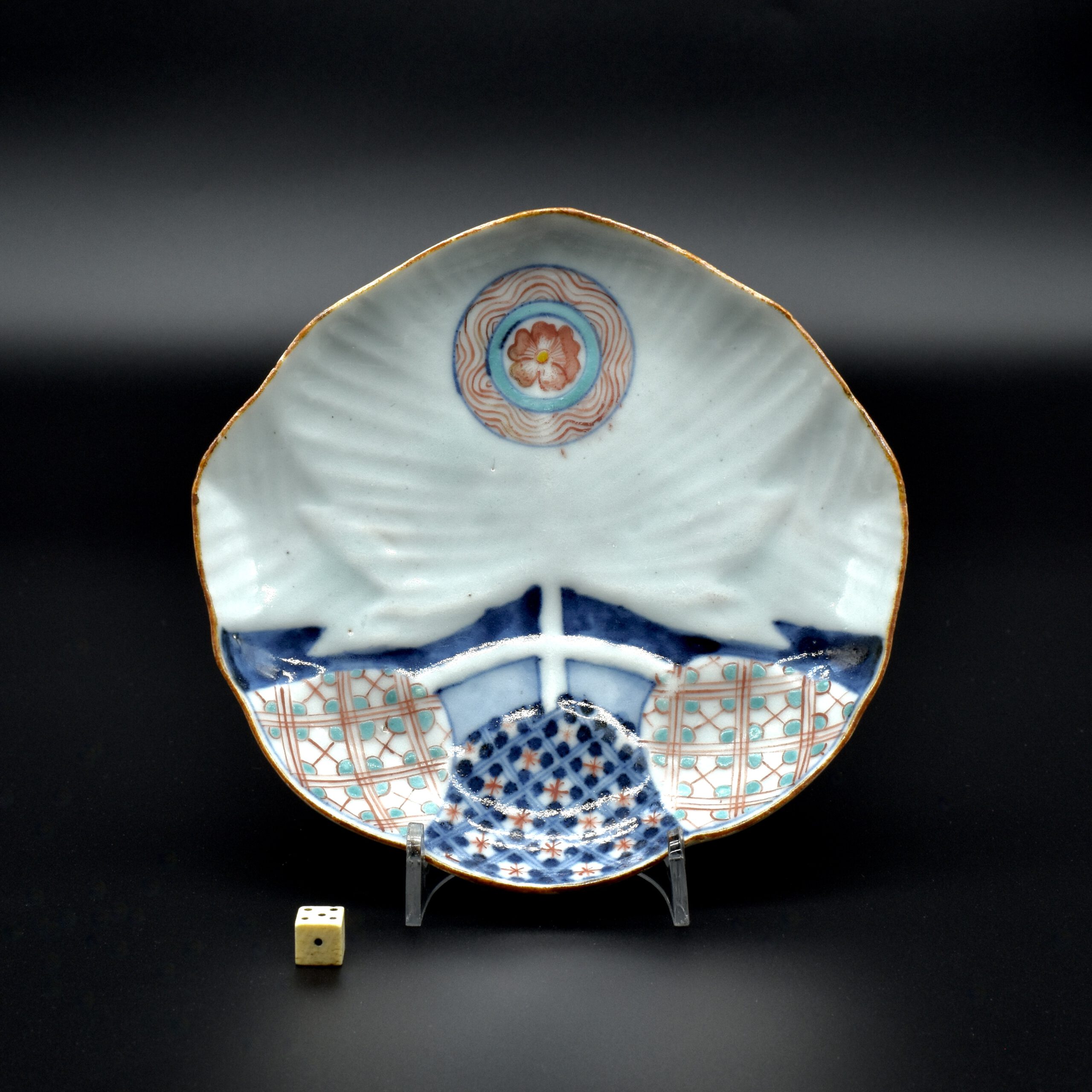
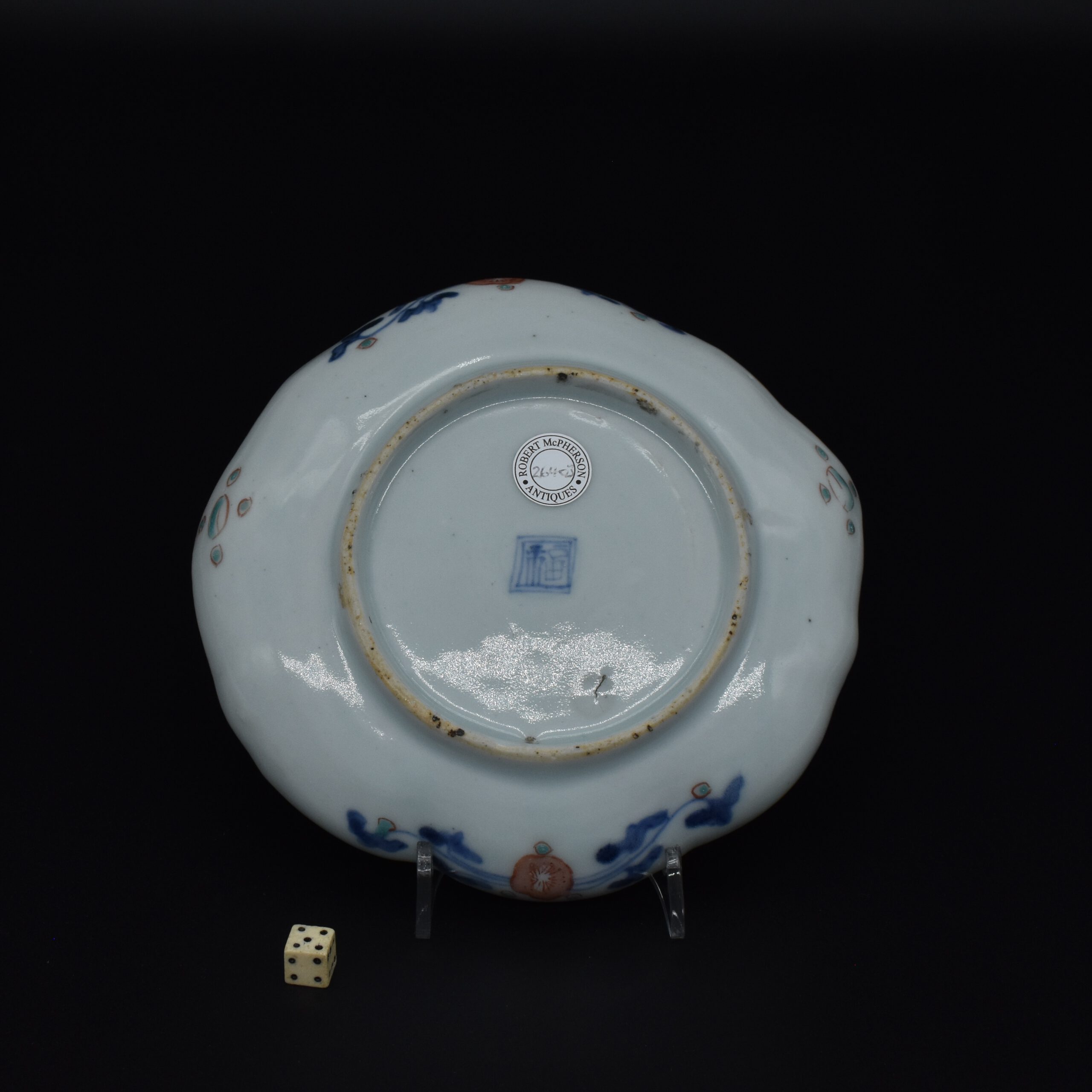
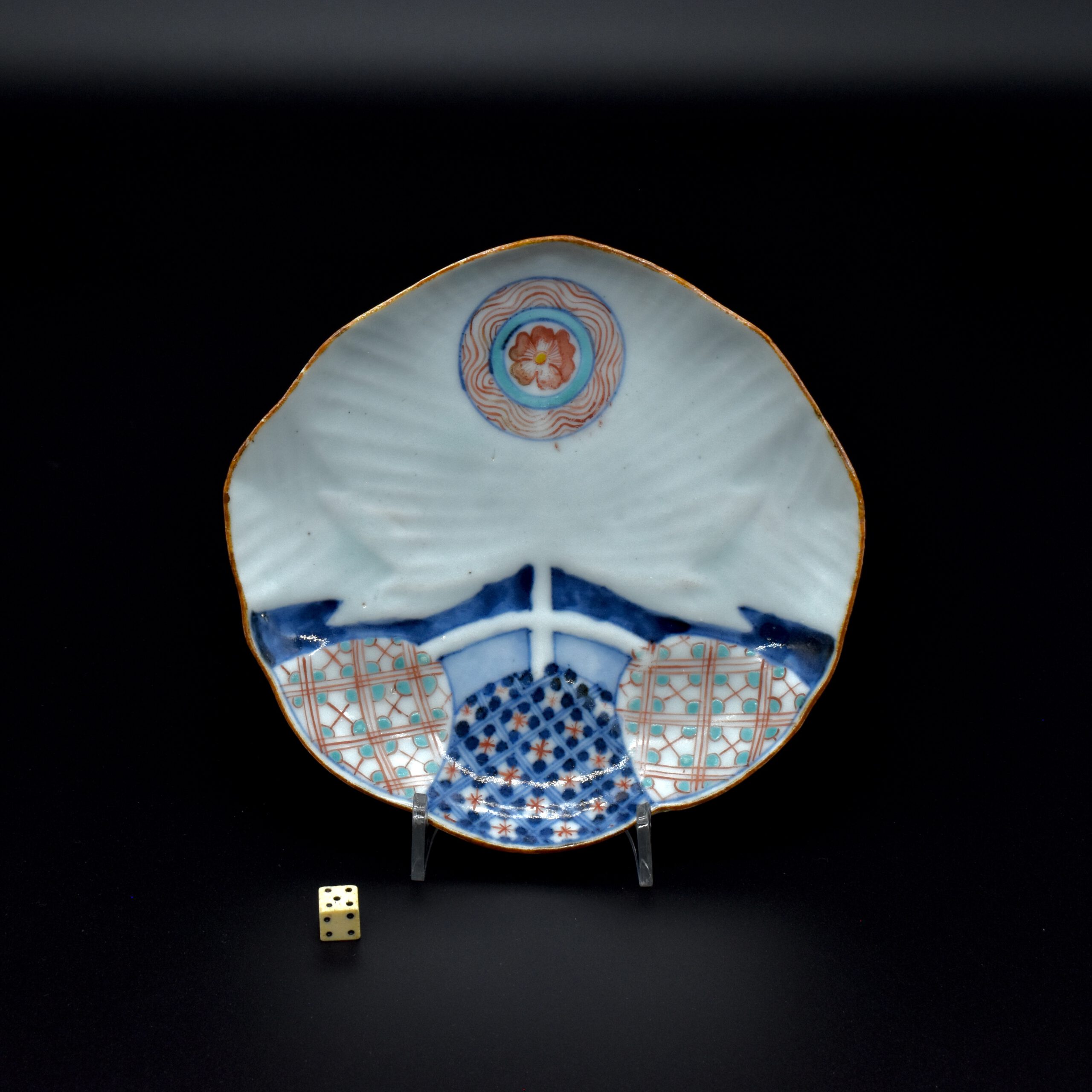
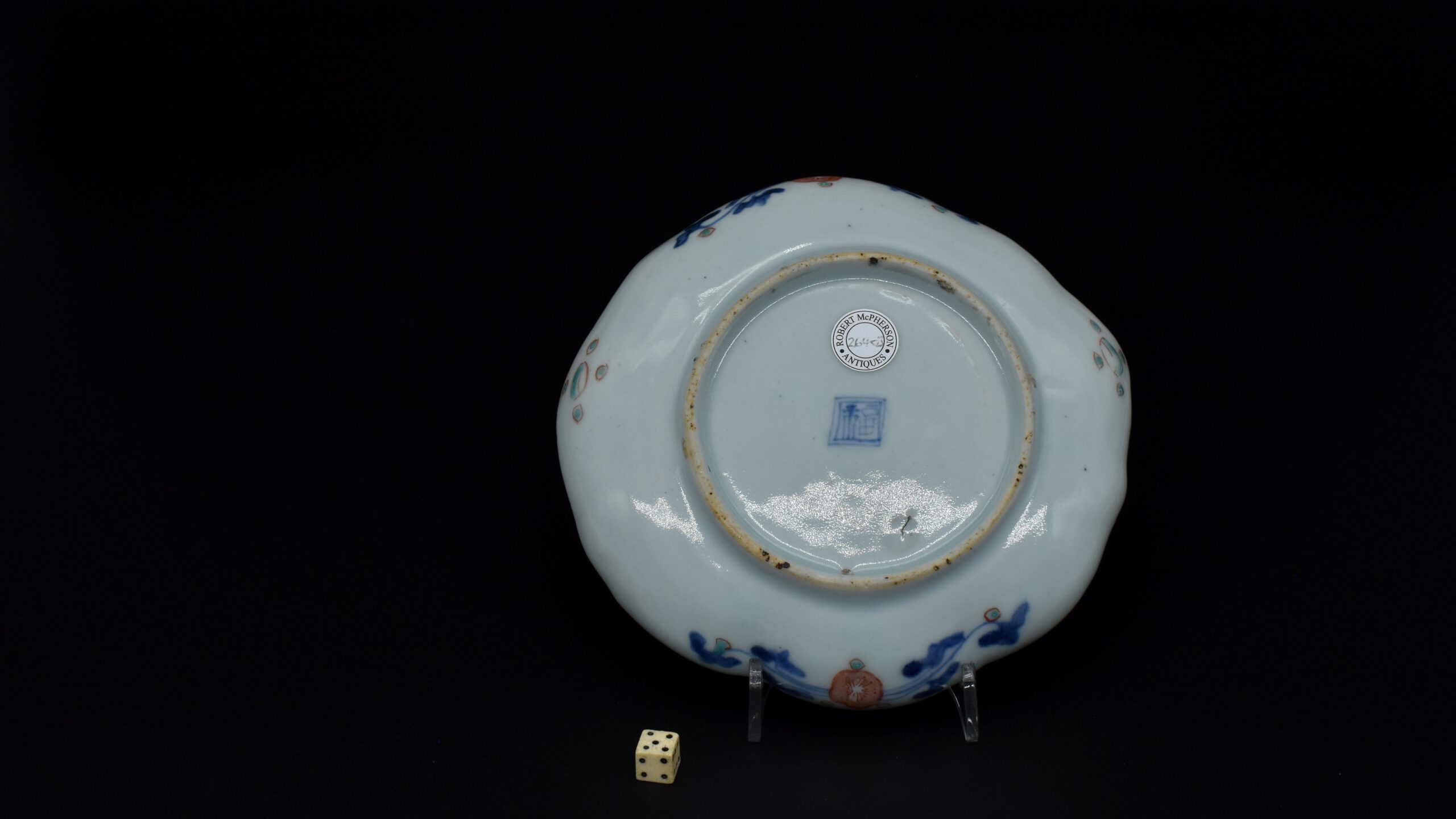
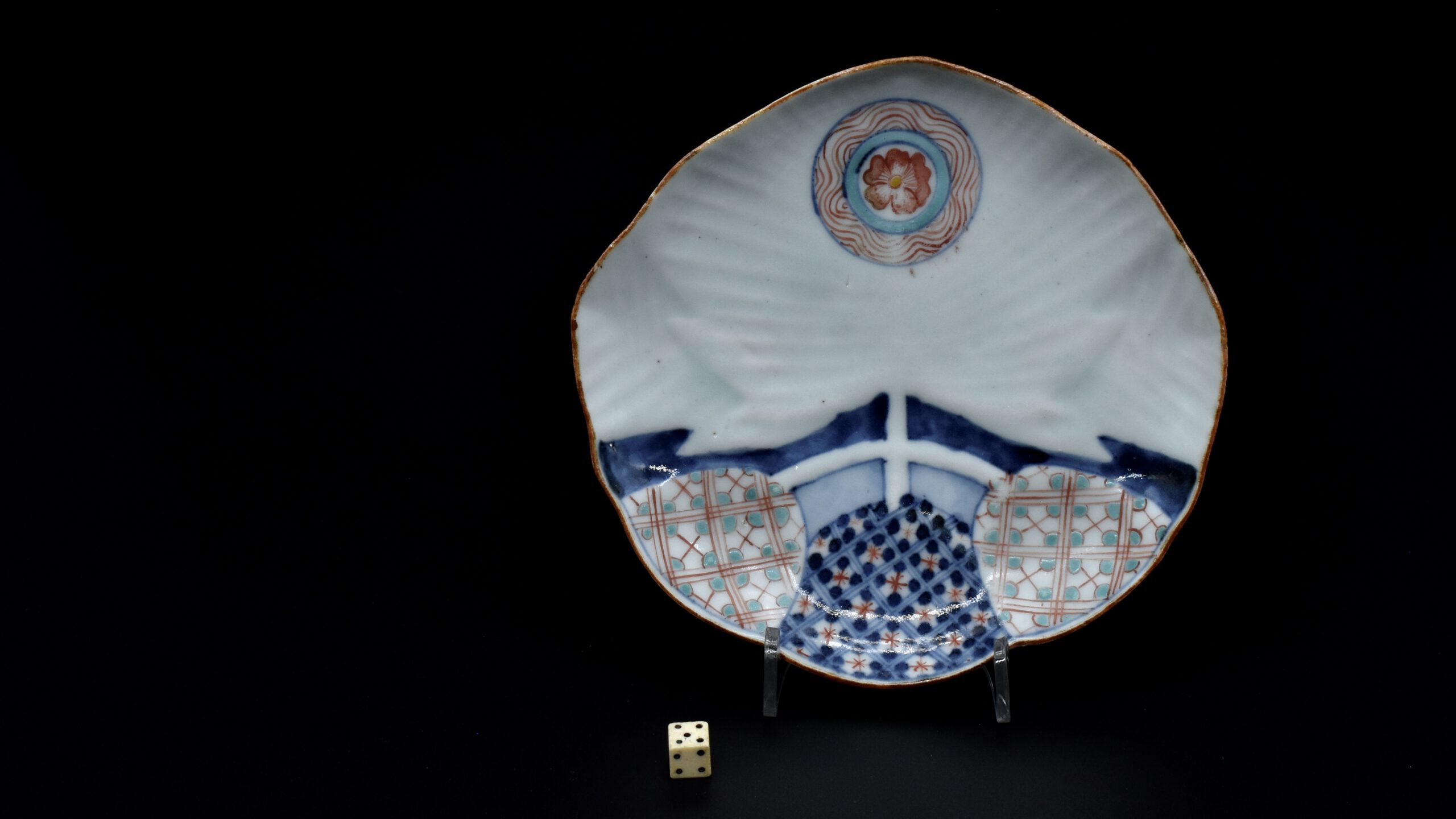
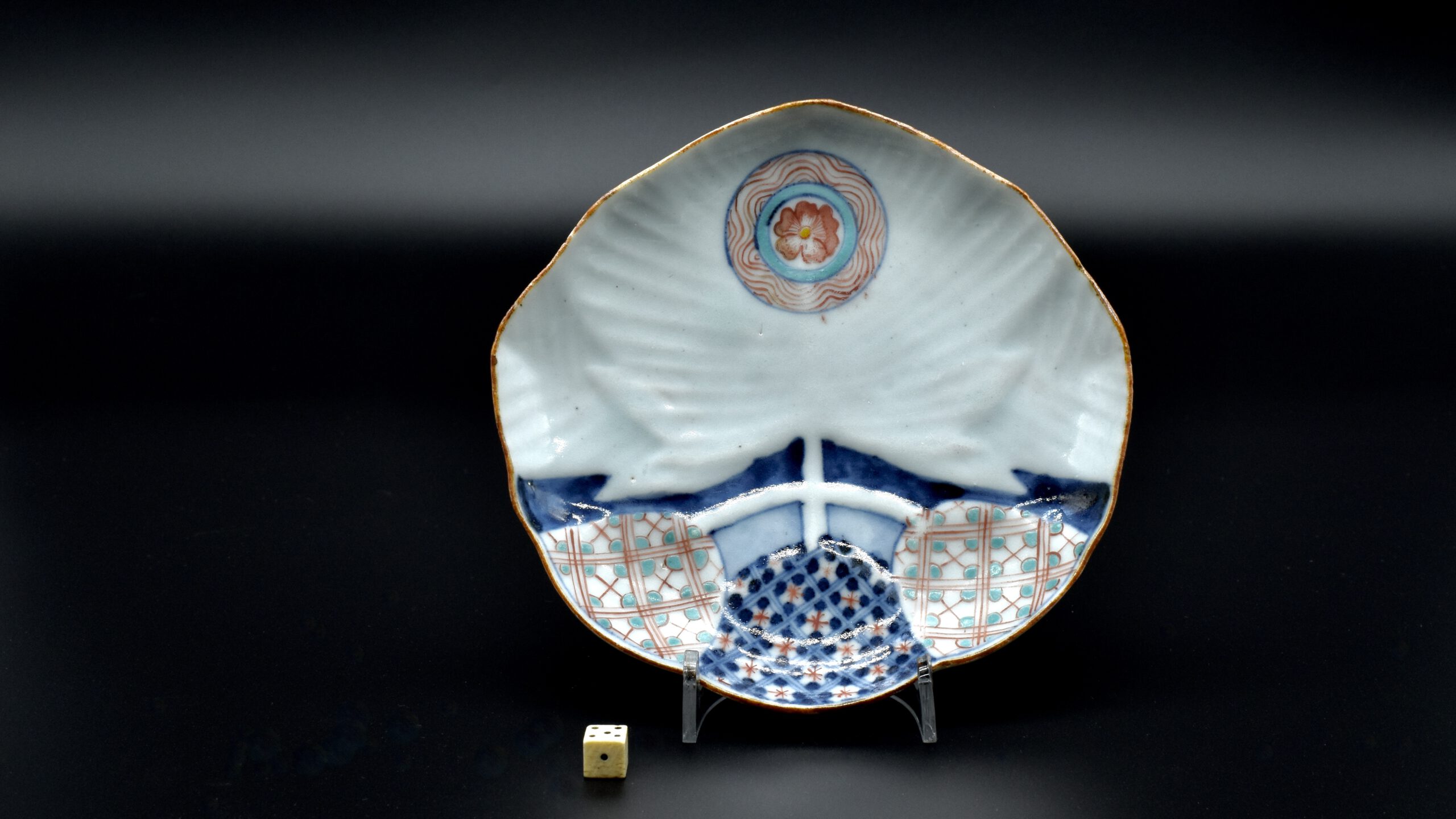
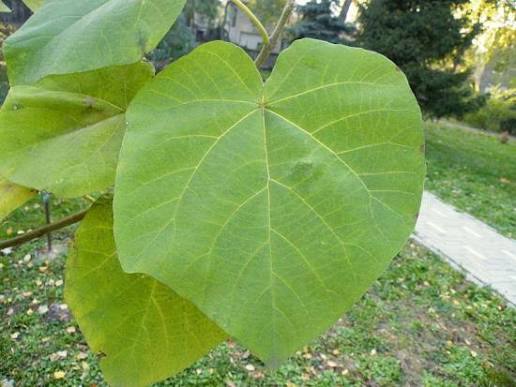
An Unusual Small Mid – 17th Century Japanese Porcelain Dish, Arita Kilns, Japan 1650s’. This thickly potted moulded dish made for the domestic market is based on overlapping Paulownia leaves and what could be a highly stylised Paulownia tree with geometric patterns. This tree, called Kiri (桐) in Japan is an important, the purple-flowered paulownia is woven deeply into Japanese governance and heraldry. The Office of the Prime Minister of Japan uses the ‘Paulownia Crest’ as its official emblem and an ancient belief holds that planting a kiri tree near the home will attract the legendary Phoenix.
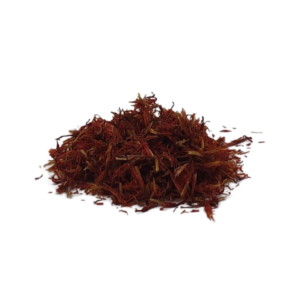
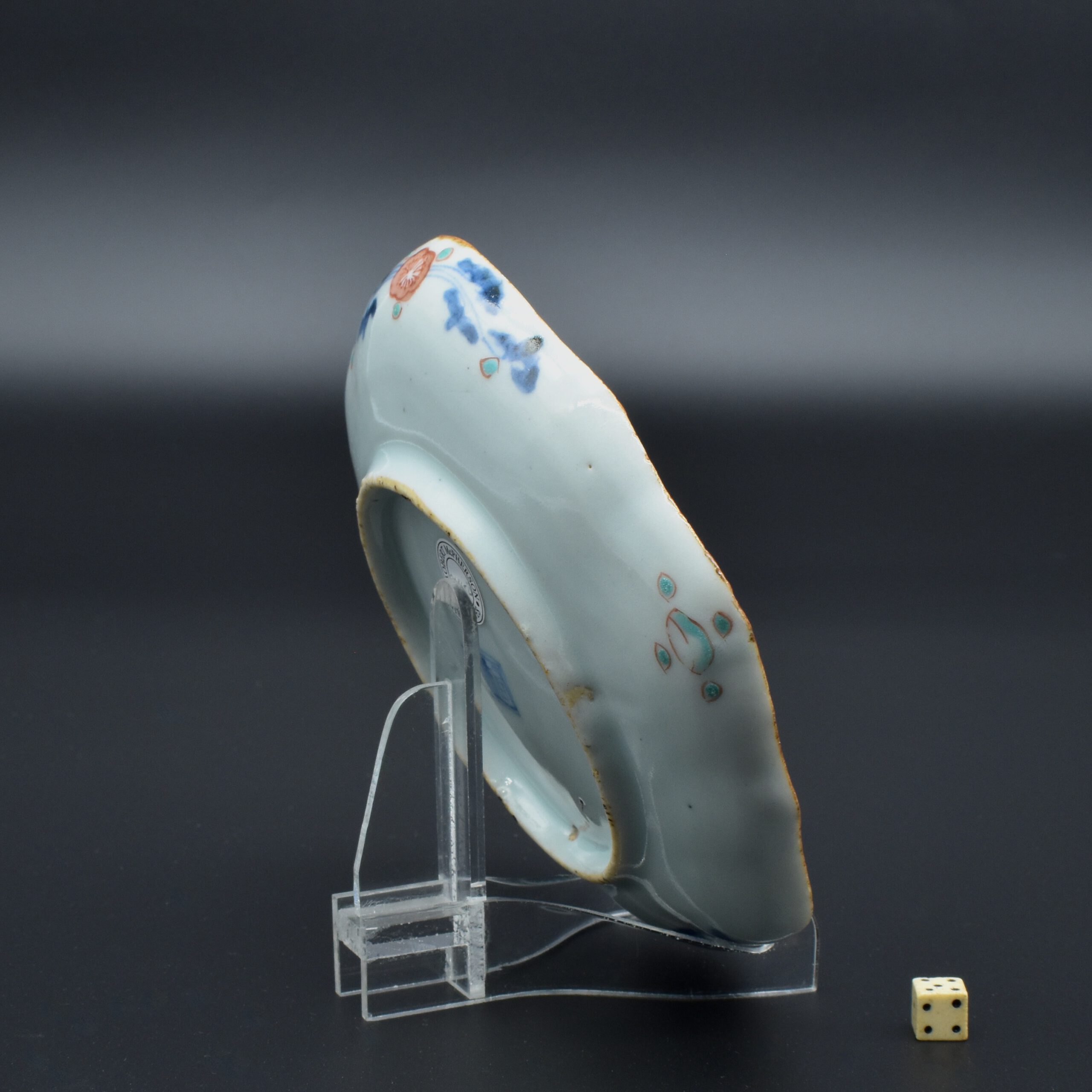
The circular design at the lower part of the dish is a Mon type emblem, but it doesn’t appear to relate to a specific Japanese clan, so it isn’t a mon. It is however deeply imbued with meaning. The open cherry blossom (sakura) symbolises rebirth, the beauty of impermanence, and springtime. The swirling ocean or river waves are known as Seigaiha, this repeating geometric pattern represents good luck, peace, continuous surges of good fortune, and a grounding connection to nature. The edge is dressed with an iron-oxide enamel, called 口紅 Fuchibeni in Japanese, meaning lipstick. It was used to frame ceramic designs, and it also adds some strength to the fragile rim, as well as showing that the rim was not chipped. The word Fuchibeni, comes from kuchi meaning mouth and beni meaning red/safflower red.
SOLD
See Below For More Photographs and Information.
- Condition
- No damage, light wear to the unpainted raised moulded decoration.
- Size
- Diameter 14.7 cm (5.8 inches).
- Provenance
- N/A
- Stock number
- 26403
- References
- For a very similar blue and white version of this dish dated to the 1650s' see : Complete Catalogue of Shibata Collection (Kyushu Ceramic Museum, 2003) page 50, plate 0339
Photos
Information
Paulownia Tree Leaves.
Fuchibeni : Glazed rims on Japanese Porcelain.