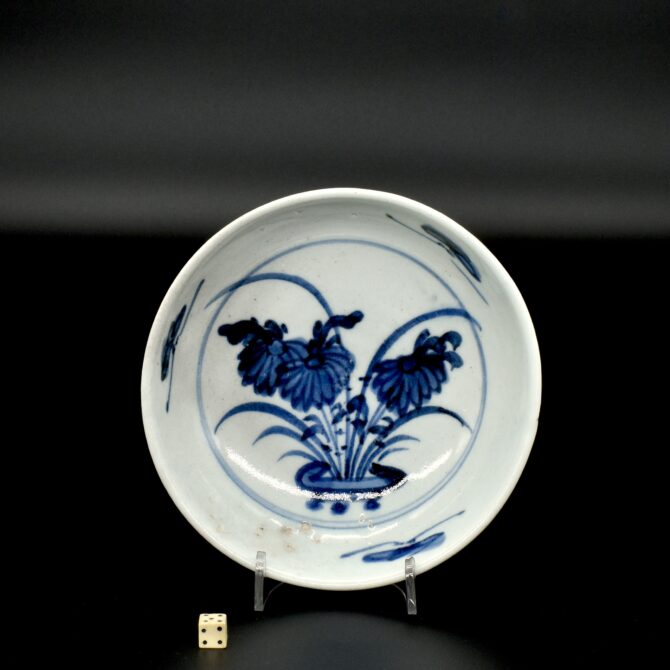
A Small Shoki-Imari Shallow Porcelain Bowl c.1630 – 1640.
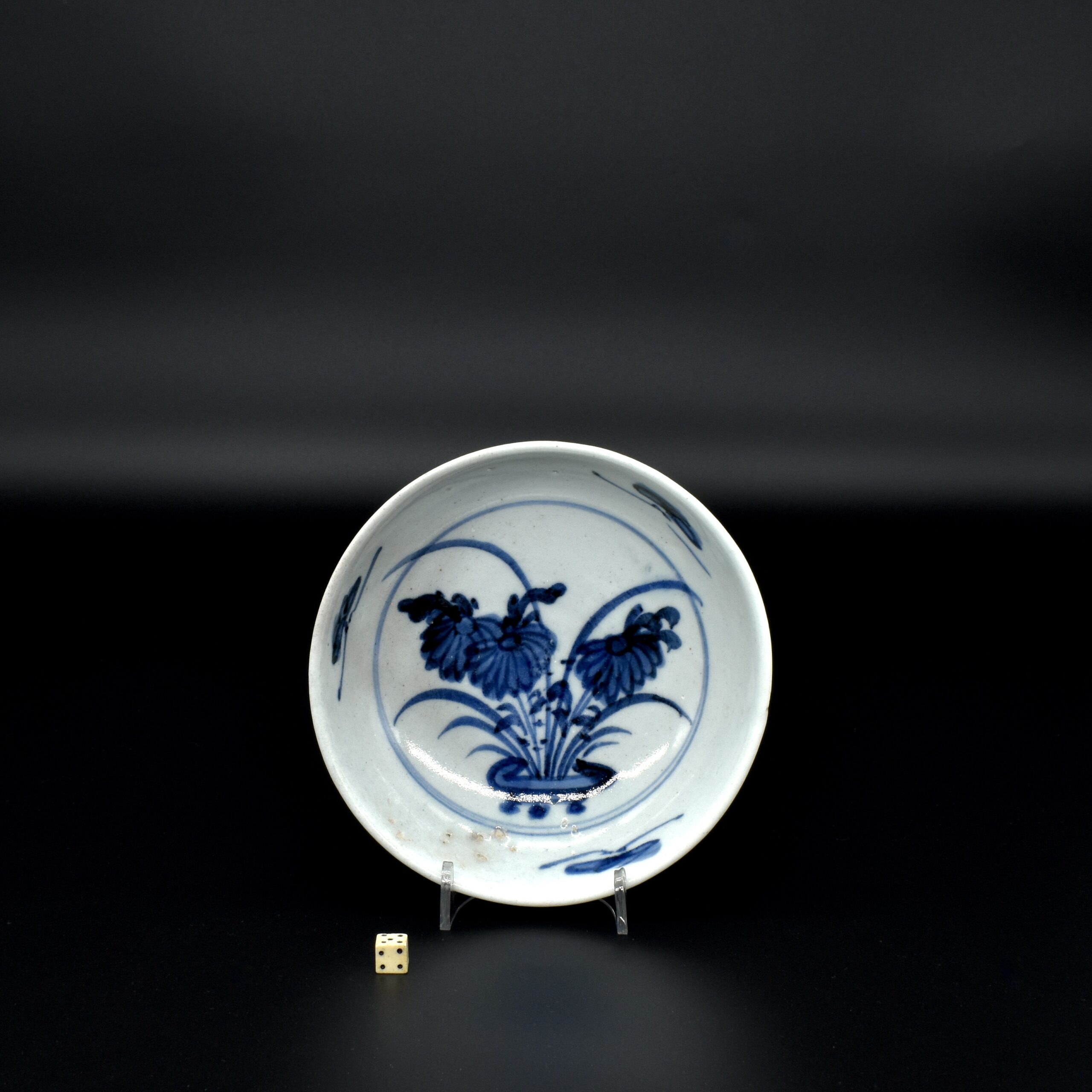
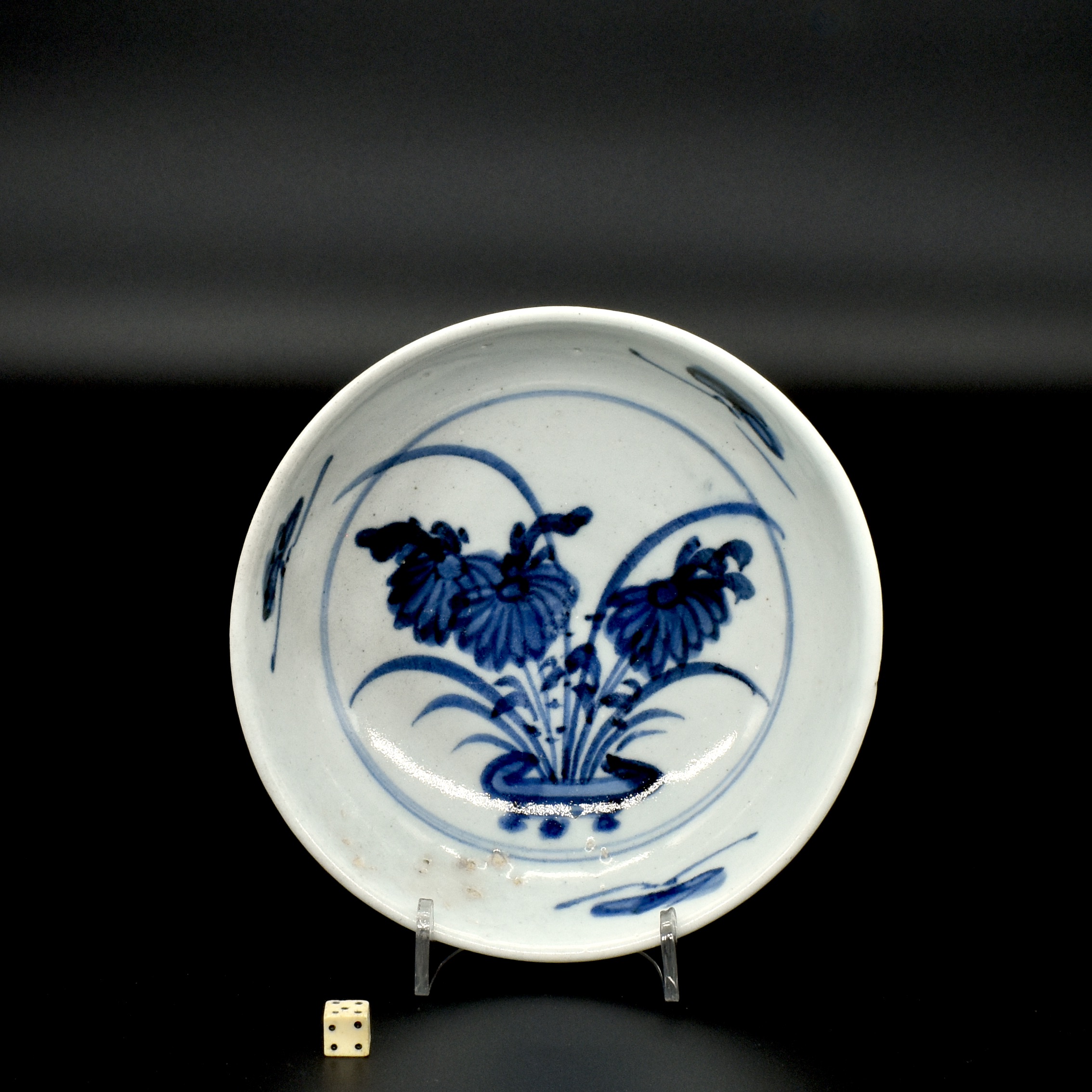
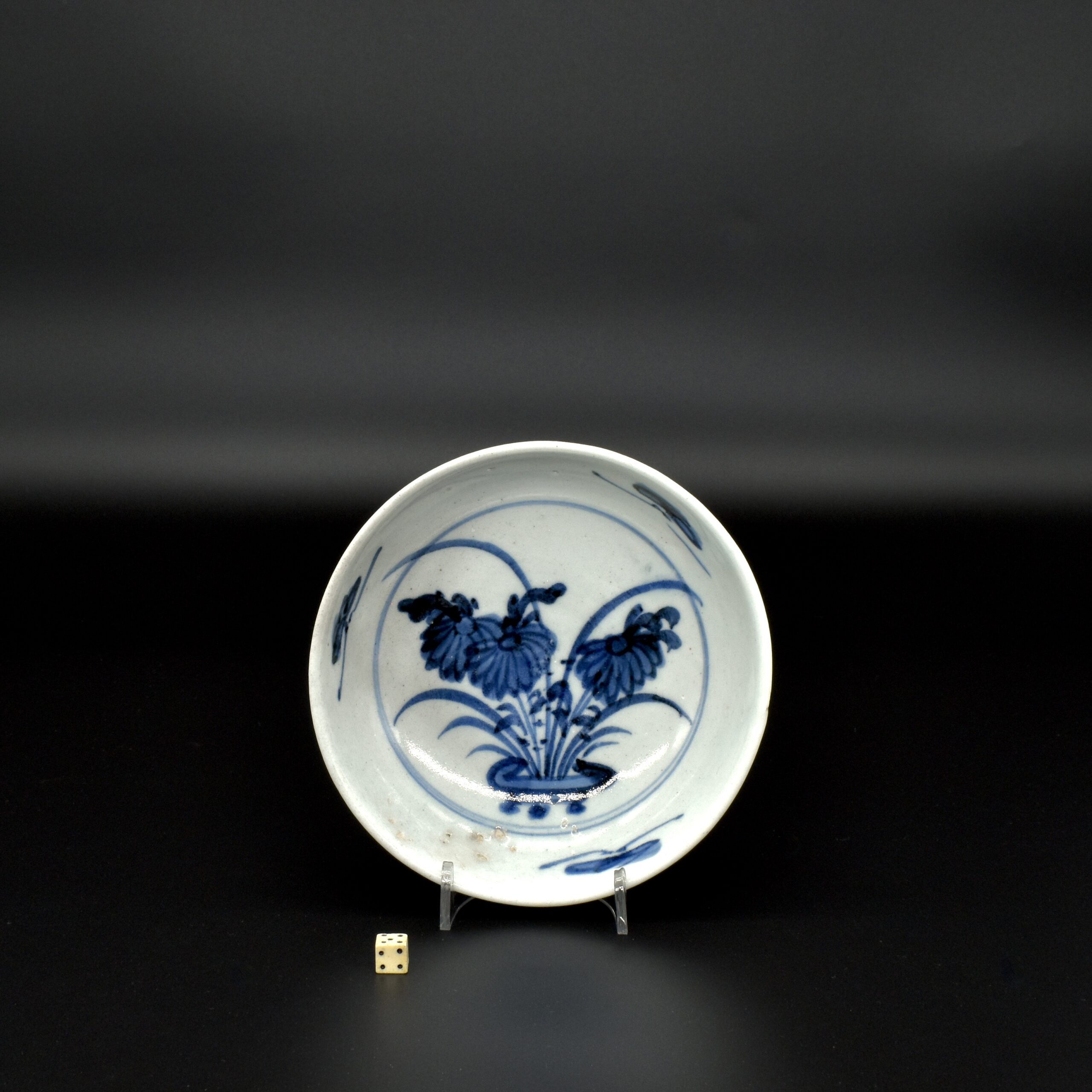
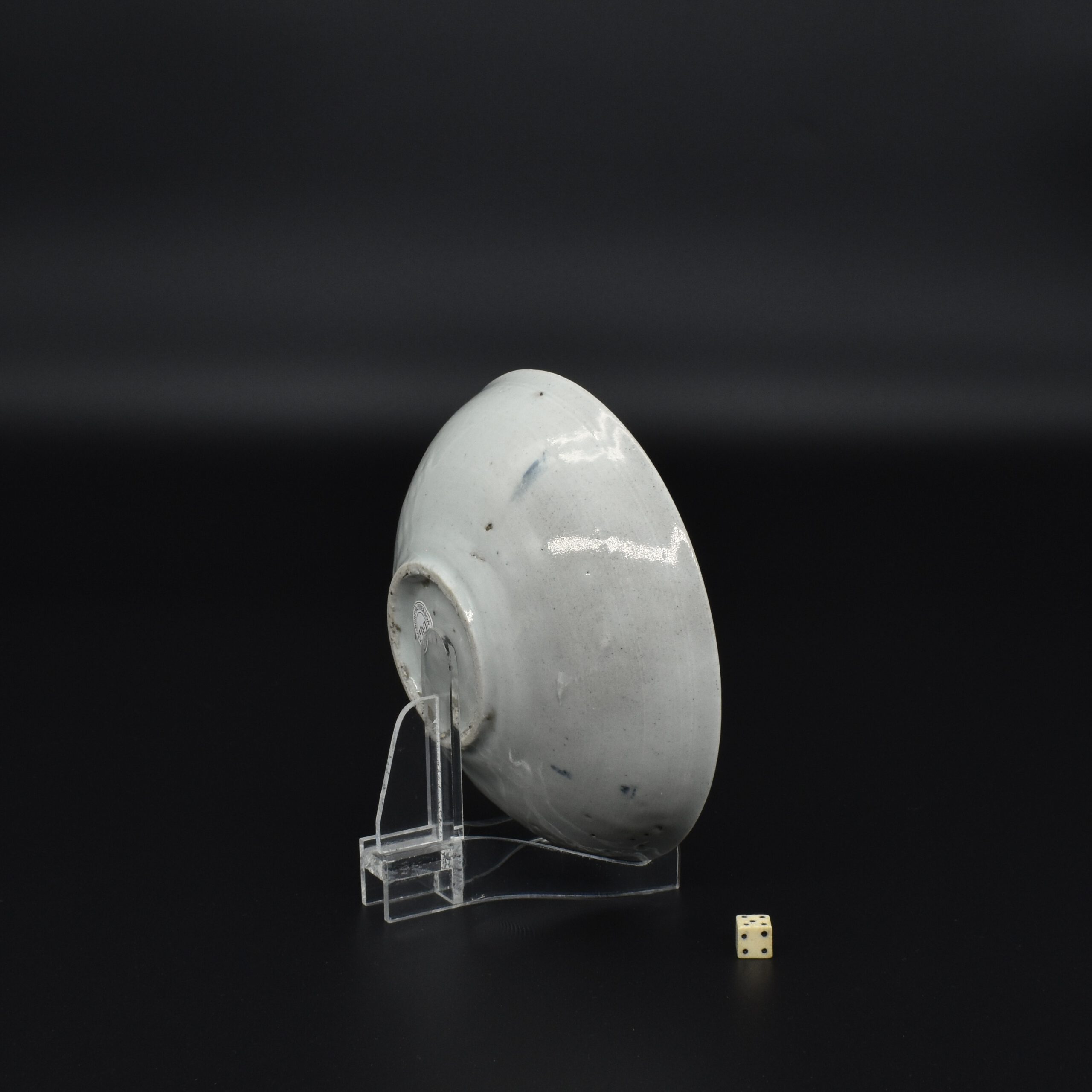
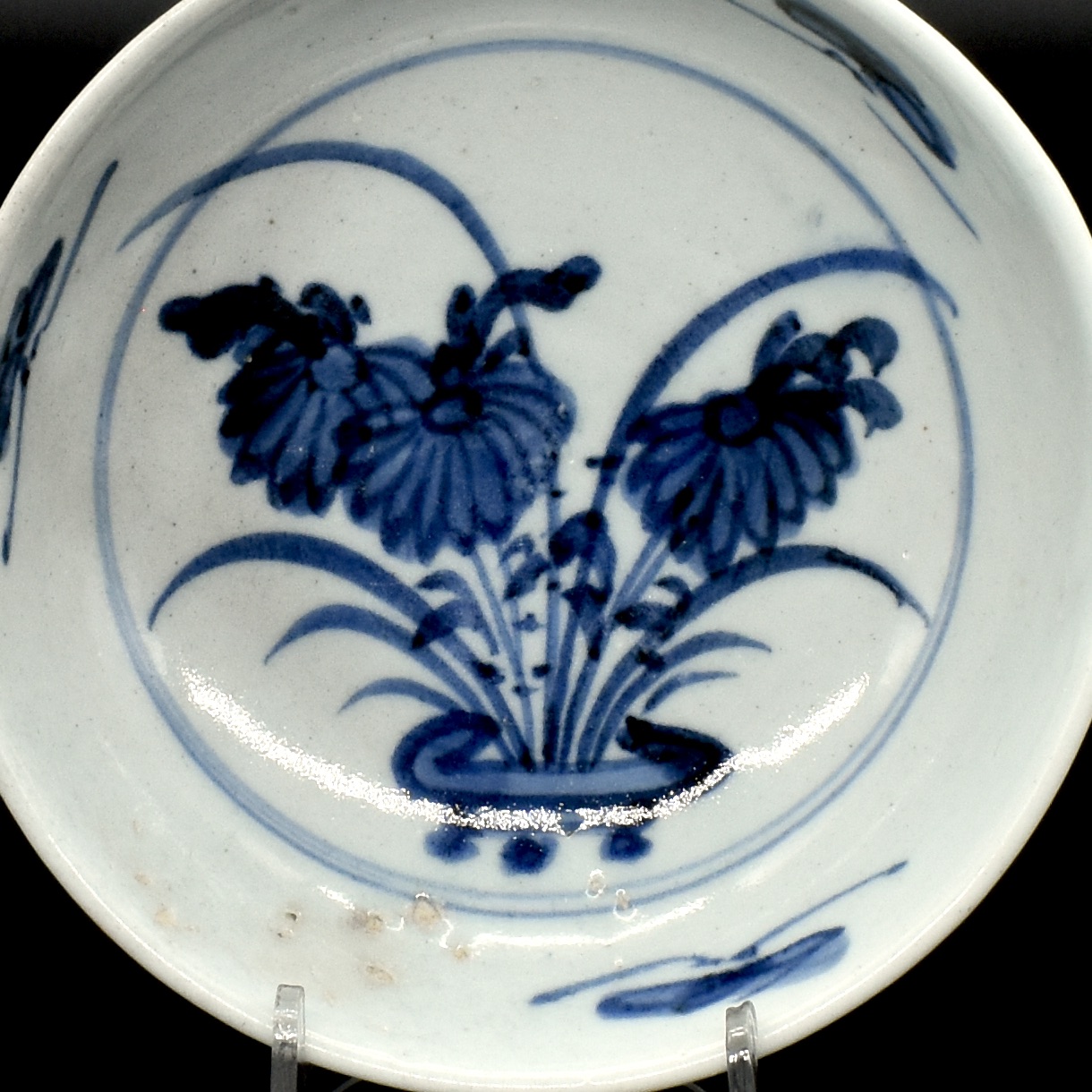
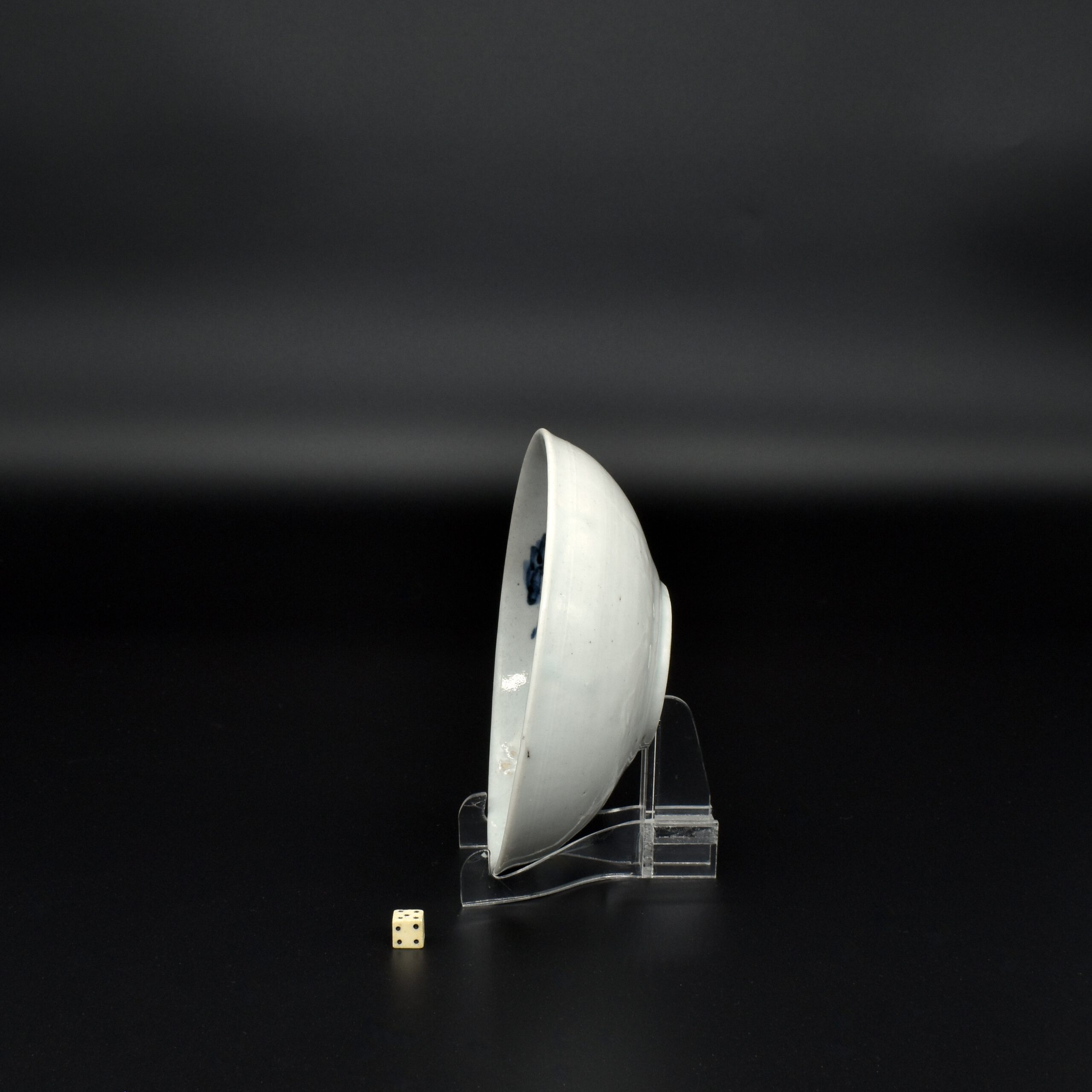
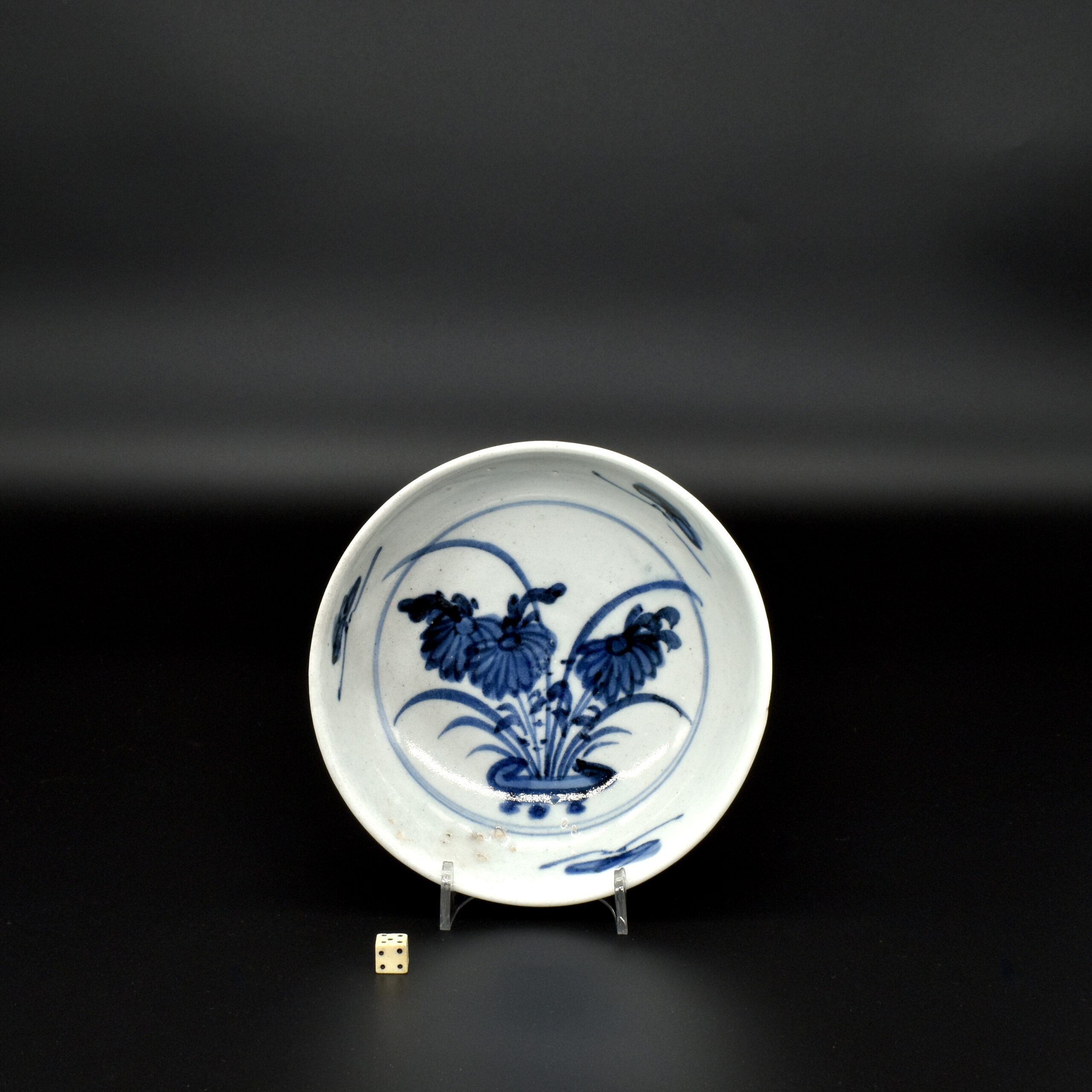
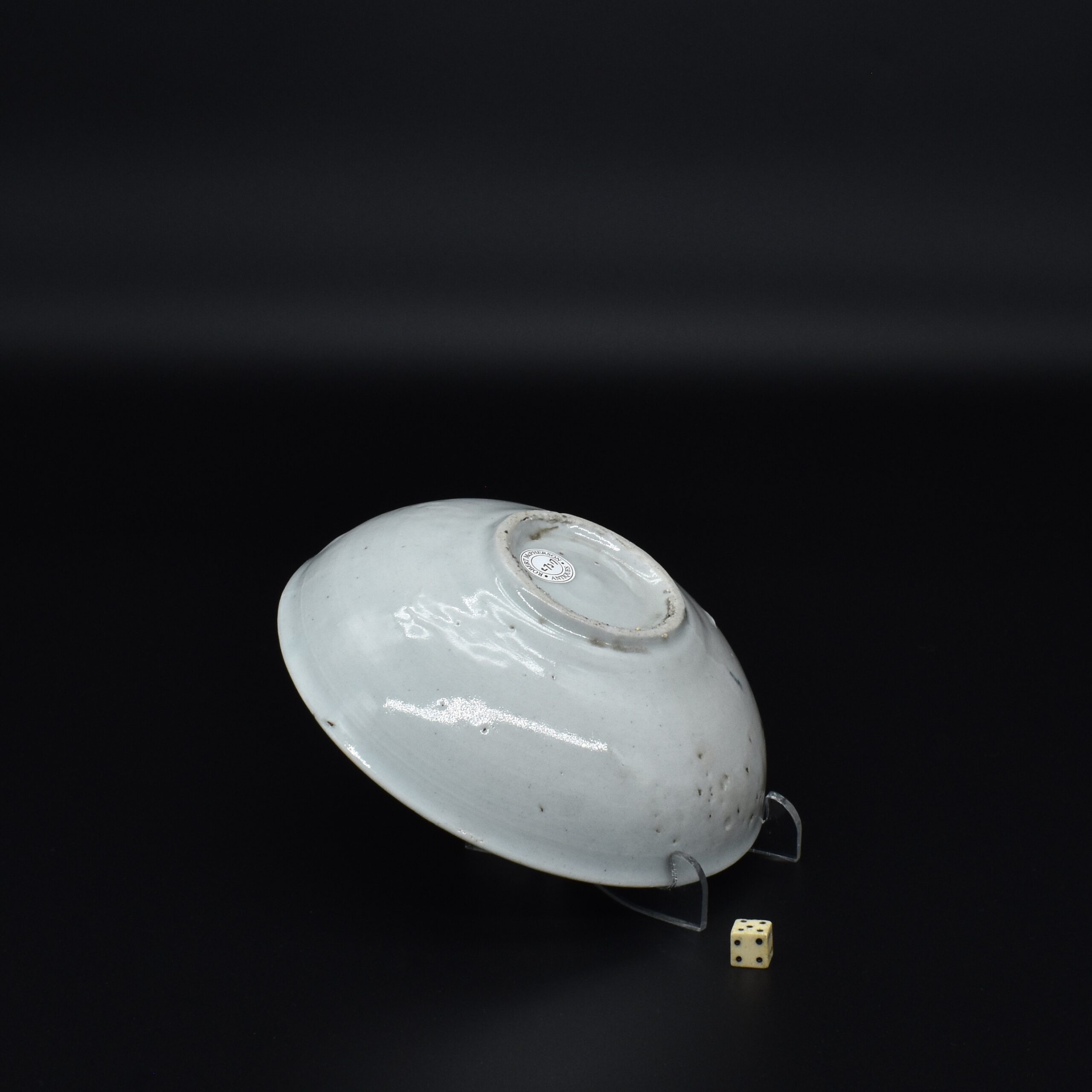
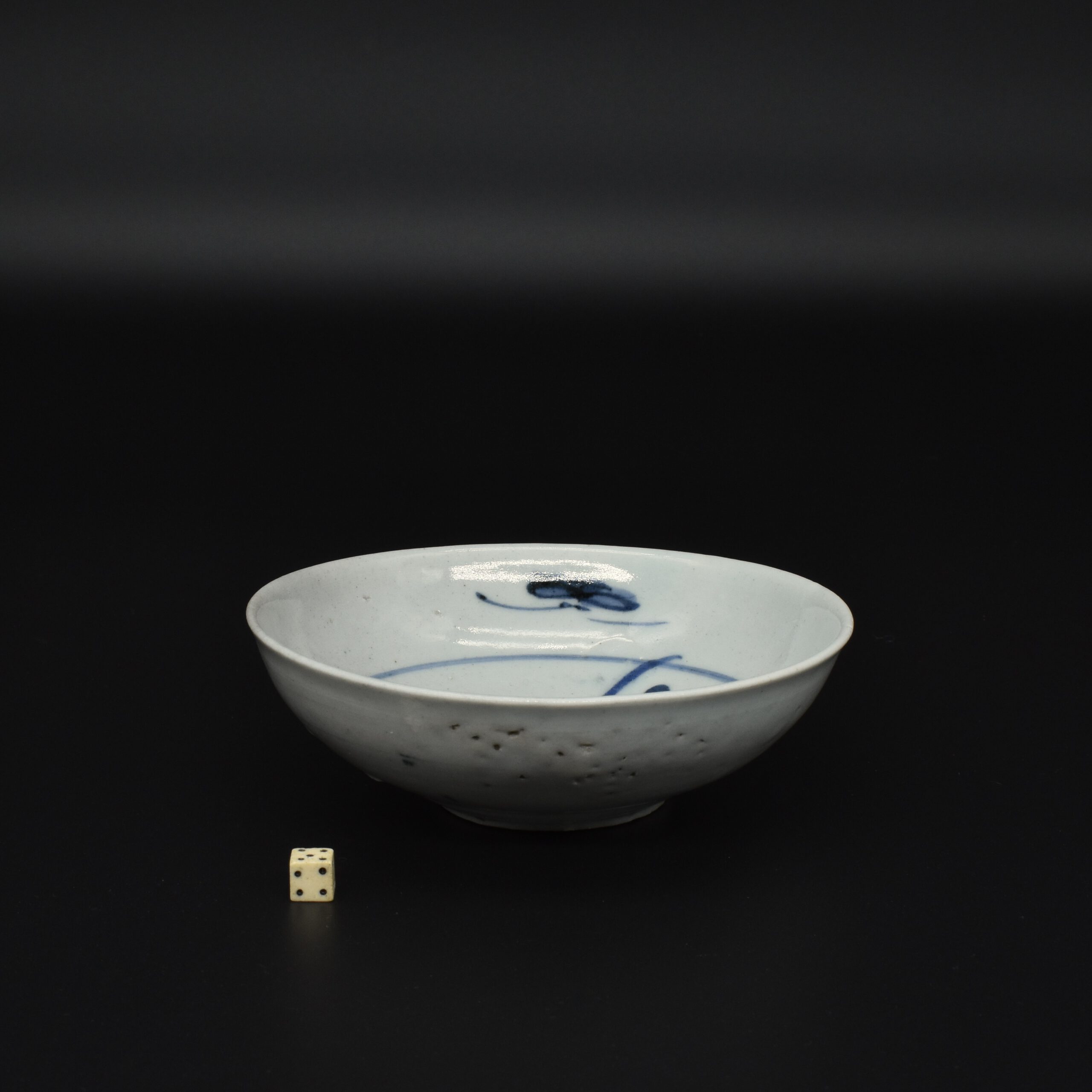
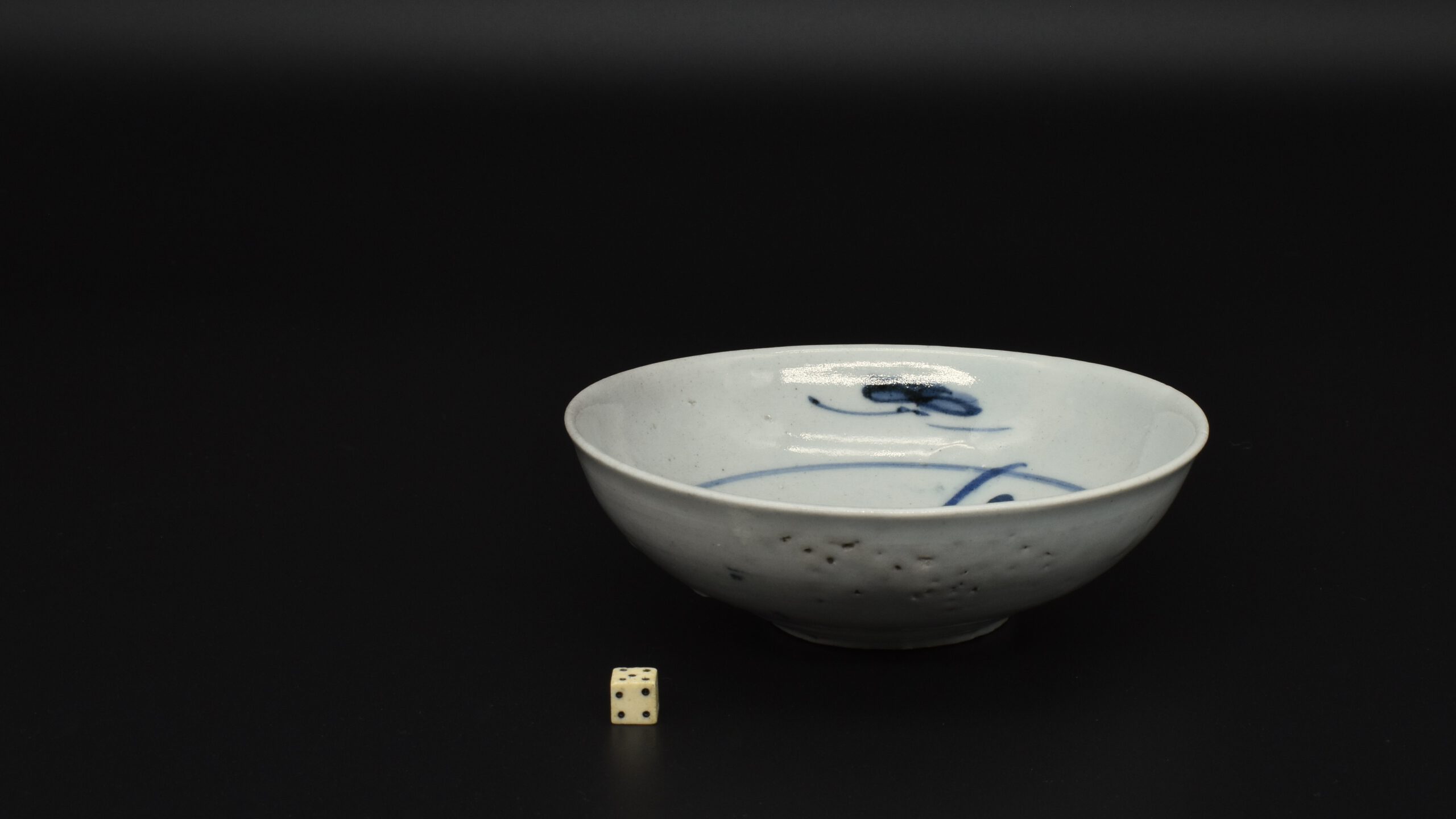
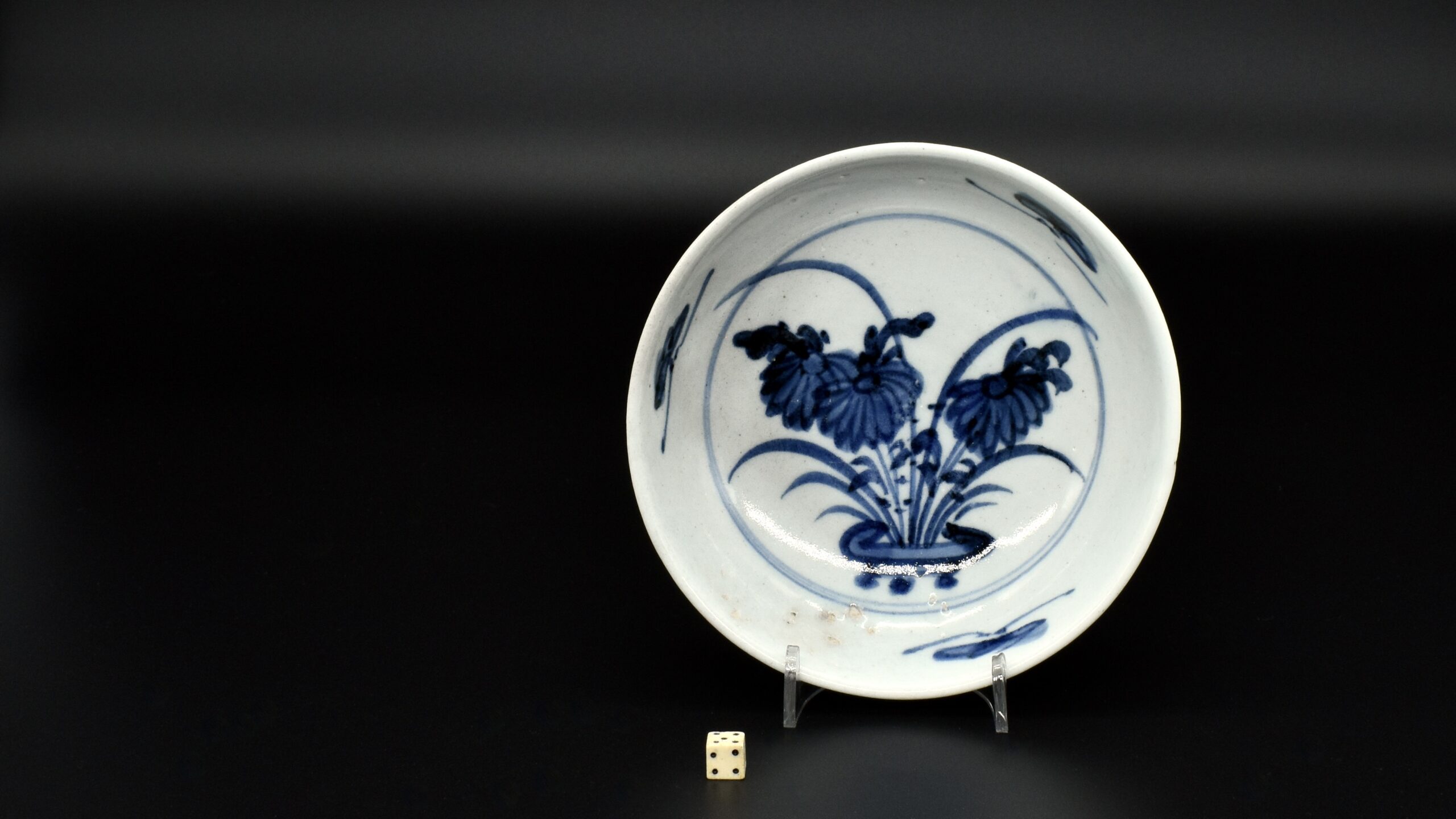
A Small Shoki-Imari Shallow Porcelain Bowl c.1630 – 1640, Arita Kilns, Hizen Province, northwestern Kyūshū, Japan. This bowl is potted with thin raised edge, the heavy weight of the base is heavy which feels nice when you hold it in your hands. The vigorous painting in a deep cobalt blue is reminiscent of late Ming Ko-sometsuke porcelain made at Jingdezhen in China for the Japanese market. The flower arrangement bursts out of the shallow container as if it’s a firework display. Three butterflies are painted to the cavetto. The reverse shows accidental paint splashes, excess clay under the glaze and burst bubbles. There is a feint smoke stain inside and out. The foot ring shows grit to the rim, indicating that this dish wasn’t made with a form of kiln support. The term Shoki-Imari is used to denote the first phase of Japanese porcelain production, from around 1610 to 1640. The imperfections are part of the aesthetic of the piece, but also an indication of this period being experimental.
See Below For More Photographs and Information.
- Condition
- In excellent condition, a few very minor glaze scratches. Firing Faults : burst bubbles in the glaze and very minor smoke discolouration to the glaze.
- Size
- Diameter 13.6 cm (5.3 inches). Depth 4.5 cm (1.8 inches).
- Provenance
- N/A
- Stock number
- 27350
- £ GBP
- € EUR
- $ USD
Photos
Information
A Late Ming Porcelain Bowl.
Later Wanli or Tianqi c.1600 – 1627, Jingdezhen Kilns.
Robert McPherson Antiques, Sold Archive 26194.
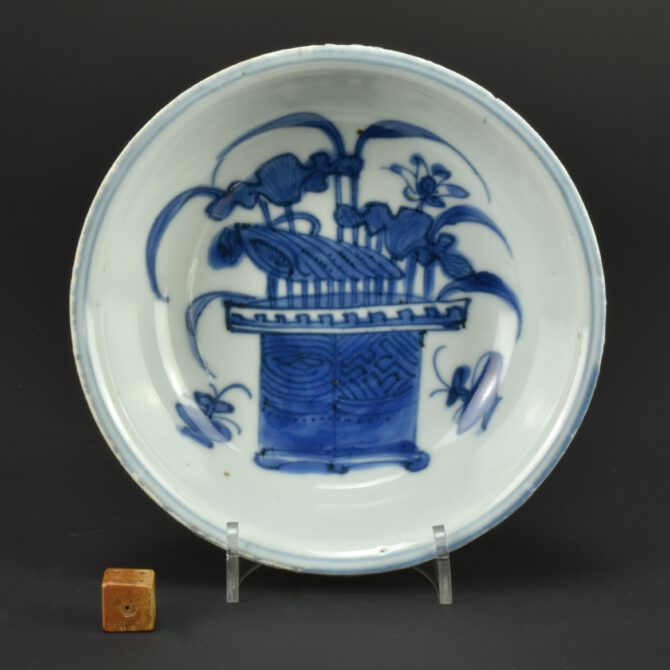
See Below For More Photographs and Information.
Condition
Mushikui (insect-nibbled) small rim chips, typical of this Ming porcelain for Japan.
Size
Diameter 14 cm (5 1/2 inches)
Stock number
26194.
A Rare Shoki-Imari Butterfly Dish, Attributed to the ‘Hyakken Group’ c.1630-1640
Robert McPherson Antiques, Sold Archive 27036.
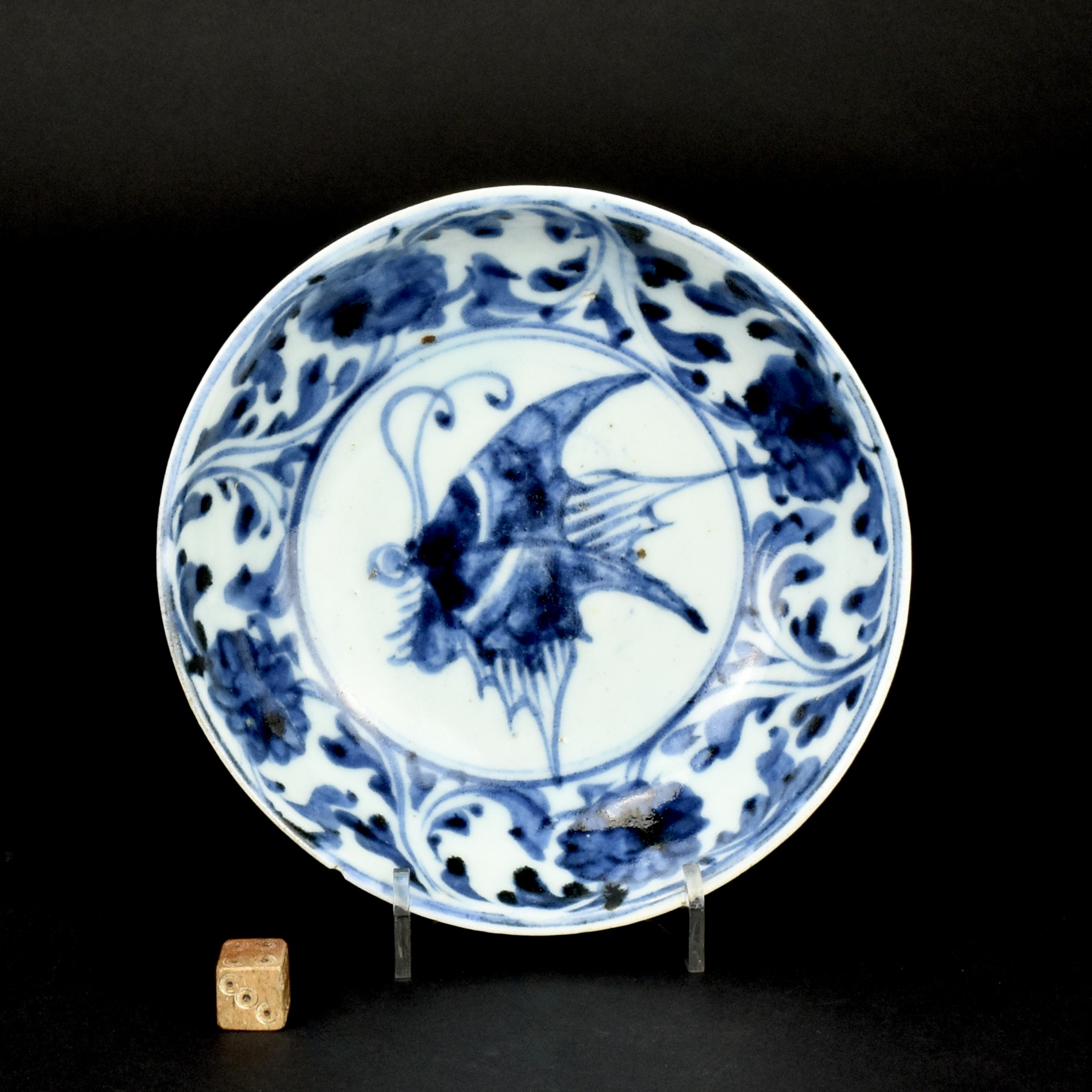
A Rare Shoki-Imari Butterfly Dish, Attributed to the ‘Hyakken Group’ c.1630-1640. This small deep dish, has a heavily potted base which gradually thins to a slightly everted rim. The well is painted with a large butterfly inflight, perhaps a swallowtail butterfly (papilio xuthus), the most common butterfly in Japan. Butterflies, Chō, is principally associated with women and regularly occur on Japanese porcelain but not normally as the central theme. The vigorously painted stylised border, is of a continuous scrolling design with flowers. This dish, and others of this early period, are often painted very freely in a style that could said to relate to painting on pottery. Indeed, many of the people who set up the porcelain industry in Japan from around 1620 were making pottery. This quality of blue is of particularly high quality for this period. There are few pieces of Shoki-imari in European collections, that is because this early Japanese porcelain was not exported to the West. It was made for the Japanese market and is still highly prized in Japan. Dr.Oliver Impey refers to a dish of this design as attributed to the ‘Hyakken Group’ in his group two 1630-1645, see The Early Kilns of Japan, Arita in the First Half of the Seventeenth Century, References above. The Hyakken porcelain kilns started production just before 1630, and continued until around 1650. Kiln wasters have been excavated, but being precise about the attribution to this kiln is often difficult, as one or two other kilns were producing similar pieces.
Condition Two small rim chips.
Size Diameter 14 cm (5 1/2 inches). Depth 4.2 cm (1 1/2 inches)
Stock number 27036.
References :
For a dish of this size and design attributed to the 'Hyakken Group', Impey's group two - 1630-1645, see : The Early Kilns of Japan, Arita in the First Half of the Seventeenth Century (Oliver Impey, Clarendon University Press Oxford 1996. ISBN 0-19-826370-8) plate 20a. Another dish of this design, with the butterfly dark throughout, see : The Azabu Museum of Arts and Crafts, catalogue of 1996, page 87, plate 97 (in Japanese). A set of five of these dishes dated to 1630-1640 are illustrated in : The Kushu Ceramic Museum Collection (The Kyushu Ceramic Museum, Japan March 31st 1987) page 20, plate 15. The title of the book refers to Kushu, when I think they mean Kyushu).