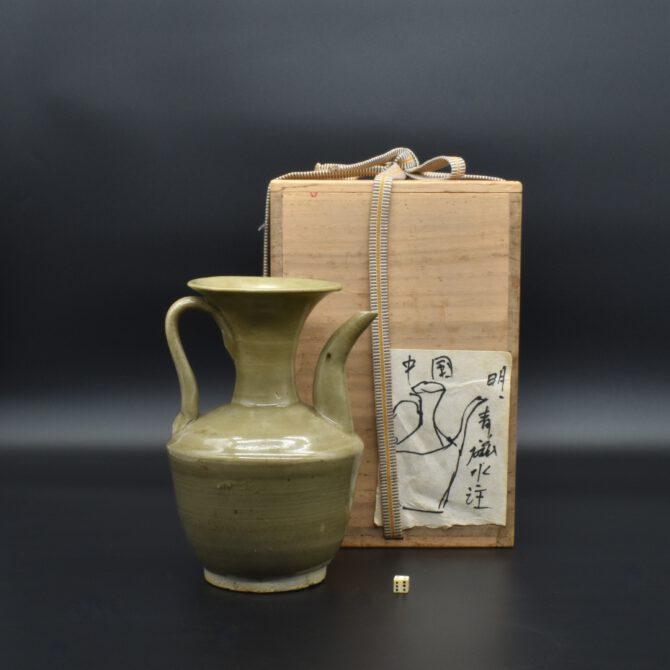
A Song Dynasty Celadon Ewer from Fujian Province.
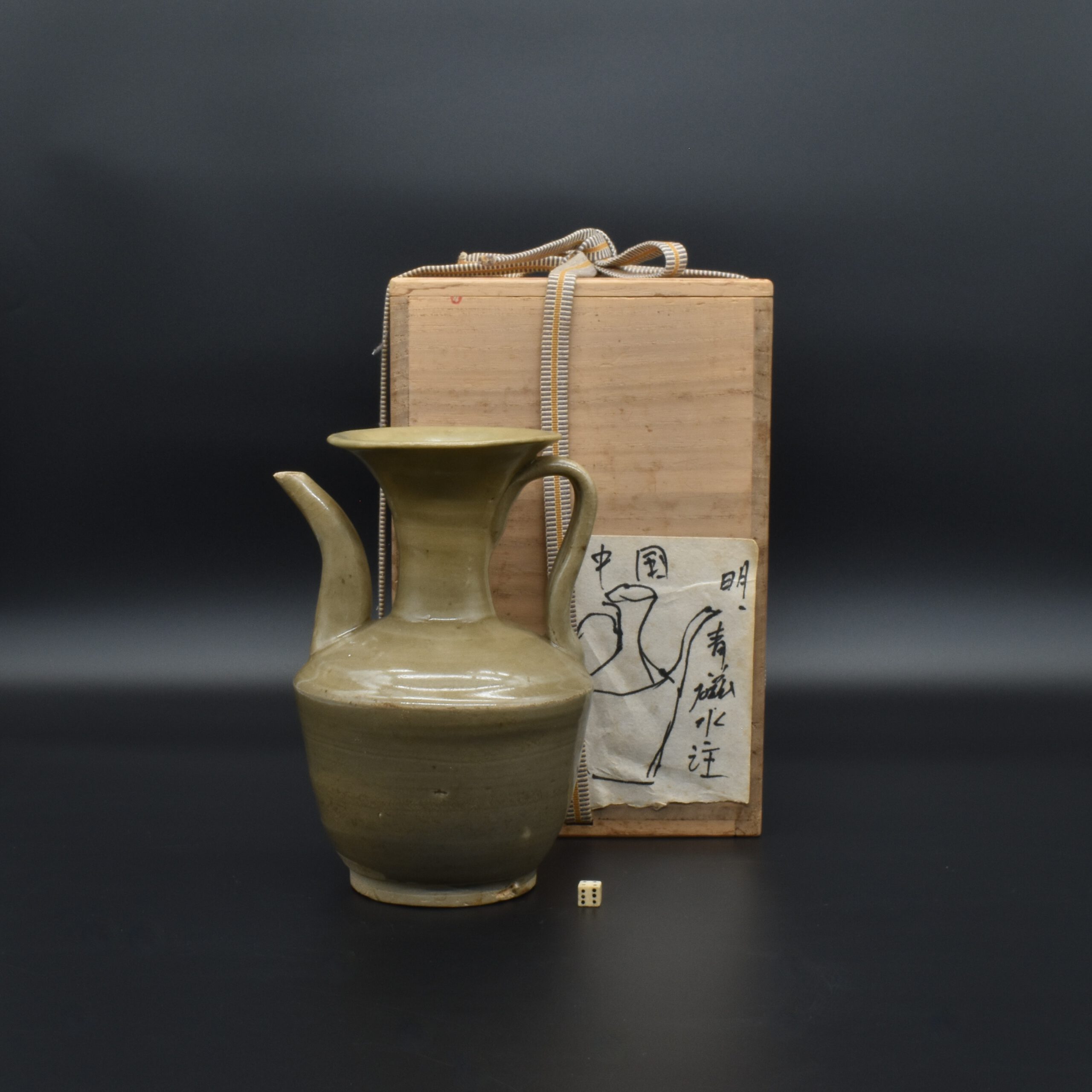
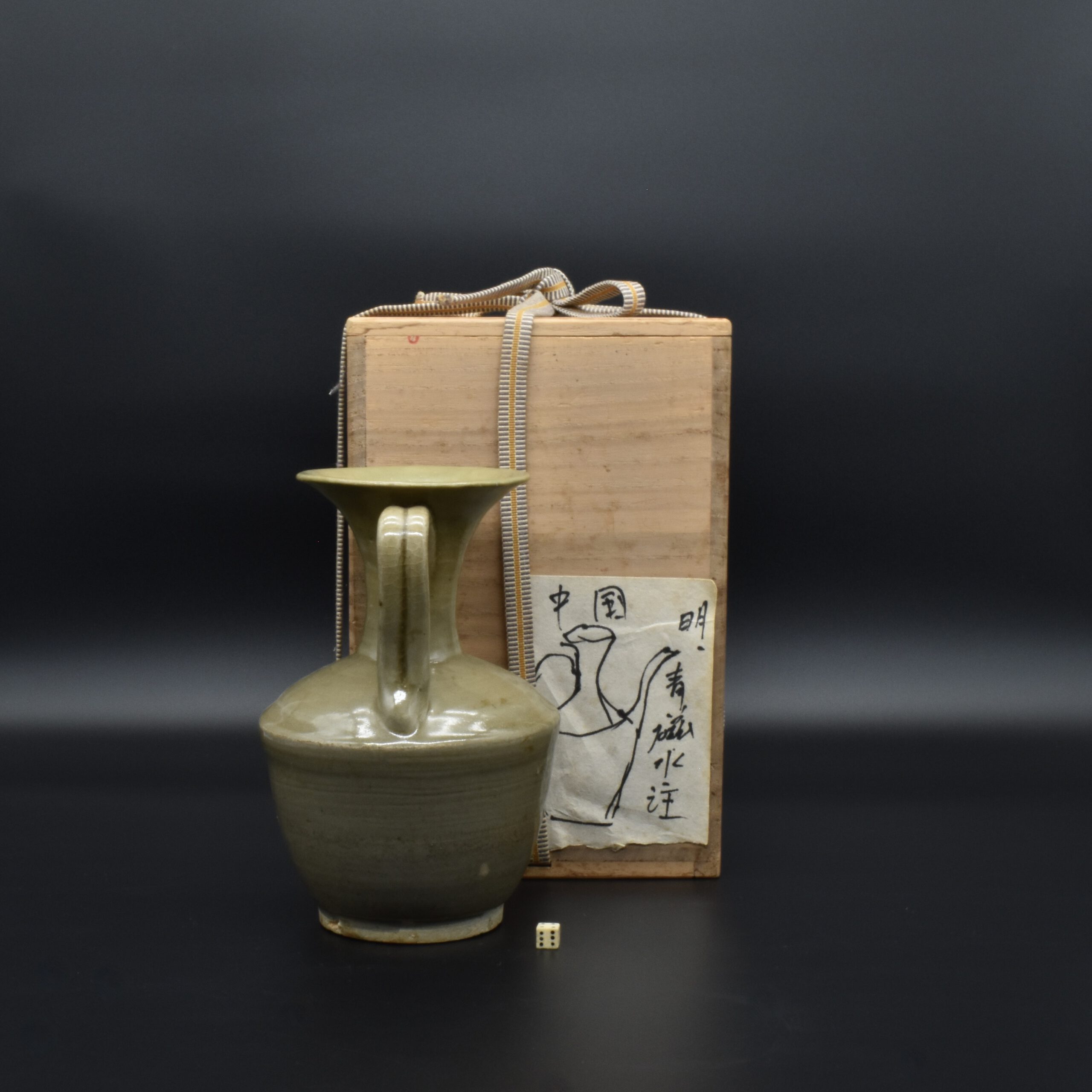
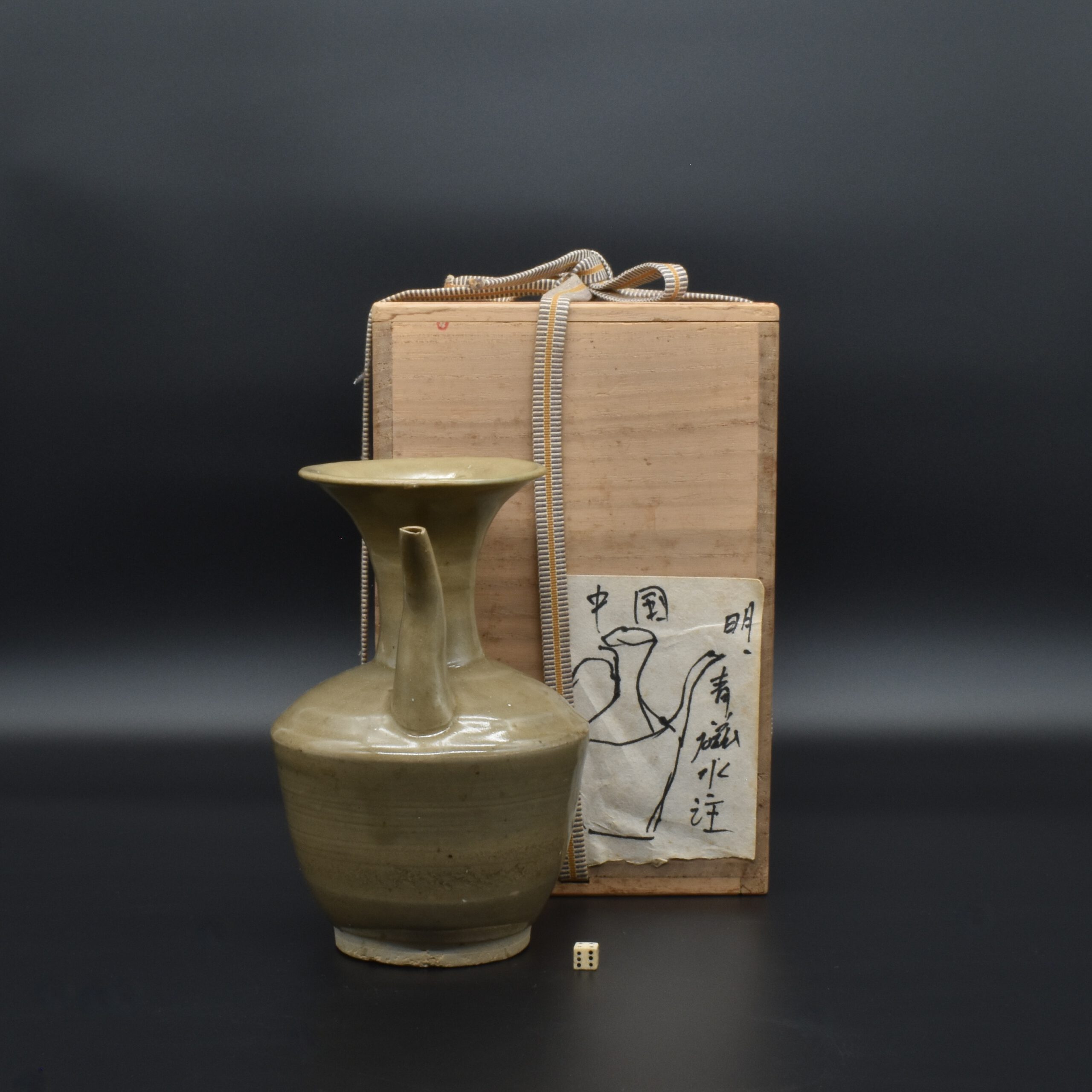
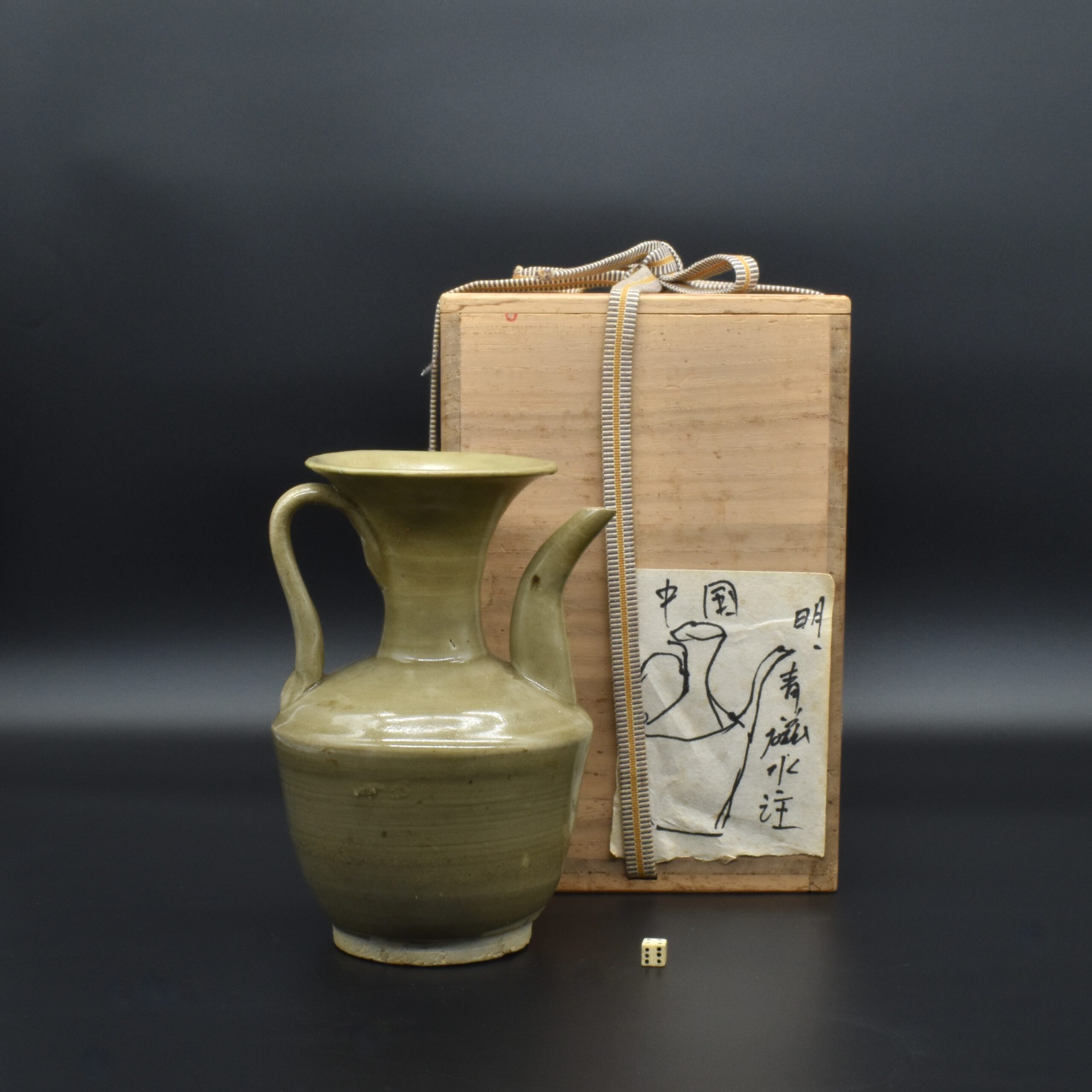
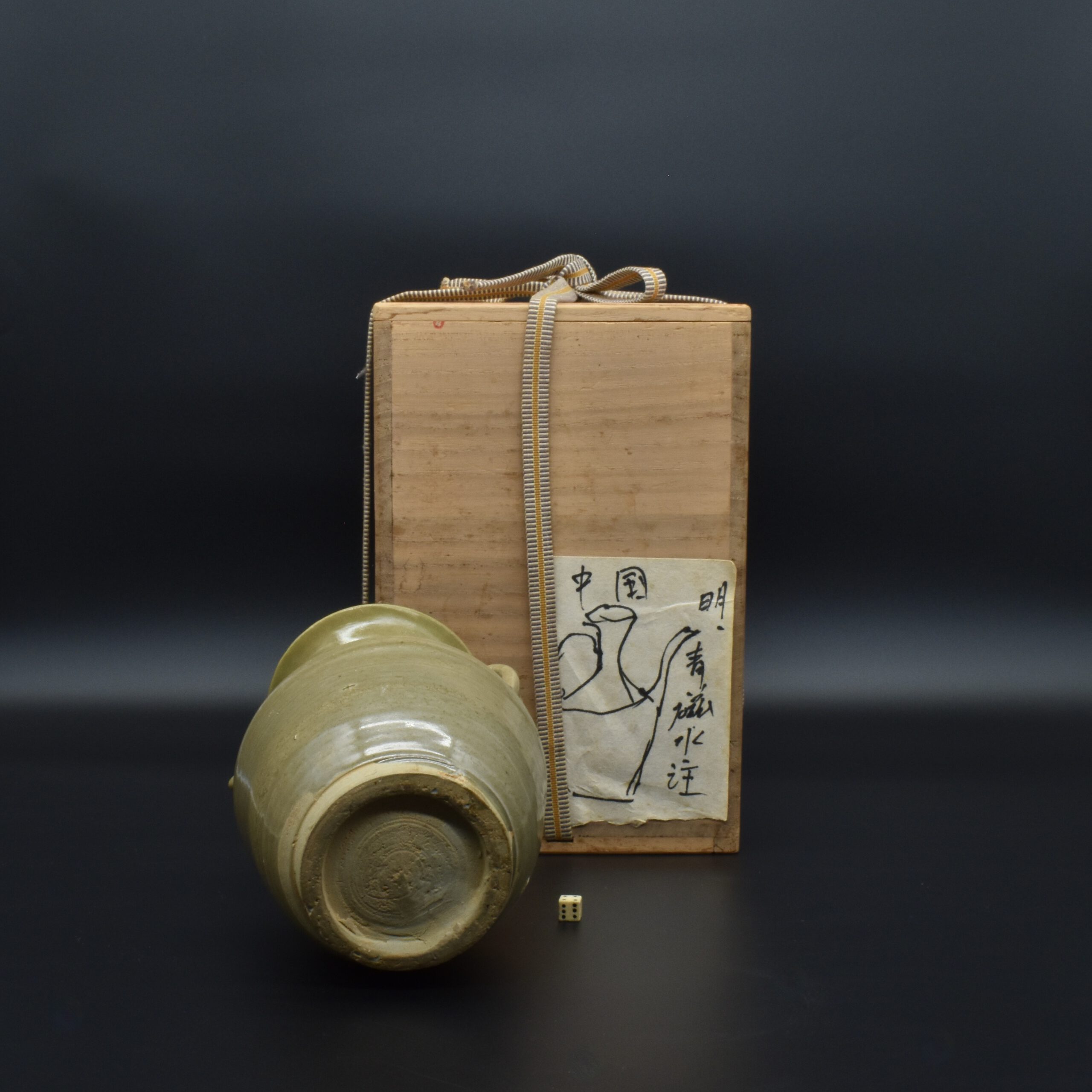
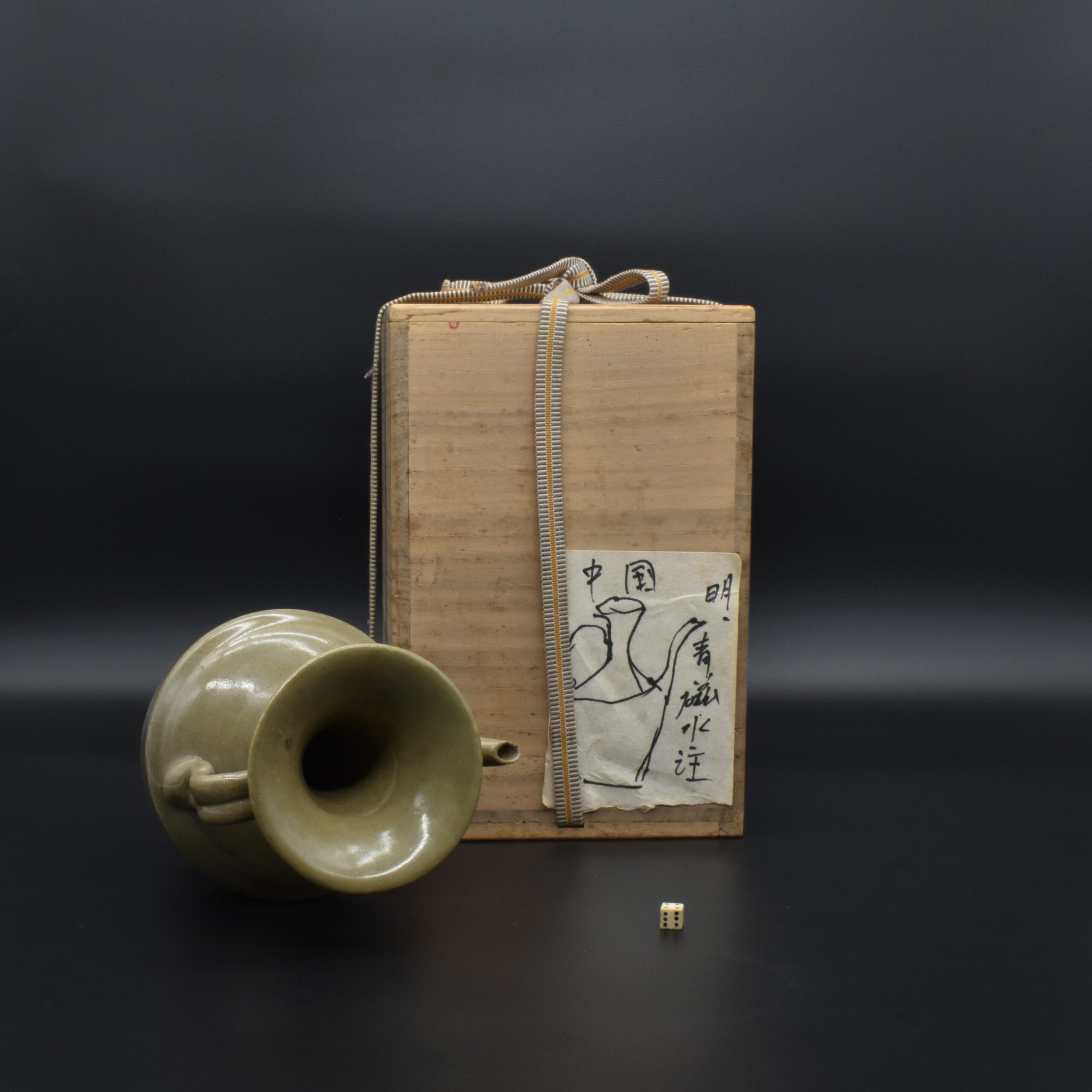
A Song Qingbai wine ewer, 12th to mid-13th century, probably from a kiln in Fujian province. This Song celadon ewer was made in Fujian, it is typical of the period, it is based on a contemporary metal form . This thickly potted Song dynasty porcelain ewer would originally have had a warming bowl with it, these were close fitting, and would have enabled warm water to keep the wine at the right temperature. For a Qingbai porcelain version of this form see below. This Song porcelain ewer comes with it’s Tomobako box, there is an inscribed paper label together with a sketch of the ewer.
Chinese Celadon Ware : Celadon is a term used to describe several types of Chinese stoneware and porcelain, as well a ceramics from other countries, notably from Korea and Japan. The term is a imprecise one, applying to various types of green glazed ceramics, but not all ceramics with green glazes, there are several wares that have a green glaze that are not refereed to as celadon. For example Green Jun and Ge Ware. For this reason there has been a move to try to clarify the situation by using the term ‘Green Ware’. But for now Celadon is a more familiar and therefore useful term. The origins of the term Celadon are not clear, one theory is that the term first appeared in France in the 17th century and that it is named after the shepherd Celadon in Honoré d’Urfé’s French pastoral romance, L’Astrée (1627), who wore pale green ribbons. (D’Urfe, in turn, borrowed his character from Ovid’s Metamorphoses.) Another theory is that the term is a corruption of the name of Saladin, the Ayyubid Sultan, who in 1171 sent forty pieces of the ceramic to Nur ad-Din, Sultan of Syria. Yet a third theory is that the word derives from the Sanskrit sila and dhara, which mean “stone” and “green” respectively.
Celadon ware originated in Zhejiang Province in the Eastern Han Dynasty, however green monochrome glazes can be found on stoneware much before that date. Zhejiang is were the famous Longquan Celadons were made but Celadon wares were also produced at Jiangsu, Hubei, Hunan and Jiangxi. The production of Celadon Ware required a reducing atmosphere of around 1300 degrees C., the colouring agent was a mixture of iron oxide and titanium. The glaze was applied very thickly, and was full of tiny bubbles which defuse the light giving the appearance of richness and softness.
SOLD
See Below For More Photographs and Information
- Condition
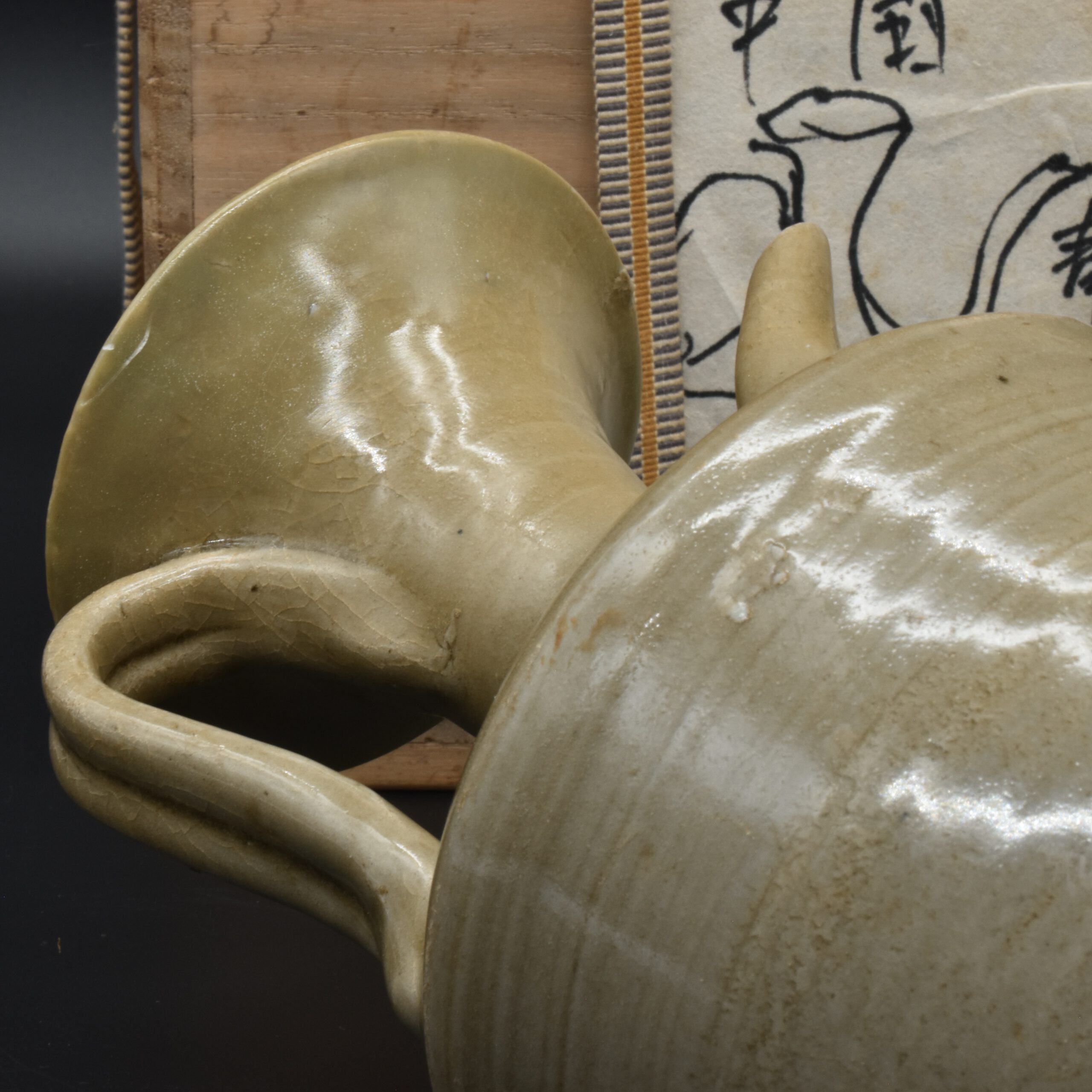
- There is a large amount of over-spraying of repairs to the flared rim. When tapped it sounds like ceramic but its possible that 20% has been repaired. The restoration is well done but it is difficult to tell what is happening under the sprayed colour added and blended into the rim. The repair has got a scratch to the surface.
- Size
- Height 19.1 cm (7 1/2 inches).
- Provenance
- N/A
- Stock number
- 26475
- References
- See information below the 'Photograph Gallery'.
Photos
Information
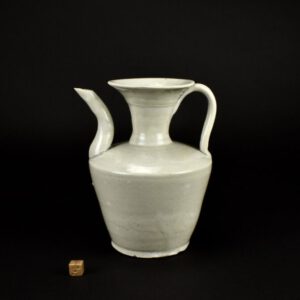
A Closely Related Song Qingbai Ewer.
Robert McPherson Antiques, Sold Archive Number 24938.
See Below For More Photographs and References.
SOLD
Condition
Good, a shallow glaze chip to the end of the spout and three chips to outer edge of the base .
Size
Height : 17.8cm (7 1/2 inches).
Provenance
A Private Collection of Early Chinese Ceramics in London.
Stock number
24938
Chinese Celadon Ware
Celadon is a term used to describe several types of Chinese stoneware and porcelain, as well a ceramics from other countries, notably from Korea and Japan. The term is a imprecise one, applying to various types of green glazed ceramics, but not all ceramics with green glazes, there are several wares that have a green glaze that are not refereed to as celadon. For example Green Jun and Ge Ware. For this reason there has been a move to try to clarify the situation by using the term ‘Green Ware’. But for now Celadon is a more familiar and therefore useful term. The origins of the term Celadon are not clear, one theory is that the term first appeared in France in the 17th century and that it is named after the shepherd Celadon in Honoré d’Urfé’s French pastoral romance, L’Astrée (1627), who wore pale green ribbons. (D’Urfe, in turn, borrowed his character from Ovid’s Metamorphoses.) Another theory is that the term is a corruption of the name of Saladin, the Ayyubid Sultan, who in 1171 sent forty pieces of the ceramic to Nur ad-Din, Sultan of Syria. Yet a third theory is that the word derives from the Sanskrit sila and dhara, which mean “stone” and “green” respectively.
Celadon ware originated in Zhejiang Province in the Eastern Han Dynasty, however green monochrome glazes can be found on stoneware much before that date. Zhejiang is were the famous Longquan Celadons were made but Celadon wares were also produced at Jiangsu, Hubei, Hunan and Jiangxi. The production of Celadon Ware required a reducing atmosphere of around 1300 degrees C., the colouring agent was a mixture of iron oxide and titanium. The glaze was applied very thickly, and was full of tiny bubbles which defuse the light giving the appearance of richness and softness.
The Jepara Shipwreck
The Jepara Wreck contained numerous coins, the latest was struck during the reign of Jian Yian datatable to no later than A.D 1130. Chinese coins were in circulation for many years and looking at the ceramics they certainly appear to be later. We had a large group of pieces from this wreck which we incorrectly dated to the Yuan Dynasty (1279-1368) but I now feel the recovered ceramics date from the mid to late 12th century. However it might turn out that these pieces date from nearer 1130 than I now think. The ceramics recovered were rather basic, utilitarian pieces but not without a certain rustic charm. Most of the ceramics were either celadon wares of Tongan and Minnan, and Qingbai ware both of which appear to originate from Fujian Kilns. Celadon fragments found at the Putian and Lianjiang Pukou kiln match celadon bowls from the Jepara wreck. http://www.koh-antique.com/fujianceramics/fceramicsmain.html
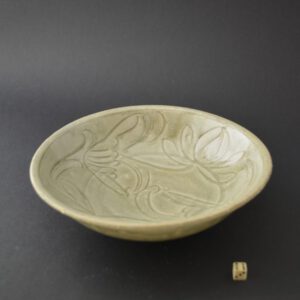
An Example of Song Fujian Celadon
Robert McPherson Antiques, Sold Archive Number 24889.
SOLD
Condition
In excellent condition with almost no sign of being from a shipwreck. The glaze is exceptionally bright and shows no signs of being in a shipwreck. The glaze along the edge is slightly fritted.
Size
Diameter : 19 cm. (7 1/2 inches).
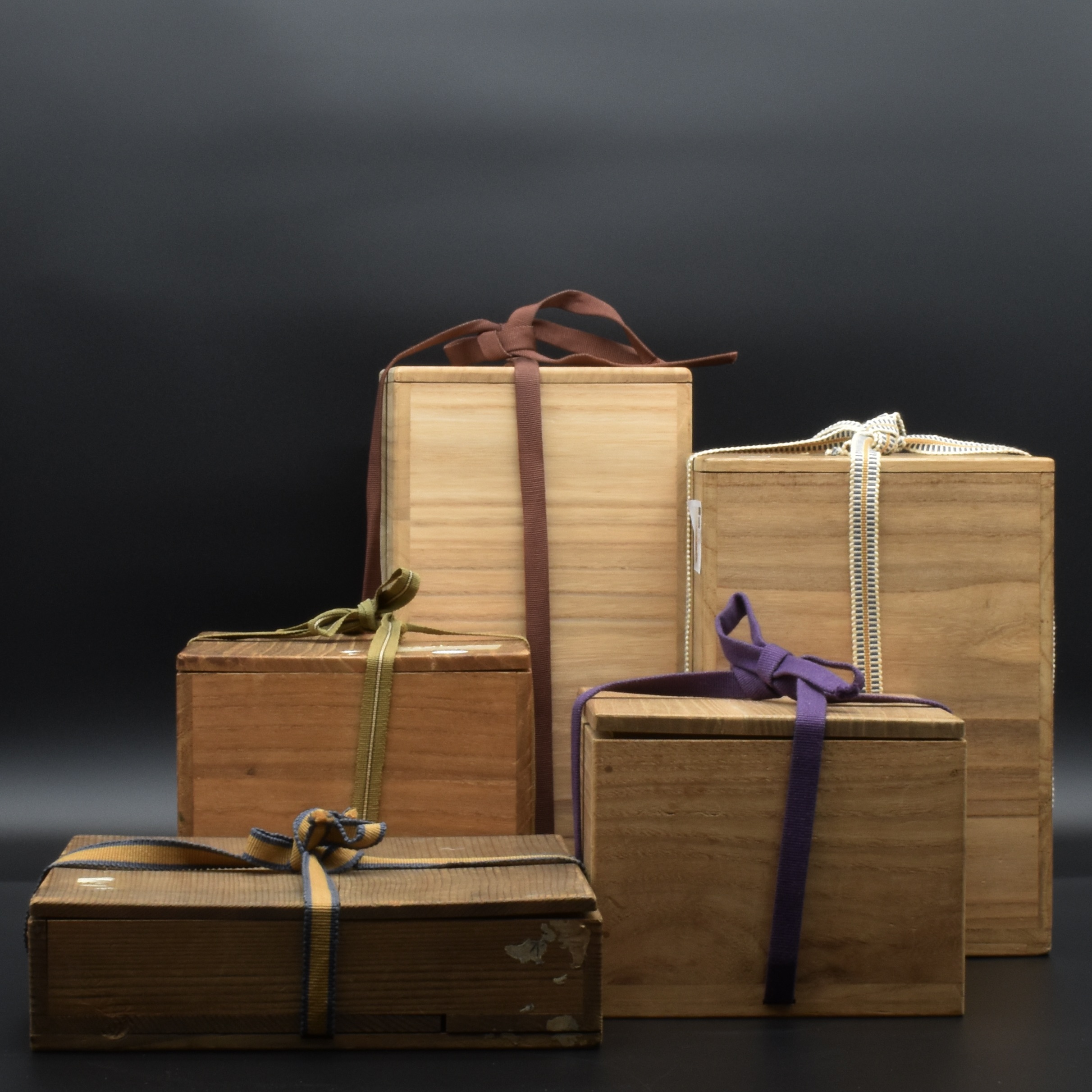
Tomobako Storage Boxes :
Traditional Japanese ceramic storage boxes, referred to as Tomobako are highly valued and much used in Japan. Most boxes are made from paulownia wood, it is lightweight hardwood and it’s also fire resistant, which is very useful in because Japanese buildings tend to be made of timber and have paper dividers inside. The Islands of Japan are located on a highly complex, unstable, and active geological junction where four major tectonic plates collide and subduct. These islands are essentially built upon the boundaries of these plates, with the archipelago forming as a result of the subduction and volcanic activity caused by these tectonic movements. Therefore the use of tradition tomobako is essential for the survival of ceramics in Japan. Japanese museums don’t have this luxury, so they secure the ceramic objects with nylon, which looks very much like fishing line. The paulownia is a fast growing tree, so it isn’t too expensive. It is believed that the phoenix, symbolising wisdom and prosperity, will only land on a paulownia tree when a worthy ruler is in power.
Tomobako containers that protect, store, and often certify the authenticity of the pottery inside. They are typically signed by the owner of the antique ceramic item in the box. They are tied with cord in a specific way, this is regarded as part of the ritual ceremony among a gathering of friends in Japan. Of course not everything in these boxes is what it might seem. Some contain surprising objects, so you will have to wait and see what we have in these boxes.
Traditional Japanese ceramic storage boxes, referred to as Tomobako are highly valued and much used in Japan. Most boxes are made from paulownia wood, it is lightweight hardwood and it’s also fire resistant, which is very useful in because Japanese buildings tend to be made of timber and have paper dividers inside. The Islands of Japan are located on a highly complex, unstable, and active geological junction where four major tectonic plates collide and subduct. These islands are essentially built upon the boundaries of these plates, with the archipelago forming as a result of the subduction and volcanic activity caused by these tectonic movements. Therefore the use of tradition tomobako is essential for the survival of ceramics in Japan. Japanese museums don’t have this luxury, so they secure the ceramic objects with nylon, which looks very much like fishing line. The paulownia is a fast growing tree, so it isn’t too expensive. It is believed that the phoenix, symbolising wisdom and prosperity, will only land on a paulownia tree when a worthy ruler is in power.
Tomobako containers that protect, store, and often certify the authenticity of the pottery inside. They are typically signed by the owner of the antique ceramic item in the box. They are tied with cord in a specific way, this is regarded as part of the ritual ceremony among a gathering of friends in Japan. Of course not everything in these boxes is what it might seem. Some contain surprising objects, so you will have to wait and see what we have in these boxes.