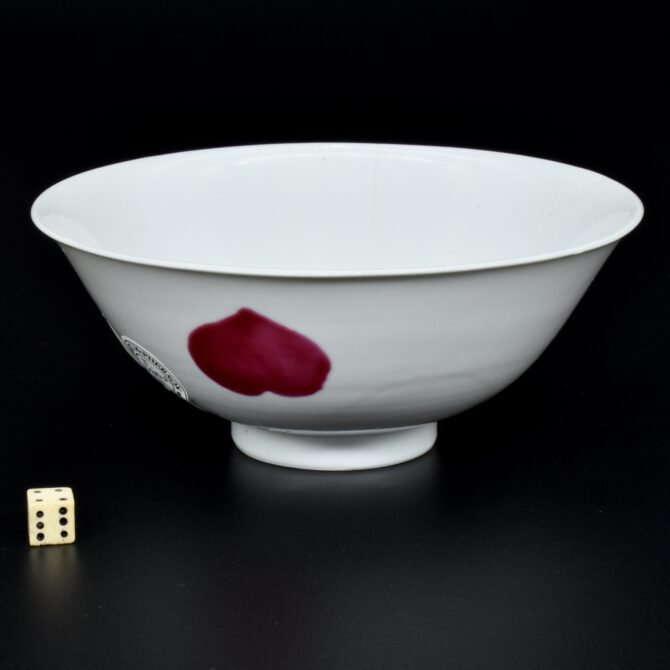
A Extremely Rare Ming Style Puce Decorated Yongzheng ‘Sanduo’ Bowl.
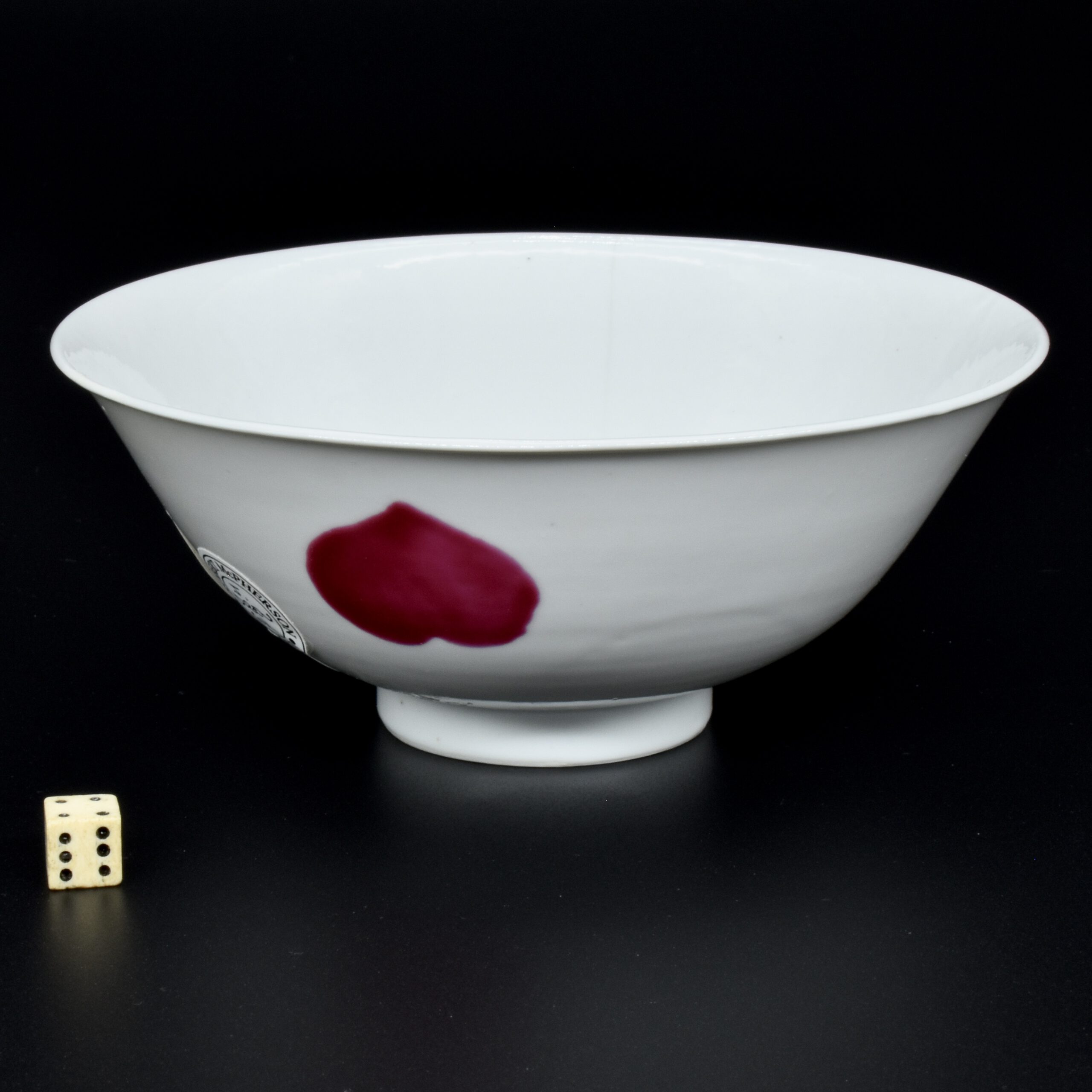
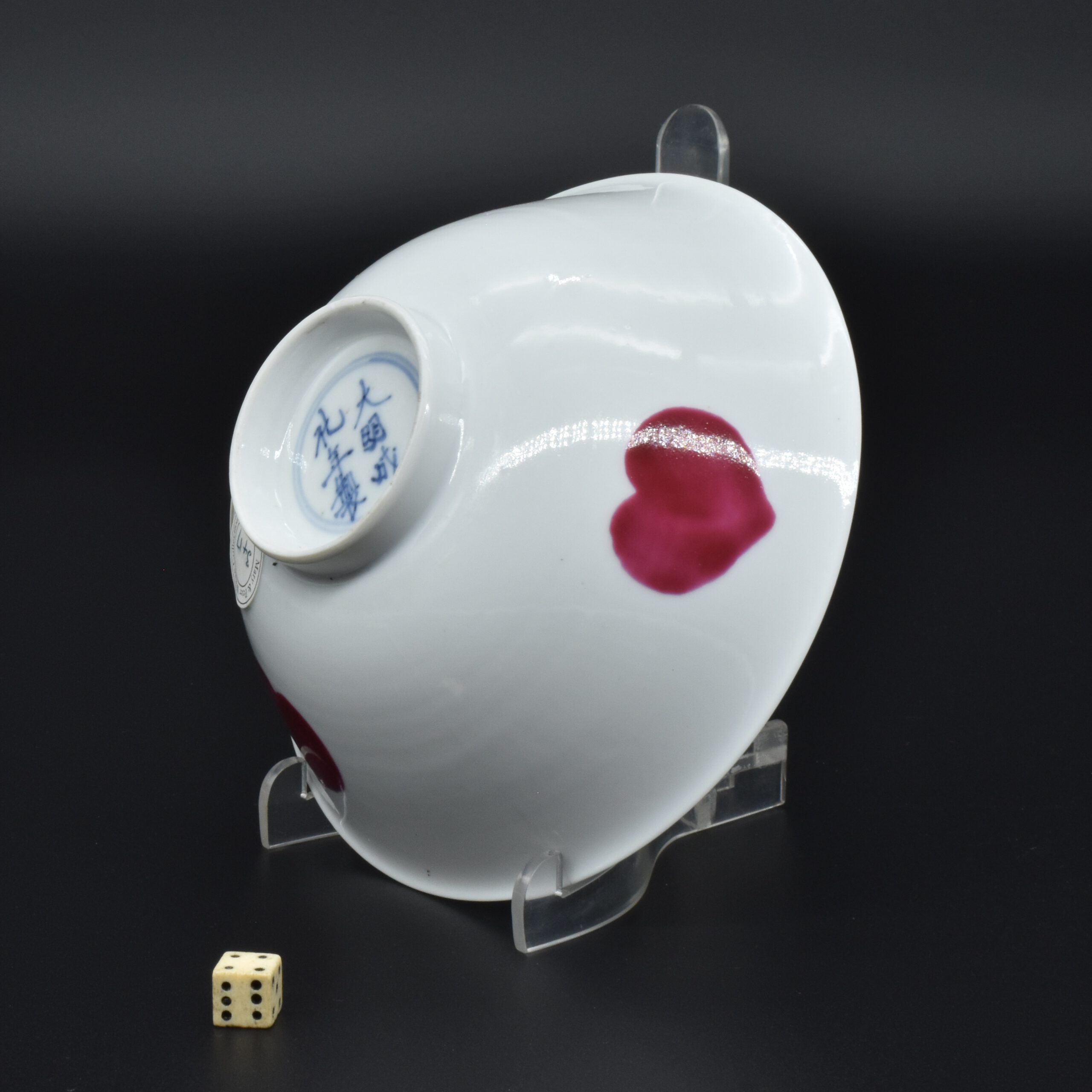
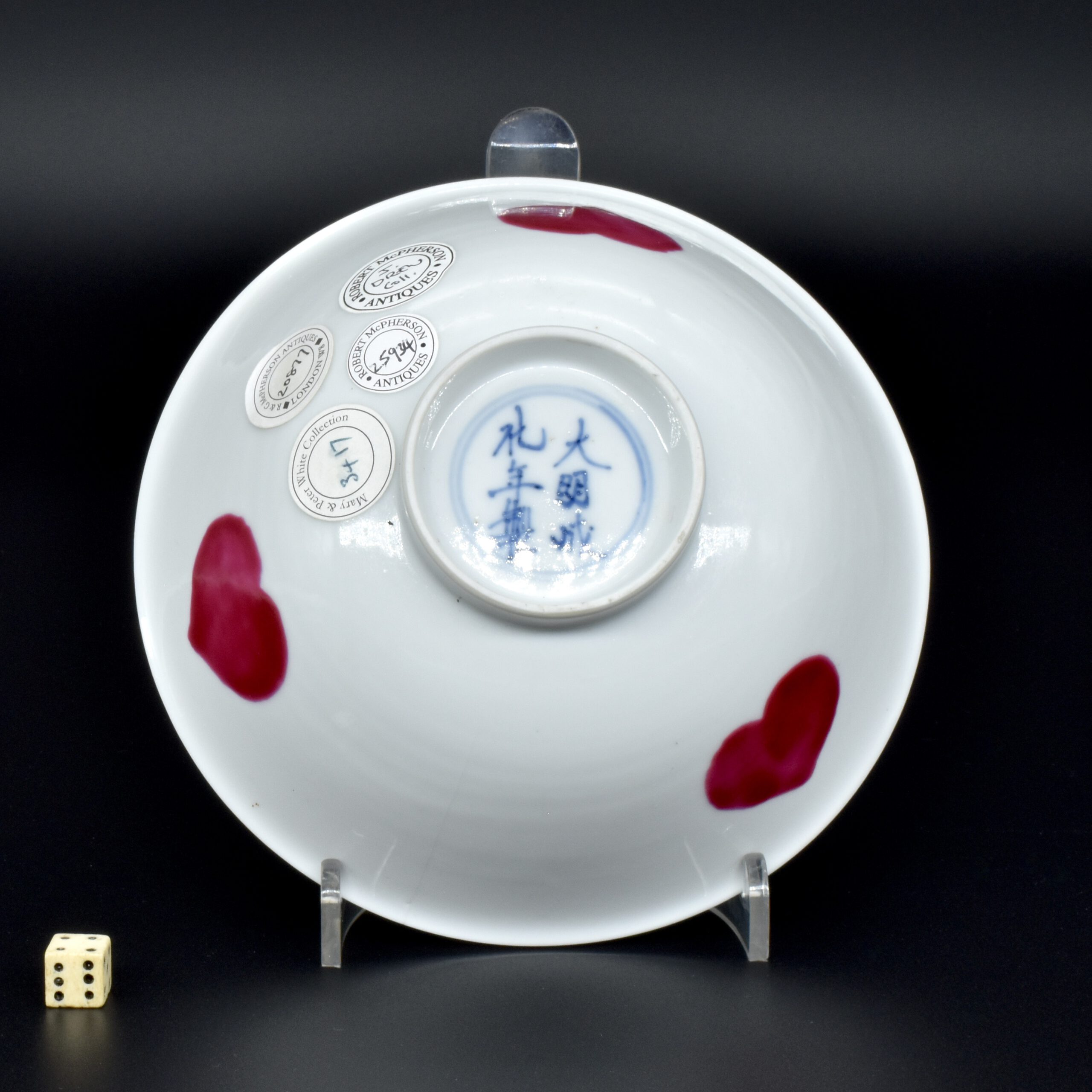
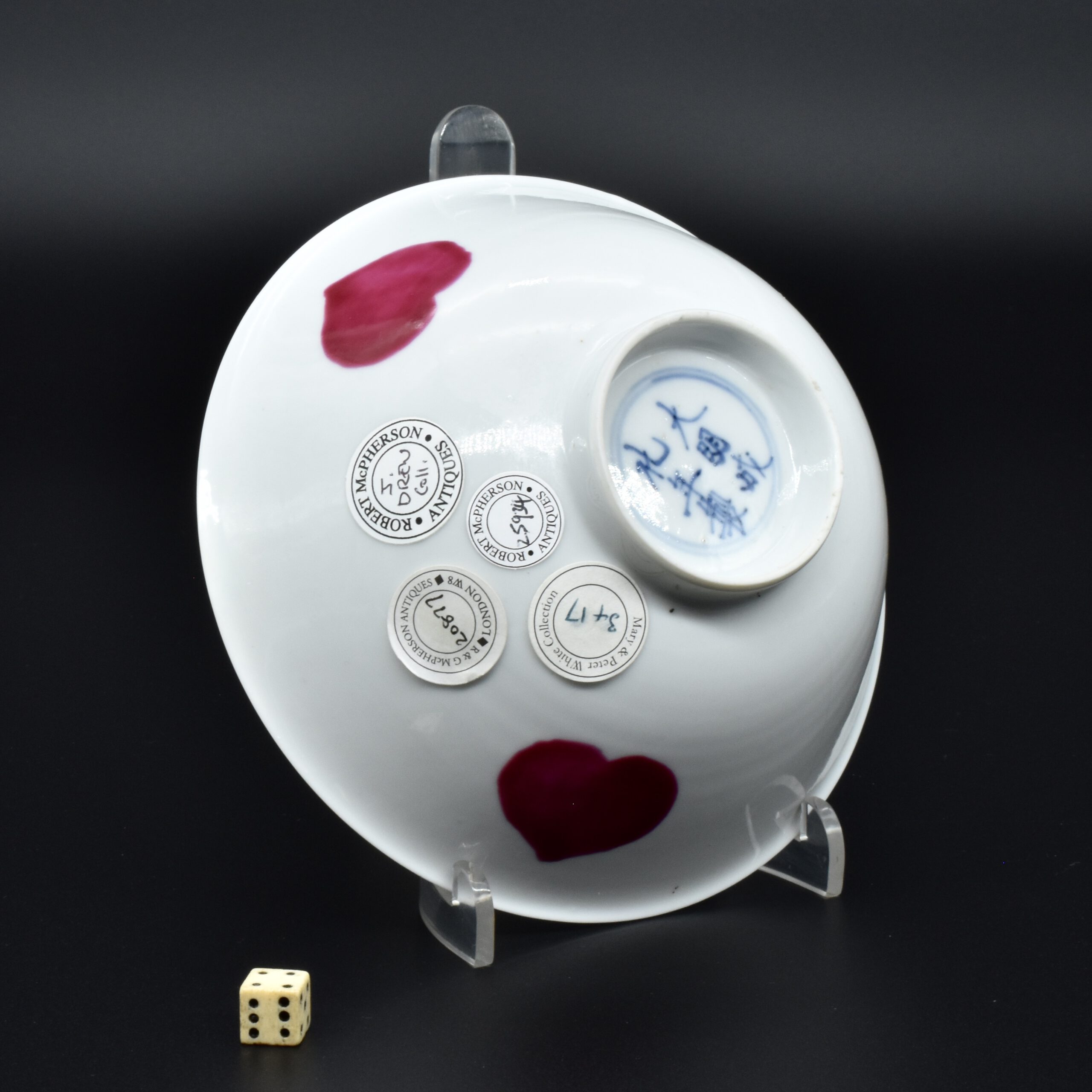
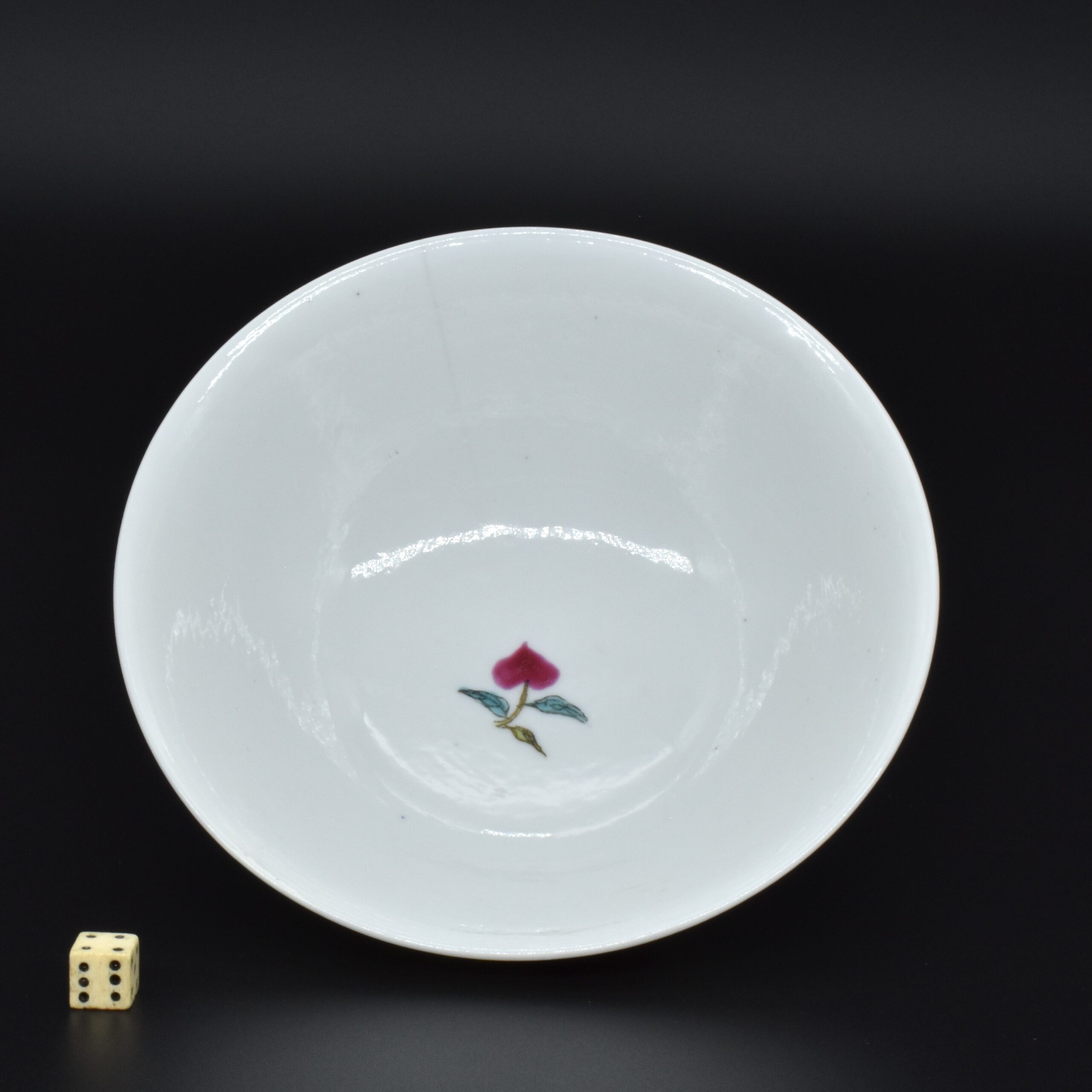
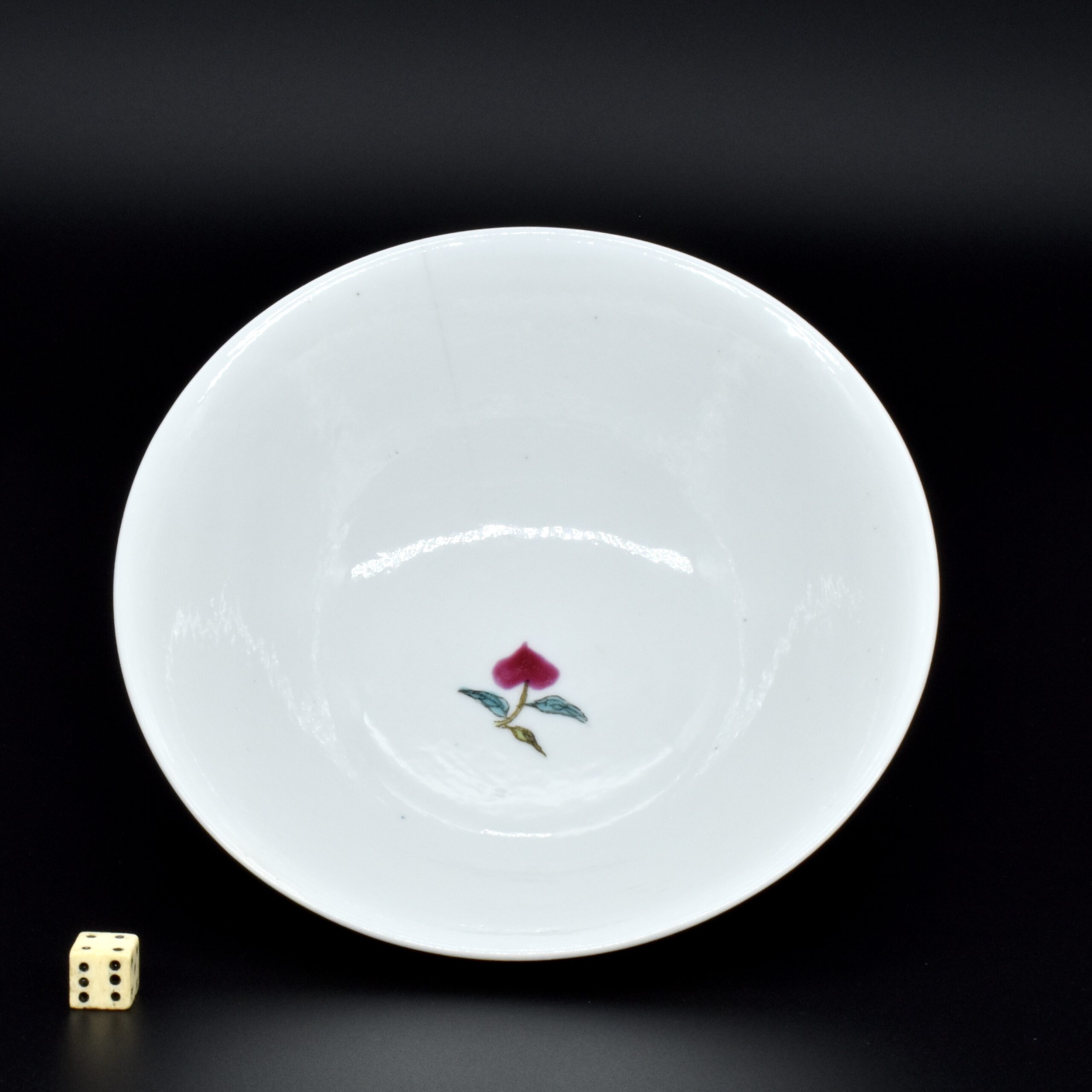
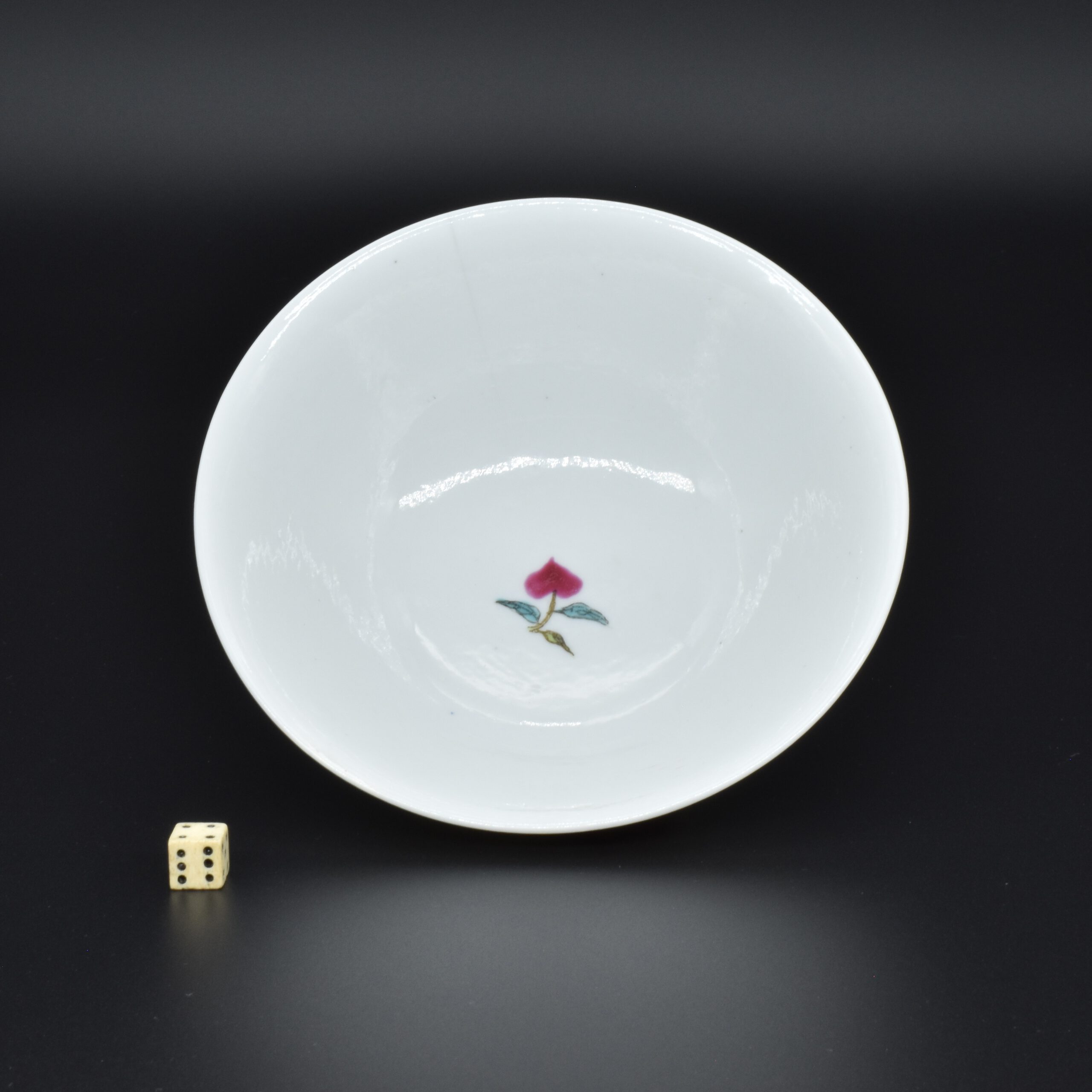
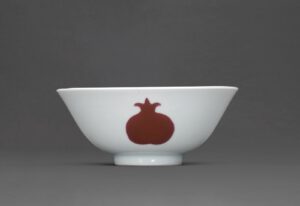
An Extremely Rare Ming Style Puce Enamel Decorated Yongzheng ‘Sanduo‘ Bowl, Jingdezhen Kilns. From the Collection of John Drew (1933 – 2006). Chinese bowls of this type, which have their origins in the Xuande period are always decorated using copper-red, the metallic pigment being added prior to glaze firing. Most extant pieces are from the Kangxi period (1662-1722), in fact they are more commonly from the Yongzheng period (1723-1735). The Kangxi examples, as well as the Yongzheng ones have the relevant imperial six-character marks. At least one imperial bowl decorated in puce enamel is known, it sold at Christie’s Hong Kong in 2014, the bowl is from the Yongzheng period and has the six-character mark of the period (see Information below). The bowl, that we have, is different despite having puce decoration. It is close to the imperial puce Yongzheng bowl, however it has a very scrappy Chenghua mark (1465-1487). Marks like this are quite often encountered on Yongzheng porcelain, they are very different to neatly confidently painted Yongzheng imperial marks. I think this bowl was made for collectors, there was a large market in China among the connoisseurs for good copies of pieces that were outside the financial reach of many individual. My understanding is that this market was particularly strong in during the Yongzheng and into the earlier part of Qianlong period. Xuande prototypes of this type of bowl with copper red were excavated from the waste heaps of the Ming imperial kilns in Zhushan, Jingdezhen; see a fragmentary Xuande-marked stemcup, included in Imperial Porcelain: Recent Discoveries of Jingdezhen Ware, Museum of Oriental Ceramics, Osaka, 1995 (see references). I have not see a bowl like the present example before finding this one.
See Below For More Photographs and Information.
SALE PENDING
- Condition
- There is one long fine crack, see the Photograph Gallery for details.
- Size
- 12.8 cm ( 5 inches).
- Provenance
- Robert McPherson Antiques. The John Drew Collection. Mary and Peter White Collection. The John Drew Collection : John Drew was born in 1933 in Tideswell, Derbyshire, where his father was curate. The family moved to Norfolk whilst he was still a baby and his father became the rector of the parish of Intwood and Keswick. He was educated at Sedbergh School and after National Service in the R.A.F. being taught Russian, he went to Queens College, Oxford to read Greats (Classics). He spent nearly all his working life in various African countries as an archivist, moving to a post at Cape Town University in 1978. He remained in Cape Town after his retirement until his death in 2006. He had a great love of the English countryside (but not the climate) and this is shown in many of the pieces he collected. His taste was varied and ranged from Neolithic right through to the 18th Century. When we sent photograph to his home in Cape Town of pieces we thought he might be interested in, he would write long funny well observed letters back, wanting to add many of the items to his growing collection. Over the years we got to know him better and better, and during the last few years it was very rare for him to not want all the pieces we offered him. We knew his taste, even though his taste was so varied. This was in no small part because he had a very good eye and it was a pleasure finding things that interested him, because they were also very interesting to us. He never got to put his collection on display, something he hoped to do while on retirement in England, so it is with a mixture of pleasure and sadness that we offer these pieces from his collection this June. Each piece has a John Drew collection label, so when the collection is split up there will be some lasting record of the love and hard work he put into his two decades of collecting.
- Stock number
- 25934
- References
- The minimalistic design of the red fruits is indebted to the early Ming dynasty creation. Xuande prototypes were excavated from the waste heaps of the Ming imperial kilns in Zhushan, Jingdezhen; see a fragmentary Xuande-marked stemcup, included in Imperial Porcelain: Recent Discoveries of Jingdezhen Ware, Museum of Oriental Ceramics, Osaka, 1995, cat. no. 43, together with an unmarked example, cat. no. 44. See a pair of Yongzheng bowls from the Meiyintang collection, published in Regina Krahl, Chinese Ceramics from the Meiyintang Collection, London, 1994-2010, vol. 2, no. 736. Several examples have appeared at auctions, including one sold at Christie's New York, 15th September 2011, lot 1571, and again in these rooms, 30th November - 1st December 2017, lot 612.
Photos
Information
A Very Rare Yongzheng Mark and Period Puce Bowl.
Sold by Christie's Hong Kong in 2014, for HKD 937,500 (£89,700).
A FINE PUCE-ENAMELLED 'SANDUO' BOWL
YONGZHENG SIX-CHARACTER MARK IN UNDERGLAZE BLUE WITHIN A DOUBLE CIRCLE AND OF THE PERIOD (1723-1735)
The bowl is finely potted with rounded sides rising to a slightly flared rim. The exterior is decorated in puce enamels with the sanduo, a peach, a pomegranate and a persimmon.
4 3/4 in. (12 cm.) diam., box.
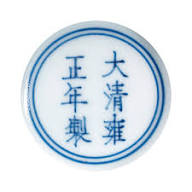
YONGZHENG SIX-CHARACTER MARK IN UNDERGLAZE BLUE WITHIN A DOUBLE CIRCLE AND OF THE PERIOD (1723-1735)
THE PROPERTY OF A LADY
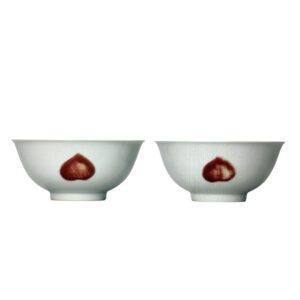
RARE PAIR OF COPPER-RED DECORATED 'SANDUO' BOWLS
KANGXI SIX-CHARACTER MARKS IN UNDERGLAZE BLUE WITHIN DOUBLE CIRCLES AND OF THE PERIOD (1662-1722)
Sold Christie's Hong Kong, Price realised HKD 562,500. 4th October 2018.