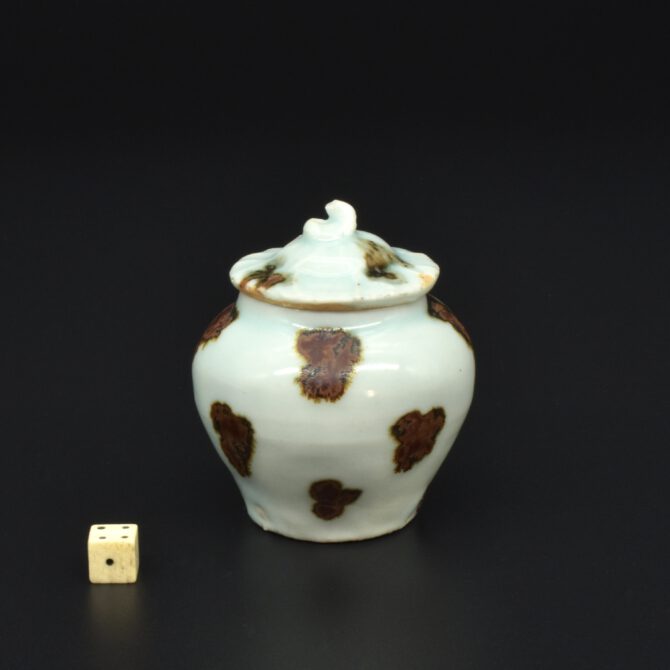
A Rare Yuan Qingbai Iron-Spot Jar and Lotus Leaf Cover
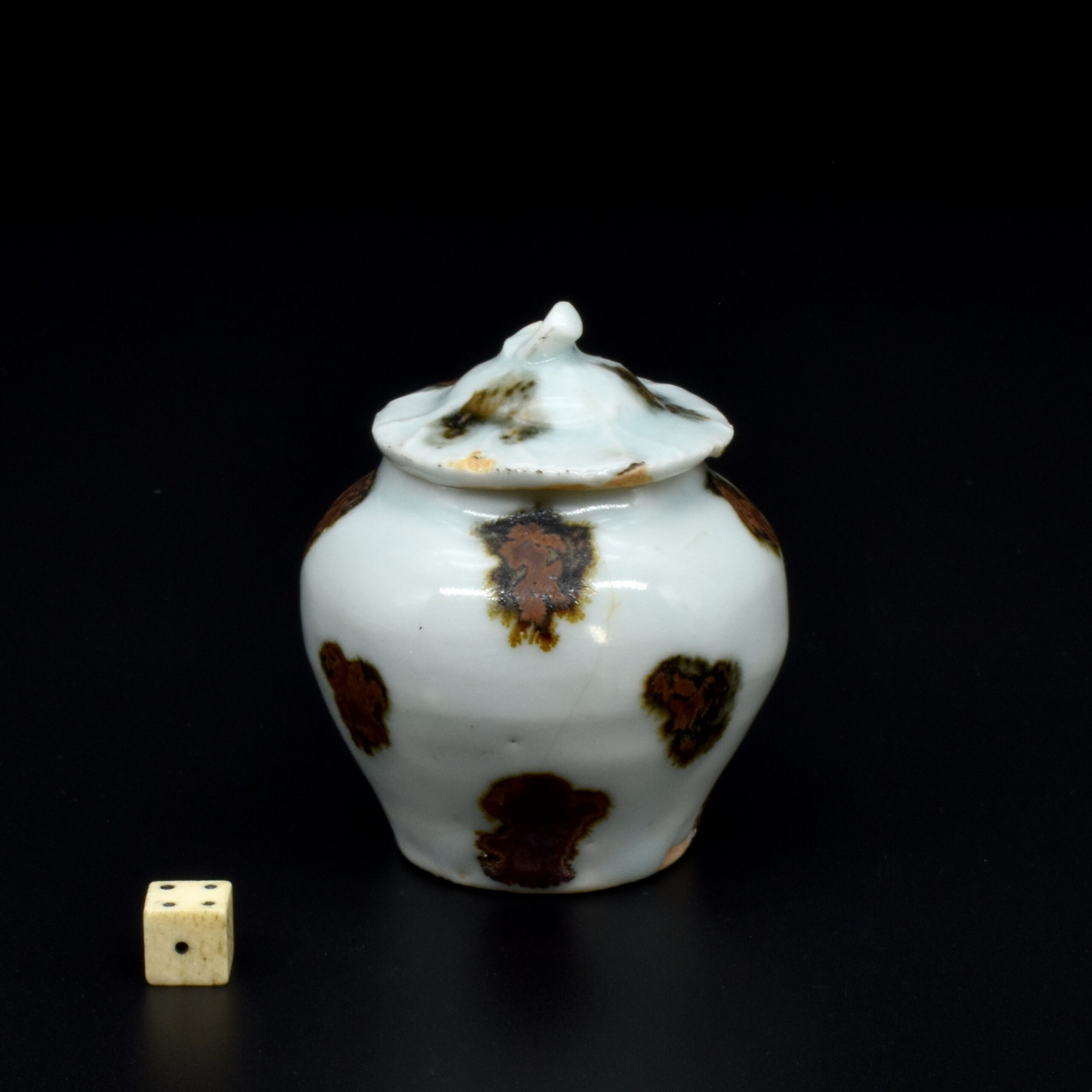
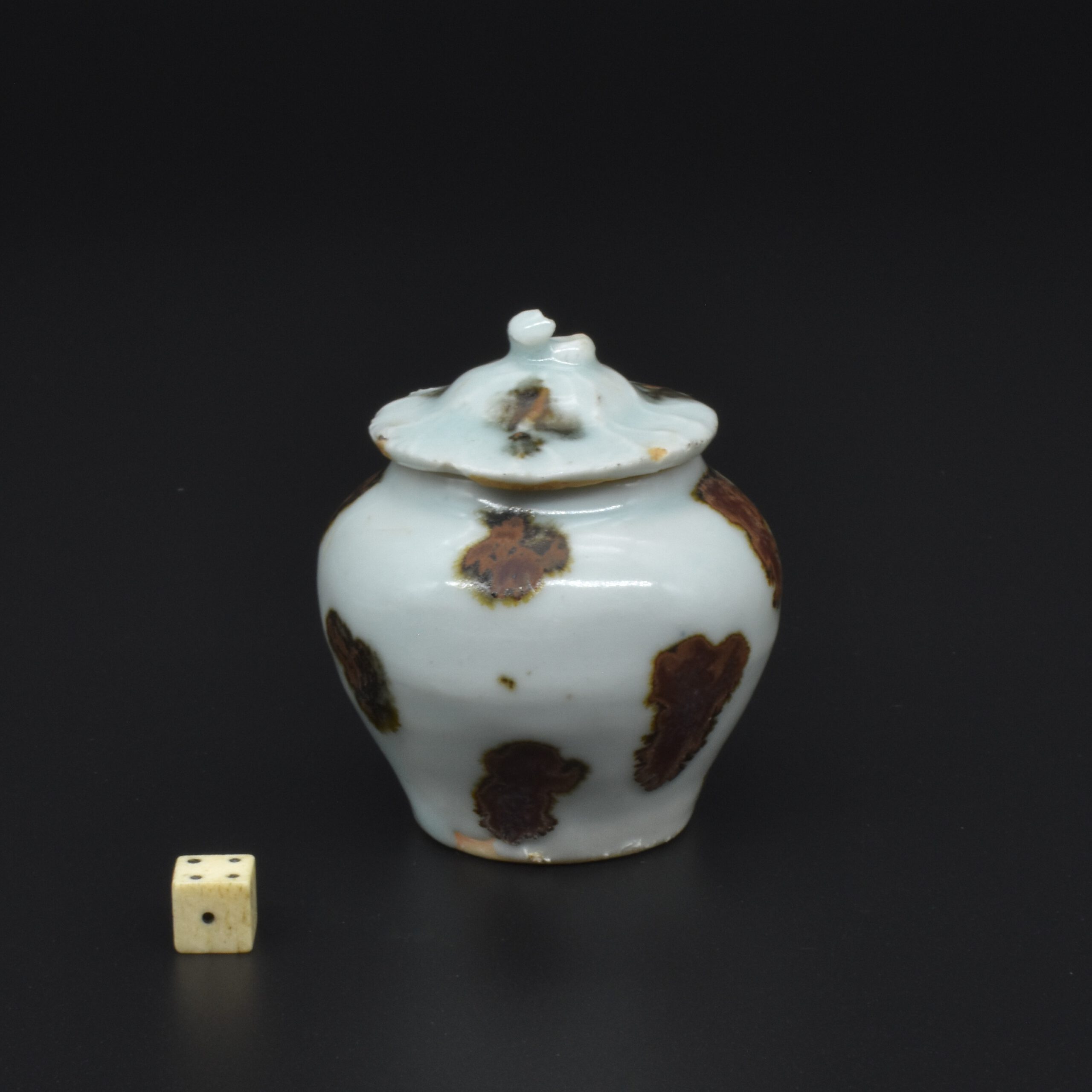
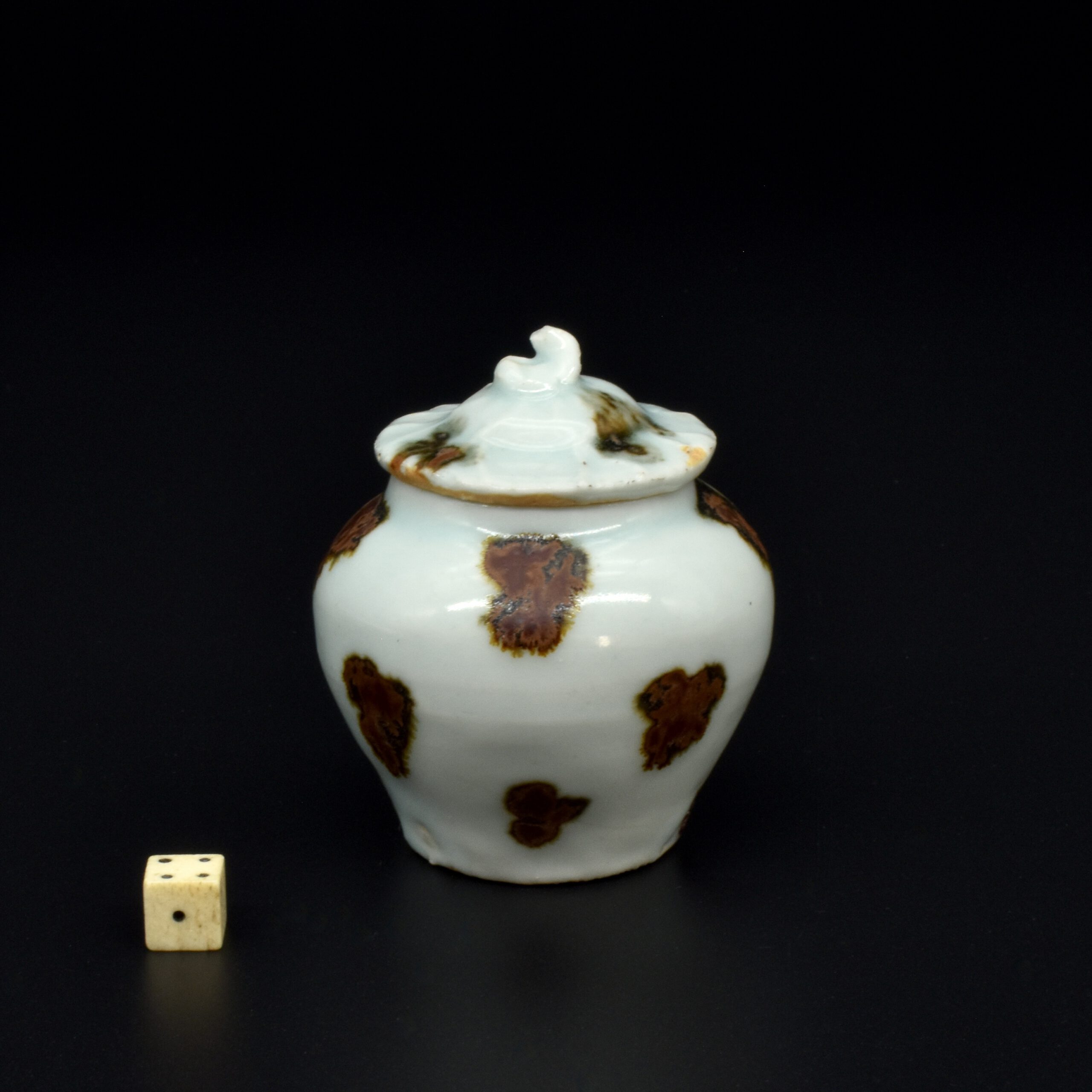
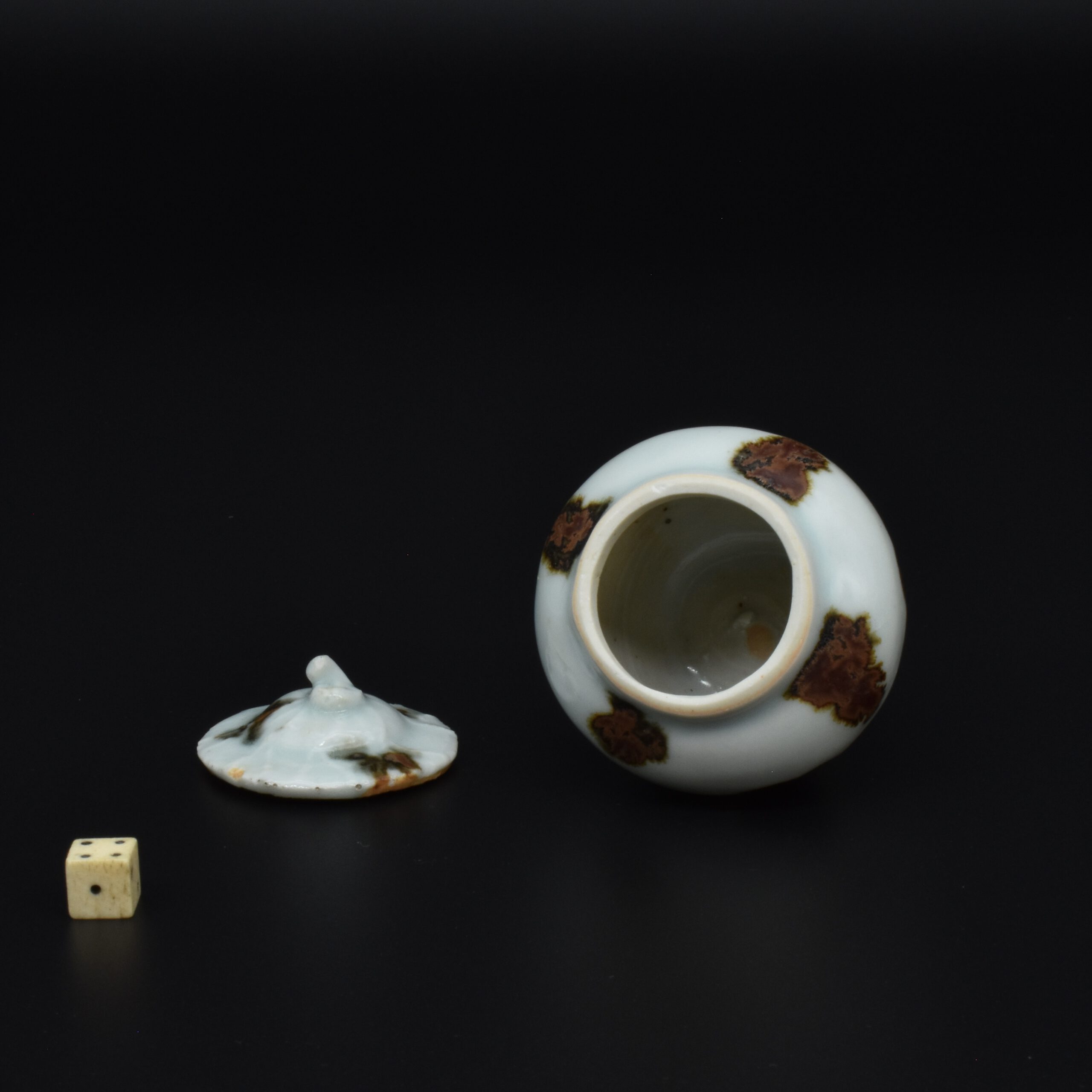
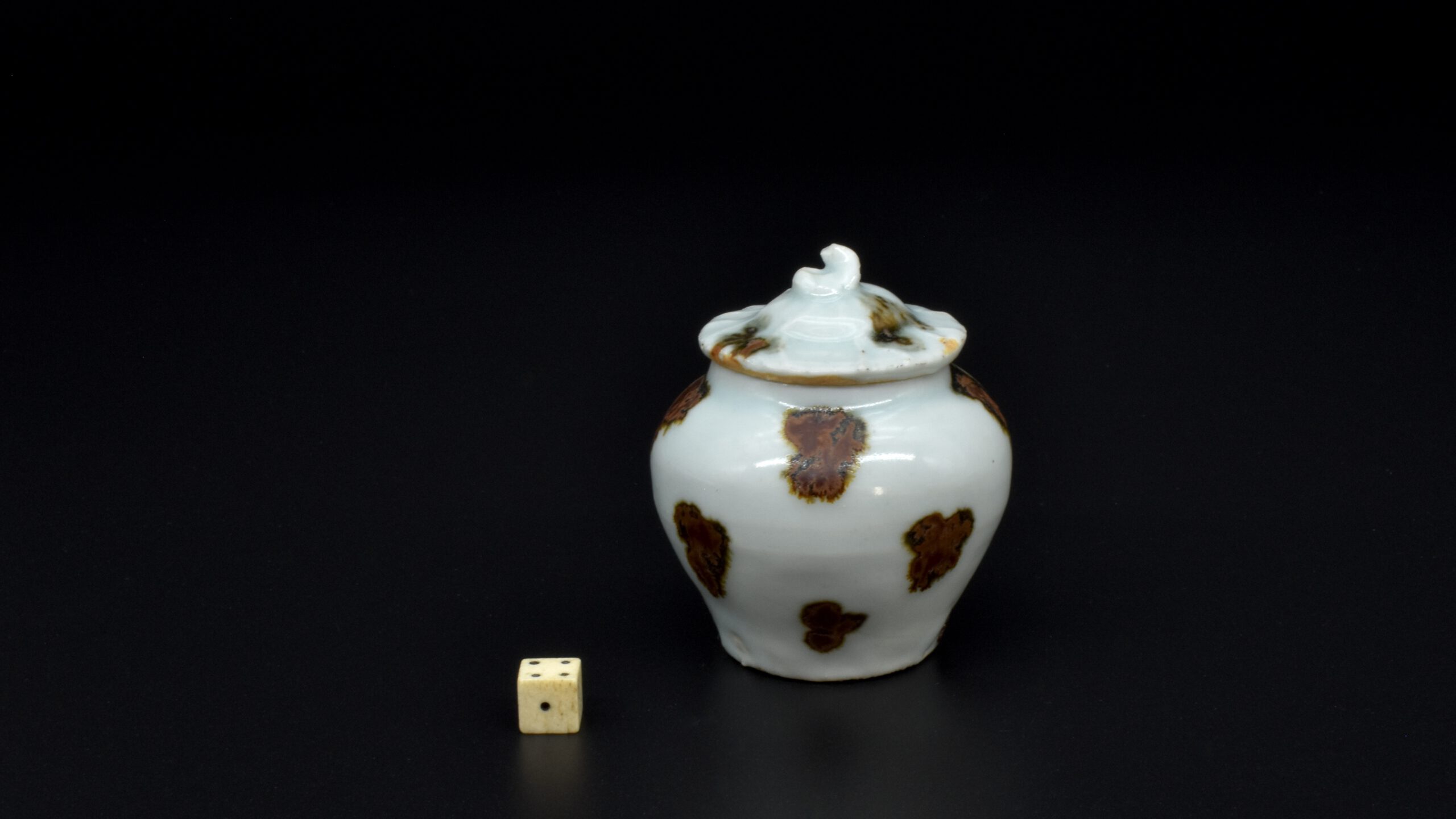
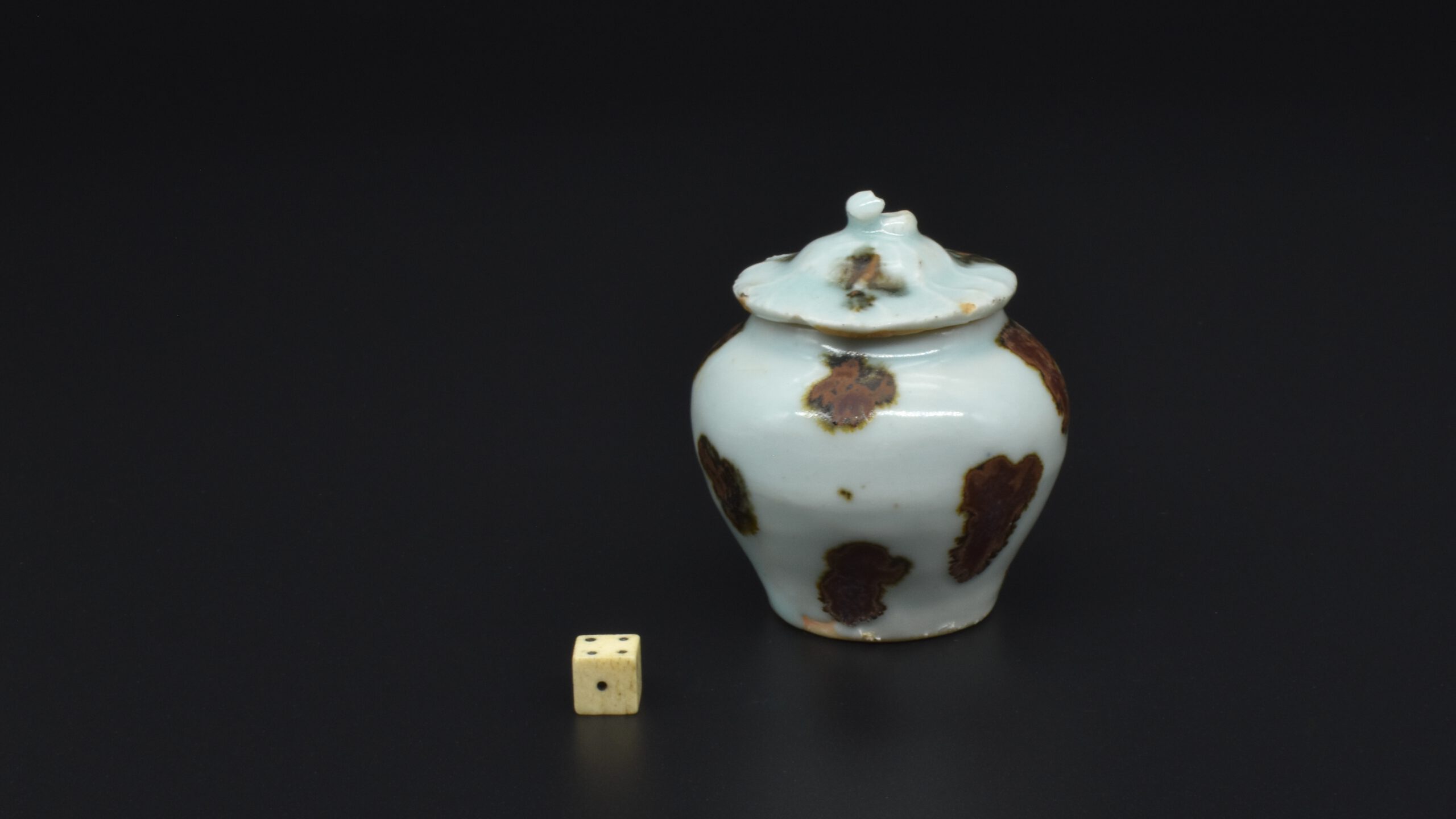
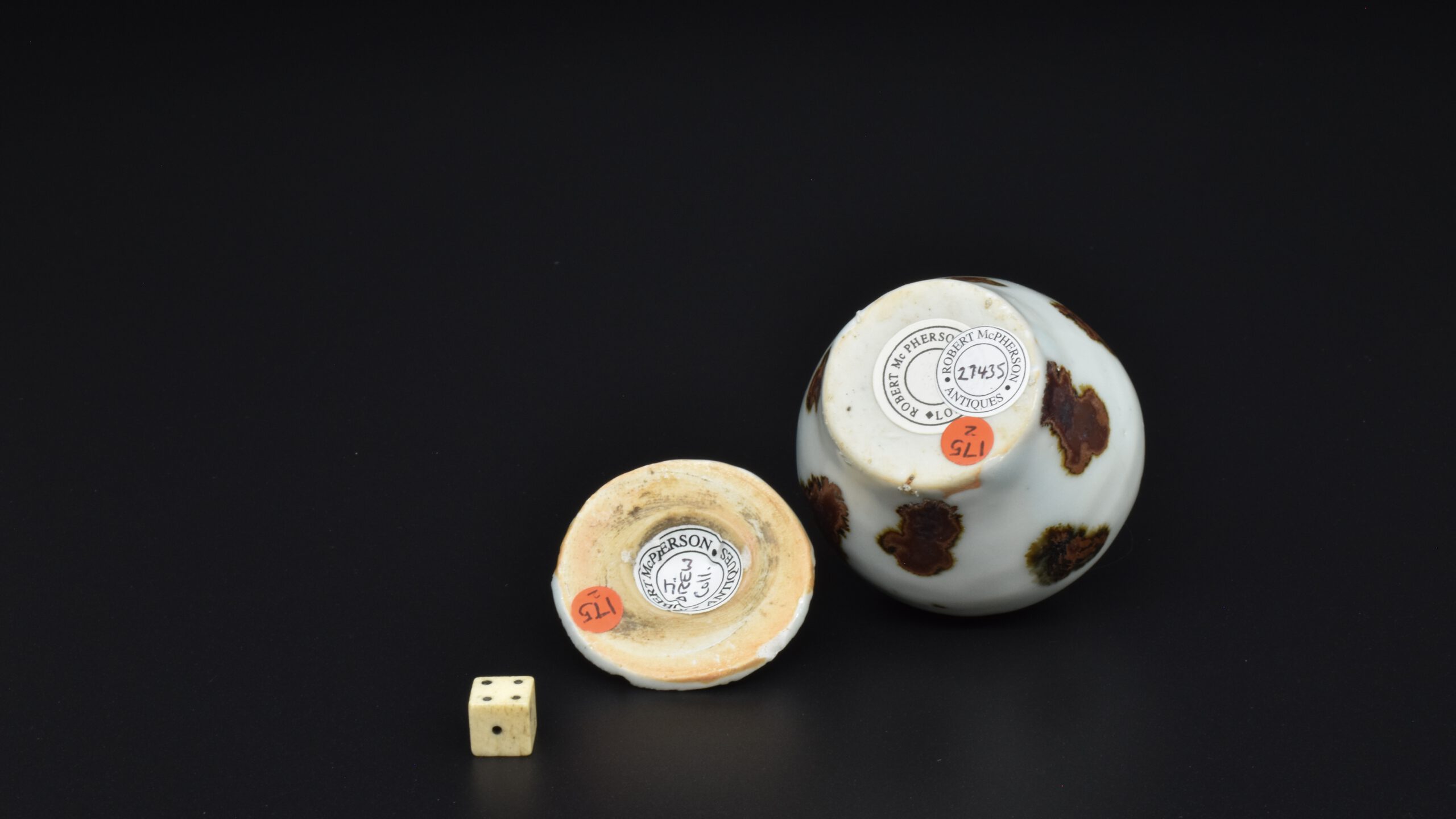
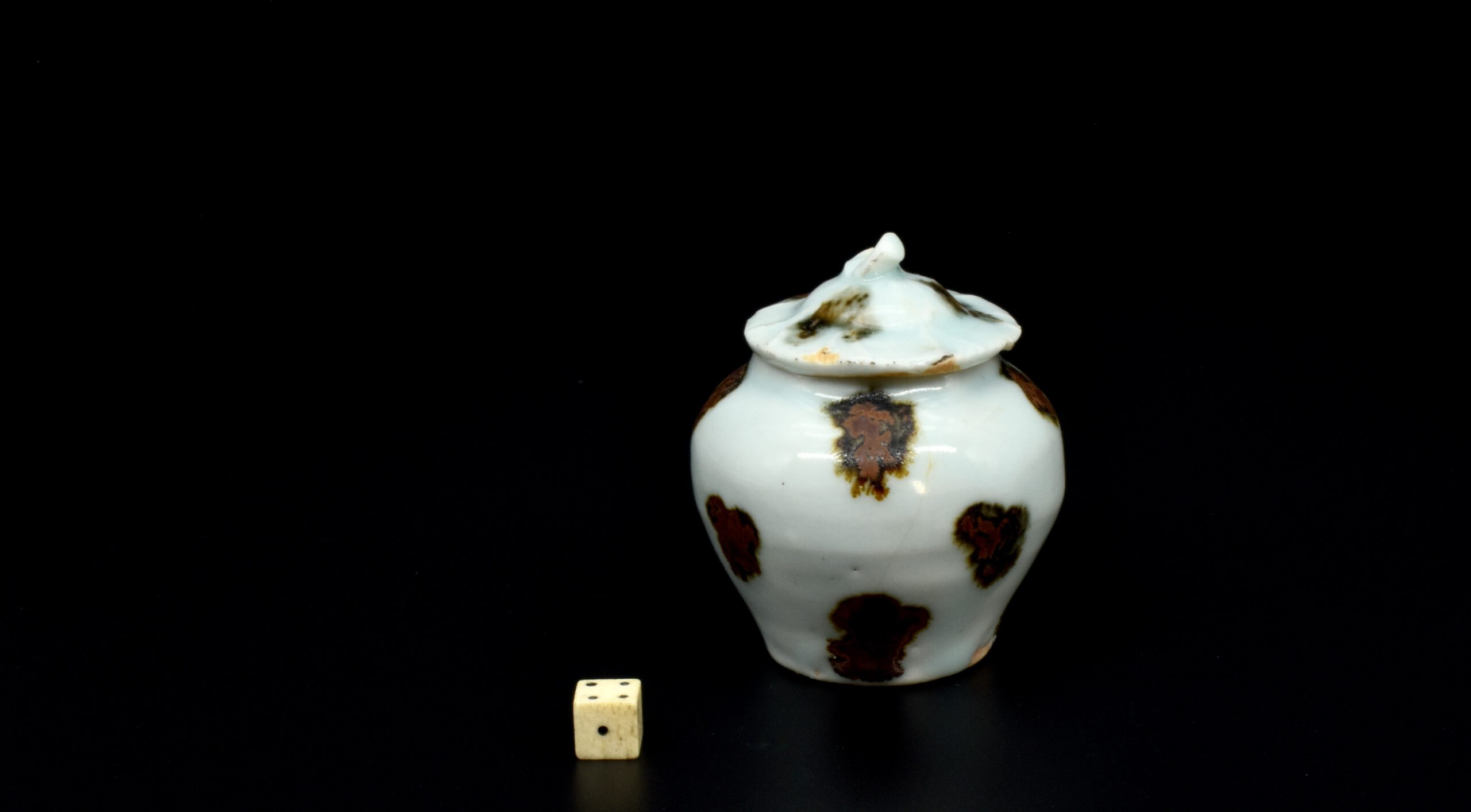
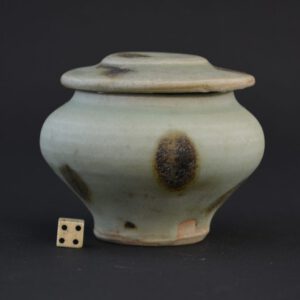
A Rare Miniature Yuan Iron-Spot Jar and Moulded Lotus Leaf Cover, of Guan Form, Jingdezhen Kilns, Yuan Dynasty 1279-1368. From the Collection of John Drew (1933 – 2006). This bright Qingbai glazed jar has clear iron-spots which are somewhat dry in places, reflecting the high iron concentration. This jar shape is referred to as a guan, the present example is perhaps the smallest size made at this period, its a shape that was very popular during the Yuan period. It to is rare for these Yuan miniature jars to retain their covers, the reddish marks to the top of the cover are where there isn’t any glaze and so it has fired red in the kiln. Small Yuan guan can also be found with iron-spot decorated in celadon (see below for an example we sold some years ago) where it is referred to as Tobi Seiji (飞青). The guan form was of course used primarily on a larger scale, for example on the well known Yuan blue and white porcelain guan. This Qingbai jar, is very similar to one we sold that by was previously sold by Bluett in London, and has their label on the base, with the number 413, perhaps a number from an exhibition. That example had lost its cover. These Qinbai porcelain iron-spot pieces were popular in the Philippines, see Chinesische Keramik auf den Philippinen. They were also popular in China , see Jingdezhen Wares, The Yuan Evolution. A larger (10 cm) Yuan iron-spot jar with a lotus cover in the Capital Museum Collection in Beijing is illustrated in Qingbai Ware, Chinese Porcelain of the Song and Yuan Dynasties. For details of these three pieces see ‘References’.
See Below For More Photographs and Information.
SOLD
- Condition
- The body has a long curved crack which extends to 80% of the depth of the jar and it then curves up. This crack has a smaller crack from it. It is rare for a jar like this to retain its lotus form cover, with a lotus stalk finial.
- Size
- Height 6.3 cm (2 1/2 inches).
- Provenance
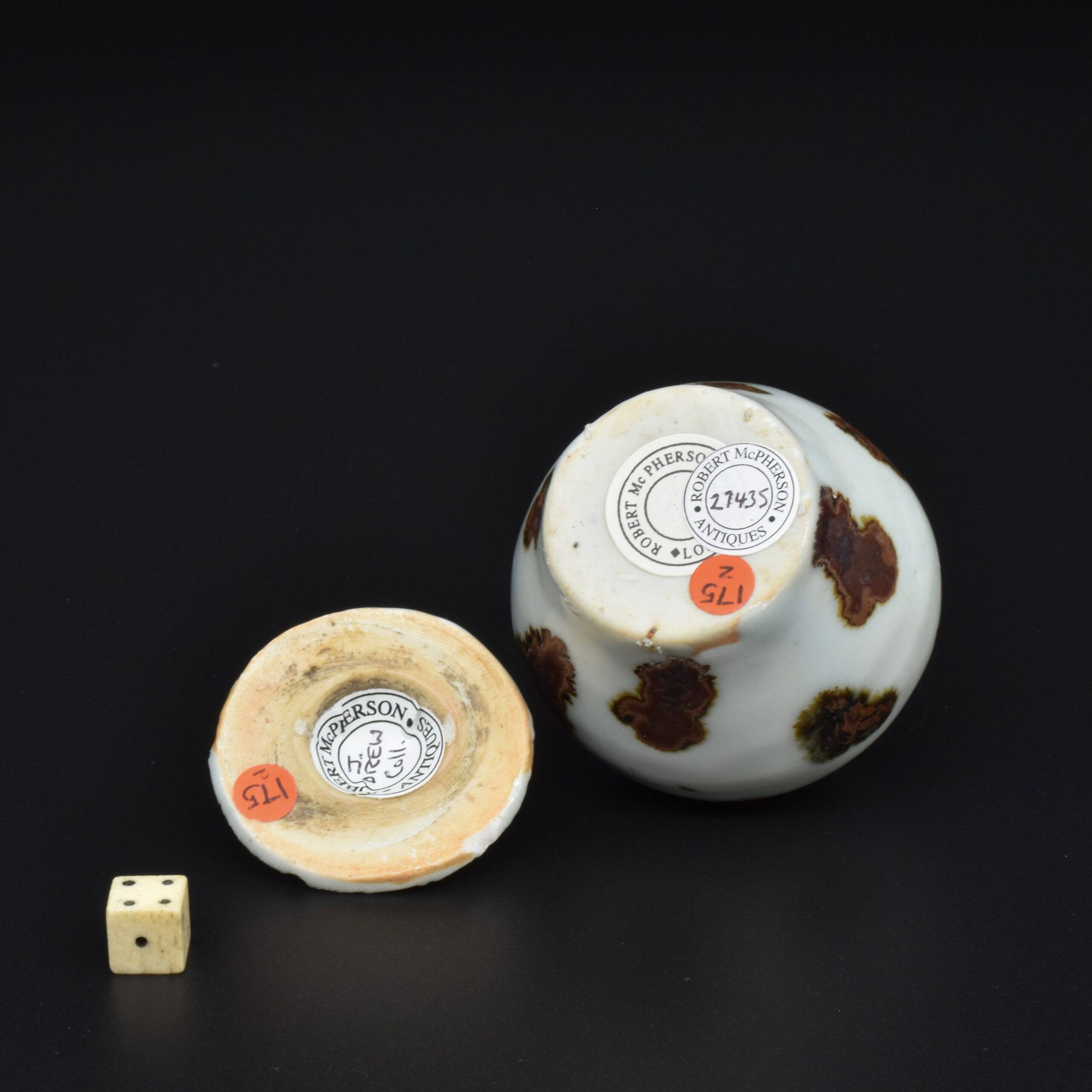
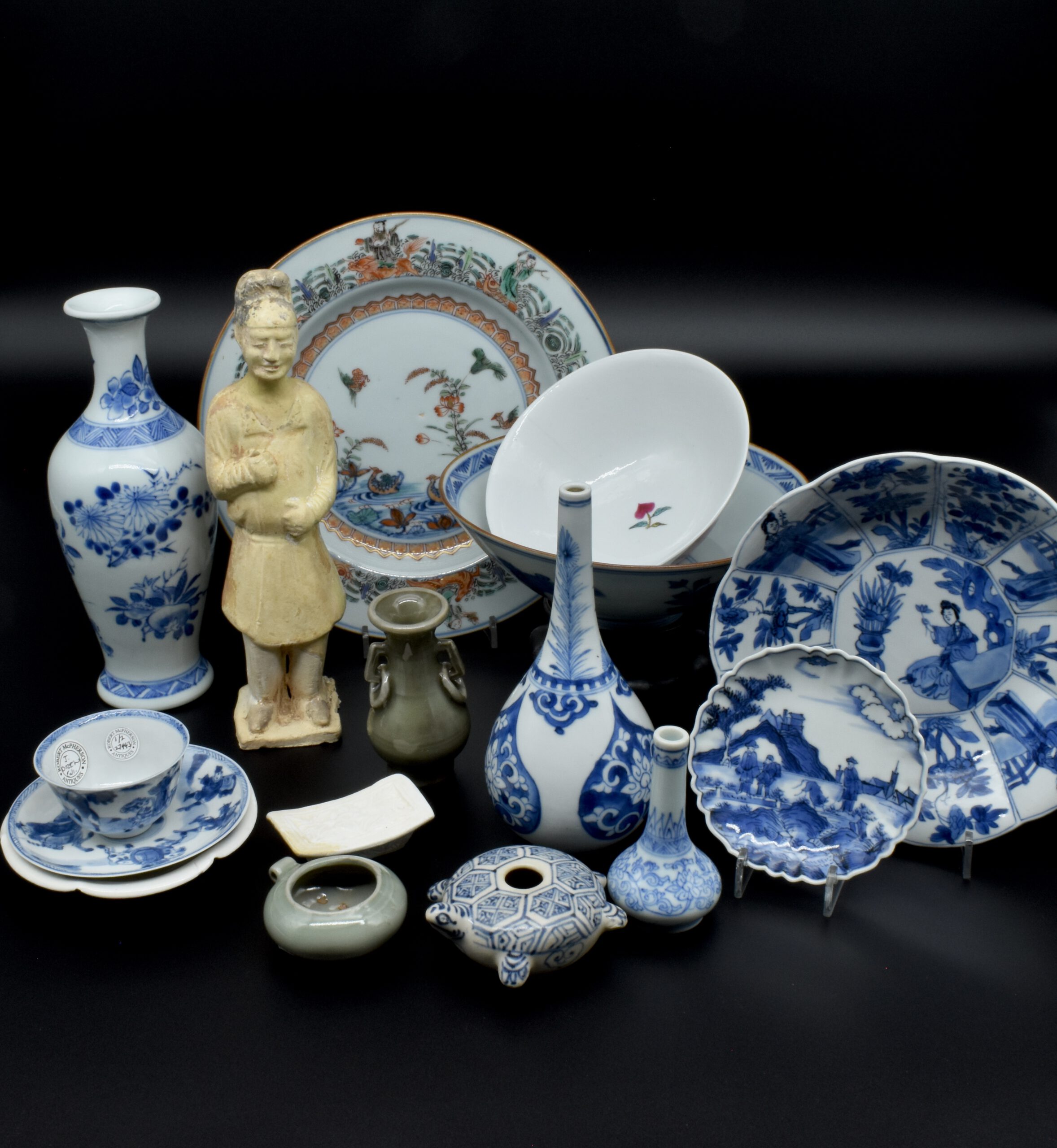
- Robert McPherson Antiques. The John Drew Collection. The John Drew Collection : John Drew was born in 1933 in Tideswell, Derbyshire, where his father was curate. The family moved to Norfolk whilst he was still a baby and his father became the rector of the parish of Intwood and Keswick. He was educated at Sedbergh School and after National Service in the R.A.F. being taught Russian, he went to Queens College, Oxford to read Greats (Classics). He spent nearly all his working life in various African countries as an archivist, moving to a post at Cape Town University in 1978. He remained in Cape Town after his retirement until his death in 2006. He had a great love of the English countryside (but not the climate) and this is shown in many of the pieces he collected. His taste was varied and ranged from Neolithic right through to the 18th Century. When we sent photograph to his home in Cape Town of pieces we thought he might be interested in, he would write long funny well observed letters back, wanting to add many of the items to his growing collection. Over the years we got to know him better and better, and during the last few years it was very rare for him to not want all the pieces we offered him. We knew his taste, even though his taste was so varied. This was in no small part because he had a very good eye and it was a pleasure finding things that interested him, because they were also very interesting to us. He never got to put his collection on display, something he hoped to do while on retirement in England, so it is with a mixture of pleasure and sadness that we offer these pieces from his collection this June. Each piece has a John Drew collection label, so when the collection is split up there will be some lasting record of the love and hard work he put into his two decades of collecting.
- Stock number
- 27435
- References
- For a similar guan shaped small Yuan iron spot jar with a lotus cover see : Chinesische Keramik auf den Philippinen (Die Sammlung Eric E. Geiling, Bearbeitet von Ulrich Wiesner. Museum für Ostasiatische Kunst. 1977) page 118, plate 76. Another Yuan jar of this type, found in China, is illustrated in Jingdezhen Wares, The Yuan Evolution (Catalogue of an exhibition presented by The Oriental Ceramics Society of Hong Kong and the Fung Ping Shan Museum, University of Hong Kong March 23rd to 31st of May 1984. The Oriental Ceramic Society of Hong Kong 1984) page page 118, item 76. Qingbai Ware, Chinese Porcelain of the Song and Yuan Dynasties (Edited by Stacey Pierson, Percival David Foundation, 2002. ISBN 0-7286-0339-X) page 178, item 96.
Photos
Information
Robert McPherson Antiques : Sold Archive 27259.
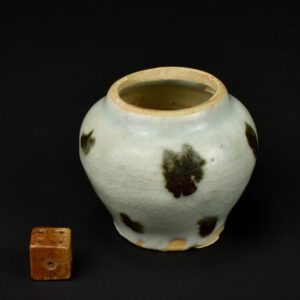
A Miniature Yuan Iron-Spot Jar of Guan Form, Jingdezhen Kilns, Yuan Dynasty 1279-1368. It would originally have had a cover, either plain, or in the form of a lotus leaf. This small jar is a guan, a shape used during the Yuan period. Small guan can also be found with iron-spot decorated in celadon (see below for an example we sold some years ago). The form was of course used primarily on a larger scale, for example Yuan blue and white porcelain. This Qingbai jar, was sold by Bluett in London, and has their label on the base, with the number 413, perhaps a number from an exhibition. These iron-spot pieces were popular in the Philippines, see Chinesische Keramik auf den Philippinen. They were also popular in China , see Jingdezhen Wares, The Yuan Evolution. A larger (10 cm) Yuan iron-spot jar with a lotus cover in the Capital Museum Collection in Beijing is illustrated in Qingbai Ware, Chinese Porcelain of the Song and Yuan Dynasties. For details of these three pieces see ‘References’.
- Condition : Poor condition, the cover is missing and there are three cracks.
- Size :Height 5 cm (2 inches).
- Provenance : Bluett London, number 413 (label to base). Collection o Dr. Desmond Laurence. Robert McPherson Antiques, stock number 16637. Bought by Nicholas Thompson (Collection number 342). Robert McPherson Antiques.
- .
- References
- For a similar guan shaped small Yuan iron spot jar with a lotus cover see : Chinesische Keramik auf den Philippinen (Die Sammlung Eric E. Geiling, Bearbeitet von Ulrich Wiesner. Museum für Ostasiatische Kunst. 1977) page 118, plate 76. Another Yuan jar of this type, found in China, is illustrated in Jingdezhen Wares, The Yuan Evolution (Catalogue of an exhibition presented by The Oriental Ceramics Society of Hong Kong and the Fung Ping Shan Museum, University of Hong Kong March 23rd to 31st of May 1984. The Oriental Ceramic Society of Hong Kong 1984) page page 118, item 76. Qingbai Ware, Chinese Porcelain of the Song and Yuan Dynasties (Edited by Stacey Pierson, Percival David Foundation, 2002. ISBN 0-7286-0339-X) page 178, item 96.
Robert McPherson Antiques : Sold Archive 24638.
A Related Yuan Celadon Tobi Seiji (飞青) Iron Spot Jar.
Condition
There is no damage, however the glaze is of a rather matte appearance due to being immersed in seawater.
Size
Diameter : 8 1.2 cm (3 1/4 inches)
Provenance
Robert McPherson Antiques (stock number 14435). Mrs Helen Espir. R and G McPherson Antiques. A Private English Collection of Early Chinese Ceramics.
References
For a similar Yuan celadon jar with iron spot decoration (lacking its cover) see : Chinese Celadons And Other Related Wares In Southeast Asia (Southeast Asian Ceramic Society, Singapore. Arts Orientalis, Singapore.1979). Pages 194-195 plate 121.